
How to Add Google Reviews to a Website: 5 Ways (2026)
Most people read Google reviews before they contact or buy from a business. Putting those reviews on your own website means visitors see them without leaving, right next to your prices and buttons.
There are five ways to do it, from a widget that updates on its own to a simple link to your Google profile. They differ mainly in cost and whether new reviews show up automatically.
Below is a quick comparison, then a full walkthrough of the method that suits most sites.
5 Ways to Add Google Reviews to a Website
| Method | Cost | Auto-updates | Best for |
|---|---|---|---|
| 1. WiserReview widget | From $6.75/mo billed yearly, 7-day free trial | Yes, new Google reviews sync on their own | Any site that wants live reviews in a styled widget |
| 2. Google Places API | Pay per request after Google’s free monthly usage | Yes, but shows up to 5 reviews | Developers building a fully custom display |
| 3. Other review widget tools | Monthly subscription, varies by vendor | Usually yes | Sites already paying for another widget tool |
| 4. Manual embed or screenshots | Free | No, you update them by hand | A few hand-picked quotes on one page |
| 5. Link to your Google profile | Free | Reviews stay on Google | A simple “Read our reviews” button |
For most businesses, a review widget is the practical choice: reviews stay current, look like part of your site, and no code is involved. The walkthrough below uses WiserReview and works on any website builder.
How to Embed Google Reviews With WiserReview
You set this up once in WiserReview, then paste one code snippet into your site. After that, fresh Google reviews show up without any work from you.
Step 1: Sign Up and Pick Your Platform
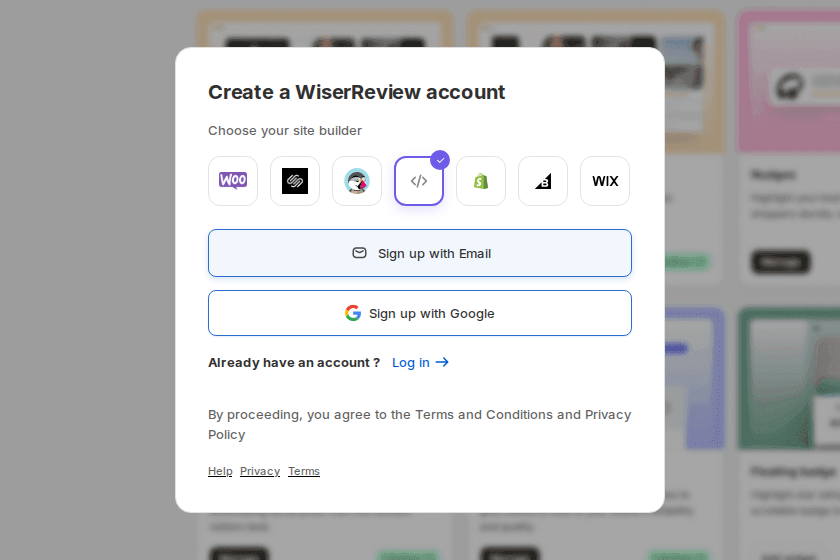
Open the WiserReview sign-up page to start a 7-day free trial. Select your site builder from the list, or the code icon if yours isn’t shown, then create the account with email or Google.
Step 2: Find Google in Integrations
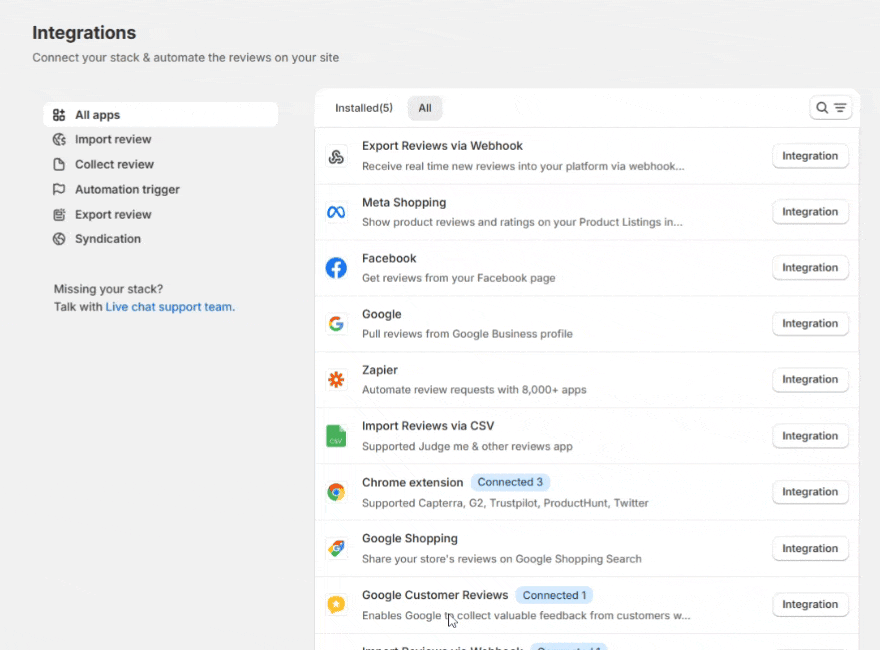
In the left menu, open Integration. You can also get here from Manage Reviews by clicking Import.
Find Google, listed as “Pull reviews from Google Business profile,” and click Integration next to it.
Step 3: Link Your Google Profile
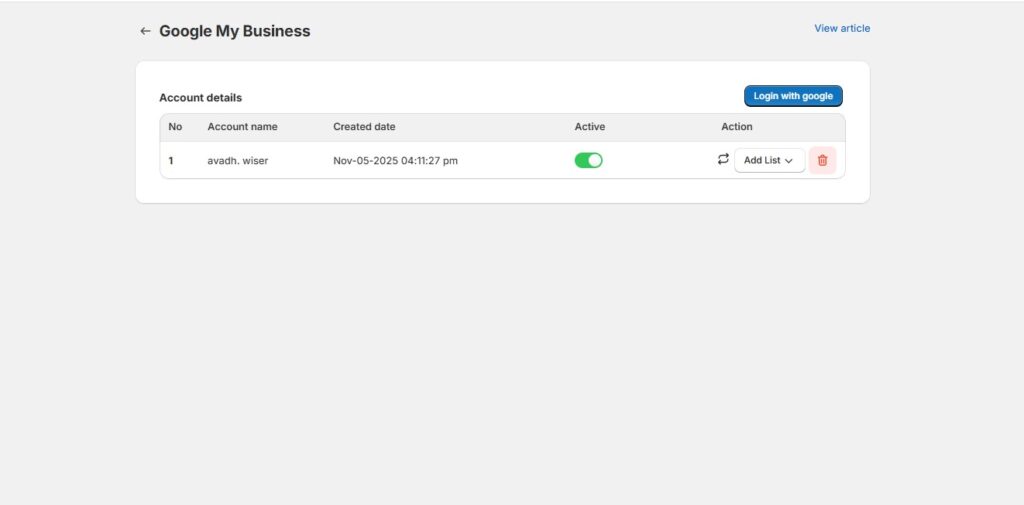
Click Login with Google, sign in with the account that manages your Business Profile and allow WiserReview to read your reviews.
The account then shows under Account details. Keep the Active toggle on so new reviews keep syncing, and use Add List if you want them grouped under a product or location.
No access to the profile? Choose Google Place instead. Search your business name as it appears on Google Maps, select the location, add a connection name and language, then click Create.
The Business Profile guide and Google Place guide cover both options.
Step 4: Create a Review Widget
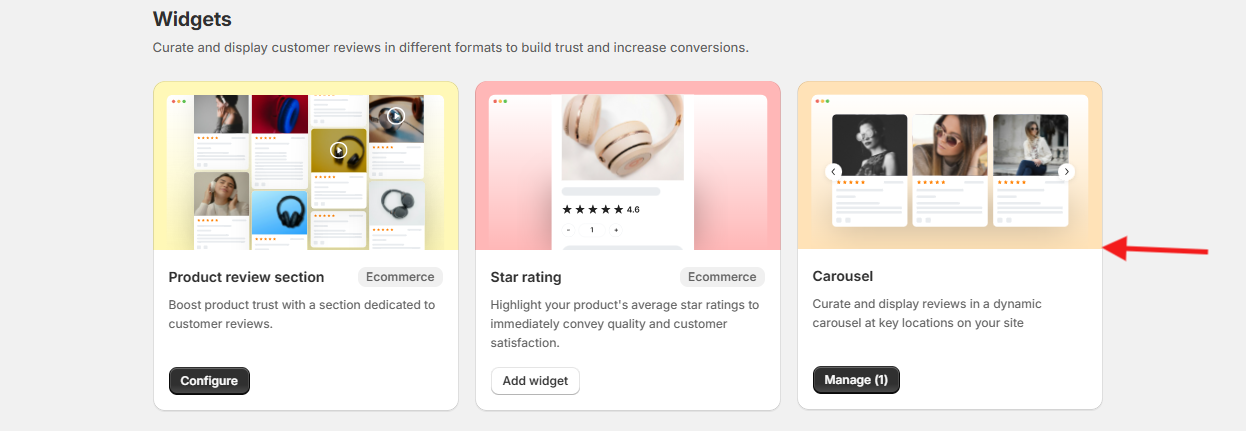
Open Widgets from the left menu and find Carousel. Click Add widget, or Manage if you already have one, then type a name and click Create.
A carousel fits homepages and landing pages. For a dedicated reviews page, pick Wall of love instead.
Step 5: Filter to Google Reviews
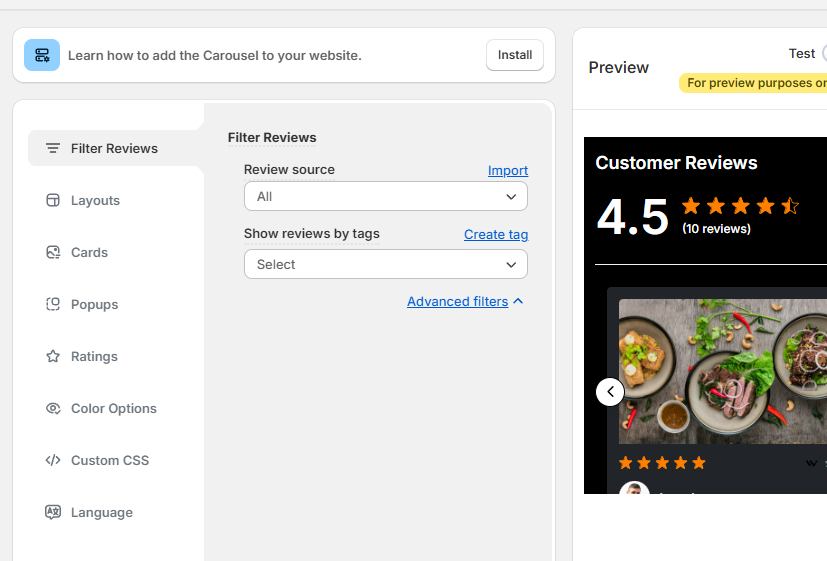
The widget editor opens. In Filter Reviews, set Review source to Google so only your Google reviews show.
Then use Layouts, Cards, Ratings, Color Options and Language to match your brand. Switch the preview to Real data to see your own reviews.
The display reviews docs explain every widget setting.
Step 6: Copy Your Embed Code
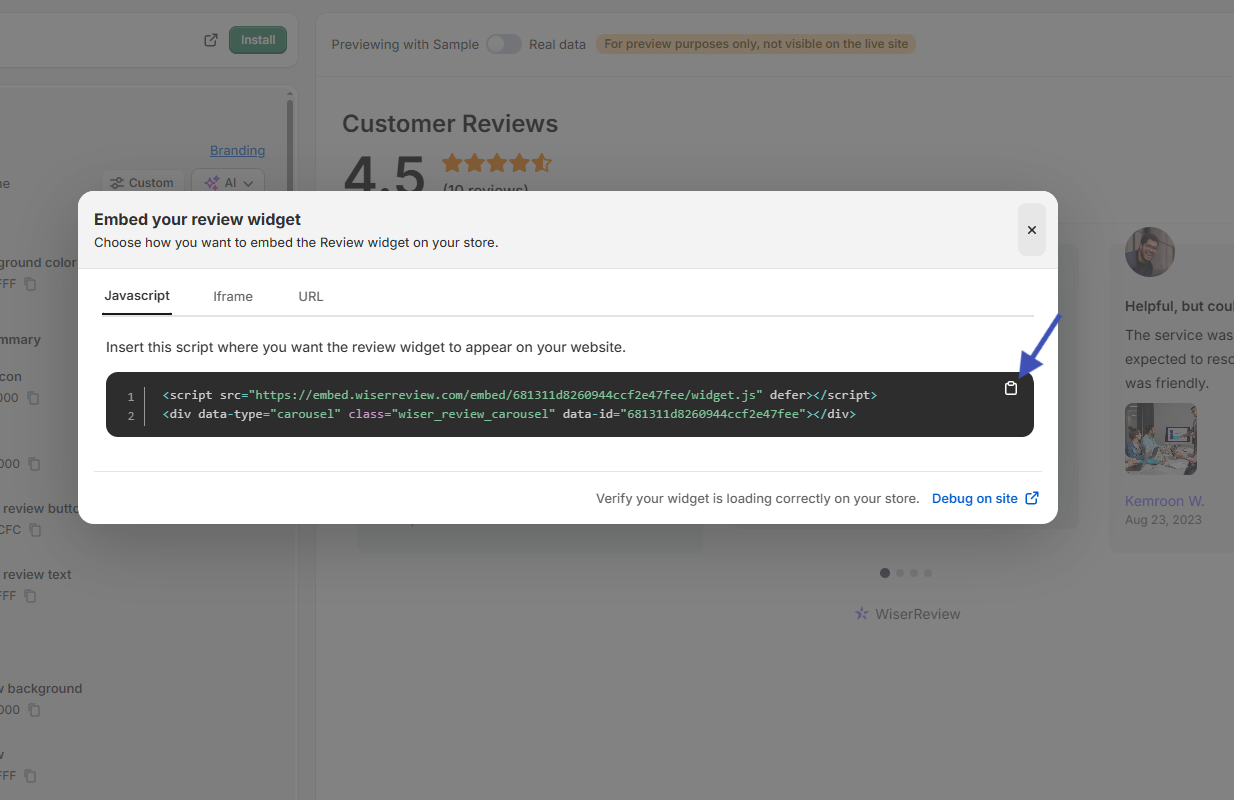
Click Install at the top of the widget editor. In the window that opens, copy the code from the Javascript tab.
If your builder doesn’t allow scripts, use the iFrame tab. The URL tab gives you a hosted review page you can link to instead.
Step 7: Paste It Into Your Site
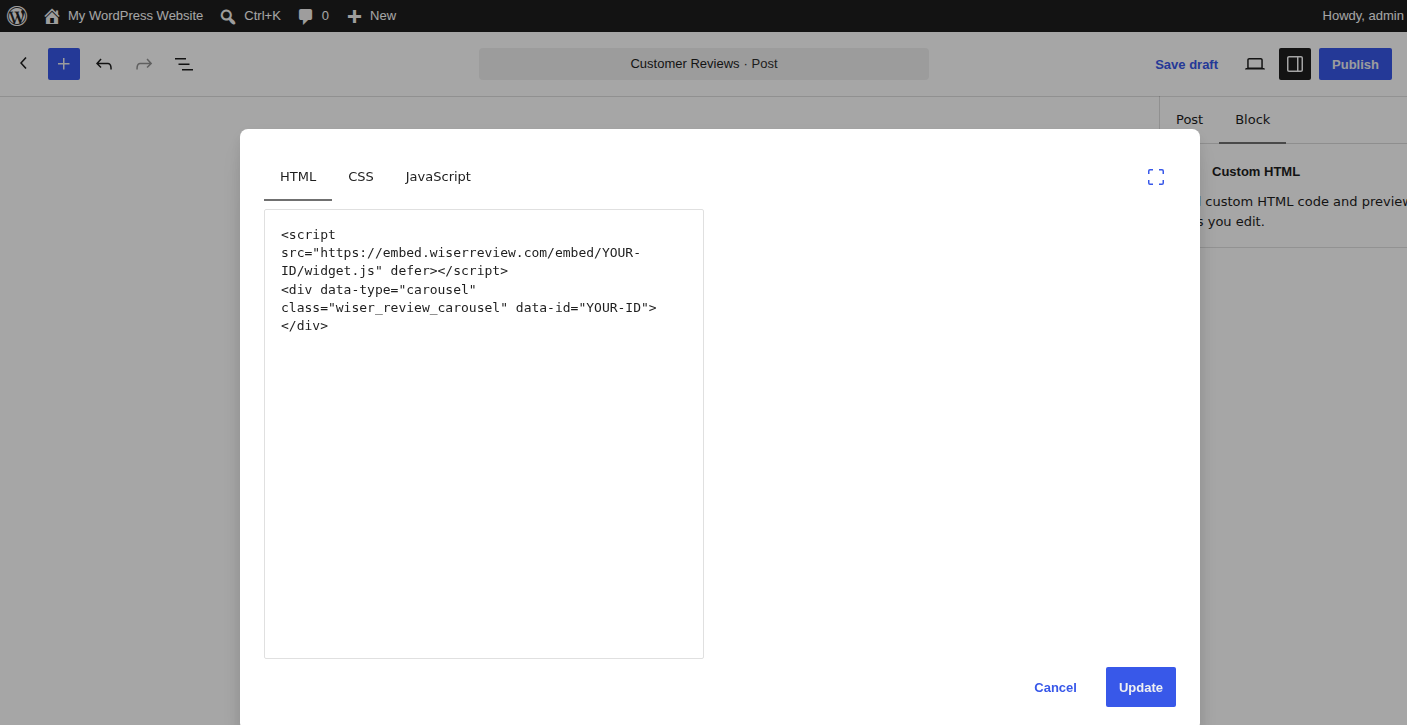
In your website builder, add an HTML or embed block where the reviews should appear, paste the code and publish. The screenshot shows a Custom HTML block in WordPress.
Open the live page to confirm the widget loads. If it doesn’t, click Debug on site in the install window. For builder-specific steps, use the platform guides below.

All your Google reviews in one place
Collect Google reviews, manage every response, and display them where they matter most.
Platform Guides for Google Reviews
Pick your website builder for exact steps and screenshots:
- Add Google reviews to WordPress
- Add Google reviews to Wix
- Add Google reviews to Shopify
- Add Google reviews to Squarespace
- Add Google reviews to Webflow
- Add Google reviews to an HTML website
More guides: WooCommerce, Elementor, Divi, Weebly, GoDaddy, Magento, Drupal, GoHighLevel and Mailchimp.
When the Other Methods Make Sense
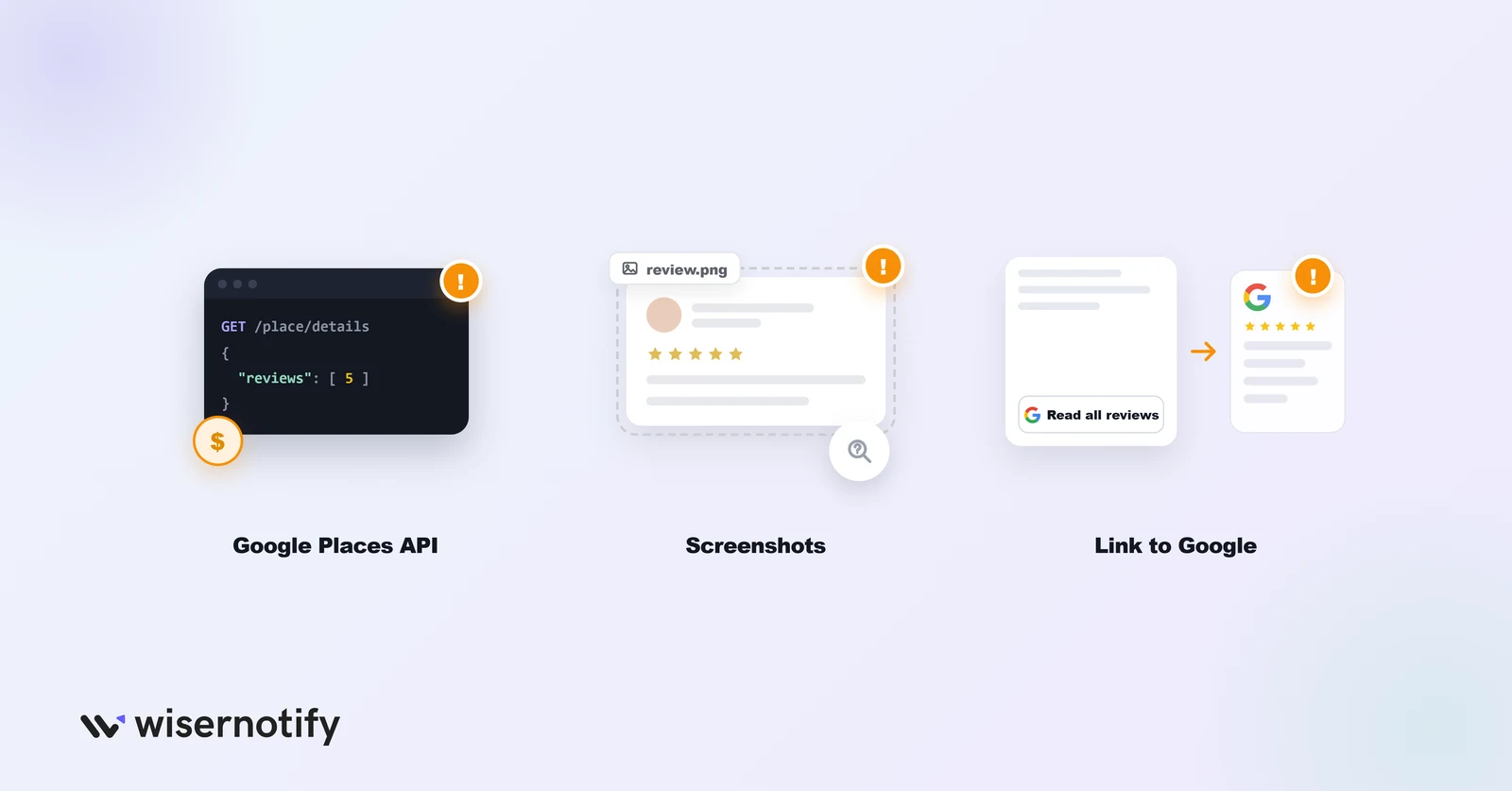
- Google Places API: only worth it if you have a developer and want a fully custom layout. It returns a handful of reviews per place, and heavy traffic adds usage costs.
- Manual embed or screenshots: fine for two or three hand-picked quotes, but they go stale and search engines can’t read review text inside images.
- Link to your Google profile: useful as an extra “Read all reviews” button, but visitors leave your site to read them.
Best Practices for Showing Google Reviews
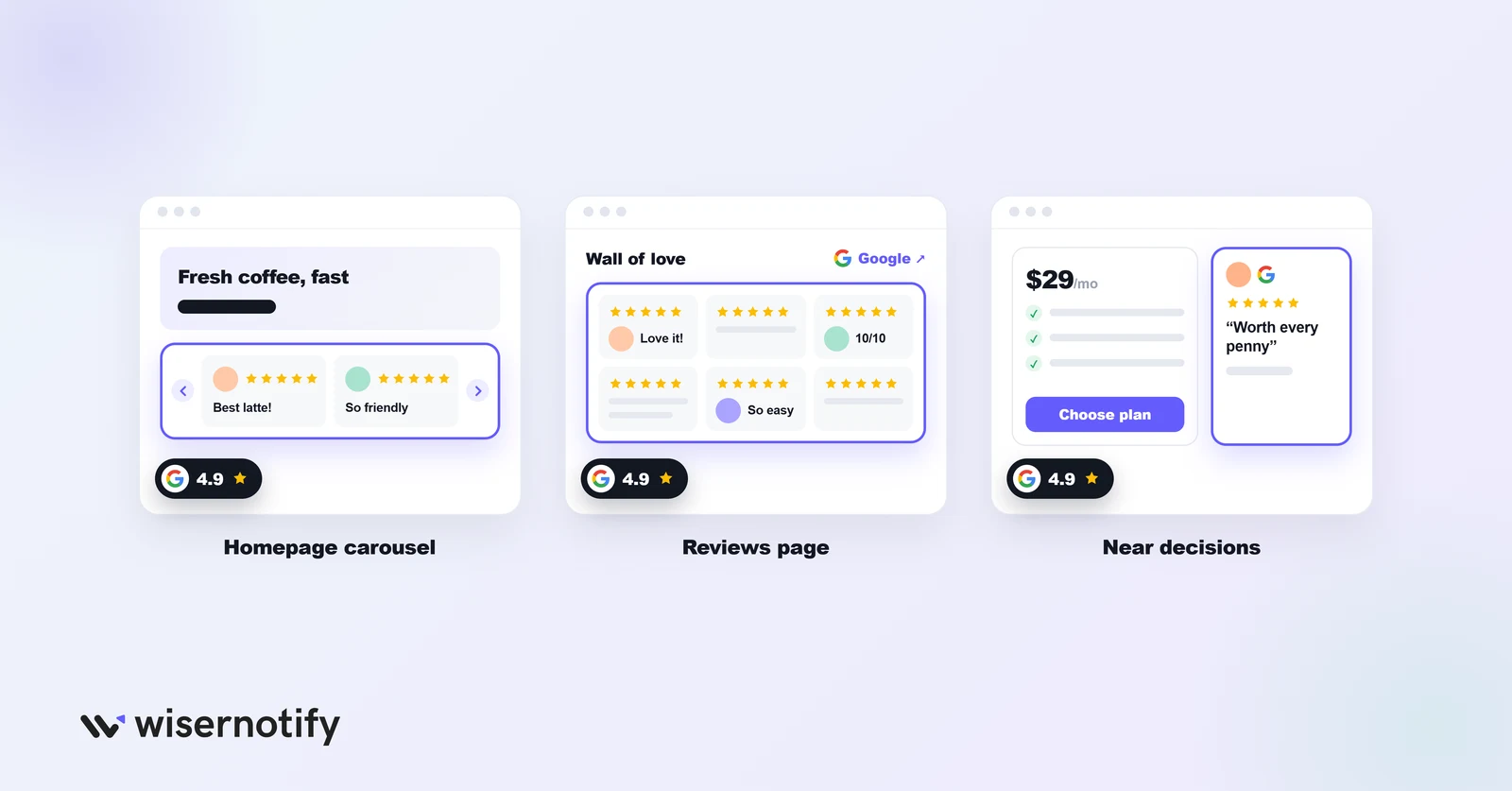
- Show reviews on your homepage. A carousel near the top gives new visitors proof in the first scroll.
- Build a reviews page. A Wall of love lets skeptical visitors read more, with a link back to your Google profile.
- Keep a badge visible. A small floating rating badge reminds visitors of your score on every page.
- Place reviews near decisions. Put them beside pricing, booking buttons and checkout.
Also check: How to Add Reviews to Your Website: Widget or Review Page
Common Mistakes to Avoid
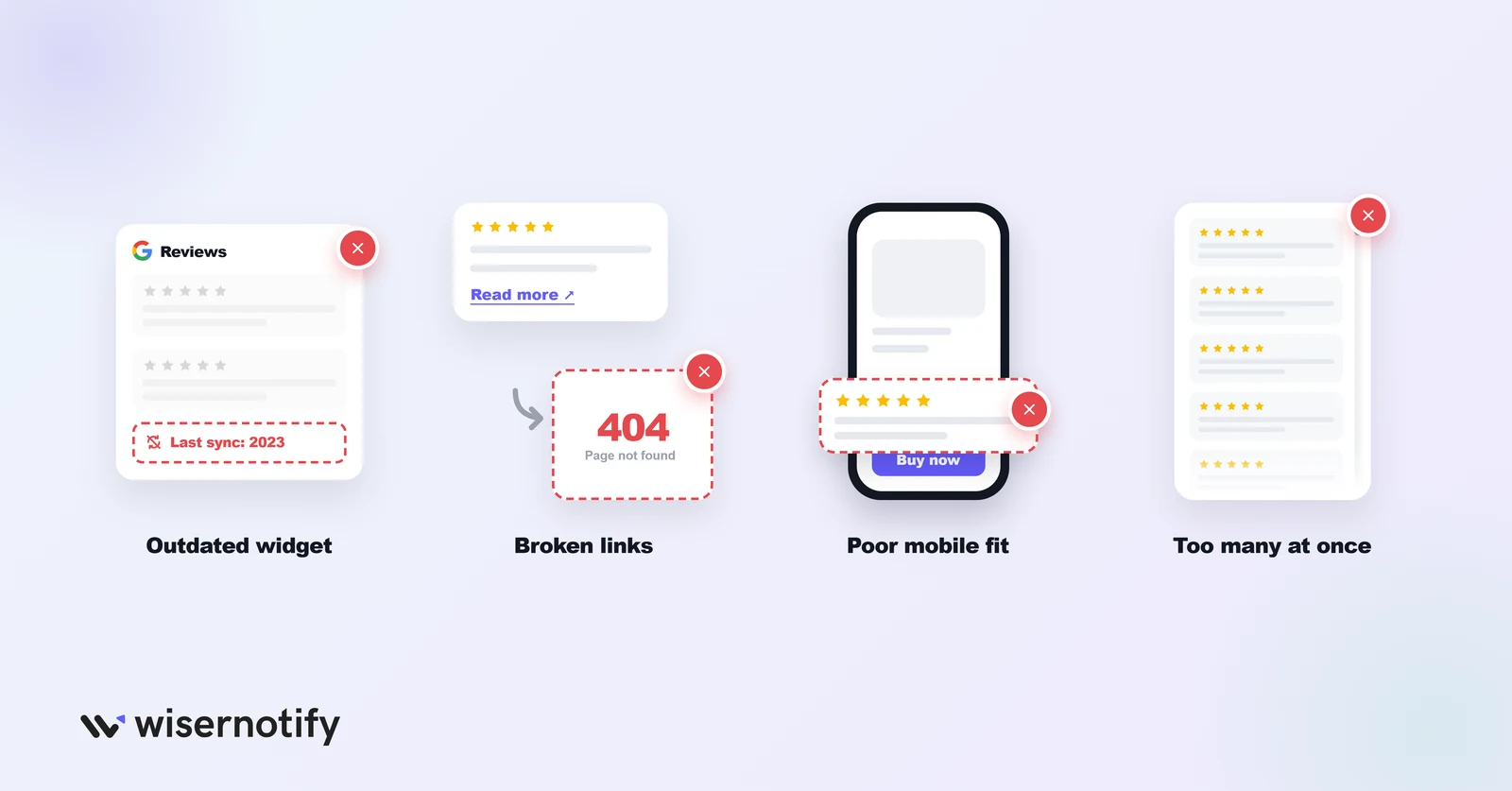
- Outdated widgets. A widget that stops updating shows old reviews or breaks. Pick one that syncs automatically.
- Broken review links. Test every “Read more” link after changing your Google profile or site.
- Poor placement on mobile. Check that the widget fits small screens and doesn’t cover buttons.
- Too many reviews at once. A few recent, relevant reviews read better than a long wall on every page.
Wrap Up
A review widget is the easiest way to keep Google reviews current on your site without touching code.
Set it up once, place it where visitors decide, and let new reviews flow in on their own.
Frequently Asked Questions
Why are Google Reviews important for my business?
They show new visitors that real customers trust you, and they help your business appear in local search.
How do I encourage customers to leave Google Reviews?
Send a short email or text after each purchase with a direct link to your Google review page.
Can I respond to Google Reviews on my business profile?
Yes. Replying shows customers you value feedback, and it’s done from your Google Business Profile.
What should I do if I receive a negative review?
Reply calmly, acknowledge the issue and offer a fix. How you respond often matters more than the review itself.
How can I display Google Reviews on my website?
Connect your Google Business Profile to a review widget like WiserReview, then paste its embed code into your page.

Krunal Vaghasiya is a marketing tech expert who boosts e-commerce conversion rates with automated social proof and FOMO strategies. He loves to keep posting insightful posts on online marketing software, marketing automations, and improving conversion rates.




 Capterra