
Increase WooCommerce Sales: The 80/20 Playbook for 2026
Most WooCommerce stores get most of their extra sales from a handful of changes.
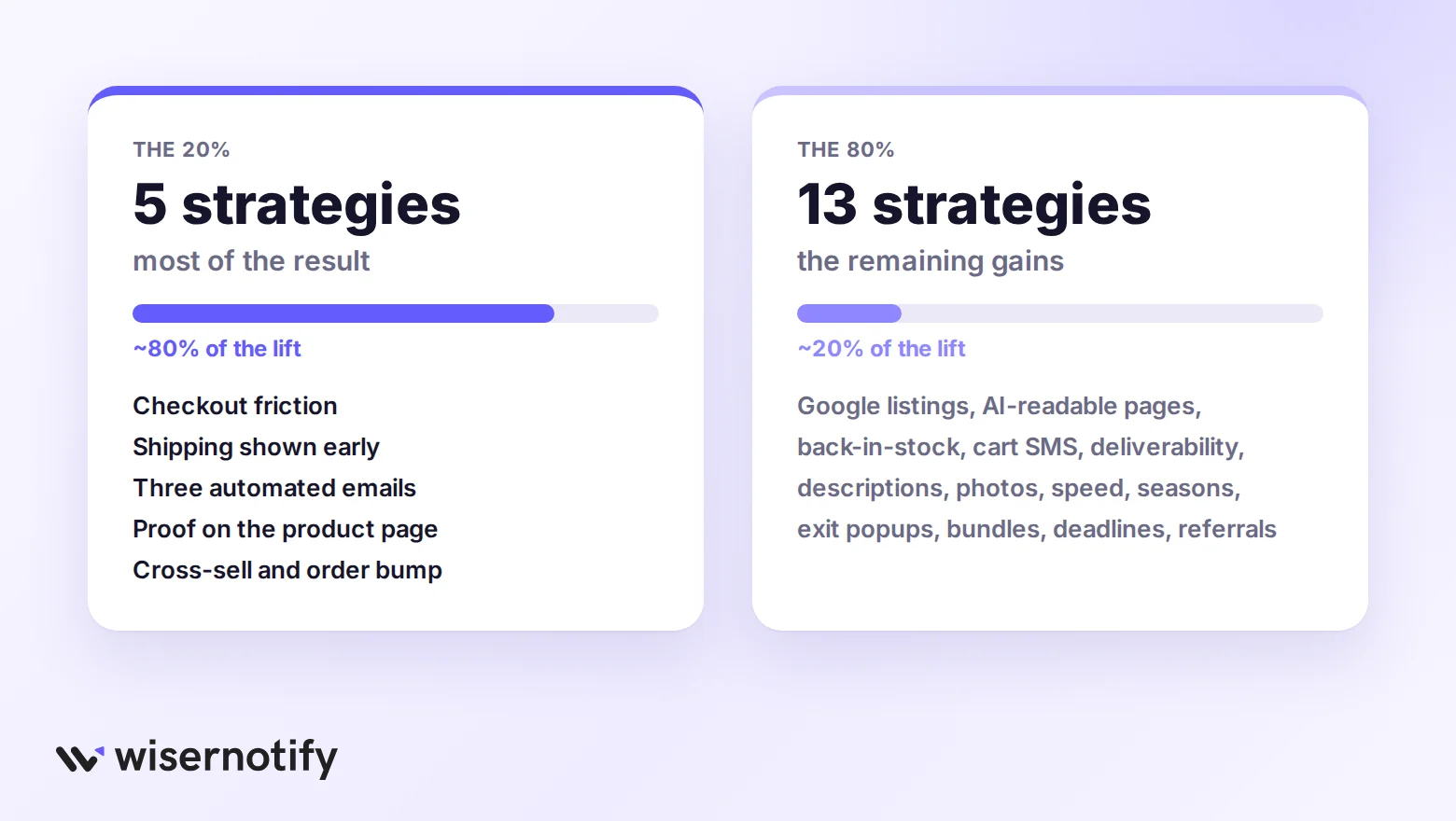
Fix checkout, show shipping costs early, switch on three automated emails, put proof on the product page, and add a cross-sell. Those five do the heavy lifting.
Everything after that still helps, but each item adds a little rather than a lot. This guide is split that way on purpose.
The first part covers the 20% of strategies that produce most of the result. The second part covers the other 80%.
That second group includes a few that rarely make these lists, like back-in-stock alerts and product pages that AI shopping assistants can read.
The 80/20 Split for WooCommerce Sales
 About seven in ten online carts are abandoned, and roughly four in ten of those shoppers say they were only browsing.
The rest wanted to buy and hit something that stopped them. That’s why checkout and the steps right before it carry so much weight.
The table shows where each strategy sits and what it needs from you.
| Group | Strategies | Effort |
|---|---|---|
| The 20% (most of the result) | Frictionless checkout, shipping shown early, three automated emails, proof on the product page, cross-sells and bumps | An afternoon each, mostly settings |
| The 80% (the rest) | Free Google listings, AI-readable product pages, back-in-stock alerts, cart SMS, deliverability, descriptions, photos, speed, seasonal plans, exit popups, bundles, deadlines, referrals | Hours to days each, some ongoing |
The 20% That Drives 80% of Sales
Do these five before anything else. Each one works on shoppers who already decided to buy, which is why the return is so high for the effort.
1. Take the Friction Out of Checkout
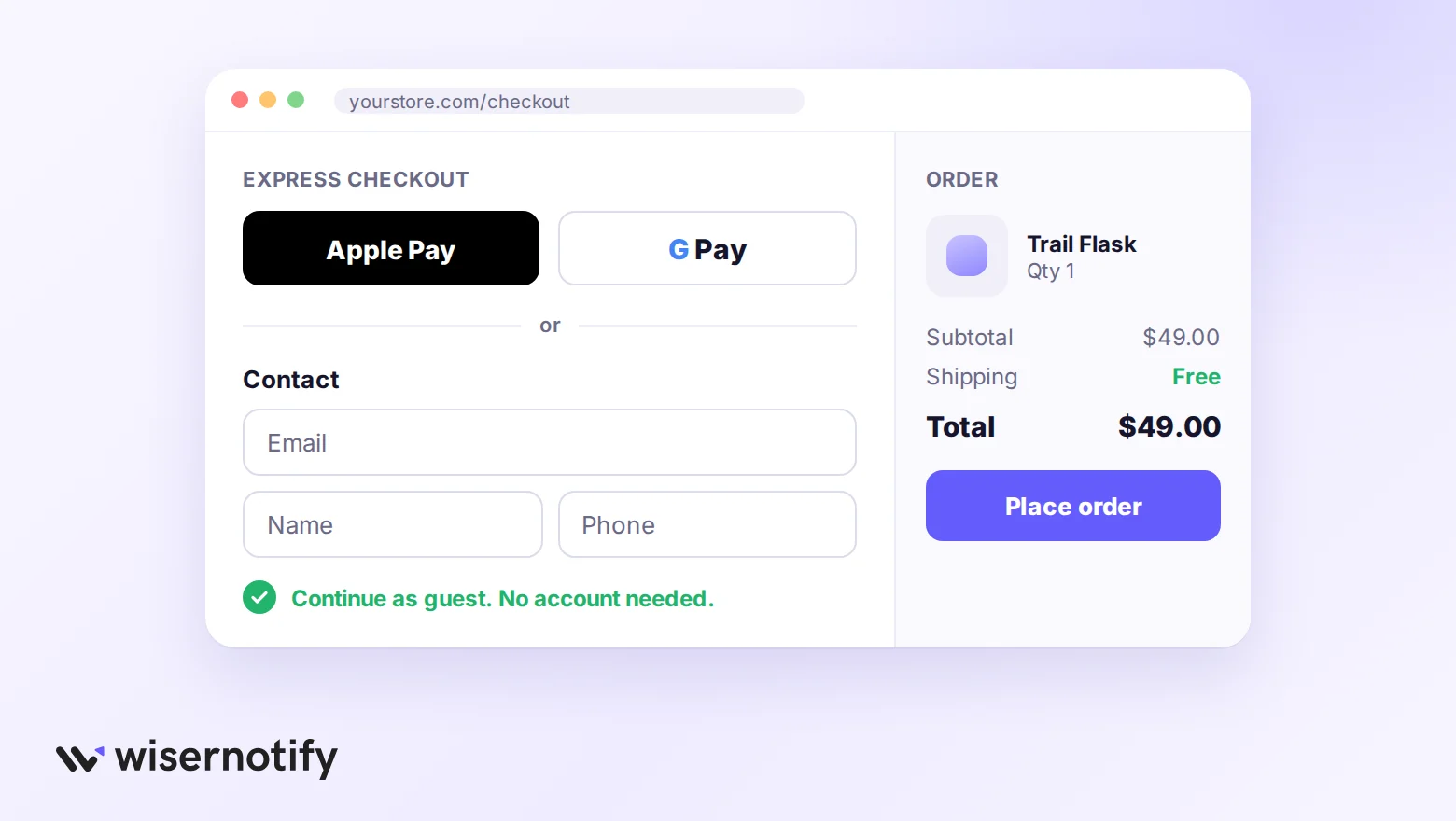 Checkout is where wanting to buy turns into paying, or doesn’t. Studies of large stores put the gain from better checkout design alone at around 35% more conversions, with no new traffic.
Three settings cover most of it in WooCommerce.
- Turn on guest checkout under WooCommerce › Settings › Accounts & Privacy. Offer the account after payment, not before.
- Remove fields you don’t use for delivery. Company name, address line two and order notes are the usual ones.
- Switch on Apple Pay and Google Pay in your payment gateway, so a phone shopper pays with a thumbprint instead of a card number.
Then order a product from your own store on a phone. Every tap you resent, a customer resents twice.
For the rest of the form, this guide to WooCommerce checkout optimization goes field by field.
2. Show Shipping and Delivery Early
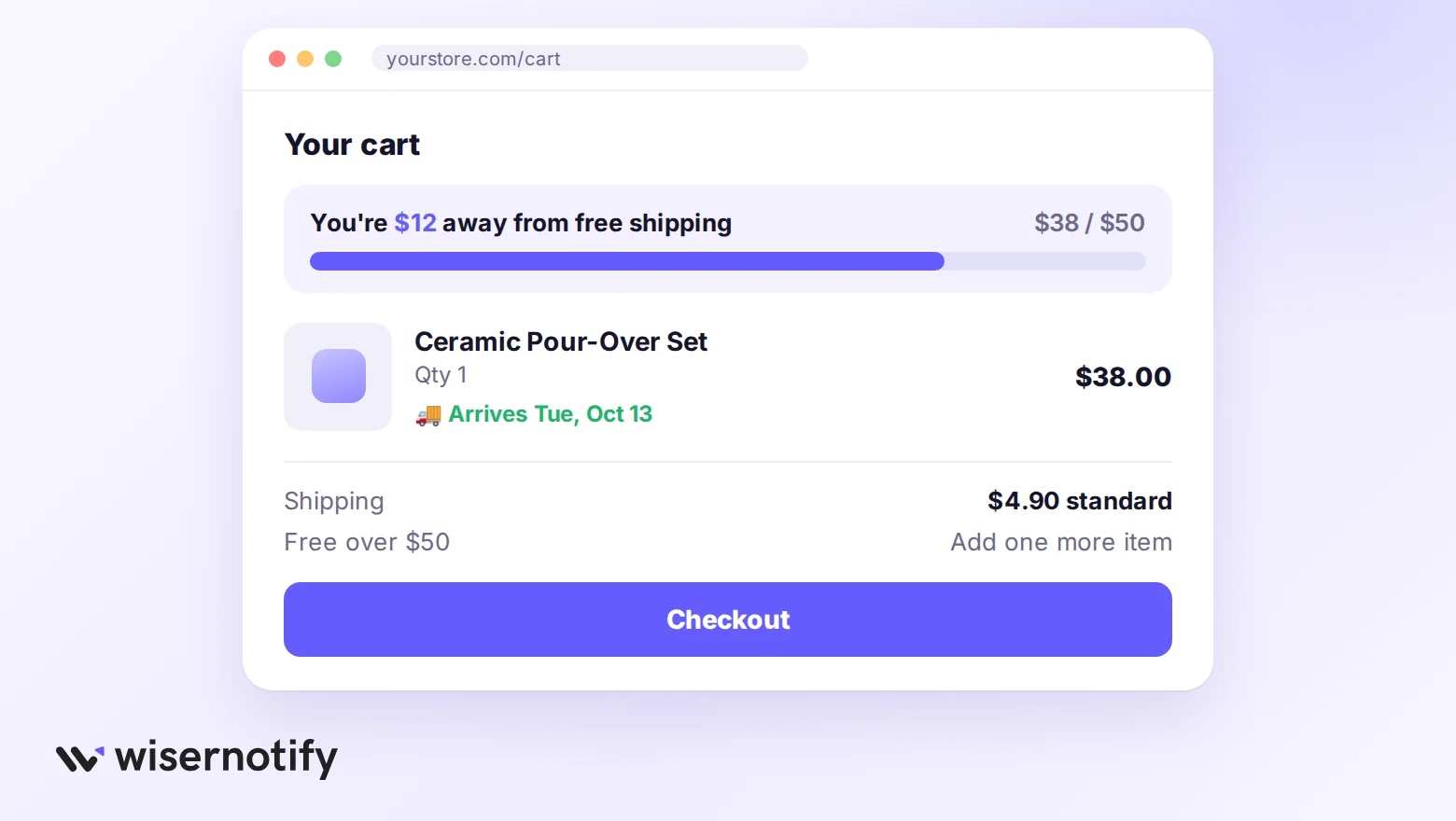 A shipping fee that appears on the last step is the oldest reason carts get dropped. Shoppers accept a cost they saw coming and walk away from one that ambushes them.
Put the shipping cost, or the free shipping threshold, on the product page and in the cart.
Set the threshold a little above your average order, and a line like “You’re $12 away from free shipping” quietly adds items to carts.
Show the delivery date next to the add-to-cart button as well. “Arrives Tuesday” answers a question most product pages leave open.
3. Switch On Three Automated Emails
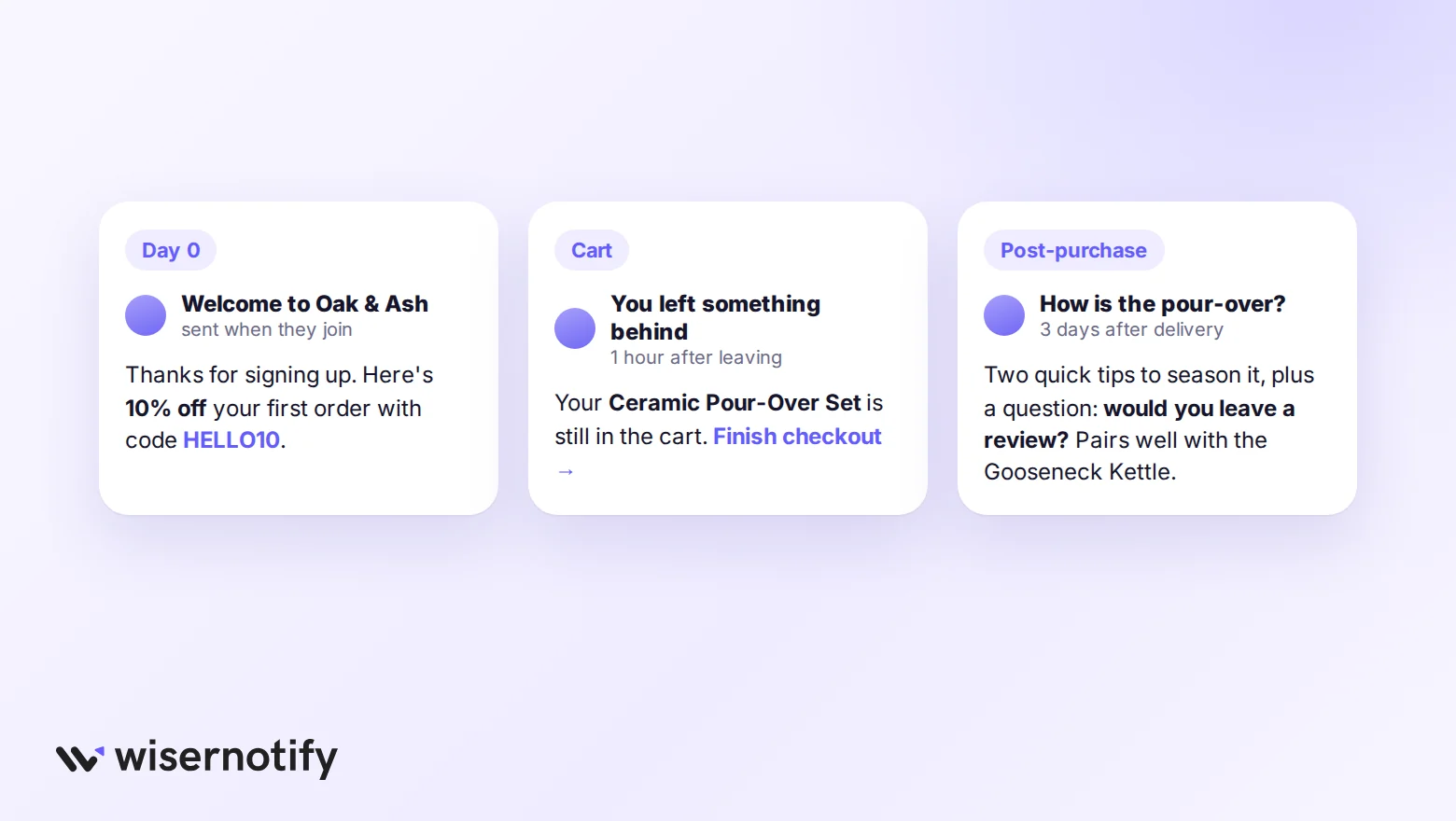 Automated emails are a small share of what stores send and a large share of what they earn.
Across hundreds of thousands of stores, flows make up about 5% of sends and 41% of email revenue. An automated email earns about 16 times more per send than a campaign.
Three flows cover most of it.
- Welcome, sent when someone joins the list, usually with a first-order code.
- Abandoned cart, sent an hour or two after someone leaves, with a link back to the filled cart.
- Post-purchase, sent a few days after delivery, with care tips, a review request and one related product.
WooCommerce doesn’t send these on its own, so you’ll need an email plugin. Cart and welcome emails alone account for most automation orders, so start with those two.
4. Put Proof on the Product Page
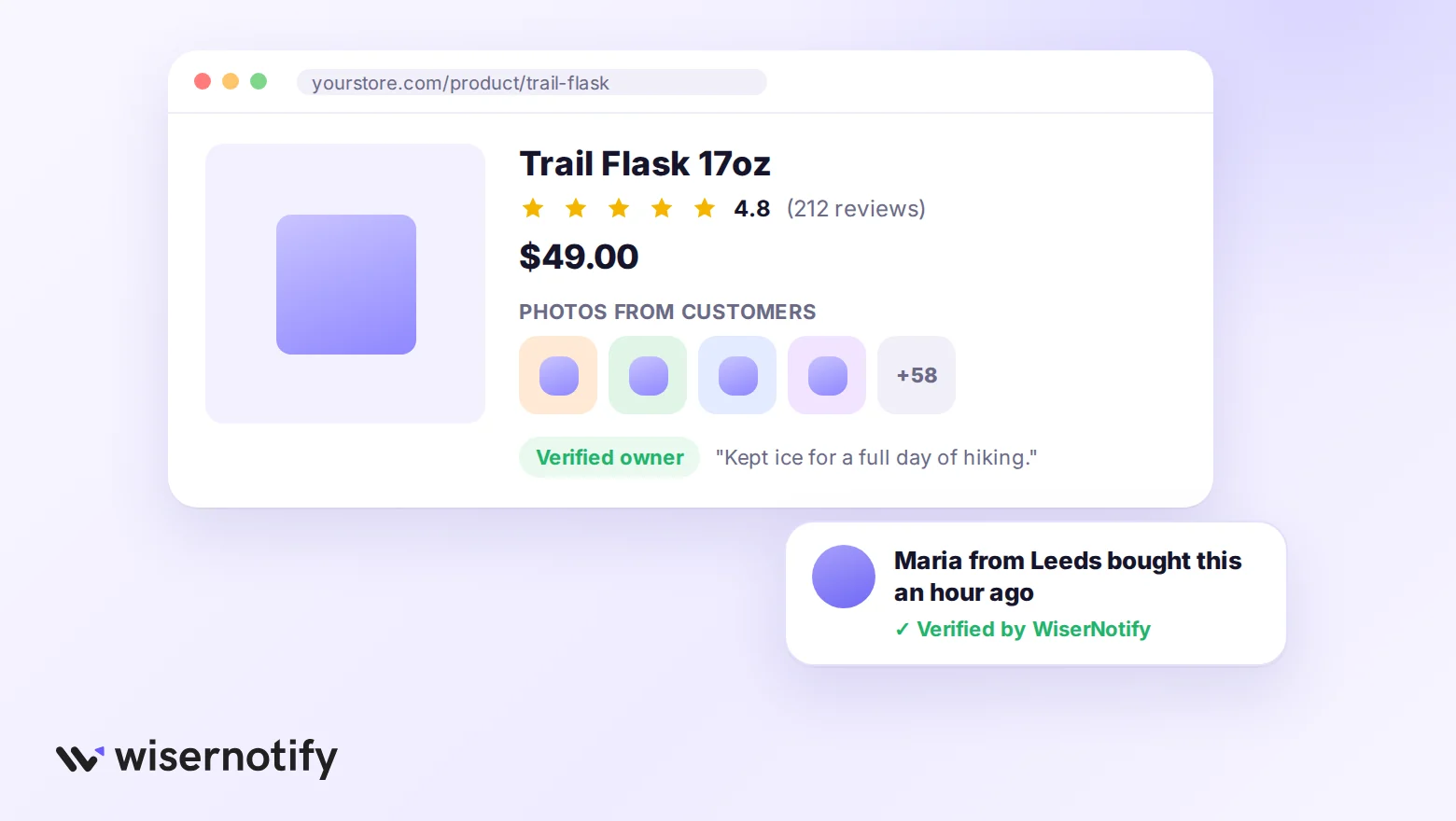 A product page is a stranger asking for money. Two kinds of proof make the ask easier, and both update themselves once set up.
Reviews with photos come first. WooCommerce turns on text reviews by default, under Settings › Products, with a “verified owner” label you should tick.
WiserReview adds photo and video reviews, asks buyers a few days after delivery, and shows star ratings on the shop grid. Other options are compared in these WooCommerce review plugins.
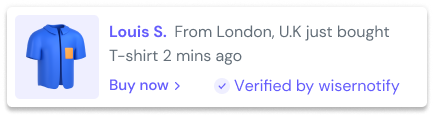
Live activity comes second. WiserNotify reads real WooCommerce orders and shows them as small verified notifications, such as “Maria from Leeds bought this an hour ago,” plus a live visitor count.
A store that looks busy gets treated like one. Here’s the setup for a sales notification popup on WooCommerce.
Build trust & FOMO
Highlight real-time activities like reviews, sales & sign-ups.

5. Add a Cross-Sell and an Order Bump
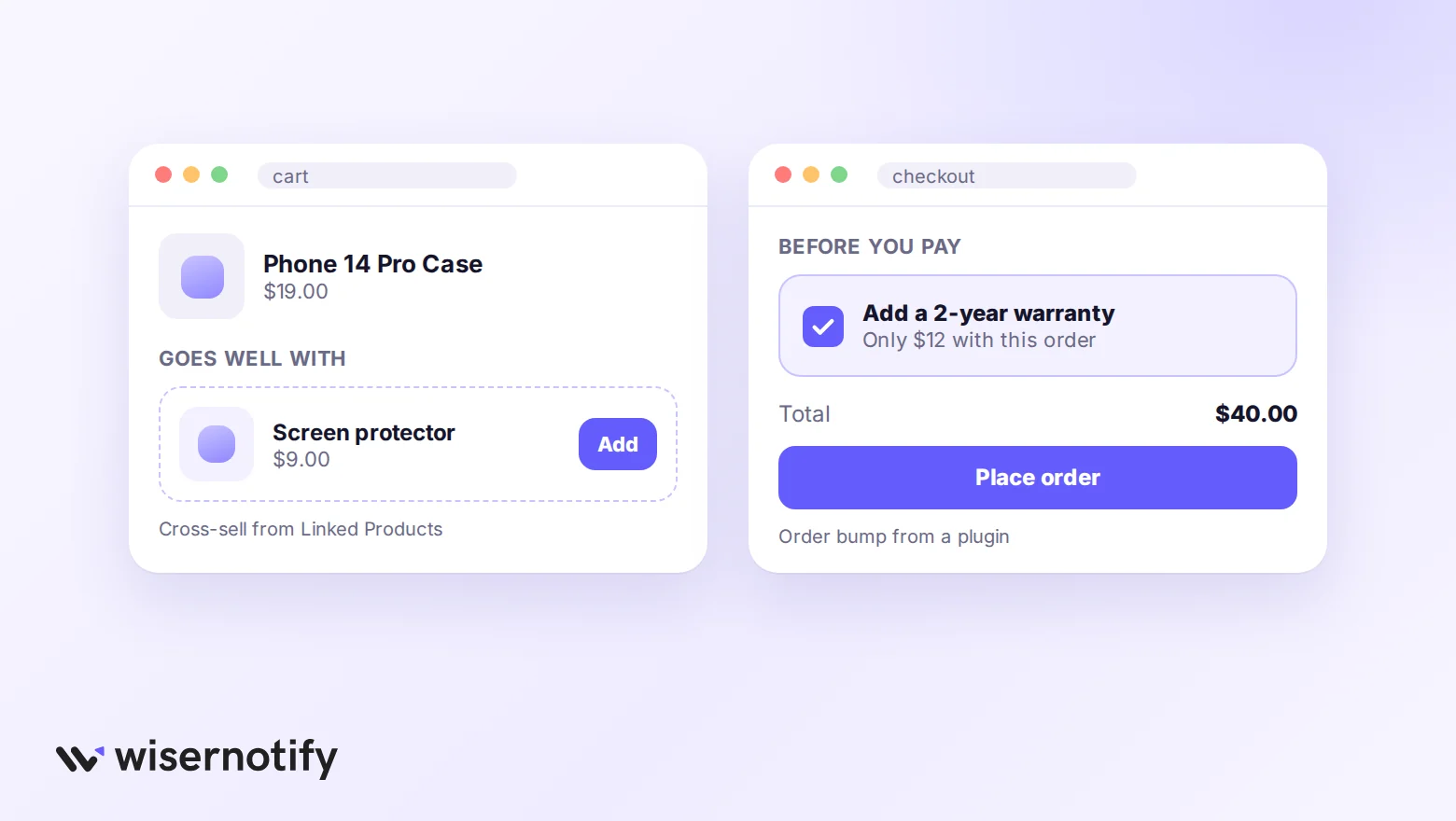 Selling one more thing to a shopper who’s already paying is the cheapest sale there is.
WooCommerce has the first half built in. Open any product, go to Product data › Linked Products, and fill Cross-sells with a matching extra. It shows in the cart.
A case next to a phone, or a filter next to a coffee machine, is an easy yes.
The second half is an order bump, a checkbox offer on the checkout page, which needs a plugin. These WooCommerce upsell plugins cover bumps and one-click offers after payment, and most have a free version.

All your reviews in one place
Collect reviews, manage every response, and display them where they matter most.
The 80% That Drives the Other 20%
These add up, and some of them matter a lot in a specific situation. Work through them once the five above are live.
6. List Products on Google for Free
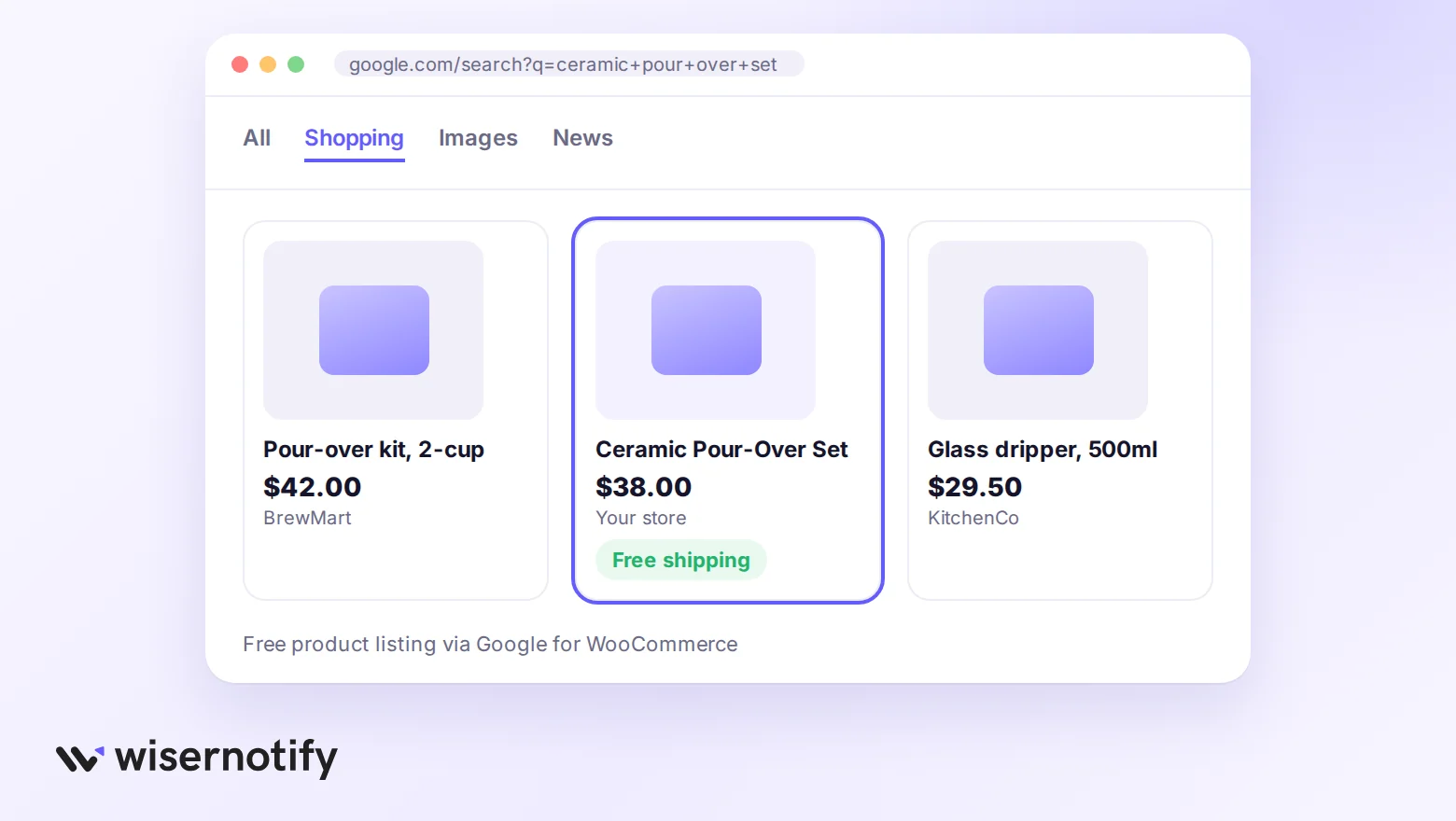 Google shows free product listings in the Shopping tab and in product rows inside normal results. The shopper who clicks one has already seen your price and photo.
Install the Google for WooCommerce extension, connect a Merchant Center account, and let it push the catalog.
Expect a few products to be flagged on the first sync, usually for a missing GTIN or a shipping setting, and clear them.
7. Make Product Pages AI-Readable
 Traffic sent to US retail sites by AI tools grew 138% in a year to May 2026, and those visitors convert 54% better than other traffic.
Yet retail product pages score an average of 66% on machine readability. A third of what’s on them is invisible to the assistants doing the recommending.
The fix is plain, structured content.
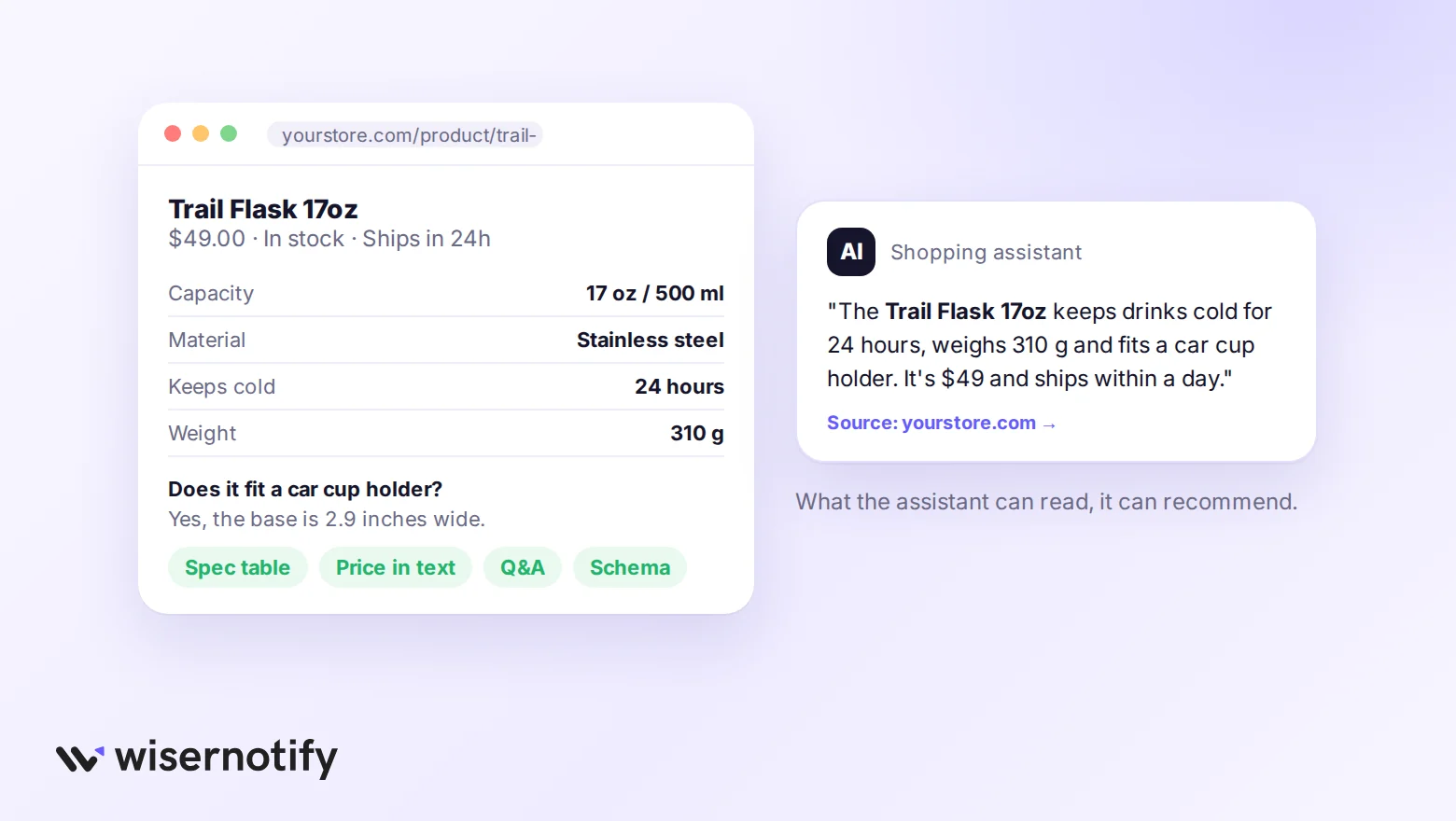
- Specs in a real HTML table, not an image or a tab that loads on click.
- Price, stock and shipping in text on the page.
- A short question-and-answer block for the things people ask before buying.
- Product schema from your SEO plugin, so the facts are labeled.
Cosmetics and electronics stores lead on this because their pages carry ingredient lists and spec sheets. Any store can do the same.
8. Add Back-in-Stock Alerts
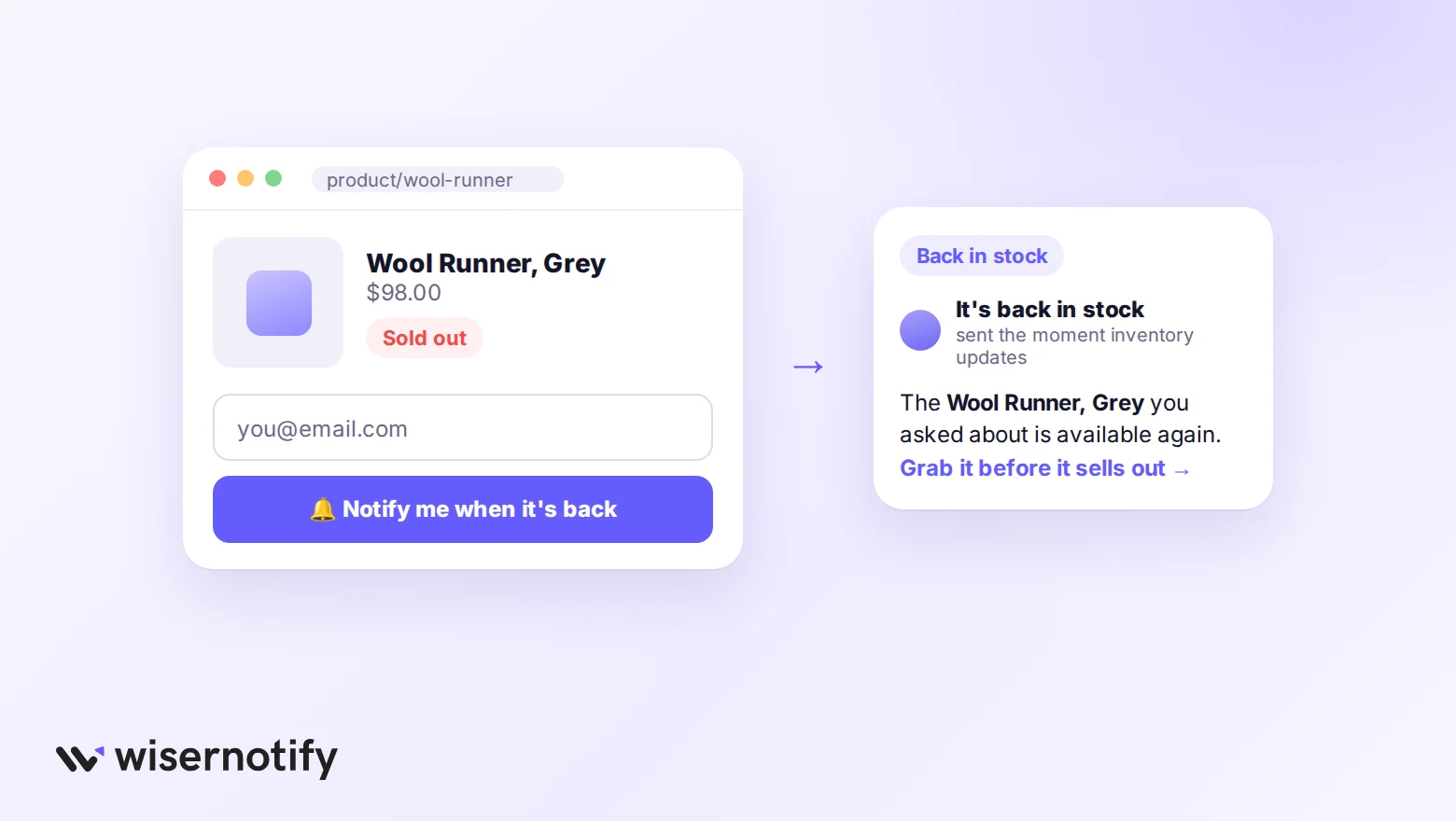 A sold-out product with no “notify me” button is a sale you’ve agreed to lose twice. Someone who asks to be told when it’s back has already decided on the product and the price.
Back-in-stock emails convert at about 6.5%, the highest of any automated email type. Add the button with a stock alert plugin, connect it to your email tool, and let it send the moment inventory updates.
9. Recover Carts by Text
 Email recovers some abandoned carts. A text recovers more of the ones that are still warm, because it arrives in minutes and gets read on the phone the shopper was using.
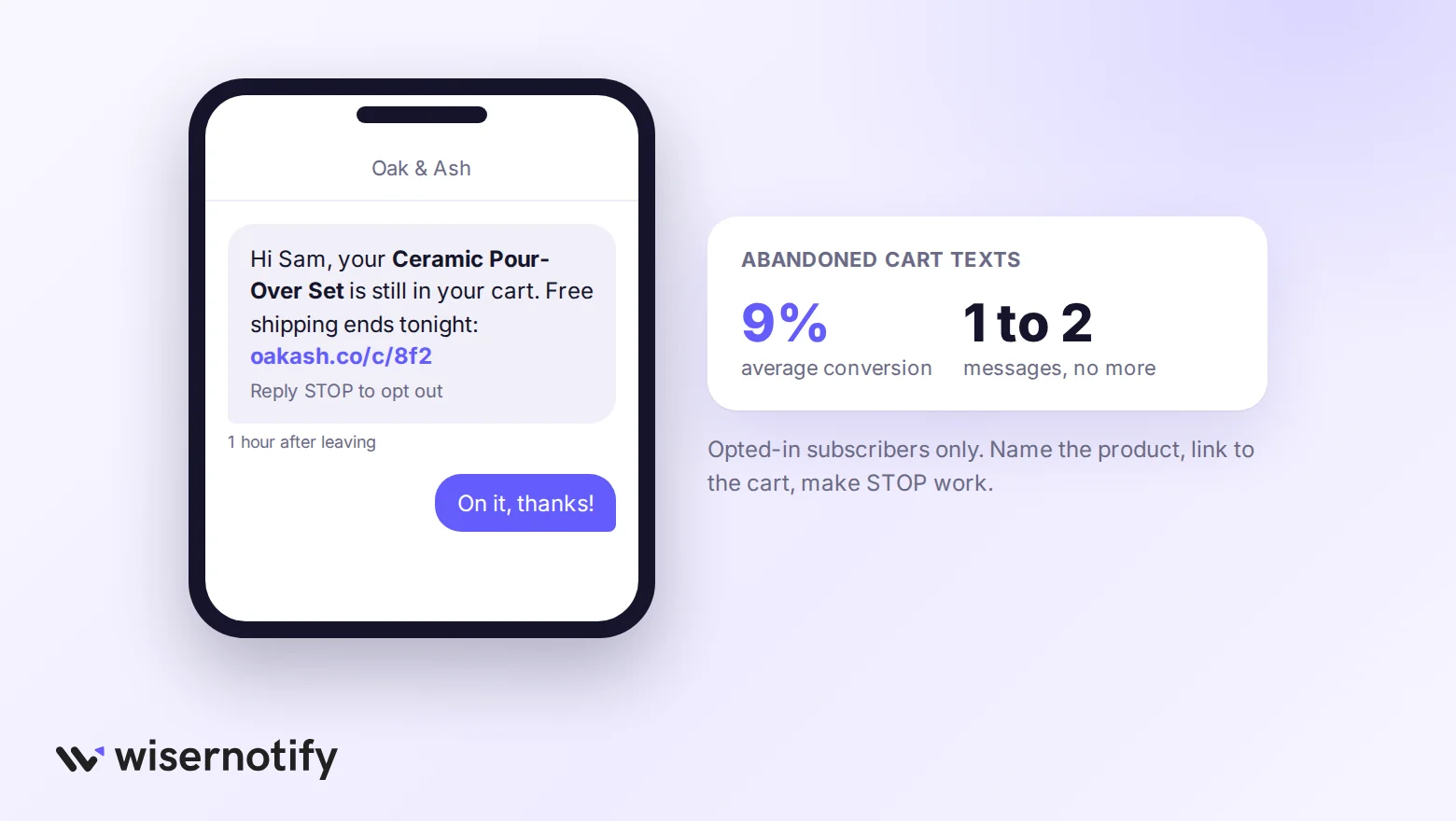
Across thousands of stores, abandoned cart texts convert at around 9% on average.
Keep it to one or two messages, name the product, and link straight to the cart. Only text people who opted in, and make stopping as easy as replying STOP.
10. Make Sure Your Emails Arrive
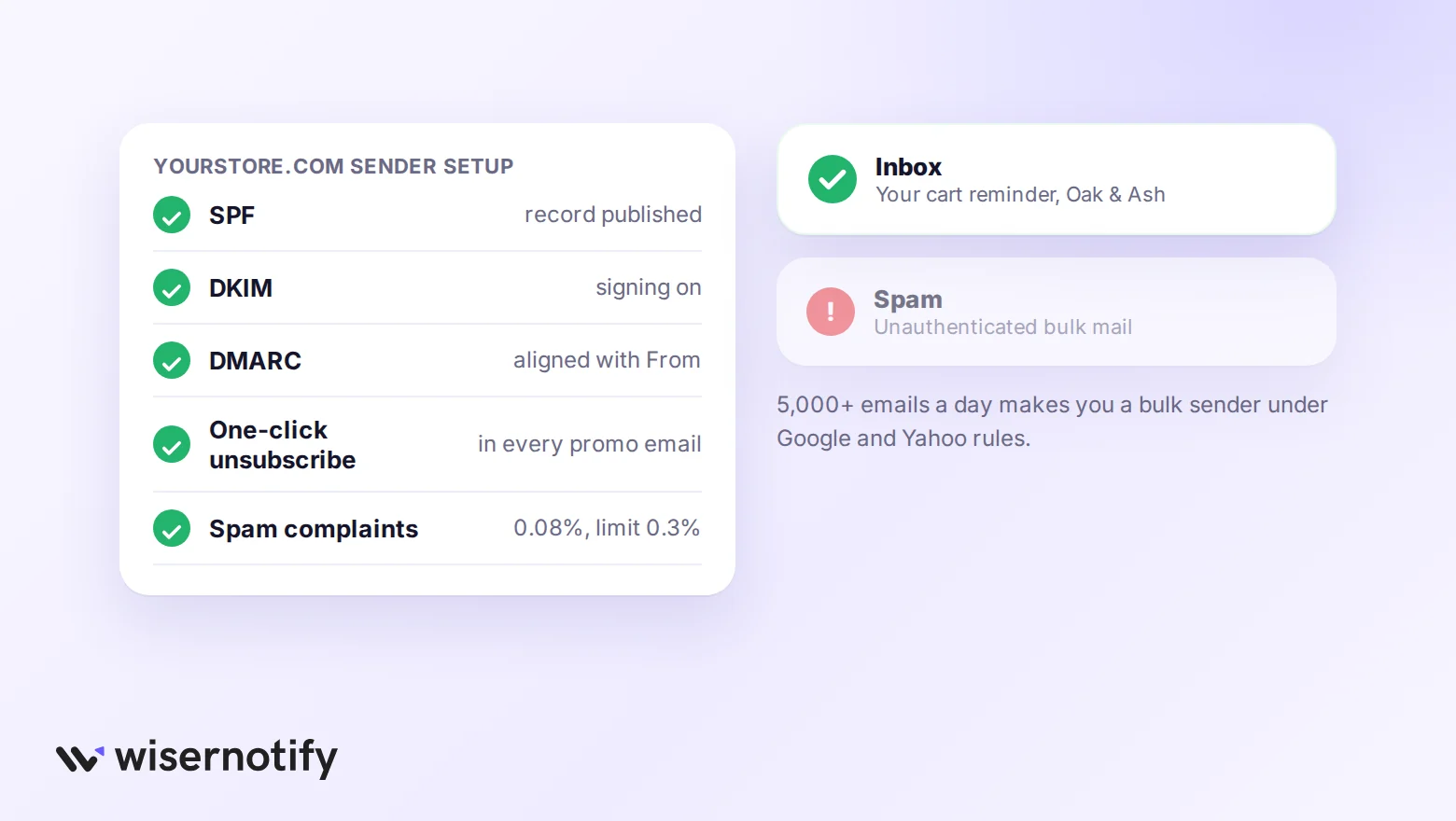 Every flow above is worthless if it lands in spam, and the rules changed in 2024. Google and Yahoo treat anyone sending 5,000 or more emails a day to their users as a bulk sender.
Bulk senders must pass SPF, DKIM and DMARC, offer one-click unsubscribe, and keep spam complaints under 0.3%.
Your email plugin or domain host has a guide for each record. Set them up once, then check your spam rate in Google Postmaster Tools every month.
Judge emails by clicks, not opens, since mail apps now open messages on the reader’s behalf.
11. Write Your Own Product Descriptions
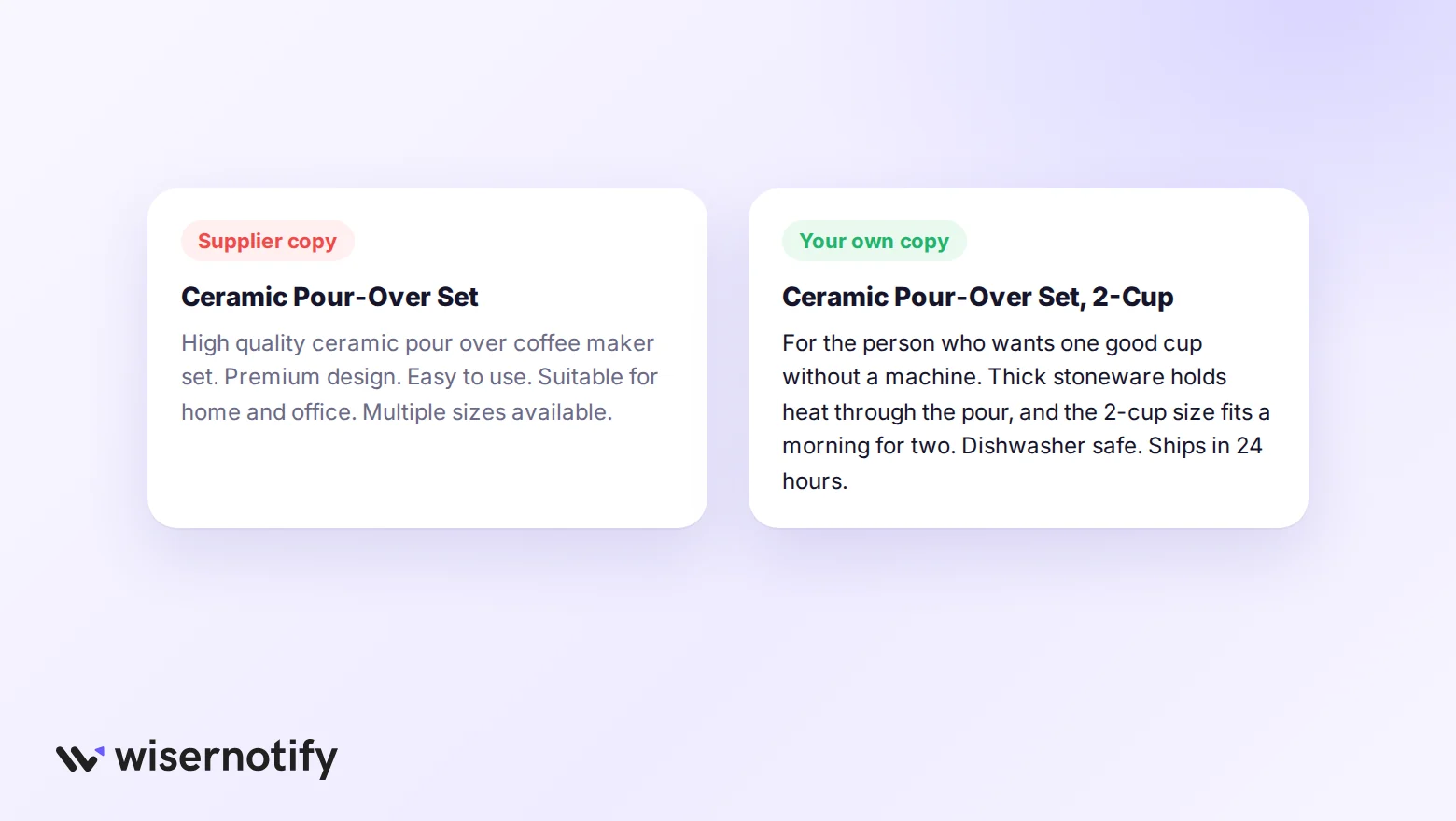 If the description came from the supplier, it’s on a dozen other stores word for word, and Google has no reason to rank yours.
Say who the product is for and what it fixes, then the specs. Put the detail people search for in the title, whether that’s a size, material or model number. Give images real file names and alt text.
12. Use Better Photos and Swatches
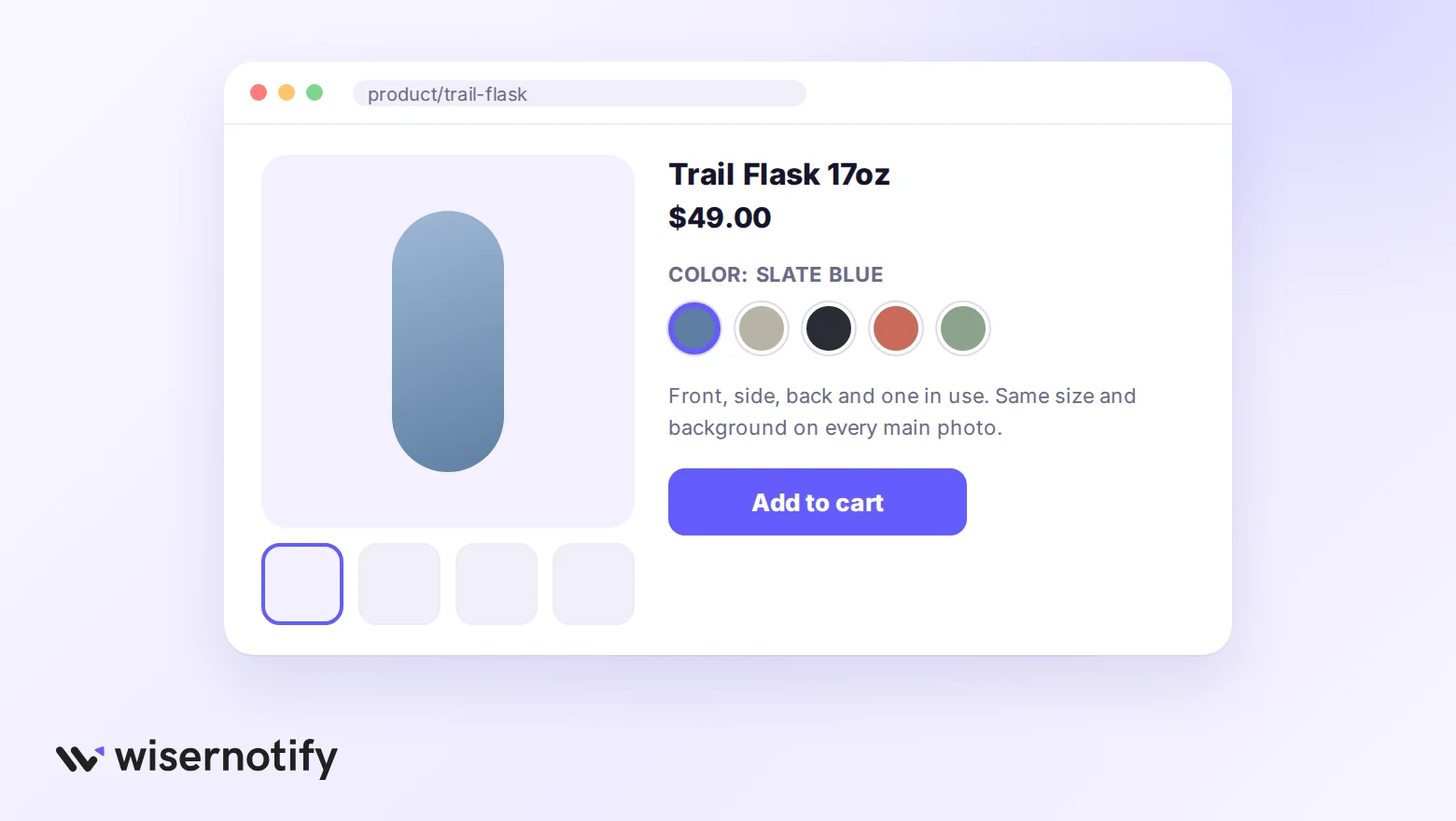 The photos do the handling the shopper can’t. Shoot a few angles plus one shot in use so the size is clear, and keep every main image the same size and background so the shop grid looks tidy.
If you sell colors, replace the drop-down with swatches. A free swatches plugin handles it, and people pick a color by clicking it.
13. Speed Up the Store
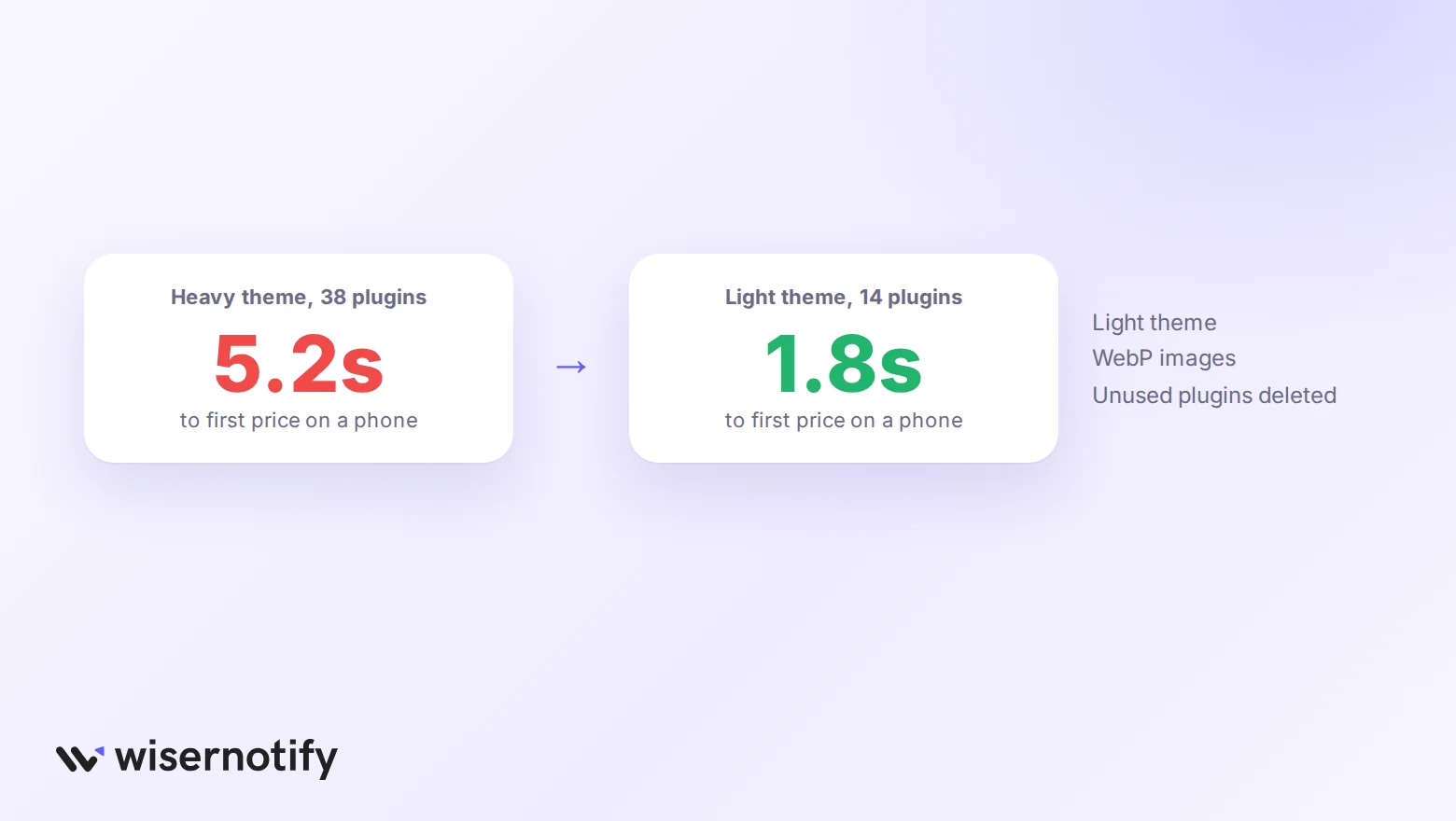 A product page that takes five seconds to show a price has lost the phone shopper. On WooCommerce the usual causes are a heavy theme and plugins nobody uses anymore.
Pick a light theme, like several in these free WooCommerce themes, compress images and serve WebP, and clear the plugin list once a quarter.
14. Plan Seasonal Sales a Month Out
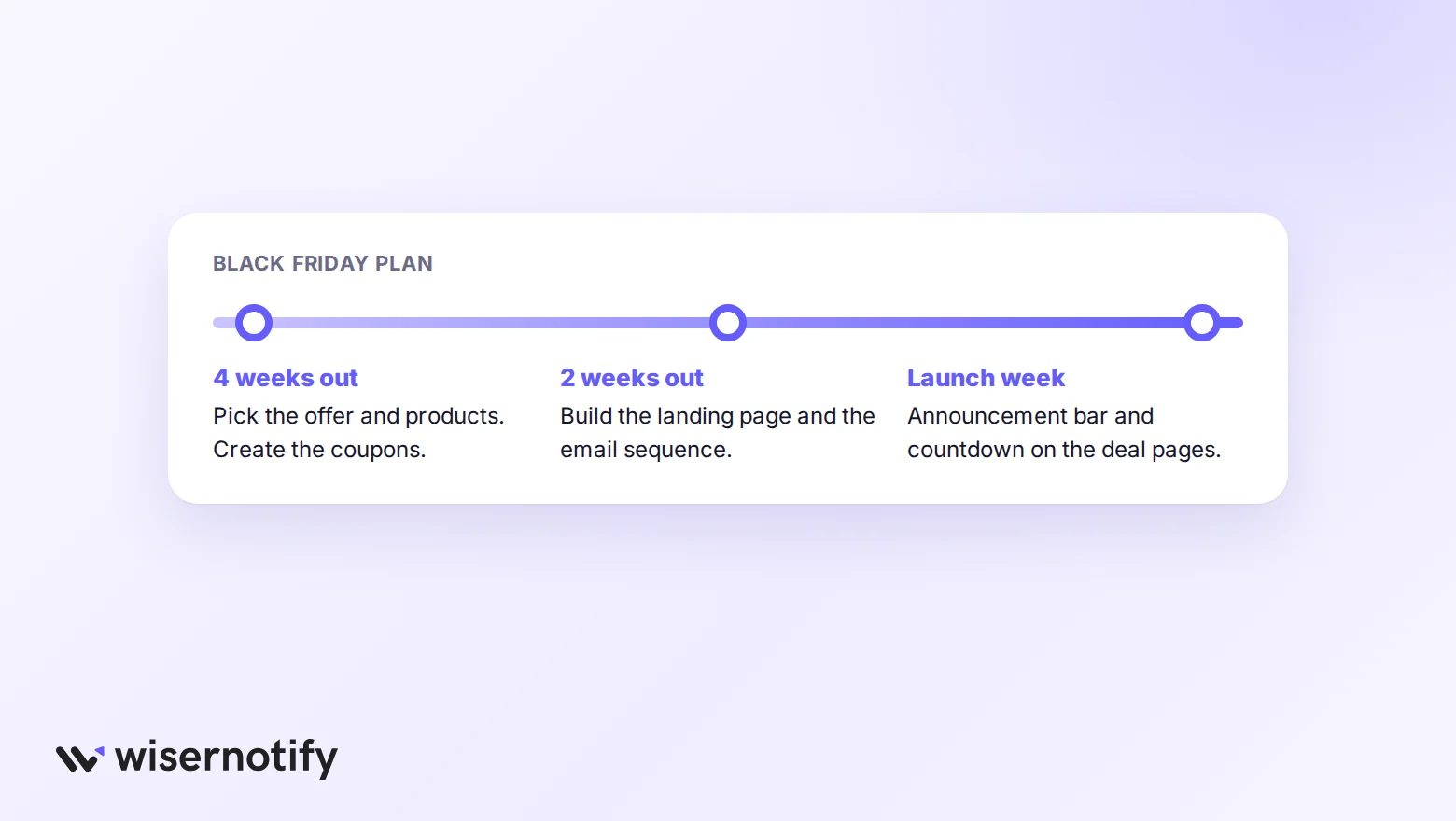
Black Friday and the December run bring buyers who have already decided to spend. The difference between a good season and a forgettable one is lead time.
Four weeks out, pick the offer and create the coupons. Two weeks out, build the landing page and the email sequence. Launch week, add a bar and a countdown to the deal pages.
Here’s how to add an announcement bar to WooCommerce.
15. Catch Leavers With an Exit Popup
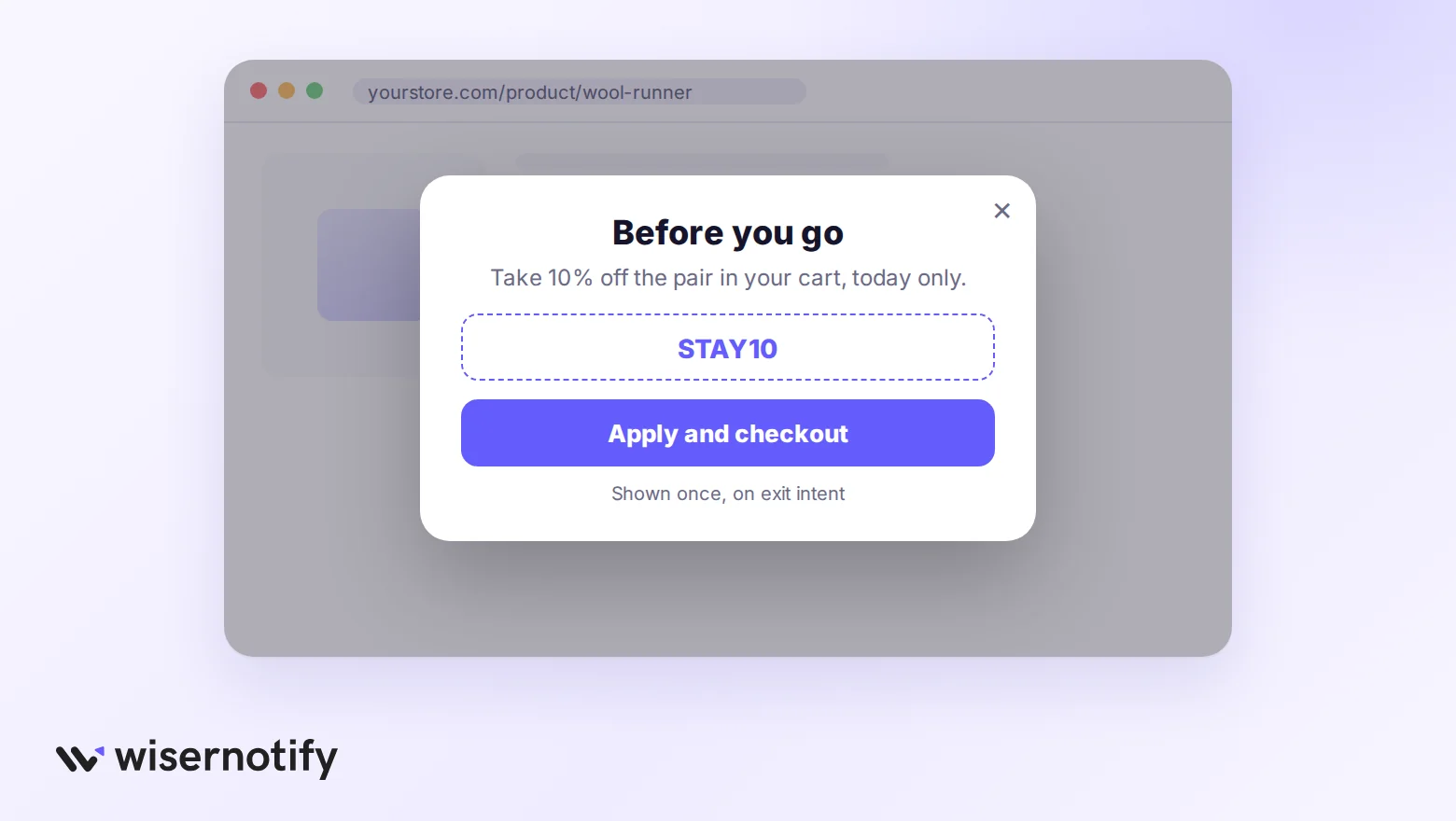 Some shoppers leave whatever you fix. An exit popup fires when the cursor heads for the close button and makes one last offer, which recovers a share of them at no ad cost.
Keep it to one offer and one button, and show it once per visitor. Here’s how to create an exit popup in WooCommerce.
16. Bundle Products and Gift Sets
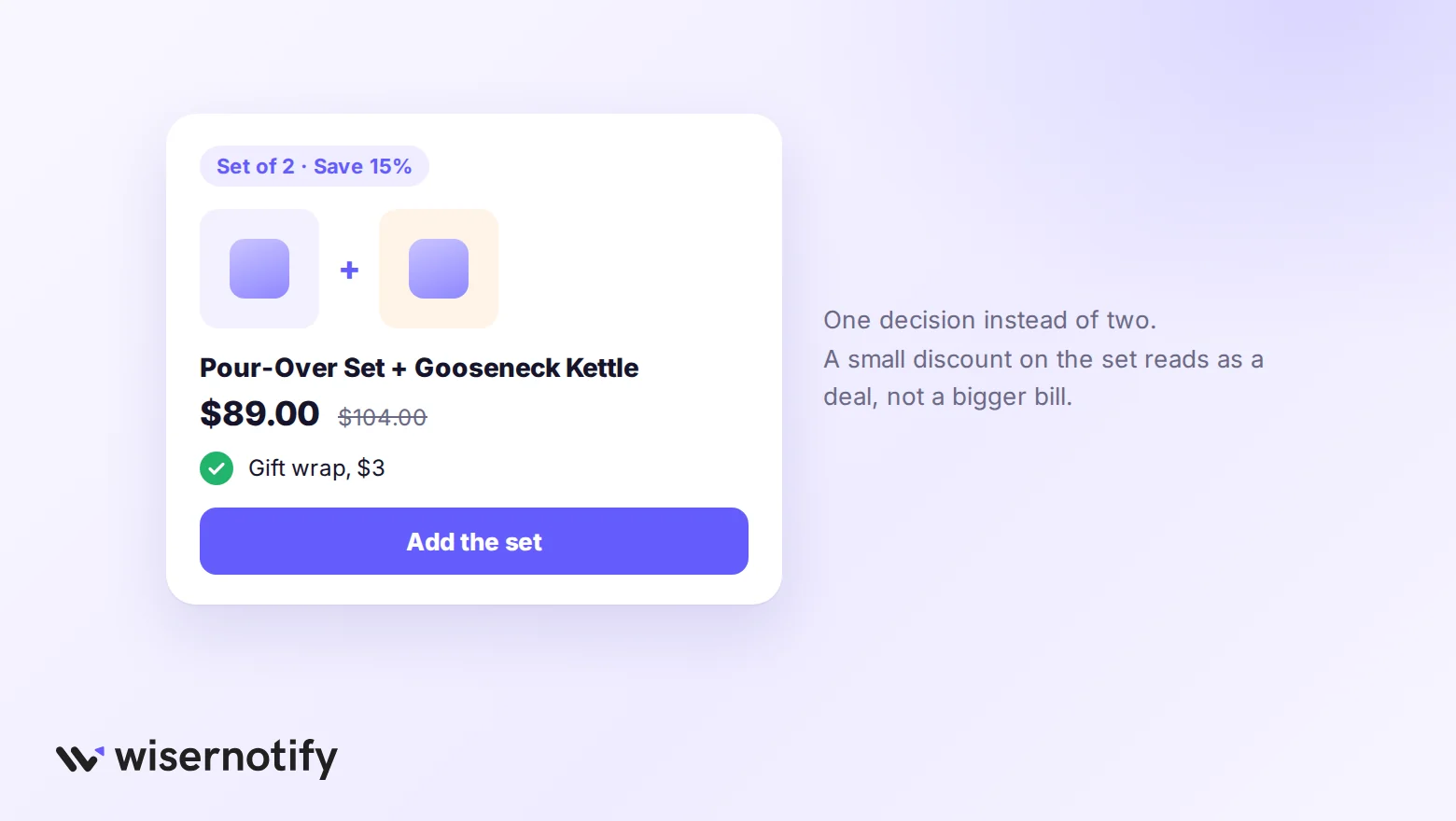 A set of two sells differently from two singles. The buyer makes one decision instead of two, and a small discount on the set reads as a deal.
Gift wrap does the same job in December for a few dollars of paper. These product bundling examples show how stores price their sets.
17. Run Offers With a Real Deadline
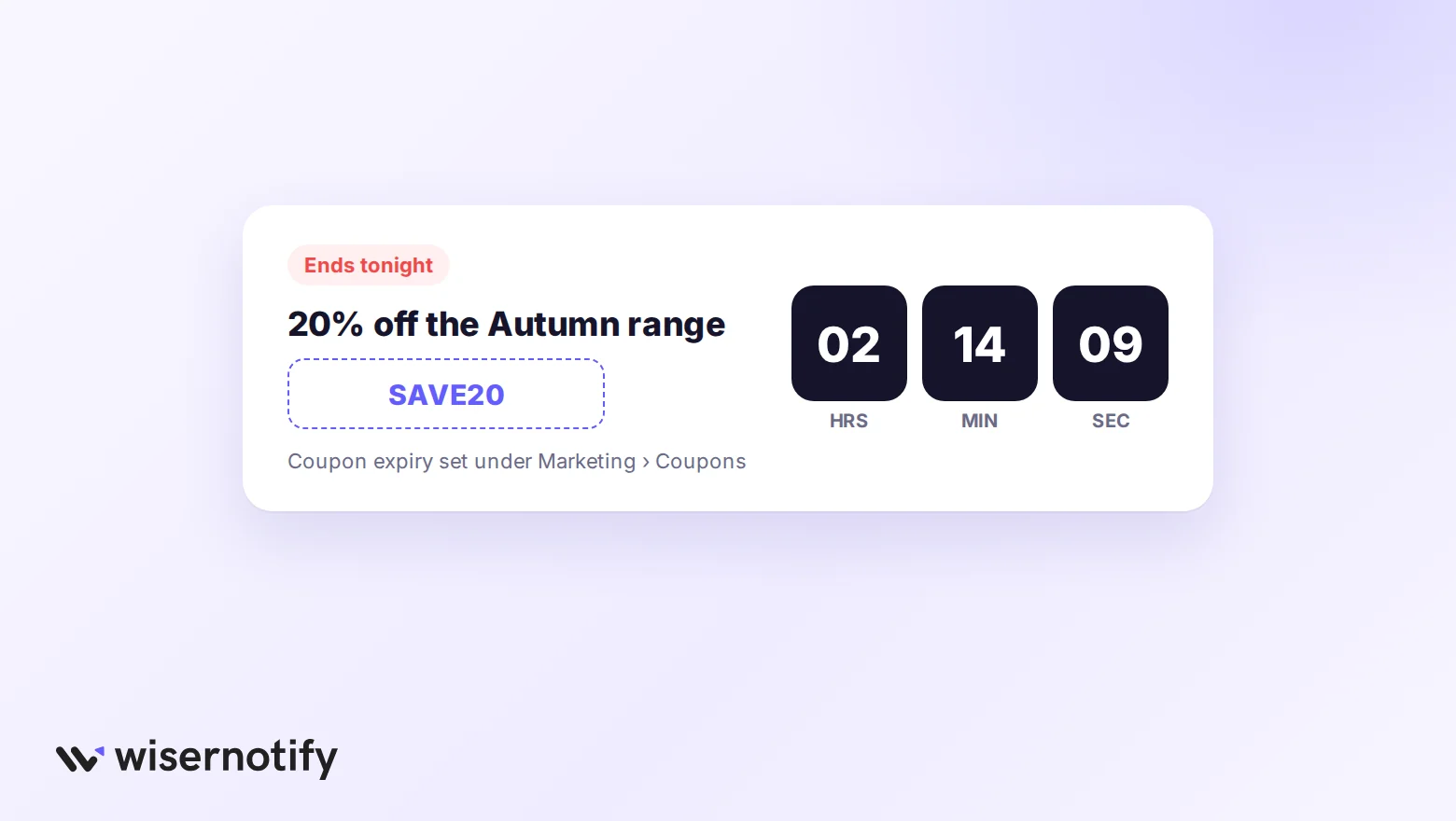 A coupon with no end date gets saved for later, and later rarely comes.
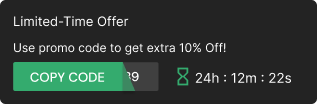
Create the coupon under Marketing › Coupons with an expiry, show the deadline with a countdown, and end it when you said you would. A timer that resets teaches shoppers to ignore the next one.
Here’s how to add a countdown timer to WooCommerce.
Build urgency
Add floating offers with countdown timer & coupon code.
18. Give Buyers a Referral Code
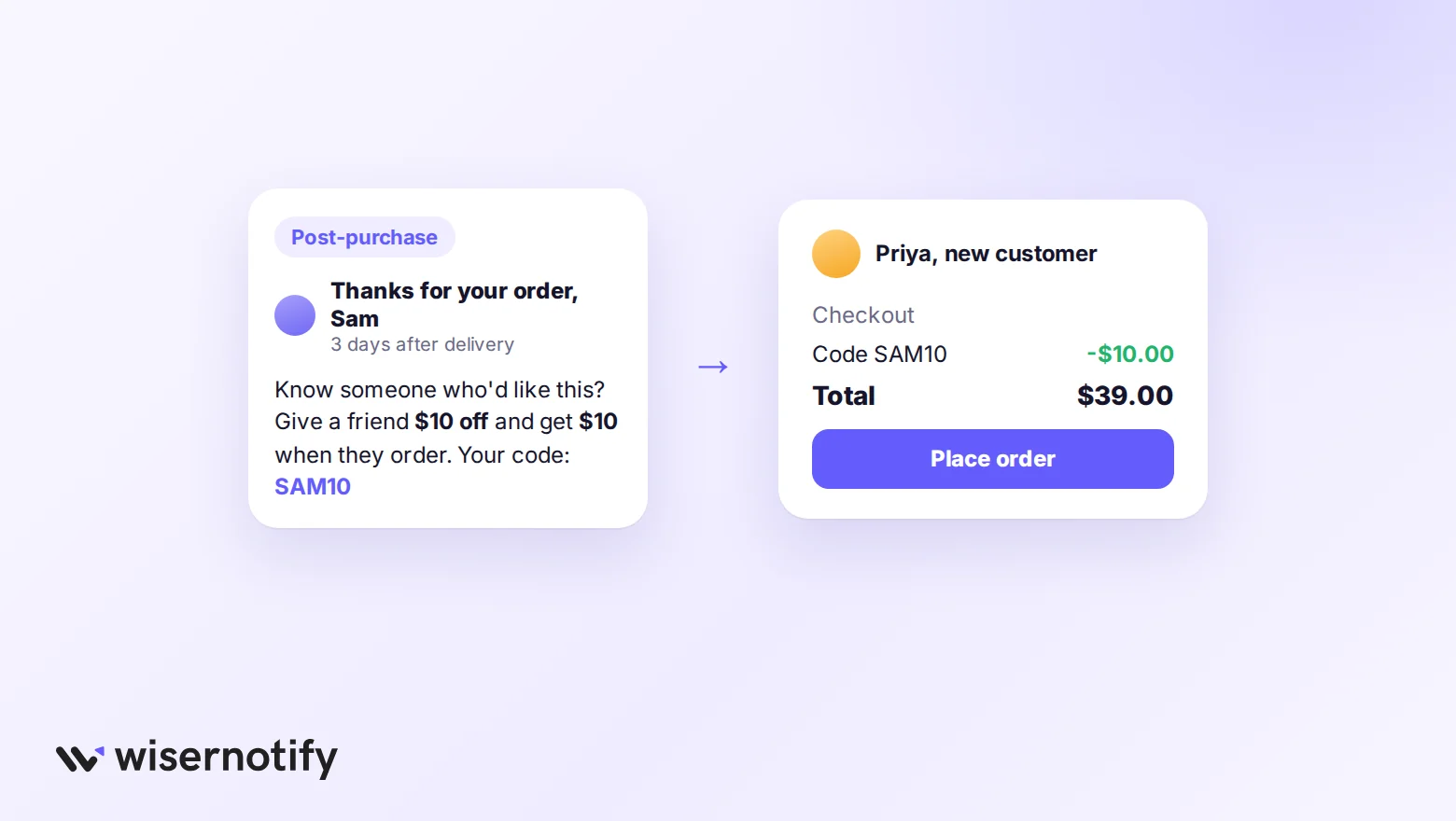 A customer who hands a code to a friend sends you a buyer who already half trusts you.
Put the code in the post-purchase email, give both sides something small, and keep it simple enough to explain in one line.
Check Your Numbers Every Month
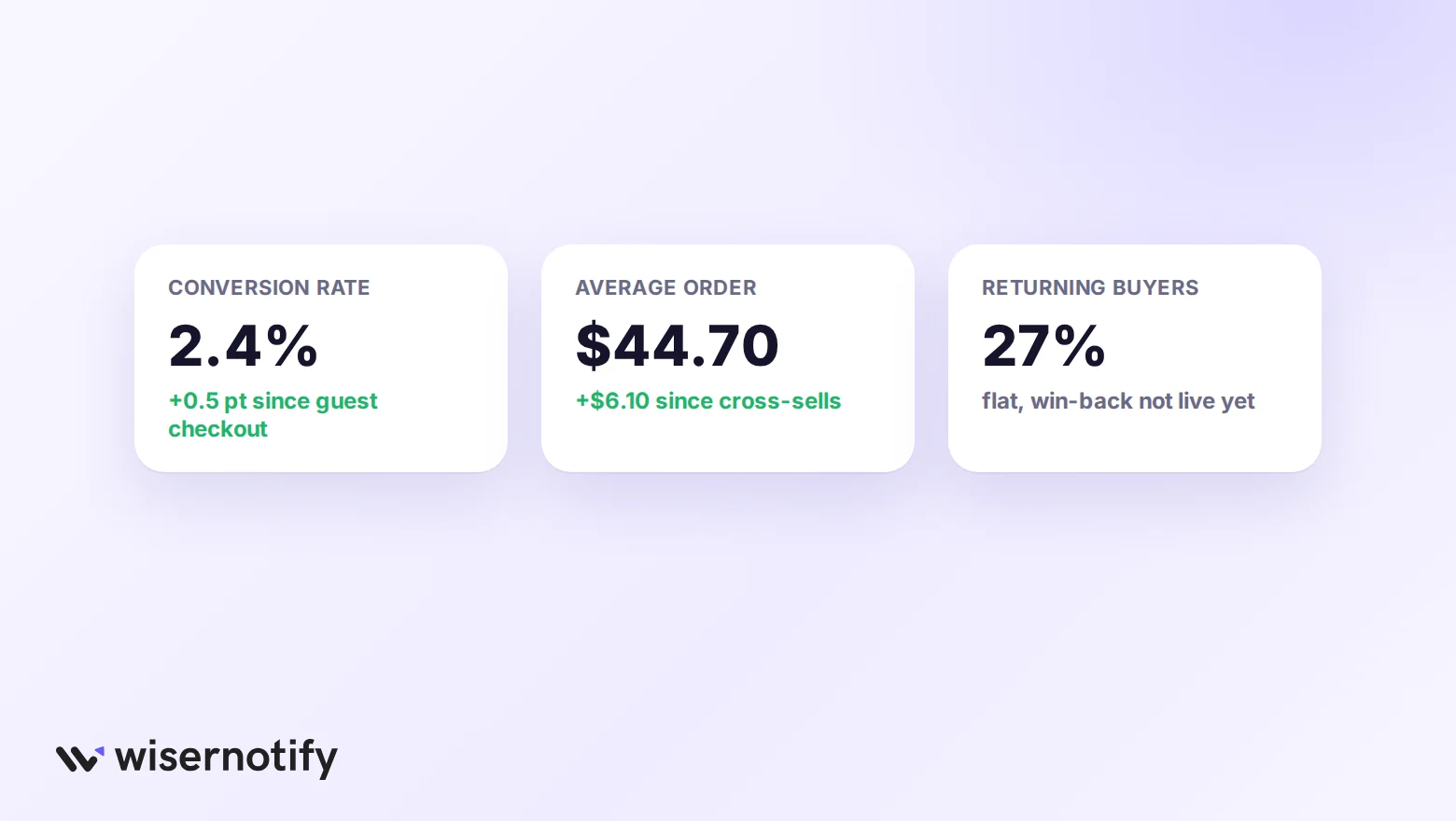 Change three things in one week and you’ll never know which one worked. WooCommerce Analytics gives you orders and average order value, and your site analytics gives you visits, which is enough for three numbers.
Conversion rate moves when checkout gets easier. Average order value moves when cross-sells and bundles work. Returning customer rate moves when the emails do their job.
One change, a few weeks, a comparison. Keep it or roll it back, then take the next one.
Wrap Up
If you only do the first five, you’ll get most of what this list can give you. Guest checkout alone is a ten-minute change.
Start with the stage where you lose the most shoppers, measure it, and work down the list from there.
Frequently Asked Questions
What is the fastest way to increase WooCommerce sales?
Fix checkout. Guest checkout, fewer fields, wallet payments and shipping costs shown early recover buyers who already wanted the product.
Which WooCommerce sales strategies matter most?
Five do most of the work: frictionless checkout, shipping shown early, three automated emails, proof on the product page, and cross-sells with order bumps.
Does WooCommerce have built-in upsells?
Yes. Each product has Upsells and Cross-sells fields under Product data, Linked Products.
Does WooCommerce send abandoned cart emails?
Not on its own. An email marketing plugin adds cart, welcome and post-purchase flows.
How do I know which changes are working?
Check WooCommerce Analytics each month and change one thing at a time.

Krunal Vaghasiya is a marketing tech expert who boosts e-commerce conversion rates with automated social proof and FOMO strategies. He loves to keep posting insightful posts on online marketing software, marketing automations, and improving conversion rates.




 Capterra