
How to Convert Leads into Customers (16 Ways)
Most businesses do not have a lead problem. They have a follow-up problem. The leads come in, sit in an inbox for a day, and by the time somebody rings, the person has already spoken to two competitors.
About five in a hundred leads turn into customers. The firms that beat that are rarely better at pitching. They answer faster and they keep going for longer.
Below is what a normal conversion rate looks like, sixteen ways to raise it, and what to do about phone enquiries and marketing leads.
How Many Leads Turn into Customers
The average sits at roughly five percent in the latest tracked data. On its own that is not much use, because the number moves a lot depending on where the lead came from.
- Referrals convert best. Somebody already told them you were good, and nothing you send in an email beats that.
- Inbound beats outbound. Someone who filled in your form has a problem today. Someone you emailed cold does not.
- Content downloads convert worst. Wanting a free PDF is not the same as wanting your product, and treating both alike is why sales teams stop trusting marketing.
- Paid sits in the middle, and depends on how well the ad matched the page.
So the question is not whether five percent is good. It is what each source converts at, and which one should get more of your money. Only 22 percent of companies say they are happy with their conversion rates, so most are not looking at it that way. Our customer acquisition examples show what the good ones do differently.
One thing worth knowing first. Firms that follow up properly get around 50 percent more sales-ready leads for about a third less money, and those leads bring in roughly 20 percent more opportunities than the ones nobody chases.
Lead Conversion Benchmarks
Two sets of numbers decide whether your rate is a problem: what your industry converts at, and what response time does to the odds. Both tables name the primary study and its year, because most figures quoted around the web are these same studies relabelled.
| Industry | Average lead conversion rate |
|---|---|
| All industries (13 tracked) | 5.13% |
| Automotive | 7.9% |
| Legal | 7.9% |
| Software | 7.6% |
| Education | 6.3% |
| Finance | 6.3% |
| Marketing and advertising | 6.2% |
| Professional services | 6.1% |
| Construction and engineering | 4.9% |
| Beauty and cosmetic | 3.5% |
| Real estate | 2.8% |
| Retail and ecommerce | 2.4% |
| Health and social care | 2.3% |
| Travel | 1.9% |
Source: Ruler Analytics, Conversion Rate Benchmarks 2026, 110 million sessions and 5 million conversions tracked. Their earlier reports put the average at 2.9%, which is the figure most older articles still quote.
| Response time | Effect on the lead | Study |
|---|---|---|
| Within 5 minutes vs 30 minutes | 21 times more likely to qualify the lead | Lead Response Management Study |
| After the first hour | Odds of reaching the lead fall more than 10 times; odds of qualifying fall 6 times | Lead Response Management Study |
| Within an hour vs later | About 7 times as likely to qualify the lead | Harvard Business Review, 2011 (2,241 companies) |
| How companies respond in practice | 37% reply within an hour; 23% never reply | Harvard Business Review, 2011 |
Sources: Lead Response Management Study and The Short Life of Online Sales Leads (HBR). Both are from 2011 and nobody has run a study that size since, so treat the multipliers as direction rather than precision. The gap between five minutes and a day is real; the exact multiple is not.
Ways to Convert Leads into Customers
Sixteen of them, roughly in order of what they are worth.
1. The first five minutes decide it
A lead answered within minutes converts far better than the same lead answered the next morning. Not a little better. Several times better.
The reason is plain: they filled in three forms, not one. Whoever rings first gets the conversation, and everyone after that is arguing with a decision they have half made already.
- Alert somebody straight away, not on a daily digest.
- Keep one person on call in working hours, even if it is a rota.
- Auto-reply that says when, if you truly cannot answer at once.
If you only fix one thing on this page, fix this one.
2. Most people give up after two tries
One call and one email is not following up. Most deals that close at all close after several attempts, and most businesses stop well before that.
Six to eight touches over a fortnight, across email, phone and one social message. Write the sequence down so it happens whether or not anybody remembers.
We have mapped the whole run in increasing sales funnel conversions.
3. Know which customer you are talking to

A general pitch converts badly because it answers nobody’s actual question. The firms that do well know what problem brought each kind of lead to them.
Two or three real customer types, written down, with the objection each one raises.
Then listen on the call instead of reciting, because the thing they say unprompted is usually the thing that closes it. That is also the groundwork for any website personalisation worth doing.
4. Qualify before you chase
Chasing everyone equally means your best leads wait while somebody works a time-waster. Score them on fit and on what they did, not on how keen they sounded.
Budget, timing and whether they can sign anything off. Someone who opened four emails and looked at pricing twice beats someone who grabbed a free PDF and vanished. Increasing conversion rate in sales takes it further.
5. Chase the ones who nearly bought

Somebody who got to your pricing page and left beats any cold audience you can buy, and they have not decided yet.
Run those separately. Send the ad to the page they left rather than the homepage, and answer the thing that stopped them instead of repeating the offer. The cart abandonment statistics show how much of this you can get back.
6. Your form asks too much
Every extra field costs you leads, and most forms ask for things nobody needs until later.
Name, email, one question that tells you if they are a fit. Company size and phone number can wait for the reply.
The rest of the page is covered in building a page that converts, and the landing page statistics put numbers on what each field costs.
7. Answer while they are still on the site

A question nobody answers is a lead gone. Chat catches the people who would never have filled in a form at all.
Use a bot for the questions you get every day, and put a person on it the moment somebody asks about price or timing.
A bot you cannot get past loses you more than it saves. The same goes for exit intent popups, which catch the ones already reaching for the tab.
8. Nobody wants to be your first customer
A lead choosing between you and two others wants a sign that other people picked you and were glad they did.
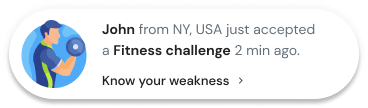
- Recent signups or purchases, taken straight from your dashboard.
- Reviews with the outcome, not “great service” but what changed for them.
- Names, photos and job titles on testimonials, because an anonymous quote proves nothing.
Our roundup of social proof marketing has the formats, the testimonial examples show what a usable quote looks like, and the social proof statistics cover why they move a decision.
Build trust & FOMO
Highlight real-time activities like reviews, sales & sign-ups.

9. A real deadline moves people who stall
Most stalled leads are not saying no. They are saying not today, and not today turns into never unless something makes them act.
A price that does change, a course that starts, an offer that ends. Real ones work and made-up ones get spotted, especially by somebody comparing you against two competitors. There is more on where the line sits in scarcity marketing tactics.
10. Your CRM is where leads go to die

Most lost leads are not lost to a competitor. They are lost because nobody followed up, and nobody followed up because nobody knew it was their job.
- A named owner on every lead. Not the team. A person.
- A next step with a date on it. “Follow up soon” is not a next step.
- An alert when it goes quiet. Seven days with nothing should shout at somebody.
If your pipeline relies on people remembering, it will fall over in the busy weeks. The same discipline is what makes customer retention analytics worth anything.
11. Automate the chasing, not the conversation
Reminders, sequences and routing should run themselves. The reply itself should not read like they did.
Automate what happens when nothing happens: a nudge on day three, a different one on day seven, a handover if it goes cold.
Then write the messages like somebody who read their enquiry. The conversion rate optimisation tools roundup covers what handles which part.
12. Reply where they messaged you
Some people will never pick up the phone but will answer a message in ten seconds. Meeting them where they are works better than making them come to you.
WhatsApp, LinkedIn, text, whatever they used first. Reply there rather than moving them to email, which is where enquiries go quiet.
It is the same thinking behind good customer experience, which is mostly just being easy to deal with.
13. Content should answer the objection
Almost all content is written to bring leads in and almost none is written to close them. That is where deals stall.
- A comparison page, because they are already weighing you up whether you help or not.
- A straight answer on pricing, a range at the very least.
- A case study from somebody like them, same size, same problem.
Send those in the follow-up instead of hoping the lead finds them.
14. Email works when you split the list
Sending everyone the same thing teaches people to ignore you, and the unsubscribes cost more than the send.
Split by what they came for and how far they got. Somebody who read the pricing page needs a different email from somebody who grabbed a checklist. Social proof in email marketing has the sequencing.
15. Borrowed trust beats advertising

A word from somebody a lead already follows sounds like an opinion. The same words in an advert sound like an advert.
Smaller accounts with a real audience in your line of work cost less and get believed more. The user generated content statistics show how far that reach goes.

Boost Conversion Instantly
Add Social Proof & Urgency to your website
16. Watch response time, not just the rate
A conversion rate on its own hides where the leak is. Three numbers together will show you.
- How long you take to answer. Measured in minutes, not days.
- How many times you followed up before giving up on a lead.
- Close rate per source, so you can see which channel is worth the money.
If the rate is low and you are answering a day late, you already know the answer, and no amount of testing headlines will change it. A conversion rate optimisation audit will find the rest.
Ways to Win More Phone Inquiries
Phone leads convert better than any web form and get handled worse than any other channel, because nobody owns them.
- Answer inside three rings, in working hours. A missed call from a lead is rarely repeated. They ring the next result instead.
- Ring back the same day, and text if they do not pick up. A text gets read when a voicemail does not.
- Ask what prompted the call. It tells you the objection and the source in one question.
- Book the next step on the call. “I will send some details” is where phone leads die.
- Log it like a web lead. Untracked calls make your best channel look like your worst.
If most of your enquiries arrive this way, lead generation covers where to point the rest of the budget.
Ways to Hand Marketing Leads to Sales
Marketing counts leads, sales counts revenue, and nobody agreed what a good lead looks like. That is where most of the friction between the two teams starts.
- Write the definition down together. What has to be true before sales picks it up, in words both sides accept.
- Put a clock on it. A lead marketing worked for weeks should not sit unclaimed for two days.
- Send back the ones that miss, with the reason. That is how the definition gets better.
- Judge marketing on deals, not enquiries. Counting volume rewards whichever source produces the most useless ones.
The handover itself is worth designing, and calls to action covers what the lead should be asked to do at each step.
How WiserNotify Helps You Convert More Leads
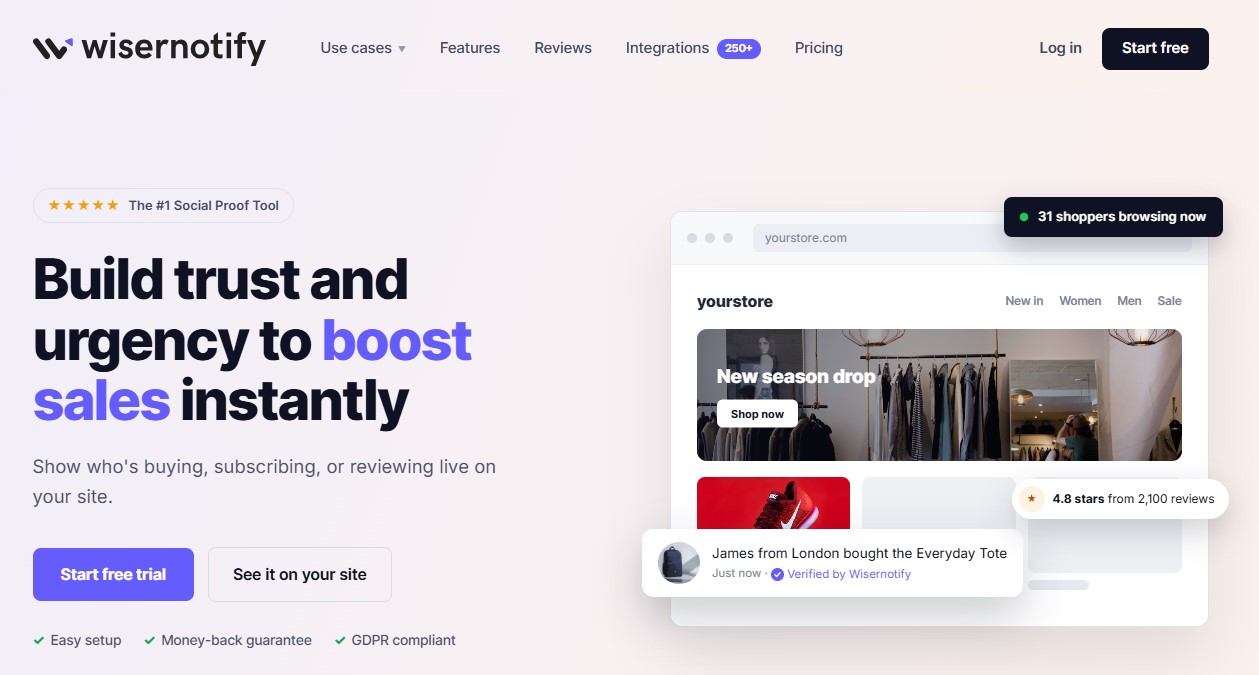
Everything above starts once the enquiry lands. The hours before that are the problem, when somebody is on your site, on two competitors’ sites, and nobody has spoken to anybody yet.
There is no one on the desk at half past nine at night.
WiserNotify fills those hours with your own data.
- Signup and purchase notifications. Shows that other people are signing up while this one is still reading.
- Live visitor notifications. How many are on the page now, with a floor so quiet days stay quiet.
- Recent activity counters. Signups this week, over a window you choose, which keeps somebody warm while your reply sits in a queue.
- Review notifications and the review feed widget. Your Google and Facebook ratings next to the form rather than on a testimonials page nobody visits.
- WhatsApp chat widget. For the ones who would rather type than talk.
- Countdown timer widget and announcement bar. For an offer that does end, and for saying so on every page.
- Display and trigger rules. By page, device and whether they have been before, so a lead waiting on your callback sees something different.
- A/B testing and reports. Impressions, clicks and hovers per notification, so you can tell which ones bring leads in.
It pulls from your own system through 250-plus integrations, so a quiet week looks like a quiet week.
Build trust & FOMO
Highlight real-time activities like reviews, sales & sign-ups.

Wrap Up
Answer faster, follow up more times than feels comfortable, and give every lead an owner with a dated next step. Those three are worth more than the other thirteen together.
Then measure each channel on its own. One blended number will not tell you where the money should go.
Also check: How to increase checkout conversion
Related Guides
- Online review statistics
- Product recommendation examples
- Creating urgency in sales
- Reducing shopping cart abandonment
Frequently Asked Questions
What are quick ways to generate leads for my business?
Quick ways to generate leads include:
- Responding to leads quickly
- Personalizing the communication
- Understand your target audience, their preferences, behavior, and sales stage.
- Using social proof, FOMO, and a sense of urgency to build trust
- Optimizing website, landing pages, and social media posts with clear and compelling CTAs
Why are leads not getting converted for my business?
Leads may not get converted due to ineffective nurturing, poor strategies, lack of trust, poor communication, and unclear value propositions. It’s essential to make sure you work on each factor, optimize strategies, and A/B testing to attract potential customers.
How important is personalization in Lead conversion?
Personalization is crucial to connecting with your audience. It makes them feel valued and understood, increasing their chances of becoming loyal customers. To convert customers, offer personalized messages, offers, and experiences by understanding their behavior, funnel stage, preferences, and other factors.
How can lead conversion strategy for mobile users be optimized?
As most users use mobile devices to connect with brands, it is important to ensure your strategies are optimized for mobile users. Use responsive websites, simplify forms, and provide a seamless user experience on all devices. In addition, mobile-specific CTAs and designs should be used to optimize lead conversion for mobile users.
What are lead conversion tool and software?
Lead conversion tools are platforms or applications designed to help businesses convert leads into customers more effectively. These tools offer unique features and functionalities that streamline the lead nurturing process, optimize communication, and track interactions with leads.
Some standard tools include CRM, marketing software, chatbots, email marketing software, FOMO tools, Analytic & reporting tools, and A/B testing software.
How do I measure the effectiveness of my lead-generation strategies?
You can track different metrics, such as conversion rates, response times, lead quality, client acquisition cost, and ROI, to measure the effectiveness of your lead generation strategies. Make sure to analyze and optimize these strategies frequently to improve their effect.

Krunal Vaghasiya is a marketing tech expert who boosts e-commerce conversion rates with automated social proof and FOMO strategies. He loves to keep posting insightful posts on online marketing software, marketing automations, and improving conversion rates.




 Capterra