
Scarcity Marketing: 9 Tactics With Real Examples (2026)
Scarcity marketing gets people to buy sooner by showing that a product, price, or spot is limited. It works when the limit is real and easy to see, such as a stock count, a deadline, or a members-only window.
Most guides stop at “add a countdown timer.” The stores that do it well pick the kind of scarcity that fits what they sell, then show it where the buying decision happens.
Below are 9 scarcity tactics grouped by quantity, time, and access, each with a live example from a real brand, plus a simple way to build your own.
What Is Scarcity Marketing?
Scarcity marketing is the practice of showing shoppers that something is in short supply, available for a short time, or open to a small group, so they decide now instead of later.
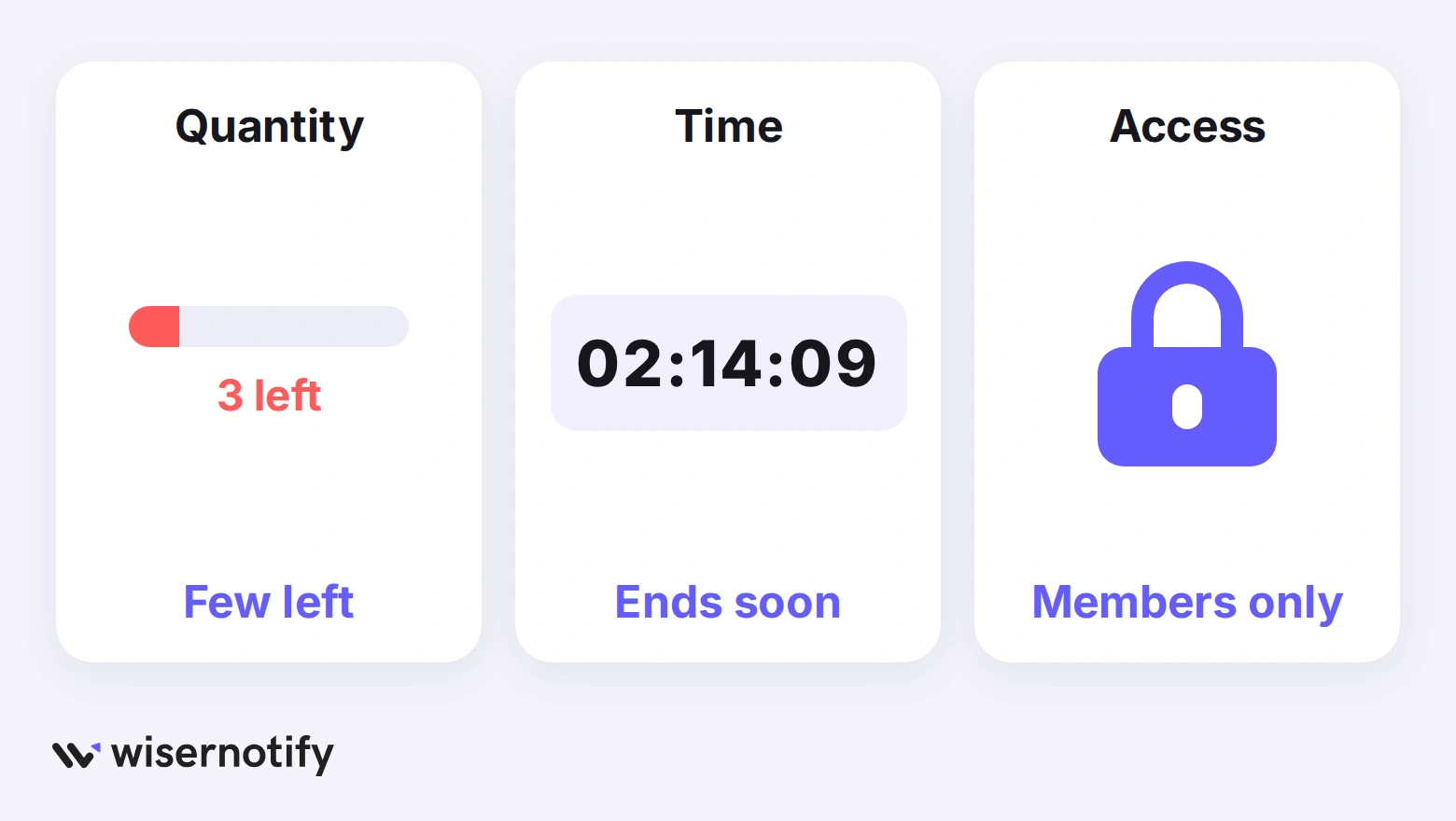
Every tactic in this guide uses one of three limits:
- Quantity: only so many units exist, like a low-stock count or a limited run.
- Time: the offer ends at a set hour or date, like a daily deal or a seasonal product.
- Access: only some people can buy, like members, early sign-ups, or a waitlist.
Scarcity is one lever inside FOMO marketing, which also uses urgency, exclusivity, and social proof. This guide stays on the scarcity side and goes deeper on it.
Why Does Scarcity Marketing Work?
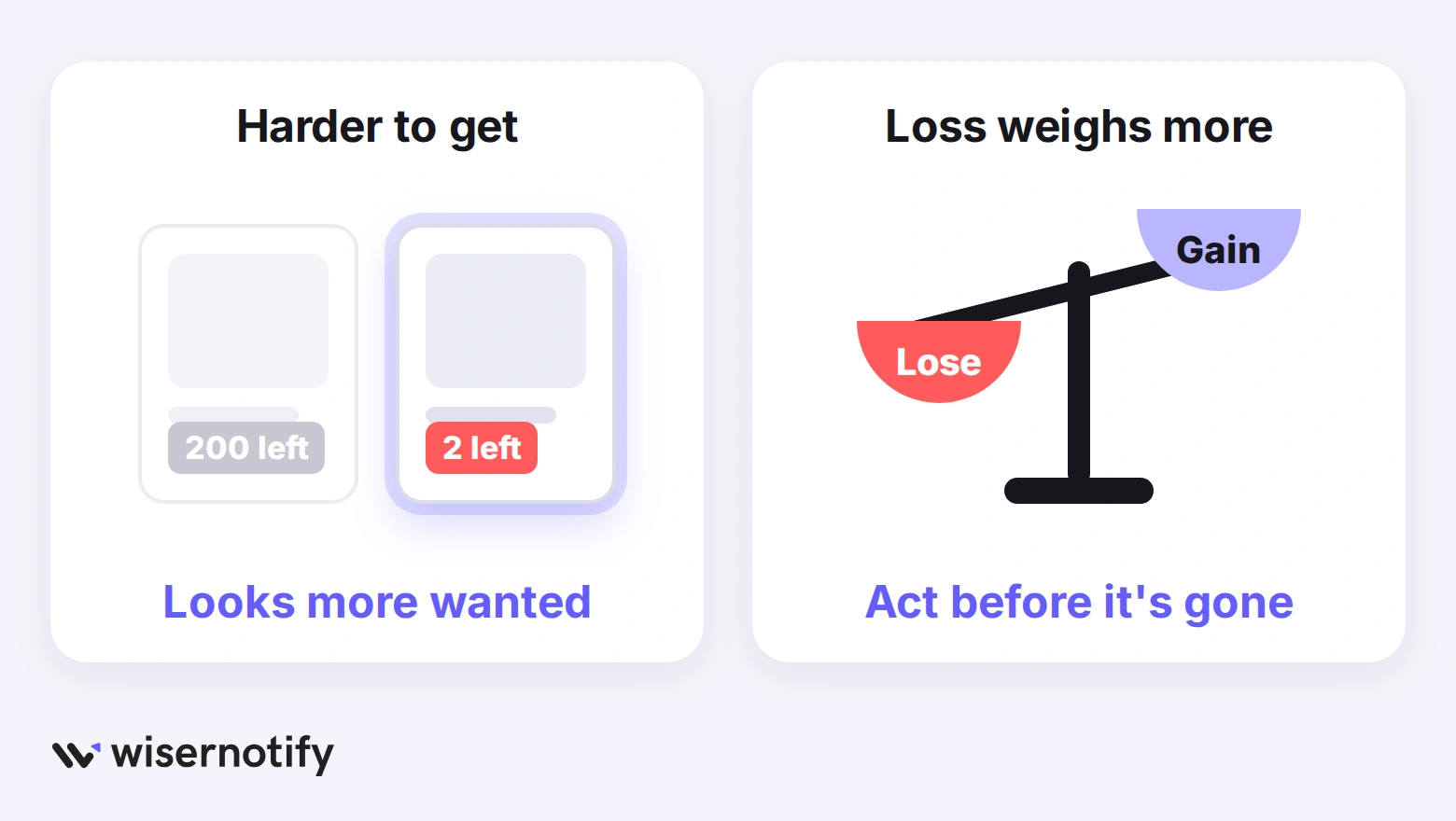
Scarcity marketing works because people value what’s harder to get and fear losing a chance more than they enjoy gaining one.
Robert Cialdini listed scarcity as one of his six principles of persuasion in Influence, and decades of studies since have backed it up.
Two forces do the work. A limit makes the product look more desirable, and the chance of losing it hurts more than the chance of gaining it pleases.
A limit caused by other buyers adds a third pull, the same one behind these herd mentality examples.
For the research and the history behind it, see our entry on the scarcity principle.
Scarcity vs Urgency: What’s the Difference?
Scarcity is a real limit on how many, how long, or who can buy. Urgency is the push to act now that the limit creates.
| Feature | Scarcity | Urgency |
|---|---|---|
| What it is | A limit on supply, time, or access | The feeling of needing to act now |
| Example | “Only 9 left in stock” | “Order in the next 2 hours” |
| Without the other | A limit nobody notices changes nothing | Pressure with no real limit loses trust |
Most tactics below use both. The strongest ones show a limit the shopper can check, and the urgency follows on its own.
9 Scarcity Tactics at a Glance
Here are all nine tactics, the limit each one uses, and the brand examples covered below.
| # | Tactic | Type | Example | Best for |
|---|---|---|---|---|
| 1 | Low-stock counters | Quantity | Amazon | Physical products with real inventory |
| 2 | Limited drops | Quantity | Kith, Nike SNKRS | Fashion, merch, small batches |
| 3 | Last-chance products | Quantity | LEGO | Discontinued colors, sizes, or sets |
| 4 | Deals that end or sell out | Time | Woot | Daily or weekly deals |
| 5 | Limited-time price cuts | Time | Uniqlo | Seasonal markdowns |
| 6 | Seasonal products | Time | Starbucks | Holiday and seasonal items |
| 7 | Members-only sale events | Access | Amazon Prime | Loyalty programs and subscriptions |
| 8 | Early-access windows | Access | AppSumo | SaaS, courses, and launches |
| 9 | Waitlists | Access | BigBadToyStore | Sold-out and pre-order items |
Quantity Scarcity Tactics
Quantity scarcity tells shoppers that the units themselves are running out. A stock count is easy to check, which makes this the most believable kind.
1. Low-Stock Counters
Amazon prints the count right under the price. A line like “Only 9 left in stock” shows up in search results and on the product page once stock runs low.
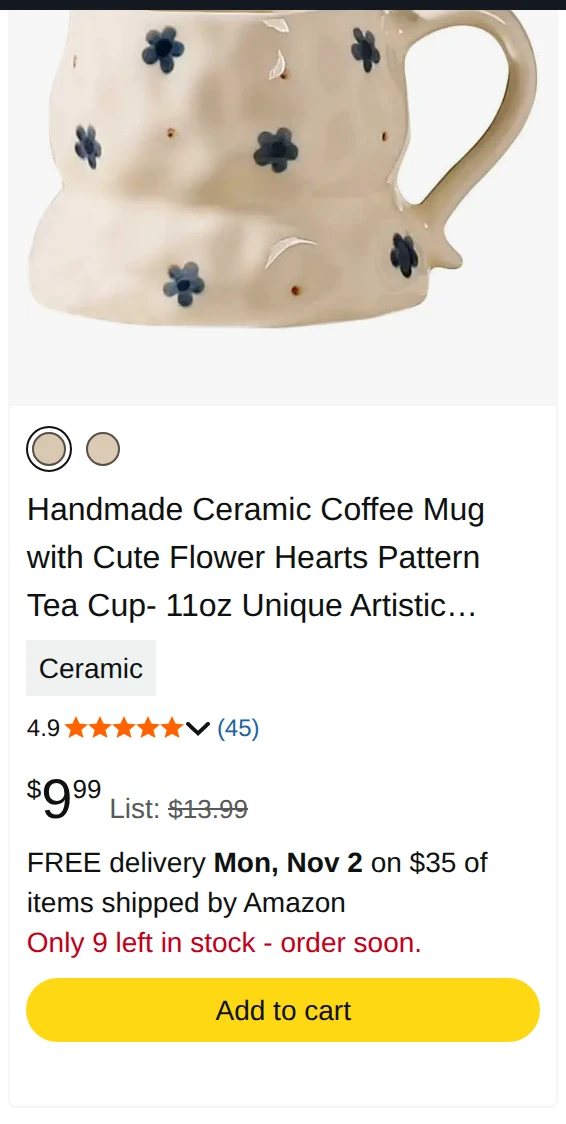
The line is plain red text, not a flashing banner, and it only appears on items that are low. That restraint is why shoppers believe it.
Copy the rule, not the color. Show a count only below a set threshold, such as 10 units, and pull it from live inventory.
2. Limited Drops
Kith turned release day into a habit. Through its Monday Program, the store puts out new products every Monday, many of them collaborations like its Kith for Salomon sneakers.
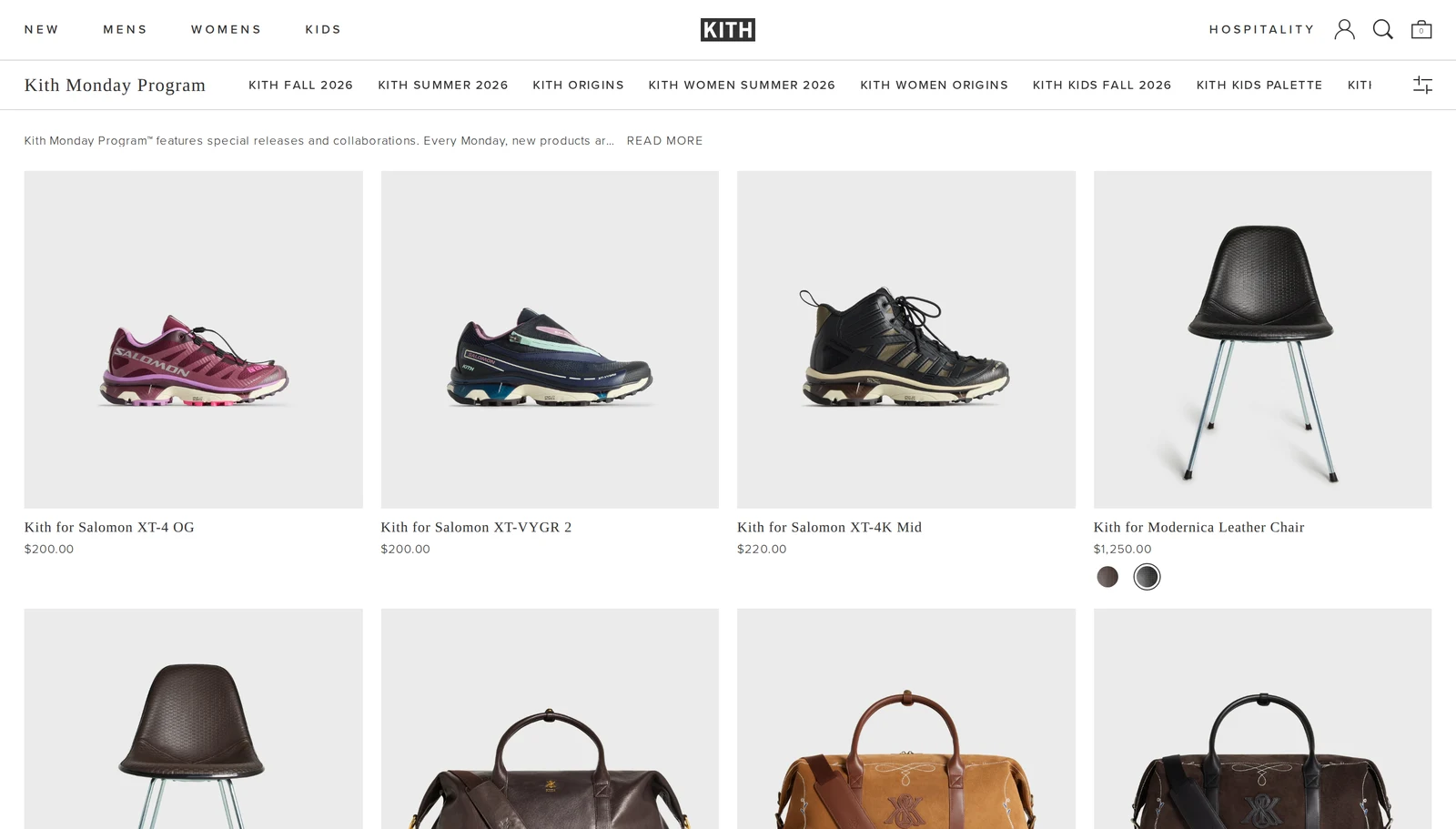
Fans know when to check, so demand stacks up before the product is even live. A small run on a fixed day does more than a big launch with no date.
Nike’s SNKRS app takes the same idea further with an Upcoming calendar. Each release, like the Nike x UGA x Outkast collection, shows its drop date weeks ahead.
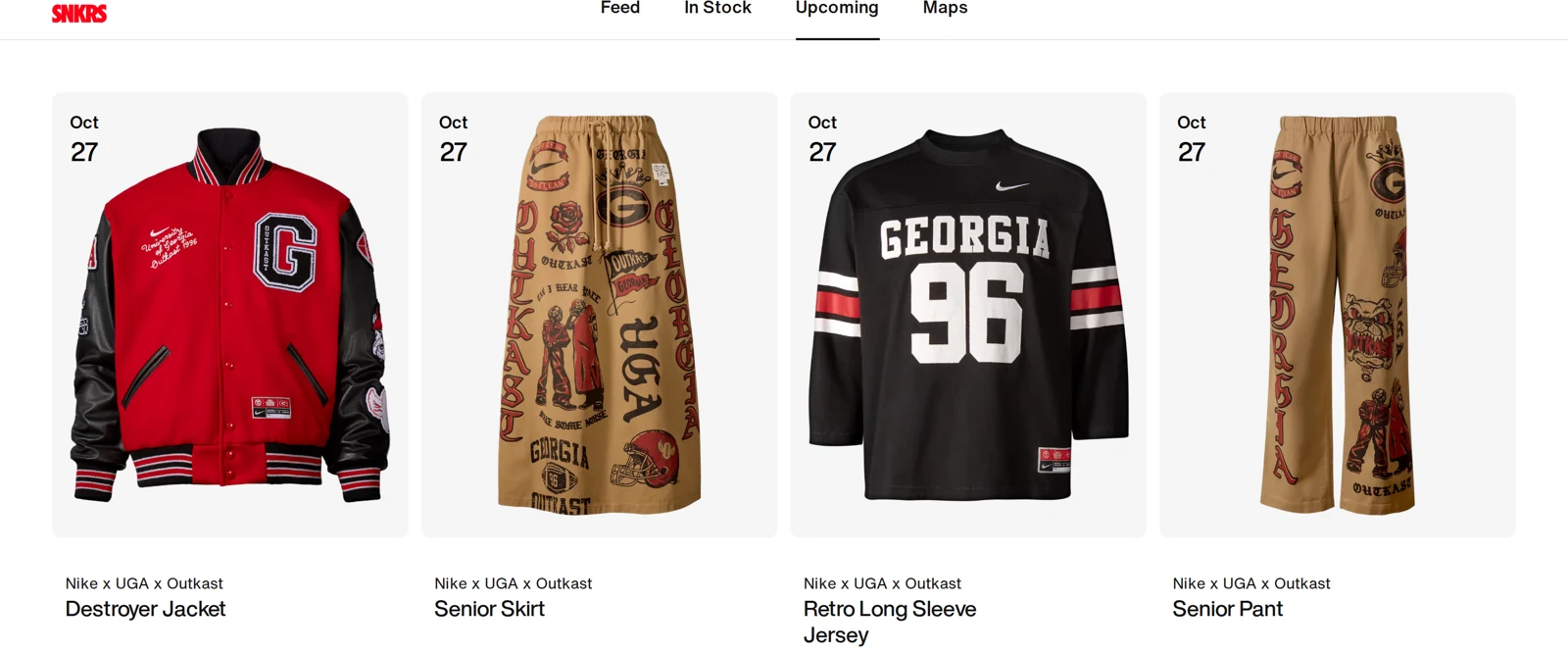
Publishing the date turns a drop into an event people plan around. A smaller store can do the same with a monthly limited batch, announced a week ahead to its email list.
3. Last-Chance Products
LEGO gathers sets that are about to stop production on a Retiring Soon page, each marked with a yellow badge.

No discount is involved. The reason to buy now is that the set won’t be made again, and collectors know retired sets rarely come back.
Any store with discontinued colors, sizes, or scents can run a Last Chance collection on the same logic.

Boost Conversion Instantly
Add Social Proof & Urgency to your website
Time Scarcity Tactics
Time scarcity puts an end date on the offer. Time limits work best when the deadline is short, specific, and the same for everyone.
4. Deals That End or Sell Out
Woot, an Amazon company, runs one Deal of the Day at a time. The deal shows “23 hours left to buy or until sold out,” so two limits run together.
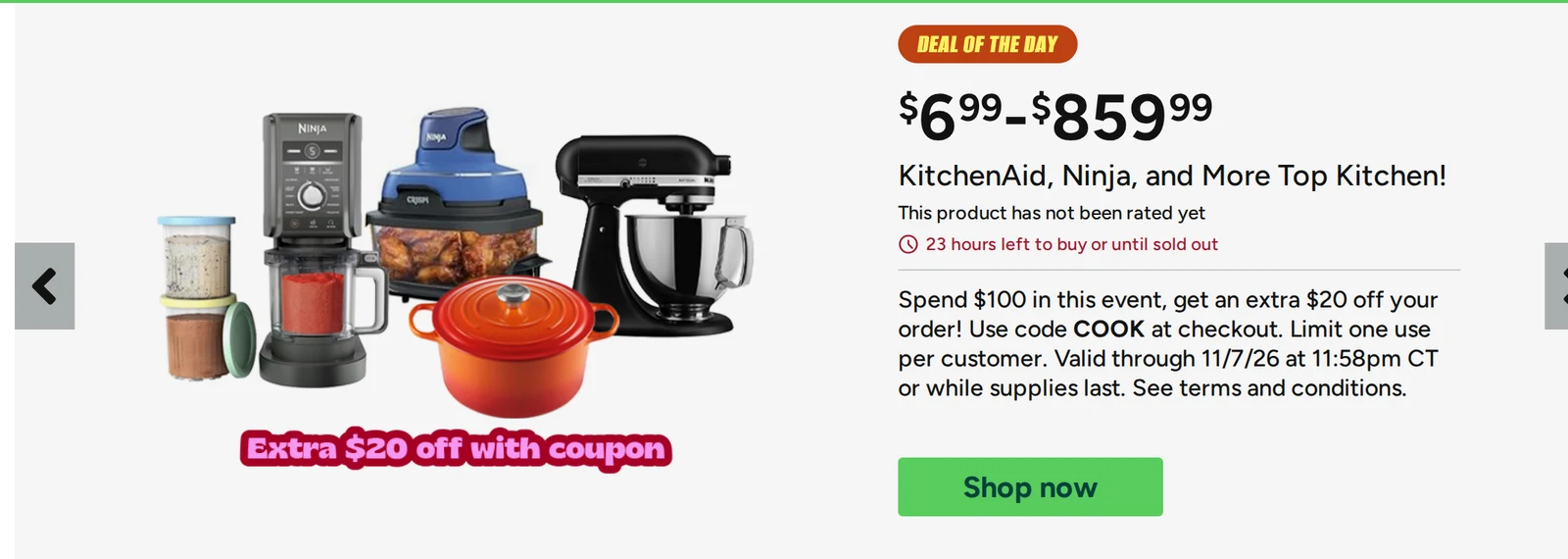
Pairing a deadline with a stock cap means shoppers can’t wait for the last hour. Whichever limit hits first ends the deal.
5. Limited-Time Price Cuts
Uniqlo keeps a Limited-Time Deals page that rotates new-season styles at special prices, “for a limited time only, while supplies last.”
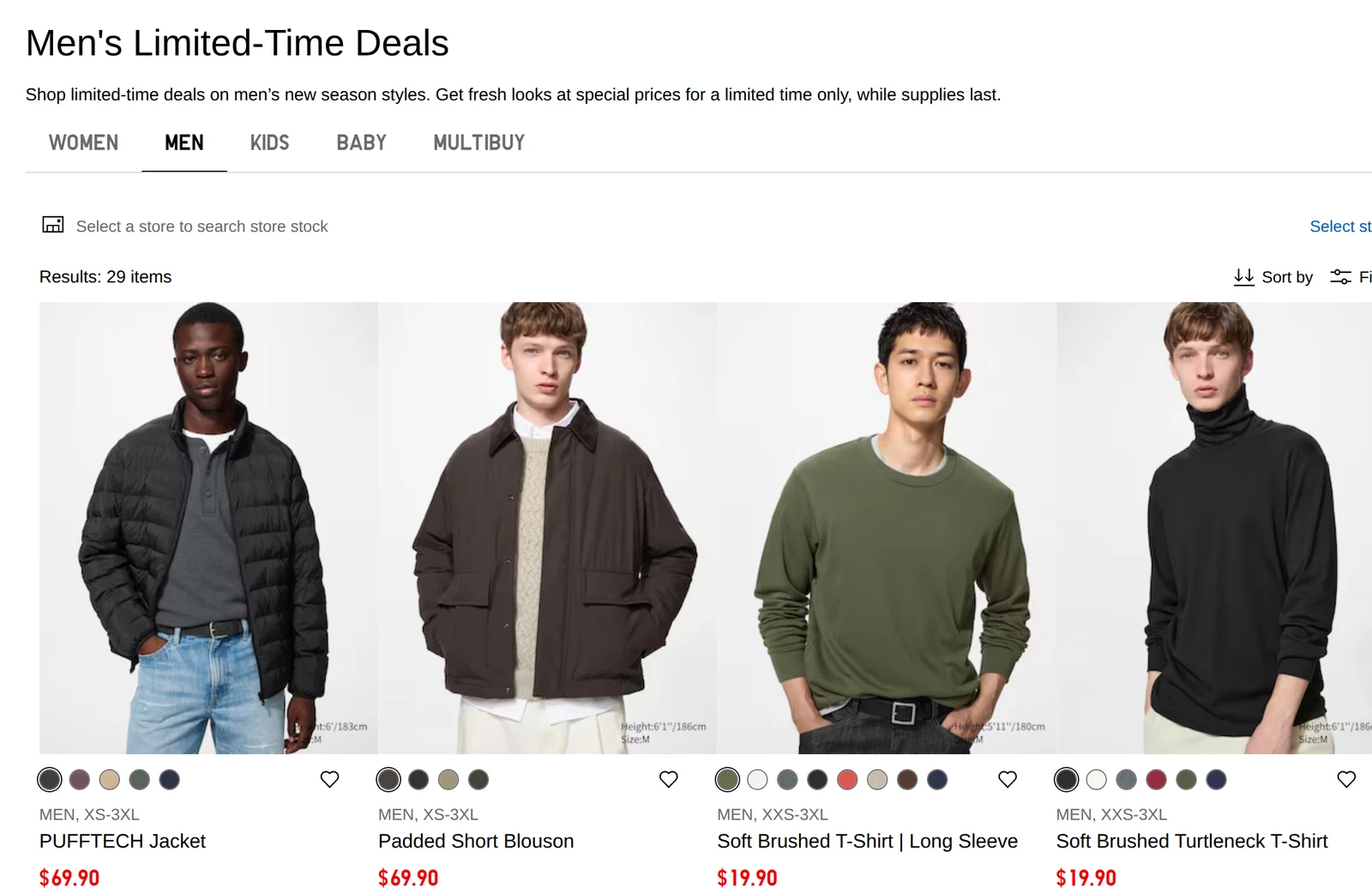
The page stays put, but the products on it change. Shoppers learn to check back, and each item still carries its own short window.
If you run timed prices, say when they end. “This week only” beats “limited time,” because shoppers can plan around a date.
6. Seasonal Products
Starbucks swaps its featured menu every season. The fall page opens with “Get your fall fix,” and this year it adds Mini Pies in Pumpkin, Pecan, and Apple Crumble.

Seasonal scarcity repeats on a calendar, so fans plan for it. Each year the return becomes its own launch.
Gift sets, holiday flavors, and summer-only products all fit here. Announce the end date as clearly as the start.
Access Scarcity Tactics
Access scarcity limits who can buy, not how many or how long. Access limits also reward loyalty and make buyers feel picked.
7. Members-Only Sale Events
Amazon holds Prime Big Deal Days every October, and the event deals are open only to Prime members. Inside the event, lightning deals carry their own timers.
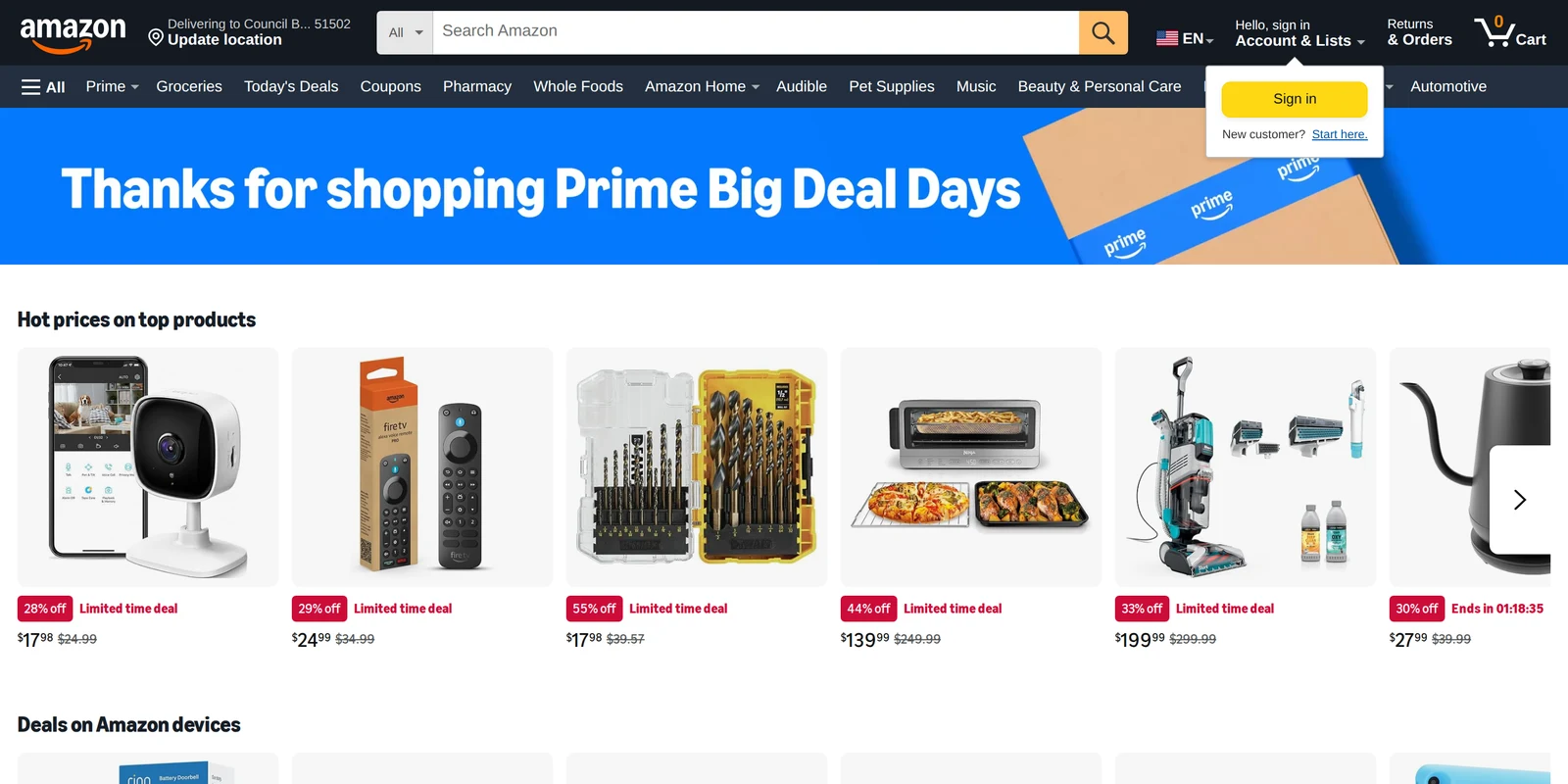
The event drives sign-ups as much as sales. Shoppers who aren’t members see what they’re missing and start a trial to get in.
For a smaller brand, a 48-hour early sale for loyalty members or past buyers works the same way.
8. Early-Access Windows
AppSumo labels software deals with timers like “Early access ends in 11 hours” and “Price increases in 2 days.”
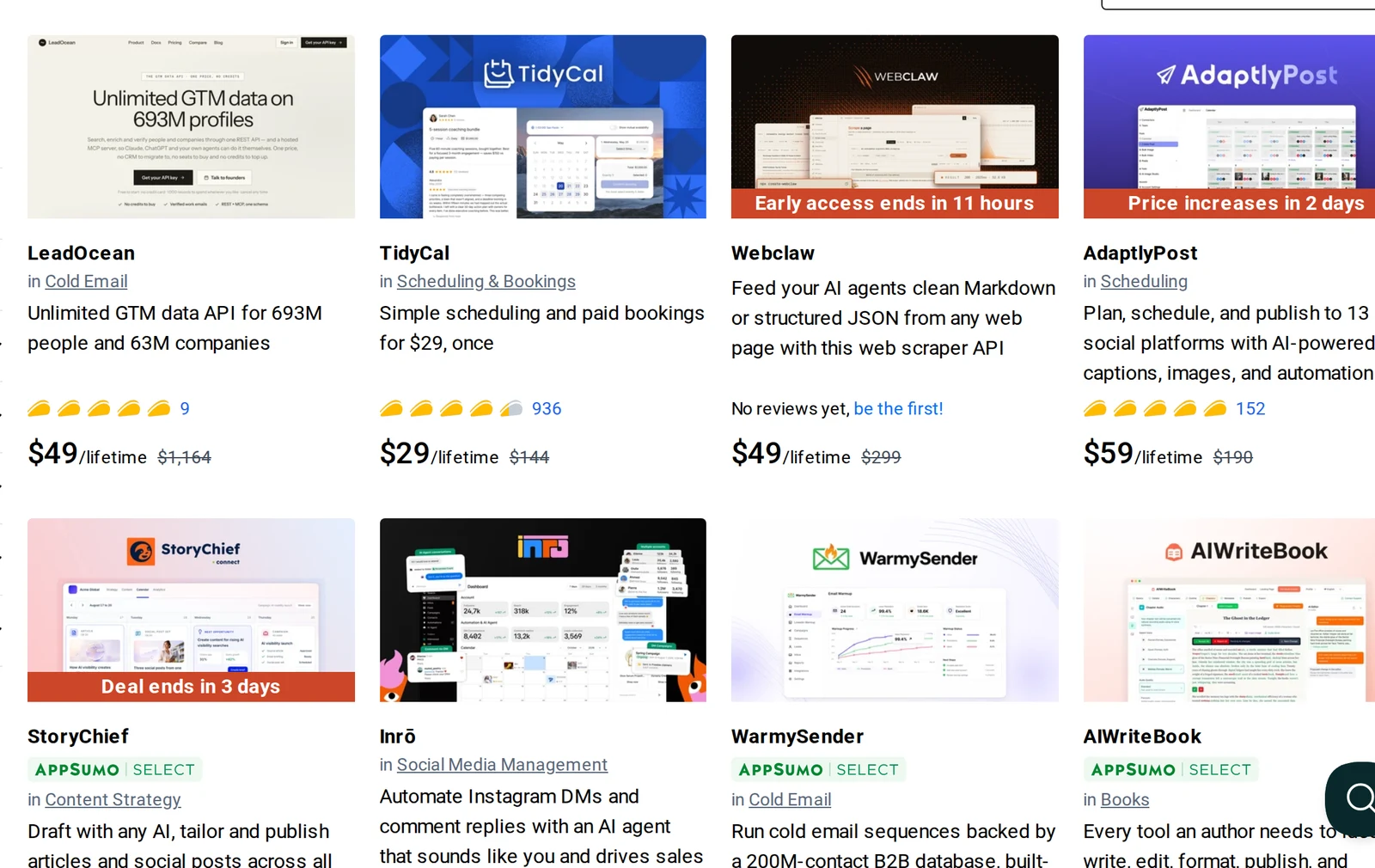
The price steps up on a known date, so early buyers get a better deal and late buyers know exactly what they missed.
This suits SaaS launches, courses, and memberships. Open a founding-member price for a set window, then raise it as promised.
9. Waitlists
When a figure sells out at BigBadToyStore, the product page swaps Add to Cart for a Join Waitlist button.
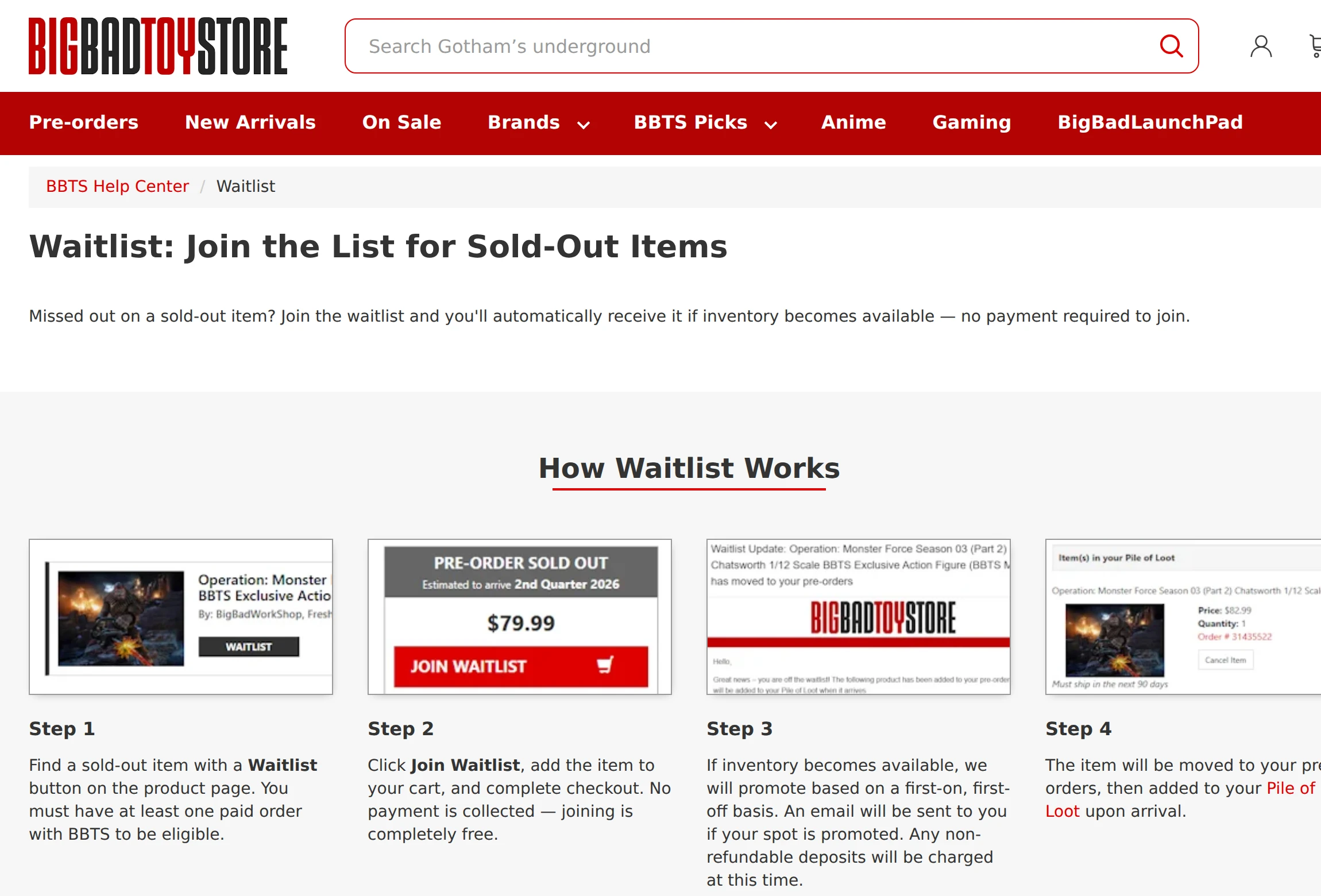
Restocks go to people in the order they joined, and nobody pays until their unit comes through. A sold-out product keeps collecting buyers instead of losing them.
A back-in-stock list on your own sold-out items captures the same demand. The restock email then carries its own scarcity.
Build trust & FOMO
Highlight real-time activities like reviews, sales & sign-ups.


How to Create a Scarcity Marketing Strategy
To create a scarcity strategy, pick one limit you can prove, set its rules before launch, show it where shoppers decide, and measure the result.
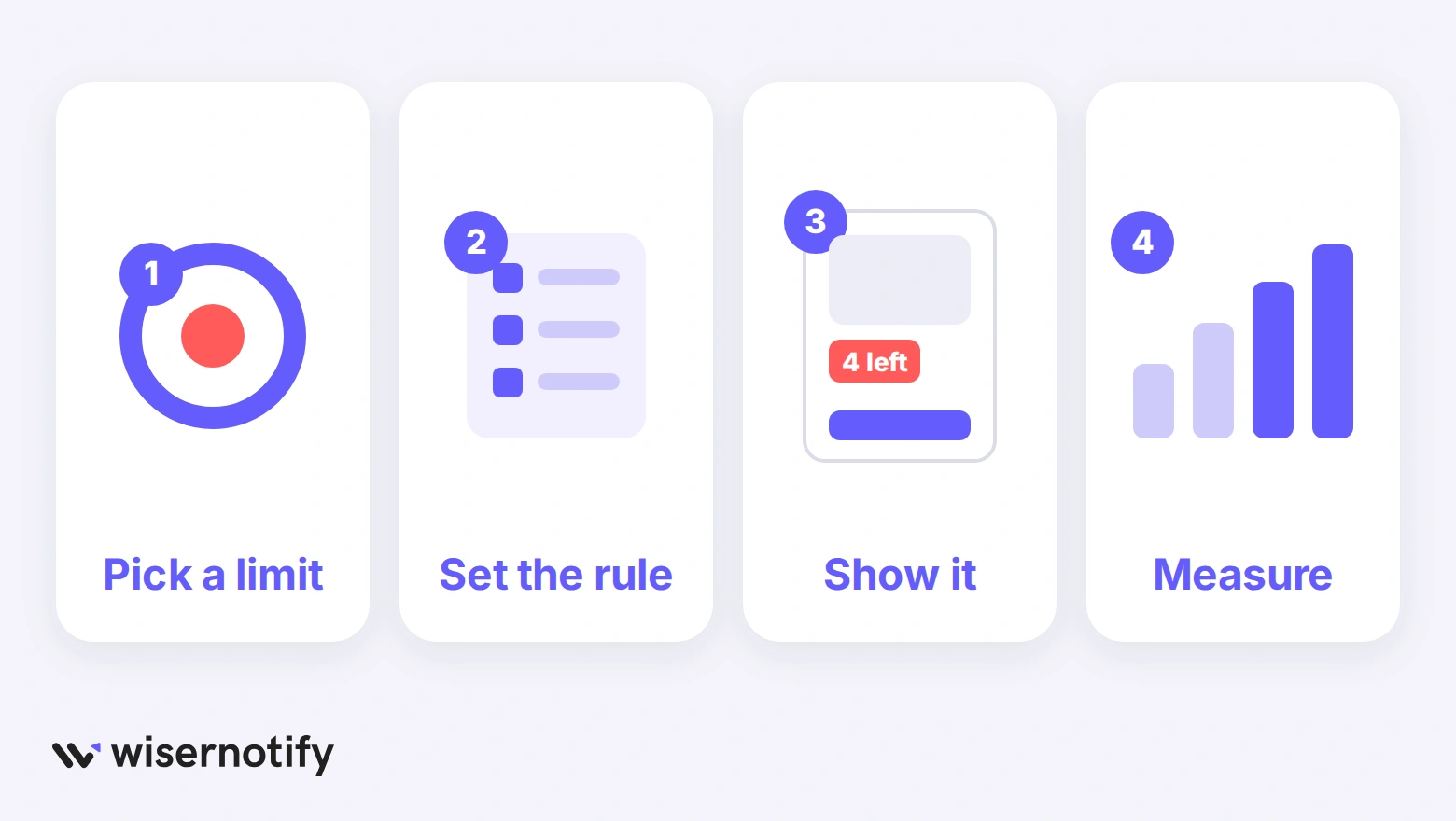
- Pick a limit you can prove. Physical stock suits a low-stock counter, a launch suits a date, and a membership suits early access.
- Set the rule before launch. Decide the stock threshold, the exact end time, or who qualifies, and write it down so nobody changes it mid-sale.
- Show it at the decision point. Put the limit next to the price or the buy button, and pair it with proof such as recent purchases.
- Measure and keep it true. Compare conversion with the limit on and off, and never restart a sale you called final.
Real Scarcity vs Fake Scarcity
Scarcity only works while shoppers believe it. Once they catch one fake limit, they stop trusting every badge on your site.
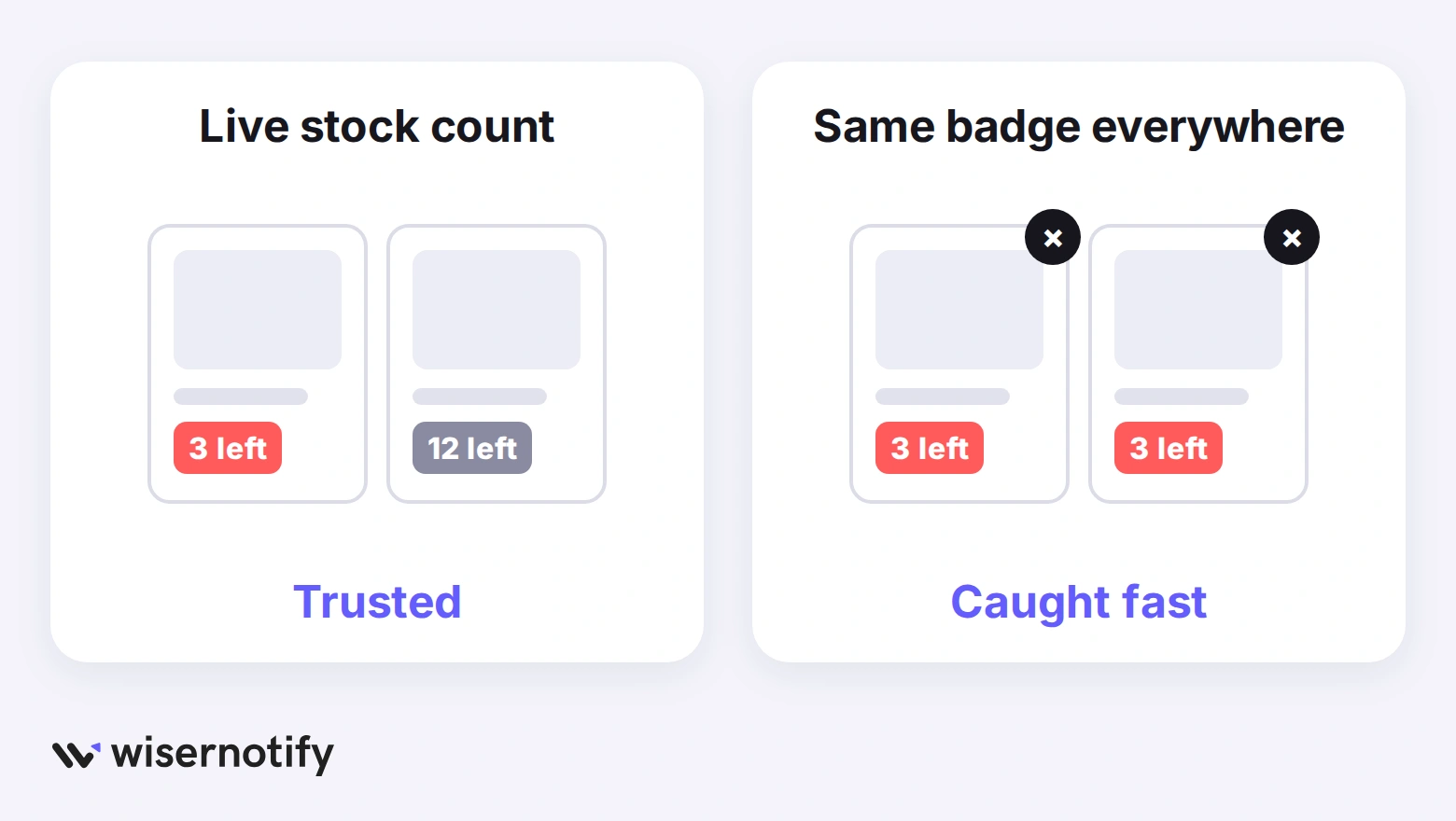
Regulators in the UK, EU, and US now treat fake urgency as misleading, and the UK can fine it directly. Four rules keep you on the right side:
- Read stock counts from inventory. Never hard-code “Only 3 left.”
- Set real end times. A deal that ends should end for everyone, at the same time.
- Don’t restart the same sale. A “final” sale that returns next week teaches shoppers to wait.
- Honor the queue. If you run a waitlist, ship in the order people joined.
Where to Show Scarcity on Your Store
Put the limit where the decision happens. A deadline buried in the footer does nothing.
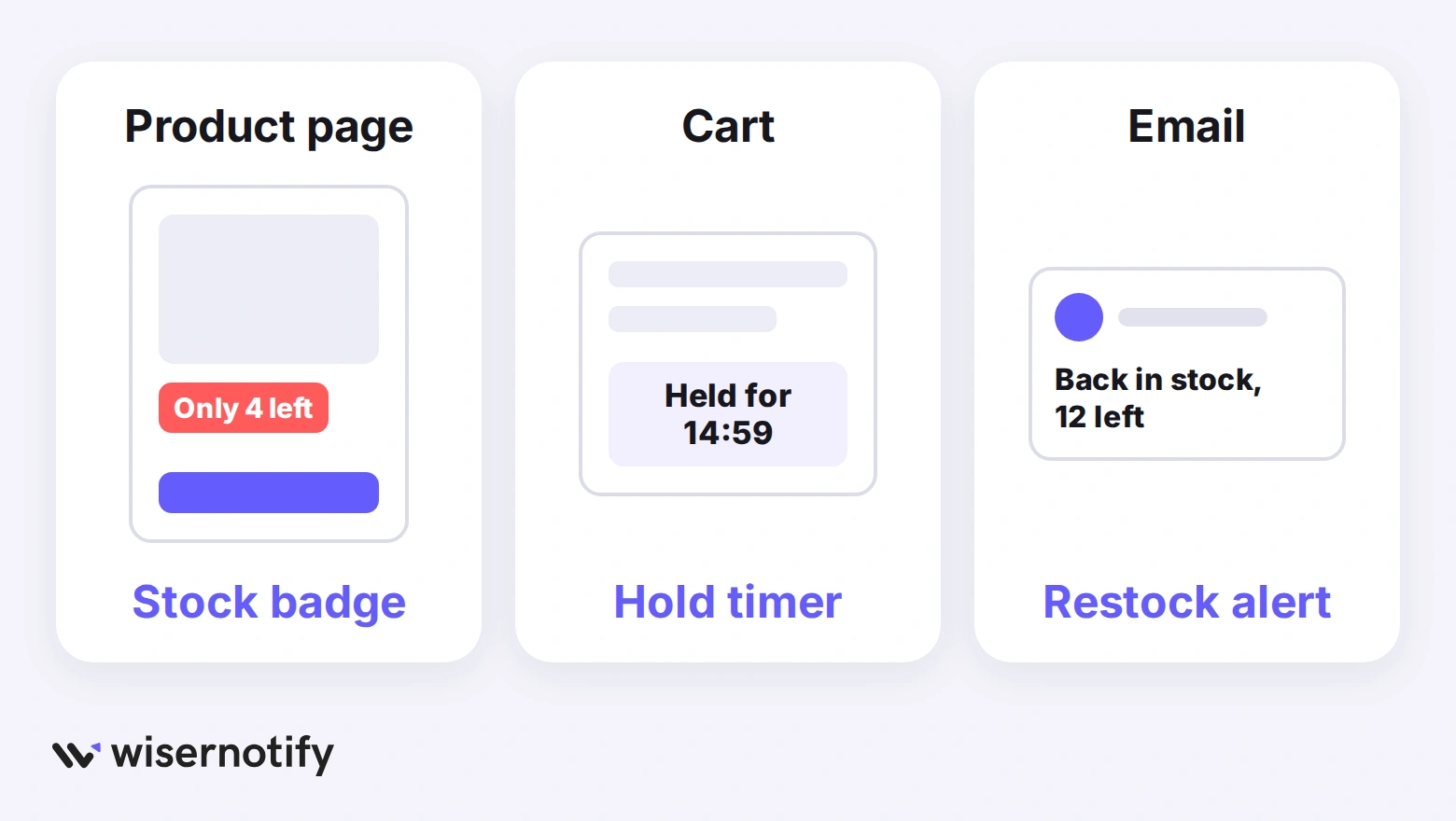
- Product pages: a stock badge near the price and the add-to-cart button.
- Cart: a hold timer, but only if you hold the item while the timer runs.
- Email and SMS: restock alerts and last-chance reminders with the real end time.
- Site-wide: an announcement bar for sales that end on a set date.
For wording ideas, our guide to limited-time offers shows how other brands phrase the deadline.
Scarcity also pairs well with the other urgency methods in our guide on how to create urgency in sales.
How to Add Scarcity With WiserNotify
WiserNotify adds countdown timers, low-stock alerts, and announcement bars to your site with one pixel, so you can show a limit without touching your theme.
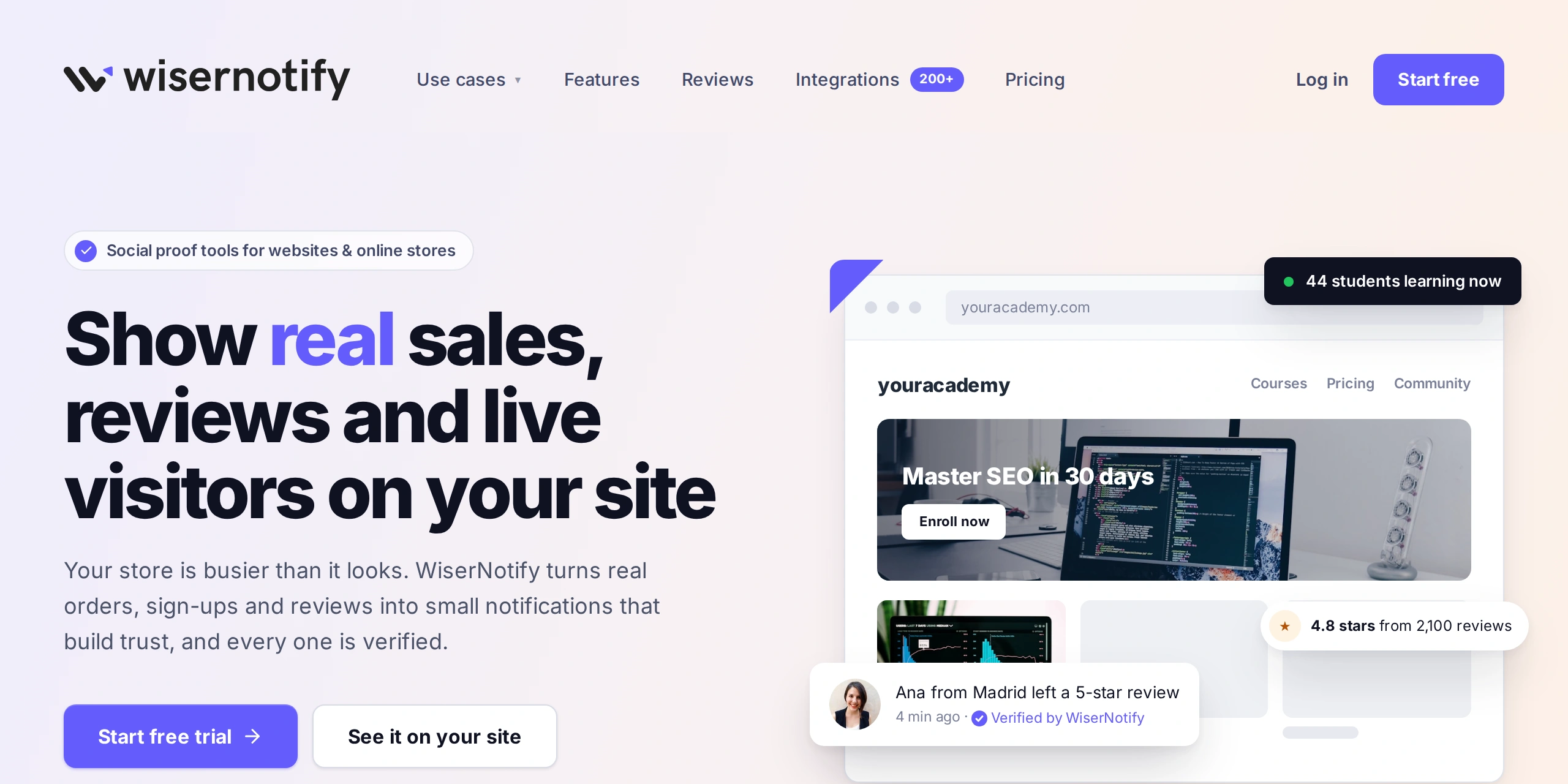
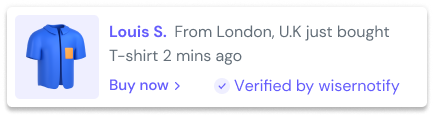
A countdown timer widget for your website handles fixed deadlines, and live notifications of recent purchases, pulled from your store data, add social proof next to the limit.
WiserNotify connects to 250+ platforms, including Shopify, WooCommerce, and WordPress, and there’s a 7-day free trial.
Build trust & FOMO
Highlight real-time activities like reviews, sales & sign-ups.
Scarcity Mistakes to Avoid
- Running every tactic at once. A stock badge, a timer, and a members-only banner on one page reads as pressure, not proof.
- Using it on deep stock. A low-stock badge on a product with 800 units is a lie waiting to be caught.
- Hiding the end date. “Ends soon” with no date gives shoppers nothing to act on.
- Leaning only on discounts. If every limit is a price cut, buyers learn to wait for the next one.
- Forgetting mobile. A timer that covers the buy button on a phone costs more sales than it creates.
Wrap Up
Pick the limit that fits what you sell. Physical products lean on stock counts, launches lean on dates, and subscriptions lean on access.
Then keep it true. The brands above win because shoppers trust their limits, and that trust is the whole tactic.
Frequently Asked Questions
What is scarcity marketing?
It’s showing shoppers that a product, price, or spot is limited so they buy sooner, using stock counts, deadlines, or members-only access.
Does scarcity marketing work for small businesses?
Yes. A small store can show live stock counts, run a monthly limited batch, or open a waitlist without a big budget.
Is scarcity marketing ethical?
Yes, when the limit is real. Fake stock counts or timers that reset mislead shoppers and can break consumer law in the UK, EU, and US.
Does scarcity marketing work for SaaS?
Yes. Early-access pricing, founding-member seats, and launch windows that close on a set date are the usual SaaS versions.
What are examples of scarcity marketing?
Amazon’s low-stock counts, Kith’s Monday drops, Woot’s daily deals, and Amazon’s Prime-only sale events are common examples.

Krunal Vaghasiya is a marketing tech expert who boosts e-commerce conversion rates with automated social proof and FOMO strategies. He loves to keep posting insightful posts on online marketing software, marketing automations, and improving conversion rates.




 Capterra