
40 Facebook Reviews Statistics for 2026 (How It Works)
Most people still picture Facebook reviews as star ratings. That stopped being true years ago.
Facebook now runs on a simple Recommend or Do Not Recommend system, and most businesses have not caught up. It gets far fewer reviews than the big review sites, yet people trust it more than you might expect.
This page walks through how Facebook reviews actually work today, how much people trust them, and what gets someone to leave one in the first place.

Boost Conversion Instantly
Add Social Proof & Urgency to your website
Key Facebook Reviews Statistics
| Metric | Latest Figure |
|---|---|
| Consumers who read Facebook reviews for local businesses | 49% |
| Facebook’s share of total online review volume | About 3% |
| Americans who name Facebook their most trusted review platform | 34% |
| Facebook monthly active users worldwide | Over 3.05 billion |
| Consumers who write reviews specifically on Facebook | 34% |
| Businesses that reply to reviews across platforms | Only about 5% |
| Average Facebook page engagement rate | 0.06% to 0.1% |
| Facebook users who access the platform on mobile | Over 81% |
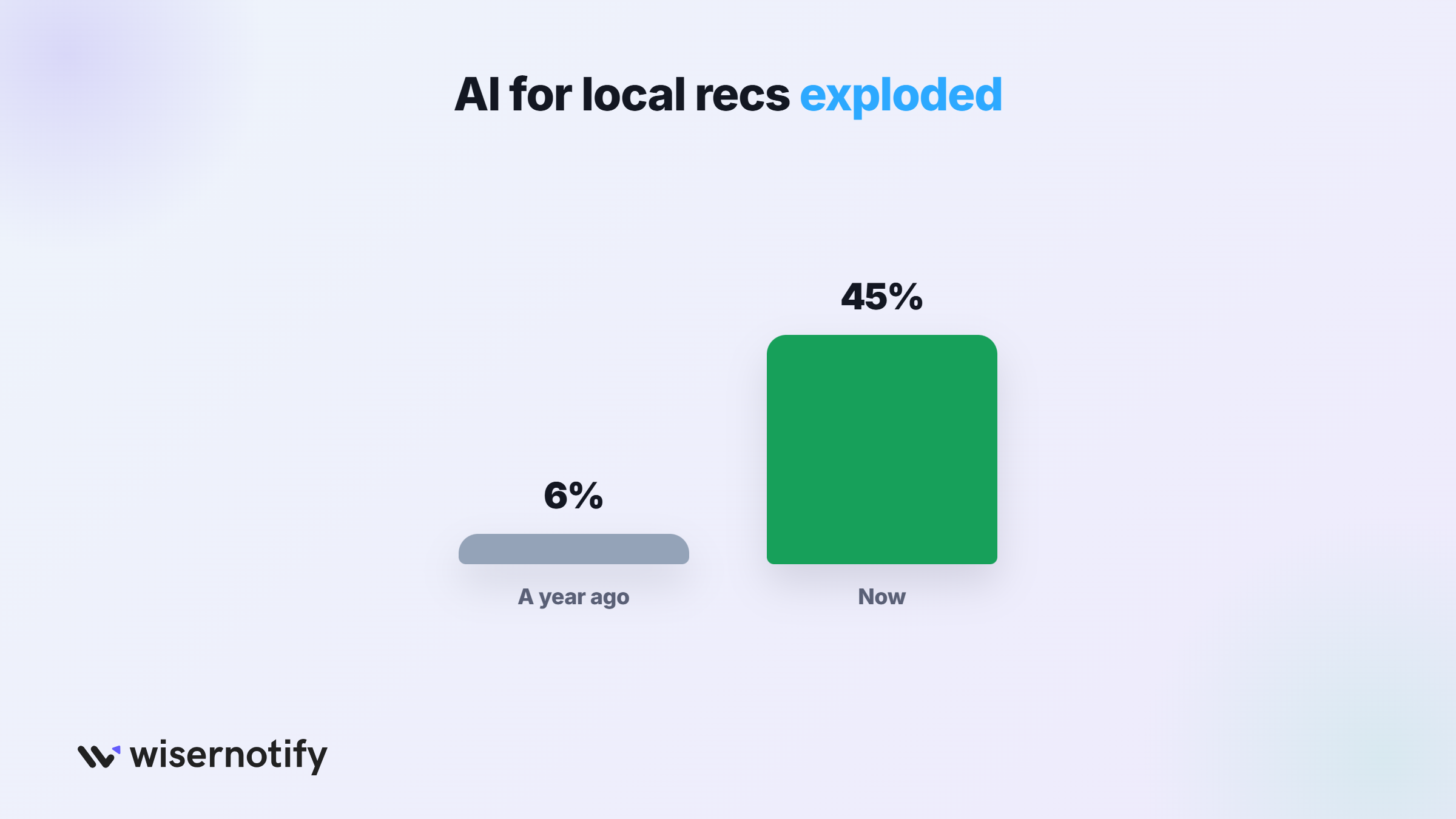
| Consumers using AI tools for local business discovery, 2025 vs 2026 | 6% up to 45% |
| Consumers who avoid businesses with fewer than 20 reviews | 47% |
How Do Facebook Reviews Work?
Facebook dropped its 5-star system years ago in favor of a binary Recommendations feature, and a lot of businesses have not caught up.
1. Facebook replaced star ratings with a simple “Yes” or “No” Recommendations system on business Pages.
2. A Facebook Page’s recommendation score shows as a percentage of visitors who recommended it, not an average star number.
3. Reviewers can still leave written comments and photos alongside their yes-or-no recommendation.
4. Facebook requires a Page to be claimed and set up correctly before Recommendations can appear on it at all.
5. Over 200 million businesses maintain an active Facebook Page.
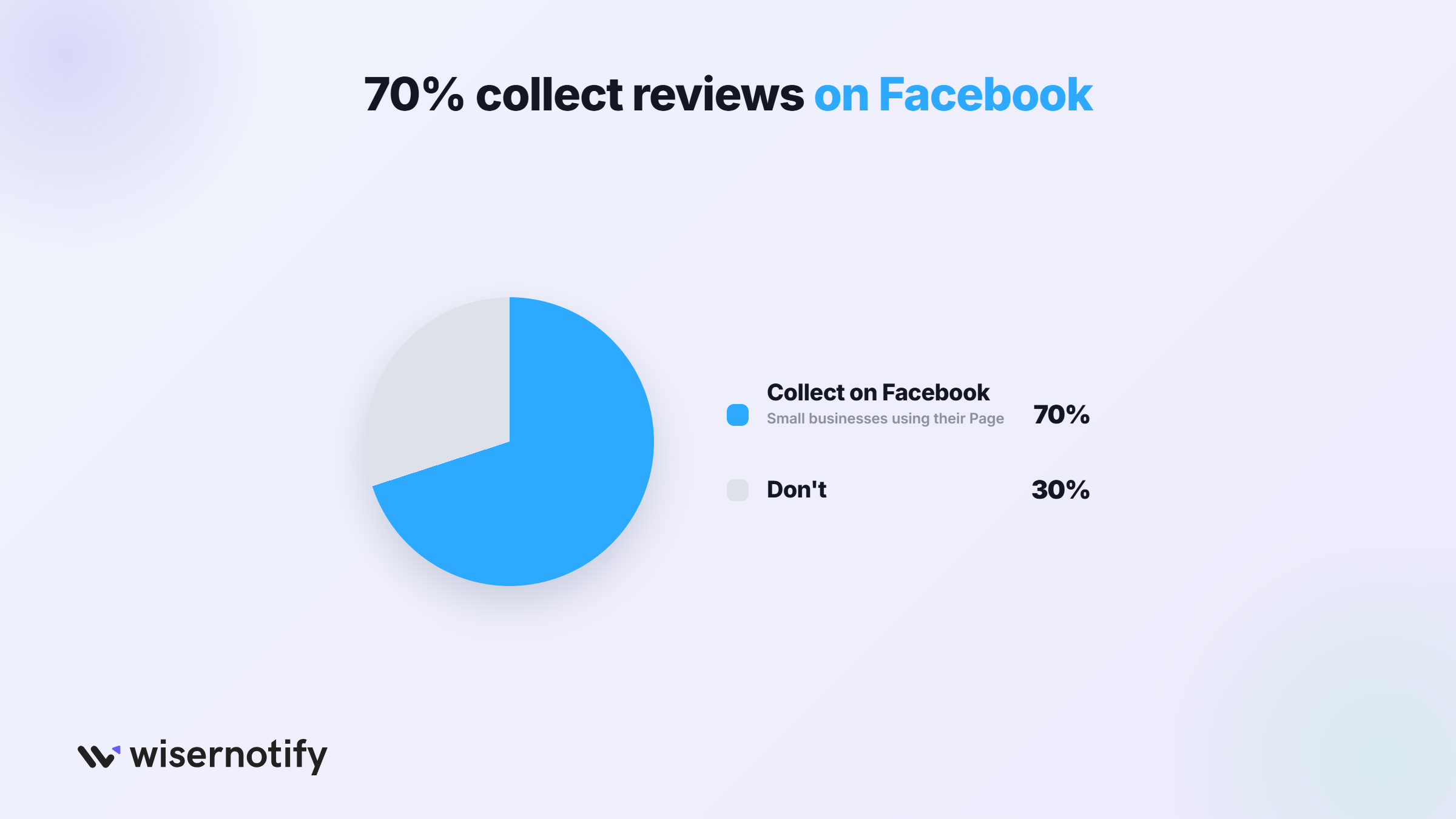
6. About 70% of small businesses use their Facebook Page to collect customer reviews and feedback.
Most competitors covering Facebook reviews still describe a star system that no longer exists.
Knowing it is a binary recommend-or-not format changes how a business should ask for and respond to reviews.
Boost Conversion Instantly
Add Social Proof & Urgency to your website
How Much Do People Trust Facebook Reviews?
Facebook punches above its weight on trust, even though it carries a small share of total review volume.
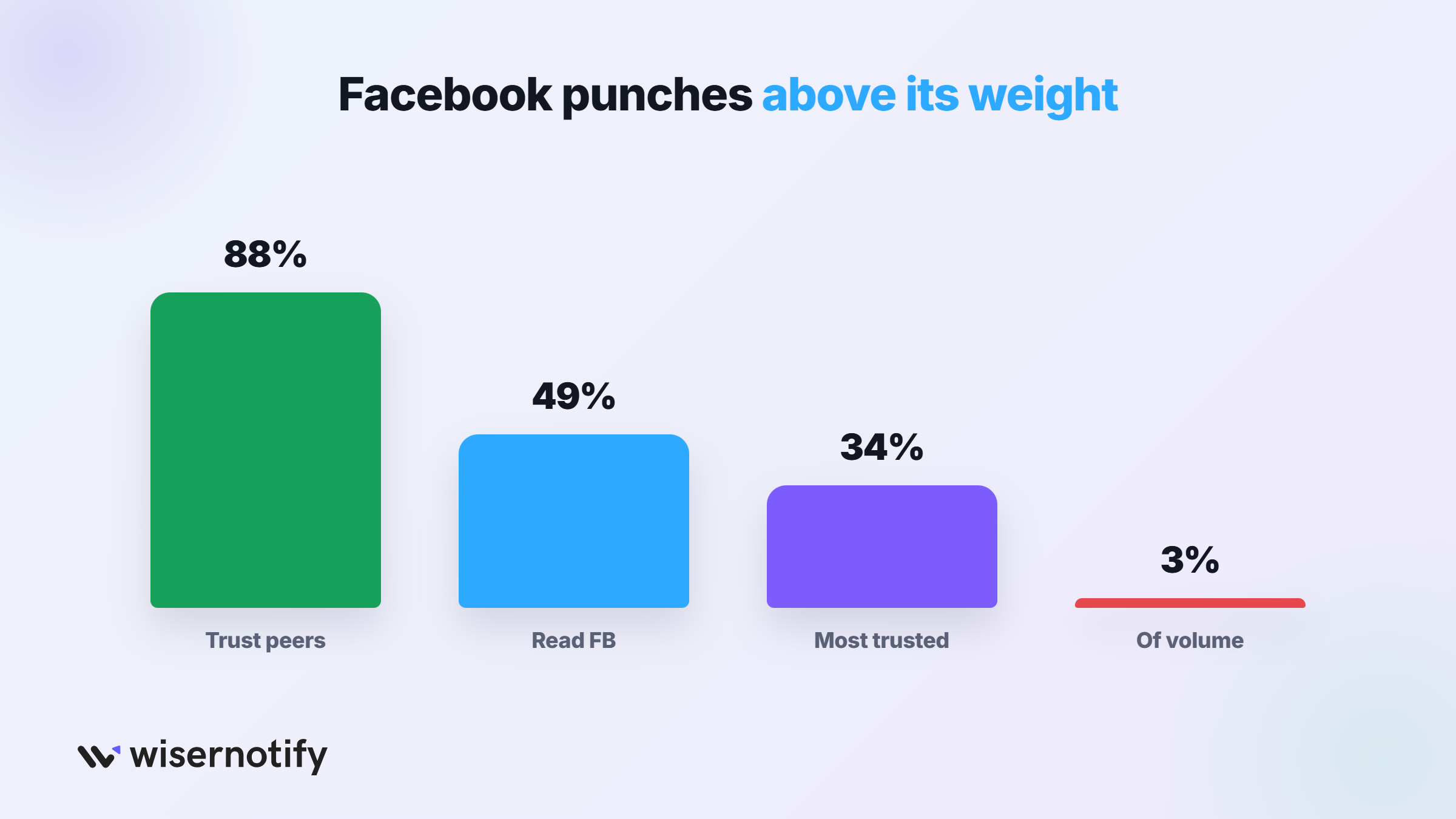
7. 49% of consumers read reviews on Facebook specifically when researching a local business.
8. Facebook accounts for only about 3% of total online review volume across all platforms.
9. 34% of Americans name Facebook their single most trusted review platform.
10. 34% of consumers say they specifically choose Facebook when they want to write a review about a local business.
11. Nearly 88% of consumers trust online reviews from people they do not know almost as much as a personal recommendation, and Facebook’s social, peer-to-peer format reinforces that trust.
12. Independent surveys consistently rank Facebook among the top 5 most trustworthy review platforms, alongside Google, Yelp, the BBB, and Tripadvisor.
Low volume, high trust is the pattern worth remembering. Facebook does not need to compete with Google on the number of reviews it hosts to still move a buying decision. Our online review statistics for every major platform show where the rest of that volume sits.
What Gets Someone to Leave a Review?
Reviews on Facebook skew positive, and the reasons people leave one at all follow a predictable pattern.
13. About 68% of Facebook business reviews are positive, at 4 stars or higher on platforms that still show a star equivalent.
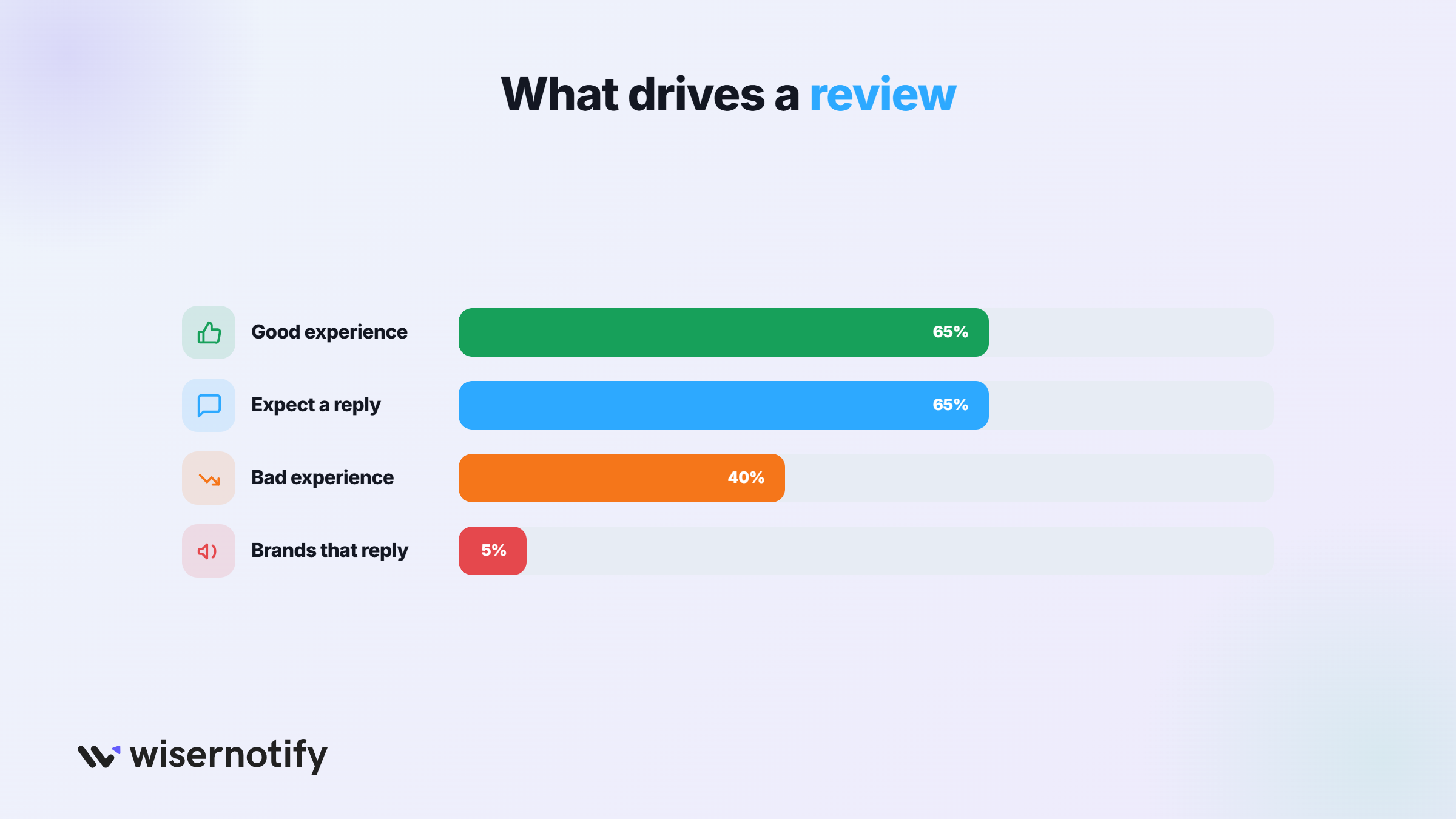
14. Roughly 65% of customers are more likely to leave a review after a positive experience with a brand.
15. About 40% of customers leave a review specifically after a negative experience, which is why response speed matters so much.
16. 65% of customers expect a business to respond when they leave a review.
17. Across platforms, only about 5% of businesses consistently respond to the reviews they receive.
18. Response rates industry-wide have climbed from around 63% to 73% year over year, even though consistent responders remain a small minority.
The gap between what customers expect and what most businesses do is the single biggest opportunity on this list. Responding consistently costs nothing but attention.
Boost Conversion Instantly
Add Social Proof & Urgency to your website
How Do Facebook Reviews Affect Local Business Behavior?
Recommendations translate directly into foot traffic and inquiries for the businesses that manage them well.
19. 47% of consumers will not consider a business with fewer than 20 total reviews, regardless of its rating.
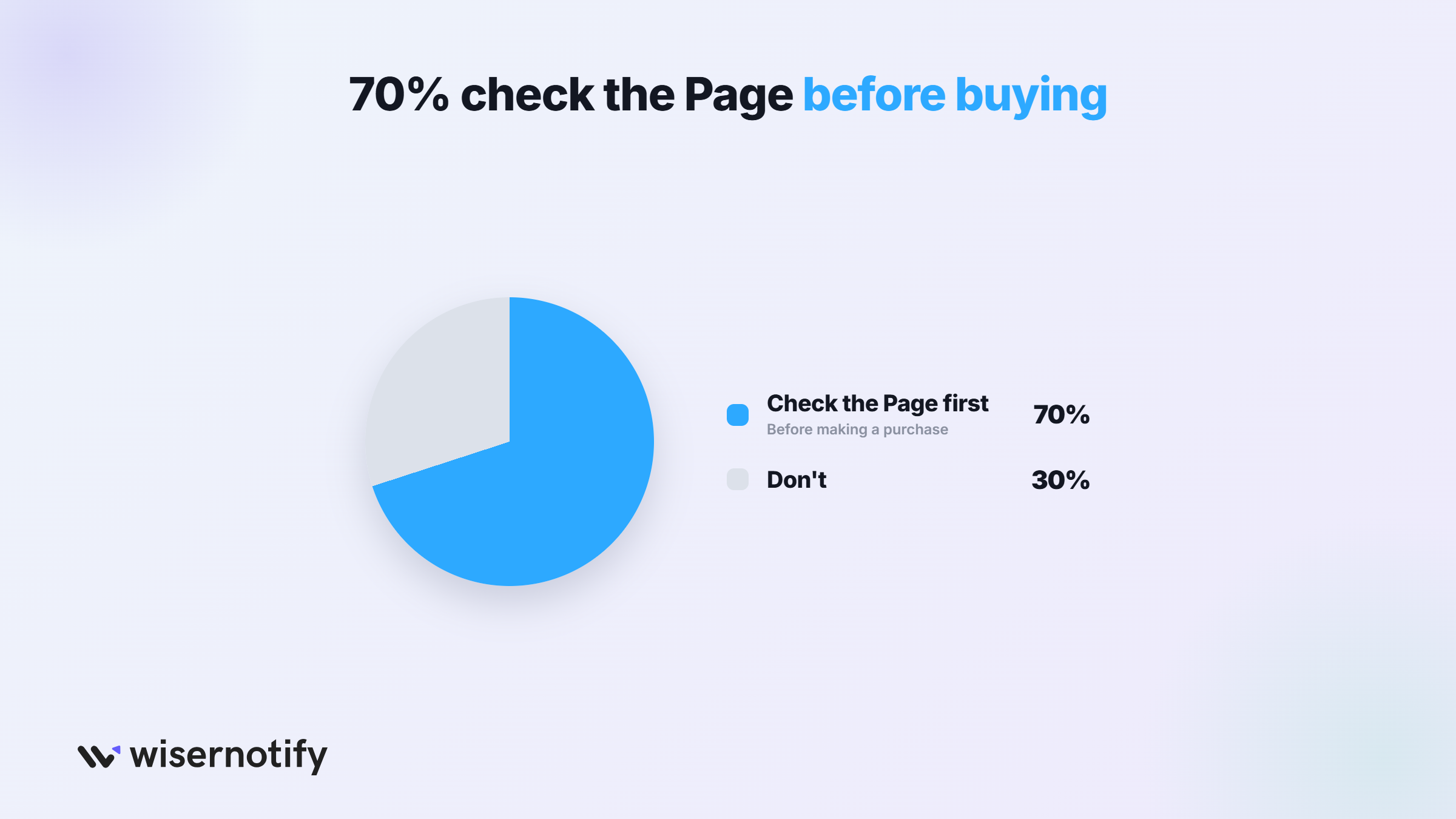
20. 70% of users visit a Facebook Page before making a purchase decision.
21. 66% of consumers say they check reviews before visiting a local business in person.
22. 58% of businesses now manage their review presence across multiple platforms, including both Facebook and Google.
23. 60% of consumers cross-check both Facebook and Google reviews before making a final decision.
24. A strong, actively managed Facebook Page can meaningfully increase customer inquiries compared to a page with sparse or outdated reviews.
Nobody researches a local business on a single platform anymore.
Facebook reviews rarely close a sale alone, but they are one of the checkpoints in a buyer’s customer experience before they do, alongside the Google reviews most shoppers check too.
How Is AI Changing Local Business Discovery?
The way people find local businesses is shifting fast, and Facebook still holds a real place in that shift.
25. Consumers using AI tools like ChatGPT for local business recommendations jumped from 6% to 45% in a single year.
26. AI tools are now the third most common source for local business discovery, behind only Google and Facebook.
27. 42% of consumers say they trust AI-generated recommendations almost as much as traditional review platforms.
28. Google, Facebook, and Yelp remain the three platforms where consumers most often write reviews.
29. The share of consumers who say they “always” read reviews before choosing a local business jumped from 29% to 41% in a year.
30. Consumers now check an average of 6 review sites before making a local business decision.
Facebook is not being replaced by AI search, it is becoming one of the sources AI tools pull from when they answer a local business question, the same shift covered in our fake review statistics.
Boost Conversion Instantly
Add Social Proof & Urgency to your website
Facebook Review Benchmarks by Context
A few numbers worth knowing depending on what kind of business you run.
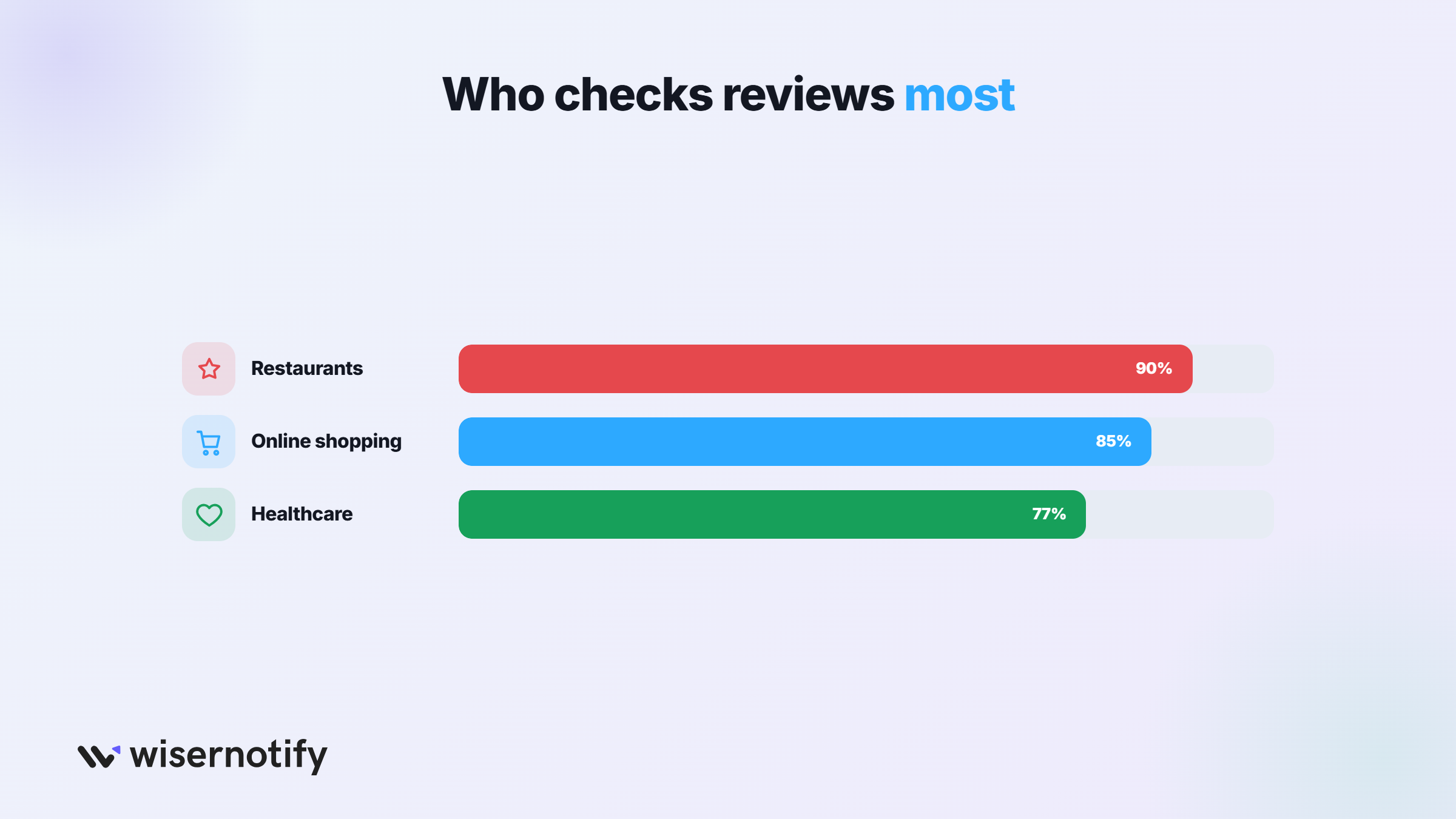
31. 90% of consumers check reviews before choosing a restaurant, one of the highest review-dependency rates of any category.
32. 77% of patients read reviews before booking a healthcare appointment.
33. 85% of online shoppers read reviews before completing a purchase, whether the review appeared on Facebook or elsewhere.
34. Video content, including video reviews and testimonials, gets roughly double the engagement of static image or text posts on Facebook.
35. Businesses that post consistently see meaningfully higher reach and faster follower growth than those that post irregularly.
Benchmarks vary by category, but the direction is the same everywhere.
More recent, more visible, more responded-to reviews consistently outperform a page that goes quiet, a pattern we cover in more depth in our guide to getting more Facebook reviews.
How to Use These Numbers
Claim and set up your Facebook Page properly first, since Recommendations cannot appear at all on an unclaimed or incomplete profile.
Keep your reputation management active across every platform your customers check, not just Facebook.
Ask happy customers for a recommendation directly, respond to every review you get, and keep your page active.
Show that same proof on your own site with visible social proof, since a Facebook recommendation only works for people who are already looking at your Page.
Boost Conversion Instantly
Add Social Proof & Urgency to your website
Conclusion
Facebook reviews carry more trust than most businesses realize. The ones losing ground here simply have not caught up with how the platform actually works now.
It is a yes-or-no system, not a star rating. Claim your Page properly, ask happy customers directly, and reply to what comes in.
Keep that up, and Facebook stays one of the easiest, highest-trust review channels a local business has, even as AI reshapes how people search.
Sources
BrightLocal | BrightLocal LCRS 2026 | SocialPilot | Capital One Shopping | Digital Applied
Frequently Asked Questions
Why are Facebook reviews important for businesses?
Facebook reviews help businesses build trust and show real customer feedback. They also influence buying decisions and improve overall Facebook page performance.
How do Facebook reviews affect engagement rate?
Positive reviews increase user trust, which leads to higher engagement rate, better post interaction, and improved content performance on your facebook page.
How can I get more Facebook reviews?
You can ask customers directly, share your Facebook page review link, or use tools like Meta Business Suite to send follow-up messages and collect reviews easily.
Do negative Facebook reviews harm a business?
Negative reviews can affect trust, but responding properly can improve your brand image and show that you care about customer feedback.
How do Facebook reviews help in social media marketing?
Facebook reviews support social media marketing by improving credibility, increasing engagement metrics, and helping businesses understand their target audience better.

Krunal Vaghasiya is a marketing tech expert who boosts e-commerce conversion rates with automated social proof and FOMO strategies. He loves to keep posting insightful posts on online marketing software, marketing automations, and improving conversion rates.




 Capterra