Over the last 6 years, I have tested 21 different review management software tools.
Some were built for local businesses. Some were built for ecommerce brands. Some promised “AI-powered deep analytics.” Some barely sent a review request correctly.
A few stood out.
In this guide, I’m breaking down the top 5 review management tools that actually help you manage customer reviews, increase review volume, improve online visibility, and turn customer feedback into real sales.
I’ll also share the exact review collection and display strategies I’ve seen drive the biggest results.
This is based on hands-on testing. No fluff. No recycled feature lists.
If you care about online reputation, conversion rates, and building trust with potential customers, this is for you.
Quick Comparison: Review Management Software
Before we go into detail, here is a simple comparison based on real-world use, pricing, and positioning.
| Tool | Best For | Starting Price | Key Strength |
|---|---|---|---|
| WiserReview | Ecommerce + Local | $9/mo | All-in-one collection + display |
| Senja | SaaS + Startups | $29/mo | Video testimonials |
| Famewall | Creators | $11.99/mo | Testimonial walls |
| Trustmary | SMB marketers | $29/mo | Lead widgets + surveys |
| Reviewflowz | SaaS + B2B | $45/mo | Monitoring + AI sentiment |
Now, let’s break down the top five review management software tools I tested hands-on.
Top 5 Review Management Software (Hands-On Tested)
1. WiserReview

WiserReview is a complete review management software for ecommerce brands, local businesses, and agencies.
After testing it, I understand why.
It focuses on three core pillars:
And it does this without pricing complexity.

WiserReview Pricing
WiserReview runs on a freemium model.
Paid plans start at $9/month for up to 100 orders.
Pro starts at $19/month for 1,000 orders, and Pro + AI is $31/month.
There are no contracts. No hidden fees.
Unlike traditional reputation management platforms such as Trustpilot or Reviews.io, which often start at $29/month and can reach $299/month, WiserReview keeps pricing simple and volume-based.
Everything, collection, display, automation, and AI, sits inside one dashboard.
What It Does Well
1. Automated Review Requests

You can trigger automated review requests based on order status, delivery confirmation, or service completion.
This is critical.
Most businesses forget to ask customers to leave reviews. Review volume remains low, not because customers are unhappy, but because no one asked.
Automation fixes that.
You can send review request emails at the right time to consistently collect more feedback.
For ecommerce, this can be triggered 7–14 days after delivery. For local services, it can trigger immediately after the service is completed.
That timing improves responsiveness.
2. Multi-Format Reviews (Text, Photo, Video)
WiserReview supports:
- Text reviews
- Photo reviews
- Video reviews
Photo and video reviews are powerful. They create authentic feedback. They improve conversion rates because potential customers see real usage.
User-generated content builds trust fast.
Most tools charge extra for video reviews. Here, it is included.
3. Display Widgets That Actually Convert

This is where many review management tools fail.
They collect feedback but do not help you share reviews properly.
WiserReview offers:
- Carousels
- Popups
- Badges
- Review walls

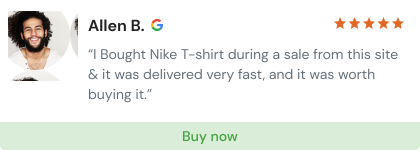
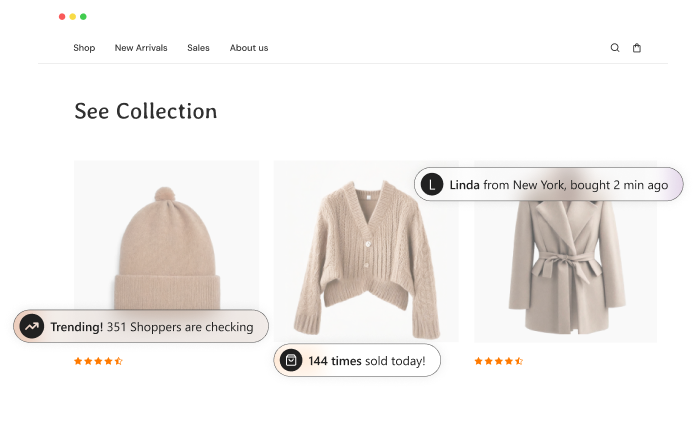
You can place star ratings near product titles. You can show review snippets on collection pages. You can display homepage testimonials.

Schema markup support allows star ratings to appear in Google search results.
That improves online visibility.
This is not just about reputation. This is about SEO and sales.
4. Moderation + AI Reply Templates

Managing online reviews across platforms can get messy.
WiserReview includes automatic moderation filters to block spam and inappropriate content.
It also provides AI reply templates.
Responding fast matters.
When customers see that you respond and address concerns promptly, your brand reputation improves. Even negative reviews become opportunities to build customer relationships.
WiserReview also provides AI insights to help you understand the overall context of reviews.

Where It Is Strongest
In my testing, WiserReview is strongest when:
- You run a Shopify, WordPress, or WooCommerce store
- You want more reviews without hiring extra staff
- You need one dashboard to manage everything
- You care about conversion rates
It integrates natively with Shopify, WooCommerce, and WordPress.
That makes setup simple.
Where It Is Not Enterprise-Level
If you need:
- Advanced social listening
- Complex enterprise workflows
- Massive multi-location reputation management
Then tools like Birdeye or Podium may offer more enterprise-specific features.
But you will pay significantly more.
For most small to mid-sized businesses, WiserReview offers the best balance between cost, features, and ease of use.
Next, let’s look at a tool that takes a very different angle: video-first testimonials.
All your reviews in one place
Collect reviews, manage every response, and display them where they matter most.
2. Senja

Senja focuses on simplicity and video testimonials.
It markets itself as the easiest way to collect and share testimonials for startups and SaaS companies.
After testing it, I would describe it as: Clean. Fast. Minimal friction.

Senja Pricing
- Free plan available
- Starter: $29/month (2 seats)
- Pro: $59/month (5 seats)
It is more expensive than WiserReview at the entry level.
But its positioning is different.
What It Does Well
1. Frictionless Video Collection

Senja claims that video testimonials convert 2x higher than text requests.
Whether the exact multiplier applies to every business is debatable.
But video reviews clearly increase authenticity.
Senja makes it easy to send “magic links” that allow customers to record video without login friction.
That improves response rates.
2. Wall-of-Love Widgets

Senja offers embeddable testimonial walls.
These look clean on landing pages.
For SaaS businesses trying to improve conversion rates on pricing pages, this works well.
You can collect feedback, curate the best testimonials, and display them with minimal setup.
3. Slack + Zapier Integrations

Senja integrates with Slack and Zapier.
You get instant notifications when new reviews come in.
That helps teams respond quickly.
Where It Falls Short
Senja is not a heavy review monitoring platform.
It does not provide deep monitoring of review sites across multiple channels, such as Google, Yelp, or Capterra.
It is more of a testimonial collection and display tool than a full reputation management system.
Also, $29/month for just 2 seats can feel expensive compared to alternatives.
Who It Is Best For
- SaaS founders
- Agencies collecting case studies
- Startups want high-quality video reviews
- Businesses focused on website testimonials
If your main goal is building trust on landing pages, Senja is strong.
If your main goal is to manage online reviews across platforms and extract insights from review data, you may need a broader solution.
All your reviews in one place
Collect reviews, manage every response, and display them where they matter most.
3. Famewall

Famewall takes a slightly different angle.
It is a testimonial management platform that centralizes customer feedback from over 30 sources.
It focuses on creators, entrepreneurs, and small businesses seeking clean, uncluttered testimonial displays.
It is not trying to be a heavy reputation management system. It aims to make testimonials easier.

Famewall Pricing
Famewall keeps pricing simple:
- Free: $0 (10 testimonials)
- Standard: $11.99/month
- Professional: $29.99/month
- Business: $99.99/month
The $11.99 plan competes with WiserReview at the low end.
But the features are slightly different.
What It Does Well
1. Multi-Format Testimonials (Including Audio)

Famewall supports:
- Text
- Video
- Audio
- Social media imports
Audio testimonials are rare in review management tools. That is a differentiator.
For creators and coaches, this works well.
2. AI Composer + AI Review Summary

Famewall includes an AI Composer Assistant that helps customers write better testimonials.
This increases review volume because customers often hesitate. They do not know what to say. Guided prompts solve that.
It also offers AI-generated review summaries on widgets.

That helps visitors quickly understand customer sentiment without having to read 100 reviews.
3. Wall-of-Love Display

Like Senja, Famewall excels at testimonial walls.
The embeds are clean. The setup is no-code. You can even use custom domains and white-label options on higher plans.
For entrepreneurs building personal brands, this is powerful.
Limitations
There are caps.
- Video testimonials are limited on lower plans (6 on Standard)
- Recording time is capped at 2–3 minutes.
If you need unlimited video reviews, this can become restrictive.
Also, Famewall is not designed for in-depth review monitoring across review sites such as Google or Yelp.
It is more focused on collecting and displaying curated testimonials.
Who It Is Best For
- Creators
- Course sellers
- Coaches
- Agencies building client-proof pages
If you need strong reputation management across multiple platforms, this may not be enough.
If you need fast testimonial collection and a beautiful display, it works well.
All your reviews in one place
Collect reviews, manage every response, and display them where they matter most.
4. Trustmary

Trustmary is a cloud-based review management tool for SMB marketers and entrepreneurs.
It combines review collection, survey distribution, and review imports from major platforms.
It feels more like a hybrid between survey software and review management software.

Trustmary Pricing
Trustmary pricing is based on survey responses and widget views, not order volume.
Main plans shown:
- Solo: Free
- Build Your Plan: Starting from $26/month
- Starter: $23/month
- Business: $463/month
Core features such as auto-import reviews, schema markup (SEO), and analytics are included with each tier.
Add-ons such as AI visibility profile, review connections, premium integrations, analytics, and lead generation incur additional costs.
As traffic or response volume grows, pricing scales with it.
What It Does Well
1. Imports from Major Review Sites

Trustmary can import:
- Google reviews
- Facebook reviews
- Yelp
- G2
- Capterra
- TripAdvisor

This centralizes online review management in a single dashboard.
For businesses already receiving reviews directly on platforms, this is helpful.
2. Survey Distribution Channels

It supports distribution via:
- URL
- QR codes
- SMS (Europe)
- Website embeds
The key is consistency.
3. Lead Generation Widgets

Trustmary mixes reviews with popups, chatbots, and forms.
It aims to turn customer feedback into leads.
That is an interesting angle.
Limitations
Widget views are metered. When limits are reached, widgets hide until reset.
That can hurt online visibility during high-traffic periods.
Additionally, at $203/month for full functionality, it becomes more expensive than lower-cost all-in-one tools.
Who It Is Best For
- SMB marketers
- Businesses that rely heavily on Google reviews
- Companies that want to review imports + surveys combined
If budget is a concern, you must calculate carefully.
All your reviews in one place
Collect reviews, manage every response, and display them where they matter most.
5. Reviewflowz

Reviewflowz is built differently.
It focuses on review monitoring and B2B/SaaS companies.
It is not primarily about collecting on-site testimonials. It is about managing reviews across platforms at scale.

Reviewflowz Pricing
- Lite: $45/month
- Pro: $70/month
- Premium: $80/month
- No free plan (14-day trial)
This positions it higher than most small-business tools.
What It Does Well
1. Monitor Reviews Everywhere

It tracks reviews across countries and languages.
“If it’s got stars, we support it” is their positioning.
For SaaS companies listed on multiple review sites, this matters.
2. AI Reply Agents + Sentiment Analysis

Reviewflowz includes AI reply agents with memory and context.
It also performs AI sentiment analysis to extract topics and sentiment trends.

This is strong for:
- Understanding customer sentiment
- Tracking brand reputation shifts
- Getting deep analytics
You can identify common complaints and systematically improve the customer experience.
3. Integrations for Teams

It integrates with:
- Zendesk
- Intercom
- Slack
- Microsoft Teams
You receive instant notifications when new reviews arrive.
It even includes leaderboard features to gamify review generation.
That can motivate teams.
Limitations
There is no free plan.
For small businesses, the entry cost may feel high.
Also, if you mainly need on-site review display widgets for ecommerce, this tool may feel too B2B-focused.
All your reviews in one place
Collect reviews, manage every response, and display them where they matter most.
6 Best Review Collection and Display Strategies
Software matters. But strategy matters more.
Here are six strategies that consistently increase review volume, improve customer relationships, and boost conversion rates.
For Local Businesses
1. Ask Immediately + Send SMS Link

Timing is critical.
When a service finishes, the customer experience is fresh.
Sending an SMS review request immediately captures that moment.
SMS open rates hover around 98%, compared to roughly 20% for email.
Higher open rate = more feedback.
Tools that support automated review requests make this seamless.
Build it into operations. Do not treat it as a side task.
2. Automate Every Visit
Consistency wins. Automation ensures every customer receives a review request.
- No manual follow-ups.
- No missed opportunities.
Over time, this builds a strong reputation.
More reviews improve online visibility and brand credibility.
3. Display Reviews on Homepage and Booking Pages

Collection is only half the battle.
You must share reviews strategically.
Display:
- Average star rating
- Review count
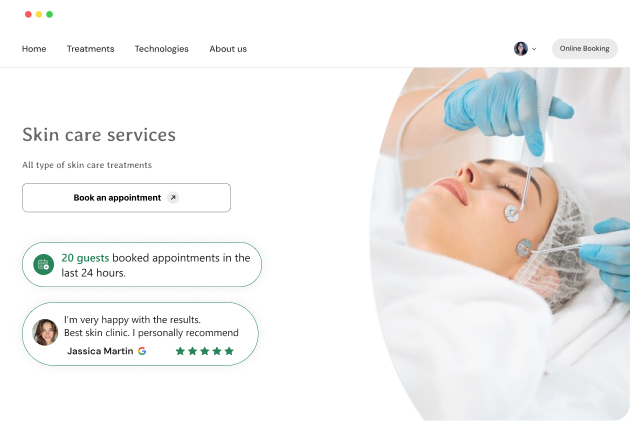
- Recent customer feedback
Place them on:
- Homepage
- Booking pages
- Service pages
Verified purchase indicators increase trust. This directly impacts sales.
For Ecommerce Businesses
4. Send Review Request 7–14 Days After Delivery

Customers need time to use the product.
Sending a review request too early reduces response quality.
Waiting 7–14 days improves authenticity.
Automated workflows make this simple.
Better timing = better customer opinions = more actionable insights.
5. Show Star Rating Near Product Title

Star ratings near product titles act as instant trust signals.
They reduce friction.

Schema markup allows star ratings to appear in Google search results.
That increases click-through rates from Google.
Trust starts before customers even visit your site.
6. Collect and Display Photo Reviews

User-generated content is powerful.
Customer photos show real-world usage.
Video reviews increase perceived authenticity. Senja reports video converts 2x higher than text requests.
Create gallery sections combining:
- Professional images
- Customer photos
- Verified purchase badges
This significantly improves customer sentiment and conversion rates.
All your reviews in one place
Collect reviews, manage every response, and display them where they matter most.
Conclusion
After testing 21 platforms, one thing is clear.
Review management software is no longer optional.
Online reviews shape purchasing decisions. They shape reputation. They shape growth.
The best tools help you:
- Collect reviews consistently
- Manage reviews in one dashboard
- Respond quickly
- Extract valuable insights from review data
- Share reviews where they impact sales
If you run an ecommerce or local services business, WiserReview offers the strongest balance of price, automation, and display power.
If you run SaaS and care about deep monitoring and sentiment analysis, Reviewflowz stands out.
If video testimonials are your main focus, Senja excels.
If you want curated testimonial walls for creators, Famewall is a good option.
If you want combined survey and review imports, Trustmary is a good fit.
But remember this:
Software does not build trust.
Consistent review management, fast responses, and authentic customer experience do.
Collect feedback. Analyze sentiment trends. Address concerns promptly.
And turn customer voices into your strongest marketing asset.
That is how you build a strong reputation in 2026.