
9 Birdeye Alternatives + Is Birdeye Worth It? (2026)

Birdeye is a strong all-in-one reputation platform, but its reported plans start around $299 per location per month on an annual contract. Most small teams only use the review tools.
If reviews are the job, cheaper Birdeye alternatives cover it. WiserReview, NiceJob and BrightLocal handle reviews for a fraction of the cost. Podium, Yext, ReviewTrackers and Reputation compete with Birdeye at the multi-location end.
Below you’ll find our verdict on Birdeye, what its users say, what it costs, and how the 9 alternatives compare on price, rating and fit.
Key takeaways
- Birdeye earns high marks from users (4.7/5 on both G2 and Capterra) but it is priced per location, and its own pricing page shows no prices.
- If you only need review requests and review widgets, a review-only tool costs far less than any Birdeye tier.
- BrightLocal and Yext are listings-first tools. Their entry plans leave out review management.
- Podium is the closest like-for-like swap, and it is not cheaper.
- Export your reviews and check your renewal date before you switch.
Is Birdeye Worth It? Our Verdict
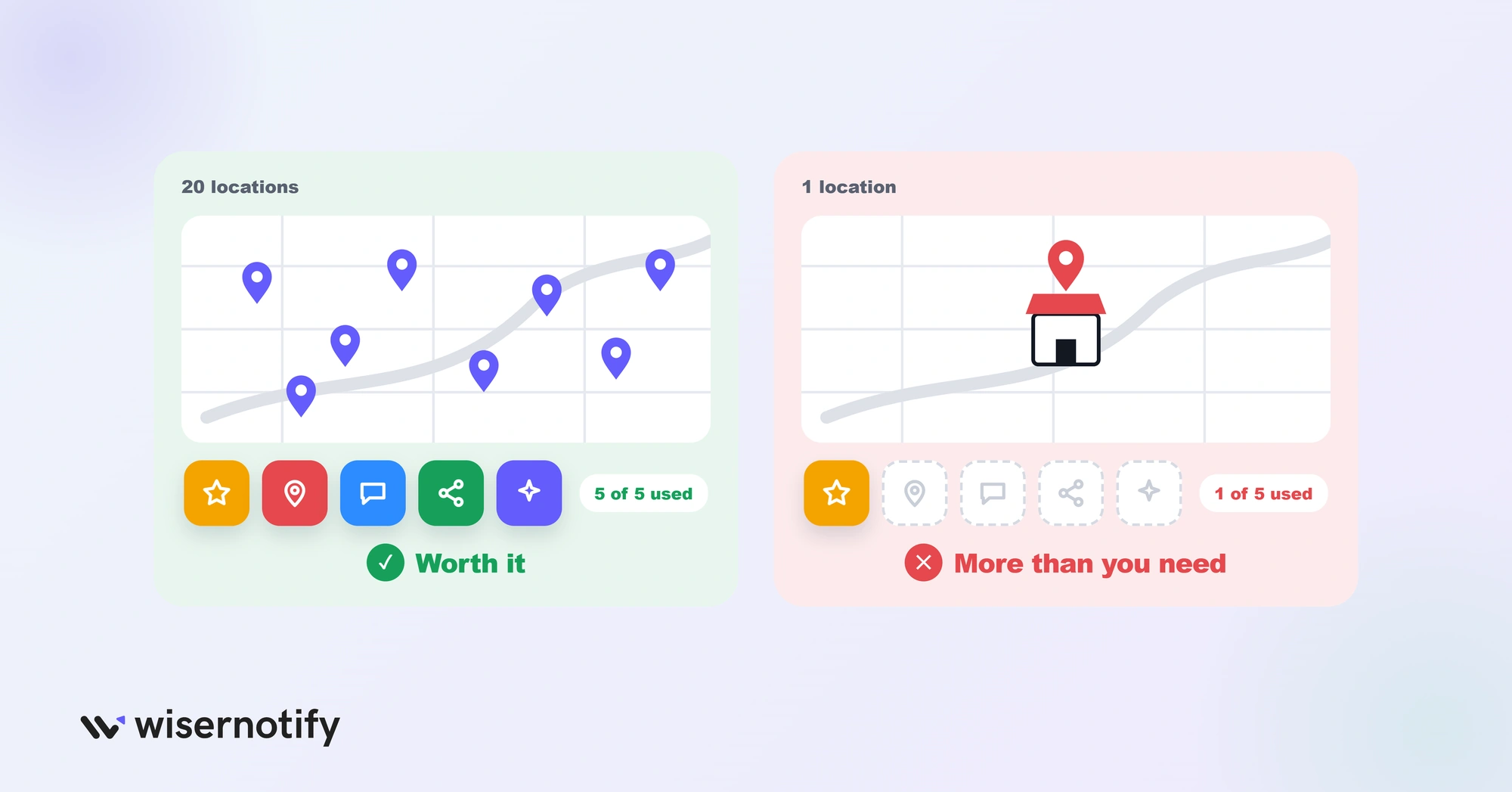
Birdeye is worth it for multi-location brands that will use reviews, listings, messaging and social together. For a single location that mainly wants more Google reviews, Birdeye is usually more than you need.
The platform has grown well past review requests. Birdeye now sells itself as an AI platform with “coworkers” for marketing, front-desk operations and customer experience. That breadth is the value for a 20-location dental group.
It is also the problem for a one-location shop. You pay per location for the whole bundle, even if you only open the reviews tab.
My rule of thumb: if fewer than three Birdeye modules would get used every week, a focused tool will do the same job for less.
What Birdeye Users Say in Reviews
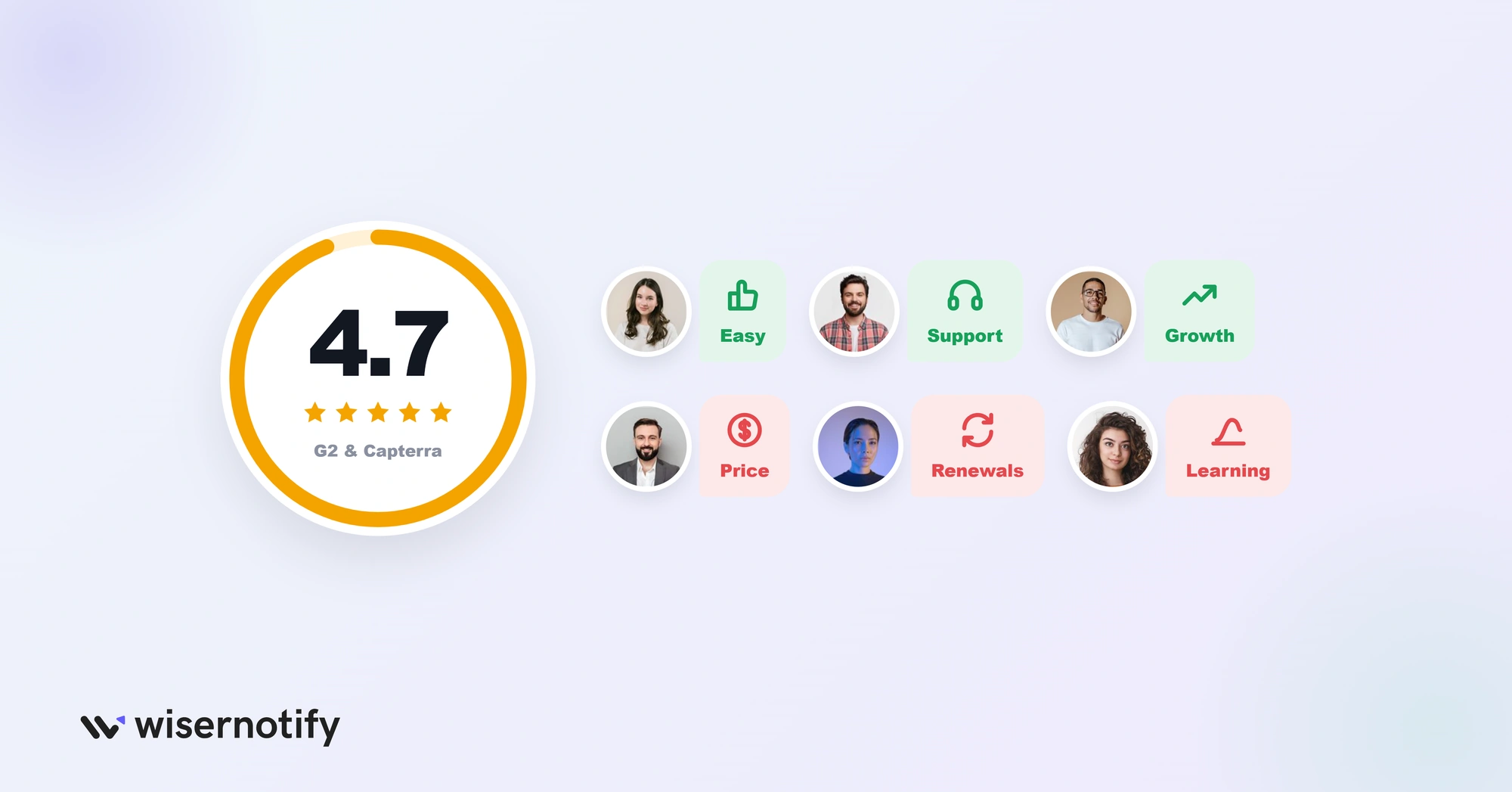
Birdeye reviews are mostly positive. Birdeye holds 4.7 out of 5 on G2 from roughly 4,200 reviews and 4.7 out of 5 on Capterra from about 700 reviews (checked in 2026).
The praise clusters around a few things:
- Ease of use. Reviewers say sending review requests and replying from one inbox is simple.
- Support. Many reviews name their account rep and describe fast help.
- Review growth. Multi-location teams report a big jump in Google review volume once requests are automated.
The complaints are just as consistent:
- Price. Small businesses and solo practices call the per-location cost steep for what they use.
- Contracts and billing. Several reviewers describe annual renewals they did not expect.
- Gaps and learning curve. G2 reviewers mention missing features, integration issues and a busy interface.
So the product works. The friction is about cost and fit, which is exactly why people search for Birdeye alternatives.
How Much Does Birdeye Cost in 2026?
Birdeye costs about $299 to $449 per location per month on its reported plans, billed annually. Birdeye’s own pricing page shows no numbers. It asks for your location count and phone number, then routes you to sales.
The figures below come from pricing trackers and buyer reports, so treat them as a starting point for your quote.
| Plan | Reported price | What it adds |
|---|---|---|
| Starter | $299/mo per location | Reviews AI, Listings AI, Messaging AI |
| Growth | $349/mo per location | Everything in Starter plus Social AI |
| Dominate | $449/mo per location | Everything in Growth plus Chatbot AI |
| Premium | Custom quote | For 4+ locations, with volume discounts set by sales |
Prices checked in 2026. Birdeye does not publish them, so your quote may differ.
The per-location model is what surprises people. Five locations on Growth come to roughly $1,745 a month before add-ons such as surveys, referrals or extra texting.
There is no free plan. Capterra lists a free trial, but you reach it through a sales call.
Why Businesses Switch From Birdeye
Owners who leave Birdeye rarely say the product failed. They say the cost stopped matching what they used.
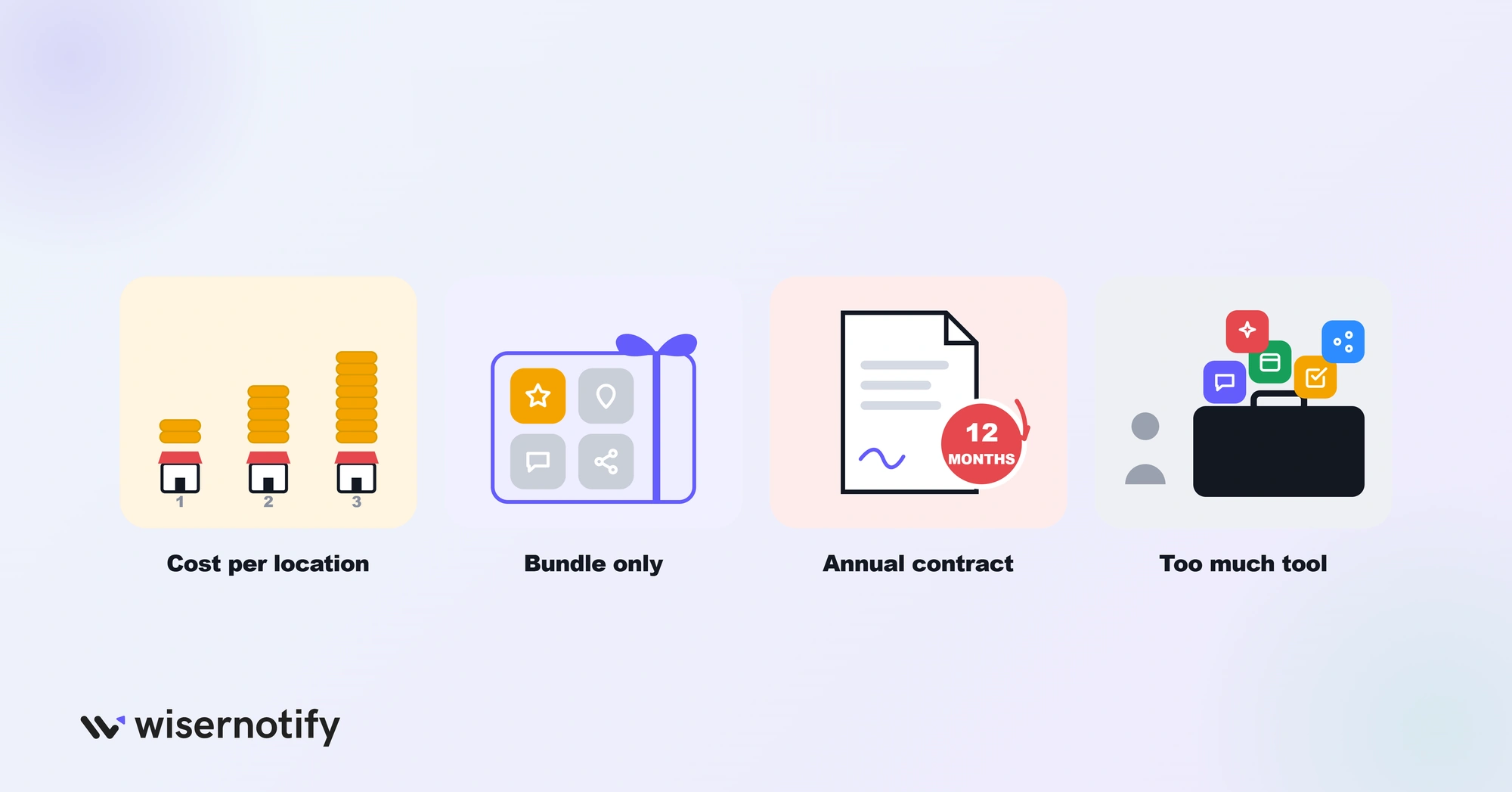
- The bill grows with every location. Each branch pays the full plan rate, so a second or third location doubles or triples the spend.
- You buy the bundle. Reviews, listings, messaging and social come together. There is no reviews-only tier.
- Annual contracts. Plans are sold on 12-month terms that renew. Read the cancellation notice clause before you sign.
- Too much tool for a small team. A solo practice rarely needs a chatbot, social scheduler and survey module on top of reviews.
If that list sounds familiar, start with a focused review management software tool and add listings only if you need them.

Reviews without the bundle
Collect reviews by email, SMS or WhatsApp and show them on your site, without paying for tools you won’t open.
Birdeye Alternatives Compared
The table sorts the nine tools by what they do best. Prices name the unit you pay for, because “per location”, “per seat” and “per year” add up very differently.
| Tool | Best for | Starting price | Trial or free plan | G2 rating (2026) |
|---|---|---|---|---|
| WiserReview | Review collection and display | $6.75/mo billed yearly (100 review requests/mo) | 7-day trial; free plan only on the Shopify and Wix app stores | Not rated |
| BrightLocal | Local SEO with reviews | $39/mo per location; reviews need Grow at $59/mo per location | 14-day trial | 4.6/5 |
| NiceJob | Hands-off reviews for service businesses | $75/mo per business, no contract | 14-day trial | 4.8/5 |
| GatherUp | Feedback plus reviews across locations | $99/mo for 1 location; $60/mo per location for 2+ | 14-day trial | 4.5/5 |
| Grade.us | Agencies reselling reviews | $110/mo per seat (Solo) | 14-day trial | 4.6/5 |
| Yext | Listings accuracy at scale | $199/yr per location; review monitoring needs Premium at $999/yr per location | Trial on request | 4.4/5 |
| Podium | Text-first local businesses | $399/mo (Core), plus add-ons | Demo only | 4.5/5 |
| ReviewTrackers | Multi-location review analytics | Quote, per location billed yearly | Demo only | 4.6/5 |
| Reputation | Enterprise brands | Quote only | Demo only | 4.5/5 |
Prices and ratings checked in 2026. Birdeye itself is rated 4.7/5 on G2.
9 Best Birdeye Alternatives (2026)
Each profile covers where the tool beats Birdeye, where it falls short, and who it suits. Pricing lives in the table above.
1. WiserReview

WiserReview is a review platform that does one job: collect reviews, manage them, and show them on your website. There are no listings, social or chatbot modules to pay for.
Requests go out by email, SMS, WhatsApp or QR code. WhatsApp matters if your customers are in India, Southeast Asia or the Middle East, where email gets ignored.
From one dashboard you approve, tag, filter and reply to reviews, including imported Google reviews. AI tags reviews by topic and can auto-publish positive ones. Display options include carousels, review walls, badges, popups and sidebars.
Where it beats Birdeye: you pay for reviews only, and the price does not multiply by location.
Where it falls short: no listings sync, no social publishing and no two-way text inbox. If you need those, Birdeye or Podium still fits better.
Good fit: stores, clinics and service businesses that want more reviews and better review widgets.
Not a fit: brands whose main pain is keeping directory listings accurate.
2. BrightLocal

BrightLocal is a local SEO toolkit first. Rank tracking, citation audits and Google Business Profile reporting are where it shines, and agencies love its white-label reports.
Reviews come in through the Reputation Manager. It monitors Google, Facebook, Yelp and industry sites, sends review requests by email and SMS, and adds a review showcase widget.
The catch is the tier. Review tools sit only in the Grow plan, so the cheapest BrightLocal plan will not replace Birdeye’s reviews.
Good fit: agencies and local businesses that care about map rankings and citations as much as reviews.
Not a fit: anyone who wants heavy review automation or a text inbox.
Also check: BrightLocal alternatives
3. NiceJob

NiceJob is built for contractors, cleaners, salons and other service businesses that want reviews without thinking about them. You connect your job software, and requests plus reminders go out after each job.
Its best trick is reuse. Good reviews turn into social posts and on-site proof automatically, so one five-star review works in three places. A team leaderboard shows which staff member earns the most reviews.
It is month-to-month, a sharp contrast with Birdeye’s annual terms.
Good fit: single-location service businesses with a job-management tool already in place.
Not a fit: multi-location chains that need per-location reporting. See these NiceJob alternatives if that is you.
4. GatherUp

GatherUp mixes customer feedback with review generation. Customers answer a short NPS or satisfaction question, then get the review link, and you see the private score alongside the public reviews.
That feedback layer is its edge over Birdeye for clinics and legal firms that want to hear about problems early.
One caution: Google does not allow review gating. Make sure every customer still gets the public review link, not only the happy ones.
GatherUp is owned by Traject, the same company behind Grade.us. Listings sync is a paid add-on.
Good fit: multi-location businesses that want feedback data next to reviews.
Not a fit: teams that just want the highest raw review count for the least setup.
5. Grade.us

Grade.us is for marketing agencies that sell review management to local clients. Pricing is per seat, and one seat usually equals one client location.
White-label is the reason to pick it. Review funnels, dashboards and reports can run under your agency’s brand, and the premium option puts the whole dashboard on your own domain (Agency plan and up).
For a single business managing its own reviews, it feels like buying a reseller kit. Text messaging is also an add-on on the lower plans.
Good fit: agencies with 10 or more local clients.
Not a fit: a brand managing only its own locations. Compare Grade.us alternatives first.
6. Yext

Yext is the listings specialist. Update your hours or phone number once, and it pushes the change to Google, Apple Maps, Bing, Facebook, Yelp and a long list of directories.
For 50 or more locations, that alone can save a person’s week of manual edits. Yext now pitches itself as an agentic marketing platform, with structured business data that AI search tools can read.
Reviews are secondary. Review monitoring and widgets only arrive on the Premium tier, so the cheap entry plan is listings-only.
Good fit: multi-location brands where wrong listings cost real visits.
Not a fit: anyone shopping mainly for review requests. Pair Yext with a review tool, or see these Yext alternatives.
7. Podium
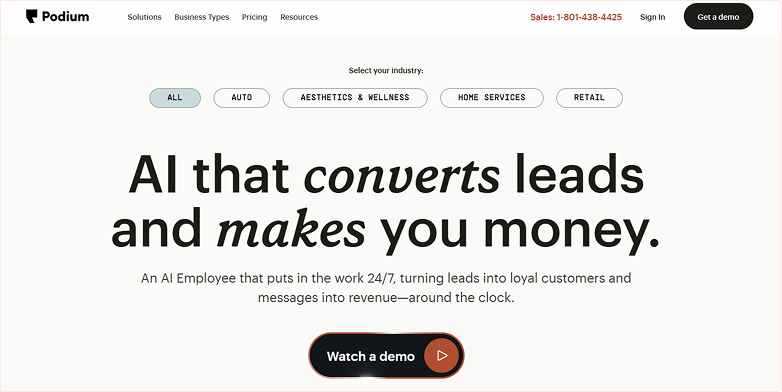
Podium is Birdeye’s closest rival and shows up in almost every Birdeye comparison. Both chase local and multi-location businesses, and both are sold through sales demos.
Podium is built around text messaging. Website chat moves to SMS, review invites go out by text, and customers can pay by text. An AI employee add-on answers leads, books appointments and follows up.
Switching to Podium to save money rarely works, since its Core plan costs more than Birdeye’s reported Starter. Add-ons such as phone lines and compliance fees stack on top.
Good fit: dental offices, auto shops and home services that run on texting.
Not a fit: owners leaving Birdeye over price. Our WiserReview vs Podium vs Birdeye breakdown goes deeper.
8. ReviewTrackers

ReviewTrackers, now part of InMoment, is an analytics tool for brands with many locations. It pulls reviews from more than 100 sources into one place.
Its strength is comparison. You can line up rating, review volume and response time by location, and spot the branch that is slipping.
Sentiment tagging groups complaints by theme, such as wait time or staff.
Review generation is lighter than Birdeye’s, and pricing is quote-only with annual billing.
Good fit: operations teams running 20 or more locations.
Not a fit: a single location that wants more reviews this month.
9. Reputation

Reputation (formerly Reputation.com) is the enterprise pick. Healthcare systems, auto groups and property managers use it across hundreds of locations.
It combines reviews, surveys, listings and social listening, with role-based access so each team sees its own data. Its Reputation Score rolls rating, volume, recency and response rate into one number for leadership reports.
Expect a long sales cycle and a quote-only contract. Below roughly 50 locations, most of the platform goes unused.
Good fit: enterprises with a dedicated CX or reputation team.
Not a fit: small businesses leaving Birdeye over cost.
Also check: Reputation alternatives
Birdeye vs Podium vs Yext at a Glance
These three share most Birdeye shortlists, but they solve different problems.
| Feature | Birdeye | Podium | Yext |
|---|---|---|---|
| Core strength | All-in-one reputation | Texting and payments | Listings sync |
| Price unit | Per location, per month | Per plan, per month | Per location, per year |
| Review requests | Yes, all plans | Yes, all plans | Limited, top tier |
| Listings management | Yes | No | Yes, its main job |
| Two-way texting | Yes | Yes, its main job | No |
| Best for | Multi-location brands using several modules | Service businesses that live on text | Large brands with listing sprawl |
None of the three is a budget option. If cost is why you are leaving Birdeye, look at the review-focused tools first.
How to Pick the Right Birdeye Alternative
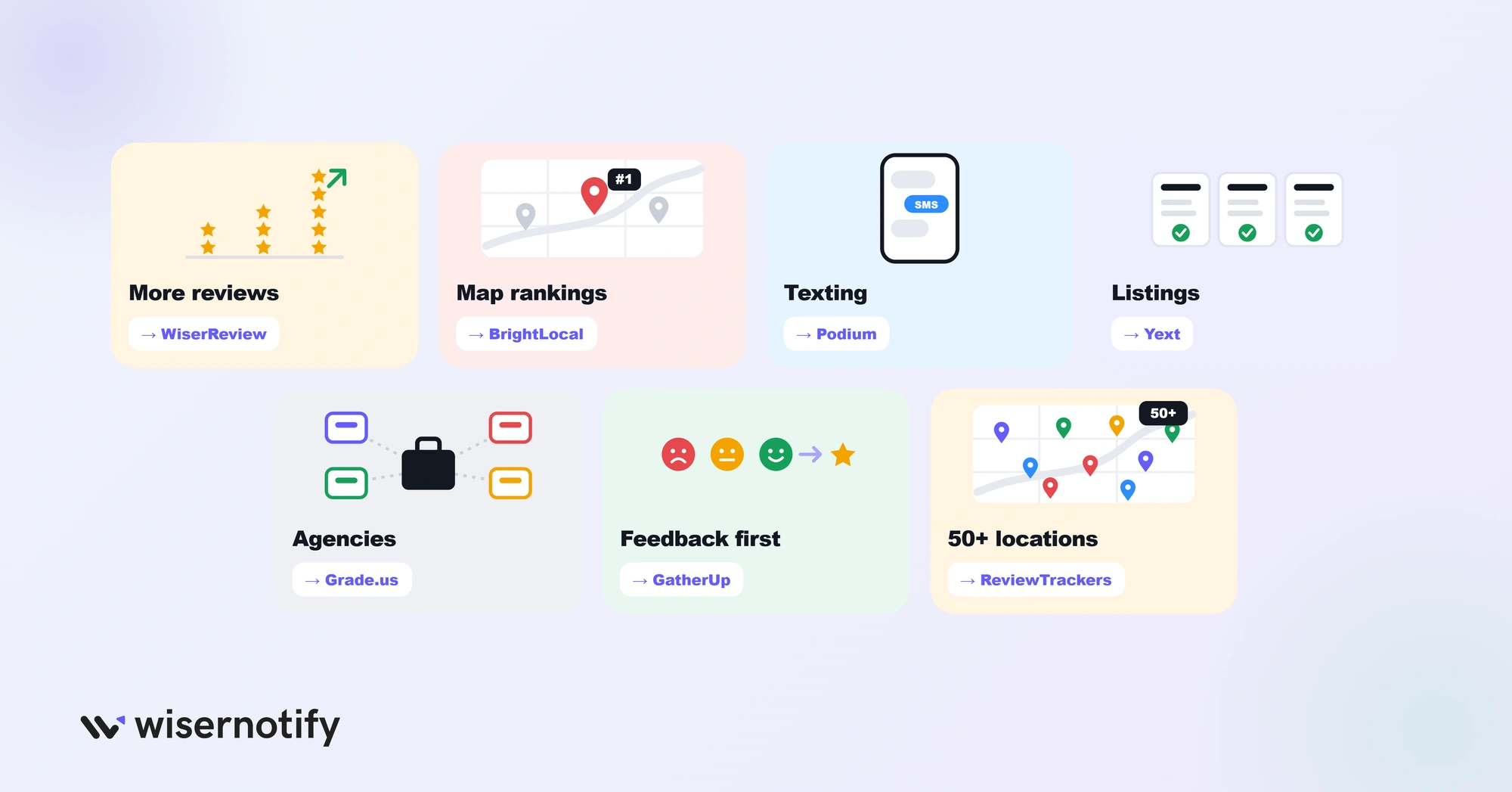
Start from the one job you most need done, then check the price unit against your location count.
- More reviews on a tight budget: WiserReview for collection and website display, NiceJob for service businesses that want it fully automatic.
- Map rankings and citations matter: BrightLocal on the Grow plan, so reviews are included.
- Customers prefer texting: Podium, if the messaging and payments justify the price.
- Directory listings are the headache: Yext, paired with a separate review tool.
- You run an agency: Grade.us for white-label review funnels. Agencies that also want listings and social often shortlist Vendasta or SOCi; see these Vendasta alternatives for that route.
- You want feedback before reviews: GatherUp.
- You manage 50 or more locations: ReviewTrackers for analytics, Reputation for a full enterprise suite.
A quick test before you commit: count how many Birdeye modules you opened last month. That number tells you how much platform you need.
Show Real Reviews That Build Trust
Collect and display photo, video, and text reviews with full design control.
How to Switch From Birdeye Safely
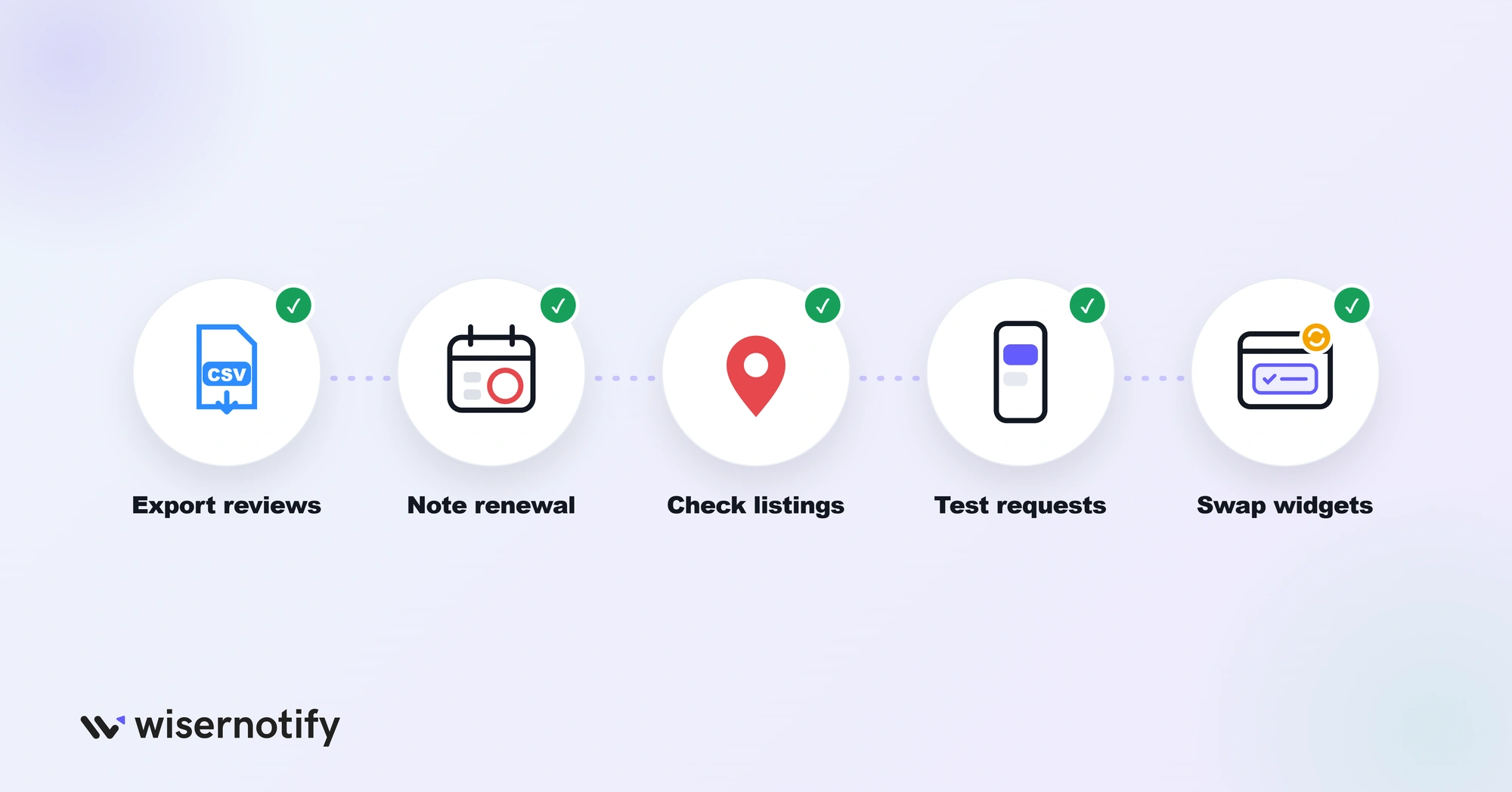
Moving review tools takes an afternoon if you plan it. Most of the damage comes from skipping one of these.
- Export your reviews first. Download everything to CSV before you cancel, so years of feedback can move to the new tool.
- Find your renewal date. Birdeye plans renew yearly. Check the notice period in your contract and send written notice early.
- Check your listings. If Birdeye synced your directory listings, confirm Google, Yelp and Apple Maps still show the right details after you leave.
- Rebuild your review requests. Rewrite the timing and wording, and test a request on your own phone. These review request message templates help.
- Replace your website widgets. Swap the Birdeye embed for the new tool’s widget on the same day, so your pages never show an empty box.
All your reviews in one place
Import your reviews, automate new requests, and display them where customers decide.
Wrap Up
Birdeye is a good product priced for brands that use most of it. If you do, it earns its cost.
If you mainly need reviews, the switch is simple. Pick the tool that matches your one main job, test it on a real customer, and move your reviews over before your renewal date.
Frequently Asked Questions
How much is Birdeye per month?
Birdeye’s reported plans start at about $299 per location per month on an annual contract. Birdeye does not publish prices, so the exact figure comes from its sales team.
Is Birdeye worth it for a small business?
For a single location that mainly wants reviews, usually not. Birdeye pays off for multi-location brands that use reviews, listings and messaging together.
What do Birdeye reviews say?
Users rate Birdeye 4.7 out of 5 on G2 and praise its ease of use and support. The most common complaints are the per-location price and annual contracts.
What is the cheapest Birdeye alternative?
WiserReview starts at $6.75 a month billed yearly for review collection and display. It does not include listings sync or a texting inbox.
Does Birdeye have a free plan?
No. Birdeye has no free plan, and trials are set up through its sales team.
What is the difference between Birdeye and Podium?
Birdeye is an all-in-one reputation platform with listings and social tools. Podium centers on texting, payments and review invites, and costs more at entry level.
Can I move my reviews from Birdeye to another tool?
Yes. Export your reviews to CSV before you cancel, then import them into the new tool.

Krunal Vaghasiya is a marketing tech expert who boosts e-commerce conversion rates with automated social proof and FOMO strategies. He loves to keep posting insightful posts on online marketing software, marketing automations, and improving conversion rates.




 Capterra