I’ve worked with thousands of store owners over the years. And the ones who grow the fastest almost always have one thing in common: they take reviews seriously.
Not just collecting them. Using them. Responding to them. Putting them front and center where shoppers can actually see them.
Here’s the thing: 93% of consumers read reviews before making a purchase. That number hasn’t budged in years. If anything, shoppers are more review-dependent now than ever. A product with zero reviews is a product most people won’t touch.
So if you’ve been treating reviews as a “nice to have,” this post is your wake-up call.
Below, I’ll break down exactly why product reviews matter for your business, what makes a good review, and how to actually use them to grow.
What Makes a Good Product Review?
Before getting into why reviews matter, it’s worth being clear on what a good review actually looks like. Because not all reviews are created equal.
A useful review is specific. “Great product!” tells a potential buyer almost nothing. “The sizing runs small, but the fabric is really comfortable and holds up after 10 washes” is what people actually need to hear.
Good reviews are also honest. They include both the upsides and the rough edges. Shoppers are suspicious of five-star-only pages. A mix of 4s and 5s with the occasional 3 actually feels more credible than a perfect score. This is one of the big reasons fake reviews hurt brands more than they help over time.
Photos and videos help a lot too. Seeing a real customer’s unboxing photo or a short clip of the product in use gives shoppers a much clearer picture than any product description could.
Also check: 5 Best Product Review Software for Ecommerce Brands
11 Reasons Why Product Reviews Are Important
Let’s get into it. Here’s what reviews actually do for your business.

1. They Build Trust Before You Even Say a Word
When someone lands on your product page for the first time, they don’t know you. They don’t know if your sizing is accurate, if your customer service actually picks up the phone, or if your product is worth the price.
Reviews answer those questions for them.
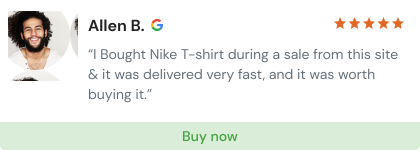
A product with 200+ reviews and a 4.6-star average practically sells itself. It’s already done the work of convincing the shopper that other people tried it and it was worth it. That’s a level of trust your product copy alone can’t replicate.

This is exactly why building trust in your online store starts with showing proof, not just making promises.
2. Reviews Are Your Most Powerful Form of Social Proof
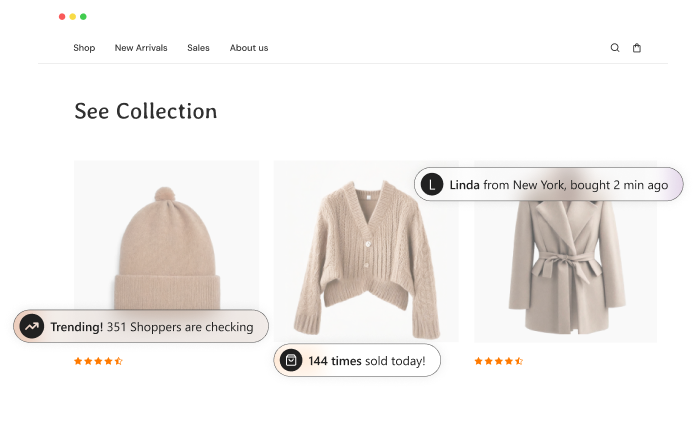
Social proof is the psychological nudge that says, “Other people made this decision, so it’s probably safe.” Reviews are the most direct version of that nudge.
When a shopper sees a string of happy customers, it removes doubt. They think: these aren’t marketing claims, these are real people. That shift is huge for conversion.
You can take it further by pulling strong quotes and using them in ads, emails, and landing pages. A single powerful review quote can outperform the best copywriter you’ve ever hired. The social proof statistics back this up: products with visible reviews convert significantly better than those without.

Also check: 27 Winning Social Proof Examples That Seal the Deal
3. They Directly Influence Buying Decisions
This one is straightforward. When a shopper is on the fence, reviews push them one way or the other.
Positive reviews reduce hesitation. Negative reviews (if there aren’t too many) actually build credibility. Reading through reviews gives shoppers the specific details they need: does the battery last? Is the fit true to size? Does the software actually work the way it claims?
That depth of information is what takes someone from “I’m thinking about it” to “I’m adding it to my cart.”

The consumer decision-making process is heavily shaped by peer input, and reviews are the most accessible form of peer input online.
4. More Reviews = Better SEO
Google loves fresh, relevant content. And reviews are exactly that.
Every new review on your product page adds unique text that search engines can index. It naturally includes the keywords your customers use, which is the real language of your market, not just the terms your team thinks to write. That’s genuinely valuable for rankings.
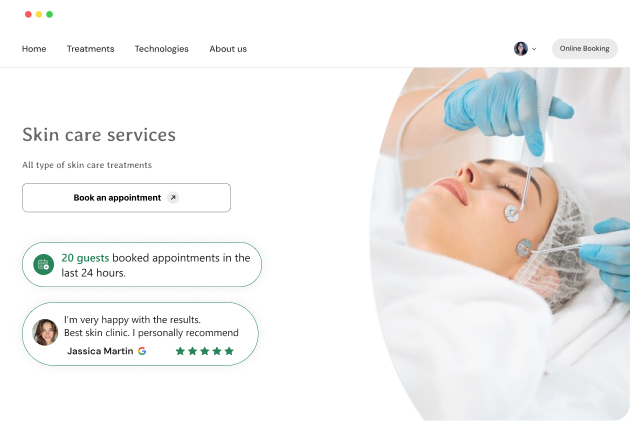
Google reviews, in particular, have a direct impact on local SEO. More reviews and a higher average rating tend to push your listing higher in local search results.

User-generated content from reviews is a steady source of fresh signals. Check out some UGC examples to see how brands use this content across their marketing. That’s a lot of SEO value coming in passively, just from happy customers sharing their experiences.
5. They Tell You What’s Actually Wrong with Your Product
This one doesn’t get talked about enough.
Negative reviews are annoying. But they’re also one of the most useful data sources you have. If five separate customers mention the same sizing issue, that’s a product problem you need to fix. If people keep saying the packaging is confusing, that’s feedback worth acting on.
I’ve seen brands completely turn around product lines by reading what customers actually wrote in one-star reviews. Not fun to read. Extremely useful.

Responding to negative reviews publicly also matters. It shows potential buyers that you take issues seriously and that real people are running this business. How you handle criticism is a huge part of managing your online reputation. That kind of transparency builds trust fast.
6. Reviews Help You Sell More (Especially to New Customers)
New customers don’t have a relationship with you. They’re taking a risk. Reviews lower that risk significantly.
Products with reviews on their online shopping pages see measurably higher conversion rates than those without. There’s a reason Amazon’s most successful sellers obsess over getting reviews. It’s not vanity, it’s revenue.

The math is simple: more trust leads to more first purchases, and more first purchases lead to repeat customers. Reviews sit right at the start of that chain. This is exactly why product reviews directly boost ecommerce sales.
7. They Encourage Even More Reviews
Here’s something interesting. When shoppers see a product with a lot of reviews, they’re more likely to leave one themselves after buying. It’s a social cue: if others are sharing, it’s normal to share.
This creates a flywheel effect. The more reviews you collect, the more people feel comfortable leaving one. And the more you respond to and acknowledge reviews, the more buyers feel their input is welcome.

Offering a small incentive for leaving a review (a discount on the next order, for example) can jumpstart this cycle early on, especially for newer products. Your review marketing strategy should include a clear process for requesting reviews post-purchase.
Also check: Testimonial vs Review: What Helps You Sell More
8. Your Reviews Are a Competitive Advantage Nobody Can Copy
Your competitor can copy your product. They can undercut your pricing. They can launch a very similar ad campaign.
They can’t copy your reviews.
Authentic customer reviews are 100% unique to your business. A competitor launching today starts at zero reviews. You, with 500+ genuine reviews built over time, have a trust advantage they simply can’t shortcut.

That’s a real moat. And it compounds. The more reviews you accumulate, the harder that advantage is to close. Verified reviews carry extra weight because shoppers know they come from actual buyers, not fake accounts or paid writers. They’re one of the strongest trust signals you can show on a product page.
Also check: 15 Best Product Review Websites You Can Actually Trust (2026)
9. They Deepen Customer Relationships
Responding to reviews (all of them, not just the glowing ones) tells your customers something important: you’re paying attention.
When someone takes five minutes to write a thoughtful review and you respond with a genuine, personalized reply, they remember that. It builds loyalty. It turns a one-time buyer into someone who comes back and recommends your store to their friends.

Strong customer engagement through reviews is one of the lowest-cost retention strategies available to any ecommerce brand. You’re not paying for it. You’re just showing up. Word of mouth often starts exactly here. Check the word-of-mouth marketing statistics if you want to see how much it matters.
10. They Give Shoppers Deeper Product Understanding
Your product descriptions are written by your team. Reviews are written by actual users who’ve lived with the product.
That difference matters. A reviewer who mentions that the bag fits a 15″ laptop and a water bottle without any extra room is giving information your copy probably doesn’t. A reviewer who says the supplement works best when taken with food? That’s genuinely useful to someone considering a purchase.

Detailed reviews answer the questions you didn’t know to answer. They fill in the gaps that product pages always have. The UGC statistics consistently show that user-created content (including reviews) drives higher engagement and conversion than brand-created content.
Also check: 11 Remarkable Product Recommendation Examples
11. They Shape How People See Your Brand
Over time, your reviews don’t just sell individual products. They shape your brand’s reputation.
A brand with hundreds of positive reviews across products builds an identity as trustworthy, quality-focused, and customer-centric. That reputation carries real weight when someone who’s never heard of you finds your store through a search or a social post.

Positive reviews keep reinforcing that story at scale. And since most shoppers read at least a few reviews before deciding, that story is being told to every new visitor who lands on your pages. This is why active social proof marketing should be a consistent part of your growth strategy, not just a one-time setup.
How to Manage and Use Your Reviews Effectively
Collecting reviews is only half the job. Here’s how to actually manage and leverage them.

Monitor Regularly
Set up alerts or check your review platforms weekly. You want to catch new reviews quickly, especially negative ones. The faster you respond, the better the outcome for both the unhappy customer and the shoppers reading the exchange later.
Respond to Everything
Yes, everything. Thank positive reviewers genuinely. Don’t just paste the same “thanks for your feedback!” reply. For negative reviews, acknowledge the issue, apologize if appropriate, and explain what you’re doing about it. This is visible to everyone.
Put Reviews Where They Convert
Don’t hide reviews on a separate tab or bury them below the fold. Put them on product pages, your homepage, landing pages, and checkout pages. Pull your best quotes into email campaigns and ads. A strong testimonial placed right next to your “Add to Cart” button can meaningfully lift conversion rates. Need inspiration? The testimonial statistics make a strong case for exactly where and how to display them.
Use Review Insights to Improve Your Products
Read your reviews for patterns. What do satisfied customers love most? What do unhappy customers keep mentioning? That information is more valuable than most market research reports, and it costs you nothing to collect.
Encourage Reviews the Right Way
Send post-purchase emails asking for a review. Make the process quick and easy. You can offer a small incentive, but never ask only for positive reviews. That’s both unethical and easy for savvy shoppers to spot. Authentic, honest reviews are far more effective than polished, incentivized ones.
Collect and Display Product Reviews with WiserReview

Knowing why reviews matter is one thing. Actually building a review system that runs itself is another.
That’s exactly what WiserReview is built for. It’s a review management platform designed for ecommerce brands that want to collect more reviews, display them where they convert, and turn customer feedback into real revenue.
Here’s what you get with WiserReview:
Automated review collection. Send post-purchase review request emails automatically, no manual follow-up needed. Set it once and let it run.
Beautiful on-site widgets. Display star ratings, review carousels, and photo reviews directly on your product pages, homepage, and checkout. Place them exactly where shoppers need reassurance most.
Photo and video reviews. Collect rich UGC from customers, product photos, unboxing clips, real-world use cases, the kind of content that converts browsers into buyers better than any ad.
Google Shopping integration. Sync your reviews to Google to show star ratings in search results and Shopping ads. More stars in search means more clicks before anyone even lands on your site.
Review syndication. Aggregate reviews across multiple product variants and display them together so no product ever looks like it’s starting from zero.
AI-powered insights. Spot patterns in your reviews automatically. See what customers love, what they’re asking about, and where friction is hiding, without reading every single review manually.
If you’re serious about using product reviews to grow your store, WiserReview gives you the infrastructure to do it properly. Try WiserReview free and start turning your customer feedback into your strongest sales asset.
All your reviews in one place
Collect reviews, manage every response, and display them where they matter most.
Wrapping Up
Product reviews aren’t just feedback. They’re one of the most powerful sales tools you have.
They build trust with people who’ve never heard of you. They answer the questions your copy can’t. They give you a competitive edge that nobody can easily replicate. And over time, they shape how your entire brand is perceived.
If you’re not actively collecting, displaying, and responding to reviews right now, that’s worth changing today. The stores that treat reviews as a core part of their growth strategy consistently outperform the ones that treat them as an afterthought.
Start with one thing: make it easier for your customers to leave a review after they buy. The rest tends to follow.