
58 Google Review Statistics for 2026 (Verified Data)
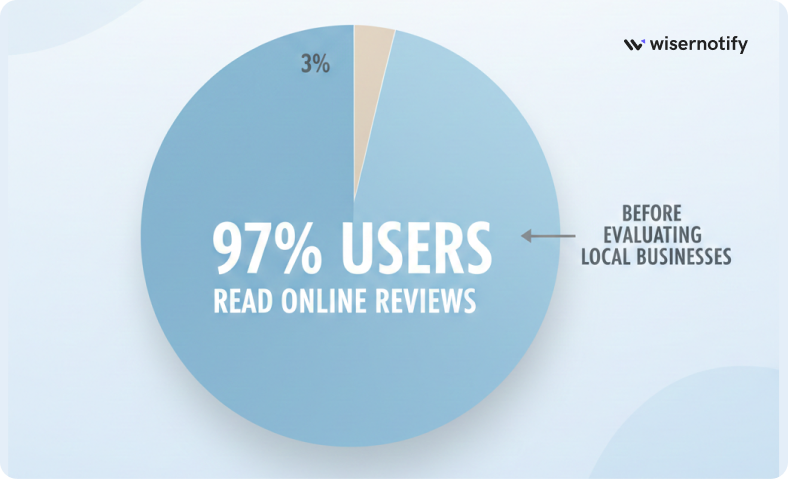
Google is still where most people check a business before they buy. 97% of consumers read reviews for local businesses, and 71% of them use Google to do it.
The bar keeps rising. More shoppers now demand 4.5 stars or better, fresh reviews from the last few weeks, and a reply from the owner within days.
Below are 58 Google review statistics for 2026, grouped by how people read reviews, the rating they expect, how requests and responses change results, and how reviews affect local rankings.
Key takeaways
- 97% of consumers read reviews for local businesses, and 41% read them every time.
- 68% will only use a business rated 4 stars or higher, and 31% want 4.5 or more.
- 74% only care about reviews from the last three months.
- 83% of customers who are asked for a review leave one.
- Responding to every review, instead of none, lifts Google profile conversions by 16.4%.
Google Review Statistics at a Glance
| Statistic | Figure |
|---|---|
| Consumers who read reviews for local businesses | 97% |
| Consumers who use Google for reviews | 71% |
| Consumers who require 4+ stars | 68% |
| Consumers who skip businesses with under 20 reviews | 47% |
| Consumers who only care about the last 3 months of reviews | 74% |
| Customers asked for a review who left one | 83% |
| Consumers who expect an owner response | 89% |
| Conversion lift from responding to all reviews | 16.4% |
| Conversion lift per 0.1-star rating increase | 4.4% |
| Policy-violating reviews Google removed in 2025 | 292 million+ |
How Consumers Read Google Reviews
Reviews are part of nearly every local buying decision, but Google now shares that attention with maps apps and AI tools.
1. 97% of consumers read reviews for local businesses.
2. 41% “always” read reviews when browsing for a business, up from 29% a year earlier.
3. 71% of consumers use Google to read reviews, down from 83% in 2025. It is still the most-used source by a wide margin.
4. The average consumer checks six different review sites before choosing a business.
5. 45% now use ChatGPT or other AI tools for local recommendations, up from just 6% the year before.
6. Apple Maps use for reviews nearly doubled, from 14% to 27%.
7. Google hosts about 78% of all local business reviews online.
For broader numbers across every platform, see our online review statistics.
Star Rating and Review Count Statistics
Shoppers set a higher rating bar every year, and a thin review count can knock a business out before the rating is even read.
8. 92% of consumers care about star ratings when choosing a business.
9. 68% will only use a business with four or more stars, up from 55% in 2025.
10. 31% will only use a business rated 4.5 stars or higher, up from 17% a year earlier.
11. Only 10% insist on a perfect five-star rating.
12. 47% won’t use a business with fewer than 20 reviews.
13. Just 9% are willing to use a business with five reviews or fewer.
14. The average Google rating rose by roughly 10% between 2015 and 2022, so a 4.2 means less today than it once did.
Review Recency Statistics
A profile full of old reviews reads as a business that has gone quiet. Most shoppers only look at the last few months.
15. 74% of consumers only care about reviews written in the last three months.
16. 32% look for reviews from the last two weeks, up from 20% the year before.
17. 18% are only swayed by reviews from the last week.
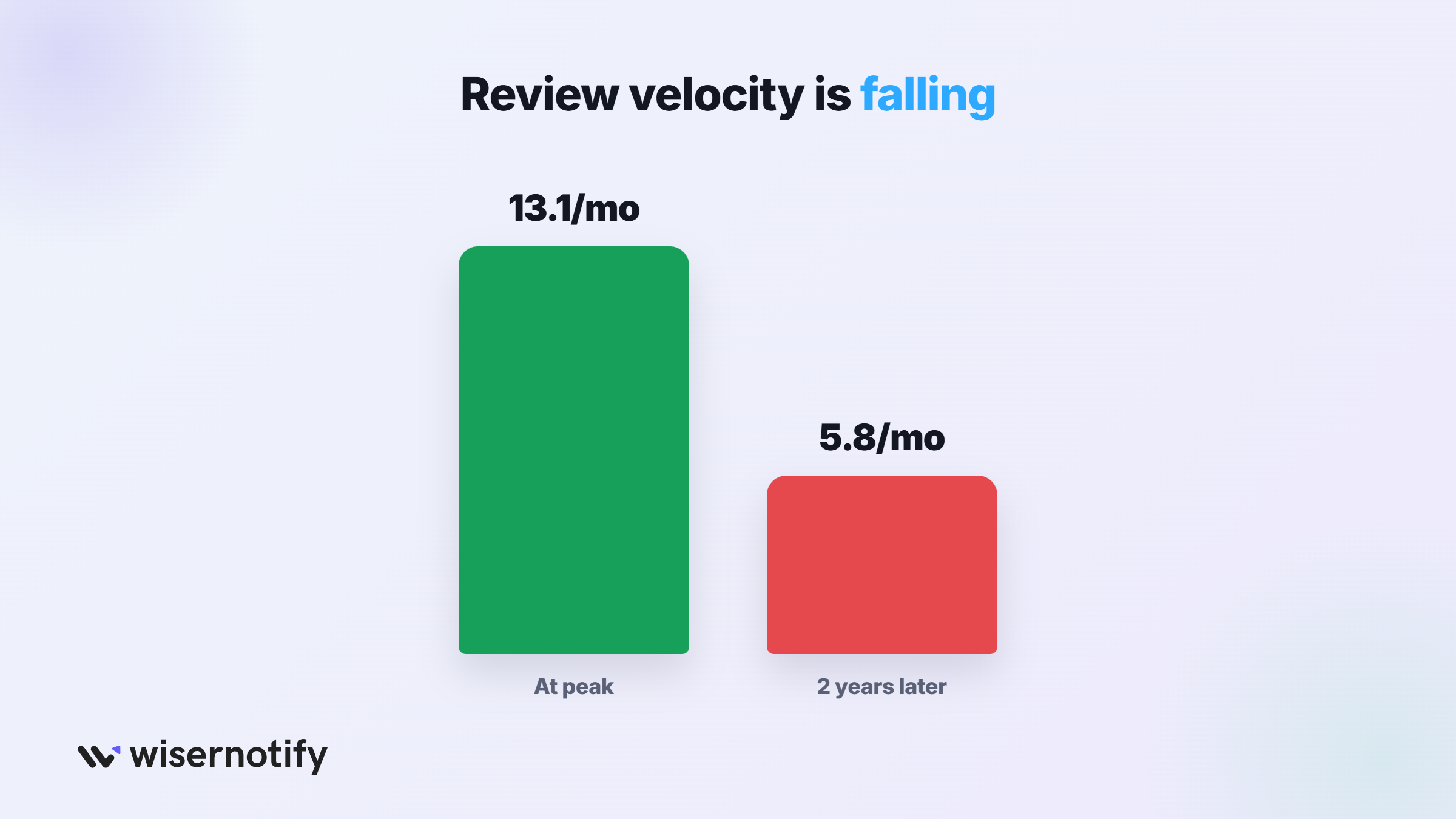
18. Google review volume peaked in August 2019, when the average business earned 13.1 new reviews that month.
19. By July 2022 that had fallen to 5.8 new reviews a month, a 56% drop.
Build trust & FOMO
Highlight real-time activities like reviews, sales & sign-ups.

How Google Reviews Drive Purchases
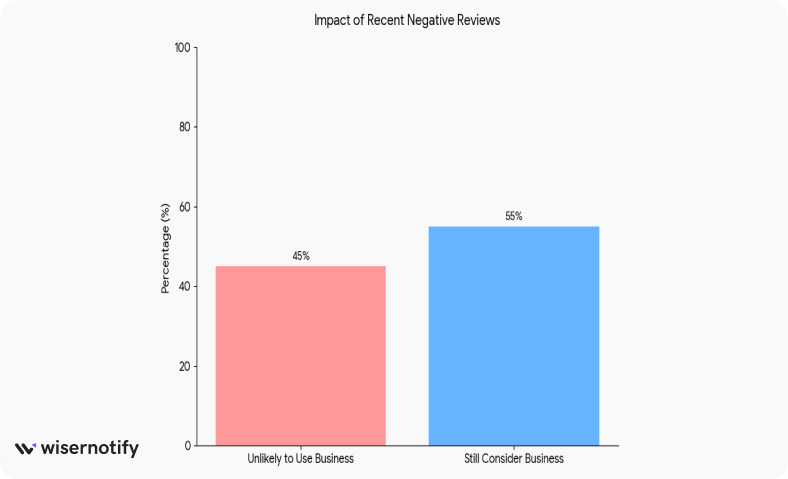
Reviews move people from browsing to buying, and small changes in rating or count show up in real actions on a Google profile.
20. 85% of consumers are more likely to use a business after reading positive reviews.
21. 77% are less likely to choose a business after reading negative reviews.
22. 54% visit a business’s website after reading positive reviews, up from 32% in 2019.
23. 93% of consumers have made a purchase after reading reviews.
24. 27% have spent more than $1,000 on a purchase after reading reviews.
25. Google Business Profiles convert at about 2.3% on average, measured as calls, website clicks and direction requests per search view.
26. Each 0.1-star increase in average rating lifts profile conversion by about 4.4%.
27. A full one-star increase, for example from 3.0 to 4.0, lifts conversions by 44%.
28. Every 10 new reviews improve profile conversion by 2.8%.
29. Businesses in the top three local results earn 126% more traffic and 93% more calls, clicks and direction requests than those ranked below them.
Google Review Request Statistics
The fastest way to get more reviews is still to ask. Most customers say yes when a business makes it easy.
30. 78% of consumers were asked to leave a review by a business in the past 12 months.
31. 83% of those asked went on to leave one.
32. 28% say they “always” write a review when asked, up from 16% in 2025.
33. 69% of consumers wrote a business review in the last 12 months.
34. Google is the most popular place to write reviews, used by 45% of reviewers, ahead of Facebook at 34% and Yelp at 24%.
Need wording for the ask? Use these review request message templates, and see more ways to get more reviews.
Who Writes Google Reviews
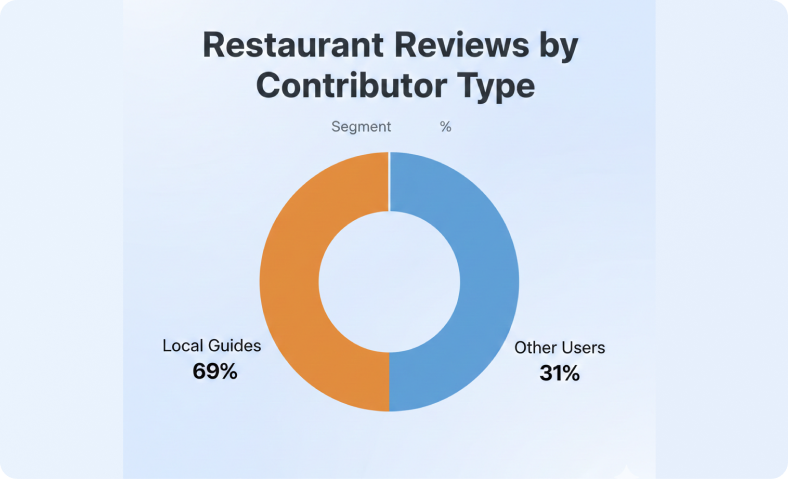
A small group of heavy reviewers writes most of what shoppers read, and many reviews carry no text at all.
35. Local Guides, Google’s volunteer reviewer program, write about 62% of all Google reviews.
36. In restaurants, Local Guides write about 69% of reviews.
37. 52.4% of Google reviews are ratings only, with no written text.
Want to post a review without your full name? Here’s how to leave an anonymous Google review.
Google Review Response Statistics
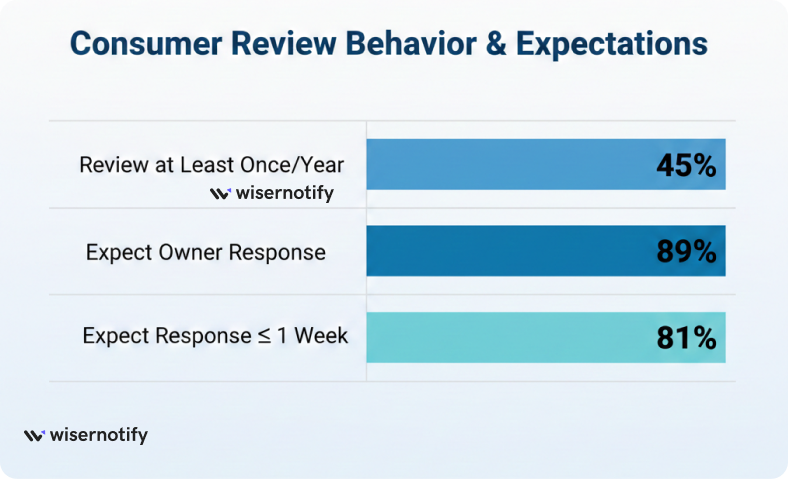
Shoppers now expect a reply, and they expect it fast. A generic reply can hurt as much as none.
38. 89% of consumers expect business owners to respond to reviews.
39. 19% expect a response the same day they post, up from 6% in 2025.
40. 32% expect a response by the next day, up from 18%.
41. 81% expect a response within a week.
42. 80% say they’re likely to use a business that responds to all of its reviews.
43. 42% are unlikely to use a business that never replies.
44. 50% are put off by templated or generic replies.
45. Responding to every review, instead of none, lifts Google profile conversion by 16.4%.
46. Every additional 25% of reviews answered adds roughly 4.1% to conversion.
For wording that doesn’t sound templated, use these Google review response examples.
Google Reviews and Local SEO Rankings
Reviews are one of the few local ranking signals a business can improve every week. In the 2026 expert survey of 187 local pack factors:
47. High Google star ratings rank #6.
48. The number of Google reviews with written text ranks #9.
49. Review recency ranks #11.
50. A steady flow of reviews over time, rather than bursts, ranks #14.
Read together, these say the same thing as the consumer data: keep ratings high, get customers to write a few words, and keep reviews arriving every month.
Build trust & FOMO
Highlight real-time activities like reviews, sales & sign-ups.
Fake Google Review Statistics
Google is removing more fake content every year, and consumers want businesses that cheat to pay a real price.
51. Google blocked or removed more than 292 million policy-violating reviews in 2025, up from 240 million in 2024.
52. Google published more than 1 billion helpful reviews in 2025.
53. Google removed more than 13 million fake Business Profiles and restricted over 782,000 accounts in 2025.
54. 63% of consumers believe review platforms should be responsible for stopping fake reviews.
55. 57% think a business caught using fake reviews should be banned from review platforms.
56. 46% want businesses that break the rules removed from Google search results.
The full picture across every platform is in our fake review statistics.
AI and Google Reviews
AI tools now sit between shoppers and reviews, summarizing them before anyone reads the full text.
57. 42% of consumers trust AI recommendations as much as traditional reviews for local businesses.
58. 82% read AI-generated review summaries to help them decide.
That makes the content of your reviews matter more. Detailed reviews that mention specific services give AI summaries something useful to repeat.
Showing Google Reviews on Your Website
Your Google rating only helps shoppers who see it. Most visitors to your website never open your Business Profile.
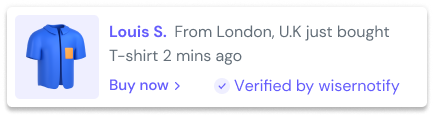
WiserNotify can pull your Google reviews and show them as small review notifications on your site, alongside recent sales or sign-ups. You connect your Google Business Profile, pick a minimum star rating, and choose the pages where reviews appear.
For more options, see how to add Google reviews to a website and compare Google review management tools.
Build trust & FOMO
Highlight real-time activities like reviews, sales & sign-ups.
Wrap Up
Google reviews now work on a short clock. Shoppers want a strong rating, a steady stream of new reviews and a quick, human reply.
Ask every happy customer, answer every review, and keep your newest reviews fresh. That habit covers most of what these numbers reward.
Frequently Asked Questions
What percentage of consumers read Google reviews?
97% of consumers read reviews for local businesses, and 71% use Google to do it, making it the most-used review source.
What Google rating do customers expect?
68% of consumers will only use a business rated 4 stars or higher, and 31% want at least 4.5 stars.
How many Google reviews does a business need?
47% of consumers won’t use a business with fewer than 20 reviews, so 20 is a useful first target.
How quickly should you respond to Google reviews?
Within a week at most. 81% of consumers expect a reply within seven days, and many now expect one the same or next day.
Do Google reviews affect local SEO?
Yes. Local SEO experts rank high star ratings, reviews with text and review recency among the most important local pack factors.

Krunal Vaghasiya is a marketing tech expert who boosts e-commerce conversion rates with automated social proof and FOMO strategies. He loves to keep posting insightful posts on online marketing software, marketing automations, and improving conversion rates.




 Capterra