
Review Marketing: What It Is and How to Do It in 2026

Review marketing is the work of collecting customer reviews on purpose, responding to them, and putting the best ones in front of buyers. Instead of hoping feedback shows up, you build a system that produces it every week.
It matters more in 2026 than it ever has. Reviews shape your Google ranking, your map pack spot, and now the answers AI assistants give when someone asks about your business.
This guide covers the full loop. How to collect and respond to reviews, the rules on paying for them, where to display and reuse them, and what to measure.
Key takeaways
- Review marketing runs as a loop. Collect, respond, display, amplify, repeat.
- Paying or rewarding people for reviews breaks FTC rules and Google policy. Asking everyone, with no reward attached, is safe.
- Reviews sitting on Google do nothing for your site. Pull them onto product and checkout pages where people decide.
- AI assistants lean on review content when they answer questions about brands, so detailed reviews now work twice.

Show Real Reviews That Build Trust
Collect and display photo, video, and text reviews with full design control.
What Is Review Marketing?
Review marketing means treating customer reviews as a marketing channel you run, not feedback you receive. You ask for reviews at the right moment, reply to what comes in, and place the strongest ones where buyers see them.
The simplest way to picture it is a four step loop.
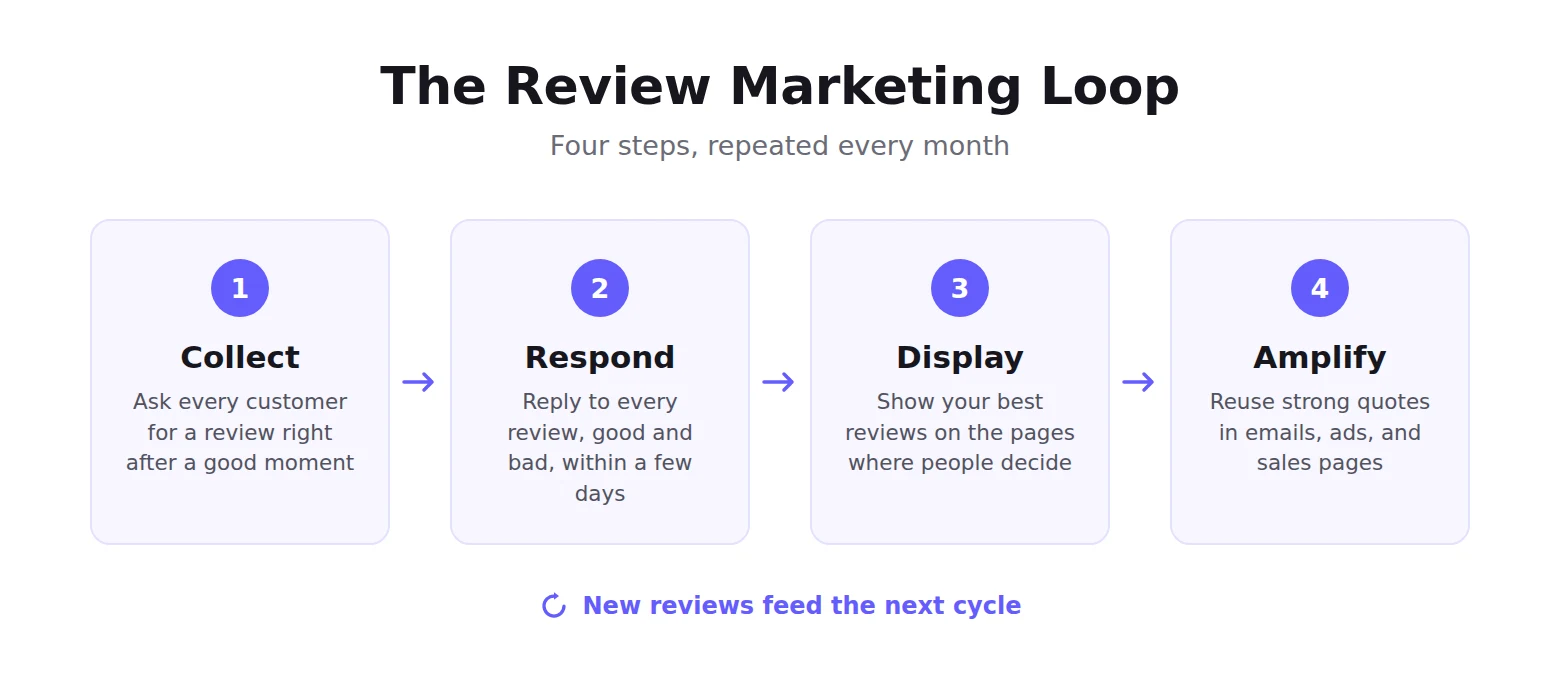
Collect comes first. You ask every customer for a review right after a good moment, such as a delivered order or a finished project.
Respond comes next. You reply to every review within a few days, including the rough ones, because replies are public proof that you listen.
Then you display. Your best reviews move onto the pages where buying decisions happen, like product pages, pricing pages, and checkout.
Amplify closes the loop. Strong quotes get reused in emails, ads, and sales conversations, and the new customers they bring in feed the next cycle.
Why Review Marketing Matters in 2026
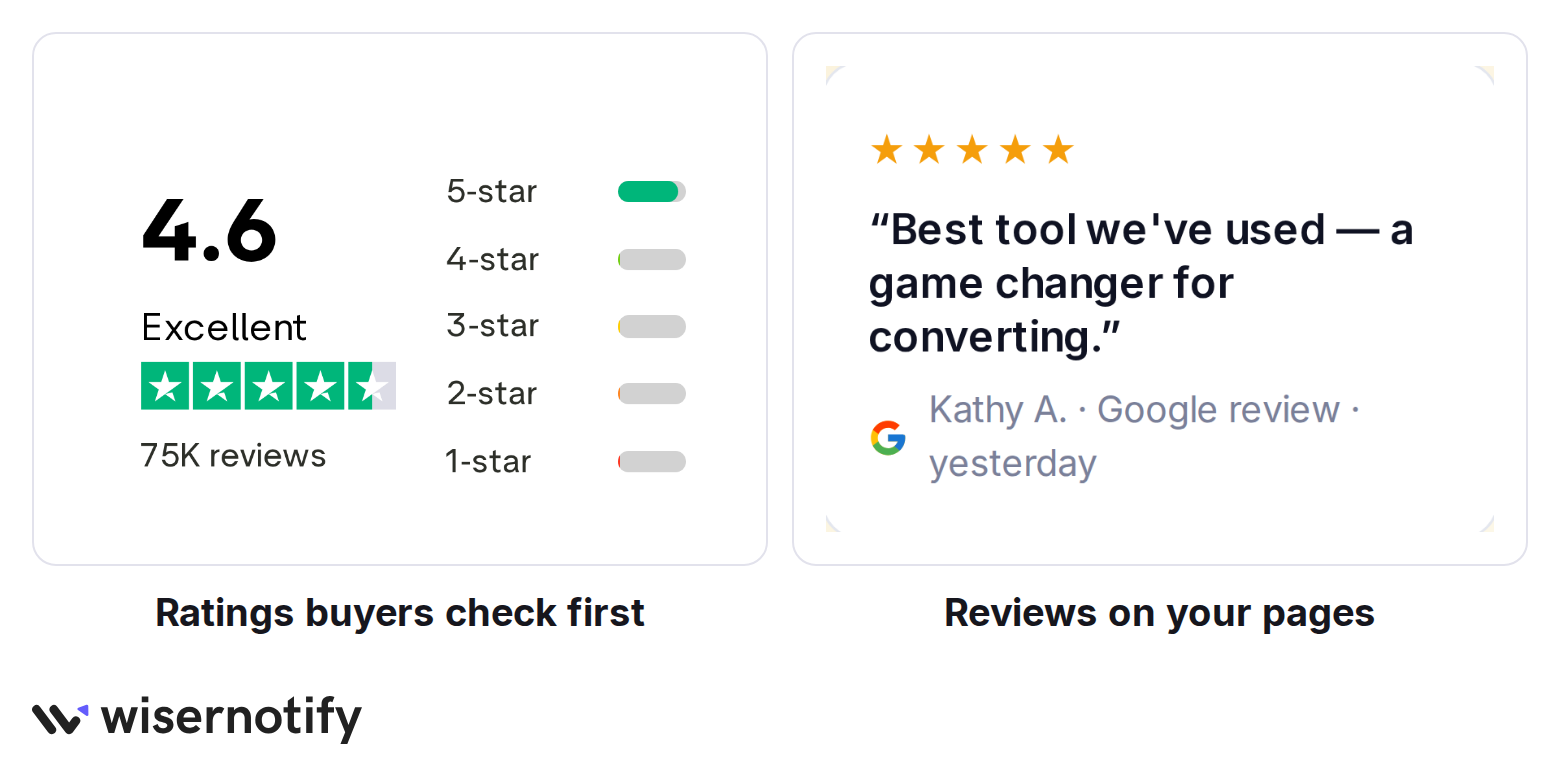
A planned review program pays off in four places at once.
- Buyers check reviews before they check you. Most people read what other customers say before they trust a price, a promise, or a product photo. A thin or stale review profile reads as a warning sign.
- Google uses review signals for local ranking. Review volume, recency, and ratings all feed how you rank in the map pack. A steady flow of fresh reviews beats a big pile of old ones. Our Google review statistics post breaks down the numbers.
- AI assistants quote reviews in their answers. When an AI assistant answers a question about a brand, 57% of the sources it cites are reviews and social proof. Your review pages are now source material for machines, not just people.
- Reviews on your own site lift conversion. A visitor who sees recent, specific reviews next to the buy button has one less reason to leave and compare. That is the part most businesses skip.
Where to Collect Reviews First
Not every platform deserves your effort. Start where your buyers already look, then add a second home once the first one has momentum.
| Business | Start here | Add next | Why |
|---|---|---|---|
| Local and service | Google Business Profile | The map pack is the first thing nearby customers check | |
| Ecommerce store | Product reviews on your own site | Google, Trustpilot | On-page reviews sell; outside profiles reassure first-time buyers |
| SaaS | G2 and Capterra | Buyers shortlist on software directories before they visit you | |
| Coaches and courses | Testimonials you collect yourself | Google, Facebook | Results stories carry more weight here than star counts |
One platform done well beats four done thinly. Review signals compound where the reviews pile up, so spreading ten reviews across four sites leaves you invisible on all of them.
How to Collect More Reviews
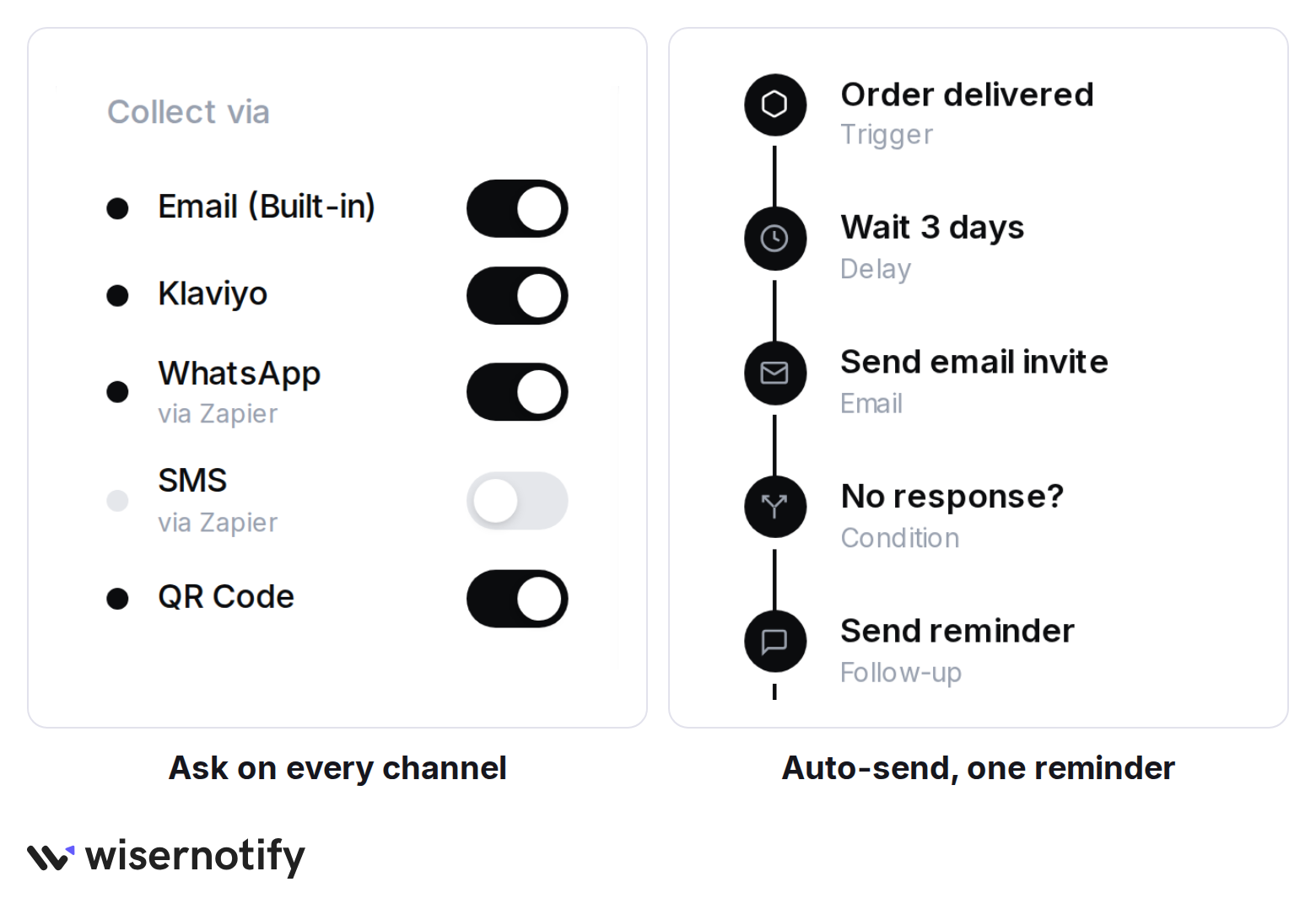
Volume comes from the system, not from asking harder. Five habits do most of the work.
- Ask right after the good moment. The best time is within a day of a delivered order, a solved ticket, or a finished service. Wait two weeks and the memory fades along with the response rate.
- Make it one tap. Send a direct review link, or print a QR code at the counter. Every extra click between the ask and the form loses people.
- Automate the ask. Tie the request to an event, like order delivered or project closed, so it goes out without anyone remembering to send it. WiserReview does this with email and WhatsApp requests after each order, and it accepts photo and video reviews along with text.
- Personalize the request. Send it from a real name, mention what the customer bought, and keep it to three sentences. A generic blast reads like spam and gets treated like spam.
- Follow up once. One polite reminder a few days later catches the people who meant to leave one. Stop after that.
Here are two asks you can copy. Short, named, and tied to the purchase.
The first ask. Hi [first name], thanks for ordering the [product]. If it is working out, would you leave us a quick review? It takes a minute and this link goes straight to the form: [link]
The one follow-up. Hi [first name], just a gentle nudge on this. One or two honest lines about the [product] would help the next buyer decide: [link]
For a deeper walkthrough of the asking side, see our guides on how to get more reviews and how to collect reviews via SMS.
Can You Pay People for Reviews?
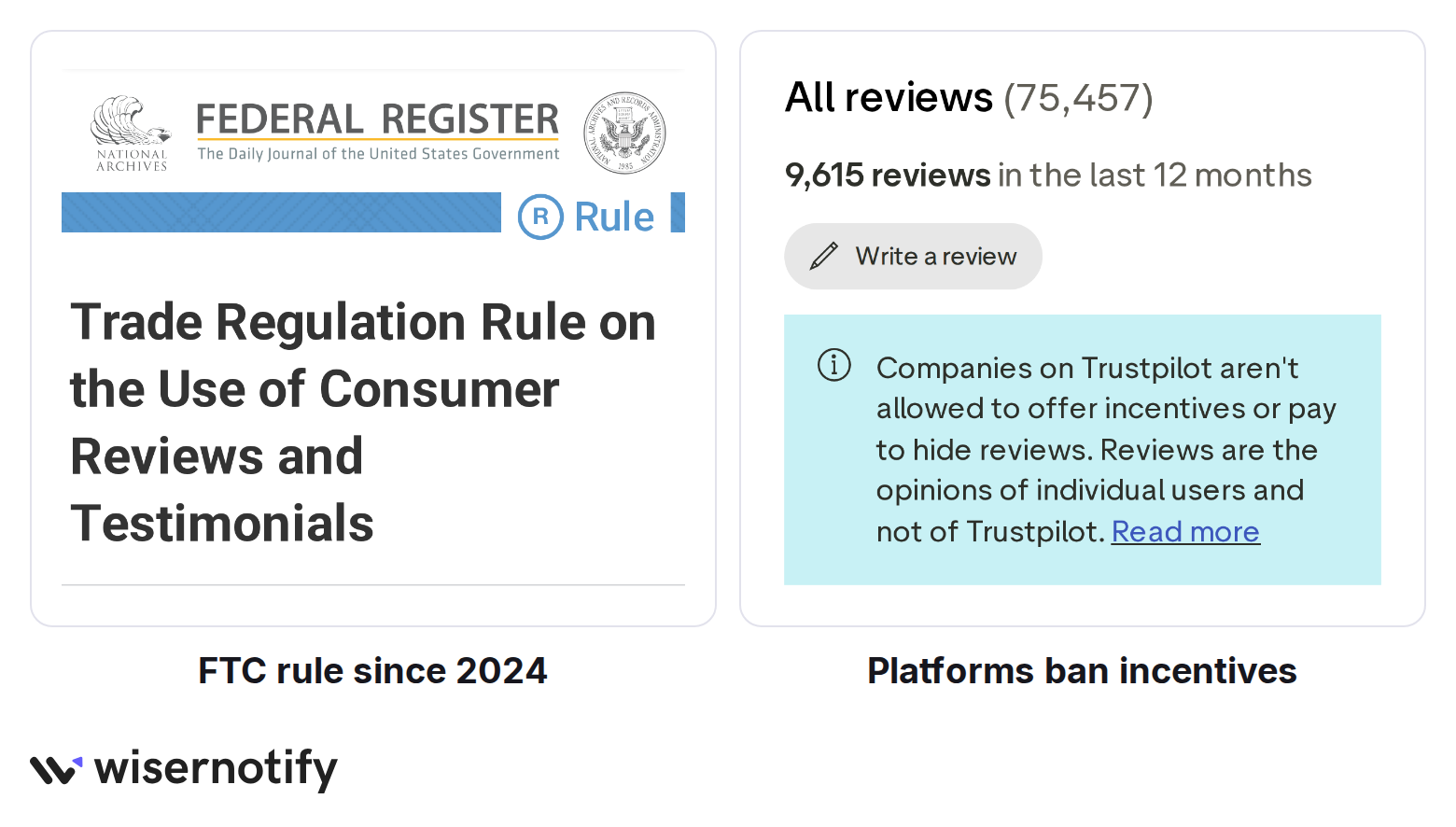
No. The days when a discount for a five star review was a gray area are over.
The FTC’s rule on fake reviews has been in force since October 2024. It bans fake and AI generated reviews outright, and it bans paying or rewarding people for reviews that express a particular sentiment, positive or negative. Our glossary entry on authentic reviews lists everything else the rule covers.
Review gating falls under the same rule. Screening customers first and only inviting the happy ones to review counts as suppression.
Google goes further for its own platform. Any incentive tied to a Google review breaks policy, even a neutral one, and enforcement got sharper through 2026.
Google now surveys reviewers about whether a business offered rewards. It removes incentivized reviews, sometimes retroactively, and it can block a Business Profile from receiving new reviews for a set period.
What stays safe is simple. Ask every customer, use neutral wording, attach no reward to the review itself, and keep loyalty perks separate from feedback. The boring version is the compliant version, and it still works.
How to Respond to Reviews
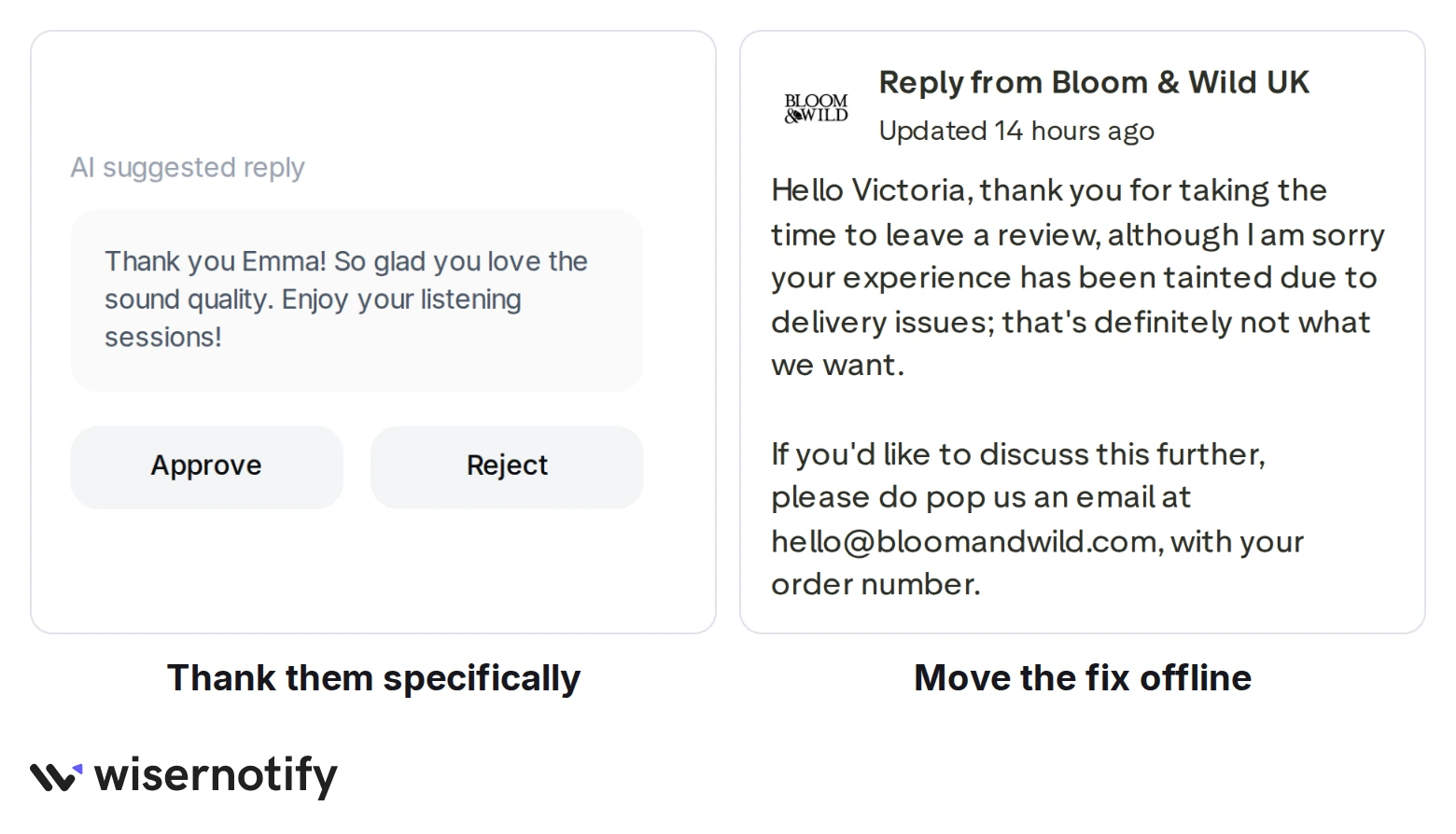
Replies are the half of review marketing most businesses skip. Every reply is written for two readers, the customer who left it and everyone who reads it later.
Replying to Positive Reviews
Keep it short and specific. Thank them by name, mention the thing they praised, and stop.
Vary the wording from reply to reply. Ten identical thank you messages in a row read as automated, which undoes the trust the reviews built.
Replying to Negative Reviews
A bad review handled well wins more trust than another five star rating. Four moves cover it.
- Reply within a day or two. An unanswered complaint ages badly. Speed signals that problems get handled here.
- Acknowledge the specific issue. Repeat back what went wrong in plain words. A canned apology that ignores the details makes it worse.
- Move the fix off the thread. Give a direct email or number and say you will sort it there. Public replies are for accountability, not troubleshooting.
- Close the loop in public. Once it is solved, add a short update to the reply. Future readers see the ending, not just the complaint.
One thing never to do. Offering a refund or a gift in exchange for editing or deleting the review falls under the same rules as paying for reviews, and reviewers often screenshot the offer.
How to Show Reviews on Your Website
Reviews parked on Google or Trustpilot help you get found. They only help you convert once they appear on your own pages, at the moment someone is deciding.
Three placements carry most of the weight.
- Review popups. Small notifications that surface recent reviews while someone browses. WiserNotify pulls your Google and Facebook reviews in and shows them as popups on any page you choose, so new visitors see recent proof without scrolling for it.
- Inline widgets on money pages. A star rating near the add to cart button, a short review strip on the pricing page, a quote above the checkout form. Put proof where doubt shows up.
- A dedicated reviews page. One page that holds full length reviews gives search engines and AI assistants a clean source to read, and gives hesitant buyers a place to binge.
Here is a review popup running on Treat My Wrinkles.
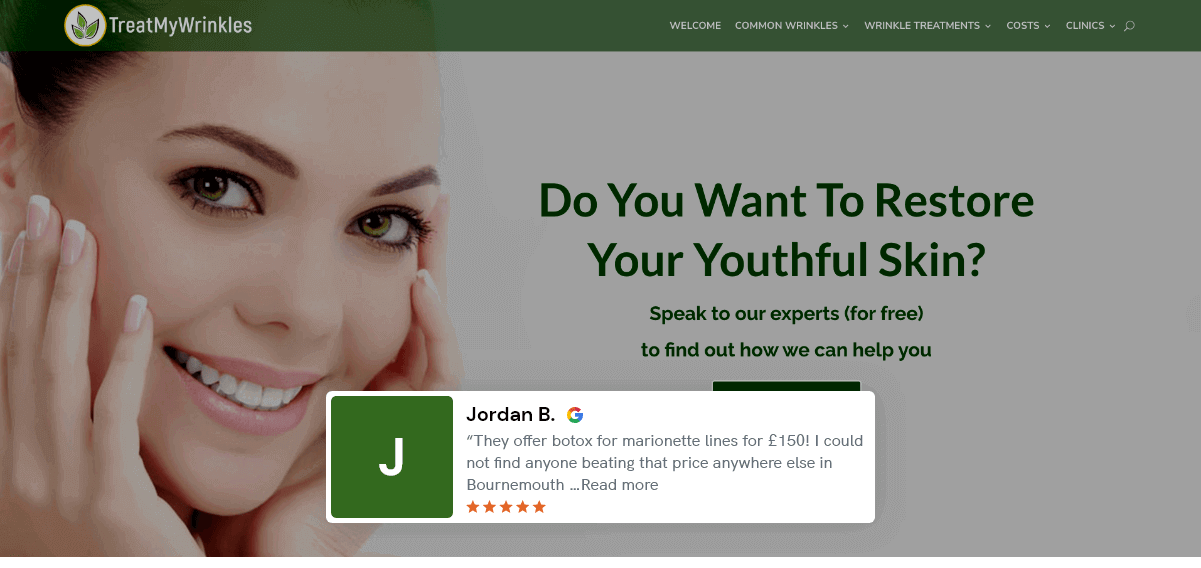
Setting this up is a one time task. Connect your review sources, pick the pages, and the widget keeps itself current as new reviews land.
Our guide on displaying reviews on your website covers every widget type, and adding Google reviews to your website walks through the Google connection step by step.

Boost Conversion Instantly
Add Social Proof & Urgency to your website
How to Use Reviews Beyond Your Website
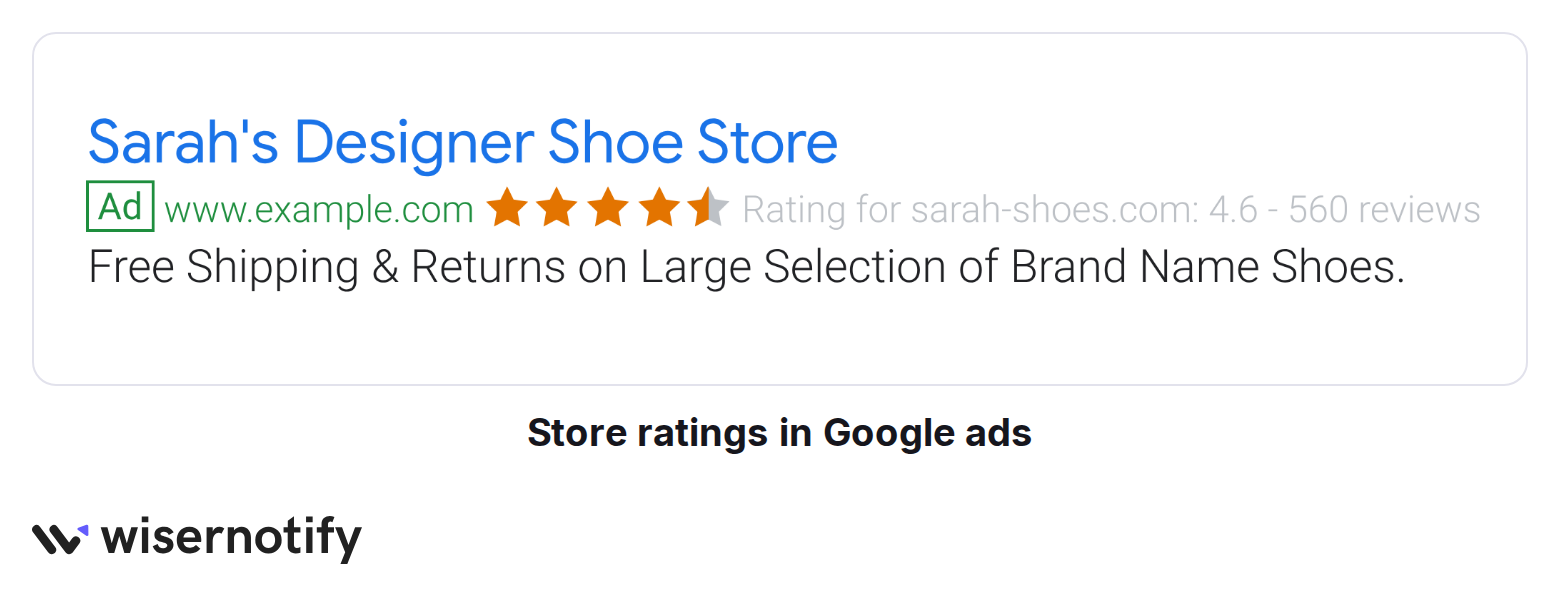
Amplify is the loop step that turns one review into ten impressions. Four channels do most of the work.
- Email. Drop one strong quote near the button in promo and post-purchase emails. A customer sentence outperforms another line of your own copy in the same spot.
- Ads. Review quotes and star visuals make social ads feel like a recommendation instead of a pitch. On search, Google can show store ratings under your ads once it has enough review data from supported platforms.
- Social posts. Screenshot the review, add one line of context, and post it. It is the cheapest content you will publish all month.
- Sales conversations. Keep a short bank of quotes sorted by objection, price, setup time, support, and paste the matching one into proposals and follow-ups.
Always use the review as written and name the source platform. Trimming for length is fine. Rewriting a customer’s words is not.
Review Marketing Examples
Three brands, three different parts of the loop done well. All three were checked live in October 2026.
1. WiserNotify
WiserNotify sells social proof, so its own reviews page has to deliver. The page leads with 5 out of 5 scores from Capterra, G2, and AppSumo, then stacks full length reviews from named users underneath.
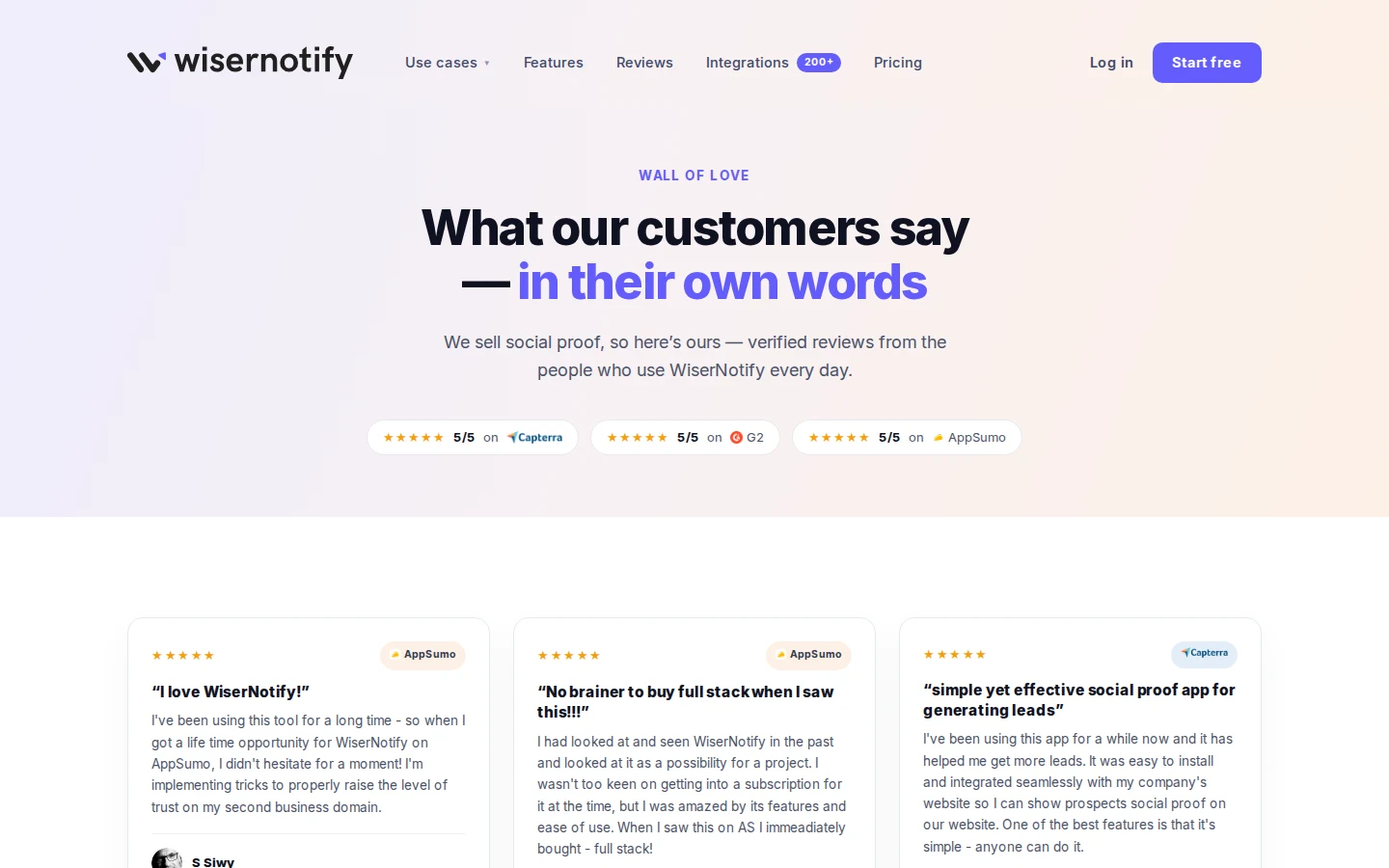
Notice what the long reviews do that star ratings cannot. They name specific outcomes, like getting more leads and easy installs, which is exactly what a hesitant buyer wants to hear in a customer’s own words.
The takeaway applies to any business. Give your reviews a permanent home page, keep the full text, and show the source platform next to each score. More formats to borrow are in our positive review examples roundup.
2. Fabletics
Fabletics shows what responding looks like at scale. Its US Trustpilot profile holds over 149,000 reviews.
The profile badges tell the story. Fabletics invites every customer to review, positive or negative, and has replied to 94% of negative reviews, usually within a week.
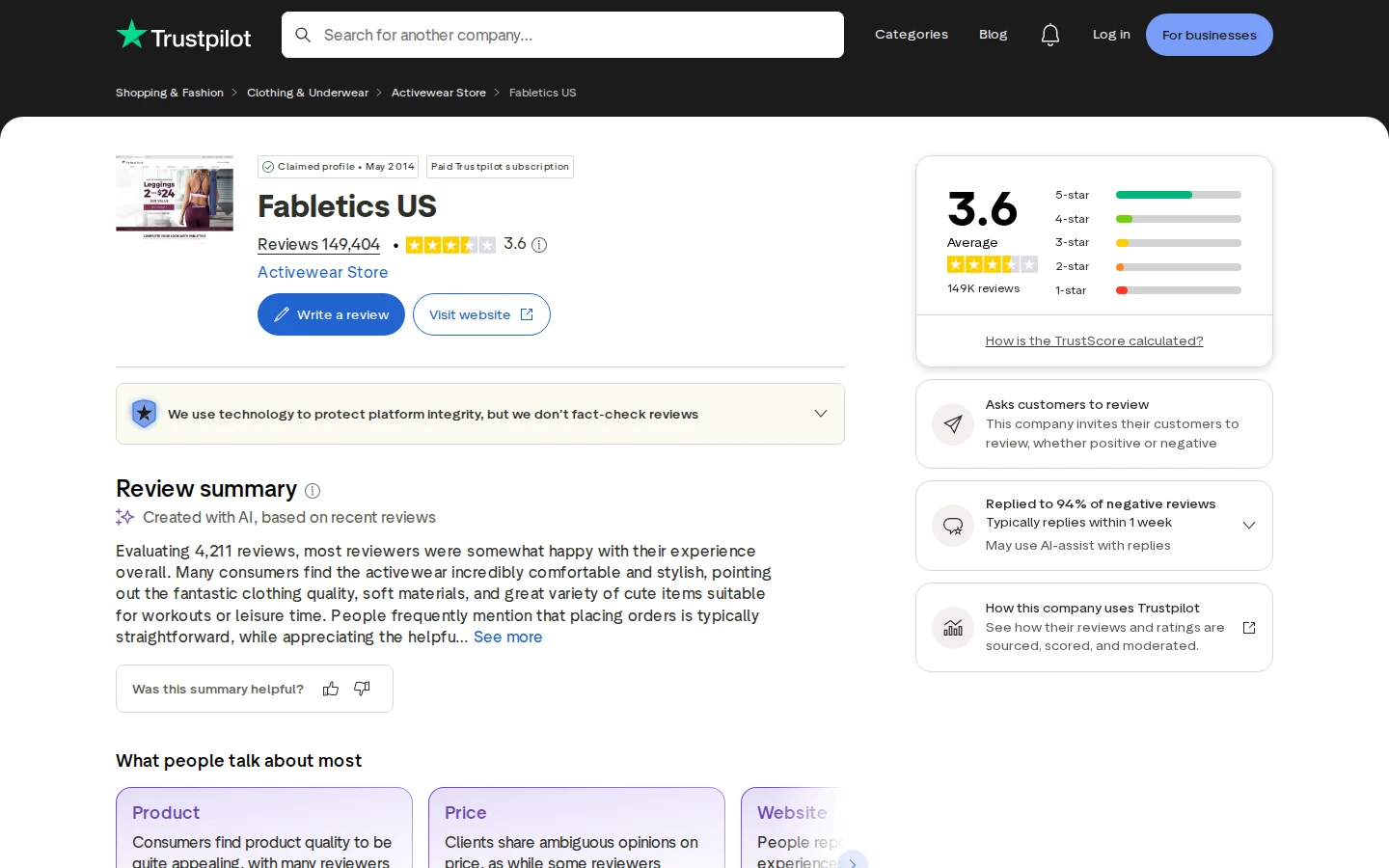
That reply rate is the lesson. A 3.6 average with visible, fast responses to every complaint reads as more trustworthy than a silent wall of five star ratings, because buyers can see how the company behaves when something goes wrong.
No gating, everyone invited, every problem answered in public. That is the compliant playbook running at six figure review volume.
3. Amazon
Amazon shows where review content goes next. On product pages, a Customers say box now sits above the reviews.
The box holds a summary generated by AI from the text of customer reviews, plus clickable themes like quality, charging speed, and value for money.
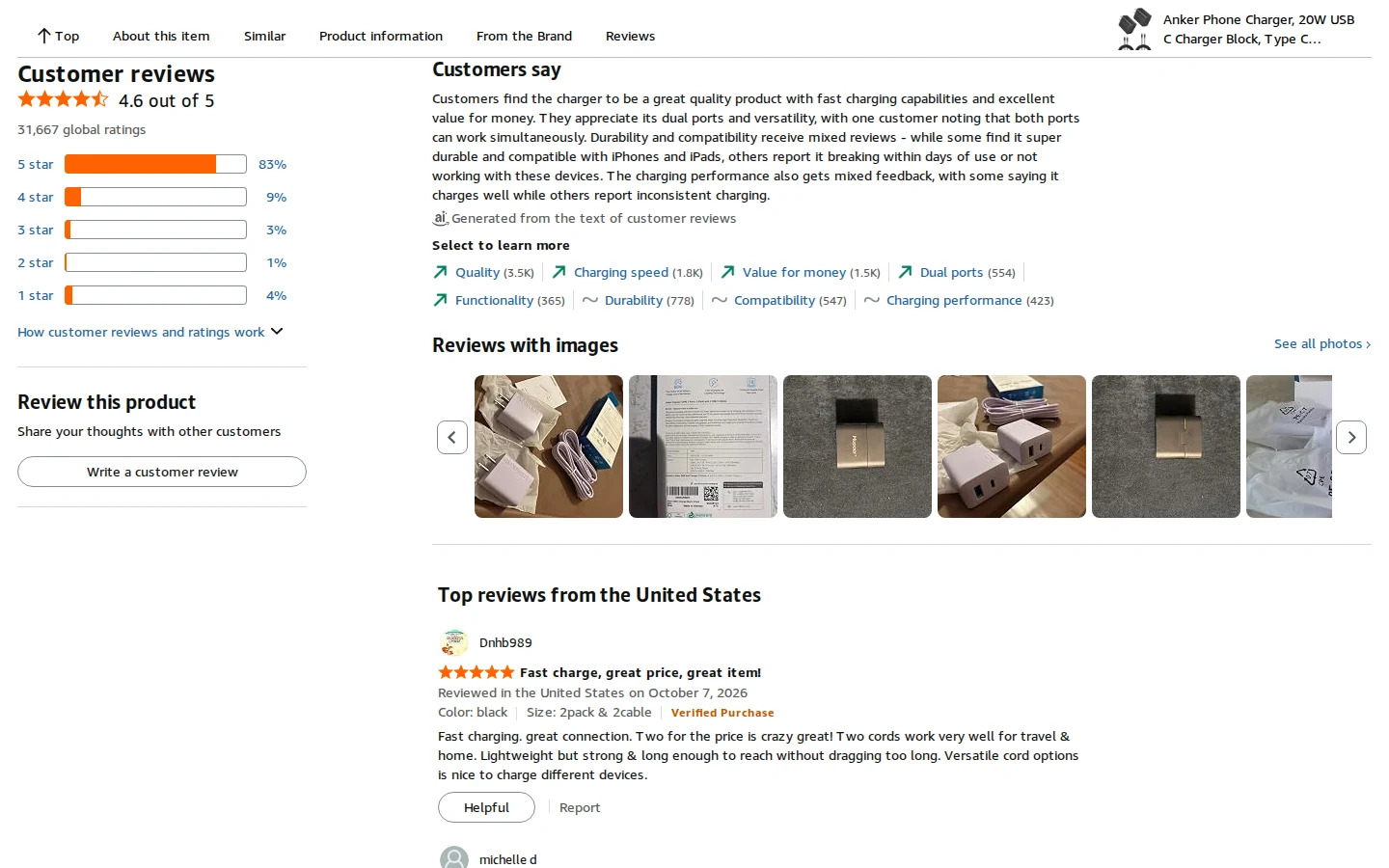
Shoppers read the machine written summary first and only dig into individual reviews to confirm it. The reviews themselves have become raw material.
The move for your business is to ask for specifics. A review that says the charger handled two devices at once gives an AI summary something to work with. A bare five stars gives it nothing.
What to Measure
Four numbers tell you whether the loop is working. Check them monthly.
- Review velocity. New reviews per month on each platform. A stall usually means the ask broke somewhere, not that customers stopped caring.
- Recent rating. Your last 90 days of ratings against the lifetime average. The recent number is the one buyers and algorithms weigh first.
- Response rate and speed. The share of reviews answered and how fast, tracked separately for negatives. This is the metric Fabletics wins on.
- On-site lift. Conversion rate of pages carrying review widgets against matching pages without them. This is the number that justifies the whole program.
Mistakes That Get Reviews Removed
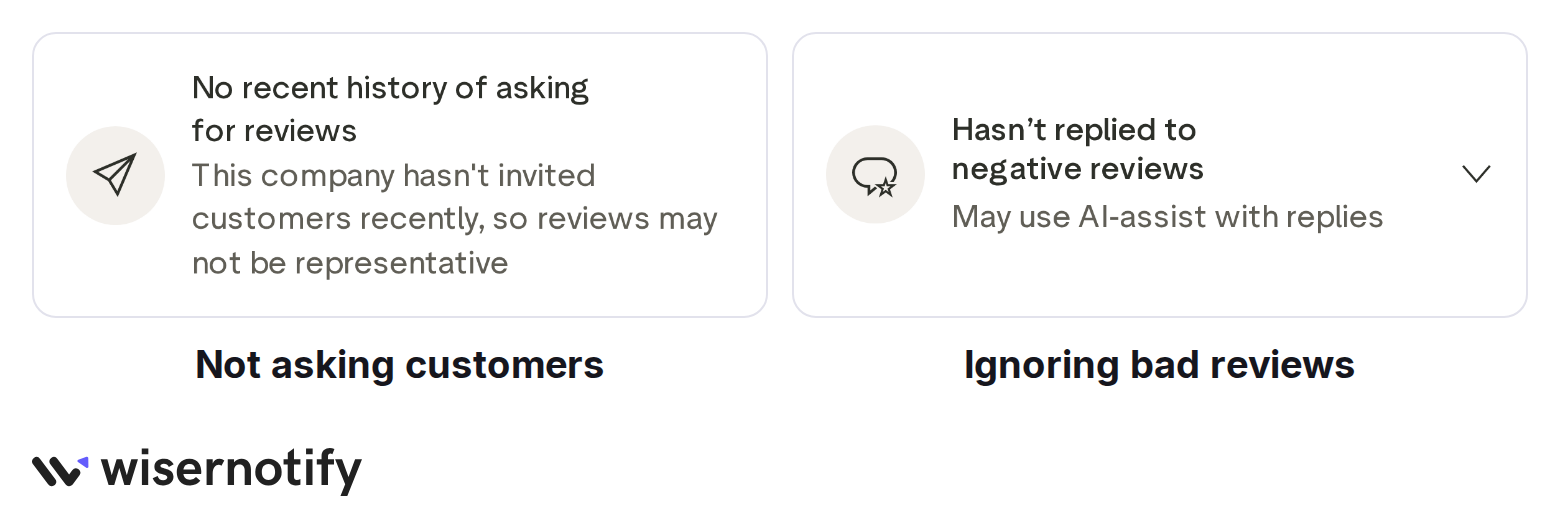
Most review marketing damage is self inflicted. These are the patterns to avoid.
- Paying or gifting for reviews. Discounts, gift cards, and contest entries tied to a review violate FTC rules and get Google reviews pulled, sometimes along with your ability to receive new ones.
- Gating by sentiment. Surveying customers first and only sending happy ones to Google is prohibited, and the lopsided pattern is easy to detect.
- Ignoring negative reviews. A public complaint with no reply tells every future buyer the complaint is accurate.
- Collecting without displaying. Hundreds of reviews on third party sites and zero on your product pages means you did the work and skipped the payoff.
- Asking weeks later. A request that arrives long after the purchase gets ignored, and the few reviews it produces are vague.
Turn Reviews Into Customers
Collect reviews on autopilot and show them on the pages where people decide.
Wrap Up
Review marketing is a loop, not a campaign. Ask after every good moment, answer everything that comes in, and move the best reviews onto the pages where people decide.
Keep the incentives out of it. The rules now have teeth, and the honest version works better anyway.
Start with the next ten customers. Ten fresh, specific reviews placed where buyers can see them will do more for your conversion rate than any headline you rewrite.
Frequently Asked Questions
What is review marketing?
Review marketing is the practice of collecting customer reviews, responding to them, and displaying the best ones where buyers make decisions. It treats reviews as a channel you run rather than feedback you wait for.
Can I offer a discount for a review?
No. FTC rules ban rewarding reviews that carry a particular sentiment, and Google prohibits any incentive tied to a Google review.
How do I start review marketing with no reviews?
Ask your last ten customers directly with a one tap link, then automate the request for every new order. A handful of recent, specific reviews is enough to start displaying.
Where should reviews appear on a website?
Put them where decisions happen, such as product pages, pricing pages, and checkout. A dedicated reviews page helps search engines and AI assistants read them too.
Do reviews affect SEO and AI search?
Yes. Review volume, recency, and ratings feed local rankings, and AI assistants pull from review content when they answer questions about brands.
How many reviews do you need to start?
A handful of recent, specific reviews is enough to start displaying them. Volume helps rankings over time, but recency and detail do the convincing.

Krunal Vaghasiya is a marketing tech expert who boosts e-commerce conversion rates with automated social proof and FOMO strategies. He loves to keep posting insightful posts on online marketing software, marketing automations, and improving conversion rates.




 Capterra