
How to Increase Furniture Sales Online (17 Strategies)

Furniture is the hardest thing to sell online. The order value is high, the delivery is slow, the customer cannot sit on it first, and returns cost you a van rather than a padded envelope.
That combination means a furniture site converts at well under one percent while a clothing site manages two or three. Buyers are cautious because the mistake is expensive and hard to undo, and the levers are different: nobody buys a sofa because of a countdown timer.
Below is what moves furniture, why the platform you post on matters more here than in most categories, and the seventeen changes worth making first.
What a Furniture Marketing Strategy Has to Do
It comes down to four jobs, in this order:
- Get found while they are still browsing. Furniture buying starts months out, usually on Pinterest or Instagram rather than Google.
- Answer the questions a showroom would. Dimensions, fabric, firmness, how it sits in an ordinary living room. Every one of these is a reason not to buy.
- Remove the risk. Delivery, assembly, returns and finance decide more furniture sales than design does.
- Stay in front of them for weeks. The average decision here runs long enough that the shop usually loses patience before the buyer does.
Skip the third one and you are just advertising. Most furniture marketing advice covers the first job and stops there, which is why so much traffic arrives and nothing sells.
Instagram, Pinterest or Facebook for Furniture
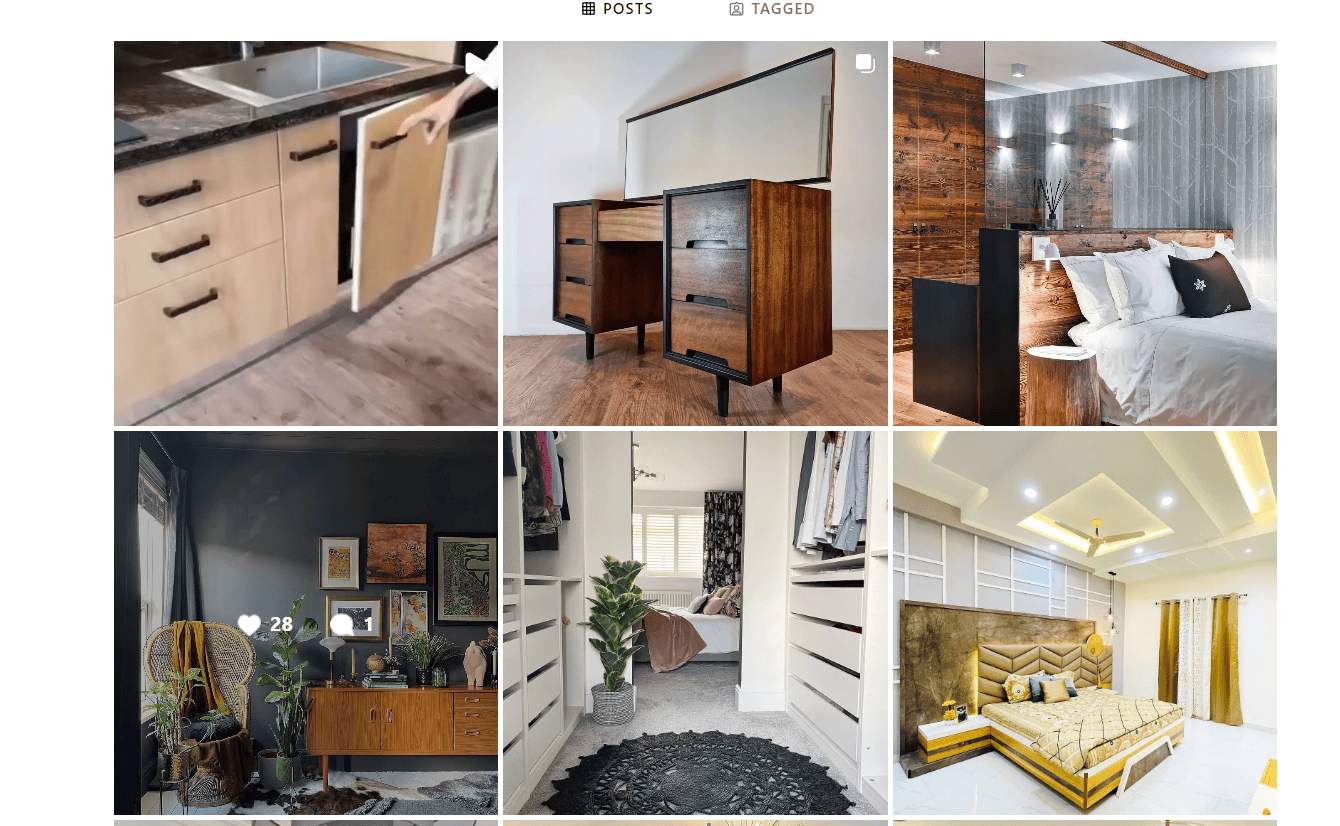
They do different jobs, and which one you lead with makes a real difference here.
- Pinterest, for discovery. People plan rooms there well ahead, pins keep working for years rather than hours, and people are there to shop rather than to chat. If you only do one, do this.
- Instagram, for brand and styling. Reels of a room coming together, before and after posts, customer photos in ordinary homes. Better at building a following than at direct sales.
- Facebook, for local and remarketing. Marketplace still shifts volume, and the ad targeting for people who have just moved house beats anywhere else.
- TikTok is worth testing if you make things. Workshop footage does well, though it rarely sells anything expensive.
For most furniture retailers the split is Pinterest for reach, Instagram for trust, Facebook for ads. Posting the same image to all three is the common mistake, because each one wants a different crop and a different caption.
How to Increase Furniture Sales Online
Seventeen changes, roughly in order of what they are worth.
1. A white background hides the scale
A sofa cut out on white tells a buyer nothing about size. The same sofa beside a rug, a lamp and a doorway tells them whether it fits their life.
Shoot every piece both ways. The cut-out does the listing work, the styled shot makes the decision, and the styled one gets pinned. The online shopping statistics put images near the top of what shoppers weigh.
2. Seat depth is the missing dimension
Width, depth, height, seat height, arm height, leg height, doorway clearance, and the boxed size. Seat depth in particular decides comfort and almost nobody lists it.
It is dull work, and no other change to a furniture product page pays back as well. Add a line about what will not fit through a standard doorway. Buyers who have had a sofa stuck on a staircase never forget it, and saying it upfront comes across as honest rather than off-putting.
3. Scale is what photos cannot show
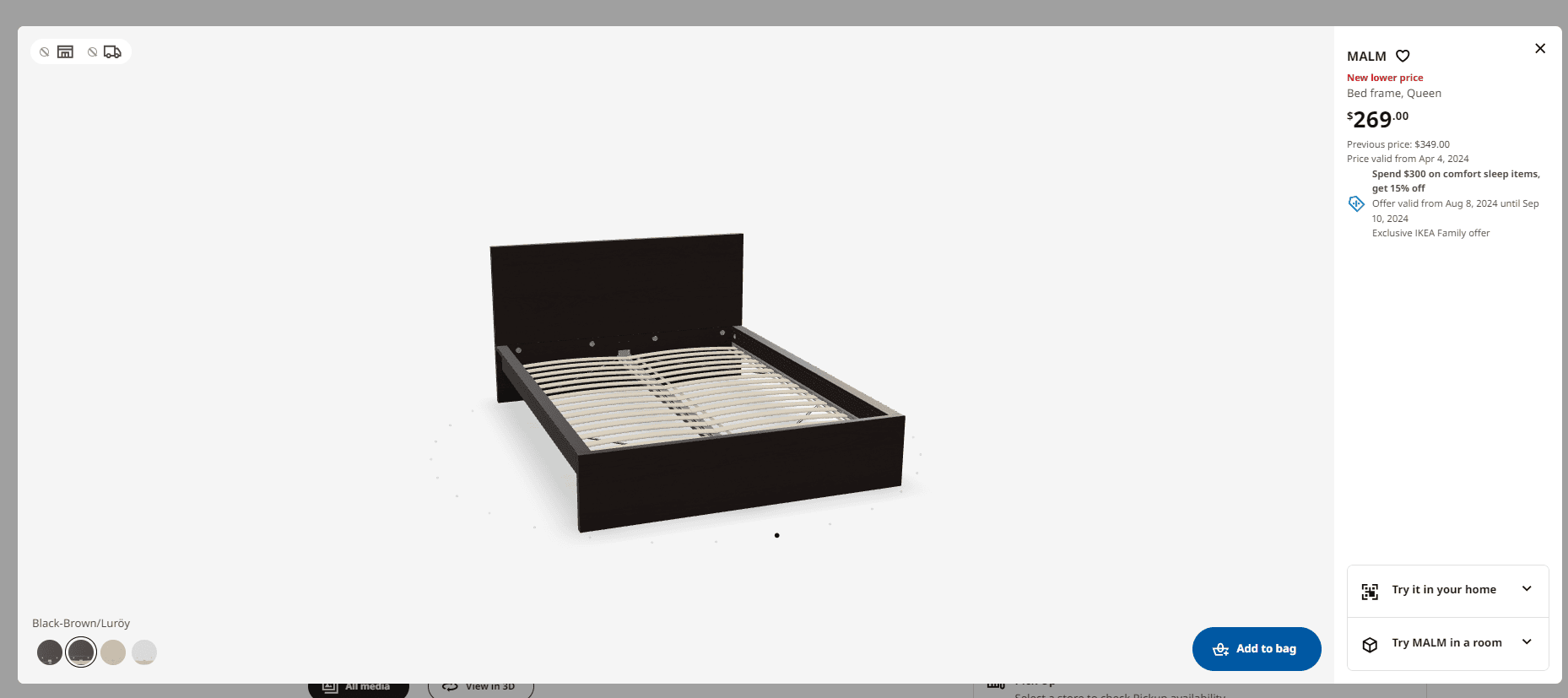
360 degree views and augmented reality do more for furniture than any other category, because scale is the thing photographs cannot convey.
If AR is out of reach, a scale drawing with a person in it gets you most of the way for very little money.
4. Fabric swatches prevent returns
Colour on a screen is a guess, and it is the most common reason an expensive sofa comes back. A free swatch pack costs a few pounds and posts in an envelope.
It also buys you the thing furniture sellers most need: a reason to be in touch again in ten days, when they are still deciding.
5. Delivery is the biggest doubt
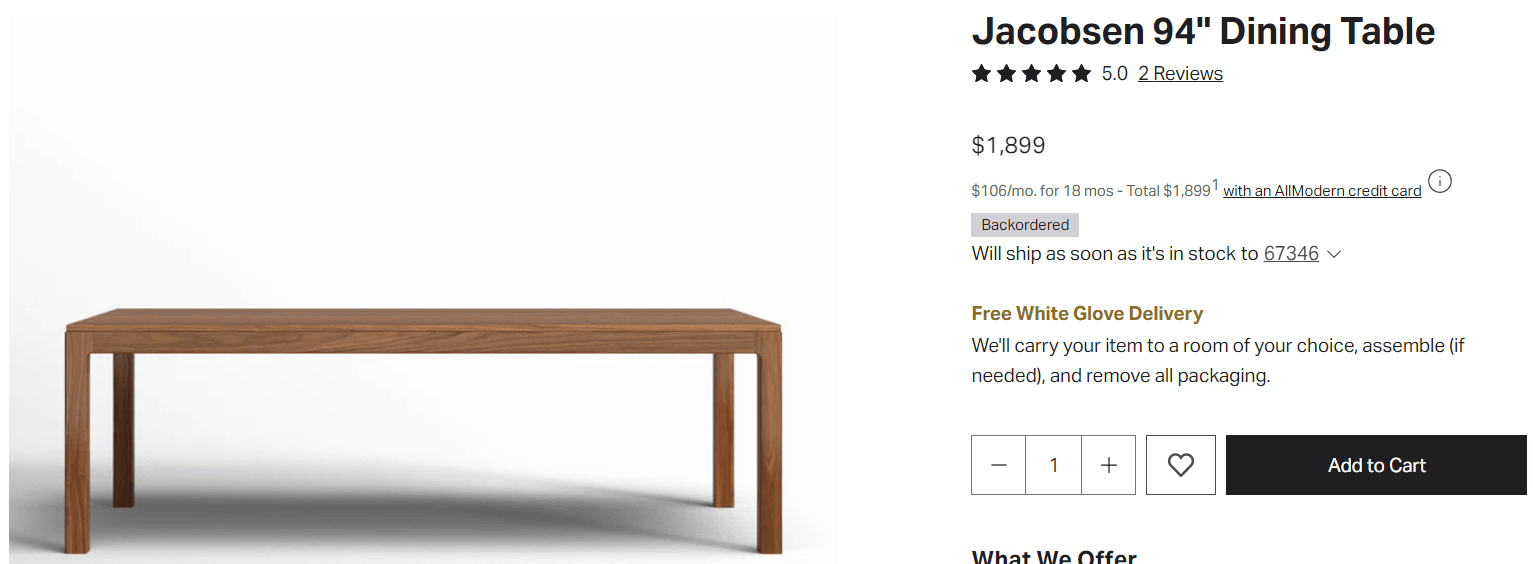
Delivery is the single biggest source of doubt in furniture, and most stores bury it. Free white glove delivery, room of choice, packaging taken away.
State the lead time where they first see the price. A buyer who discovers at step four that it is fourteen weeks does not come back.
6. The monthly figure decides it
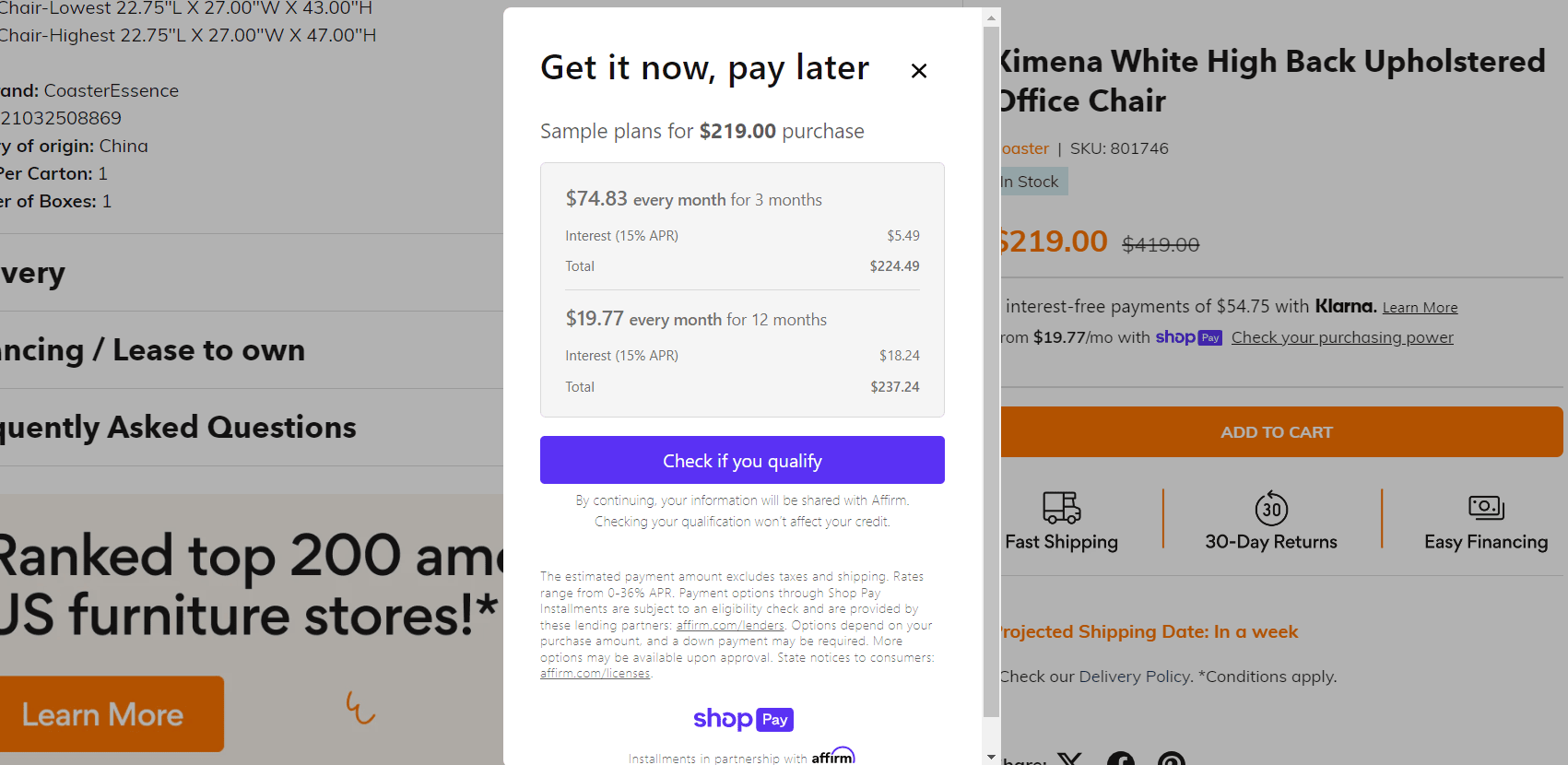
On a £1,500 sofa the monthly figure is what decides it. Klarna, Clearpay and store finance all shift high-ticket furniture, and the effect is largest where the ticket is largest.
Put the monthly amount under the price rather than saving it for checkout. Our guide to multiple payment options covers what to enable.
7. A video call closes the undecided
Somebody stuck between two sofas will not resolve it on a product page. Twenty minutes with someone who can look at their room settles it. It is the nearest thing an online shop has to a showroom.
Offer a free design or measuring call, book it in the same click as the swatch pack, and let the customer hold the phone up to the wall. The same thinking sits behind live selling tactics. It also catches the orders nobody else was going to get, because an undecided buyer usually just leaves.
8. Rooms sell better than products
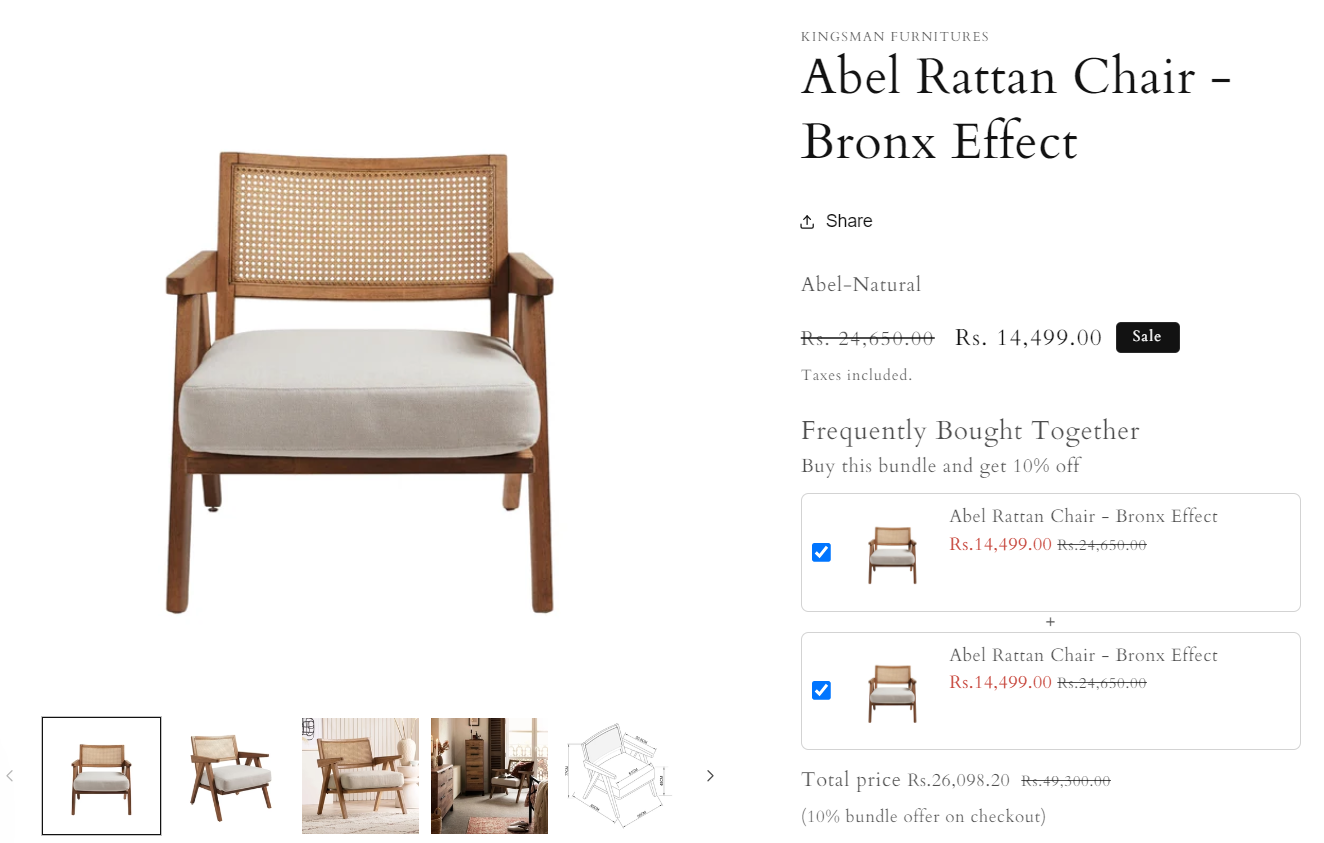
Somebody buying a dining table needs chairs. Somebody buying a bed needs a mattress. Bundles are the easiest way to lift the order value here.
Ten percent off the set, offered before the basket rather than inside it, and photographed together so they can see it works.
9. Reviews need to mention the room

“Great sofa” is worth nothing. “Fits a small Victorian front room and the delivery team took the door off” is worth a sale.
Ask specifically about size, comfort after a month, and how delivery went. Photo reviews carry more weight here than almost anywhere else, because they put the piece in an ordinary house. There is more on getting them in visual reviews.
10. Furniture sells on the bank holidays
Furniture is unusually seasonal. January, Easter weekend, the August bank holiday and Black Friday do far more than their share of the year, mostly because people are at home looking at their rooms.
Plan stock and delivery capacity around those weeks rather than reacting to them, and start the email warm-up a fortnight before rather than on the day. A moving-house surge in spring and summer is worth targeting separately, and we have written up the biggest week of the lot in Black Friday marketing.
11. Most stores give up in week two
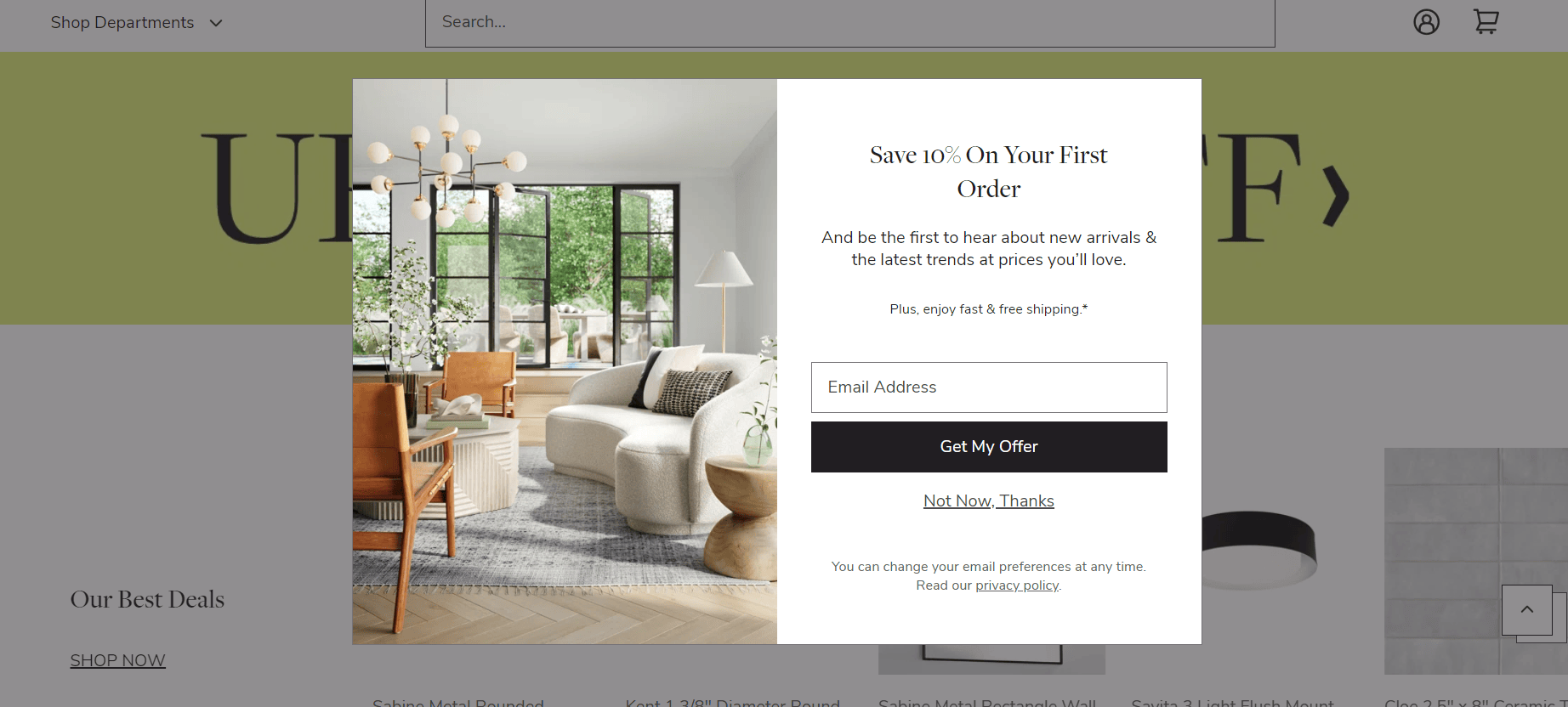
A furniture decision runs for months. Most stores email twice and stop. The shop still politely present in week six wins the order.
Swatch reminder, a room-styling email, a back-in-stock note, a finance explainer. Useful rather than pushy, spread over eight weeks. Whether any of it works shows up in your customer retention analytics.
12. Plenty of buying still ends in store
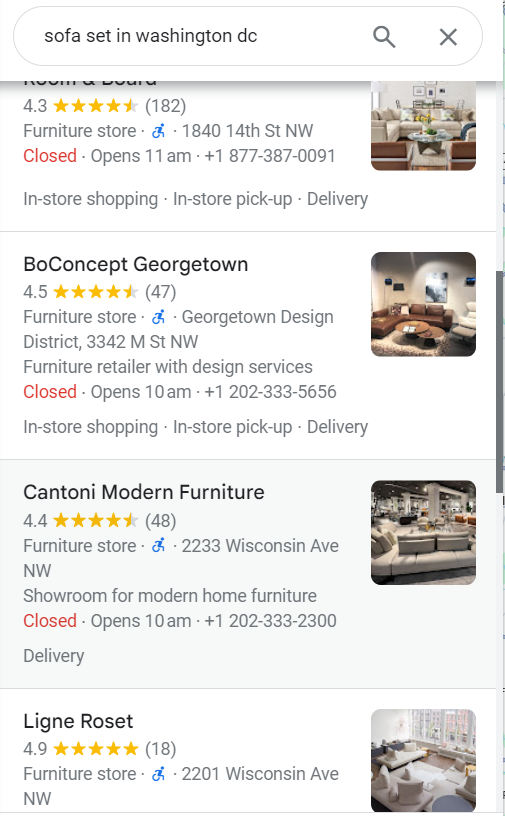
A lot of furniture is still bought in person. “Sofa shops near me” is a strong search to win and costs nothing to compete for.
Claim and fill out the profile, get the opening hours right, and add photos of the showroom. The Google Business Profile statistics show how much of a local decision happens there before anybody reaches your site. If you deliver to specific regions, say which ones on the site.
13. In Shopping ads the photo is the ad
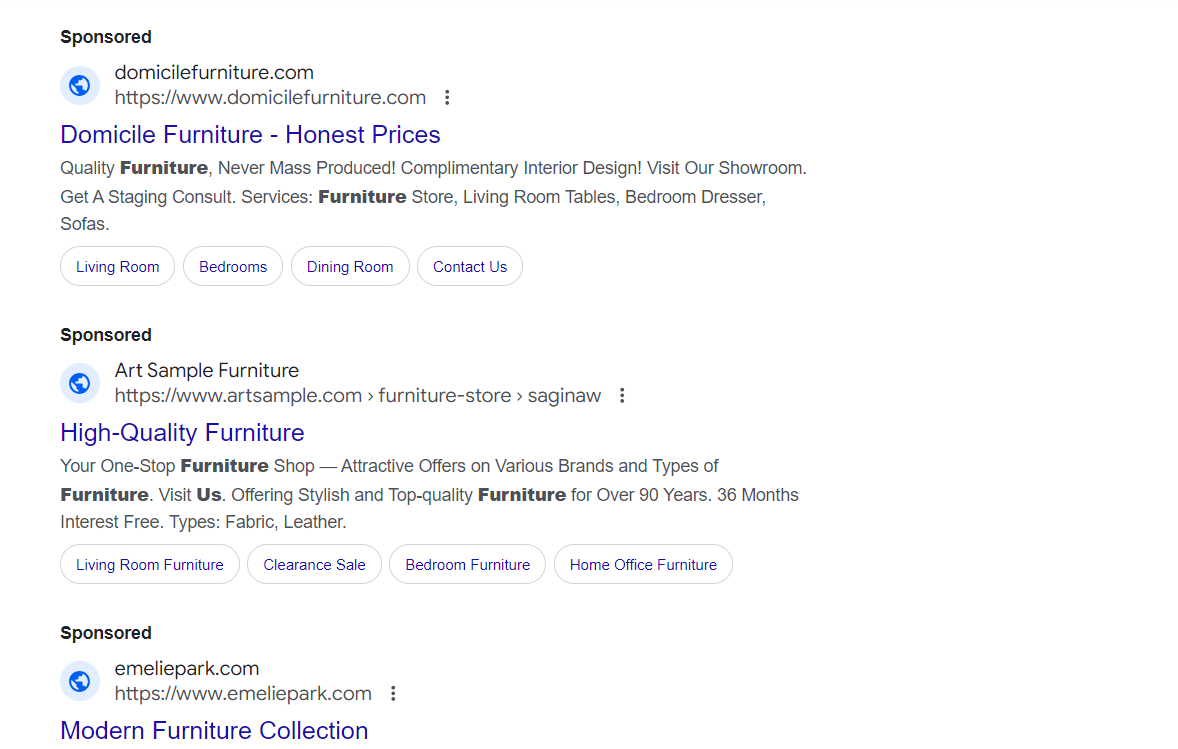
Furniture buyers search with a picture in their head, so Shopping ads do more for the money than text ones. The listing that gets clicked is the one whose thumbnail reads clearly at postage-stamp size.
- Put dimensions in the feed title. “3 Seater Sofa 210cm Grey Linen” beats “The Hartley Sofa”, because the size is what they are scanning for.
- Keep one background across the feed. A grid of listings where yours is the odd one out gets skipped, whatever the product looks like.
- Keep availability and lead time accurate. A click on something that turns out to be fourteen weeks away is money you will not get back.
- Split by room, not by campaign type. Bedroom, dining and living buyers behave differently and deserve separate budgets.
14. Somebody who measured up is not cold
Somebody who viewed a product three times or downloaded the dimensions is not a cold audience. That is the person worth spending on.
Run those separately from your cold audiences, and set the window in months rather than the fortnight most platforms start you on.
15. Where it came from is a buying factor
Where a piece was made and what it was made from shifts a decision here in a way it rarely does elsewhere. The buyer expects to keep it for a decade.
FSC timber, recycled fabric, where it was made, and whether you sell replacement parts. Repairability in particular reads as quality rather than as an environmental claim, so it persuades the people who do not care about the environmental claim either.
16. Stylists outsell celebrities here
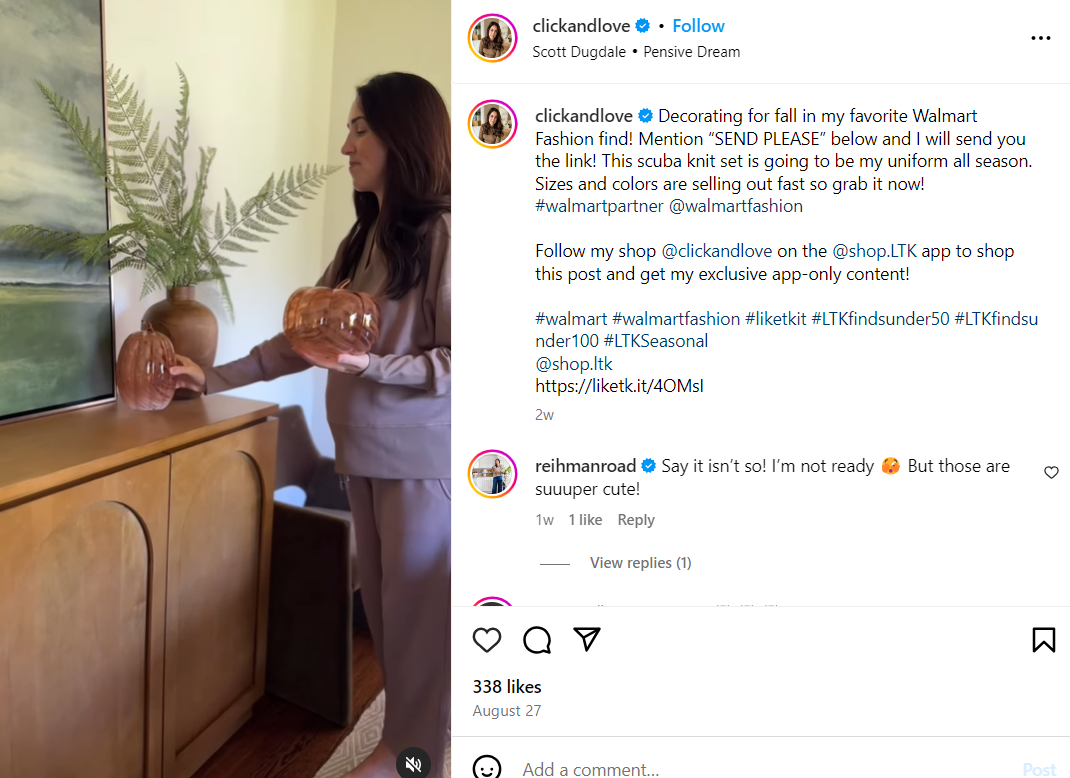
Interior stylists and home accounts sell furniture better than celebrity endorsement, because their audience is already mid-renovation.
A room reveal featuring your piece beats a paid post about it, and small accounts with real local followings usually cost less and do more. It works for the same reason the rest of social proof marketing does.
17. A big basket abandons differently
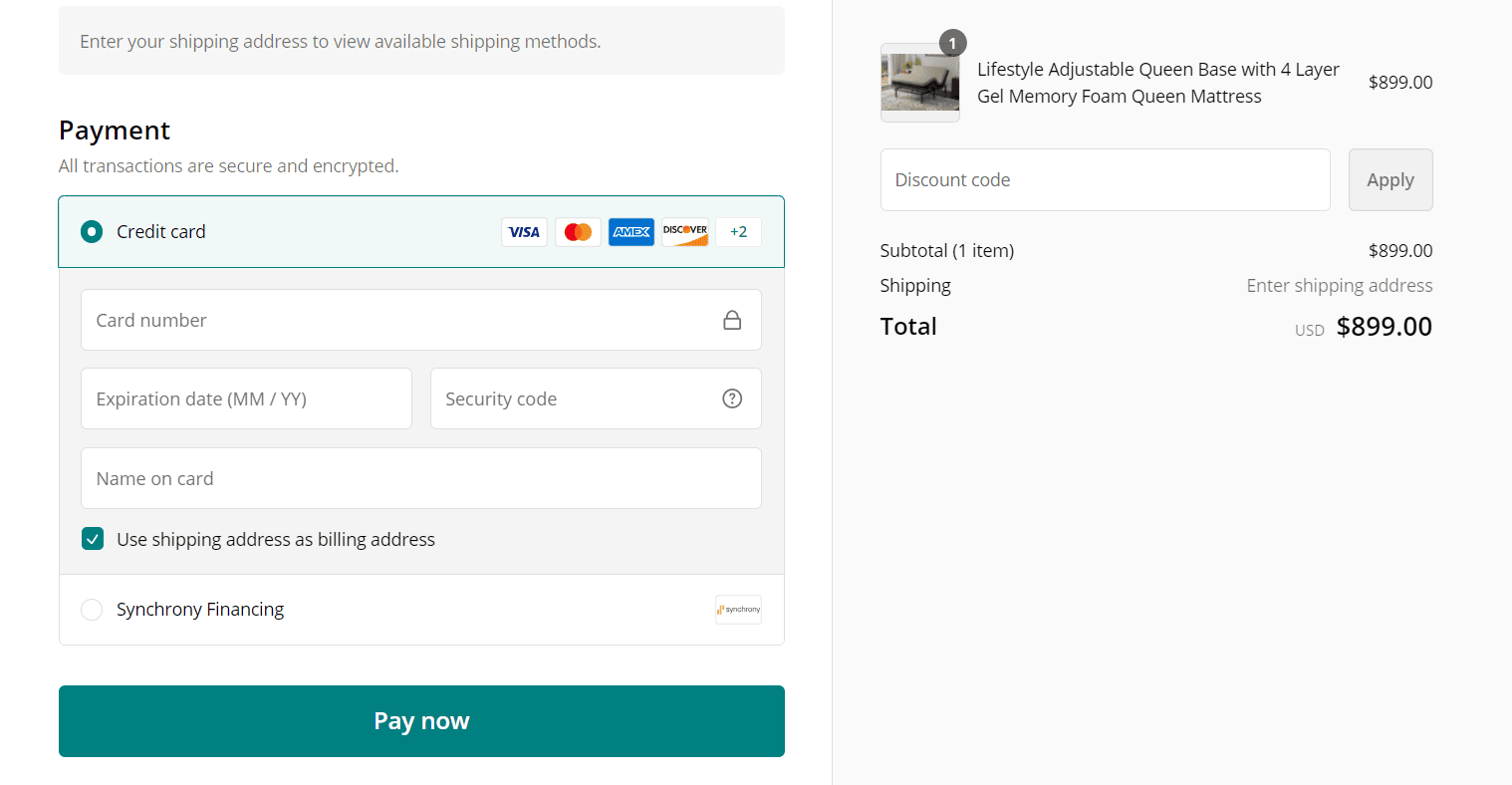
A £2,000 basket gets abandoned for reasons a £30 one does not. Guest checkout, saved baskets, and no surprise delivery charge at the end.
Let them save the basket and come back, because on this ticket they will. Our guides to increasing checkout conversion and reducing cart abandonment go through the rest.
How WiserNotify Helps You Sell More Furniture

A furniture buyer decides on trust as much as taste, and most sites give them nothing to go on. They cannot tell whether anybody else shops with you or whether the delivery goes smoothly, so they leave and think about it.
WiserNotify is a social proof tool that puts your real orders, ratings and delivery feedback on the page before they close the tab. The trick on a slow sale is restraint: popups every ten seconds suit a twenty-pound basket, not somebody forty minutes into comparing seat depths.
Which notification types to run, and how:
- Purchase notifications. Pulled straight from Shopify, WooCommerce or Stripe through the 250-plus integrations, so the product name and time appear on their own. Name the room rather than the price: “Someone in Leeds ordered this for a dining room.”
- Review notifications. Google, Facebook and the rest in one feed. Filter to the reviews that mention delivery, because that is the doubt costing you the sale.
- Review feed widget. A block of real reviews embedded on the delivery and returns pages, not just a rating in the corner.
- Live visitor notifications. Worth running on the pieces that move, and worth leaving off the slow ones.
- Countdown timer widget. Use it for the delivery cutoff rather than a sale. “Order by Tuesday for pre-Christmas” is information, not pressure.
- Announcement bar. New collection in, a showroom opening, free delivery this month. Sitewide and easy to change.
- Display and trigger rules. Page-level targeting, new versus returning visitors, and UTM source. This is where a slow purchase is won or lost, because a returning buyer in week six needs a different message from a first-timer.
- A/B testing and reports. Impressions, clicks, and hovers per notification, so you can tell which ones are doing anything rather than guessing.
Every figure has to come from your own orders. At this price, one invented number loses the sale, and the social proof statistics only hold up where the proof is real.
Wrap Up
Photograph everything styled, list every dimension including seat depth, and put delivery and finance where the buyer meets the price. Those three clear the doubts that stop a furniture sale.
Then lean on Pinterest for reach, and keep showing up for a couple of months, because that is how long the decision takes.
Also check: How to increase art sales online
Related Guides
Frequently Asked Questions
Which social platform is best for selling furniture online?
Pinterest for discovery, because people plan rooms there months ahead and pins keep working for years. Instagram builds the brand, and Facebook is strongest for local reach and remarketing.
What conversion rate should a furniture site expect?
Well under one percent for most stores, against two or three percent in clothing. High order values, slow delivery and the inability to sit on it first all pull the rate down.
What causes most furniture returns?
Colour looking different on screen, followed by size. Free fabric swatches fix the first and publishing every dimension, including seat depth and doorway clearance, fixes the second.
How long does a furniture buying decision take?
Months rather than days. Most stores email twice and stop, which is why the shop still politely in touch in week six tends to get the order.
Does buy now pay later work for furniture?
Yes, particularly above about a thousand pounds. The monthly figure is what the buyer weighs, so show it under the price rather than saving it for checkout.

Krunal Vaghasiya is a marketing tech expert who boosts e-commerce conversion rates with automated social proof and FOMO strategies. He loves to keep posting insightful posts on online marketing software, marketing automations, and improving conversion rates.




 Capterra