
Live Selling Script and 12 Tactics for TikTok and Facebook (2026)
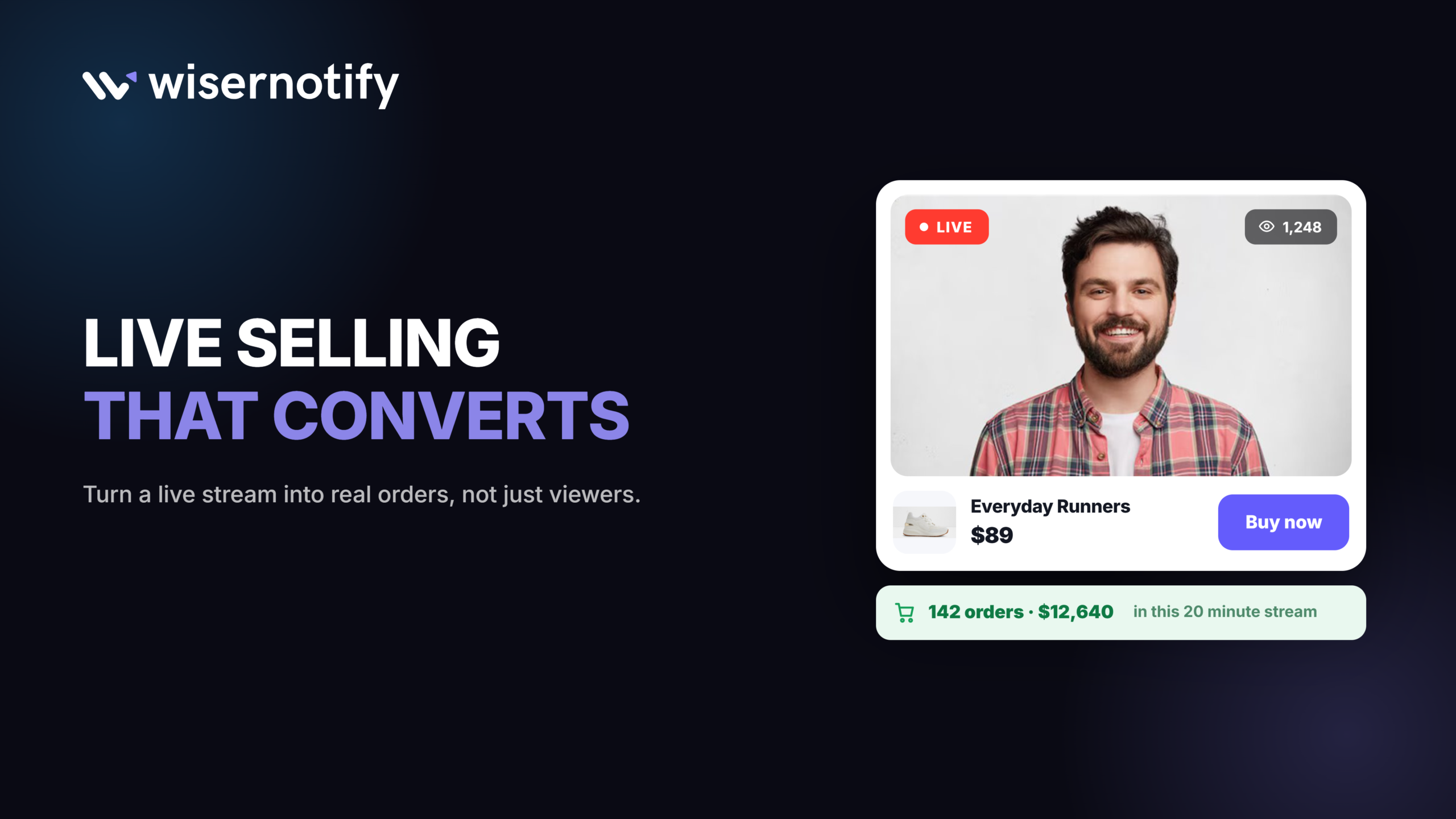
Live selling means demoing products on a live stream and selling them while viewers watch and chat.
The sellers who make steady money use the same routine every week: promote the stream days ahead, follow a simple script, show products in use, and give a real reason to buy before the stream ends.
I’ve watched many stores run live sales alongside WiserNotify, which they use for the proof and urgency on their product pages.
This guide gives you a live selling script you can copy, 12 tactics for TikTok, Facebook, Instagram and your own site, and the mistakes that sink most first streams.
Key takeaways
- Promote every stream 3 to 5 days ahead to people who already know you.
- Script the opening, the objection answers and the close. Let the chat drive the middle.
- Use products on camera and answer questions out loud for the whole room.
- Only use urgency that is true, and keep every deadline you announce.
- Stream in one weekly slot on one platform before adding more.
What Is Live Selling?
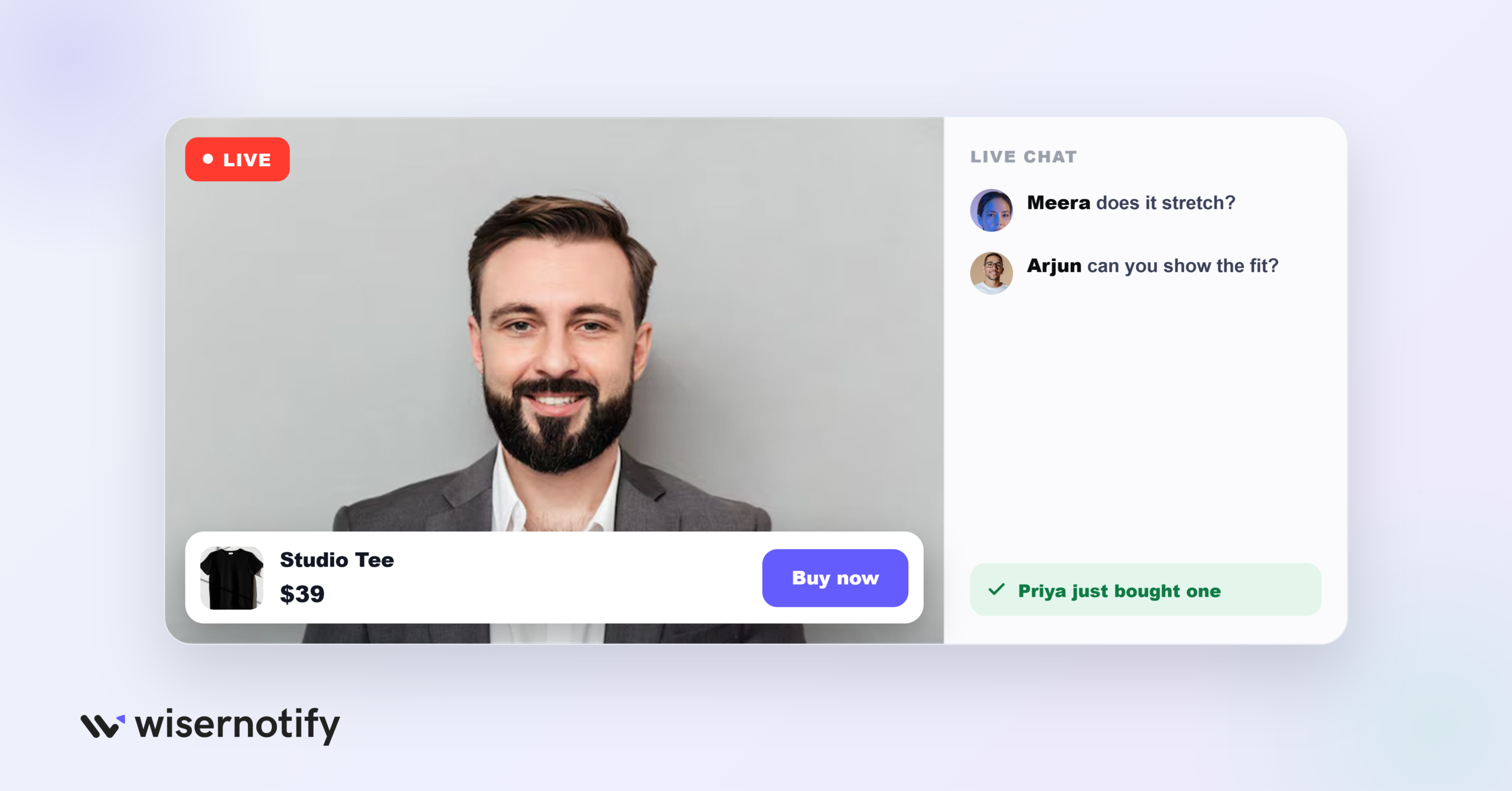
Live selling means going live on a platform like TikTok, Facebook, Instagram, YouTube, Whatnot, or your own website, showing your products on camera, and selling them while people watch.
You demonstrate the product, viewers ask questions in the chat, you answer on the spot, and buyers check out without leaving the stream.
It works like home shopping TV on a phone, except the audience can talk back.
A product photo cannot answer “does it stretch?” A person on camera can answer it in ten seconds, and everyone else with the same doubt hears the answer too.
Live Selling Script You Can Copy
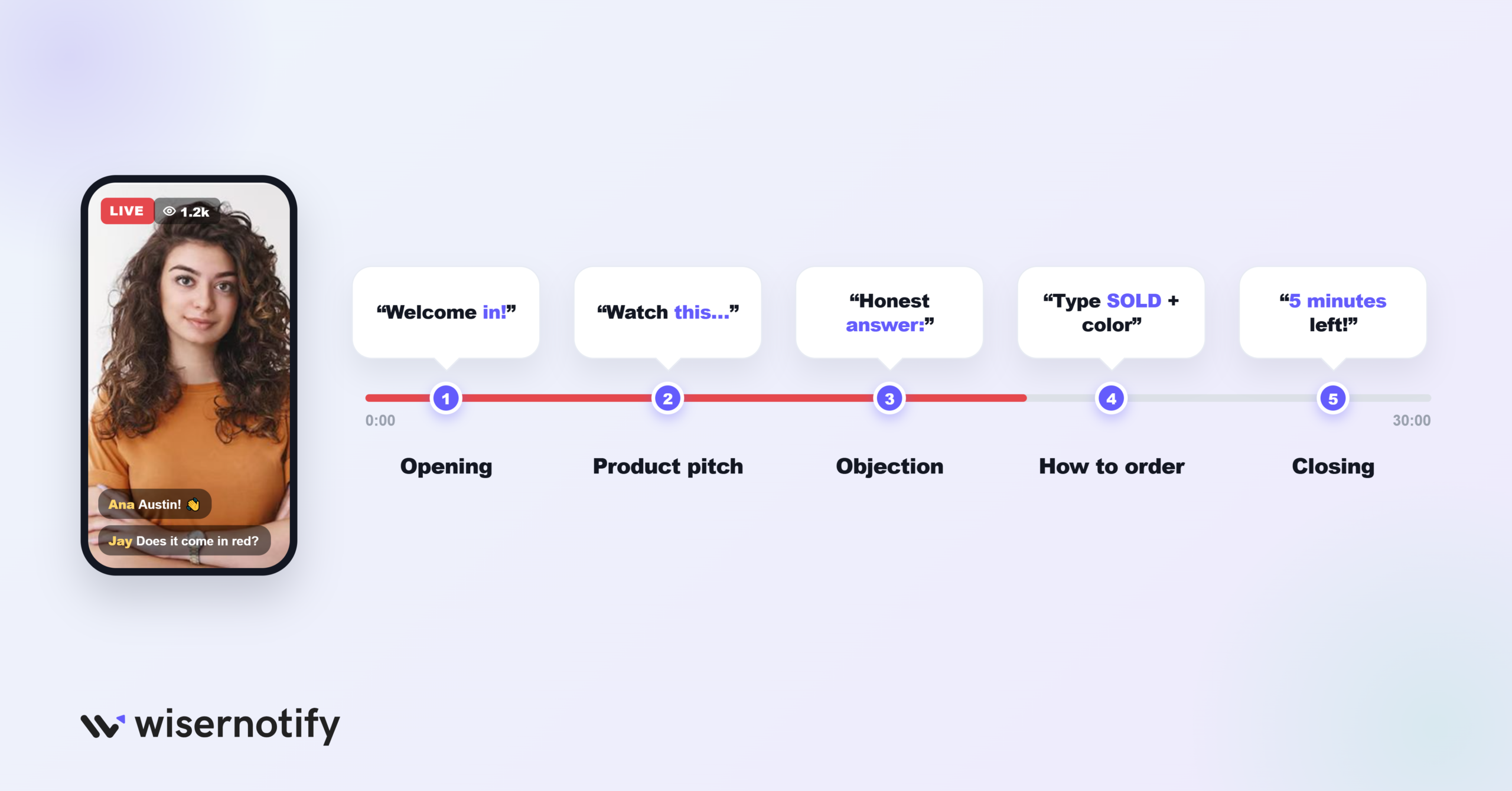
A script gives you exact lines for the moments where sellers freeze. Copy these and swap in your product details. They work on TikTok, Facebook, Instagram and your own site.
Opening line: “Hey everyone, welcome in! Drop where you’re watching from in the chat. In the next 30 minutes I’m showing you three products, and one of them comes with a deal that ends when this stream does.”
Product pitch: “This is our [product]. The thing people love about it is [main benefit]. Watch what happens when I [demo action]. [Name], good question, it works like this.”
Objection answer: “A few of you asked about [price/shipping/sizing]. Honest answer: [answer]. And if it doesn’t work out, [return policy in one line].”
How to order (Facebook and Instagram): “To grab one, type SOLD plus the color in the comments, and you’ll get your checkout link right away.”
Closing line: “We’re wrapping up in five minutes. The [discount/bundle] disappears when I end the stream, so if you’ve been on the fence, this is the moment. Link is pinned right there.”
Use the script for the opening, the transitions and the close. Let the chat drive everything in between, because answering real questions is what makes a live convert.
Why Live Selling Works
Three things changed at the same time, and together they made live selling a serious channel.
Buyers trust real people more than ads
People scroll past filtered product shots. UGC research keeps showing that content from real people influences buying decisions more than branded content.
A live stream shows the product in ordinary lighting, held by a real person, with no edits and no second takes.
Platforms reward live content
TikTok Shop, YouTube Shopping, Instagram Live, Amazon Live and Whatnot all push live shopping, because live content keeps people on the app longer. A live stream often reaches more people than a regular post from the same account.
Younger buyers expect it
For a growing share of shoppers, especially Gen Z, watching someone demo a product live is a normal way to shop, not a novelty.
12 Live Selling Tactics That Drive Sales
The first four happen before you press the live button.
1. Build an Audience Before You Go Live
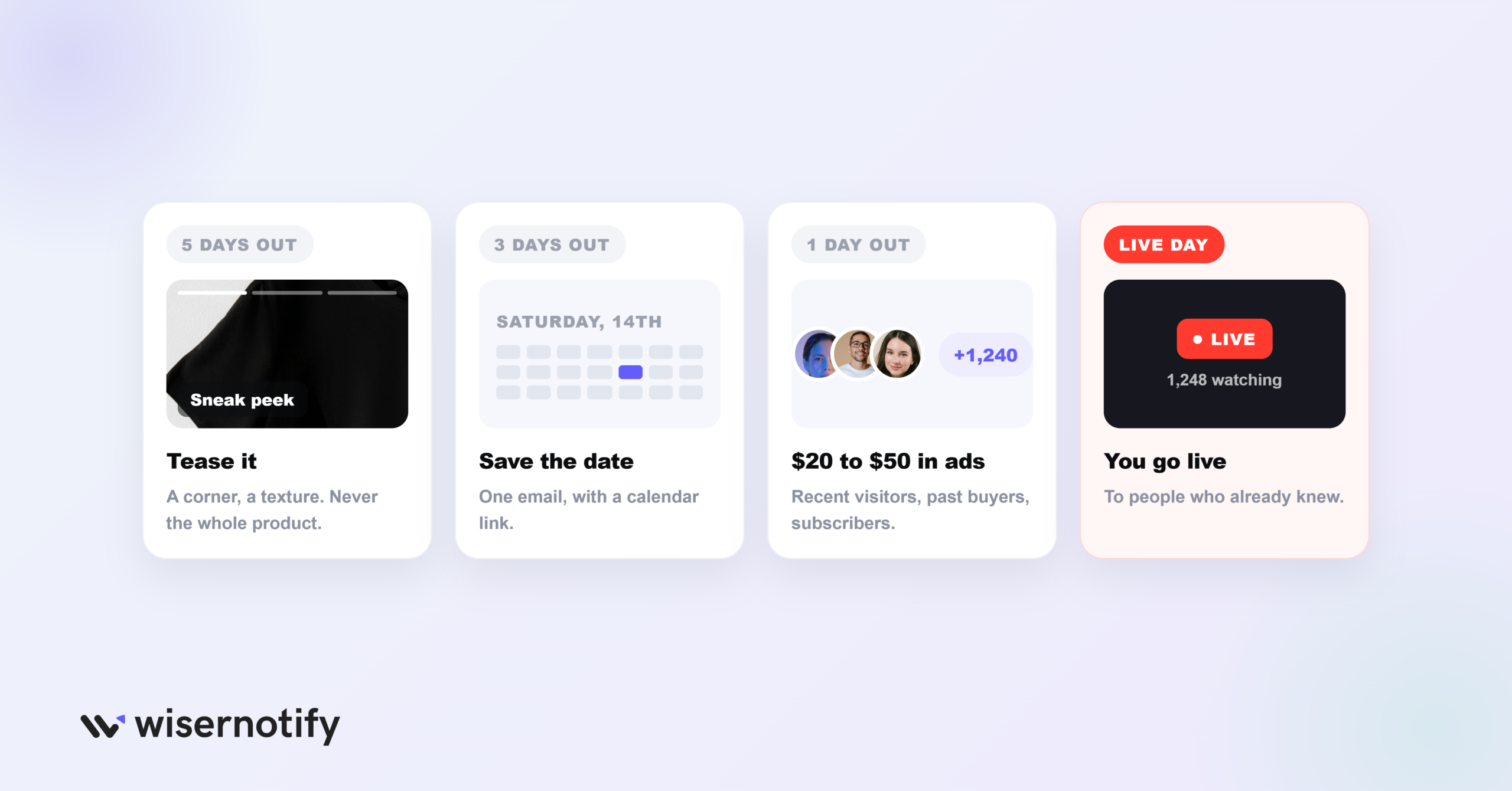
The most common reason a live flops is that nobody knew it was happening. Treat every stream like a small product launch:
- Tease products 3 to 5 days out on Stories and TikTok. Show a corner or a color swatch so people get curious enough to show up.
- Send a Save the Date email and SMS with a calendar link a few days ahead.
- Spend a small budget on ads aimed at your warmest people: recent site visitors, past customers and email subscribers.
You are not chasing cold traffic. You are reminding people who already like you that the stream is on.
2. Pick Where Your Buyers Already Are
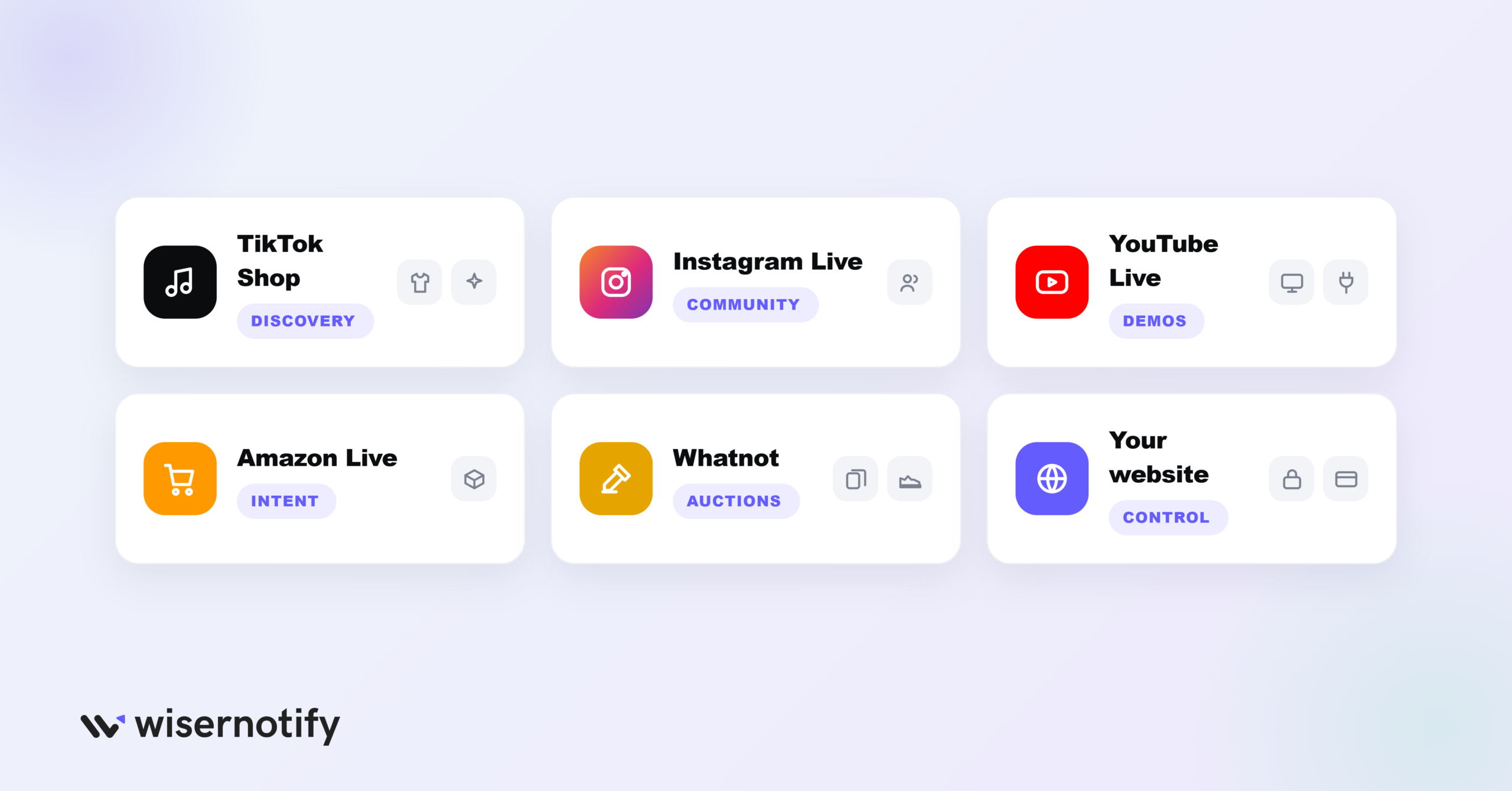
Stores waste months streaming where their buyers aren’t. The short version of each platform:
- TikTok Shop: built for discovery. The algorithm can put your live in front of people who’ve never heard of you. Best for fashion, beauty and trend-driven products.
- Facebook Live: strong for boutiques and resellers with an existing group or page. Buyers comment to claim items, and a comment-selling tool turns those comments into orders.
- Instagram Live: works when you already have a community. Reach is smaller than TikTok, but followers show up and buy.
- YouTube Live: suits longer demos of electronics, home goods and anything that needs explaining. Replays keep selling after the stream.
- Amazon Live: reaches people who are already shopping. Less entertainment, higher purchase intent.
- Whatnot: built around live selling and auctions. The home for collectibles, cards, sneakers and vintage.
- Your own website: full control of the data and the checkout. A live shopping tool puts the stream on your store.
Start with the one platform where your customers already spend time, get good there, then expand.
3. Get the Basic Gear Right
You don’t need a studio. What you need:
- A phone from the last three years
- A ring light or two small softbox lights
- A clip-on lapel mic
Lighting matters more than the camera. Put the light in front of you, never behind, because dim or uneven light makes even a good product look cheap.
Audio is the other deal-breaker. Viewers forgive a slightly grainy picture, but they leave when your voice is muffled or the room echoes.
4. Plan the Flow of the Stream
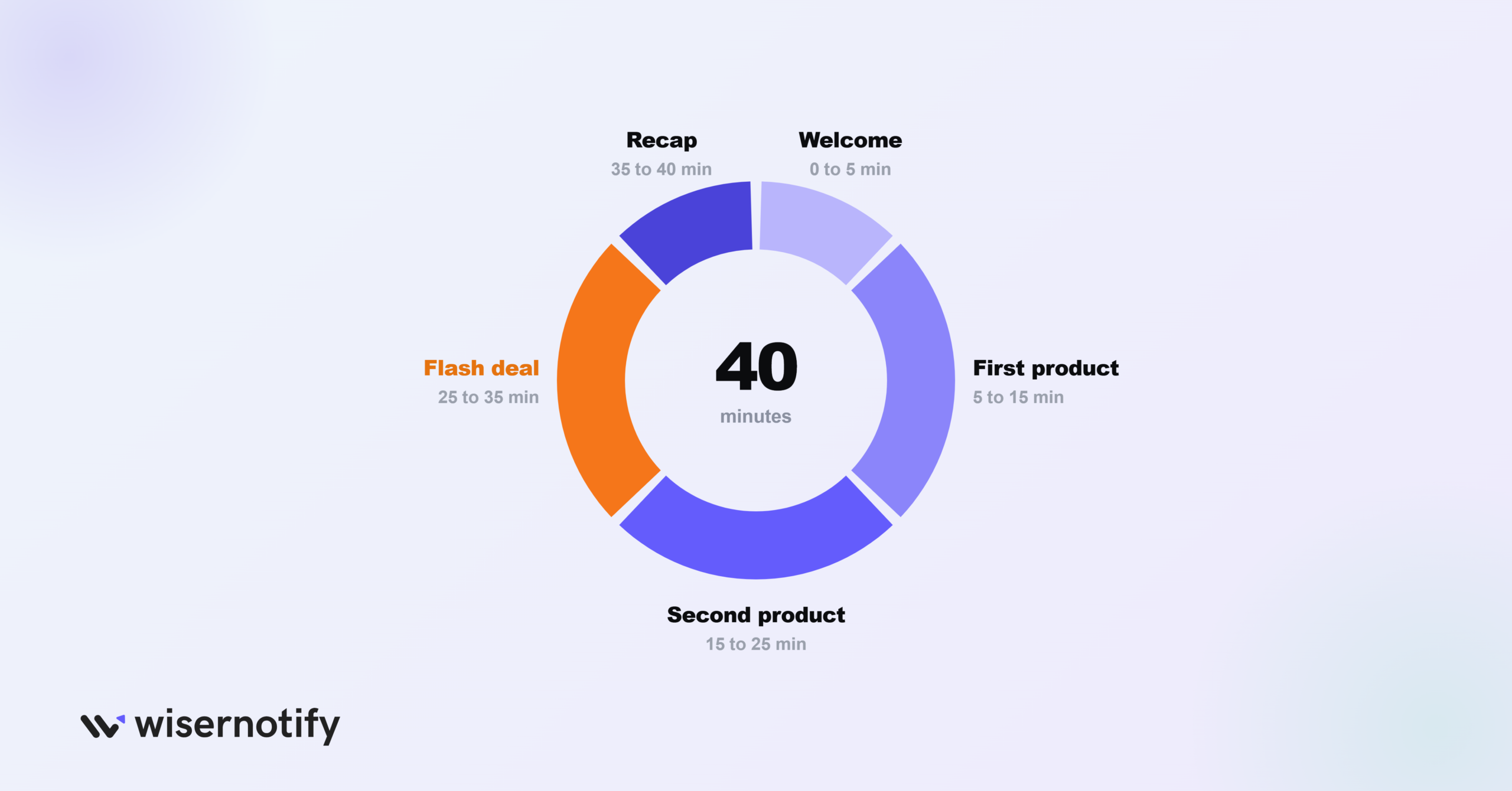
You don’t need every word planned, just a rough order for the hour:
- First 5 minutes: welcome people and preview the deals
- Minutes 5 to 15: first product, demo and questions
- Minutes 15 to 25: second product and a “which one is right for you” moment
- Minutes 25 to 35: the flash deal or bundle
- Last 5 minutes: recap and remind everyone the deal ends with the stream
Viewers usually need a few chances to say yes, and a planned flow gives them those chances without the stream dragging.
5. Make Ordering One Comment Away
Every extra step between “I want that” and checkout loses buyers. Make ordering as easy as typing in the chat:
- On TikTok Shop and Instagram, pin the product so the cart is one tap away the whole time.
- On Facebook, use a comment-selling tool so a viewer types “SOLD” and gets a checkout link or invoice automatically.
- Say the ordering steps out loud every few minutes, because new viewers join all the time.
6. Show Products in Action
Don’t hold the product up and read its features. Use it on camera: wear it, cook with it, apply it. Show the texture, the size next to everyday objects and the stitching up close.
Three Ships Beauty did this when it launched its Dream Night Cream on a live stream. The session drew about 1,200 viewers and 356 orders in an hour, a 26% conversion rate.
Team members answered chat questions in real time, so doubts never had time to turn into lost sales.
When a viewer asks “what does it look like in natural light?”, walk to the window and show them. Every answered objection sells to everyone watching who had the same doubt.
7. Create Urgency That’s True
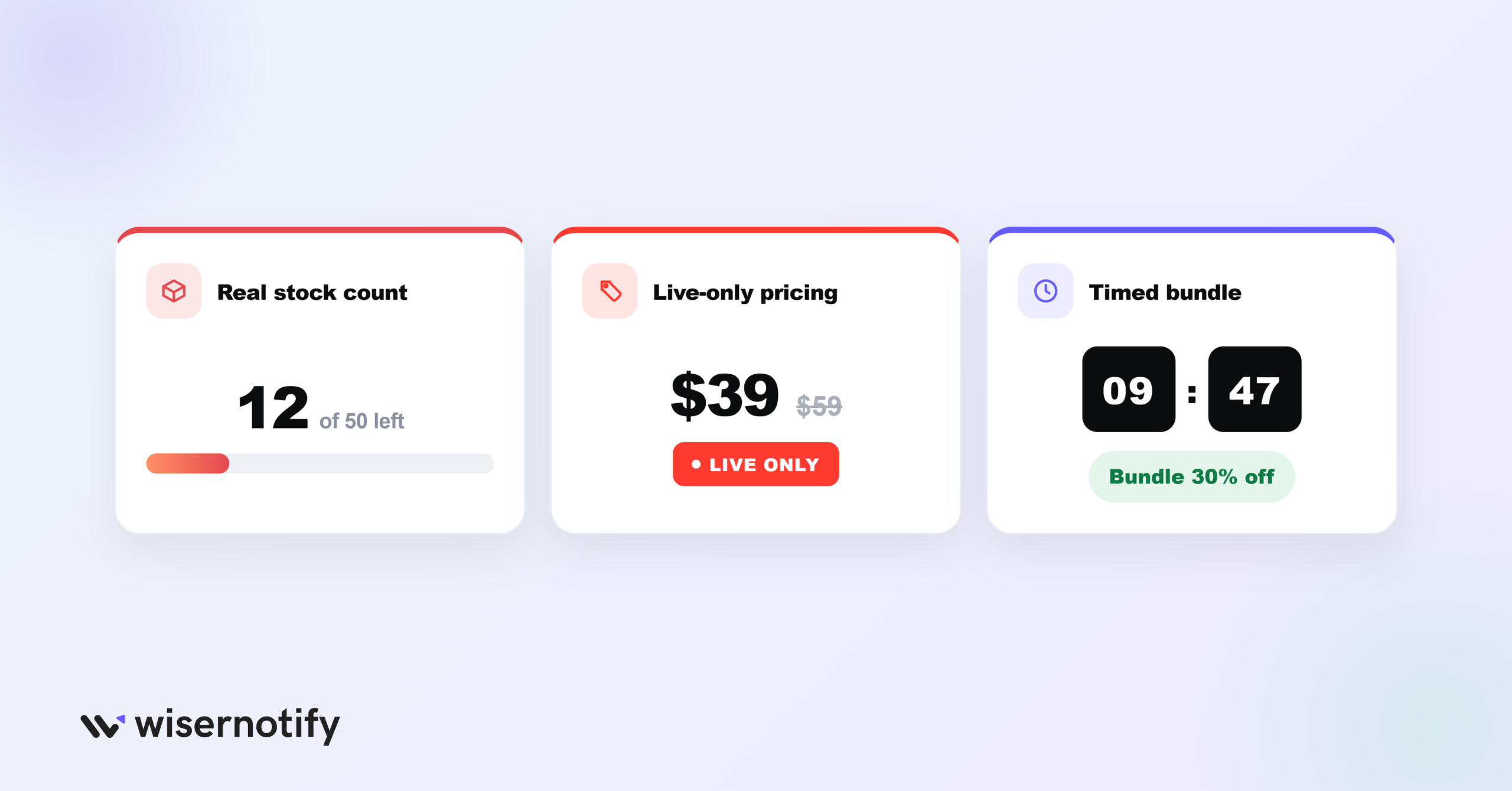
Urgency gets viewers to decide now, but only when it is true:
- Real stock counts. “We started with 50 units and we’re down to 12” is believable. “Only 3 left!” with a full warehouse is not.
- Live-only pricing. A discount that exists only while you’re streaming. When the stream ends, put the price back.
- Timed bundles. “For the next 10 minutes, the cleanser and moisturizer together are 30% off.” A limited time offer on your site can carry it after the stream.
Made by Mitchell leans on exactly this on TikTok Shop, with live-only bundles and flash deals. During a 12-hour live in June 2024, the makeup brand sold about $830,000 and passed $1 million in 24 hours.
8. Show Social Proof While You Stream
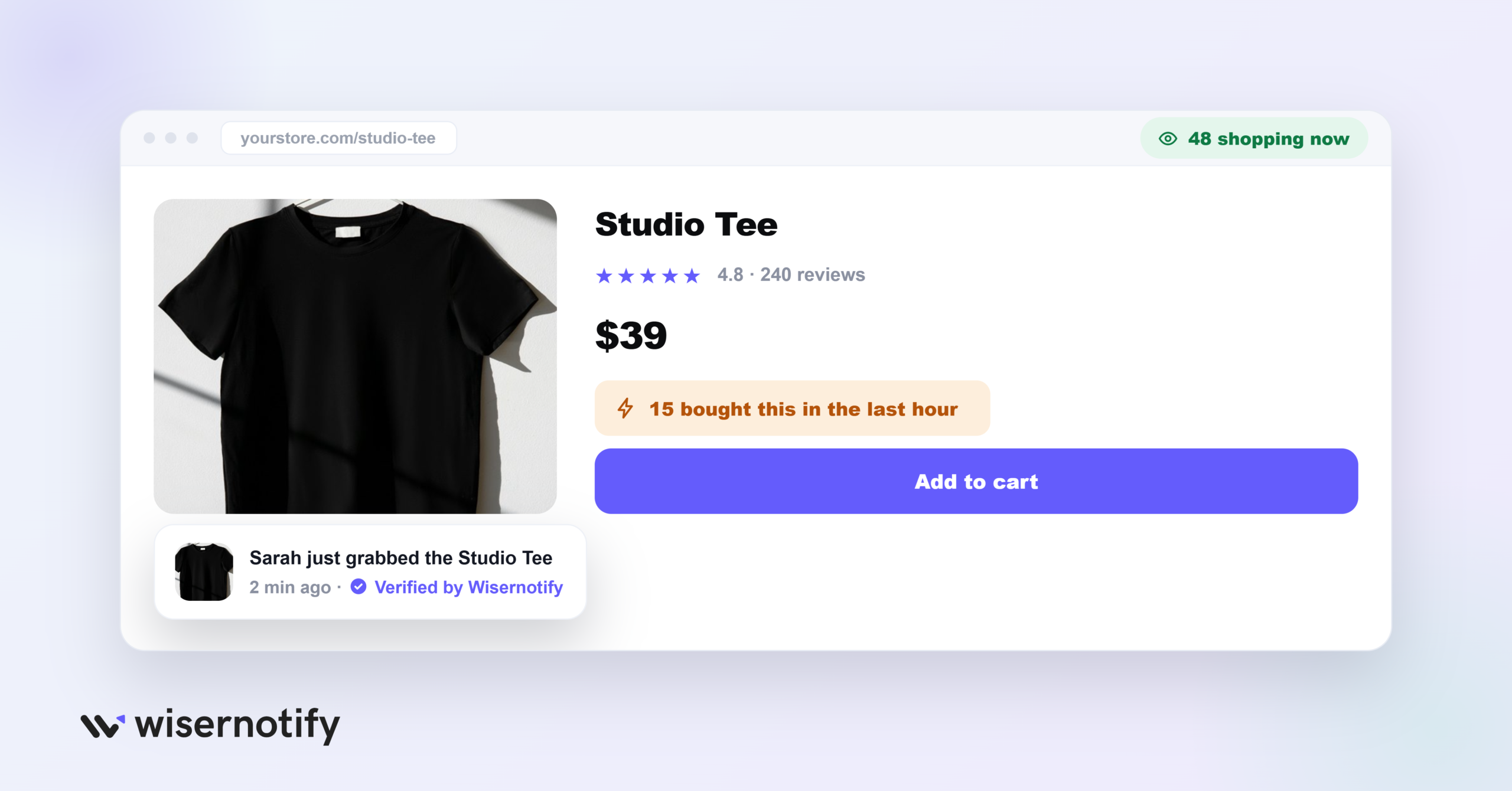
When someone buys during your stream, say it out loud. “Sarah just grabbed the blue dress, great pick, Sarah!” It thanks the buyer and shows everyone else that people are buying right now.
Then bring the stream’s activity to your store:
- Show recent purchase notifications on your product pages while the stream runs, so viewers who click through see others buying.
- Read a past customer’s review aloud mid-stream. A past buyer’s words carry more weight than yours.
- Display a live visitor count so shoppers see they’re not alone.
WiserNotify handles the website side of this. It pulls real activity from your store and shows it as small notifications, so buying from the stream stays visible on the product page.
Fair note since it’s our product: it helps once your store has activity to show.
If your store is brand new, run a few lives first, get the first sales and reviews, then turn it on. The social proof playbook covers what to show and when.
Build trust & FOMO
Highlight real-time activities like reviews, sales & sign-ups.

9. Build Trust During the Stream
Live streams build trust fast because nothing is edited, and buyers know it:
- Answer the money questions out loud. Price, shipping, delivery time and returns. Answer for the whole room, not in a DM.
- Say who a product is not for. “If you have very oily skin, skip this one.” It makes people believe everything else you say.
- Pack an order on camera. Buyers trust what they can see.
- Keep every promise you make on stream. One broken promise in front of a live audience travels fast.
Buyers who trust you come back for the next stream, and that repeat crowd is where live selling gets profitable.
10. Partner With Creators Who Use It
Creator partnerships multiply your reach, but only when the creator uses the product for real. Audiences spot a paid endorsement fast.
Find creators who already bought from you, or send products weeks before the stream so their reactions are honest.
The co-host format works well: the creator brings their audience, you bring the product knowledge, and the conversation carries the stream.
11. Make Everything Easy on a Phone
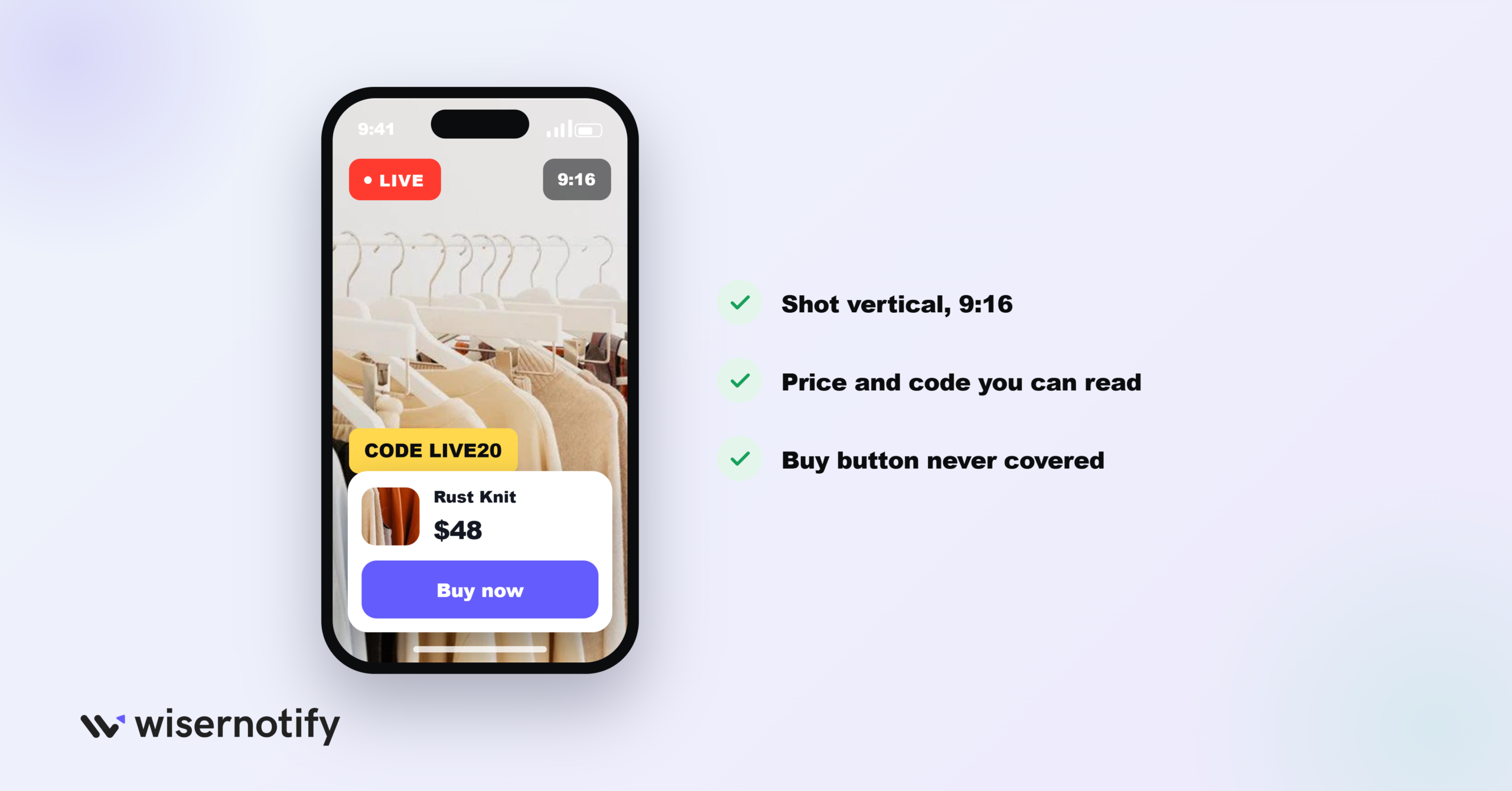
Most live shopping happens on phones, so set everything up for a small screen:
- Shoot vertical, 9:16. Make prices, sizes and codes big enough to read on a phone.
- Keep the buy link visible the whole time. On your own site, make sure the chat window doesn’t cover the checkout button.
- Run a test stream and watch it back on the smallest phone you have. Fix whatever is hard to read or tap.
12. Reuse the Stream After It Ends
The live is an hour, but the recording can sell for weeks:
- Pin the replay the moment you end, so latecomers land on it.
- Cut three or four short clips from the best demo moments for TikTok, Reels and Shorts.
- Add timestamps or a product list under the replay so viewers can jump to the item they came for.
One hour of streaming gives you a week of content, which makes a weekly schedule doable for a small team.

Boost Conversion Instantly
Add Social Proof & Urgency to your website
How to Measure Live Selling Performance
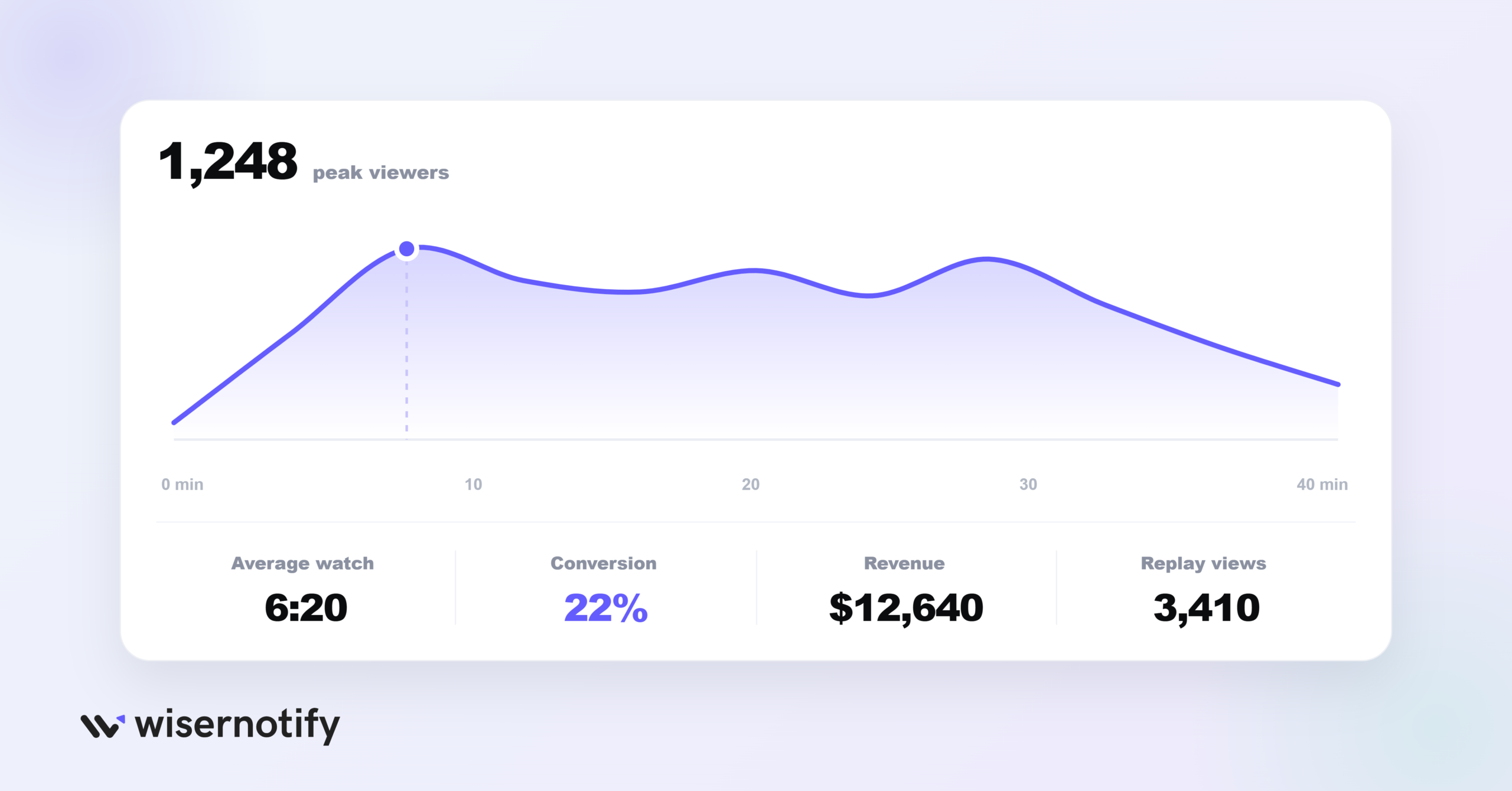
After every session, check five numbers:
- Peak viewers: how many watched at the highest point. It shows whether your pre-stream promotion is improving.
- Average watch time: if most leave in the first 2 minutes, fix your opening. If they leave around minute 15, the middle drags.
- Conversion rate: the share of viewers who bought. Compare it with your normal store rate.
- Revenue per session: track it to see which products, tactics and time slots earn the most.
- Replay views: low numbers usually mean you stopped promoting when the stream ended.
Log these in a simple spreadsheet after each live. After 5 to 10 sessions, you’ll see what to repeat and what to drop.
Common Live Selling Mistakes
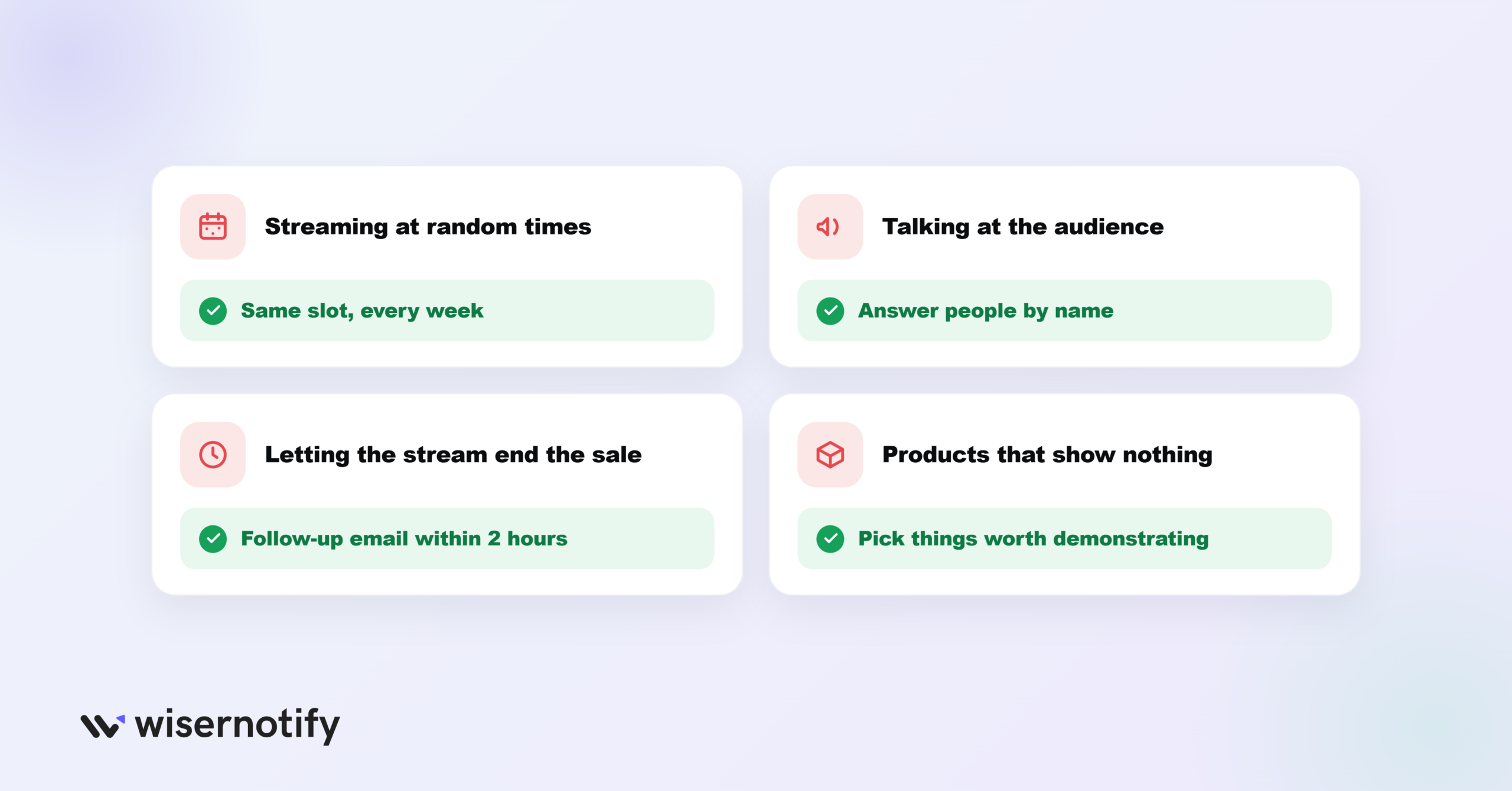
- Streaming at random times. Pick a weekly slot and announce the next date at the end of every stream, so regulars know when to show up.
- Talking at your audience. Read comments, answer people by name and ask the chat questions. Two-way streams sell more.
- Skipping the follow-up. Send an email within a few hours with the replay link, the featured products and a short deadline for people who watched but didn’t buy.
- Picking the wrong products. Choose products with texture, a before-and-after, a story or a demo moment that makes viewers stop scrolling.
Live Selling Tools Worth Knowing
You can run your first lives with a phone and the platform’s own app. When you outgrow that, these are the tools sellers reach for:
- OBS Studio: free desktop software for switching cameras, adding overlays and showing close-ups.
- Restream: sends one stream to several platforms at once.
- CommentSold: turns “sold” comments into carts and invoices, popular with Facebook and Instagram sellers.
- Bambuser: puts the live stream on your own website with checkout built in.
Add a tool when a specific problem shows up. Extra software on stream day is one more thing that can break.
Wrap Up
You can start without a big audience, professional gear or on-camera experience. A product worth talking about, a phone with a light and a mic, the script above and a weekly slot are enough.
Your first live will be rough, and that’s normal. Every session teaches you something, so pick one platform, go live on the same day each week and improve one thing at a time.
Frequently Asked Questions
What should I say in a live selling script?
Open with a welcome and the deal that ends with the stream, demo each product, answer objections out loud and close with a clear last call.
How long should a live sale be?
Most sellers do well between 30 and 60 minutes, long enough for latecomers to arrive without the energy dropping.
What is the best platform for live selling?
TikTok Shop is best for reaching new buyers, Facebook and Instagram for an existing community, and Whatnot for collectibles and resale.
How do people order during a Facebook live sale?
Viewers comment to claim an item, and a comment-selling tool sends them a checkout link or invoice.
What products sell best on live streams?
Products that look better in use, such as beauty, fashion, home goods and gadgets with a clear demo moment.
How do I start live selling with no audience?
Start on TikTok Shop or Whatnot, which show lives to new viewers, and stream at the same time every week so early viewers become regulars.

Krunal Vaghasiya is a marketing tech expert who boosts e-commerce conversion rates with automated social proof and FOMO strategies. He loves to keep posting insightful posts on online marketing software, marketing automations, and improving conversion rates.




 Capterra