
20 Countdown Timer Examples (Grouped by When to Use Each)

A countdown timer works for one reason: people hate missing out more than they like a good deal. A ticking clock turns “I will think about it” into “I will buy it now.”
But a timer on its own does nothing. Drop a generic clock on a page with no real deadline and shoppers learn to ignore it within a visit or two.
The 20 examples below are grouped by the job each timer does. The right timer for a flash sale is the wrong one for a product launch, so find the job you need first, then copy the example that matches.
Which countdown timer do you actually need?
Most articles hand you a pile of examples and leave you to guess. Start here instead. Find your goal in the table, then jump to the examples under that job.
| Your goal | The job the timer does | Examples |
|---|---|---|
| Clear stock or hit a sales target fast | Urgency on a live offer | 1 to 8 |
| Build excitement for something coming | Anticipation for a launch | 9 to 13 |
| Win back people who nearly bought | Recovery of a stalled visit | 14 to 18 |
| Keep a deadline visible site-wide | A standing reminder | 19 to 20 |
The examples that fail almost always use the wrong job for the moment. A launch timer counting down to a discount feels like pressure. An urgency timer on something with no real deadline feels like a trick.
What a countdown timer is, in one line
A countdown timer is a clock on your site or in an email that counts down to a deadline, usually the end of an offer or the start of a launch.
When it hits zero, something changes. The price goes back up, the sale ends, or the product goes live.
It works because of loss aversion. People will act to avoid losing a deal far faster than they will act to gain one. The clock makes the loss feel real and close.
It is one piece of a bigger toolkit. If you are working on urgency more broadly, our guide to creating urgency in sales covers the rest.
Build trust & FOMO
Highlight real-time activities like reviews, sales & sign-ups.


20 countdown timer examples worth copying
Timers that create urgency on a live offer
These are the classic use. There is a real deadline on a real deal, and the clock is hard to ignore. This is where timers do the most work.
1. ConvertFlow, a timer on the cart page

ConvertFlow puts a four-unit timer, days, hours, minutes and seconds, right at the top of the cart. Someone with items already in the cart is the closest to buying, so this is the best possible place to add a nudge.
Why it works: the split into four units reads as precise, which feels more real than a vague “sale ending soon.” And it appears at the exact moment of decision, not three pages earlier.
Steal this: put your timer where people decide, not where they land. The cart and the product page beat the homepage every time.
2. Journeys, a timer inside an email popup

Journeys pairs an email signup popup with a countdown on the offer inside it. You get the discount for signing up, but only if you act before the clock runs out.
Why it works: it gives two reasons to act at once, the discount and the deadline, so the popup earns the interruption instead of annoying people.
Steal this: attach a short timer to your signup offer. Our exit popup examples show where these land best.
3. Moosend, a seasonal popup timer

Moosend ties a countdown to a Halloween sale in a themed popup. The season gives the deadline a reason to exist, so it does not feel invented.
Why it works: a holiday is a deadline nobody argues with. Everyone knows Halloween ends, so the clock is believable without you having to justify it.
Steal this: hang your timers on dates people already know. Our seasonal marketing guide has the calendar.
Build trust & FOMO
Highlight real-time activities like reviews, sales & sign-ups.
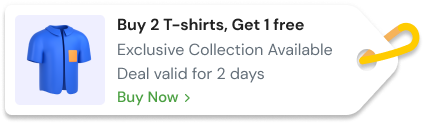
4. Mercedes-Benz, a product launch email timer

Mercedes-Benz counts down to a reveal inside an email. Even a brand nobody would call urgent uses a clock to make people open on time.
Why it works: the timer sets an appointment. It tells you exactly when to come back, which beats hoping people remember on their own.
Steal this: a timer does not have to sell a discount. It can simply hold a spot in someone’s day for a moment you care about.
5. Buoy, an extended sale email timer

Buoy sends a “sale extended” email with a fresh countdown. The people who hesitated the first time get one more clean deadline.
Why it works: an extension is a second first chance. It catches the people who nearly bought and forgot, without punishing them for missing the first clock.
Steal this: one extension is fine. A sale that gets extended every week trains people to never trust the deadline again.
6. Surfdome, a website banner timer

Surfdome runs a slim countdown banner across the top of the site. Every page shows the same deadline without getting in the way of shopping.
Why it works: it is always visible and never blocks anything. The deadline follows people around the store quietly instead of shouting once and disappearing.
Steal this: a thin top bar is the lowest-risk timer there is. It reminds without interrupting, which suits a sale that runs for days.
7. The Turmeric Co., a popup with a short window

The Turmeric Co. offers 20% off to anyone who orders within fifteen minutes of the popup appearing. Short and sharp.
Why it works: a window under thirty minutes creates real pressure because the decision has to happen now. It suits cheaper products people buy on impulse.
Steal this: match the timer length to the price. Short windows for low-cost impulse buys, longer ones for anything people need to think about.
Build trust & FOMO
Highlight real-time activities like reviews, sales & sign-ups.

8. Suiteness, a contest email timer

Suiteness counts down to the end of a contest, a chance to win booking credit. No discount at all, only a deadline to enter.
Why it works: the prize does the selling and the clock sets the deadline to enter. Urgency does not always need a price cut behind it.
Steal this: contests and giveaways take a timer well. The deadline to enter is real, so the clock never feels forced.
Timers that build anticipation for a launch
These count down to something starting rather than ending. The goal is not to rush a purchase today. It is to get people to come back on the day it matters.
9. AppSumo, a Black Friday event timer

AppSumo counts down to the start of its Black Friday deals, not the end. People know exactly when to show up for the best prices.
Why it works: counting down to an opening builds a crowd for the moment it starts. By the time the clock hits zero, people are already waiting.
Steal this: for a big sale, start the timer before the sale does. Our Black Friday marketing guide covers the full run-up.
10. Amazon, a product deal timer

Amazon shows a countdown on lightning deals along with how much of the stock is already claimed. Two kinds of pressure in one small widget.
Why it works: time and stock together are stronger than either alone. Even with time left, a deal that is 80% claimed feels like it is slipping away.
Steal this: pair the clock with a progress bar when you can. “Ending soon and nearly gone” beats “ending soon” on its own.
11. Molton Brown, a collection launch timer

Molton Brown counts down to a new collection going live. The timer is tied to availability, not a discount.
Why it works: people who want first pick have a reason to return at the exact moment. The scarcity is real, since limited collections do sell out.
Steal this: use launch timers for anything with limited stock or a genuine first-come advantage. Skip them when there is no real reason to be early.
12. Amazon, a stock scarcity indicator

Not a clock at all, but the same idea. Amazon shows “only 3 left in stock” on a product page. The countdown is on units instead of time.
Why it works: scarcity of stock hits the same nerve as scarcity of time. When it is true, it is one of the strongest nudges there is.
Steal this: only show real numbers. A fake “2 left” that never changes gets spotted fast. More on doing this honestly in our social proof examples.
13. AirBaltic, a travel sale timer

AirBaltic puts a bold timer on the booking page for the last hours of a fare sale. Flight prices already move, so a deadline fits naturally.
Why it works: travel shoppers already believe prices climb the longer they wait. The timer confirms a fear they walked in with.
Steal this: a timer lands hardest when it matches what people already suspect. Lean into the belief your buyers already hold.

Boost Conversion Instantly
Add Social Proof & Urgency to your website
Timers that win back a stalled visit
These target people who showed interest and drifted off. The clock is not there to rush a stranger. It is there to help someone who already decided finish the job.
14. MacPaw, an email sale timer

MacPaw drops a live countdown into a sale email so the deadline is visible the second it is opened, no click required.
Why it works: a timer that updates inside the inbox turns a flat email into something alive. It reads as happening now, not sent whenever.
Steal this: live email timers lift opens and clicks on sale sends. Good for cart recovery too, covered in our cart abandonment guide.
15. PositiviTees, a header bar timer

PositiviTees keeps a countdown in the header bar so returning visitors see the same deadline they saw last time. It carries across the whole visit.
Why it works: someone who left and came back gets the deadline reinforced instead of reset. Consistency is what makes it believable.
Steal this: a persistent header timer suits a real fixed deadline. Keep it honest by making sure it shows the same end time to everyone.
16. NIBBI, a product page timer

NIBBI puts a countdown right by the buy button on the product page, next to the price and the add-to-cart.
Why it works: the deadline sits exactly where the decision happens. No scrolling, no hunting. The pressure is at the point of action.
Steal this: place timers next to the buy button, not buried up top. More on this in our product page guide.
17. Boots, a seasonal sale timer

Boots runs a countdown on a summer sale landing page, tying the deadline to the season and the specific promotion.
Why it works: a dedicated sale page with a clear end date gives returning shoppers one obvious place to check the deadline and buy.
Steal this: build sale landing pages with the timer built in, not bolted on. Our sales promotions guide has the structure.
18. Casper, a last chance email timer

Casper sends a “last chance” email on the final day of a sale, counting down the hours left. The last reminder before the deal closes.
Why it works: the final-hours email catches everyone who meant to buy and put it off. A day-level countdown turns into an hour-level one, and that shift lands.
Steal this: always send a last-day reminder with the hours ticking down. It is often the best-performing email in a sale. See our limited-time offers guide.
Build trust & FOMO
Highlight real-time activities like reviews, sales & sign-ups.
Timers that keep a deadline visible
These sit in a fixed spot and stay there. Less about a single burst of pressure, more about keeping a real deadline in view the whole time someone is on the site.
19. Festifice, a top-of-page timer

Festifice locks a bold countdown to the top of the page for a Halloween sale. It is the first thing anyone sees on arrival.
Why it works: top placement means it is seen before anything else. For a sale that is the whole point of the visit, front and center is right.
Steal this: when the sale is the reason people came, put the timer where they cannot miss it. Match the boldness to how big the moment is.
20. Fashion Nova, a BOGO timer

Fashion Nova runs a countdown on a buy-one-get-one deal. The clock covers the offer, not just a straight discount.
Why it works: a BOGO already feels like a lot of value, and the deadline stops people from sitting on it. Strong offer plus a clock is a hard combination to walk past.
Steal this: timers suit bundles and BOGO as much as flat discounts. Any offer good enough to hesitate over is worth a deadline.
Build any of these with WiserNotify
Every timer above was built by hand or with a developer. WiserNotify is a no-code countdown timer widget that builds any of them and drops onto any page with one script. No coding, no plugin to wrestle with.
It covers the styles and jobs from every example on this page:
- Fixed and evergreen timers. A fixed timer counts down to one date for everyone, for a launch or dated sale. An evergreen one starts fresh per visitor, for offers with no set end date.
- Four widget styles. Bars, popups, inline widgets and floating banners, so you can match the placement to the job, whether that is a top bar or a cart-page nudge.
- Real deadlines. Fixed timers stay in sync across time zones, so everyone sees the same end time. Evergreen timers are cookie-based and do not reset on reload.
- Full design control. Set the end date, colors, font, message and a CTA button, then match it to your brand so it does not look bolted on.
- Built-in analytics and A/B testing. See which timer style and length convert best, then keep the winner.
- Works anywhere. The embed runs on Shopify, WordPress, Wix, Squarespace and any site that takes a script tag.
Because it is a widget, you can change the deadline, the copy or the placement any time after it is live, without touching the page. For the full setup walkthrough, see our guide on adding a countdown timer widget.
Build trust & FOMO
Highlight real-time activities like reviews, sales & sign-ups.

Where to put a countdown timer
Placement decides whether a timer works as much as the deadline does. Match the spot to the job.
| Placement | Best for | Why |
|---|---|---|
| Product page, by the buy button | Nudging a decision | The deadline is right where people choose |
| Cart or checkout | Stopping last-minute drop-off | Catches people at the closest point to buying |
| Top bar, site-wide | A sale running for days | Always visible, never in the way |
| Popup | A short, sharp offer | Impossible to miss, best used sparingly |
| Recovery and launches | Reaches people who already left the site |
How to use a countdown timer well
The difference between a timer that lifts sales and one people ignore comes down to a few rules.
- Make the deadline real. A clock that resets on refresh gets spotted, and once it does, people stop believing any of your offers.
- Match the length to the price. Minutes for cheap impulse buys, days for a considered purchase.
- Say what happens at zero. Price goes up, sale ends, stock goes. A deadline with no consequence is just a clock.
- One timer per page. Two competing clocks split attention and cancel each other out.
- Put it where the decision happens. By the buy button beats the top of the homepage.
Before you commit to one style everywhere, test it. Our A/B testing guide covers how to run one properly.
Mistakes that make timers backfire
| Mistake | What goes wrong |
|---|---|
| A fake deadline that resets | People notice, and trust in every offer drops |
| A timer with no consequence | Nothing changes at zero, so nobody hurries |
| Extending the same sale weekly | The deadline stops meaning anything |
| A timer on a high-price product with minutes left | Too little time to decide on a big purchase, so people just leave |
| Several timers on one page | Attention splits and none of them land |
Putting a timer to work
Start with the job. Decide whether you need urgency on a live offer, anticipation for a launch, recovery of a stalled visit, or a standing reminder. Then copy the example that matches and put the timer where the decision happens.
Keep the deadline real, fit the timer to the price, and say what happens at zero. Get those three right and a timer is one of the cheapest ways to sell more.
For the wider picture, see our guides on FOMO marketing, increasing online sales, and turning traffic into sales.
Frequently Asked Questions
What is a countdown timer in marketing?
A countdown timer in marketing is a visual clock that counts down from a set time to zero, creating urgency for customers to take action before a deadline expires. Countdown timers are used on websites, emails, popups, and product pages to drive purchases, sign-ups, and conversions by triggering the fear of missing out (FOMO).
Do countdown timers actually increase conversions?
Yes. When used correctly with real deadlines and clear offers, countdown timers can increase conversion rates by 30% or more. They work because of loss aversion, where people are more motivated to avoid missing out than to gain something new. The key is using honest deadlines and not overusing timers, as fake urgency destroys customer trust.
What are the best countdown timer examples for ecommerce?
The best ecommerce countdown timer examples include Amazon’s product deal timers placed next to the price and Add to Cart button, ConvertFlow’s cart page timers tied to delivery windows, and PositiviTees’ persistent header bar timers that maintain urgency across all pages. Product page timers near the CTA button are the highest-converting placement.
What is the difference between a fixed and evergreen countdown timer?
A fixed deadline timer counts down to a specific date and time that is the same for all visitors, such as a Black Friday sale ending at midnight. An evergreen timer starts a fresh countdown for each individual visitor, so everyone gets their own personal deadline. Fixed timers work best for shared events and seasonal sales. Evergreen timers work best for landing page offers and first-purchase discounts.
Where should I place a countdown timer on my website?
The most effective placements are on product pages near the Add to Cart button, in the header bar for site-wide sales, on cart and checkout pages to reduce abandonment, on landing pages above the fold, in email campaigns as animated GIFs, and in exit-intent popups. The best position depends on your goal, but product page timers near the CTA consistently deliver the highest conversion impact.

Krunal Vaghasiya is a marketing tech expert who boosts e-commerce conversion rates with automated social proof and FOMO strategies. He loves to keep posting insightful posts on online marketing software, marketing automations, and improving conversion rates.




 Capterra