

Product recommendations account for up to 31% of ecommerce revenue, according to Barilliance research.
That’s nearly a third of total sales coming from “you might also like” and “frequently bought together” sections.
I’ve spent years working with ecommerce store owners, and those who consistently get product recommendations right outperform those who don’t. Not by a little. By a lot.
This guide breaks down 11 product recommendation examples from real brands that are using personalized suggestions to increase average order value, reduce cart abandonment, and keep customers coming back.
You’ll see exactly what each brand does, why it works, and how to apply the same approach to your store.

Boost Conversion Instantly
Add Social Proof & Urgency to your website
What Are Product Recommendations?
A product recommendation is a suggestion shown to a shopper based on their browsing behavior, purchase history, or what similar customers have bought.
You’ve seen them everywhere. “Customers who bought this also bought…” on Amazon. “Complete the look” on fashion sites. “You might also like” on product pages.
These suggestions show up on homepages, product detail pages, cart pages, checkout flows, and even in post-purchase emails.
Think of it like a smart salesperson who watches what a customer picks up, then walks over with something that pairs perfectly.
Except this salesperson never sleeps, never forgets, and gets better with every interaction.
For ecommerce stores, product recommendations are one of the fastest ways to lift average order value without spending more on traffic.
How Product Recommendation Engines Work
Behind every “you might also like” section is an algorithm doing math.
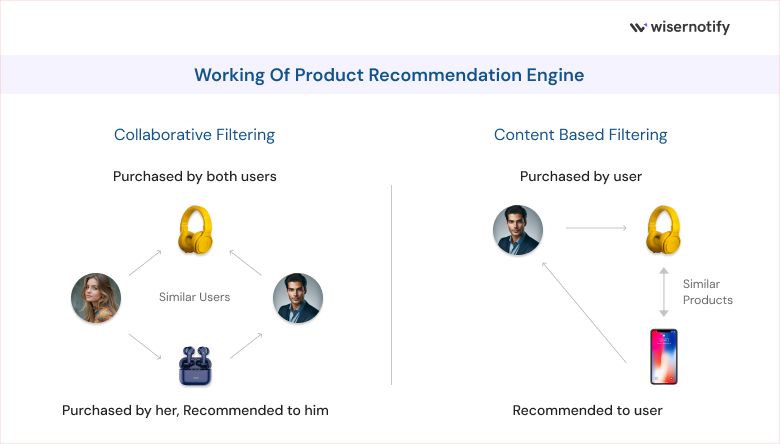
Here’s a simplified breakdown of the three main approaches.
Collaborative filtering
This method looks at what groups of customers do.
If 500 people who bought Product A also bought Product B, the system recommends Product B to the next person who adds Product A to their cart.
It’s pattern matching at scale. Netflix uses this heavily. So does Amazon.
The limitation? It needs a lot of purchase data to work well. New stores with low traffic won’t get accurate results from collaborative filtering alone.
Content-based filtering
Instead of looking at customer behavior, this approach analyzes the product itself.
It considers attributes like category, brand, price range, color, material, and features.
If someone views a black leather wallet, the system recommends other black leather goods.
Straightforward and reliable, even for new stores with limited purchase data.
Hybrid systems
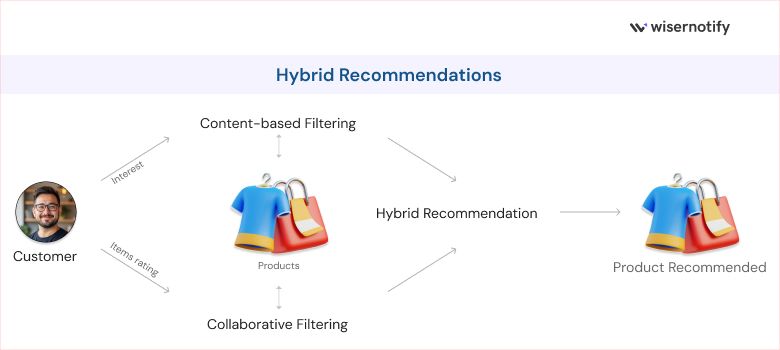
Most modern ecommerce platforms combine both approaches.
Shopify, BigCommerce, and WooCommerce apps typically use hybrid models that factor in browsing behavior, purchase patterns, and product attributes simultaneously.
The result is more accurate, more relevant suggestions that improve as the system collects more data about your customers.
Also check: 15 Product Recommendation Software That Actually Work
11 Product Recommendation Examples From Real Brands
I’ve organized these by strategy type, not just brand name.
Each example shows a specific recommendation tactic you can steal for your own store.
1. Kylie Cosmetics: “Don’t Forget” cart cross-sell
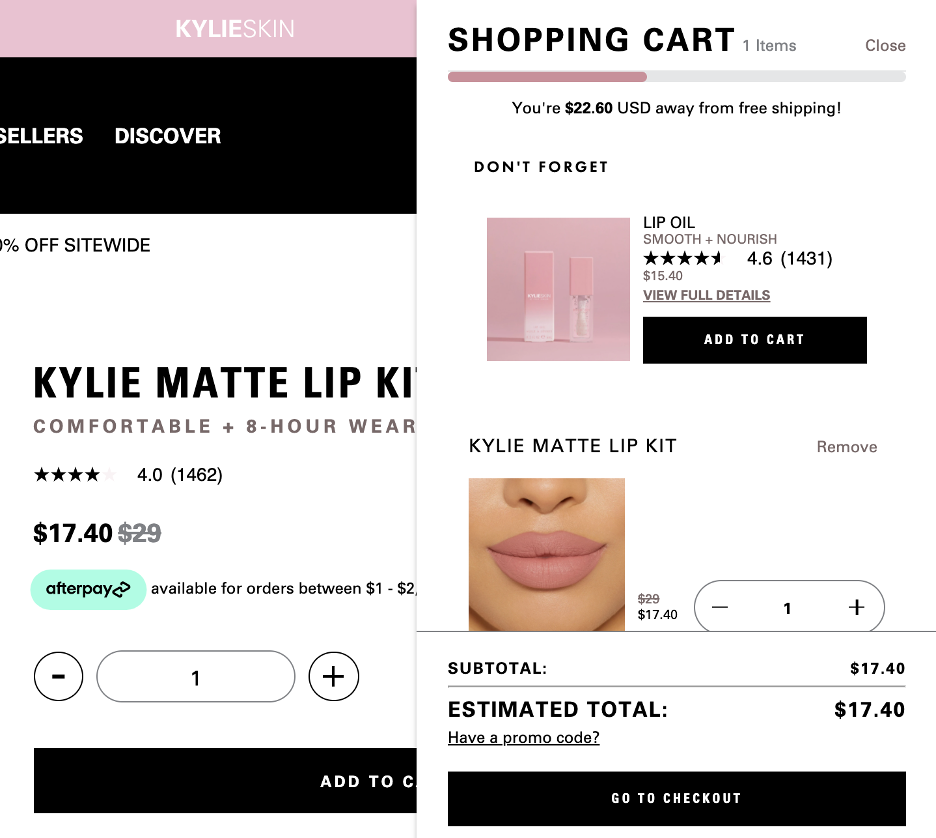
Kylie Cosmetics adds a “Don’t Forget” section on their cart page when someone has a matte lipstick in their order. The recommendation? A lip oil that complements it.
The product ratings displayed alongside the suggestion add social proof right when the customer is about to check out.
Why it works: The recommendation is contextually relevant (lip oil pairs well with lipstick), the placement is strategic (the cart page, where commitment is high), and the star ratings reduce hesitation. Simple, effective, high-converting.
2. Wandering Bear: Subscription upsell on cart page
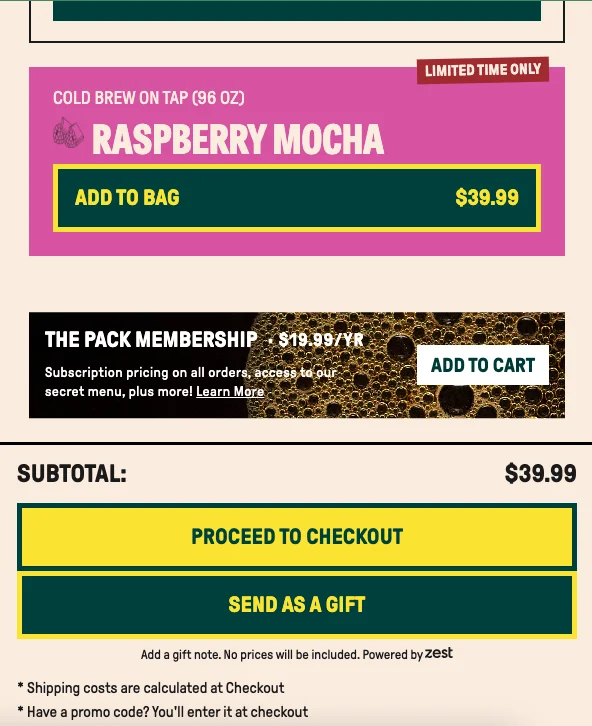
This coffee company doesn’t just suggest another product.
They promote “The Pack Membership” directly on the cart page, with subscription pricing, exclusive access, and a limited-time incentive.
Why it works: Turning one-time buyers into subscribers is the highest-ROI recommendation you can make. One customer lifetime value calculation will tell you why. The scarcity element (limited offer) creates urgency to act now rather than “maybe later.”
3. Tarte: Personalized email recommendations
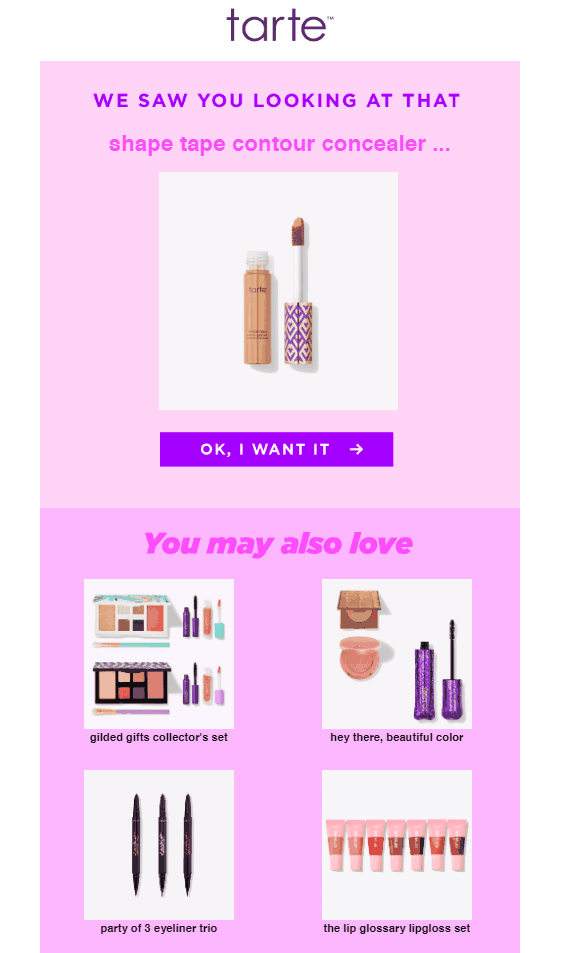
Tarte Cosmetics sends product recommendation emails based on a customer’s recent browsing history.
The email reminds shoppers of a product they viewed and adds a “you may also like” section below.
Why it works: Email recommendations have a massive advantage: they reach customers who left without making a purchase. The personalization (based on actual browsing, not random picks) makes the suggestions feel relevant rather than spammy.
Boost Conversion Instantly
Add Social Proof & Urgency to your website
4. Soi: “Complete the look” outfit builder
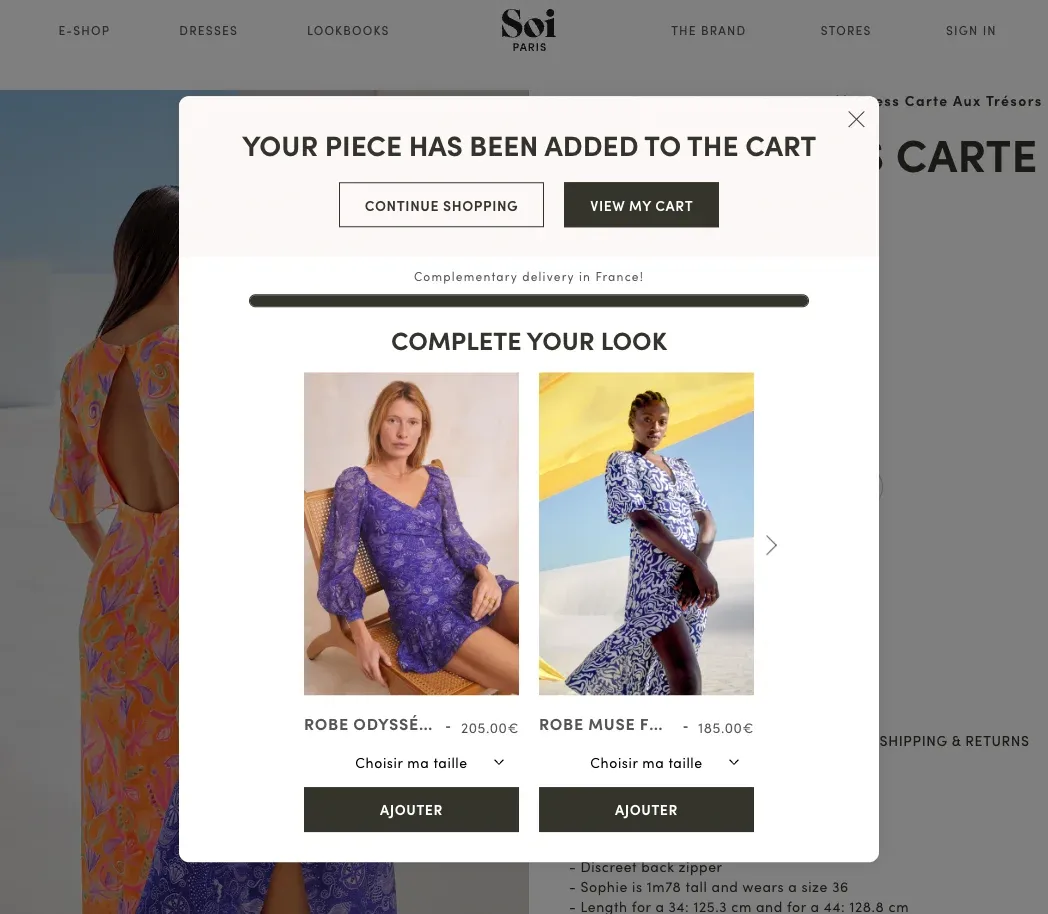
After adding a dress to their cart, customers see a “complete the look” section suggesting a matching belt and shoes.
The recommendations create a full outfit around the original item.
Why it works: Fashion shoppers often want the full look but don’t want to search for each piece individually. This approach increases average order value by 20-30% for brands that implement it well, according to multiple case studies. It turns a single-item purchase into a multi-item order.
5. Colourpop: Cart specials with limited availability
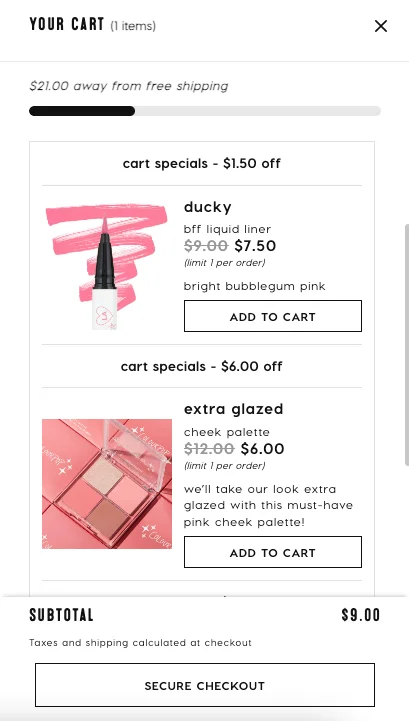
Colourpop shows “cart specials” offering discounted add-ons when items are already in the cart.
The products include a liquid liner and cheek palette at reduced prices, with a “limit 1 per order” restriction.
Why it works: The discount makes the add-on feel like a deal. The quantity limit creates scarcity and urgency. Together, they trigger impulse purchases that feel like smart shopping rather than overspending.
6. My Tote: Free gift threshold with product suggestions
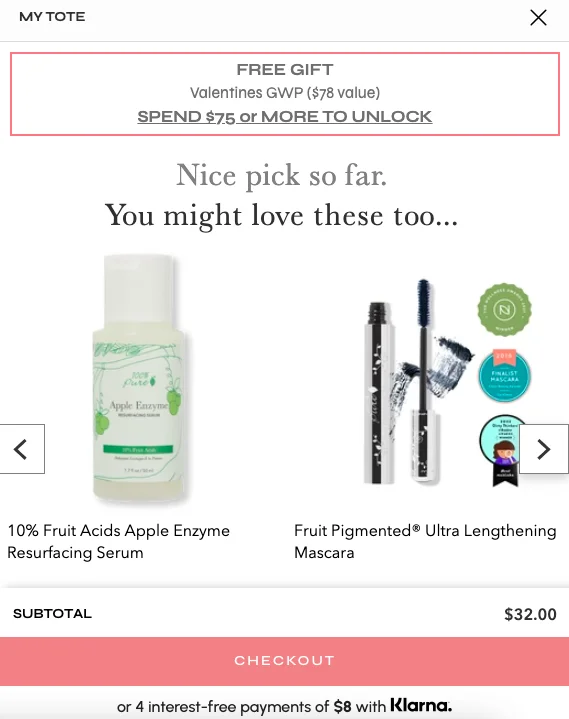
This brand places a “You might love these too” section on the cart page showing complementary products (a serum and mascara) alongside the customer’s current items.
A free gift offer with a minimum purchase encourages adding more.
Why it works: Free gift thresholds are one of the most reliable discount strategies for increasing cart size. The product suggestions make it easy for shoppers to reach the threshold without aimlessly browsing.
7. Cottages.com: Social proof with similar listings
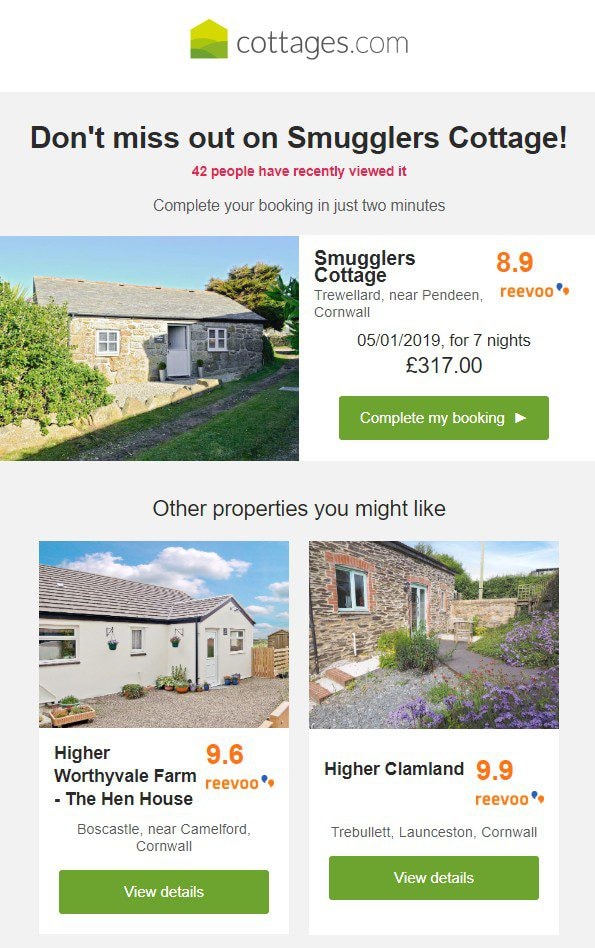
This travel booking site combines social proof (“42 people have recently viewed it”) with “properties you might like” recommendations below the main listing.
Why it works: The visitor count creates urgency (this is popular, better book fast). The alternative suggestions prevent dead-end sessions where a customer can’t find what they want and leaves entirely. Even if they don’t book the original, they might book a recommendation.
8. Frank Body: Visual browsing with benefit icons
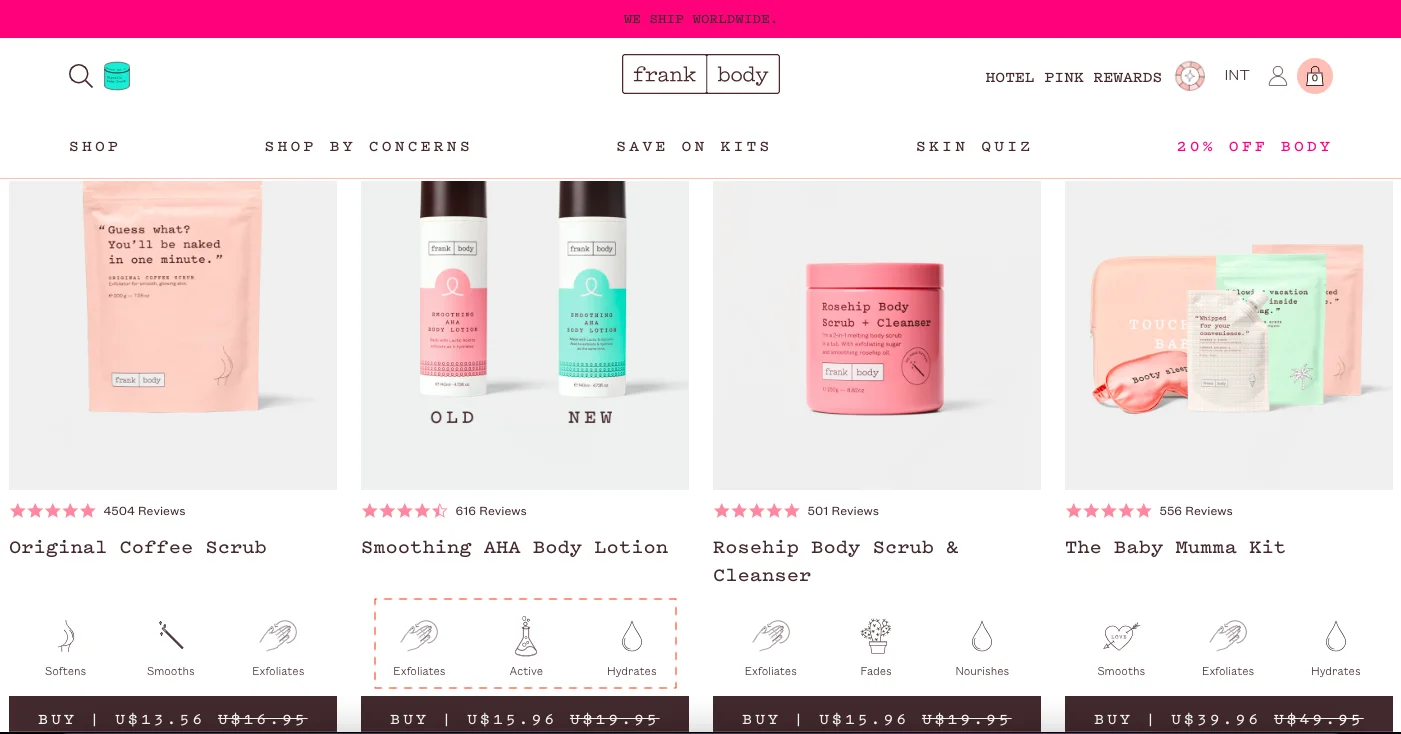
Frank Body uses product recommendation carousels with high-quality images and icons highlighting key benefits (vegan, cruelty-free, natural ingredients) for each suggested product.
Why it works: The benefit icons help shoppers quickly filter recommendations without clicking into each product page. Visual scanning is faster than reading descriptions, and faster decisions mean higher conversion rates.
9. Gymshark: “People also bought” collaborative filtering
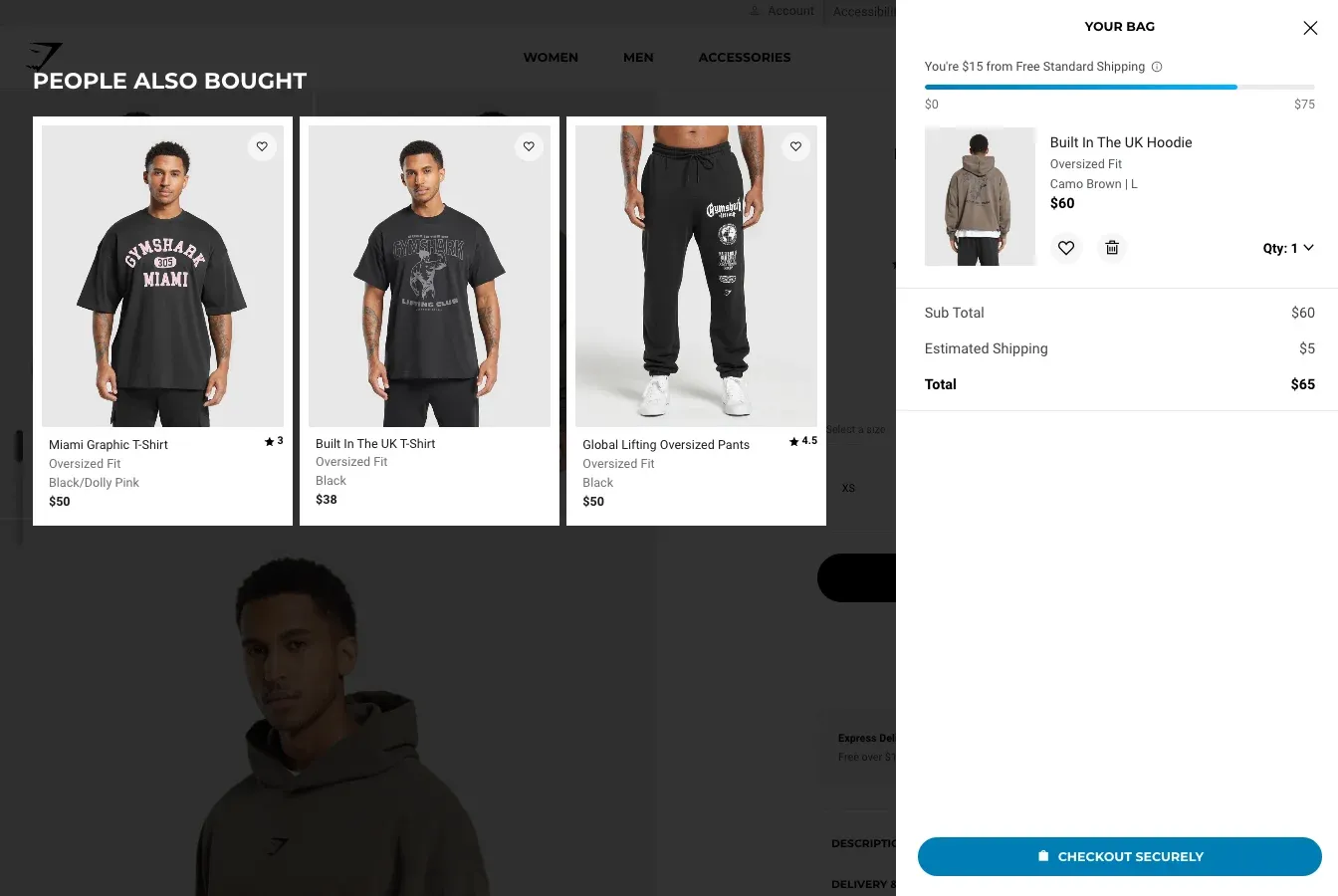
Gymshark places a “People Also Bought” section on product pages, showing items frequently purchased alongside the product being viewed.
Why it works: This is collaborative filtering in action. Real purchase data from thousands of customers powers these suggestions, making them far more accurate than manually curated recommendations. Customers trust what other shoppers actually bought over what a brand suggests they should buy.
Also check: 11 Best Upselling and Cross-Selling Strategies
10. Day Owl: “Goes great with” product bundles
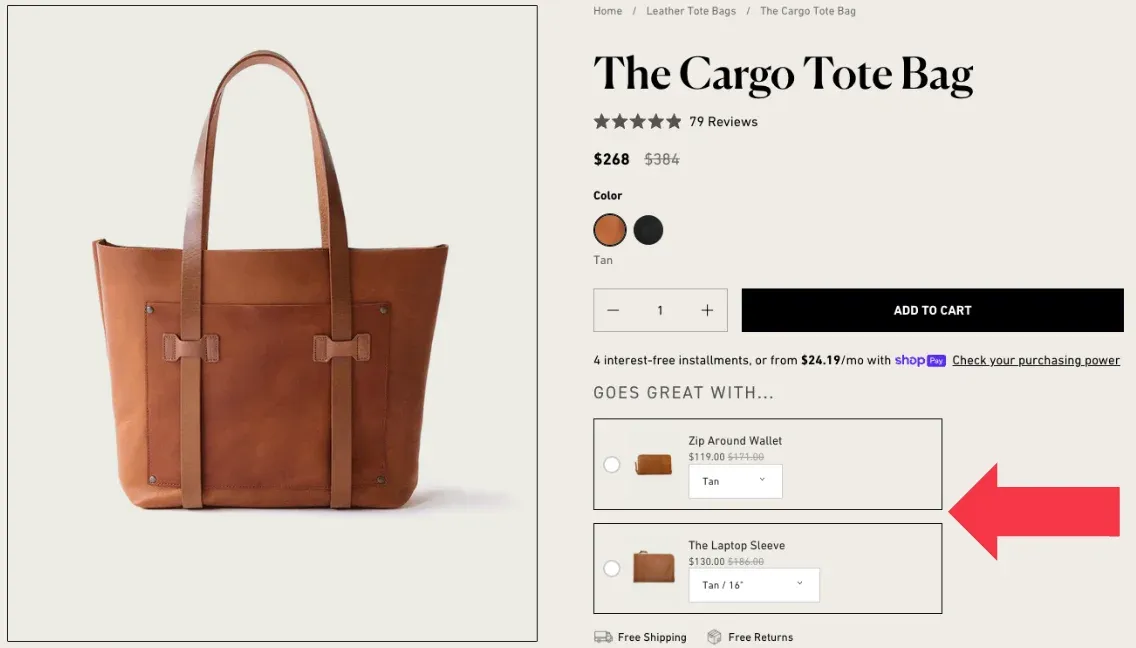
Day Owl shows a “Goes Great With” section on their product pages, recommending a matching wallet and laptop sleeve alongside a featured tote bag.
Why it works: The “goes great with” framing positions add-ons as accessories rather than upsells. Customers feel like they’re completing a set rather than being pushed to spend more. This approach typically works best for brands where products naturally pair together (bags + wallets, skincare routines, tech accessories).
Build urgency
Add floating offers with countdown timer & coupon code.


11. Olive: Mystery discount pop-up with bundled products
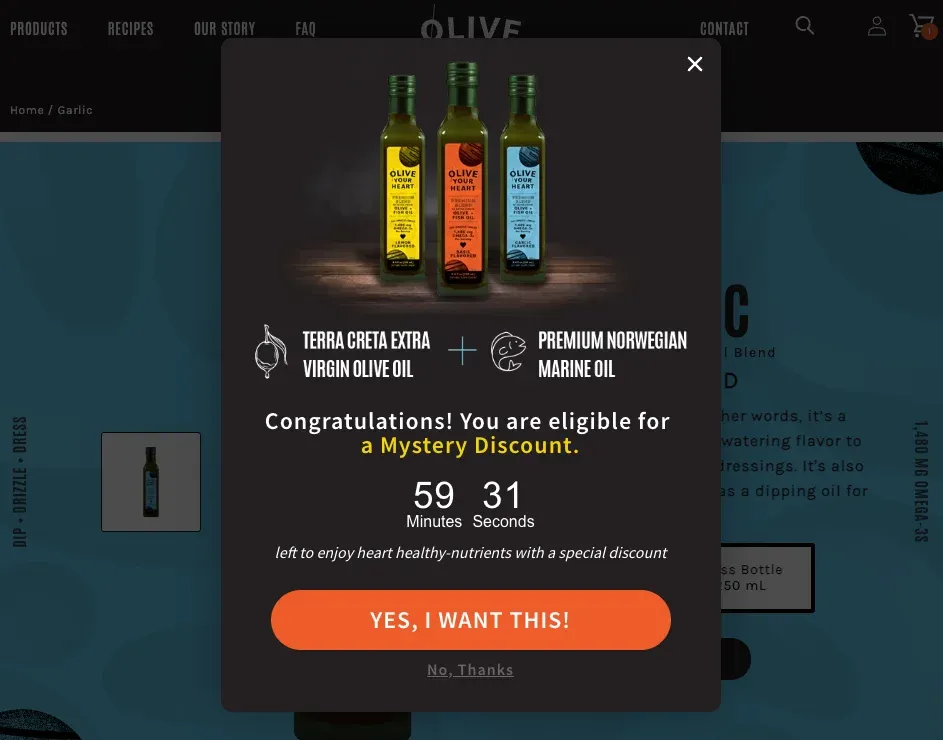
Olive uses a pop-up with a countdown timer offering a “mystery discount” on a bundle of two related products.
Why it works: The mystery element creates curiosity. The countdown timer adds urgency. And bundling two related products introduces shoppers to items they wouldn’t have found on their own. Three psychological triggers are working at once.
Where to Place Product Recommendations on Your Store
The best product recommendations fail if they’re in the wrong spot. Here’s where to place them for maximum impact.
Homepage: Show bestsellers to new visitors and personalized picks to returning ones. This is your storefront window.
Product detail pages: “Frequently bought together” and “You might also like” sections keep browsers engaged. This is where cross-selling happens naturally.
Cart page: Suggest complementary items or upgrades while the customer is in buying mode. Cart page recommendations have some of the highest conversion rates because purchase intent is already high.
Checkout page: Lightweight upsells only. A single relevant add-on suggestion works. Don’t be distracted from completing the purchase.
Post-purchase emails: Recommend items based on what the customer just bought. These emails have 4x the open rate of standard marketing emails.
404 and search results pages: Show popular products or alternatives when a customer hits a dead end. Recovering potential leads from dead-end pages is an underused tactic.
Product Recommendation Strategies That Actually Work
Pair recommendations with social proof
Product recommendations convert better when they include trust signals. Star ratings, review counts, “bestseller” badges, and social proof statistics like “bought 500+ times” all reduce purchase hesitation.
Tools like WiserNotify let you add real-time social proof notifications (“Someone in New York just bought this”) directly on product pages where recommendations appear.
The combination of personalized suggestions and live purchase activity creates both relevance and urgency.
Don’t overwhelm with choices
Showing 20 recommended products is worse than showing 4. Choice overload leads to decision paralysis.
I’ve seen this with dozens of stores.
The ones that curate 3-6 highly relevant recommendations outperform those that dump every related product onto the page. Quality over quantity, always.
Match recommendations to the customer journey
Someone browsing casually needs different recommendations than someone with items in their cart.
Early in the journey: show more options, broader categories, trending items.
Close to purchase: show complementary products, upgrades, and bundles that pair with what’s already selected.
A/B test your recommendation placements
Don’t assume the first placement works best. Test different positions, different numbers of products shown, different recommendation types (collaborative vs. content-based), and different visual layouts.
The data will tell you what converts. I’ve seen stores double their recommendation click-through rate just by moving the section from below the fold to above the “add to cart” button.
3 Product Recommendation Mistakes That Kill Conversions
1. Irrelevant suggestions
A customer browsing winter coats sees swimsuit recommendations.
It sounds absurd, but it happens more often than you’d think when recommendation engines aren’t configured properly.
Every suggestion must be contextually relevant to the product the customer is viewing or the items in their cart.
If your recommendations feel random, customers lose trust in your store’s ability to help them.
2. Showing too many products
I’ve audited stores with 30+ recommended products on a single page.
The result? Customers scroll past all of them.
Stick to 4-8 recommendations maximum.
Prioritize the most relevant ones, and display them in a clean grid or carousel format with high-quality images.
3. Not tracking performance
Implementing product recommendations without measuring results means you’re flying blind.
Track click-through rates on recommended products, conversion rates from those clicks, and how recommendations affect average order value.
Review the data monthly and optimize based on what’s working.
3 Tools to Power Your Product Recommendations
1. Recommendify (Shopify)
A Shopify app that uses collaborative filtering to analyze purchase data and generate personalized product suggestions.
It’s straightforward to set up and integrates directly with your store’s theme.
Best for: Shopify stores that want plug-and-play recommendations without heavy customization.
2. Nosto
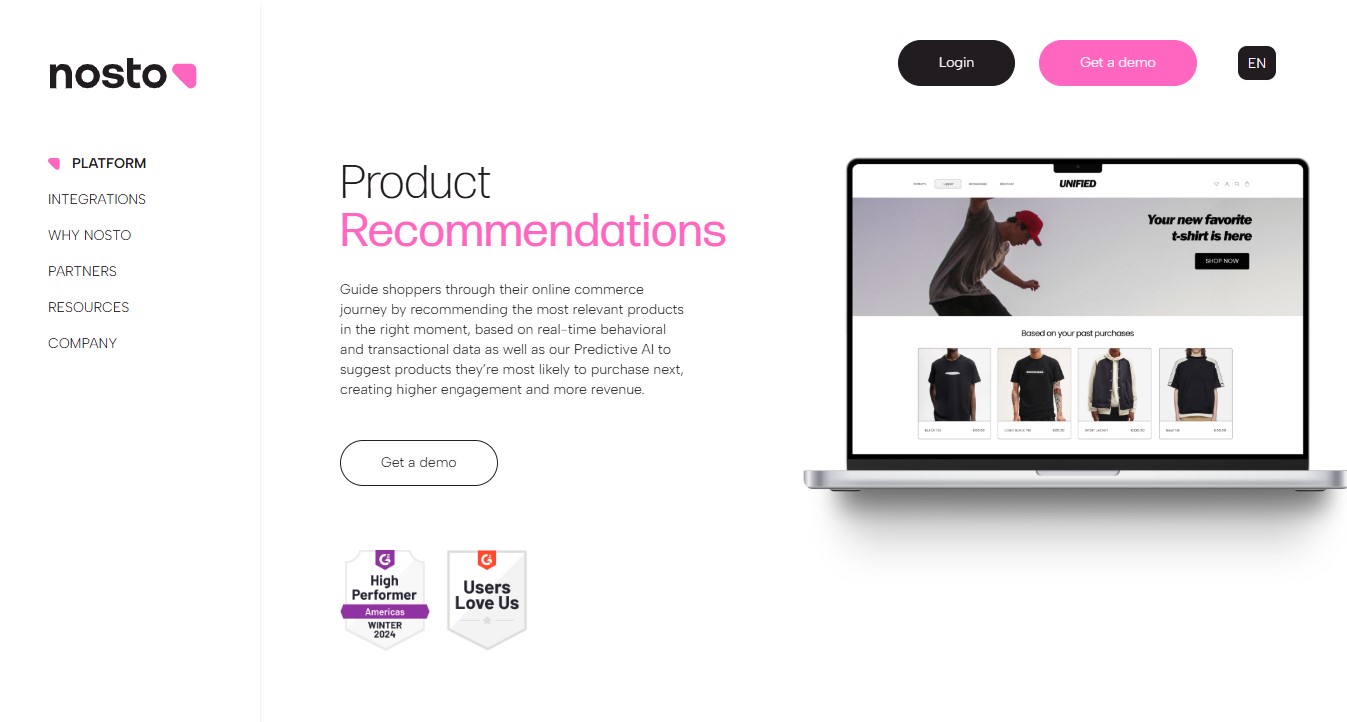
Nosto is a full personalization platform covering product recommendations, personalized content, and email campaigns.
It uses AI and machine learning to continuously improve the accuracy of recommendations.
Best for: Mid-size to large ecommerce stores with enough traffic data to power machine learning models.
3. Barilliance
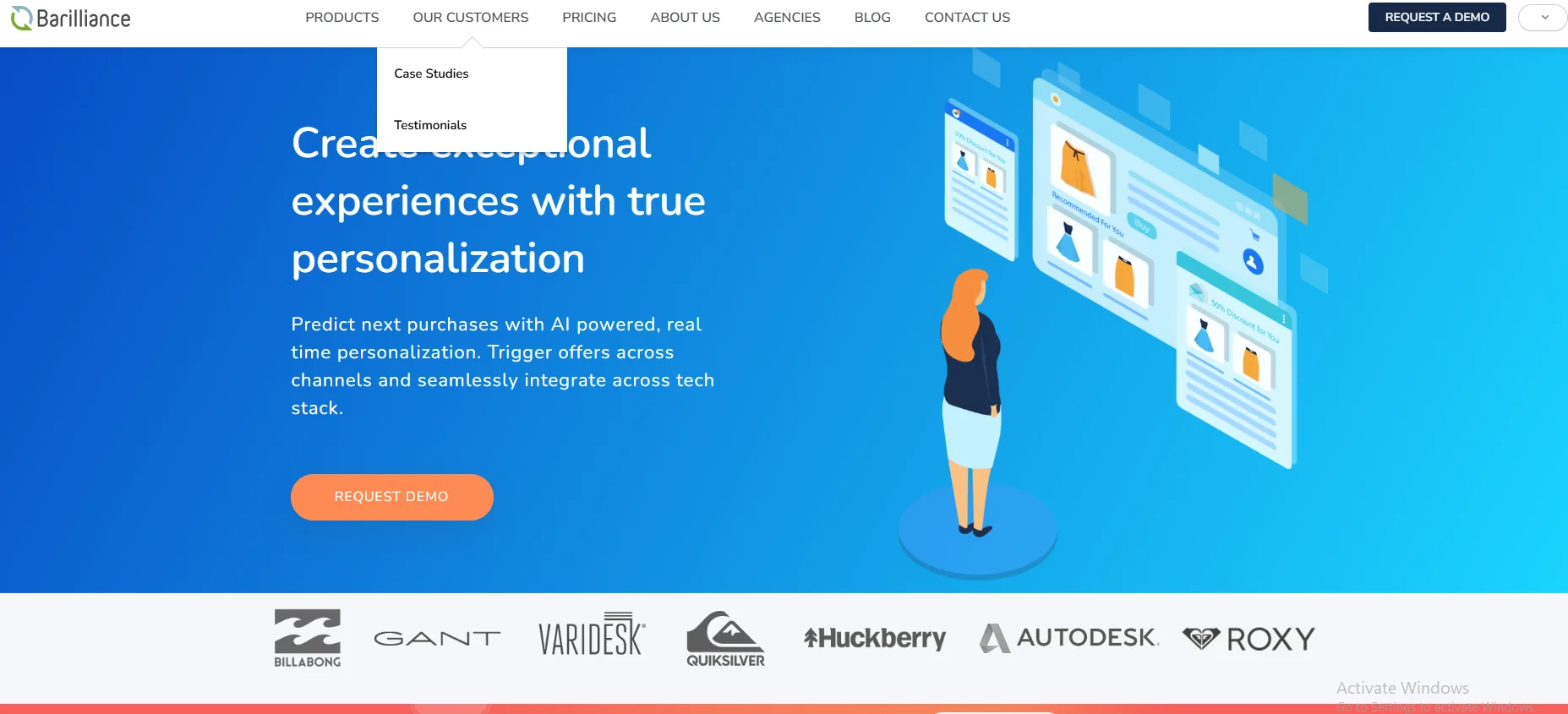
Barilliance offers product recommendations, triggered emails, and personalized search on a single platform.
Their recommendation engine is built for high-traffic stores and includes advanced behavioral targeting.
Best for: Enterprise ecommerce stores that need multi-channel personalization with deep analytics.
Boost Conversion Instantly
Add Social Proof & Urgency to your website
Wrapping Up
Product recommendations aren’t optional for ecommerce stores that want to grow.
The data is clear: they drive up to 31% of revenue, increase average order value, and keep customers engaged longer.
The 11 examples above show that recommendations work across all placements (homepage, product pages, cart, email) and all strategies (cross-sell, upsell, personalized, social proof-driven).
Start with the highest-impact placement for your store. For most brands, that’s the product detail page and the cart page. Add relevant, curated suggestions.
Pair them with social proof. Then measure and optimize.
Small changes to your recommendation strategy compound over time. A 10% improvement in recommendation click-through rate across thousands of daily visitors adds up fast.


