
15 Product Bundling Examples I Studied to Boost AOV (2026)

The product bundles that sell share one trait. A shopper can see in a glance why the items belong together and what the set saves them. Price does the rest.
Below are 15 bundles from real stores, each one checked live this quarter, with the structure it uses and the move worth copying.
After the examples come the four bundle types, a pricing section with worked numbers, and the habits that keep a bundle from sitting unsold on a page.
Key takeaways
- Mixed bundling, where items sell alone or together at a discount, fits most stores. Pure bundling only works when the set is clearly better than its parts.
- Show the saving in dollars next to the bundle price. “Save $18” beats “save 20%” because the shopper doesn’t have to do the math.
- Build bundles from products that already land in the same cart in your order history before you get creative.
- Name the bundle for the customer or the outcome, and place it where intent is highest, on the product page and in the cart.
What is Product Bundling and Why Does it Work

Product bundling is selling two or more products together as a combined package, typically at a lower price than buying each item separately.
It works because it solves a real problem for shoppers: instead of making multiple decisions about multiple products, they make one decision about one purchase.
From a psychology standpoint, bundles reduce decision fatigue while increasing perceived value, the same lever the ecommerce personalization stats keep pointing to.
The shopper feels they’re getting more for less, even when the total spend is higher than they originally planned. That’s why bundling is one of the few strategies that simultaneously increases AOV for the store and satisfaction for the customer.
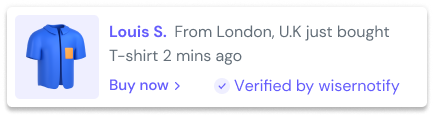
Build trust & FOMO
Highlight real-time activities like reviews, sales & sign-ups.

4 Types of Product Bundles Explained

Most of the examples below use one of four basic bundle structures. Understanding which type fits your store is the first decision you need to make before building anything.
Pure bundling
Items are only available as part of the bundle, not individually.
This works for moving slower inventory alongside bestsellers, for starter kits that need several components to be useful, and for products where selling pieces alone would create compatibility confusion.
The risk is that some shoppers who only want one item in the bundle will leave rather than buy the full package.
Use pure bundling when the bundle itself is clearly better than any of its components.
Mixed bundling
Products are available individually and as a bundle at a discount. This is the most flexible structure and works for most ecommerce categories.
The key is making the savings comparison explicit and keeping the bundle price meaningful enough to justify the combined purchase. If the discount is too small, shoppers buy individually. If it’s too large, your margins suffer.
Cross-sell bundling
Complementary products from different categories are bundled together. The shopper came for one thing; the bundle surfaces something they need but weren’t planning to buy.
This is the most effective structure for increasing AOV without requiring the shopper to start a new purchase decision. The bundle completes a natural need rather than creating an artificial one.
Subscription bundling
A curated collection delivered on a recurring schedule. Subscription bundles trade the immediate AOV boost of one-time bundles for long-term retention and predictable revenue.
They work best for consumables, products with ongoing routines, or categories where curation has genuine value (wine, beauty, food).
15 Product Bundling Examples Worth Stealing
Every brand below was checked live this quarter. The table is the short version. The entries under it explain why each one works.
| Brand | Bundle type | Tactic to steal |
|---|---|---|
| Mango | Cross-sell, complete the look | Style the full outfit before the shopper arrives |
| 3Wisemen | Fixed-price multi-buy | One always-on deal, 3 for $333, with the saving stated |
| Sephora | Seasonal gift sets | Limited edition tags that create urgency without a discount |
| Clean Beautique | Subscription mystery box | Sell discovery, not a product list |
| Vanity Planet | Outcome-based cross-sell | Each item makes the others work better |
| GetFPV | Ready-to-fly pure bundle | Remove compatibility research for technical buyers |
| PlayStation | Hardware plus game | Frame it as ready to play, not as a saving |
| Cuisinery | Recipe bundle | Sell access and a finished dish, not quantity |
| Zing | Curated pack and build-your-own | Show the pack price against the regular total |
| Nordstrom | Complete the look on product pages | Suggest the bundle at the point of highest intent |
| Harry’s | Starter set pure bundle | Collapse every configuration decision for first-time buyers |
| Blue Apron | Subscription meal kit | Remove a recurring decision, not just a purchase |
| Glossier | Build-your-own set, 10% off | Guide the build step by step, apply the saving at the end |
| The North Face | Layering system sold as a kit | Explain how the pieces work together before you sell them |
| M.M. LaFleur | Mix-and-match multi-buy | Let the customer build it, then reward the extra item |
Fashion
1. Mango


Mango builds bundles around complete, styled outfits rather than individual garments.
A single product page shows a detachable gilet trench coat paired with a striped sweater, denim skirt, patent leather moccasins, and earrings.
Every item is shoppable, and the full look is presented as the obvious purchase rather than a bonus.
The genius of this approach is that Mango isn’t asking shoppers to imagine how pieces go together, they’ve already done it.
The styling work is done before the shopper arrives. That removes the friction that kills cross-category fashion sales: “But would this work together?”
What to steal: Do the styling work for your customer before they arrive on the page. A pre-built outfit or look eliminates hesitation and makes the multi-item purchase feel like a smart decision rather than an impulse.
2. 3Wisemen
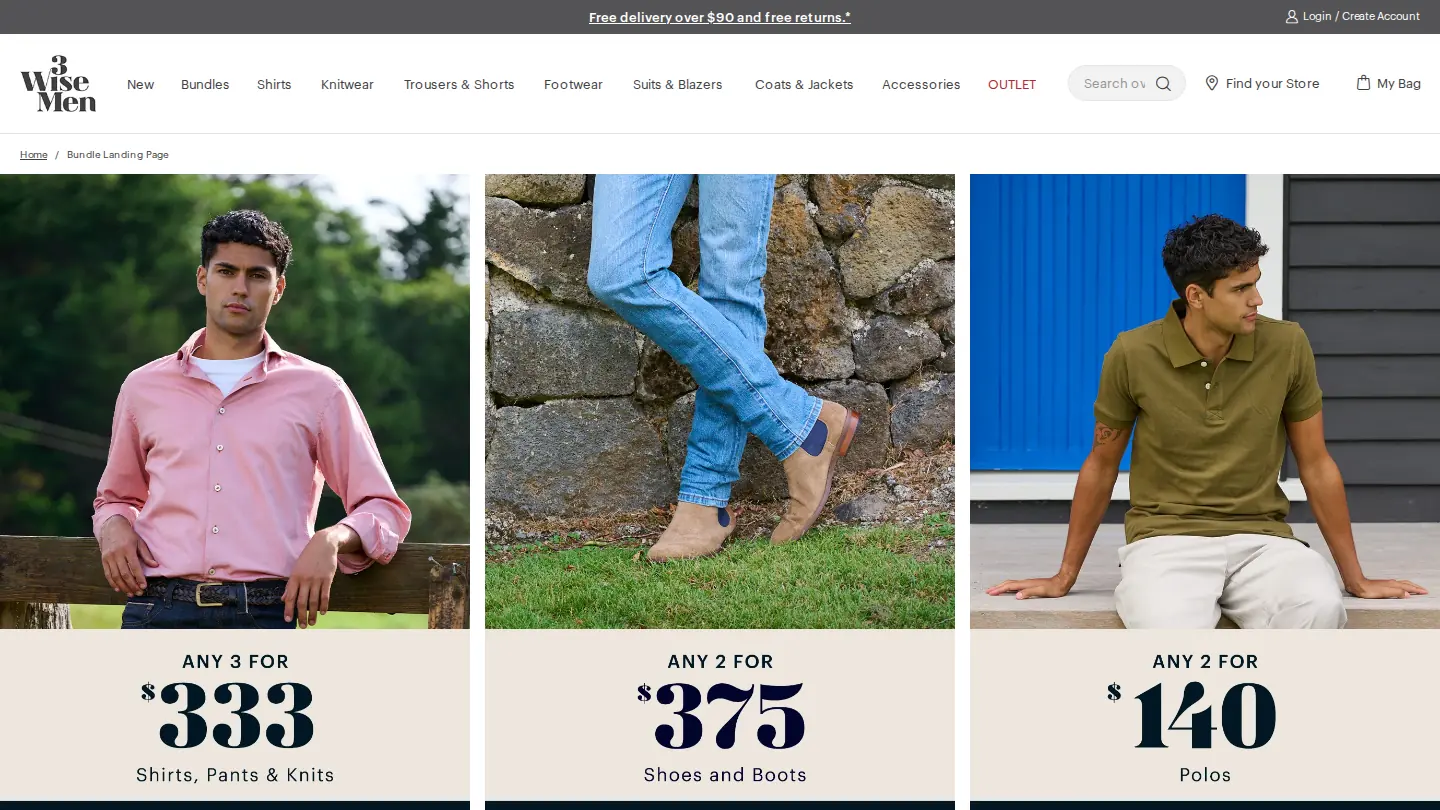
3Wisemen gives bundle deals their own tab in the menu and leads with one always-on offer. Any three shirts, knits, trousers, or denim come to NZ$333, with two-for deals on shoes and polos beside it.
At $150 a piece, the page states the saving in one line, up to $117, and then shows the eligible products in a scannable grid so the shopper builds the three without reading anything else.
The deal never changes, which is the point. Regulars know the number, and the Bundles tab turns a menswear store into a place you come back to in threes.
What to steal: One fixed-price multi-buy that never switches off, with its own navigation entry and the saving stated in dollars. Shoppers remember a number far better than a rotating promo.
Beauty and Skincare
3. Sephora

Sephora’s seasonal bundle strategy is one of the most studied in beauty retail.
They create holiday-themed sets across every category, skincare, makeup, fragrance, at multiple price points, and they layer two conversion mechanisms on top: limited edition packaging and explicit “Limited Edition” tags that create purchase urgency.
What Sephora understands is that bundles are primarily a gifting vehicle for many shoppers. Someone buying a skincare set for their sister doesn’t want to make five product decisions, they want to make one.
Sephora makes that decision feel curated, seasonal, and exclusive.
What to steal: Create seasonal bundles with dedicated packaging and limited edition tags.
The “limited” signal activates urgency even without a discount, the way the best FOMO marketing does. Shoppers who would have browsed individual products often convert faster when a pre-curated bundle makes the gifting decision simple.
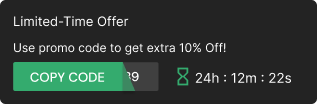
Build urgency
Add floating offers with countdown timer & coupon code.
4. Clean Beautique
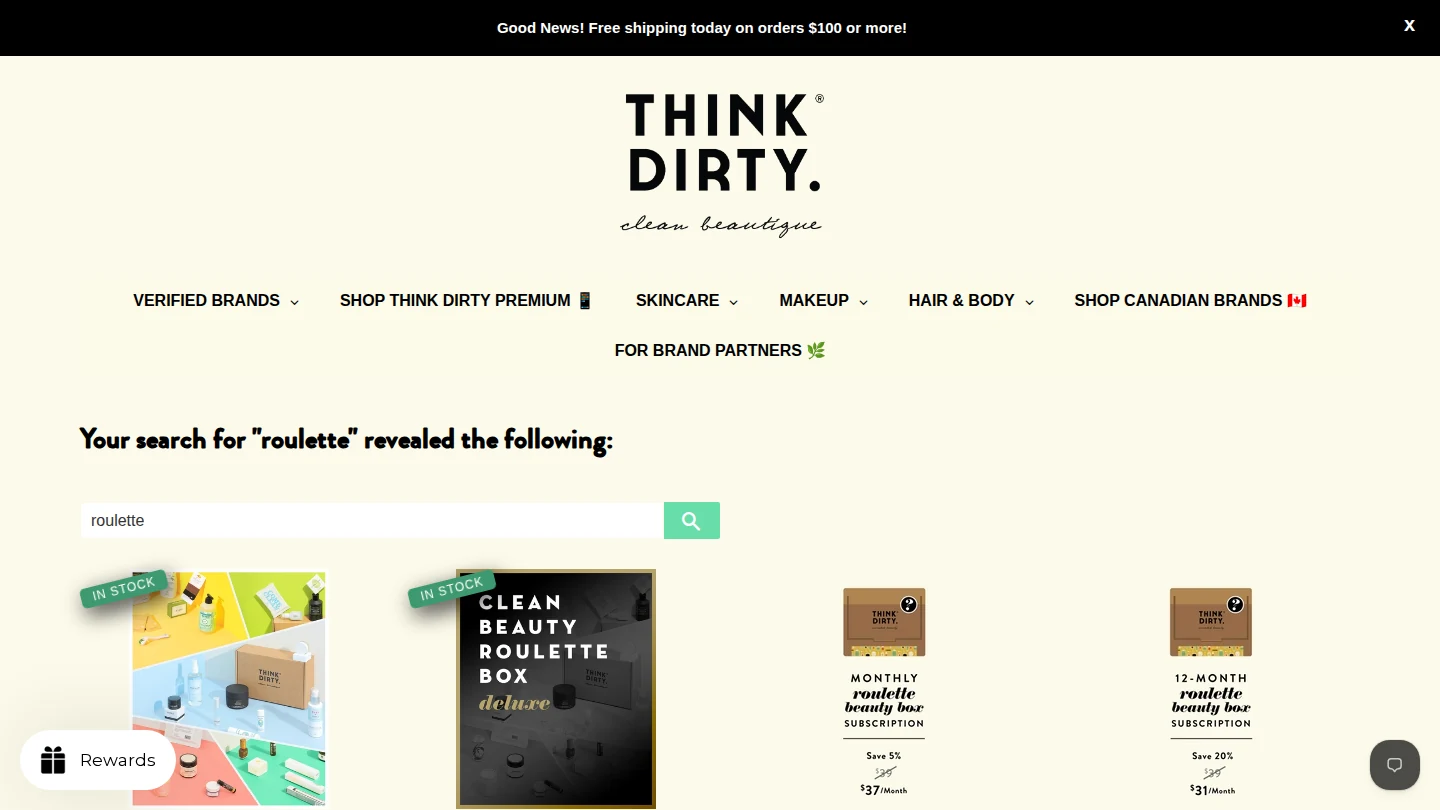
Clean Beautique’s “Clean Beauty Roulette Box” is a subscription mystery bundle priced at $39 a month, against a stated retail value of $129.
Shoppers don’t know exactly which clean beauty products they’ll receive, the surprise is the product.
This inverts the standard bundle logic: instead of showing the shopper what they’re getting, you sell them the experience of discovery.
Mystery bundles work because they address a specific shopper psychology: the desire to try new things without the commitment of buying full-size products of something unfamiliar.
The $39 price reads as low-risk exploration rather than a $39 purchase of specific items, and the $129 comparison does the persuading.
What to steal: If you have a large product catalog with items customers haven’t tried, a mystery or surprise bundle removes the friction of choosing.
The discovery experience itself is the value proposition, and subscription layering ensures recurring revenue without requiring recurring decisions from the customer.
5. Vanity Planet
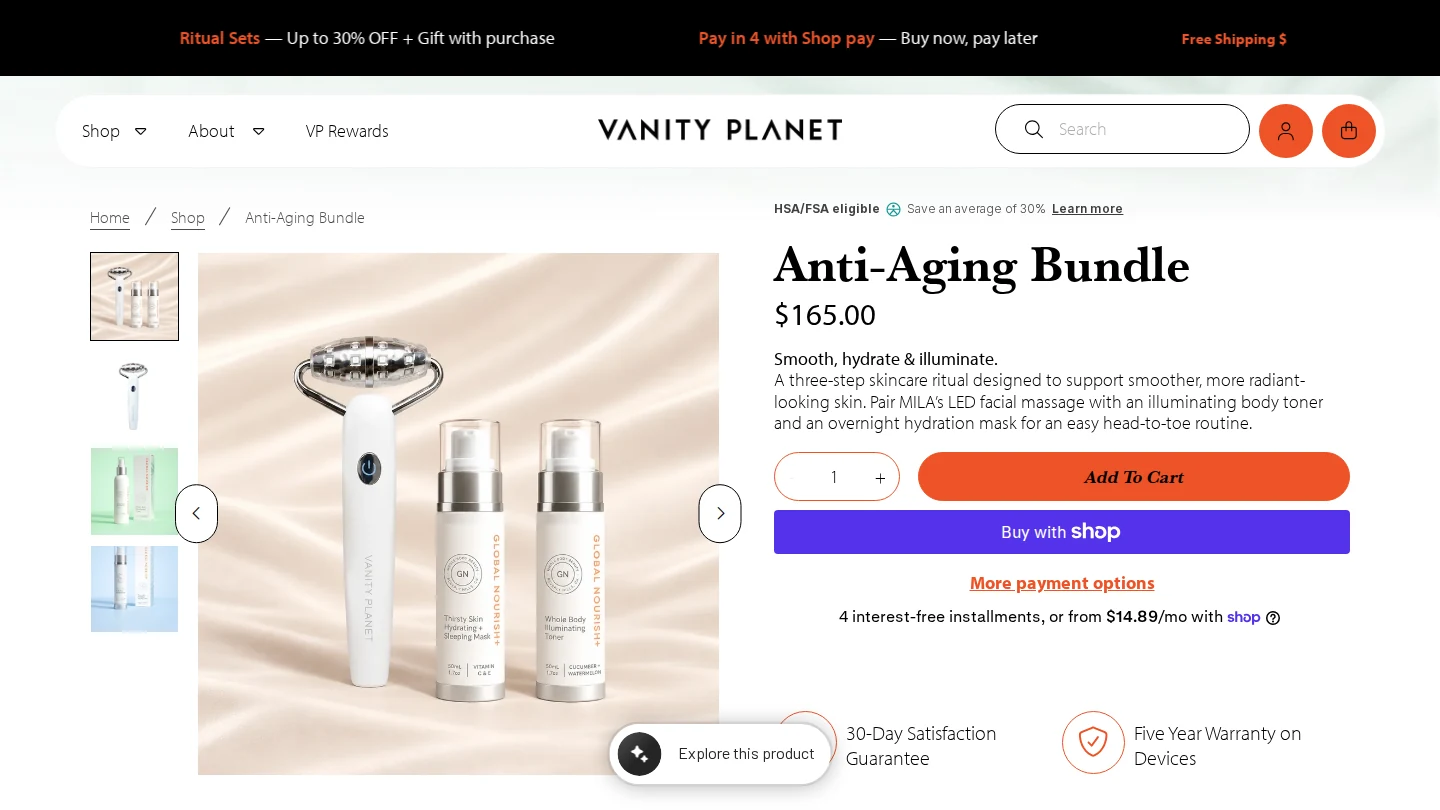
Vanity Planet sells its skincare tools as routines. The Anti-Aging Bundle pairs the MILA LED facial massager with an illuminating body toner and an overnight hydration mask for $165, sold as one three-step ritual.
A banner above the price says the bundles save an average of 30%, and the product copy explains the order you use them in. The bundle isn’t about convenience alone. It’s about a better outcome than any one tool delivers.
A shopper using only the device gets part of the result. Using the three together gets the routine the brand is known for.
What to steal: Build bundles where each item makes the others work better.
When you can explain “Product A is more effective when used with Product B,” the bundle becomes a recommendation, not a sales tactic. Outcome-based bundling converts at higher rates because the logic is self-evident.
Also check: Product page examples worth copying
Tech and Electronics
6. GetFPV
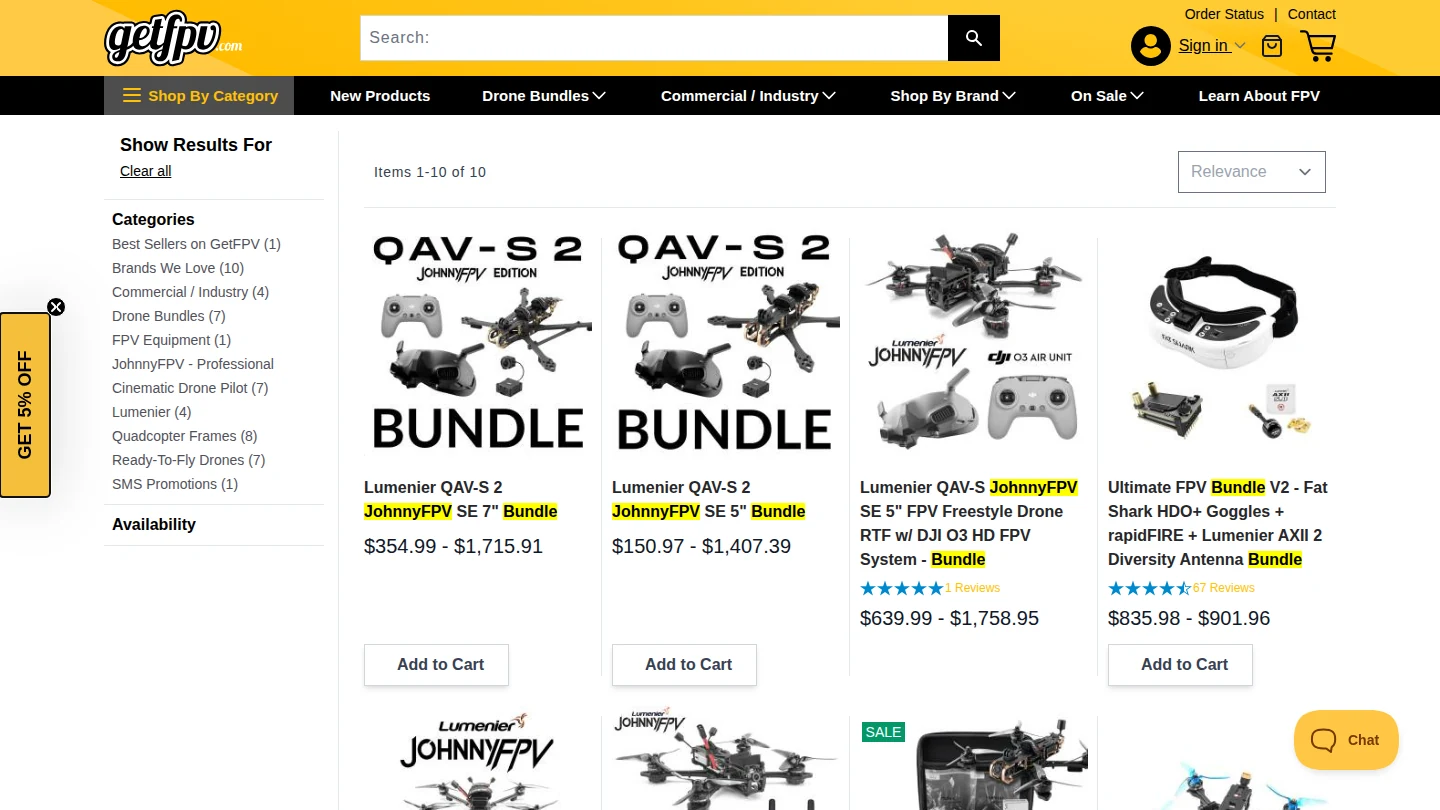
GetFPV bundles the Lumenier QAV-S JohnnyFPV Special Edition 5-inch drone as a ready-to-fly package with the DJI Digital HD FPV system at $1,028, with a 7-inch long range version with GPS alongside it.
The price is below buying the parts one by one, but the bigger feature is completeness. A drone without matching goggles and a controller doesn’t fly, so the bundle is the minimum viable product.
This is pure bundling applied intelligently. GetFPV’s core buyer is a drone enthusiast who needs all three items to fly.
Selling them separately means the shopper either has to navigate complex compatibility questions or leave to figure it out elsewhere. The bundle removes both friction points.
What to steal: When your product requires companion items to work properly, bundle them as the default.
Don’t make technically complex buyers do compatibility research. Make the complete solution obvious, add savings, and convert the shopper who would have left to verify compatibility.
7. PlayStation
PlayStation’s console bundles have been one of the most consistently successful product bundling strategies in consumer electronics.
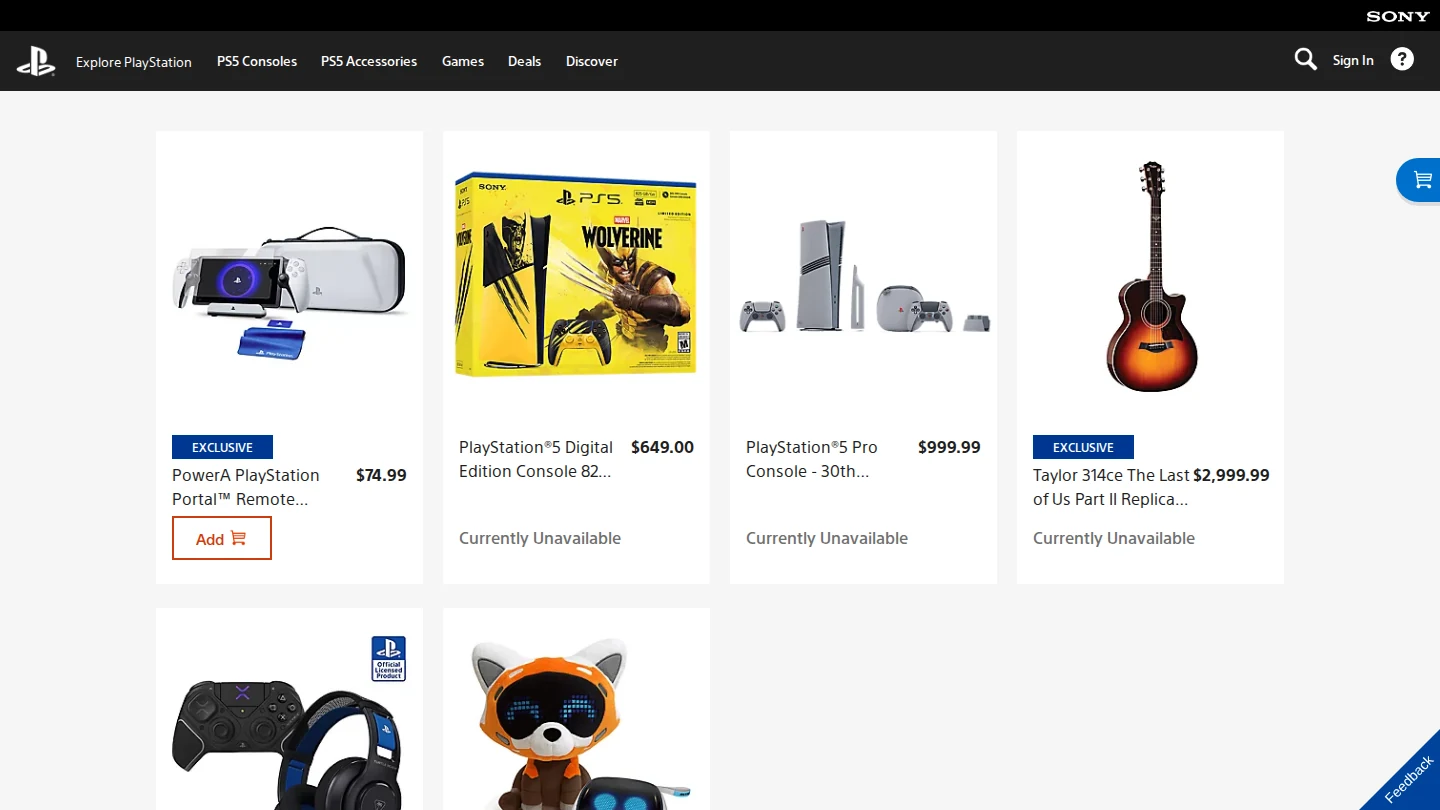
PlayStation Direct sells the PS5 Digital Edition as a limited edition bundle with Marvel’s Wolverine, and the PS5 Pro as a 30th anniversary set with a matching controller, so the hardware and the thing you do with it arrive in one box.
The single most important thing PlayStation understands about bundles: the standalone product creates uncertainty about total cost and setup complexity.
The bundle eliminates that uncertainty. “Buy this and you’re ready to play” is a more compelling value proposition than “buy this and then figure out what else you need.”
What to steal: Frame your bundle around readiness rather than savings. “Everything you need to get started” is often more persuasive than “save 15%.”
Shoppers who are unsure what they need respond better to a complete solution than to a discount on one piece of it.
Food and Beverage
8. Cuisinery
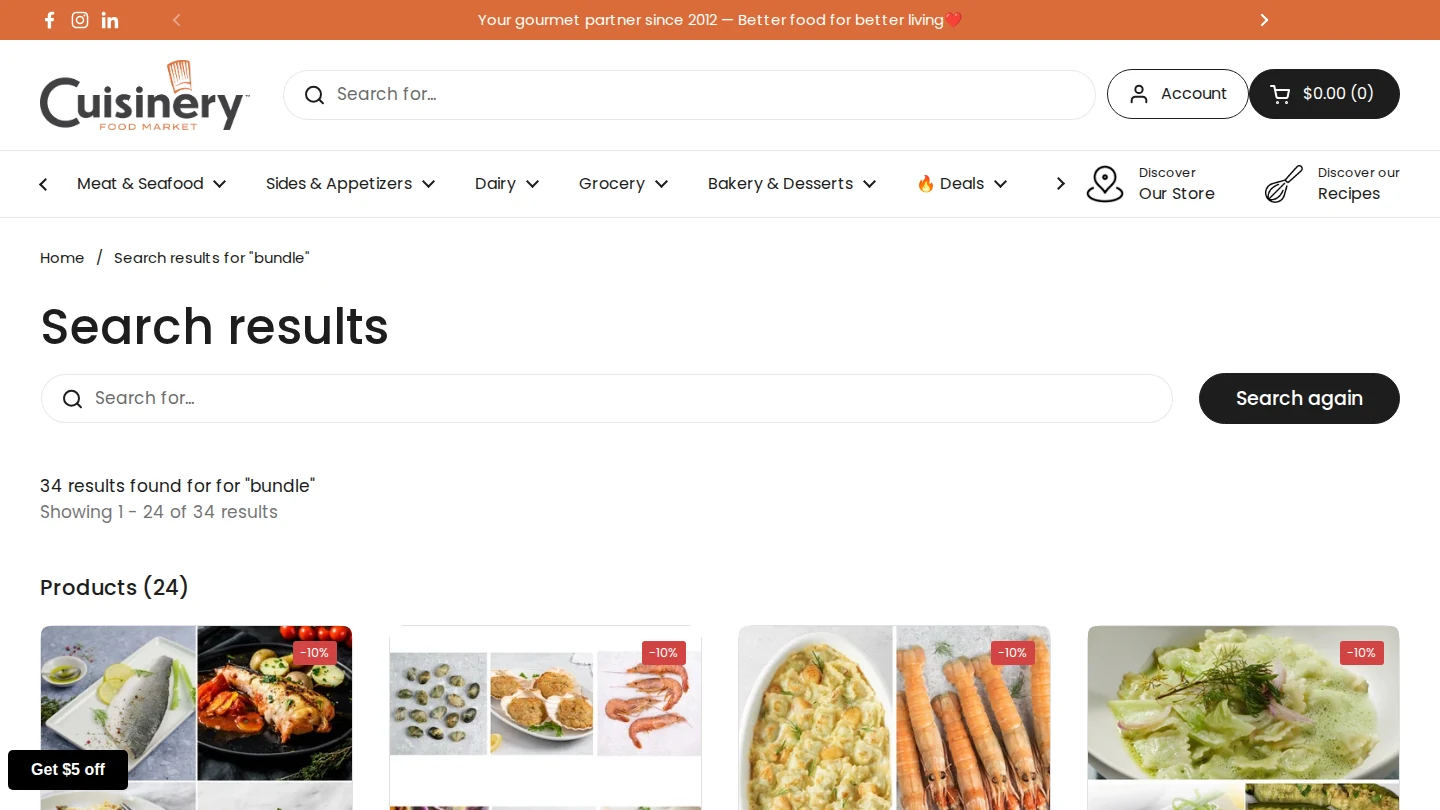
Cuisinery sells recipe bundles. The Ravioles with Langoustine Bundle puts every ingredient for one French dish in a single purchase at $74.88, 10% under the separate prices.
A smaller Seafood Ravioles du Dauphine Recipe Bundle does the same at $14.99.
The price is justified by access, not quantity. These are imported French products you won’t find at the supermarket, assembled around a dish rather than a category.
So the shopper isn’t buying pasta and seafood. They’re buying a dinner they couldn’t source on their own, which keeps the comparison with grocery prices off the table.
What to steal: Position your bundle around access and experience, not just savings.
If your products are hard to source or take expertise to curate, that curation is a value worth calling out.
“This bundle gives you access to something you can’t easily build yourself” is a different and often stronger pitch than a percentage discount.
9. Zing
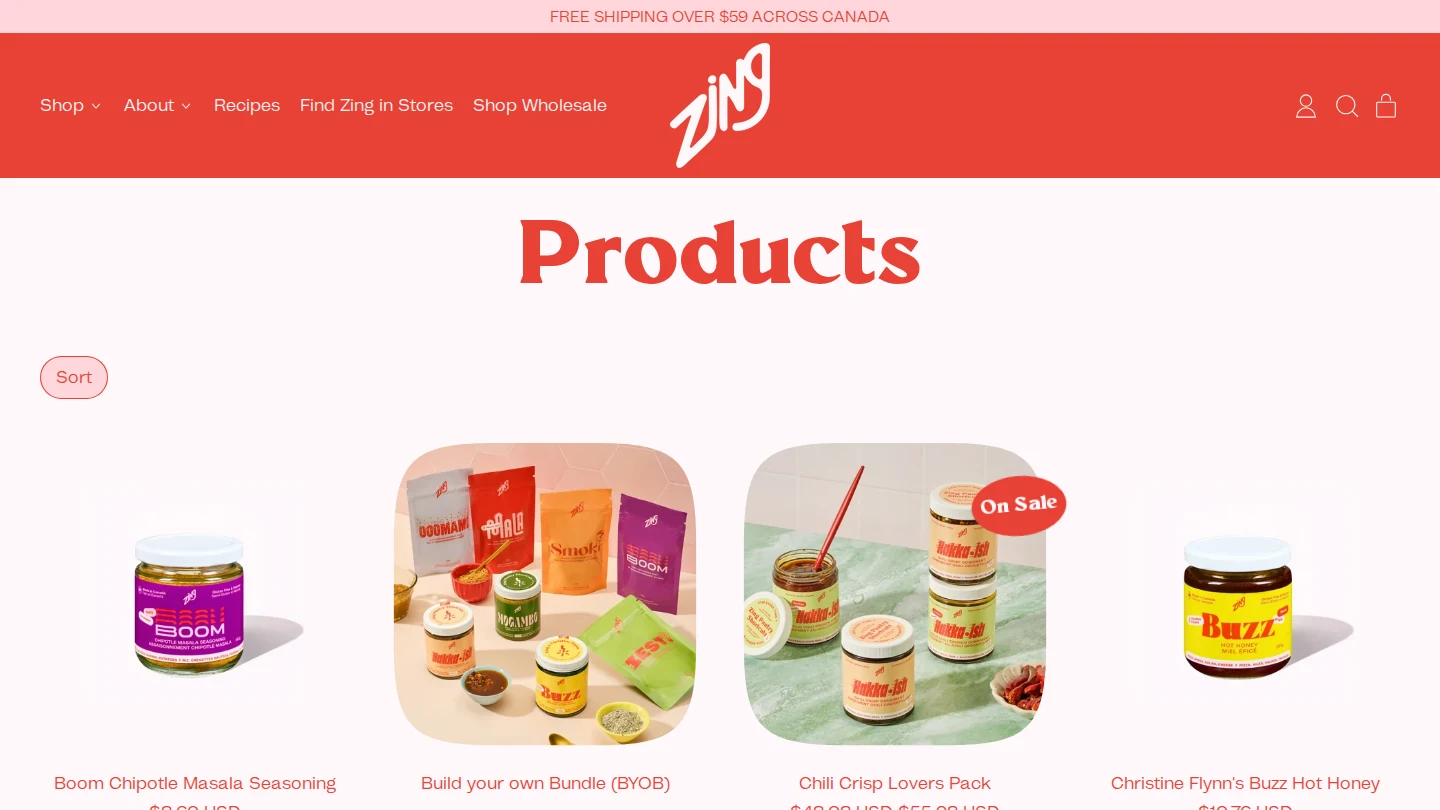
Zing Pantry Shortcuts, a Toronto condiment brand, sells its sauces and seasoning salts in named packs. The Chili Crisp Lovers Pack is $48.08 against $55.98 bought separately, and the One of Everything Bundle is $73.20 against $91.14.
None of these items pair the way shampoo pairs with conditioner. The logic is curation, the picks the brand would hand an adventurous cook, with the regular total crossed out next to the pack price.
A Build Your Own Bundle option sits beside the packs for shoppers who already know what they like. Curated for the newcomer, custom for the regular, same page.
What to steal: Name packs for the person, not the contents, and show the regular total struck through beside the pack price. Then add a build-your-own path for repeat buyers so the curated pack never becomes a ceiling.
Apparel and Lifestyle
10. Nordstrom

Nordstrom’s “Complete the Look” bundle strategy surfaces matching outfit suggestions at the product level.
When a shopper views a blazer, the page shows complementary trousers, shoes, and accessories that complete the look.
The bundles are segmented by occasion, season, and style preference, and the price differential between individual items and the suggested bundle is always shown.
What Nordstrom gets right is the placement. The bundle recommendation appears at exactly the moment when the shopper’s style intent is clearest, they’re looking at a specific item because they have a specific look in mind.
The “complete the look” suggestion meets them there rather than interrupting them elsewhere, which is why it shows up again in our product recommendation examples.
What to steal: Place bundle suggestions at the point of highest intent, not as a generic homepage promotion.
A shopper viewing a specific product already has context. Meeting them with a bundle that extends their purchase in the same direction they’re already moving converts far better than a general bundle page.
11. Harry’s
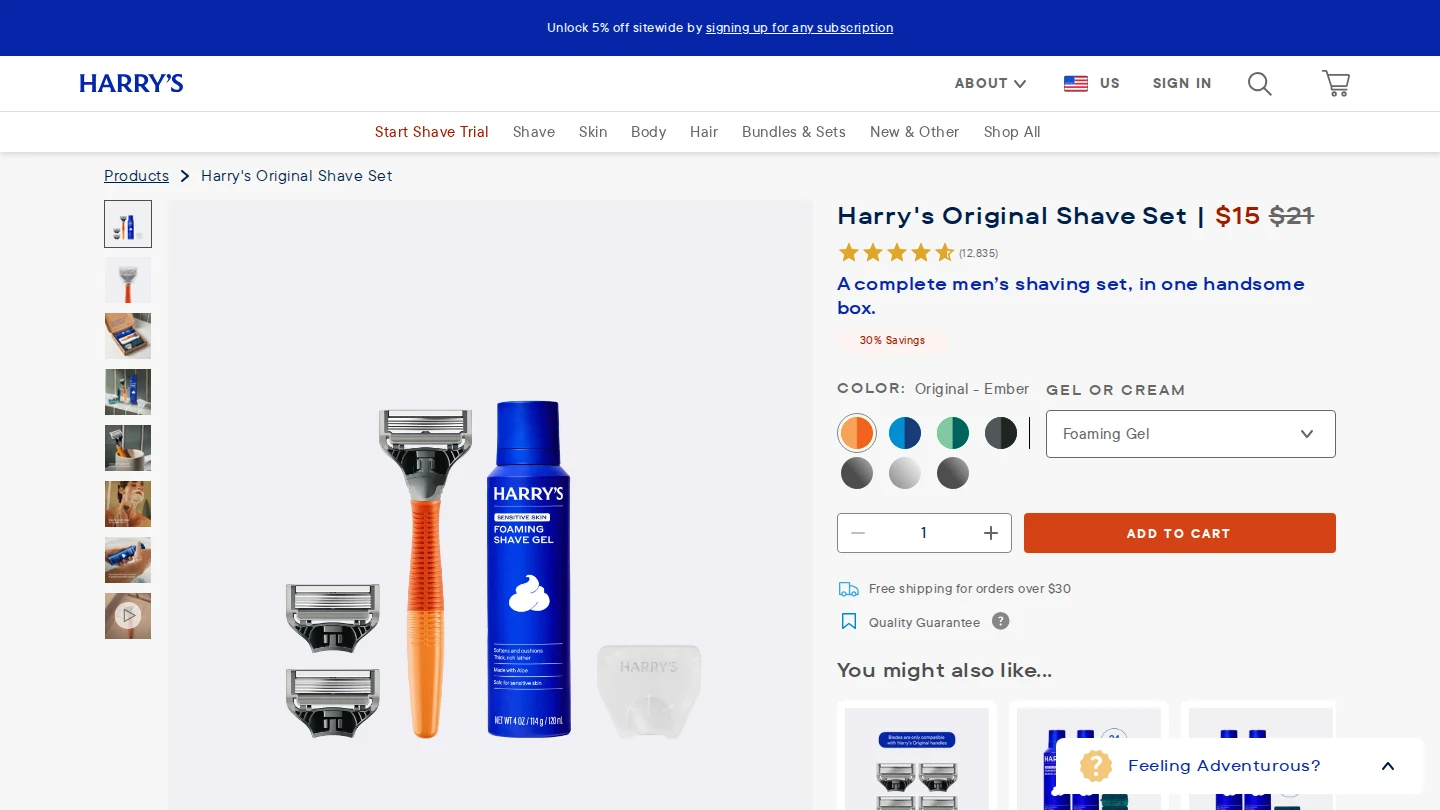
Harry’s Original Shave Set is a textbook pure bundle. It packs the weighted handle, German-made blade cartridges, shave gel, and a travel cover into one starter configuration priced as a single product.
The bundle removes the decision of which components to pick and gives first-time buyers a complete shaving system rather than just a razor.
The strategic insight: for a first-time buyer, knowing which blade cartridge to pair with which handle is a barrier to purchase.
Harry’s collapses that decision into zero by bundling the complete system. The bundle is simultaneously a product and an onboarding experience.
What to steal: Design a bundle specifically for first-time buyers that removes every configuration decision.
When you sell a system rather than components, first-time conversion rates improve because you’ve eliminated the research burden. And a customer who starts with the complete system is more likely to reorder the consumable components long-term.
Also check: How to create a sense of urgency in sales
Food Kits and Subscriptions
12. Blue Apron

Blue Apron’s meal kit bundles are a subscription model built entirely around the bundle concept.
A weekly plan bundles all the pre-measured ingredients and recipe cards for three to five meals.
Shoppers don’t buy chicken, vegetables, and spices separately, they buy a complete cooking experience. The bundle price covers curation, sourcing, and portion control alongside the ingredients themselves.
The retention mechanism is important: once a subscriber is cooking Blue Apron meals, the switching cost of going back to individual grocery shopping increases.
They’d have to re-learn how to plan and shop for meals rather than just following the recipe card. The bundle creates a behavioral dependency that supports long-term retention.
What to steal: When your product category involves ongoing decisions (what to make for dinner, what products to use in a routine), a subscription bundle that removes those recurring decisions creates retention through convenience rather than loyalty programs.
Removing friction is a stronger retention mechanism than points.
13. Glossier
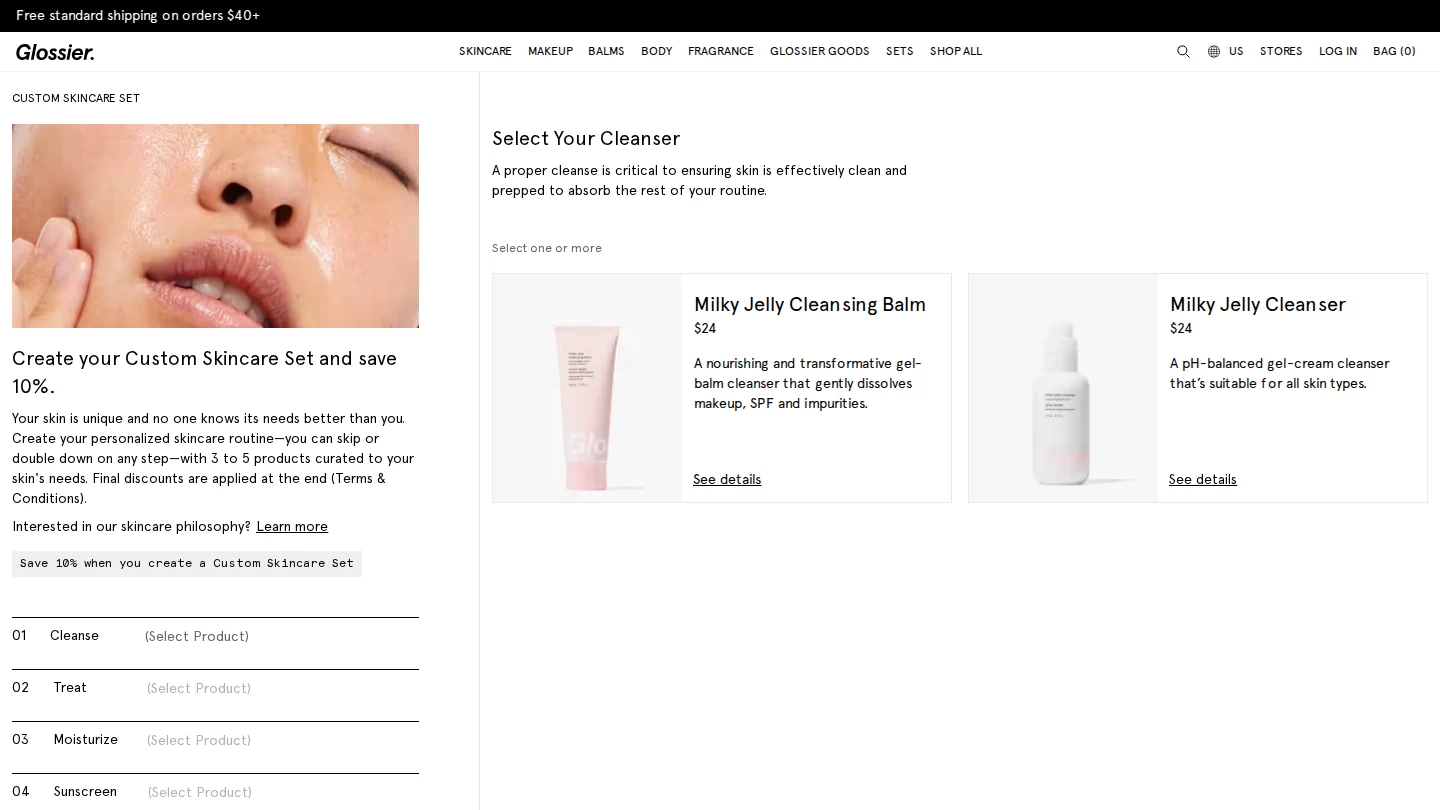
Glossier’s Custom Skincare Set is a build-your-own mixed bundle. The shopper walks five steps, cleanse, treat, moisturize, sunscreen, and extras, picks three to five products, and saves 10% on the set.
The guided order matters more than the discount. Each step explains why it exists and lets you skip or double up, so the set ends up looking like a routine the customer designed rather than a promo they clicked.
The saving is applied at the end, which keeps the shopper focused on the routine while they build it and rewards the finished set.
What to steal: If you let customers build their own bundle, guide the build with a short sequence and a reason for each step.
Apply the saving once the set is complete so the discount closes the sale instead of anchoring it.
Outdoor and Gear
14. The North Face

The North Face’s Summit Series Advanced Mountain Kit sells performance layers as one system, from the L1 base layer through insulation to the L5 shell and L6 parka, with a women’s kit added in the latest generation.
Each piece is designed to work with the others, and the collection page explains how the layers manage heat and moisture together rather than listing them as separate jackets.
This is educational bundling at its best. The North Face doesn’t assume a shopper knows what a modular layering system is. It explains the system, then presents the pieces as the answer.
A shopper who understands why the layers depend on each other is far more likely to buy the set than one who meets them as unrelated product pages.
What to steal: Educate before you sell. If your bundle involves products that work together in ways the shopper might not understand, explain the logic first.
A shopper who understands the system buys the complete system. A shopper who doesn’t understand it buys one item and figures out the rest later, often from a competitor.
15. M.M. LaFleur

M.M. LaFleur sells workwear as capsules and prices the extras in tiers.
Add a second piece of a style and a small discount applies, add a third and it steps up, with the saving calculated in the cart rather than announced on a banner.
The capsule edits change through the year, but the mechanism stays. The shopper assembles the combination, the discount rewards the extra item.
The behavioral insight is ownership. When customers build the bundle themselves, they’ve invested time in the selection, and the discount feels earned rather than handed out.
What to steal: Let customers build their own bundles from a defined product set.
The curation effort increases commitment, the savings reward engagement, and you get real-time data on which product combinations customers want together. That data makes your next pre-built bundle far more accurate.
Product Bundle Pricing Examples
Bundle pricing works when the saving is visible and the margin survives. Six structures cover most stores, each one taken from a brand above with the math written out.
| Pricing model | Seen at | How the numbers work |
|---|---|---|
| Percentage off a set you build | Glossier | Three $30 products are $90 alone. At 10% off the set is $81 and the page shows “save $9”. |
| Fixed price for a quantity | 3Wisemen | Any three $150 pieces for $333. The shopper sees one number and a saving of up to $117. |
| Curated pack below the sum | Zing | Items worth $55.98 sell as a pack for $48.08, with the regular total struck through beside it. |
| Single price, no per-item comparison | Harry’s, GetFPV | The set is priced as one product. The pitch is readiness, so no saving line is needed. |
| Subscription against retail value | Clean Beautique | $39 a month for a box with a stated $129 retail value. The comparison, not the price, sells it. |
| Stated average saving across a range | Vanity Planet | A $165 bundle under a banner that bundles save an average of 30%, so every set inherits the claim. |
Three rules sit behind every one of these.
- State the saving in dollars. “Save $9” is read in a glance. “10% off” asks the shopper to do the math, and some won’t.
- Discount the add-on, not the hero. Price the bundle so the saving comes out of the second item’s margin. The product people came for stays at full price.
- Test one number at a time. Run $ against % on the same bundle before you change the products in it. The framing often moves conversion more than the discount size, and a time limit on the bundle price works the way it does in our flash sale examples.
How WiserNotify Helps You Sell More Bundles
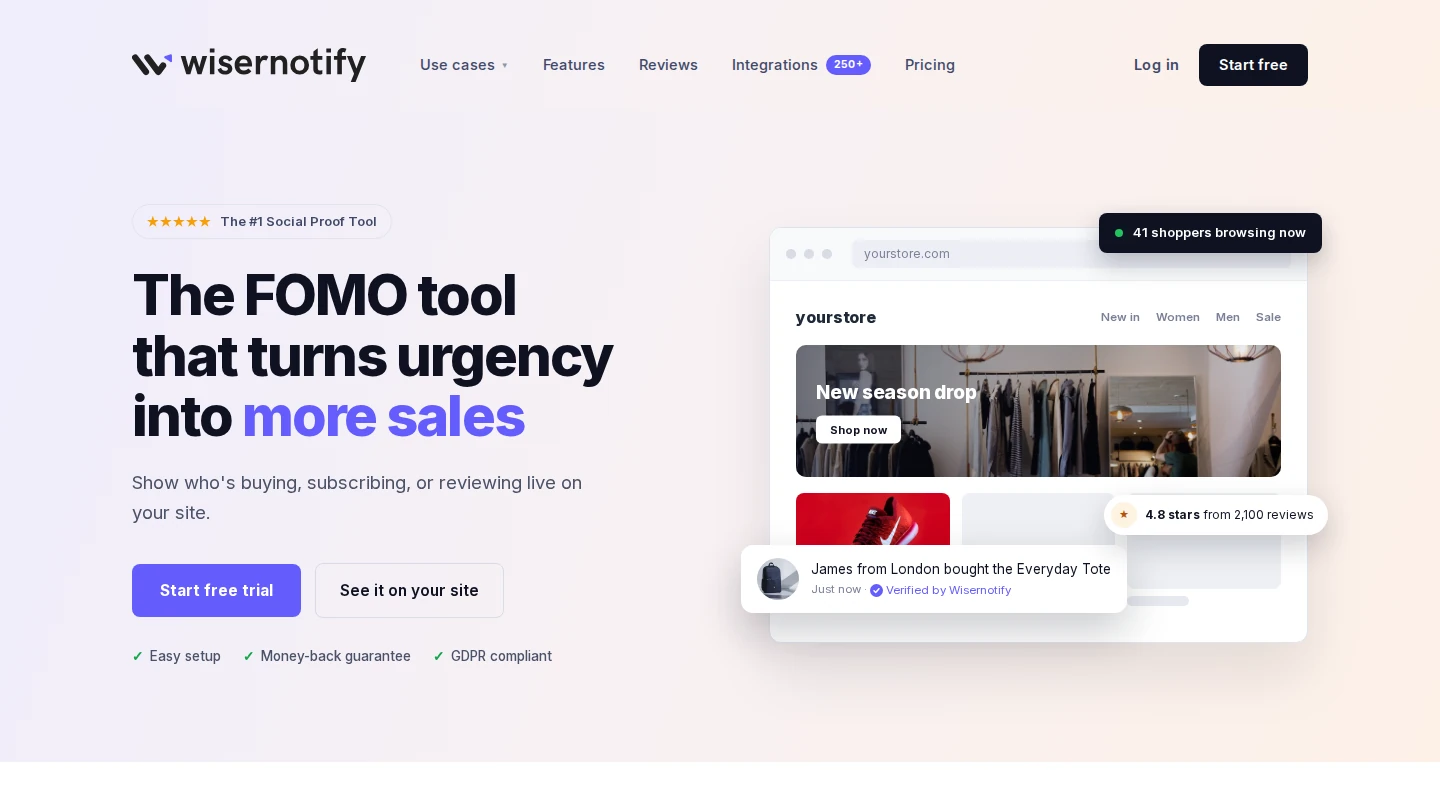
Once the offer is right, a bundle page has two jobs left. Prove that other people buy it, and give the shopper a reason to buy it today.
WiserNotify does both without touching your store code. It pulls real orders from your store and shows them as small notifications.

A shopper on the bundle page sees that someone in their city bought the Complete Skincare Kit a few minutes ago, with a real name and a real time.
An announcement bar carries the bundle offer across product and cart pages, and a countdown timer can fire only for shoppers who have been on the page long enough to hesitate.
Every notification is targeted by page, device, and visitor type, with analytics per notification, so you can see which signal moved the bundle. It connects to 250+ platforms, and the 7-day free trial covers every feature.

Boost Conversion Instantly
Add Social Proof & Urgency to your website
5 Product Bundle Best Practices That Move the Needle

1. Show the saving in dollars
Show the total price of individual items next to the bundle price on the same page. “Individual items: $87 | Bundle price: $69 | You save: $18” converts better than “20% off bundle.”
Dollar amounts are concrete; percentages require mental calculation. Every step of mental effort between the shopper and the decision costs conversions. Remove the math entirely by doing it for them.
2. Build around problems, not products
The strongest bundles solve a specific problem rather than grouping similar items together. “Everything you need to start running” solves a problem.
“Running shoes and socks bundle” just groups items. The problem-framing identifies who the bundle is for and why they need it, which is more persuasive than a product list at a discount.
When you frame around the outcome, you filter in high-intent buyers and filter out browsers.
3. Put offers at high-intent moments
Bundle promotions placed on product pages convert better than homepage banners.
Bundle suggestions at the cart stage convert better than both. The reason: purchase intent increases at each stage of the journey.
A shopper viewing a product page is more likely to add a bundle than a shopper browsing the homepage.
A shopper reviewing their cart is even more likely. Put your bundle offers where intent is highest, not just where they’re most visible.
4. Build from what gets bought together
The bundles that perform best are usually the ones where customers were already buying both products separately.
Your order history data will show you which products appear together in carts most frequently. Start there before getting creative.
A bundle of two products that 30% of customers already buy together will outperform an aspirational bundle of products that have never co-occurred in an order.
5. Name bundles for the customer
The naming of a bundle does more conversion work than most brands realize.
“Starter Kit,” “Complete Set,” “The Weekend Kit,” “Date Night Bundle.” Names like these tell a story about who the bundle is for and when they’d use it.
That story makes the bundle relevant to the right shopper and irrelevant to everyone else, which is exactly what you want.
A bundle with a clear intended audience converts better than a generic grouping, even if the products are identical.
Also check: How to improve the online shopping experience
Wrap Up
The 15 examples cover outfit bundles, mystery subscriptions, ready-to-fly tech kits, recipe bundles, layering systems, and sets the customer builds.
What they share is a logic the shopper gets at once. The combination makes sense, the saving is visible, and the bundle is sold around a need or an outcome rather than leftover stock.
Start with your order data. Find the two or three product combinations that already appear together in real customer orders.
Build a bundle around those first. Then layer in social proof and urgency to show new shoppers what existing customers already know.
The bundle that sells itself is the one built from real purchase behavior, not from what you think should go together.
Frequently Asked Questions
How do you bundle products together?
Pick items that already land in the same cart, price the set below the separate total, and show the saving in dollars next to the bundle price on the product page.
What is an example of a bundle package?
A skincare set with a cleanser, serum, and moisturizer sold at one price below the three bought separately, the way Glossier’s Custom Skincare Set applies 10% off once the set is built.
What is an example of combining two products into one?
A shampoo and conditioner duo sold as a single product, or Harry’s shave set, where the handle and blades only come together.
What is a product bundle pricing example?
Three products sold as a set for 10% below their separate total, with the dollar saving shown beside the set price so each item still clears its margin.
What is the difference between pure and mixed bundling?
In pure bundling the items are only sold as a set. In mixed bundling they’re sold alone and as a set at a discount, which fits most ecommerce stores.
How big should a bundle discount be?
Large enough that the dollar saving is worth reading, small enough that the add-on item still earns a margin. Most brands above land around 10% or a stated fixed saving.

Krunal Vaghasiya is a marketing tech expert who boosts e-commerce conversion rates with automated social proof and FOMO strategies. He loves to keep posting insightful posts on online marketing software, marketing automations, and improving conversion rates.




 Capterra