
8 Flash Sale Examples and the 5-Step Plan Behind Them
The best flash sale examples share three traits, a firm deadline, one clear offer, and urgency shown right where people shop. Best Buy, Macy’s, and ColourPop all run versions of the same playbook.
A flash sale is a discount that lasts hours or a few days, not weeks. The short window gives shoppers a reason to buy now instead of bookmarking the deal for later.
This page covers 8 flash sale examples, a side-by-side comparison, whether a flash sale is worth running, a 5-step plan, formats to try, popup examples, ways to lift conversions, and the reasons flash sales fail.
Key takeaways
- A flash sale works when the deadline is real. Extending it once teaches shoppers to wait.
- Best-sellers at a modest discount usually beat slow movers at a deep one.
- Match the length to your traffic, shorter for email and longer when social sharing drives the sale.
- Countdown timers and live purchase notifications make the urgency visible on the page.
What is a flash sale?
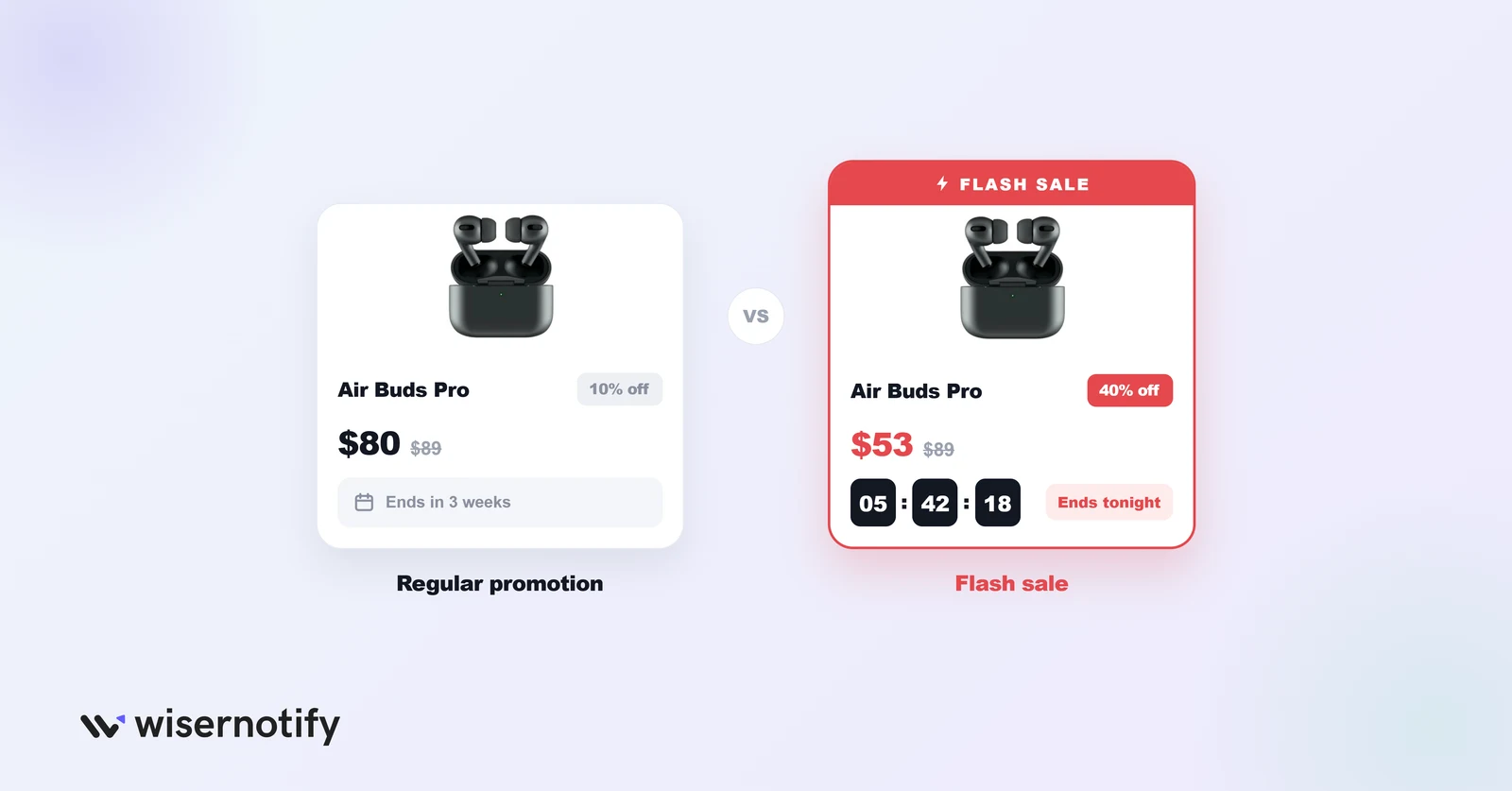
A flash sale is a time-limited discount that runs a few hours to three days, using a hard deadline to push shoppers to buy.
Three things separate a flash sale from a regular promotion. It runs for hours instead of weeks, the offer is sharper, and the page shows urgency signals like countdown timers and “ends tonight” messages.
Flash sales are one type of limited time offers, the wider family that also includes early access, gift-with-purchase, and free shipping windows.
Is a flash sale worth it?
A flash sale is worth running for a clear reason, such as clearing seasonal stock, launching a product, or waking a quiet email list.
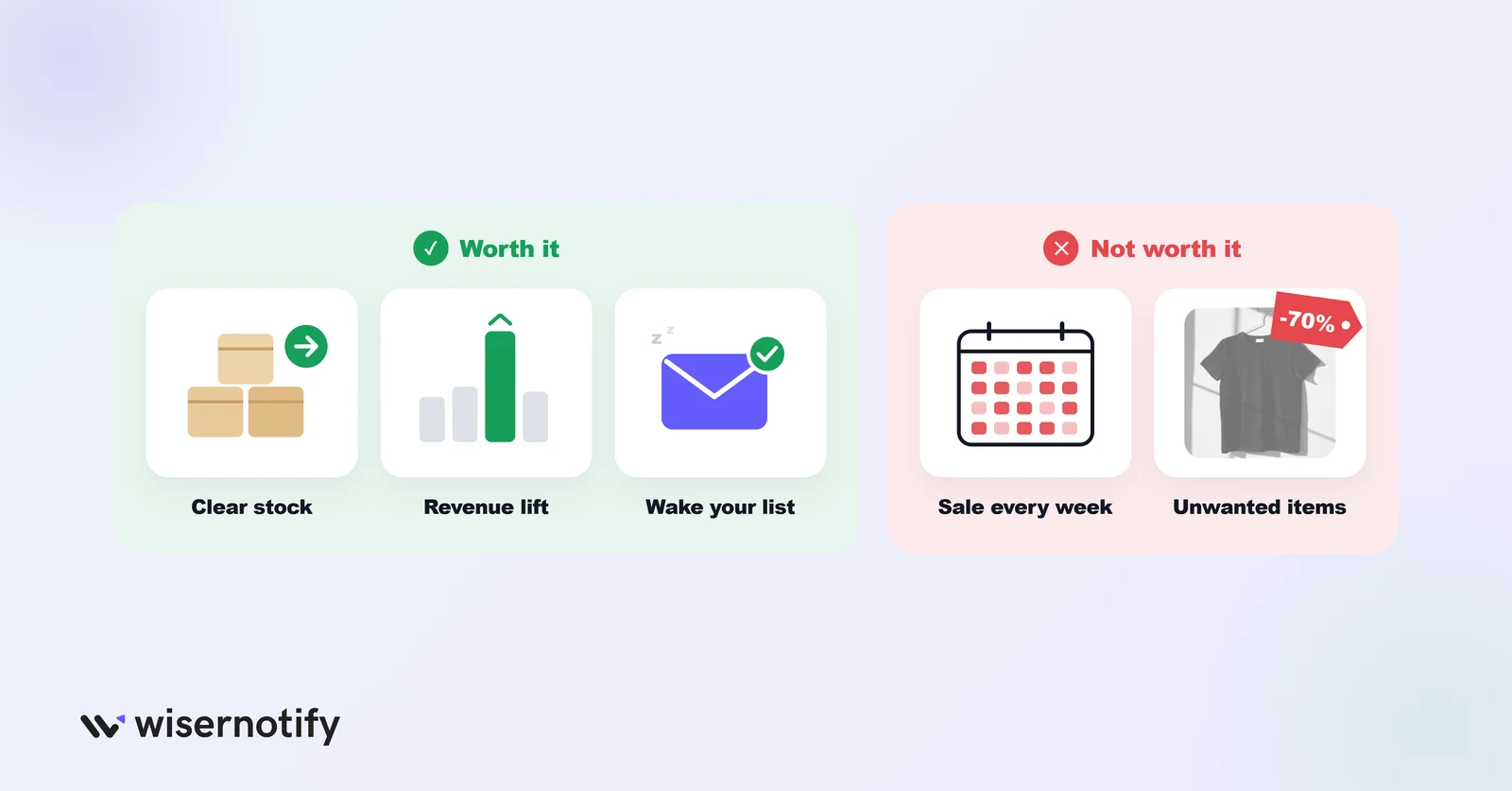
- Worth it: moving excess or seasonal stock, a quick revenue lift between bigger campaigns, or re-engaging a list that has gone quiet.
- Not worth it: running sales so often that “limited time” stops meaning anything, or discounting only items nobody wanted at full price.
The short window gives people a reason to act now. Run flash sales too often, and the same mechanic trains customers to wait for the next discount instead.
What are good flash sale examples?
Good flash sale examples pair one offer with a visible deadline, like Best Buy’s Deal of the Day, Macy’s one-day sales, and ColourPop’s 48-hour sales.
Screenshots show each campaign as it ran. Seasonal offers change, so treat them as patterns to copy rather than live deals.
1. Best Buy: 24-hour Deal of the Day
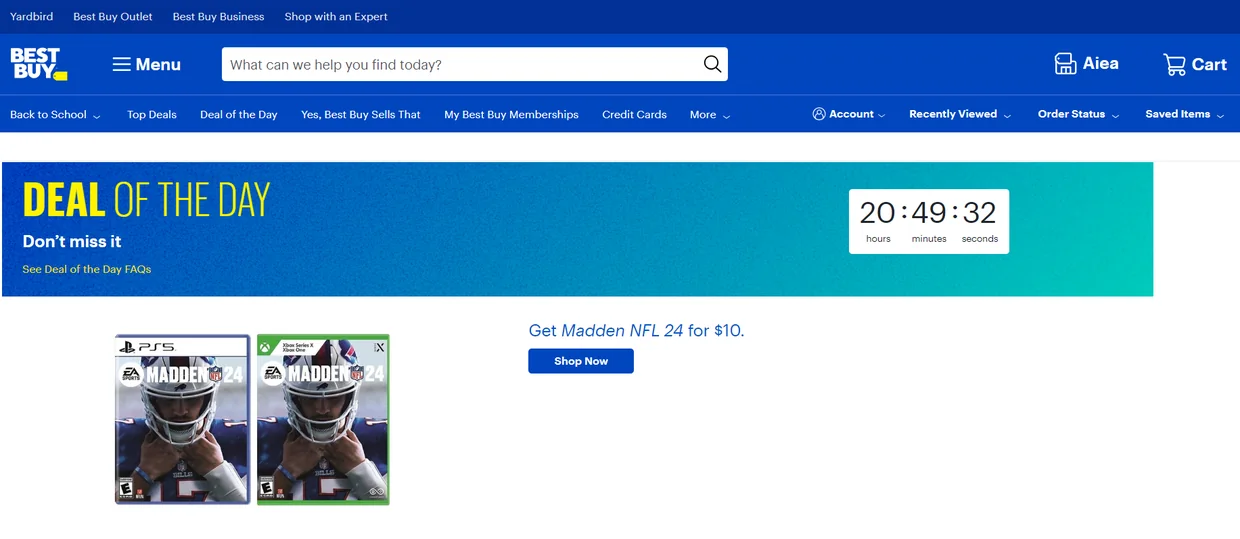
Best Buy puts one Deal of the Day at the top of its homepage with a live countdown to the minute. The product changes every day, and the timer tells shoppers exactly how long the price lasts.
The format works because it is predictable. Shoppers learn that a new deal appears daily and that it disappears on schedule, so the deadline stays believable.
Steal this: set a firm end time and never extend it. The first “back by popular demand” extension costs you the urgency that makes the next sale work.
2. Macy’s: one-day-only flash sales
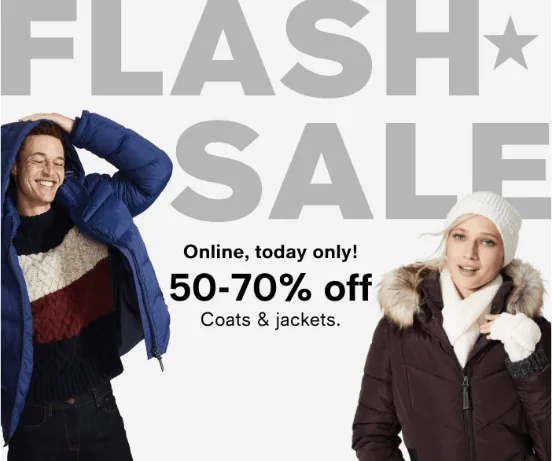
Macy’s runs “online, today only” flash sales on a single category, such as 50% to 70% off coats and jackets. The date and the discount range sit in the headline, with no fine print.
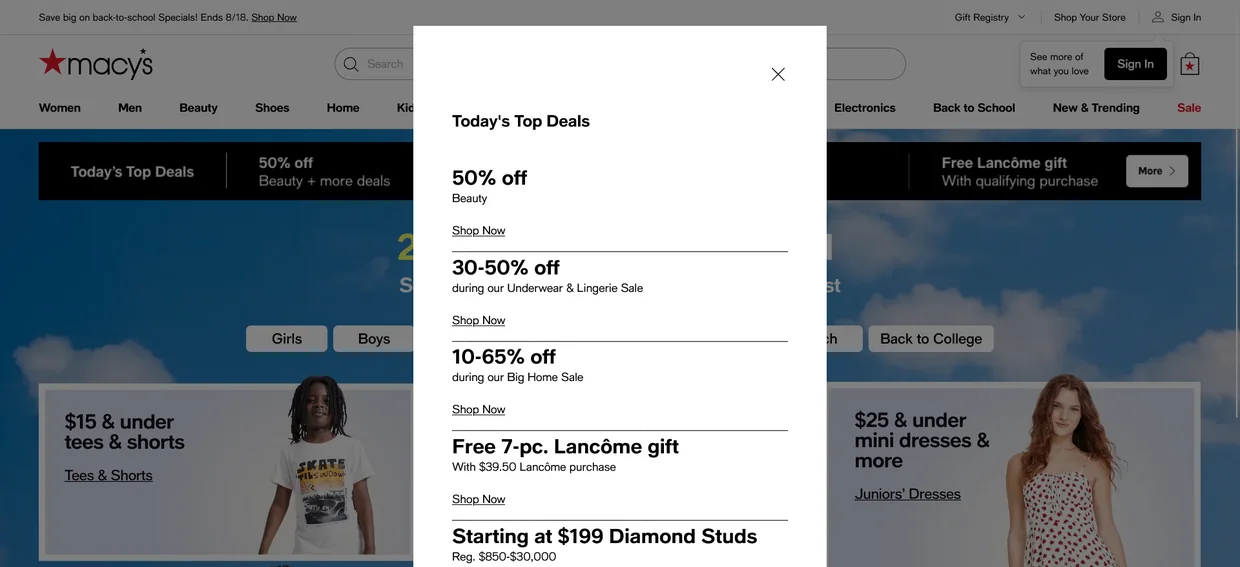
Macy’s also rotates a Today’s Top Deals panel with a different discount for each category. If today’s category does not fit, tomorrow’s might, which keeps shoppers checking back all week.
Steal this: say when the deal ends in plain words. “Ends tonight at midnight” beats “limited time offer” because shoppers know exactly how long they have.
3. ColourPop: 48-hour flash sales
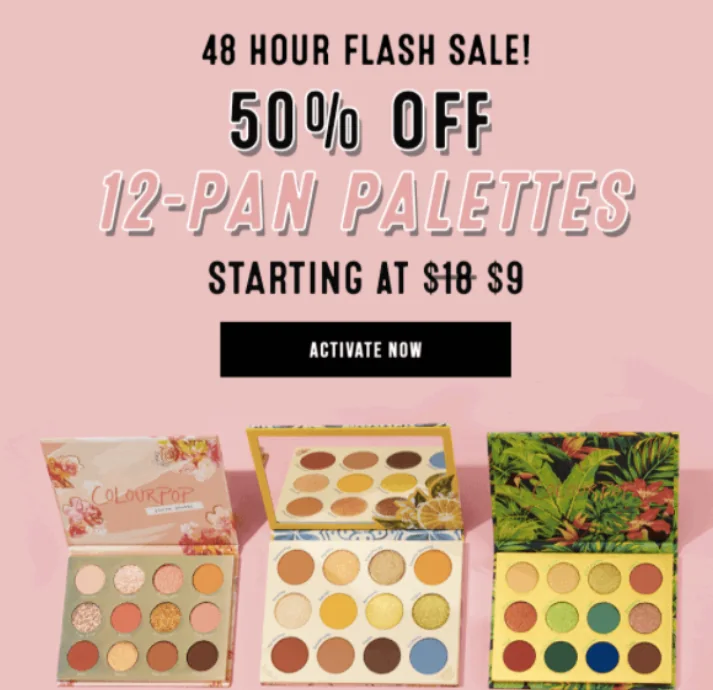
ColourPop ran a 48-hour flash sale at 50% off its 12-pan palettes, with the new price and the original price side by side. The offer covered one product line, not the whole store.
Two days gives a social-first audience time to share the deal with friends, while still feeling urgent. A single hero product keeps the message simple enough to fit in a story or a post.
Steal this: match the length to your channel. Use 12 to 24 hours for email-driven sales and 48 hours when social sharing does the promotion.
4. Bean Box: today-only launch deal
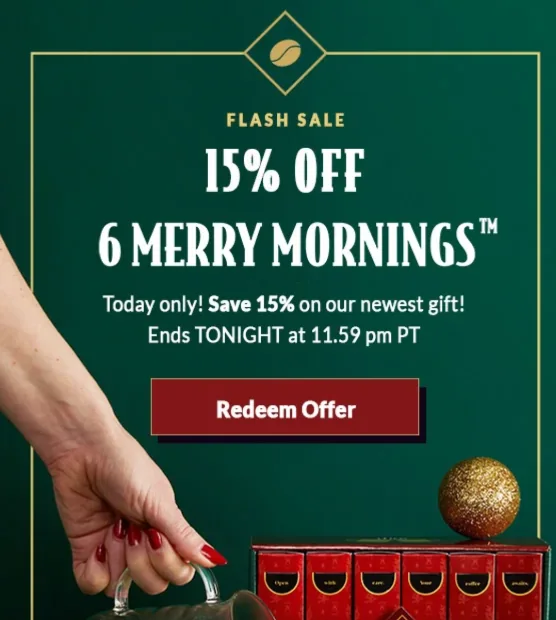
Bean Box ran a today-only flash sale at 15% off its newest gift, the 6 Merry Mornings coffee set, ending at 11:59 pm PT. The sale promoted a new product instead of clearing old stock.
A launch discount lowers the risk of trying something new, and the one-day window turns curiosity into a first order. The exact end time removes any doubt about the deadline.
Steal this: launch new products with an early-adopter price for 24 to 48 hours. You get first sales and first reviews in the same week.
5. MasterClass: limited-time 2-for-1

MasterClass ran a limited-time 2-for-1 offer on annual memberships, pay for one and give a second away, with “offer ends soon” in the banner across the site.
The buy-one-get-one format doubles the perceived value without a “50% off” message, and every gifted membership brings in a new user. For digital products, the second unit costs almost nothing to deliver.
Steal this: use 2-for-1 flash sales for subscriptions, courses, and memberships, where the gift becomes your next customer.
6. Harber London: holiday countdown
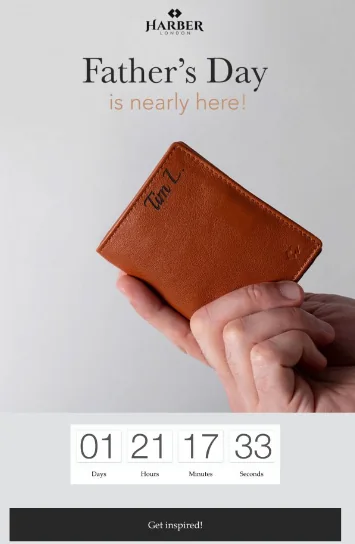
Harber London counted down to Father’s Day in its promotions for leather wallets and covers, with a timer showing days, hours, minutes, and seconds left to order.
The holiday adds a second deadline on top of the offer. Shoppers who miss the window do not just pay more, they miss the gift date, which makes the timer feel real.
Steal this: schedule gift-focused flash sales 5 to 7 days before the holiday so the shipping cutoff does part of the urgency work.
7. Urban Outfitters: extra off sale
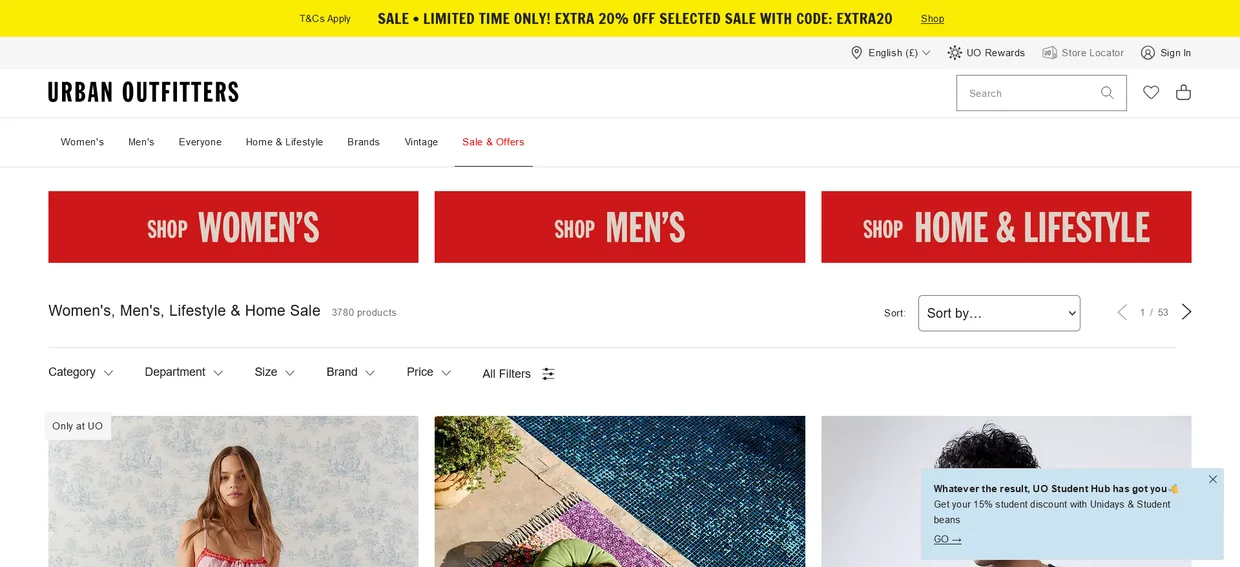
Urban Outfitters ran a “Sale + limited time only” bar across the site offering an extra 20% off selected sale items with the code EXTRA20. The flash sale sat on top of prices that were already reduced.
Stacking a short extra discount on the sale section moves clearance stock without cutting prices on new arrivals. The bar keeps the offer in view on every page.
Steal this: run a short “extra off sale” code to clear seasonal stock while full-price items stay full price.
8. Obvi: sitewide seasonal sale
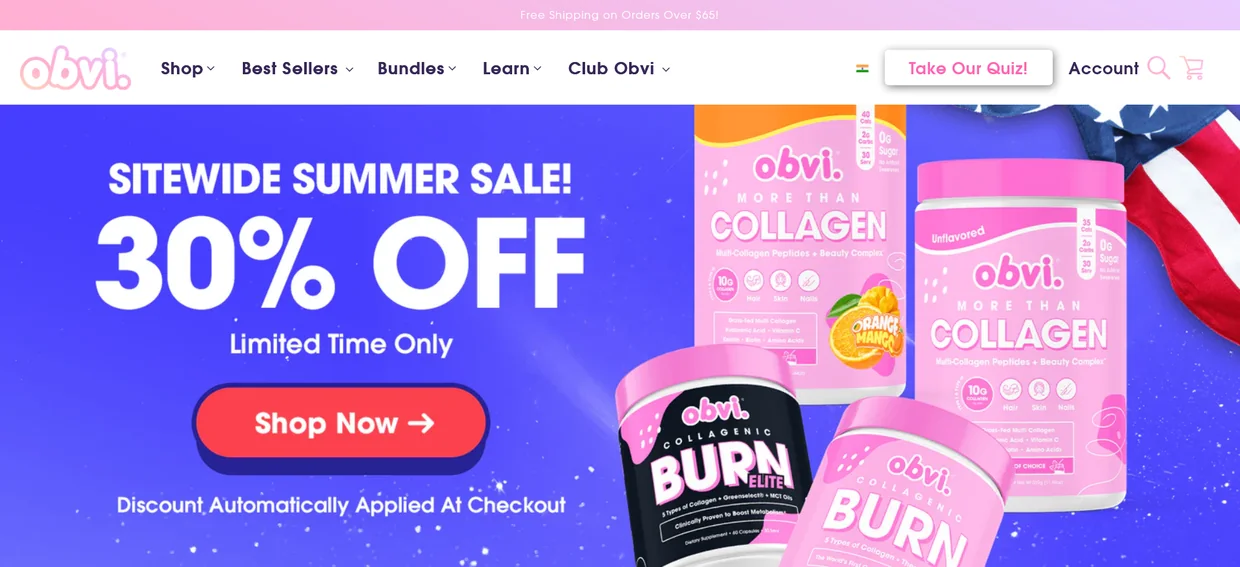
Obvi ran a sitewide summer sale at 30% off, labeled “Limited Time Only,” with the discount applied automatically at checkout.
Removing the code removes a step where shoppers drop off. A sitewide offer also suits a brand with a small catalog, because every product page carries the same clear deal.
Steal this: apply the discount automatically. Every code a shopper has to find and paste is a chance to abandon the cart.
Build trust & FOMO
Highlight real-time activities like reviews, sales & sign-ups.


How do these flash sales compare?
The flash sales above differ mainly in length and offer type, from a single 24-hour deal to a sitewide seasonal sale.
| Brand | Window | Offer | Urgency cue | Watch out for |
|---|---|---|---|---|
| Best Buy | 24 hours | One product a day | Live countdown | Needs a steady flow of new deals |
| Macy’s | 1 day | 50% to 70% off one category | “Today only” headline | Deep cuts train shoppers to wait |
| ColourPop | 48 hours | 50% off one product line | “48 hour” in the headline | Works best with a social audience |
| Bean Box | 1 day | 15% off a new product | Exact end time | Small discount needs a strong product |
| MasterClass | Limited time | 2-for-1 membership | “Ends soon” banner | Best for digital products |
| Harber London | Days before a holiday | Gift promotion | Holiday countdown | Shipping cutoffs must be accurate |
| Urban Outfitters | Limited time | Extra 20% off sale items | Sitewide bar | Only moves items already on sale |
| Obvi | Seasonal | 30% off sitewide | “Limited time only” hero | Sitewide cuts hit margin on every order |
A flash sale is only as strong as the deadline shoppers believe.
How do you plan a flash sale?
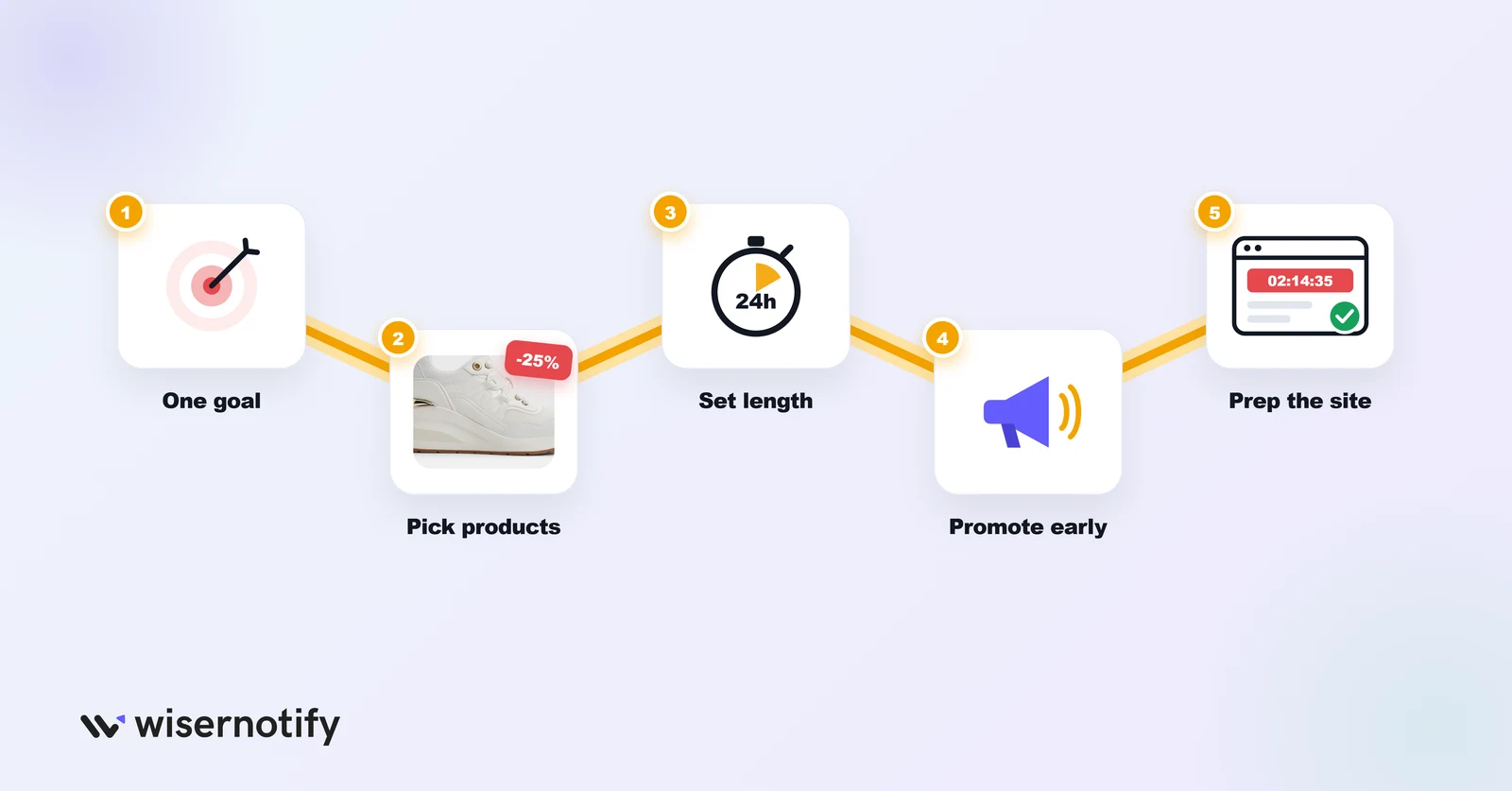
Plan a flash sale in five steps, which are picking one goal, choosing products, setting the length, promoting it early, and preparing the site.
Step 1: Pick one goal
Decide whether the sale should clear stock, win new customers, re-engage old ones, or raise cash. The goal decides which products to include and how long the sale runs.
Step 2: Choose the products
Discount products people already want but have not bought yet. Best-sellers at 20% to 30% off usually beat slow movers at 60% off. To clear slow stock, bundle it with a popular item.
Step 3: Set the length
Run 4 to 12 hours for email-driven audiences, about 24 hours for general ecommerce, and 48 to 72 hours when social media is the main channel. Too short, and most of your audience never sees it.
Step 4: Promote it before and during
Tease the sale 2 to 3 days early on email and social, with a sneak peek or early access for subscribers. Send a launch email, a midway reminder, and a last-chance email a few hours before the end.
Step 5: Prepare the site
Make sure the site can handle a traffic spike, check stock levels, and add countdown timers to product pages. Nothing ends a flash sale faster than a crash or a sold-out message in the first hour.
Which flash sale format should you run?
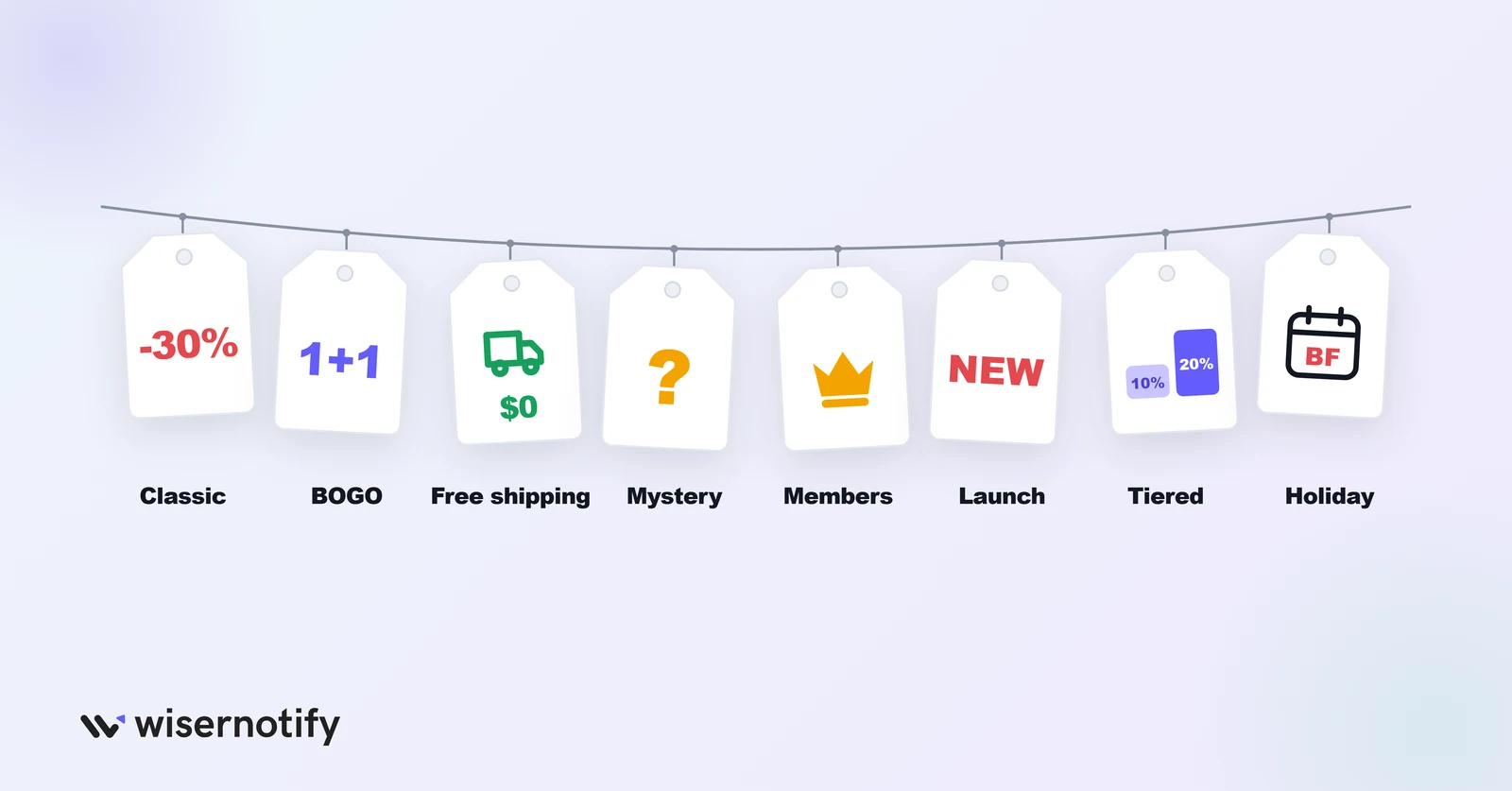
The right flash sale format depends on the goal, with a classic discount for revenue, BOGO for order value, and launch pricing for new products.
- Classic discount: 20% to 50% off selected products for about 24 hours. The simplest format, and it works in any industry.
- BOGO: buy one, get the second free or at half price. Suits consumables like beauty, food, and supplements, and lifts order value.
- Free shipping window: free shipping on every order for 12 hours. Extra costs at checkout are the top reason carts get abandoned.
- Mystery discount: shoppers add an item to reveal their deal. Adds a game element and more time browsing.
- Members-only: early access or a deeper discount for subscribers or loyalty members. Rewards the people who already buy.
- Launch price: an early-adopter discount on new arrivals for 48 hours. Builds first sales and first reviews.
- Tiered discount: spend more, save more, such as 10% off at $50 and 20% off at $100. See more discount strategies for other structures.
- Holiday or event sale: tie the sale to a date, from Black Friday marketing to a founder’s birthday. The event gives the sale a reason to exist.
Flash Sale Popup Examples
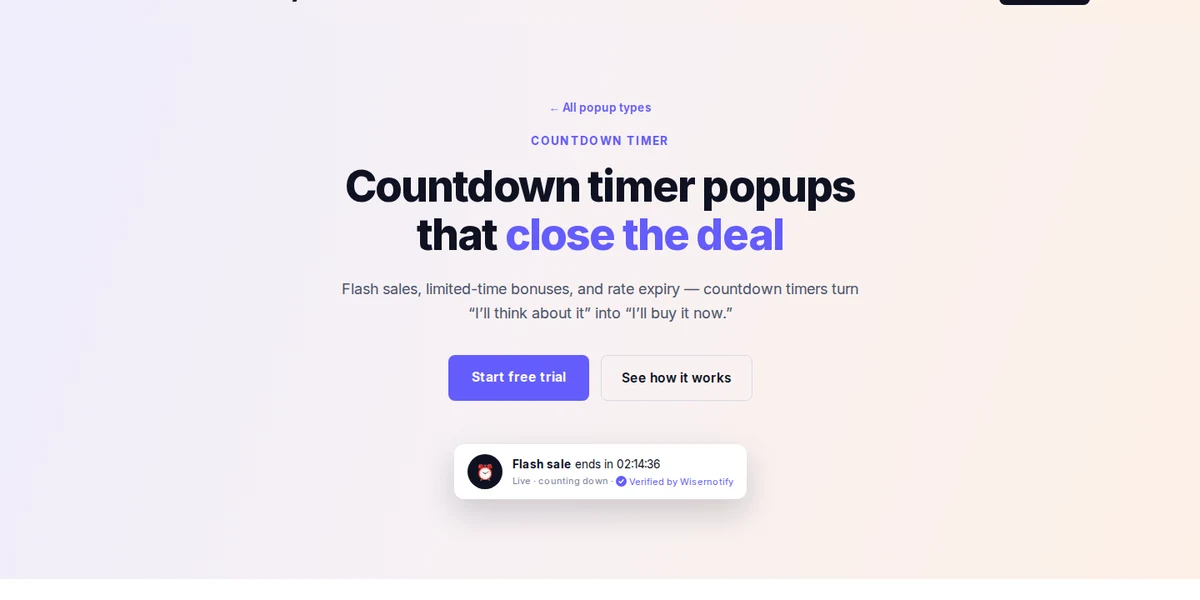
A flash sale popup puts the deadline in front of shoppers on the page they are already browsing. The best ones are small, show one message, and never block the product.
- Countdown popup: a small corner popup like “Flash sale ends in 02:14:36” that ticks down as shoppers browse, so the end time is always in view.
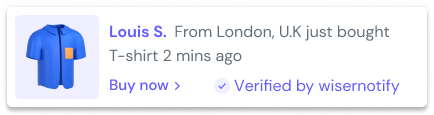
- Recent purchase popup: “Sarah from Austin just bought this” shows the sale is working and other people are buying before it ends.
- Last-hours bar: a top bar that switches on in the final hours with “Ends tonight at 11:59 pm,” timed to match your last-chance email.
With WiserNotify countdown timers, you set the end time once and the popup shows it on every page until the sale closes.
How do you get more sales from a flash sale?
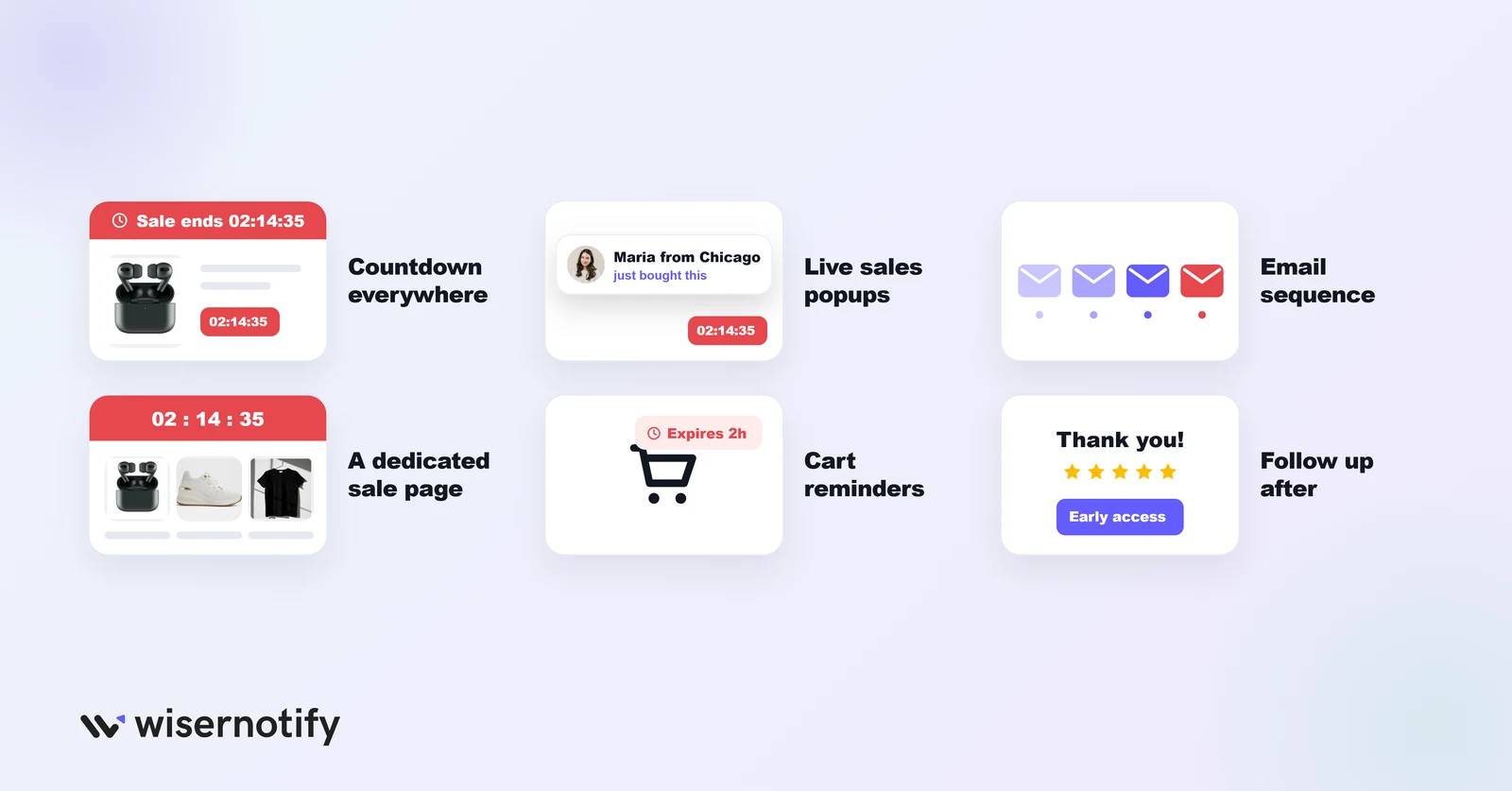
Flash sales convert better when the deadline is visible everywhere, recent purchases show on the page, and the email sequence runs before, during, and after.
- Show the countdown everywhere. Put the timer on the homepage, product pages, the header bar, and in emails, so the deadline is never out of sight. These countdown timer examples show formats that work on a store.
- Add live purchase notifications. A message like “Maria from Chicago just bought this” next to a ticking timer pairs urgency with proof that other people are buying. This is the core of FOMO marketing.
- Send a sequence, not one blast. A teaser, a launch email, a midway reminder, and a last-chance email each reach people the others miss.
- Give the sale its own page. Keep the countdown at the top, featured products below, and navigation minimal so visitors stay focused.
- Plan for abandoned carts. About 70% of carts are abandoned. Trigger reminders that the cart expires when the sale ends, as covered in our cart abandonment guide.
- Follow up after the sale. Thank buyers, ask for a review, and offer early access to the next sale, so a one-time bargain hunter becomes a repeat customer.
Build trust & FOMO
Highlight real-time activities like reviews, sales & sign-ups.
Why do flash sales fail?
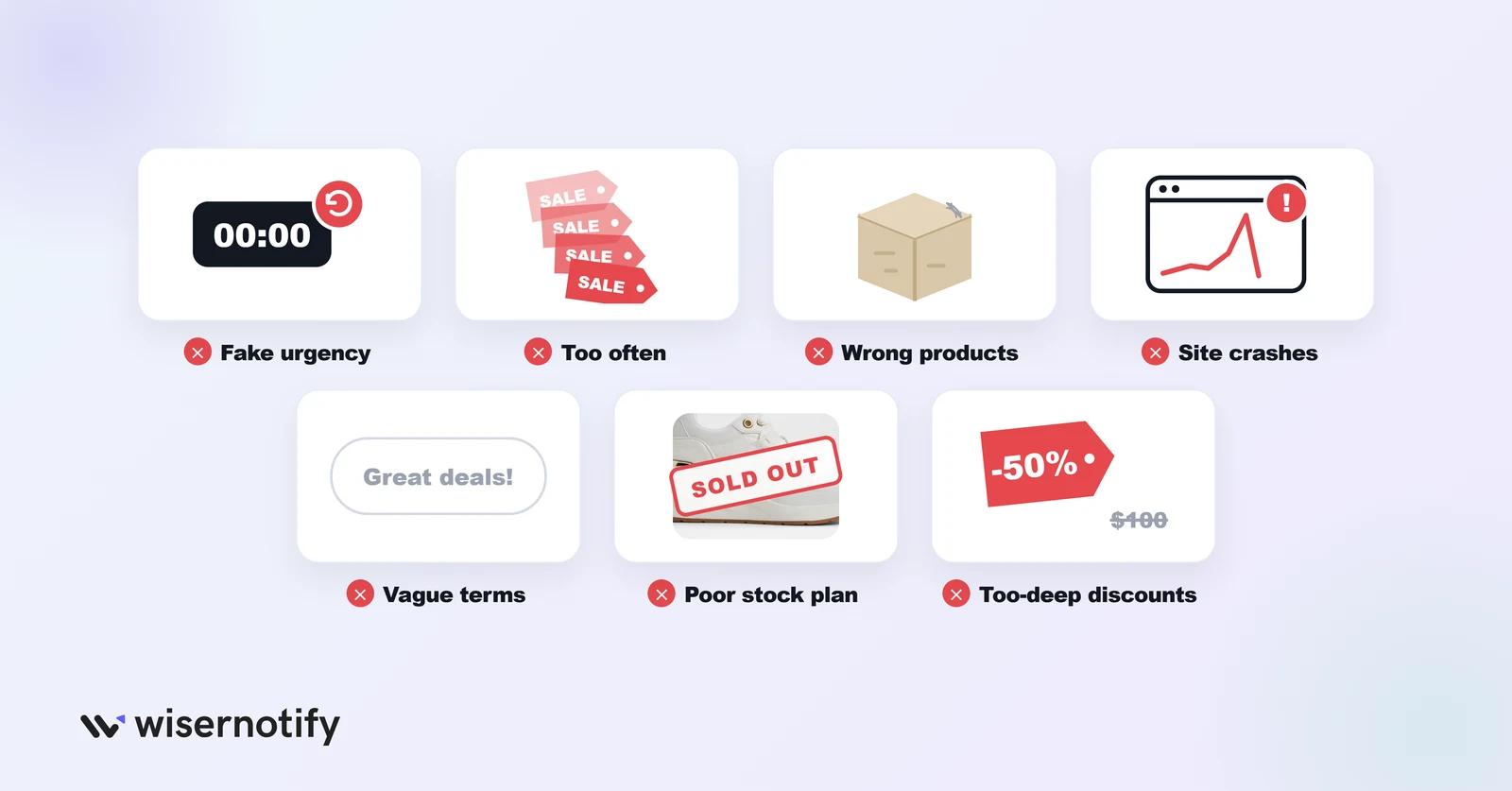
Flash sales fail when the urgency is fake, the products are wrong, sales come too often, or the site cannot handle the demand.
- Fake urgency. A timer that resets or a “limited stock” claim that is not true teaches shoppers to ignore your deadlines.
- Running them too often. A weekly flash sale is just the regular price with extra steps. Space them out.
- Wrong products. Discounting items nobody wants moves dead stock at a loss without creating any excitement.
- A site that cannot take the spike. A slow page or a crash during the sale turns excited buyers into abandoned carts. Test load before launch.
- Vague terms. “Great deals, limited time” says nothing. “30% off everything, ends tonight at 11:59 pm ET” says it all.
- Poor stock planning. Selling out in 20 minutes means demand was underestimated and most visitors left empty-handed.
- Discounts that are too deep, too often. Customers who see 50% off every month stop paying full price.
Wrap Up
The best flash sales are not about giving products away. They create a short, believable event that shoppers look forward to.
Start with one product, a 24-hour window, three emails, and a countdown timer on the product page. Measure the result, then change one thing for the next sale.
WiserNotify adds countdown timers, live purchase notifications, and other urgency widgets to your store without code, with a 7-day free trial.
Frequently Asked Questions
How long should a flash sale last?
Most flash sales run from a few hours to three days, with shorter windows for email audiences and longer ones when social sharing drives the sale.
What is the difference between a flash sale and a regular sale?
A flash sale lasts hours or days instead of weeks, carries a sharper offer, and shows the deadline on the page with timers or ends-tonight messages.
How often should you run a flash sale?
Often enough to feel like an event, not a habit. Running one monthly at most keeps the deadline believable.
What products work best in a flash sale?
Best-sellers at a modest discount usually outperform slow movers at a deep one. Bundle slow stock with a popular item instead.
Do flash sales hurt a brand?
They can when they run too often or rely on fake urgency, because shoppers learn to wait for the next discount.
What is a flash sale strategy?
A flash sale strategy sets one goal, the right products, a fixed length, a promotion plan, and a site ready for the traffic spike.
How do you create urgency in a flash sale?
Show a countdown timer on every page, state the exact end time, and display live purchase notifications so shoppers see others buying.
What is a flash sale?
A flash sale is a discount that runs for a few hours to three days, with a hard deadline that pushes shoppers to buy now.
What are good flash sale popup examples?
A small countdown popup showing the time left, a recent purchase popup, and a top bar that appears in the final hours all work well.

Krunal Vaghasiya is a marketing tech expert who boosts e-commerce conversion rates with automated social proof and FOMO strategies. He loves to keep posting insightful posts on online marketing software, marketing automations, and improving conversion rates.




 Capterra