I spent over 20 hours analyzing product pages across ecommerce to find the ones that actually convert.
Not just the ones that look pretty, but the ones where the design, copy, images, and layout work together to move shoppers from browsing to buying.
Most product pages I reviewed made the same mistakes: weak product images, generic descriptions, buried CTAs, and zero social proof.
The 15 examples below get it right.
For each one, I’ll break down exactly what makes the product page design work and what you can steal for your own store.
Consider this your product page inspiration guide, packed with ideas and examples from brands that are actually winning.
What Makes a Great Product Page Design?
Before diving into examples, here are the six elements that separate high-converting product pages from the rest:
High-quality product images from multiple angles. Shoppers can’t touch or try your product online. Your images need to do that job. The best product pages show the item from every angle, in context (lifestyle shots), and zoomed in on details. Video adds another layer.
Clear, benefit-driven product descriptions. Features tell, benefits sell. Instead of “made with organic cotton,” say “soft enough to sleep in and gentle on sensitive skin.” The best product descriptions connect features to outcomes that matter to the customer.
Visible pricing and shipping information. Hidden costs are the number one cause of cart abandonment. The best product pages show price, shipping cost (or free shipping threshold), and estimated delivery date above the fold.
Prominent call-to-action buttons. The “Add to Cart” or “Buy Now” button should be impossible to miss. Contrasting colors, adequate size, and placement near the product image and price are non-negotiable.
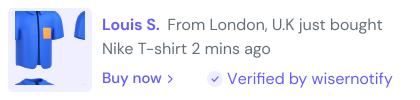
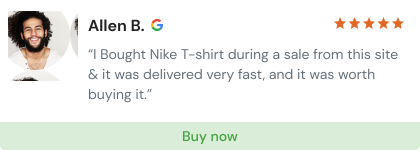
Customer reviews and social proof. Real reviews from real buyers build trust faster than any marketing copy. Star ratings, review counts, and photo reviews are especially effective. Tools like WiserNotify can display live purchase notifications and review widgets directly on product pages to create urgency and trust simultaneously.
Mobile-first responsive design. Over 60% of ecommerce traffic is mobile. If your product page doesn’t work perfectly on a phone (fast load times, easy scrolling, thumb-friendly CTA), you’re losing the majority of potential buyers.
Also check: 11 Killer Product Landing Page Examples
15 Best Product Page Examples (2026)
1. Dr. Squatch

Dr. Squatch nails the balance between personality and conversion.
The product page for their cologne leads with bold, lifestyle-driven imagery that reinforces the brand’s masculine, outdoorsy identity.
The product description is short but punchy, focusing on scent notes (spice, citrus) and natural ingredients rather than generic claims.
What to steal: Use your brand voice in the product description. Dr. Squatch doesn’t sound like every other ecommerce store. They sound like a brand you’d want to buy from.
Also check: 11 Remarkable Product Recommendation Examples
2. Michael Kors

Michael Kors keeps their product page elegant and minimal.
High-resolution images on a clean white background let the earrings speak for themselves.
The page is fully responsive, and the layout doesn’t clutter the visual space with unnecessary elements.
What to steal: For luxury or premium products, less is more. White space creates a premium feel. Let your product images do the heavy lifting.
Also check: 12 Best Product Badges to Boost Your Store Sales
3. Crumbl

Crumbl turns its product page into an interactive experience. Instead of showing a single cookie, they let customers build their own box, choosing flavors and quantities.
The playful visuals and gamified selection process make buying feel like an event rather than a transaction.
What to steal: If your product allows customization, make the selection process interactive. Giving customers choices increases engagement and average order value.
4. Pottery Barn

Pottery Barn combines aspirational lifestyle photography with practical product details.
Their champagne flutes page includes both styled shots (table settings and events) and clean, product-only images.
The “Add to Cart” button is prominent, and product specs (dimensions, material) are easy to find.
What to steal: Use both lifestyle and product-only images. Lifestyle shots help customers visualize the product in their lives. Product shots help them evaluate the details.
5. Kettle and Fire

Kettle and Fire builds their product page around health-conscious buyers.
Key nutritional claims (organic, high protein, grass-fed) are highlighted immediately.
They offer both one-time purchase and subscription options, catering to different buyer preferences without cluttering the page.
What to steal: If your product has a subscription model, show both options clearly on the product page. Subscriptions increase customer lifetime value.
6. Pepperfry

Pepperfry excels at selling large furniture online, which is one of the hardest ecommerce categories.
Their wardrobe page includes multiple-angle shots, dimension overlays, and room context images.
Prominent CTAs and time-limited offers create urgency.
What to steal: For products where size matters (furniture, appliances), include dimension details and room-scale images. Customers need to visualize how the product fits their space.
Also check: 11 Jaw-Dropping Product Listing Page Examples
7. JOANN

JOANN’s fabric product page works because it shows the material’s pattern and texture in close-up detail.
For a product category where the feel and visual of the material drives the purchase decision, this level of image detail is essential.
Clear pricing and yardage options simplify the buying process.
What to steal: Match your image detail to what matters most for your product category. For fabrics and materials, close-ups of texture are more important than lifestyle shots.
8. HOLSTEE

HOLSTEE’s Greater Good Toolkit page prioritizes the emotional benefit over product specs.
The design highlights the toolkit’s purpose (mindfulness, community connection) before getting into what’s physically included.
Trust signals and clear CTAs support the purchase decision.
What to steal: For experience-based or purpose-driven products, lead with the emotional benefit. What will the customer feel or achieve? The physical details come second.
9. Stanley

Stanley’s tumbler page is clean, modern, and focused. The high-res product image clearly shows the color and finish.
The design keeps the page uncluttered, directing attention to the product image, color selector, price, and CTA in a logical flow.
What to steal: Guide the eye with a clear visual hierarchy: product image, then color/variant selector, then price, then CTA. Remove anything that doesn’t serve that flow.
10. Total Wine

Total Wine puts the most important buying information front and center: price, star ratings, and availability at your local store.
They prominently offer three fulfillment options (in-store pickup, local delivery, shipping), letting customers choose what’s most convenient.
What to steal: If you offer multiple fulfillment methods, display them all on the product page. Customers are more likely to buy when they can choose the delivery method that fits their timeline.
11. Aura Bora

Aura Bora leans fully into their quirky brand identity. Their sparkling water product page uses whimsical illustrations and playful copy that match the unusual flavor profiles.
The design stands out because it doesn’t try to look like every other beverage brand.
What to steal: Don’t be afraid to let your brand personality dominate the product page design. If your brand is playful, your product page should feel playful too. Consistency builds recognition.
12. Casper

Casper’s dog bed page applies the same design principles that made their human mattress pages famous: clean layout, benefit-driven copy, and trust signals.
They highlight the bed’s unique design features (supportive foam, washable cover) with icons and short descriptions that are easy to scan.
What to steal: Use icons paired with short text to quickly communicate features. Scannable content converts better than long paragraphs, especially on product pages.
13. Crocs

Crocs leverages cultural moments with their Squid Game collaboration page. The bold, playful design captures the collab’s energy.
The option to personalize with Jibbitz charms adds interactivity and increases average order value by encouraging add-on purchases.
What to steal: If you run limited-edition or collaboration products, make the product page design match the partnership’s energy. And always offer related add-ons to increase cart value.
14. Fable and Mane

Fable and Mane’s hair oil page feels luxurious. Vibrant product photography, elegant typography, and detailed ingredient breakdowns create a premium shopping experience.
The page educates while it sells, building confidence in the product’s quality and effectiveness.
What to steal: For beauty and wellness products, ingredient transparency builds trust. Show what’s in the product and explain why each ingredient matters.
15. Hiya

Hiya’s children’s multivitamin page is designed to appeal to both parents and kids.
Bright colors and playful design attract children’s attention, while clear nutritional information and trust signals (pediatrician-designed, no sugar) reassure parents.
The dual-audience approach is smart for any product bought for someone else.
What to steal: If your product has a buyer and a user who are different people (gifts, children’s products, B2B), design the page to address both audiences.
Product Page Design Best Practices
Beyond the individual examples, here are the design patterns that show up consistently across the highest-converting ecommerce product pages:
Above-the-fold priority. Your main product image, product name, price, and “Add to Cart” button should all be visible without scrolling. This is the most valuable real estate on your product page. If customers have to scroll to find the buy button, you’ve already lost some of them.
Image galleries with zoom and video. Multiple product images from different angles are table stakes. The best product pages also include zoom functionality, 360-degree views, and short product videos. For fashion and apparel, on-model shots are essential.
Scannable product information. Use short paragraphs, icons with labels, and expandable tabs or accordions for detailed specs. Most shoppers scan rather than read. Structure your content so the key benefits are visible at a glance, with details available for those who want them.
Trust elements near the CTA. Place trust badges, shipping guarantees, return policies, and star ratings close to the “Add to Cart” button. These reduce purchase anxiety at the exact moment the customer is deciding whether to buy.
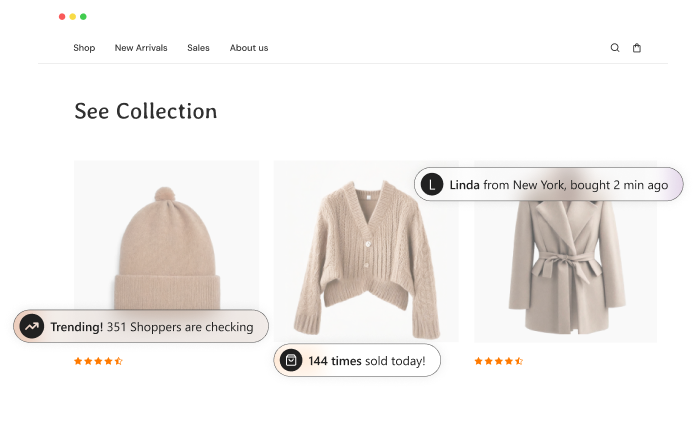
Social proof integration. Customer reviews, star ratings, and “recently purchased” notifications should be visible on the product page. The more specific the social proof (photo reviews, verified purchase badges), the more effective it is at building trust and creating urgency.
Fast page load speed. Compress images, minimize scripts, and use lazy loading. A product page that takes more than 3 seconds to load will lose a significant percentage of visitors before they even see your product.
Also check: 13 Stunning Ecommerce Landing Pages Examples
Product Page Copywriting Framework
The most effective product page copy follows the AIDA framework: Attention, Interest, Desire, Action.
Attention: Your headline and hero image grab attention. Lead with the primary benefit or the most visually compelling shot of your product.
Interest: Your product description builds interest by highlighting the key benefits. Not features. Benefits. “Waterproof to 100 meters” is a feature. “Wear it in the ocean without worrying” is the benefit.
Desire: Lifestyle images, customer testimonials, and sensory language create desire. Help the customer imagine owning and using the product. “Imagine sinking into cloud-like softness after a long day” is more persuasive than “made with premium cotton.”
Action: A clear, prominent CTA closes the deal. “Add to Cart,” “Buy Now,” or “Start Your Order” should be visible, specific, and impossible to miss.
The best product page copy is short, scannable, and speaks directly to the customer’s needs. It answers three questions: What is this? Why should I care? How do I buy it?
Also check: 12 Best Product Description Examples I’d Steal (2026)
Common Product Page Mistakes to Avoid
Weak above-the-fold content. If your hero section doesn’t include a high-quality product image, a clear price, and a visible CTA, you’re losing customers before they scroll. The above-the-fold area is your first impression. Treat it like the most important part of your product page, because it is.
Hiding critical information. Burying shipping costs, return policies, or product specs deep in the page creates friction. Customers who can’t quickly find the information they need to make a decision will leave. Use tabs or accordions to organize details without cluttering the layout.
No social proof. A product page without reviews, ratings, or testimonials feels like a sales pitch rather than a conversation. Even a handful of genuine customer reviews significantly increases conversion rates. Encourage post-purchase reviews and display them prominently on every product page.
Wrapping Up
The best product pages share common patterns: high-quality images, benefit-driven copy, visible pricing, prominent CTAs, and real customer reviews.
But the details that make each page convert depend on the product, the audience, and the brand.
Study the 15 examples above. Identify the patterns that match your product category.
The best product page design for your store is the one that addresses your specific customers’ needs and objections.
Then test one change at a time on your own product pages: better images, clearer descriptions, more prominent social proof, or a stronger CTA.
Small improvements compound. A product page that converts 1% better across thousands of visitors adds up to significant revenue over time.