I’ve spent years watching stores struggle with the same problem. Visitors browse, add things to their cart, and then leave.
The product is fine. The price is fair. But there’s nothing pushing them to decide right now. That’s the gap FOMO marketing fills.
Research shows that 60% of consumers make reactive purchases because of FOMO, often within 24 hours.
Another 37% of social media users have bought something purely because they didn’t want to miss out.
These aren’t outliers. This is how most people actually make buying decisions when they feel some kind of urgency pushing them.
I’ve studied 9 FOMO marketing examples from real brands and broken down exactly what makes each one tick. You’ll also find a practical takeaway for each one that you can apply to your own store.
1. Lean on Social Proof
Social proof works as a FOMO trigger because it makes the crowd visible.
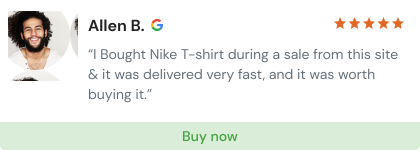
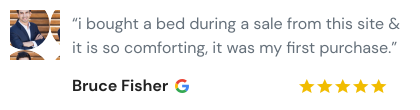
When a shopper lands on a product page and sees hundreds of five-star reviews, the message they receive isn’t just “this product is good.” It’s “hundreds of people already made this call and didn’t regret it.”
The shopper feels the gap between where they are and where everyone else already is, and that gap is uncomfortable enough to push them toward action.
Research shows that 72% of people read testimonials before buying. But what’s actually happening psychologically is bigger than trust.
The shopper is looking at evidence that they’re behind the crowd. And nobody wants to be the last person to figure out something good.
WiserNotify runs this play well. Their testimonials page shows not just star ratings but real outcomes from real users, which makes the crowd feel concrete rather than abstract.
What to steal: Don’t just display reviews. Put the count right next to your call to action. “Join 4,200 customers” placed above a buy button does something that the same number buried in a footer never will. Make the crowd visible at the exact moment your shopper is deciding.
Also check: 70+ Genius Social Proof Examples That Actually Convert
Build trust & FOMO
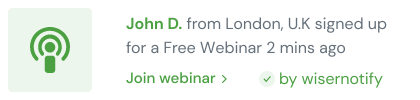
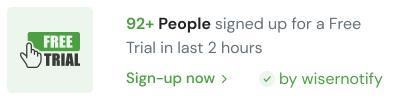
Highlight real-time activities like reviews, sales & sign-ups.
2. Limited Stock or Spots
Scarcity is the most direct FOMO signal you can send because it answers the question every procrastinating shopper is quietly asking: Will this still be here if I come back tomorrow? When the answer is clearly no, waiting stops being a safe option.
Booking.com stacks multiple scarcity signals on a single listing.
They show that only two rooms are left at this price, that 17 people are looking at this right now, and that it’s been booked eight times today.
Each signal addresses a different hesitation. Will it sell out? Yes. Am I the only one interested? Far from it. Is it worth booking at all? Apparently, yes, given the demand.
That combination of signals answers three objections at once without the shopper having to ask any of them. That’s why it converts so well.
What to steal: Don’t rely on a single scarcity signal. Stack them. Low stock plus live viewer count plus recent purchase data together answers every hesitation a shopper might have in one glance. Each signal does different work, so layering them is always stronger than picking just one.
Also check: Mastering FOMO Marketing: A Step-by-Step Guide
Build urgency
Add floating offers with countdown timer & coupon code.
3. Countdown Timer FOMO Examples
A countdown timer converts procrastination into action by putting a price on waiting. Without a timer, telling yourself “I’ll think about it” costs nothing.
With a timer showing two hours left, that same thought means missing the deal completely. The timer makes the cost of delay visible and specific.
What separates timers that convert from timers that get scrolled past is credibility. If a timer resets every time someone refreshes the page, shoppers notice.
Once they do, they’ll never trust another countdown from that brand. A timer connected to a real promotional window, one where the price actually changes when it hits zero, builds the opposite effect. It trains shoppers over time to take your deadlines seriously.
Boat uses countdown timers on its product and daily deal pages, tied to real sale windows. The deal actually expires. That’s why their shoppers act on it.
What to steal: Only run countdown timers when an offer genuinely expires. Tie them to real windows like a 48-hour flash sale or a midnight cutoff.
The moment a timer reaches zero and the deal stays live, you’ve permanently weakened every future urgency signal you run. Credibility is the whole game with countdowns.
4. Countdown Timer: Second Example
Flipkart’s daily deal countdown runs on a slightly different logic than a standard sale timer.
The deal refreshes every 24 hours, which creates a repeating urgency pattern rather than a one-off pressure spike.
Shoppers who learn this format check back daily and act quickly when they spot something they want, because they know from experience that the window is real and it closes.
This is one of the most underrated advantages of running honest FOMO campaigns consistently over time.
Every time your deadline proves real, you’re training your audience. After a few cycles, they don’t need convincing.
They already know what happens if they wait. Research shows countdown timers can increase conversion rates by up to 30% when the offer is genuine.
What to steal: Make recurring promos predictable. “Every Friday one product goes on flash sale” trains your audience to show up and act fast. Predictable urgency builds a buyer audience. Inconsistent or fake pressure just builds fatigue and eventually stops working entirely.
Build trust & FOMO
Highlight real-time activities like reviews, sales & sign-ups.
5. Gift for First-Time Buyers
First-time buyer offers work as FOMO because the expiry is personal. A sitewide countdown timer applies to everyone equally.
A first-order offer exists only for this specific shopper, only right now, and will never be available to them again once they leave.
That individual window is often more compelling than any universal deadline.
There’s a second layer to this that most people miss. When someone shares their email to claim a 10% discount code, they’ve made a small investment.
Walking away without using that code means their effort went to waste. That’s its own type of FOMO, not about missing the product but about throwing away something they already earned.
MagePlaza does this well. New visitors get 10% off in exchange for their email address.
The code is real, it expires, and an automated follow-up nudges anyone who leaves without converting.
What to steal: Pair your email capture with a real discount and a genuine expiry. A follow-up email saying “your 10% code expires in 48 hours” converts far more non-buyers than a generic come-back message, because it reminds them of something specific they’re about to throw away.
6. Discounts to First Visitors
Levi’s first-visitor offer of 20% off and free shipping works because the expiry feels personal. It doesn’t close on Tuesday for everyone.
It closes for this specific shopper when they navigate away from the page. That individual framing makes the urgency feel more immediate and more real than a site-wide countdown clock would.
There’s also a smart long-term play happening here. First-order incentives bring customers in at a discount.
But if the product is good, those customers come back at full price.
The cost of that initial FOMO offer is often paid back many times over through repeat purchases from buyers who would never have tried the brand without it.
What to steal: Make the personal nature of the expiry explicit in your copy. “Welcome, here’s 20% off your first order” is fine. “Your first-order discount expires when you leave this page” is better. The shopper needs to understand this window is theirs specifically, and it closes the moment they go somewhere else.
Build trust & FOMO
Highlight real-time activities like reviews, sales & sign-ups.
7. End-of-Season Sale
Seasonal FOMO is effective precisely because the deadline is externally justified. The season genuinely ends.
This makes the urgency feel earned rather than manufactured, which is a big deal for skeptical shoppers who have learned to tune out artificial pressure.
They’ve procrastinated on seasonal sales before and paid full price afterward. That lived experience primes them to respond when the window is closing for real.
Timing matters enormously here. “Summer sale ends soon” hits much harder in late August than it does in June.
The tighter the actual window, the more authentic the urgency feels. Levi’s end-of-season pop-up surfaces at the right moment, when inventory is genuinely low and the season is genuinely winding down. It doesn’t just announce a sale.
It frames the shopper as someone who could miss out if they don’t act right now, which is a very different feeling from simply knowing a discount exists.
What to steal: Announce seasonal sales during the final stretch, not at the start. And give the deadline a reason. “Clearing last season’s stock, everything ends Sunday” is more believable than “big sale now” because shoppers can actually accept the reason as real. A reason makes the urgency feel honest rather than constructed.
Also check: Best Website Popup Examples That Actually Convert
8. Time Limit Offer
Time-limited offers are the most flexible FOMO tool in the kit because you can drop them into any channel at any price point.
What separates the ones that actually convert from the ones that get ignored isn’t the size of the discount. It’s how specific and believable the deadline feels to the person reading it.
“Limited time offer” has been used so many times that most shoppers filter it out automatically. “Sale ends midnight tonight” is specific enough to feel real.
Showing a live countdown ticking down to that exact moment is even harder to dismiss. Every step toward specificity adds credibility, and credibility is what turns a reader into a buyer.
Shopify uses this approach well with their promotional plan pricing. When they offer a discounted rate with a hard cutoff date, it’s not pressure.
It’s an honest statement: the price is lower right now, and it won’t be later. That’s a legitimate reason to decide today.
What to steal: Give your deadline a reason. “We’re clearing last season’s inventory, everything ends Sunday” lands better than “sale ends soon” because it explains the why. Shoppers who understand why a deadline exists are far more likely to believe it and act on it.
Also check: Limited Time Offers: How to Execute and 7 Fresh Examples
Build urgency
Add floating offers with countdown timer & coupon code.
9. Early Bird Offer
Early bird pricing is one of the clearest FOMO structures in marketing because the logic is completely transparent.
The shopper who decides early gets a better price. The shopper who waits pays more for the same thing. No tricks. The incentive structure creates the urgency all on its own.
What makes early bird offers especially powerful is that they generate FOMO in two directions at once.
Before the window closes, undecided shoppers feel the pull of getting a better deal while they still can.
After the window closes, anyone who missed it pays more and remembers that feeling next time. Both outcomes push people to act faster in future campaigns.
Amazon Prime’s early access to Lightning Deals, available 30 minutes ahead of non-members, works exactly this way.
Non-members feel FOMO about not being Prime. Prime members feel urgency to use their window before it shuts. The deal itself almost becomes secondary to the access level, which is why Prime keeps growing.
What to steal: Use a capacity limit, not just a date. “First 50 orders get the early bird price” feels more real than “early bird ends Sunday” because a number is concrete and verifiable. Show the counter live as spots fill up. Watching it move creates urgency without you having to write a single line of extra copy.
4 FOMO Triggers Behind Every Example Above
Looking across all 9 examples, the same four mechanisms show up again and again in different combinations.
Knowing which one fits your situation is where building a FOMO strategy actually starts.
Scarcity
Scarcity tells shoppers that supply is limited. The rule is non-negotiable: it has to be true.
Fake low-stock warnings get spotted quickly, and once a shopper catches you manufacturing scarcity, they stop believing any signal you send.
Show specific numbers rather than vague phrases. “Only 6 left” works. “Almost gone” doesn’t, because it could mean anything.
Urgency
Urgency puts a price on delay. Without a real deadline, shoppers defer forever. The best urgency signals are specific and externally justified.
Generic phrases like “act now” or “limited time” have been so overused that most people filter them out.
Concrete deadlines tied to real events still convert consistently. “Sale ends midnight Sunday” outperforms “sale ends soon” every single time.
Exclusivity
Exclusivity creates two groups: people who have access and people who don’t. Shoppers either join the group or feel persistent motivation to.
Membership programs, early access lists, and loyalty tiers all work this way because they generate ongoing FOMO rather than a single urgency spike.
The person outside the group wants in. The person inside wants to stay.
Social proof
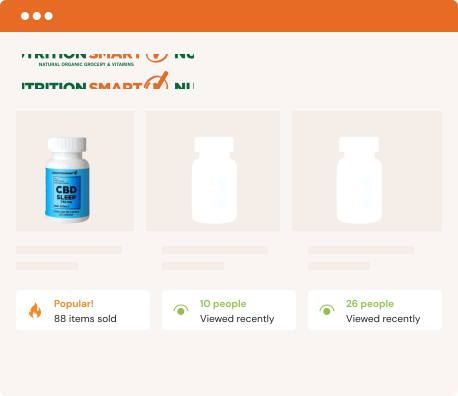
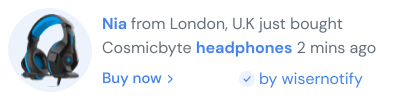
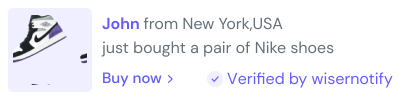
Social proof makes visible what the crowd is already doing. “5,000 sold this month,” “996 people viewing this right now,” “Emma from Toronto just bought this” each send the same underlying message: other people like you have already made this decision.
That crowd signal removes the risk of acting because it validates the choice before the shopper has to commit to it.
Also check: FOMO Marketing Statistics That Will Change How You Think About Urgency
Build trust & FOMO
Highlight real-time activities like reviews, sales & sign-ups.
How WiserNotify Helps You Create Real FOMO

Looking at every example in this post, the brands that convert best aren’t manufacturing urgency out of thin air.
They’re surfacing signals that are already real: actual purchases happening right now, actual visitors competing for the same product, actual deadlines tied to genuine promotions.
That’s the difference between FOMO that shoppers believe and FOMO that shoppers scroll past.
WiserNotify connects to your store’s live order data and website traffic and turns those real signals into visible FOMO triggers, without writing a single line of code. Here’s what each one does specifically for FOMO marketing.
Sales Popups

Most stores ask shoppers to trust their “bestseller” label or a static review count.
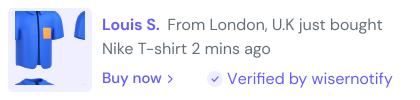
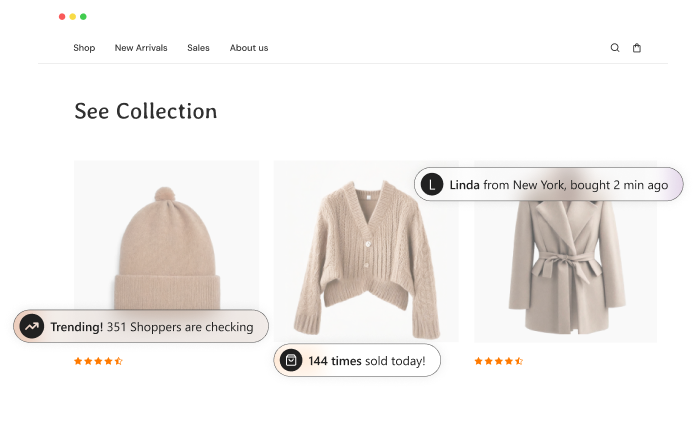
WiserNotify’s sales notifications replace that with something much harder to dismiss: live proof that a real person just bought this product minutes ago.
The notification pulls directly from your order stream, so what shoppers see is always accurate and always current.
Here’s what you can control with FOMO-specific settings:
- Which products trigger purchase notifications and which stay quiet
- How long after a purchase the notification fires (immediately, or delayed to match peak traffic hours)
- Whether the notification shows only after a visitor has been on the page for a set number of seconds, so it targets shoppers who are genuinely hesitating
- How many notifications appear per session, so you don’t overwhelm shoppers with back-to-back popups
- Custom copy so the message matches the FOMO angle of each specific product or campaign
Live Visitor Counter

The Booking.com example in this post works because shoppers can see that other people are competing for the same thing.
WiserNotify’s live visitor counter creates exactly that dynamic on any product page.
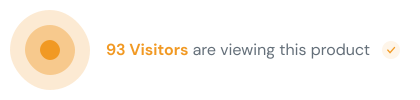
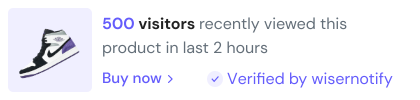
It pulls real visitor data from your site traffic and displays it as a live count, so when a shopper sees “42 people are viewing this right now,” that number is actually true.
Why this matters for FOMO specifically:
- The counter updates in real time, so the number changes as visitors arrive and leave
- You can scope it to individual product pages rather than showing a site-wide total, which makes it feel relevant to what the shopper is actually looking at
- You can set a minimum threshold so the counter only shows when traffic is genuinely high enough to be meaningful
- No discount or sale needed. The viewer count alone creates urgency by implying competition
Countdown Timer

The countdown timer examples in this post, Boat, Flipkart, Shopify, all work because the deadlines are real.
But there’s a second problem most stores run into: timers that fire for everyone regardless of behavior burn out their credibility fast.
WiserNotify’s countdown timers solve this with behavioral targeting rules that make the urgency feel relevant rather than generic.
FOMO-specific targeting options include:
- Fire only for first-time visitors who haven’t seen the offer before
- Trigger after a visitor has spent 30, 45, or 60 seconds on a product page (catching genuine hesitation, not just page loads)
- Activate only during defined sale windows, so the timer is connected to a real promotional deadline
- Show different timers to returning visitors versus new ones, since each group needs a different urgency message
- Set session caps so the same shopper doesn’t see a countdown on every page they visit
Announcement Bar

Every time-limited offer, early bird promotion, or seasonal sale in this post has one vulnerability: shoppers who don’t enter through your homepage never see the promo banner.
They land on a blog post or a category page and browse right past the deal.
WiserNotify’s announcement bar closes that gap by pinning your FOMO message at the top of every page throughout the entire shopping session.
What makes it effective for FOMO campaigns specifically:
- The bar stays visible on every page the shopper visits, from the first landing page to checkout
- You can rotate multiple messages so returning visitors see a fresh FOMO signal each session
- Countdown timers can be embedded directly inside the bar, so the urgency is always in view
- Schedule bars to activate and deactivate automatically, so your flash sale message goes live and comes down without any manual work
- Segment by visitor type so first-timers see a welcome offer and returning visitors see a different urgency message
Pricing

You can set everything up, run it on live traffic, and see the impact on conversions before you pay anything.
All plans include the 7-day free trial. Start yours here with no credit card needed.
Build trust & FOMO
Highlight real-time activities like reviews, sales & sign-ups.
Conclusion
Every example in this post has one thing in common. The FOMO signal is real. Real stock. Real deadlines. Real purchase data. Real crowd behavior.
The brands that do this badly make up signals that fall apart the moment a shopper tests them. A timer that resets. A low-stock warning that never actually clears.
A purchase pop-up pulled from a template rather than actual orders. Shoppers catch these fast, and the trust they lose is very hard to rebuild.
The brands that do it well start with what’s already real in their store. Their actual purchase stream. Their actual inventory.
Their actual promotional windows. They make those signals visible to shoppers who are on the fence, and they find that most of the persuasion work has already been done by the customers who came before.