I’ve spent years helping ecommerce brands increase conversions, and the checkout page is consistently where the most money gets left on the table. Not on the homepage. Not on the product page. At checkout.
The global cart abandonment rate hit 70.19% in 2026. That means for every 10 shoppers who made it all the way to your checkout, 7 left without buying. Most of them wanted to buy. Something in the experience stopped them.
The good news is that Baymard Institute research shows the average ecommerce site can increase conversions by up to 35% through checkout design improvements alone. That’s not paid traffic, not new products, not discounts. Just better design.
In this post, I’m breaking down 15 real checkout page designs from brands doing this well, with specific analysis of what each one does right and what you can steal for your own store.
Why Checkout Page Design Matters More Than You Think

By the time a shopper reaches your checkout page, they’ve already decided to buy. They found your product, evaluated it, and added it to their cart.
The purchase decision is made. Your checkout page’s only job is to not undo it. But that’s exactly what bad checkout design does.
According to research, the top reasons shoppers abandon at checkout are unexpected costs like shipping and taxes (39%), being forced to create an account (19%), and not trusting the site with their card details (19%).
Every single one of those is a design problem, not a product problem.
The difference between a checkout page that converts and one that bleeds revenue comes down to three things: reducing friction, building trust, and keeping the path to purchase short and obvious.
Also check: The Complete Ecommerce Checkout Flow Guide
Build trust & FOMO
Highlight real-time activities like reviews, sales & sign-ups.
15 Best Checkout Page Design Examples
These aren’t random examples. Each one illustrates a specific principle that separates high-converting checkouts from ones that leak revenue. I’ve broken down what each brand does right and the specific takeaway you can apply to your own store.
1. Amazon

Amazon’s checkout is the most studied in ecommerce, and for good reason. It processes billions of transactions a year through a page that looks, frankly, cluttered.
Multiple shipping addresses, payment methods, Prime upsells, delivery date selection. It’s a lot.
But every single element is there because Amazon tested it and it moves conversion numbers in their favor.
The most important thing Amazon does is save everything for returning customers. Shipping address, payment method, preferences.
A repeat purchase can be completed in two clicks. That’s not an accident. It’s the result of years of optimization specifically aimed at reducing return customer friction.
What to steal: Persistent saved payment and address data for returning customers. Every returning buyer who has to re-enter their card details is a conversion risk you can eliminate.
Also check: 20 Fresh Ecommerce Conversion Rate Optimization Strategies
2. Away

Away sells expensive luggage, and their checkout design reflects that product category.
They use an accordion-style single-page checkout that reveals one section at a time, keeping the experience focused without breaking it into multiple pages that could feel disjointed.
The product images in the cart summary do real work here. When someone is about to spend $300 on a suitcase, seeing the actual item they’re buying reinforces the purchase decision.
It’s a small detail that matters enormously for high-ticket products where buyer hesitation is highest right before payment.
What to steal: Show product images in the cart summary, especially for higher-priced items. The visual reminder of what they’re getting reduces the “is this worth it?” hesitation at the payment step.
Also check: 33 Brilliant Shopping Cart Page Design Examples
3. Samsung

Samsung’s checkout handles the specific challenge that electronics brands face: shoppers are naturally more skeptical about handing over payment details for big purchases.
Their response is to make trust visible at every step. Prominently displayed security seals, multiple recognized payment options, and a clear price breakdown all work together to reduce anxiety.
The uppercase CTA text on their primary button is a minor detail that actually matters. It commands attention without being aggressive, ensuring the action button doesn’t get lost in a page with a lot of information.
What to steal: Place trust signals close to the payment input, not just in the footer. Shoppers are most anxious when they’re entering card details, and that’s exactly when they need reassurance most.
4. MVMT

MVMT sells watches to millennials who value both style and efficiency. Their checkout reflects that audience.
The four-step progress bar at the top of the page does something psychologically important: it makes the checkout feel finite and manageable. Shoppers can see exactly where they are and how close they are to finishing.
Progress indicators address a specific checkout anxiety. When shoppers don’t know how many steps are left, they’re more likely to abandon mid-process simply because the end feels uncertain. MVMT removes that uncertainty entirely.
What to steal: Add a progress indicator to any multi-step checkout. The bar doesn’t just show progress, it creates commitment. Shoppers who can see they’re 75% through are far less likely to abandon than those who don’t know where they are.
Also check: 17 Inspiring Order Confirmation Page Examples
5. Brandless

Brandless takes a clean, brand-consistent approach to checkout. The page uses the brand’s color palette throughout, maintaining the visual identity right up to the final purchase step.
This consistency matters more than most stores realize. When a checkout page looks different from the rest of the site, it triggers a subtle trust concern: am I still in the right place?
Their email sign-up prompt at the top of the checkout is smart positioning. Shoppers who are actively purchasing are the highest-intent audience you’ll ever have.
Capturing their email at this moment, with a simple opt-in, builds your list with your most engaged customers.
What to steal: Maintain visual brand consistency from your store all the way through checkout. A checkout that looks like a different website creates unnecessary friction even if the UX is technically fine.
Build trust & FOMO
Highlight real-time activities like reviews, sales & sign-ups.
6. Zara

Zara’s checkout is notable for one specific feature that more stores should steal: the integrated Google Maps address lookup.
Instead of asking customers to type their full address manually, the field autocompletes as they start typing. This single change eliminates one of the most friction-heavy parts of any checkout form.
Address entry is where a lot of mobile checkouts fall apart. Small keyboards, long addresses, typos that cause errors later in the process.
Zara’s autocomplete solves all of it. The form field count is minimal across the rest of the page too, keeping the cognitive load low throughout.
What to steal: Integrate address autocomplete into your checkout form. It reduces typing, eliminates errors, and dramatically improves mobile checkout completion rates where manual address entry is most painful.
7. MOUS

MOUS runs their store on Shopify and uses the platform’s checkout customization capabilities intelligently.
Their PayPal express checkout option sits prominently at the top, letting mobile shoppers who prefer that payment method skip the full form entirely. For a store selling protective phone cases to a mobile-first audience, this is exactly the right call.
The referral field during checkout is an underrated touch. “Been Referred by a Friend?” placed during checkout serves two purposes: it captures referral data accurately, and it reinforces social proof at the moment of purchase.
Knowing someone trusted enough to recommend the brand acts as a last-mile confidence signal.
What to steal: Offer express checkout options (PayPal, Apple Pay, Google Pay, Shop Pay) prominently at the top of your checkout, not buried at the bottom. Shoppers who prefer these methods shouldn’t have to hunt for them.
8. TYLER’S

TYLER’S is a Texas-based fashion retailer that keeps their checkout page deliberately simple. Three clear steps: what you’re buying, any discounts, and the total cost breakdown.
That’s it. The clarity is the feature.
The padlock icon next to the payment step is doing quiet but important work.
It’s not a flashy trust badge, just a small visual cue that signals security at precisely the moment shoppers are most focused on whether this is safe. Sometimes the simplest trust signals are the most effective.
What to steal: Reduce your checkout to the absolute minimum steps and fields needed to complete the purchase. Every additional field or decision point is a chance for the shopper to reconsider.
9. Under Armour

Under Armour’s checkout addresses something most stores get wrong: they treat the shipping threshold as a checkout feature, not just a policy.
The prominent “Free shipping on orders over $99” message right on the checkout page is positioned where it can actually influence behavior.
A shopper who sees they’re $12 away from free shipping has a clear incentive to add one more item.
Their cart editing capabilities are also worth noting. Being able to adjust quantities and remove items directly from checkout, without going back to the cart page, keeps shoppers in the purchase flow.
Every time you force someone to navigate away from checkout to make a change, some percentage of them don’t come back.
What to steal: Display your free shipping threshold prominently in the checkout summary, with a dynamic message showing how much more the shopper needs to qualify. This consistently increases average order value.
Also check: How to Reduce Shopping Cart Abandonment
10. Lord & Taylor

Lord & Taylor’s checkout handles the account vs. guest checkout tension better than most legacy retailers.
They present guest checkout clearly, not buried or de-emphasized, while also making the value of creating an account explicit.
The loyalty rewards callout in red text during checkout is positioned where it can actually convert undecided shoppers into registered accounts.
Their order summary is transparent and detailed. Every cost component is visible before the shopper commits.
This matters because hidden fees discovered at the last moment are one of the most common reasons for checkout abandonment.
When shoppers can see the full total before entering payment details, there are no surprises.
What to steal: Make guest checkout obviously available, then earn account creation by clearly stating what the shopper gets: faster future checkouts, order tracking, loyalty points. Give them a reason to choose it, don’t force it.
Build trust & FOMO
Highlight real-time activities like reviews, sales & sign-ups.
11. Tommy Hilfiger

Tommy Hilfiger’s checkout maintains their brand’s premium feel all the way through the purchase process.
The order summary section is detailed and legible, showing tax and shipping costs itemized clearly. No surprises, no last-minute sticker shock. The color palette and typography match the rest of the site, reinforcing that premium experience buyers expect from the brand.
Two standout UX details: the “back to top” button for long-form checkouts, which sounds minor but genuinely helps on mobile, and the community donation option.
That donation module is smart brand alignment. It lets buyers who share Tommy Hilfiger’s community values act on that alignment right at the moment of purchase.
What to steal: Show an itemized cost breakdown before the payment step, not on the confirmation page. Buyers need to see the exact total including tax and shipping before they commit their card details, not after.
12. Omega

Omega sells luxury watches that cost thousands of dollars. Their checkout has to work for buyers who are making a significant purchase and are naturally more deliberate about it.
The accordion-style checkout guides buyers through each step without ever showing them the full complexity of the form at once. This is the right approach for high-ticket purchases where buyer anxiety is elevated.
The page is clean, clutter-free, and entirely focused on completing the transaction. No promotional banners, no cross-sells, no distractions.
When your product is expensive, the checkout page isn’t the place for upselling. It’s the place for reassurance.
What to steal: Match your checkout complexity to your product price point. Higher-ticket items benefit from more deliberate, guided checkout flows. Lower-ticket impulse purchases benefit from the fastest possible path to completion.
13. Crate & Barrel

Crate & Barrel sells home goods, kitchen appliances, and furniture. Their checkout page handles the complexity of that product mix with a focus on transparency.
Every cost component is visible: product price, shipping, taxes, any additional charges. There are no costs hidden until the final confirmation screen.
Their progress indicator is particularly clear, showing shoppers exactly which step they’re on and how many remain.
For a store where orders might include multiple items with different delivery timelines, that clarity reduces the anxiety that comes with complex purchases.
What to steal: Show transparent pricing at every step of your checkout. Shoppers who can see exactly what they’re paying for at each stage are far more likely to complete the purchase than those who have to wait for a confirmation page to see the real total.
14. Glossier

Glossier’s checkout reflects their brand identity: minimal, clean, and focused on the customer relationship rather than just the transaction.
Their question-based form approach feels less like filling out paperwork and more like a conversation. The guest checkout option is prominently available, and the order summary is clear without being clinical.
The free gift inclusion during checkout is a smart retention play. Shoppers who receive an unexpected gift in the checkout experience feel rewarded rather than just processed.
That emotional note at the end of the purchase journey affects how they remember and talk about the brand.
What to steal: Use your brand voice in the checkout form labels and microcopy. Checkout fields don’t have to feel like tax forms. Small copy choices like “Where should we send your order?” instead of “Shipping address” make the experience feel more human.
Build trust & FOMO
Highlight real-time activities like reviews, sales & sign-ups.
15. Brooks

Brooks Running uses a single-page checkout with four distinct sections that reveal progressively.
Only the fields relevant to the current step are visible, which prevents the “wall of form” effect that kills conversion rates on mobile. Section headers remain visible throughout so shoppers always know where they are in the process.
Their guest vs. account decision is handled particularly well. Shoppers in a hurry can check out as a guest immediately, but the account creation option is presented as a value proposition rather than a requirement.
The long-term benefit for Brooks is that even shoppers who start as guests get nudged toward account creation, building a customer database of verified buyers.
What to steal: On single-page checkouts, use progressive disclosure. Show only the fields needed for the current step, reveal the next section after each is completed. This makes the form feel shorter and less daunting even if the actual field count is the same.
Key Elements of a High-Converting Checkout Page
Across all 15 examples above, certain patterns show up consistently in the ones that convert best.
These aren’t opinions – they’re the elements that Baymard’s UX research and real conversion data point to repeatedly.
➔ Keep the form as short as possible
Every additional field in your checkout form is a reason to abandon. Audit your form and ask: do we actually need this to complete the order? Phone numbers, company names, “how did you hear about us” fields, and secondary addresses.
If you don’t need it to ship the order and send a confirmation, cut it. The average checkout form has 14.88 fields, but most stores only need 8.
➔ Make guest checkout the default
Baymard’s research shows 19% of shoppers abandon because they’re forced to create an account.
That’s a huge amount of revenue walking away from a completely solvable problem.
Present guest checkout prominently and let shoppers complete their purchase first. You can invite account creation on the confirmation page, after the sale is done.
➔ Show trust signals where they matter most
Trust badges next to the payment field, not just in the footer, convert.
SSL certificates, recognized payment logos (Visa, Mastercard, PayPal), and satisfaction guarantee statements all do the most work when they’re positioned close to where shoppers are entering sensitive information.
That’s the moment of maximum anxiety, and that’s where your trust signals need to be.
➔ Be transparent about every cost before payment
Unexpected costs at checkout are the single biggest driver of cart abandonment at 39%.
Show shipping costs, taxes, and any fees before the shopper reaches the payment screen.
If your shipping is free, say so loudly. If it’s calculated based on address, show the real number as soon as they enter their location. There should be no surprises on the confirmation page.
➔ Optimize relentlessly for mobile
In 2025, smartphones accounted for 78% of retail site traffic and 70% of online purchases.
If your checkout isn’t designed first for mobile, you’re optimizing for the minority of your shoppers.
Large tap targets, address autocomplete, express payment options (Apple Pay, Google Pay), and minimal typing requirements aren’t nice-to-haves for mobile. They’re requirements.
➔ Use social proof at checkout
The checkout page is not too late for social proof. In fact, it’s one of the highest-impact places to use it.
A recent purchase notification showing that someone just bought the same product, a star rating next to the item in the order summary, or a brief customer quote near the payment button all reinforce the decision right when second-guessing is most likely.
WiserNotify’s social proof notifications are specifically designed for this – showing real-time purchase activity that makes shoppers feel confident they’re making the right call.
➔ Never let shoppers leave to edit their cart
Quantity adjustments, item removal, size changes. All of it should be editable directly from the checkout page.
The moment you send someone back to their cart to make a change, you’ve introduced a navigation step that some percentage of them won’t complete.
Keep them in the checkout flow no matter what they need to adjust.
Build trust & FOMO
Highlight real-time activities like reviews, sales & sign-ups.
How WiserNotify Helps You Convert More at Checkout

The best checkout pages in this list use social proof strategically. Amazon shows purchase activity. MOUS uses referral signals.
Under Armour surfaces free shipping thresholds. All of them are reducing the specific anxiety buyers feel right before they commit their payment details.
WiserNotify gives you the infrastructure to do the same without custom development. Here’s how each feature maps directly to checkout conversion.
Recent Sales Notifications

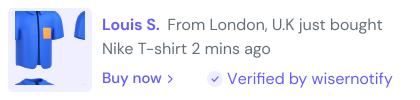
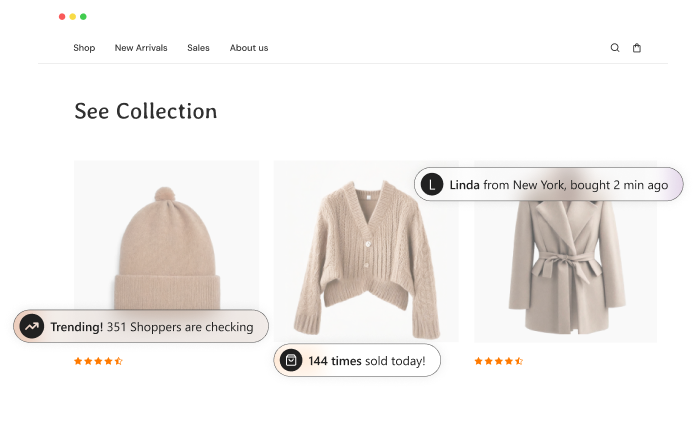
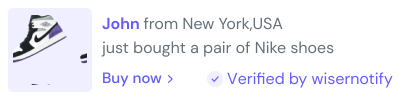
When a shopper is on your checkout page and sees a notification that “Sarah from Chicago just purchased this item 4 minutes ago,” two things happen simultaneously.
Their purchase anxiety drops because someone else just made the same decision. And their sense of urgency increases because the item is clearly in demand.
WiserNotify pulls real purchase data from your store and displays it as floating notifications that appear at the moment they’re most needed – during checkout, on product pages, and at the cart stage. These aren’t fake counts. They’re real transactions, which is exactly why they convert.
Live Visitor Counter

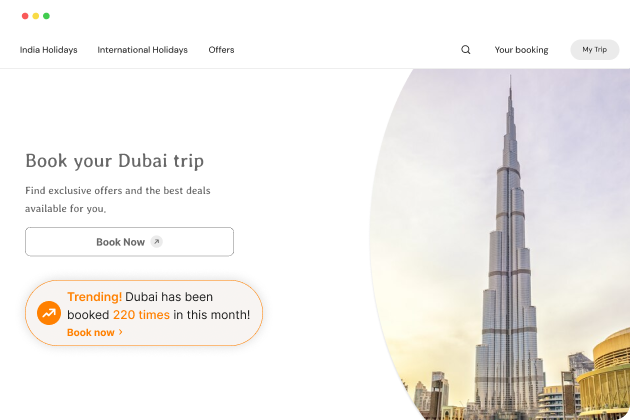
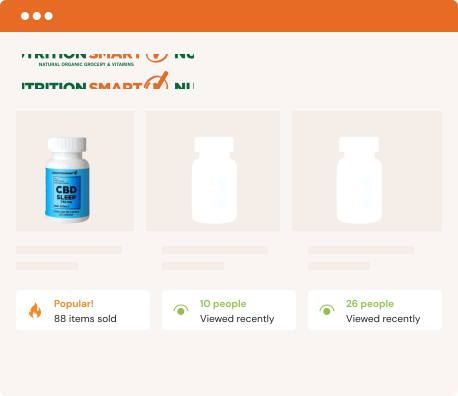
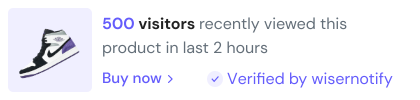
Showing “43 people viewing this product right now” next to your checkout button replicates one of the most effective in-store sales triggers: the crowd signal.
When shoppers see other people actively looking at the same product, it validates their decision and adds urgency without requiring a discount.
WiserNotify’s live visitor counter updates in real time and can be displayed anywhere on your site, including directly on your checkout page alongside the order summary. It’s one of the simplest changes that consistently lifts checkout conversion rates.
Countdown Timers

A checkout page without time pressure has no urgency. WiserNotify’s countdown timers let you display live-only pricing windows, limited-stock countdowns, and flash sale timers directly within the checkout experience.
The key difference between WiserNotify timers and basic plugins is specificity.
You can trigger a timer to appear only when a shopper has been on the checkout page for more than 60 seconds, targeting exactly the hesitant buyers who need a nudge. Or display it only for shoppers who have a specific product in their cart.
Social Proof Notifications

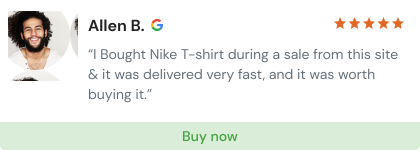
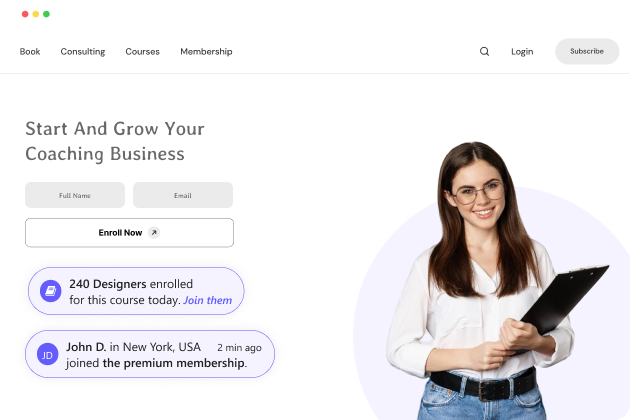
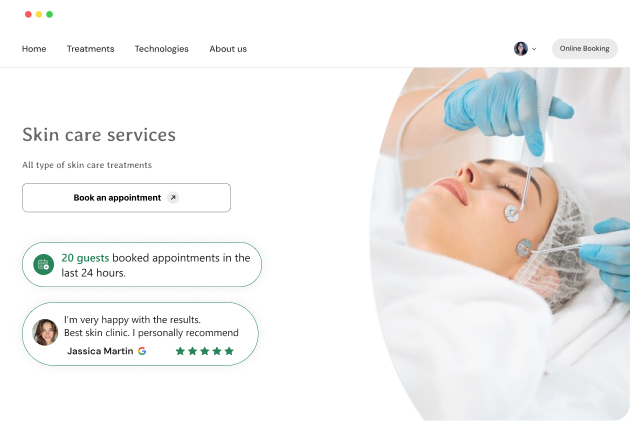
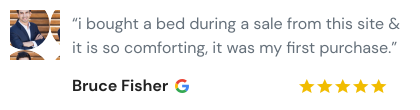
Beyond purchase notifications, WiserNotify can display review snippets, star ratings, and testimonial quotes as floating popups during checkout.
A 5-star review appearing next to the payment button at the exact moment a shopper is deciding whether to complete their order is one of the highest-converting placements in ecommerce.
You control which reviews appear, when they appear, and on which pages. You can target high-value review content – specific mentions of fast shipping, product quality, or easy returns – to the checkout page specifically, addressing the exact concerns that cause abandonment.
Announcement Bar

Free shipping thresholds, limited-time offers, trust messages like “30-day returns, no questions asked.”
All of these belong at the top of your checkout page as a persistent announcement bar. Under Armour does this natively. WiserNotify lets any store do the same thing without a developer.
The announcement bar can be configured to show different messages at different stages of checkout, updating from a shipping threshold reminder at the cart stage to a security guarantee message at the payment stage.
The message adapts to what the shopper needs to see most at each point in the flow.
Full Customization and Analytics


Every WiserNotify notification is fully customizable to match your brand without touching code.
Colors, fonts, positioning, display timing, and animation style all match your store’s design so the notifications feel native rather than bolted-on.
The analytics dashboard shows you exactly which notifications are driving views, clicks, and conversions at your checkout.
You can see which social proof message performs best, which placement drives the highest click-through, and which trigger timing converts the most hesitant buyers.
That data lets you optimize your checkout social proof the same way the brands in this post optimized their checkout design – through iteration based on real results, not guesswork.
Pricing

Common Checkout Page Mistakes to Avoid
The checkout page is easy to underestimate. Most brands invest heavily in product pages and homepages, then treat checkout as an afterthought. Here are the mistakes that cost the most revenue.
- Forcing account creation before purchase: This is the highest-impact mistake in checkout design and one of the easiest to fix. Move account creation to after the purchase is complete. You have the email; they’ve already committed. Creating an account at that point feels like a convenience rather than a barrier.
- Hiding the total until the end: If your checkout page doesn’t show the full order total, including shipping and tax, until the final confirmation step, you’re going to lose a significant portion of your shoppers right before they convert. Full price transparency at every step is non-negotiable.
- Too many form fields: Asking for information you don’t need introduces friction without adding value. A date of birth field, a company name for a consumer brand, a secondary phone number. Every unnecessary field costs you conversions. Audit your form quarterly and cut anything you’re not actively using.
- No mobile optimization: A checkout designed only for desktop is half a checkout. Form fields that are too small to tap, payment options that don’t support Apple Pay or Google Pay, and address fields without autocomplete. All of it bleeds mobile conversion rates.
- Removing navigation without replacing it with reassurance: Most checkout pages correctly remove the main navigation to reduce distraction. But that removal can create anxiety. Replace it with visible trust signals, a clear path to customer support, and your return policy. Shoppers shouldn’t feel trapped – they should feel guided.
Conclusion
Your checkout page is the last thing standing between a shopper and a completed sale. By the time they get there, you’ve already done the hard work.
Don’t lose the conversion on a form that asks too much, a total that surprises them, or a page that doesn’t feel trustworthy.
The 15 brands in this post all approach checkout differently, but they share the same underlying logic: remove every obstacle, show every cost upfront, and give shoppers a reason to feel confident right up to the moment they click the final button. That’s not complicated.
It just requires treating your checkout page with the same attention you give your homepage and product pages.
Pick two or three takeaways from these examples that apply to your store. Test them.
Measure the change in checkout completion rate. Then come back and do two more. That’s how the best ecommerce brands built the checkout pages you just read about.
Also check: 28 Cart Abandonment Statistics Every Ecommerce Store Needs to Know