
I Tested 11 UGC Platforms for Ecommerce Brands (2026)

I’ve spent the past few weeks inside UGC platforms so you don’t have to. Signing up, posting briefs, checking what the pricing pages actually say once you’re logged in.
Full disclosure before we start: one of the eleven tools below is ours. I’ll flag it clearly when we get there, and I’ll give you its weak points the same way I do for everyone else.
Here’s the short version, then the detail.
Quick answer: For creator video ads, start with Billo ($99 per video, no subscription). For paid social and whitelisted ads, Insense is built for it. On a tight budget, JoinBrands gets you volume from $25 per video. For collecting photo and video reviews from your own customers, WiserReview (ours) starts at $9/month with a 7-day free trial. For pulling social content onto your site, Taggbox starts at $19/month. Enterprise teams syndicating reviews across retailers should look at Bazaarvoice.
What Are UGC Platforms?
A UGC platform is software that helps brands get content made by real people, whether that’s hired creators, social media fans, or paying customers.
In 2026 the category has split into three groups that get lumped together but do very different jobs:
- Creator marketplaces (Billo, Insense, JoinBrands, Collabstr): you pay creators to produce new videos and photos, usually for ads.
- Aggregation platforms (Taggbox, Flowbox): they collect content your customers already posted on social and display it on your site.
- Review UGC platforms (WiserReview, Yotpo, Bazaarvoice): they collect photo and video reviews from your actual buyers and turn them into on-site content.
Most brands eventually run two of the three. Ad creative from a marketplace, plus customer content from reviews or social. If you want raw ideas for what this content looks like in the wild, I keep a running list of UGC examples.
What Makes a UGC Platform Different?
UGC platforms buy content, not audiences. An influencer tool pays someone to post to their followers; a UGC platform pays for the video file itself, which you then run in your own ads and pages.
That’s why UGC creators with 900 followers can out-earn influencers with 90,000. Nobody’s renting their reach. They’re buying their footage.
Why UGC Matters for Ecommerce in 2026
Shoppers trust content from real people more than brand-shot creative, and now AI assistants read that content too before recommending products.
The money says this isn’t a fad. The UGC platform market is expected to hit about $8.5 billion in 2026, up from $7.1 billion last year.
And the way people find products is shifting under our feet. BrightLocal’s 2026 survey found 45% of consumers now use AI to find business recommendations, up from 6% a year earlier, and 42% trust those AI answers as much as written reviews.
That second stat matters more than it looks. ChatGPT and Google’s AI answers build their product recommendations from reviews and customer content on the open web. The brands with the most recent, most visible UGC are the ones the machines quote. I’ve pulled together more numbers on this in our UGC statistics roundup.
Build urgency
Add floating offers with countdown timer & coupon code.

Quick Comparison Table
Eleven platforms, three categories, and pricing that runs from free to enterprise contracts. Here’s the whole field on one screen.
| Platform | Type | Best for | Pricing from |
|---|---|---|---|
| Billo | Creator marketplace | Video ads for TikTok and Meta | $99/video |
| WiserReview | Review UGC | Photo/video reviews on your store | $9/mo (7-day trial) |
| Insense | Creator marketplace | Paid social and whitelisted ads | $500/mo + creator fees |
| JoinBrands | Creator marketplace | Budget video volume | $25–60/video + fee |
| Collabstr | Creator marketplace | One-off creator hires | $50–500+/creator |
| Cohley | Managed marketplace | Hands-off content programs | Custom |
| Aspire | Creator management | Creator programs at scale | Custom |
| Bazaarvoice | Reviews + syndication | Enterprise retail syndication | Custom annual |
| Taggbox (Tagbox) | Aggregation | Social walls and site galleries | Free; paid $19/mo |
| Flowbox | Aggregation | Shoppable galleries (EU brands) | Custom |
| Yotpo | Reviews + aggregation | Bigger stores wanting one suite | $79/mo (free tier) |
How Much Do UGC Platforms Cost in 2026?
Expect $25 to $150 per video on marketplaces, $9 to $500+ per month for software, and custom annual contracts at the enterprise end.
The three pricing models break down like this:
- Pay per video. Billo ($99), JoinBrands ($25–60 plus an 8–15% platform fee), Collabstr ($50–500+ per creator). No subscription, so it’s the cheapest way to test.
- Monthly software. WiserReview from $9 with a 7-day free trial, Taggbox from $19, Yotpo reviews from $79, and Insense from $500 billed quarterly plus what you pay creators.
- Custom contracts. Cohley, Aspire, Flowbox, and Bazaarvoice all quote per brand, and Bazaarvoice bills annually.
Watch the second line item. On marketplaces, the subscription or fee is never the whole cost — creator budgets sit on top. Prices are current as of July 2026.
11 Best UGC Platforms I’ve Tested (2026)
Ranked with ecommerce brands in mind: what you get, what it costs, and the one limit each vendor won’t put on their homepage.
1. Billo

Billo is where I’d send most ecommerce brands making their first UGC video ad. You post a brief, vetted creators apply, you pick, and finished videos come back ready for TikTok and Meta.
- Best for: Creator video ads without a subscription.
- Standout features: 5,000+ vetted creators across the US, Canada, UK, and Australia; CreativeOps benchmarks built on 326,000+ video ads; script and casting guidance.
- Pricing: From $99 per video, bought in packs. No monthly fee.
- Main limit: Costs stack fast at volume, and the brief-then-wait model means you’re reviewing applications instead of picking creators directly.
The data layer is the quiet advantage. Billo’s benchmarks tell you which hooks and formats are converting in your category before you spend a dollar on ads. If Billo’s model doesn’t fit, I’ve broken down the best Billo alternatives separately.
2. WiserReview
This one’s ours, so read it knowing that. If you want a neutral comparison first, start with our product review software roundup and come back.

WiserReview handles the UGC most brands already have and don’t use: customer reviews. It collects photo and video reviews through email, SMS, and WhatsApp, then displays them in widgets on your product pages.
- Best for: Turning real customers into your UGC engine on Shopify, WooCommerce, BigCommerce, Wix, or Squarespace.
- Standout features: Photo and video review collection on autopilot; display widgets on every plan; AI review insights on the top plan.
- Pricing: Starter $9/month, Pro $19, Pro + AI $31, tiered by monthly review requests. Every plan starts with a 7-day free trial.
- Main limit: It won’t produce ad creative for you — there’s no creator marketplace — and there’s no permanent free plan, just the 7-day trial. The ecosystem is also smaller than Yotpo’s.
Why rank review software this high on a UGC list? Because a photo review is UGC with a five-star rating attached, and it’s the content type AI assistants quote most when someone asks about your brand. More on that thinking in our guide to why product reviews matter.
3. Insense

Insense is the marketplace built for performance marketers. Beyond content production, it handles creator whitelisting, Spark Ads, product seeding, and TikTok Shop campaigns in one place.
- Best for: Brands running paid social who want creator ads with usage rights sorted.
- Standout features: Whitelisted and Spark Ads workflows; creator sourcing across TikTok, Instagram, and Facebook; product seeding and affiliate campaigns.
- Pricing: From $500/month billed quarterly, plus creator payments and a marketplace fee. The trial month is paid ($650).
- Main limit: The real spend is subscription plus creator budgets, which makes it overkill if you only need occasional content.
Build trust & FOMO
Highlight real-time activities like reviews, sales & sign-ups.

4. JoinBrands

JoinBrands is the volume play. With creator rates starting at $25 per video, it’s the cheapest way to fill a testing pipeline with fresh creative every week.
- Best for: Stores that burn through ad creative and need quantity on a budget.
- Standout features: 100,000+ creators; jobs from $25; Amazon-friendly workflows for sellers who need review-safe content.
- Pricing: $25–60 per video typical, plus an 8–15% platform fee. Paid plans from $99.
- Main limit: Quality swings hard at the low end. Budget time to vet portfolios or you’ll pay twice for the same video.
5. Collabstr
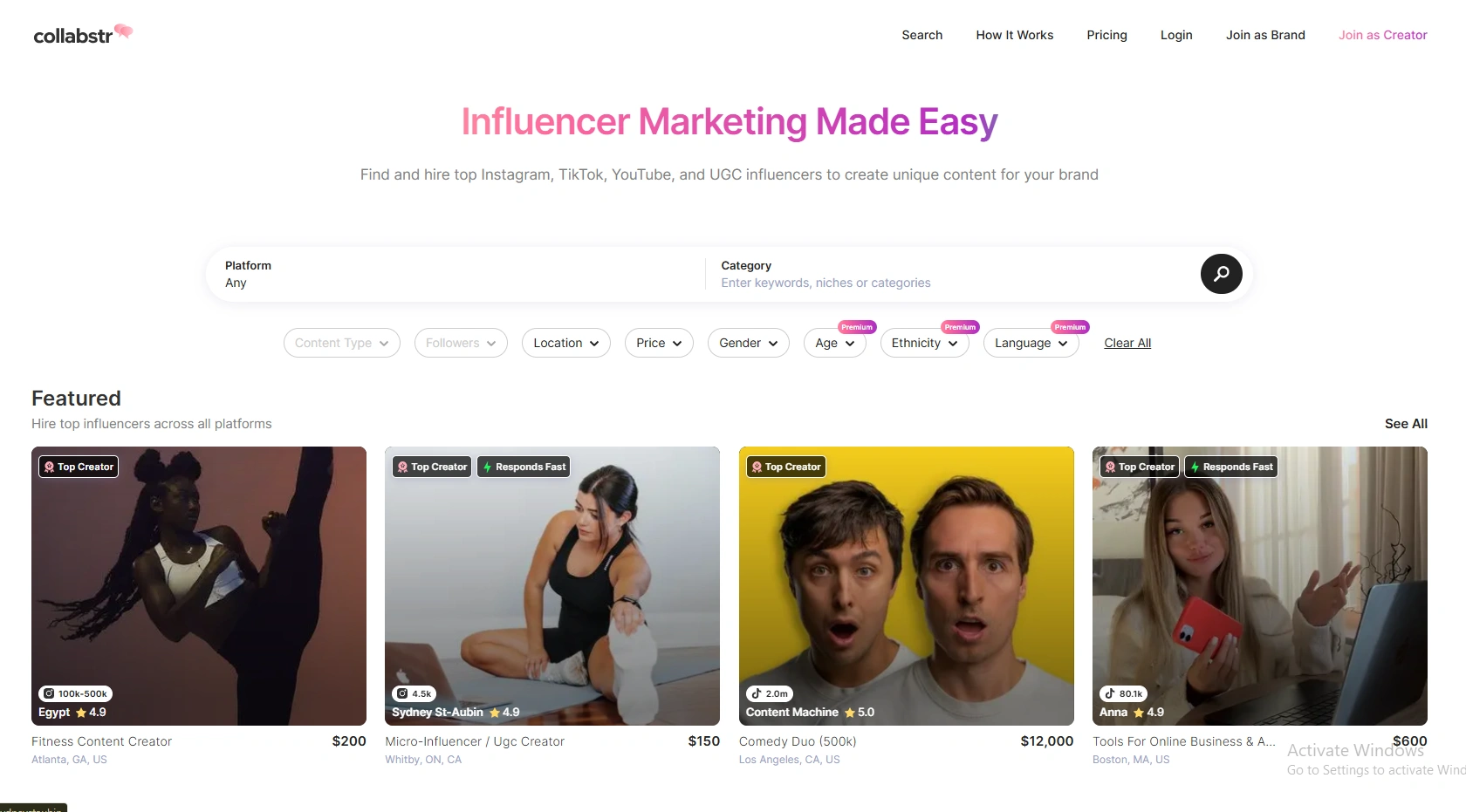
Collabstr is the simplest tool on this list. Browse creators like a catalog, see their rates upfront, and book in a few clicks with your payment held until delivery.
- Best for: One-off creator hires without contracts or subscriptions.
- Standout features: Transparent per-creator pricing; instant booking; filters for platform, niche, and content type; works for both UGC and influencer posts.
- Pricing: Free to browse. $50–500+ per creator, set by the creator.
- Main limit: Fully self-serve. No briefs marketplace, no strategy layer, no one to call when a creator ghosts.
Build trust & FOMO
Highlight real-time activities like reviews, sales & sign-ups.

6. Cohley
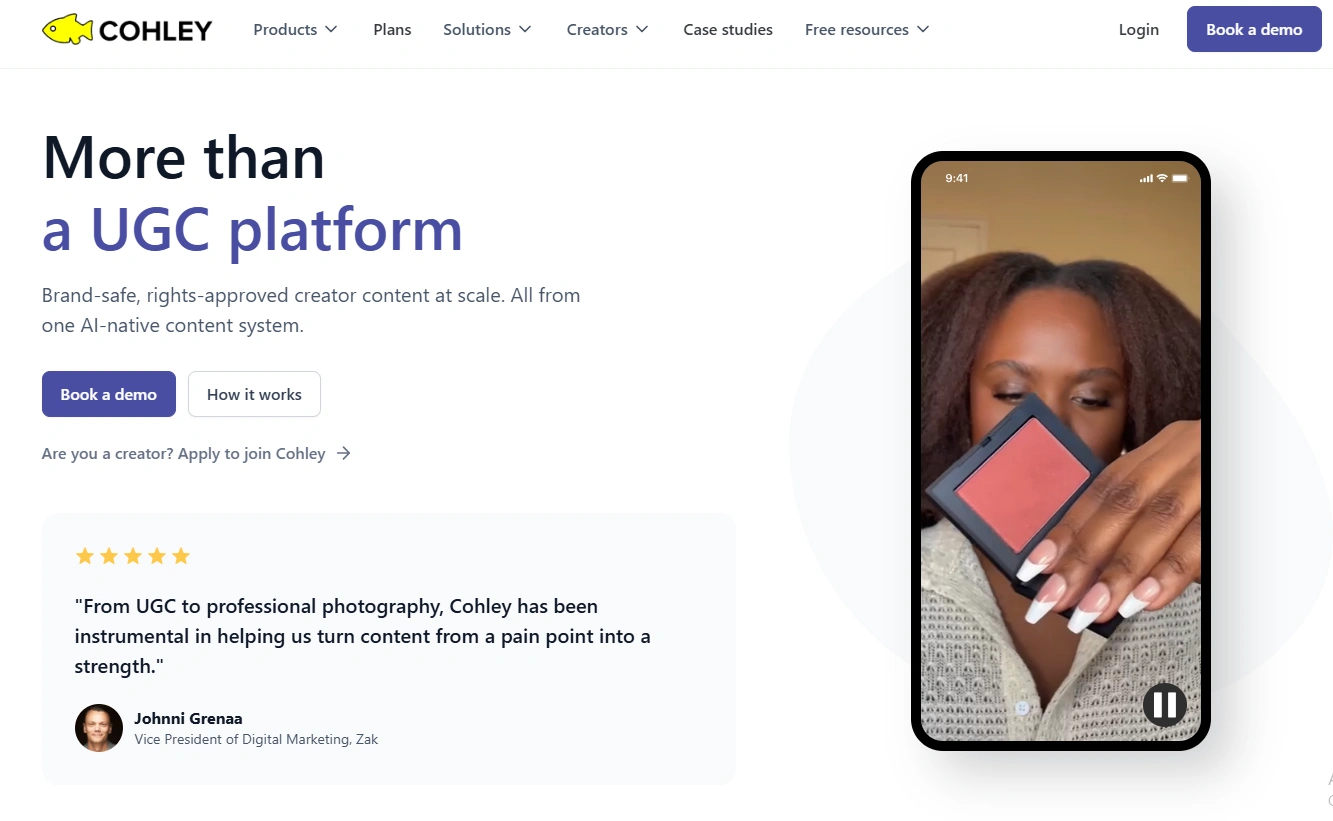
Cohley is managed UGC for teams that want a partner, not a dashboard. Their team helps plan briefs, source creators, and run the content calendar with you.
- Best for: Mid-market brands that want strategic support behind their content program.
- Standout features: Managed campaigns; photo, video, and text review generation; content testing guidance.
- Pricing: Custom.
- Main limit: Not self-serve. You’re committing to a program and a budget, not buying three videos to test.
7. Aspire

Aspire goes past one-off content into full creator relationship management. Think of it as a CRM where the contacts are creators, affiliates, and ambassadors.
- Best for: Brands running always-on creator programs across UGC, influencer, and affiliate at once.
- Standout features: Creator discovery and CRM; campaign workflows; affiliate and ambassador management; reporting across the whole program.
- Pricing: Custom.
- Main limit: Enterprise-grade depth means enterprise-grade setup. Small teams wait a while before the value shows up.
Build trust & FOMO
Highlight real-time activities like reviews, sales & sign-ups.

8. Bazaarvoice

Bazaarvoice is the enterprise pick, and one thing it does is genuinely unique: syndicating your reviews and UGC across a retail network that includes Amazon, Walmart, and Target.
- Best for: Enterprise brands selling through big-box retail who need reviews everywhere their products sit.
- Standout features: Retail syndication network; review collection at scale; visual UGC galleries; sampling programs.
- Pricing: Custom, billed annually.
- Main limit: Pricing and onboarding are built for enterprises. Small and mid-size brands are effectively priced out.
9. Taggbox (now Tagbox)

Taggbox, rebranded as Tagbox, pulls the content your customers already post on Instagram, TikTok, and X onto your website as walls, galleries, and shoppable feeds.
- Best for: Displaying social content on your site without paying creators a cent.
- Standout features: Social walls and widgets; shoppable galleries; rights management for reposting; event displays.
- Pricing: Free plan available. Paid from $19/month.
- Main limit: It aggregates what exists. If your customers aren’t posting about you yet, there’s nothing to display.
Build trust & FOMO
Highlight real-time activities like reviews, sales & sign-ups.

10. Flowbox

Flowbox is Europe’s strongest UGC platform for ecommerce, focused on turning customer photos and videos into shoppable galleries that sit right in the buying flow.
- Best for: European brands making social content shoppable on product pages.
- Standout features: Shoppable UGC galleries; automated rights requests; product tagging; conversion analytics per gallery.
- Pricing: Custom.
- Main limit: Quote-only pricing and an EU-first footprint. US brands have equal options closer to home.
11. Yotpo

Yotpo bundles reviews, visual UGC, loyalty, and SMS into one suite for brands that want a single vendor across retention.
- Best for: Bigger Shopify stores consolidating reviews, UGC display, and loyalty in one place.
- Standout features: Review collection with photo and video; visual UGC galleries; loyalty and referral programs; deep Shopify integration.
- Pricing: Reviews from $79/month. A limited free tier exists for very small stores.
- Main limit: Pricing scales fast as you add products and modules, and the visual UGC side aggregates content rather than commissioning it. I’ve compared the field in Yotpo alternatives.
Build trust & FOMO
Highlight real-time activities like reviews, sales & sign-ups.

Free UGC Platforms: Which Tools Work?
Truly free UGC software exists, but “free” on creator marketplaces only means free to browse — the content itself always costs money.
Here’s what free actually gets you in 2026:
- WiserReview — no free plan, just a 7-day trial on every plan. That’s ours, and I won’t pretend a trial is a plan.
- Taggbox — free plan displays social feeds with limits on sources and views.
- Yotpo — free tier covers basic review collection for very small stores.
- JoinBrands and Collabstr — free accounts, but every video is a paid job.
My honest take: use free plans to test the workflow, not to run the program. Every one of them is designed to be outgrown in a month or two.
How to Pick the Right UGC Platform
Pick the category first, the vendor second: marketplaces make new content, aggregators display existing content, and review platforms turn customers into contributors.
Five checks before you pay anyone:
- Match the tool to the job. Need ad creative? Marketplace. Need social proof on product pages? Reviews or aggregation. Our guide to UGC tools maps the full stack, and customer review platforms covers the review side in depth.
- Read the usage rights before you pay. This is the one that burns people. Some platforms include full licensing in the price; others sell usage rights separately, cap the license term, or charge extra for paid-ad usage and whitelisting. Confirm in writing who owns the file, where you can run it, and for how long.
- Price the second line item. Platform fees, creator budgets, per-order pricing tiers. The subscription is rarely the real cost.
- Check your integrations. Your store platform, your email tool, your ad accounts. A platform that doesn’t talk to your stack creates manual work forever.
- Start where your customers already are. If buyers already post about you, aggregate. If they don’t, commission creators or ask for photo reviews — that’s the fastest path to a library you own. Pair whichever you choose with social proof on-site so the content actually sells.

Boost Conversion Instantly
Add Social Proof & Urgency to your website
Conclusion
UGC in 2026 comes from three places: creators you hire, fans you repost, and customers you ask. The platforms above each own one of those lanes, and the strongest stores run at least two.
If I had to start from zero today, I’d test ad creative on a pay-per-video marketplace and switch on photo review collection the same week. One builds your ads, the other builds your product pages, and neither locks you into a contract.
Whatever you pick, get the usage rights in writing and check the full cost before the subscription. The tool matters less than actually shipping the content.
Frequently Asked Questions
What is a UGC platform?
A UGC platform is software that gets you content made by real people. Creator marketplaces sell new videos, aggregators collect social posts, and review platforms gather customer photos and videos.
Which UGC platform is best for small ecommerce stores?
JoinBrands and Collabstr are the cheapest way to buy creator videos. For review UGC, our own WiserReview starts at $9/month, and every plan has a 7-day free trial.
Do customer reviews count as UGC?
Yes. Photo and video reviews are UGC your buyers make for free, and tools like WiserReview collect and display them on product pages.
Who owns the content a UGC creator makes?
It depends on the license. Some platforms include full rights in the price, others sell ad usage or whitelisting separately, so confirm ownership in writing before paying.
How much do UGC platforms cost?
Marketplace videos run $25 to $150 each. Software starts around $9 to $79 per month, and enterprise tools like Bazaarvoice use custom annual contracts.

Krunal Vaghasiya is a marketing tech expert who boosts e-commerce conversion rates with automated social proof and FOMO strategies. He loves to keep posting insightful posts on online marketing software, marketing automations, and improving conversion rates.




 Capterra