
42 Retargeting Statistics for 2026 (CTR, ROAS & Privacy)
Most people who visit your website leave without buying. And most of them never come back on their own.
Retargeting is how you bring them back. You show ads to people who have already visited your site, looked at a product, or left something in their cart.
This page has 42 up-to-date retargeting statistics: CTR and cost benchmarks, conversion and ROAS data, cart recovery numbers, and what the privacy changes mean for remarketing in 2026.

Boost Conversion Instantly
Add Social Proof & Urgency to your website
Key Retargeting Statistics
| Metric | Latest Figure |
|---|---|
| Visitors who leave a site without converting | 97% |
| Average display retargeting CTR | 0.7% (10x standard display) |
| Search retargeting (RLSA) CTR | 5.2% |
| Conversion rate, retargeted vs cold traffic | 3.8% vs 2.2% |
| Average retargeting ROAS | About 4.2x |
| Average cart abandonment rate | Just over 70% |
| Lost revenue recovered by cart abandonment campaigns | 26% |
| Marketers using retargeting | 77% |
| Marketers increasing retargeting budgets this year | 48% |
| Browsing already happening without third-party cookies | About a third |
Why Retargeting Exists
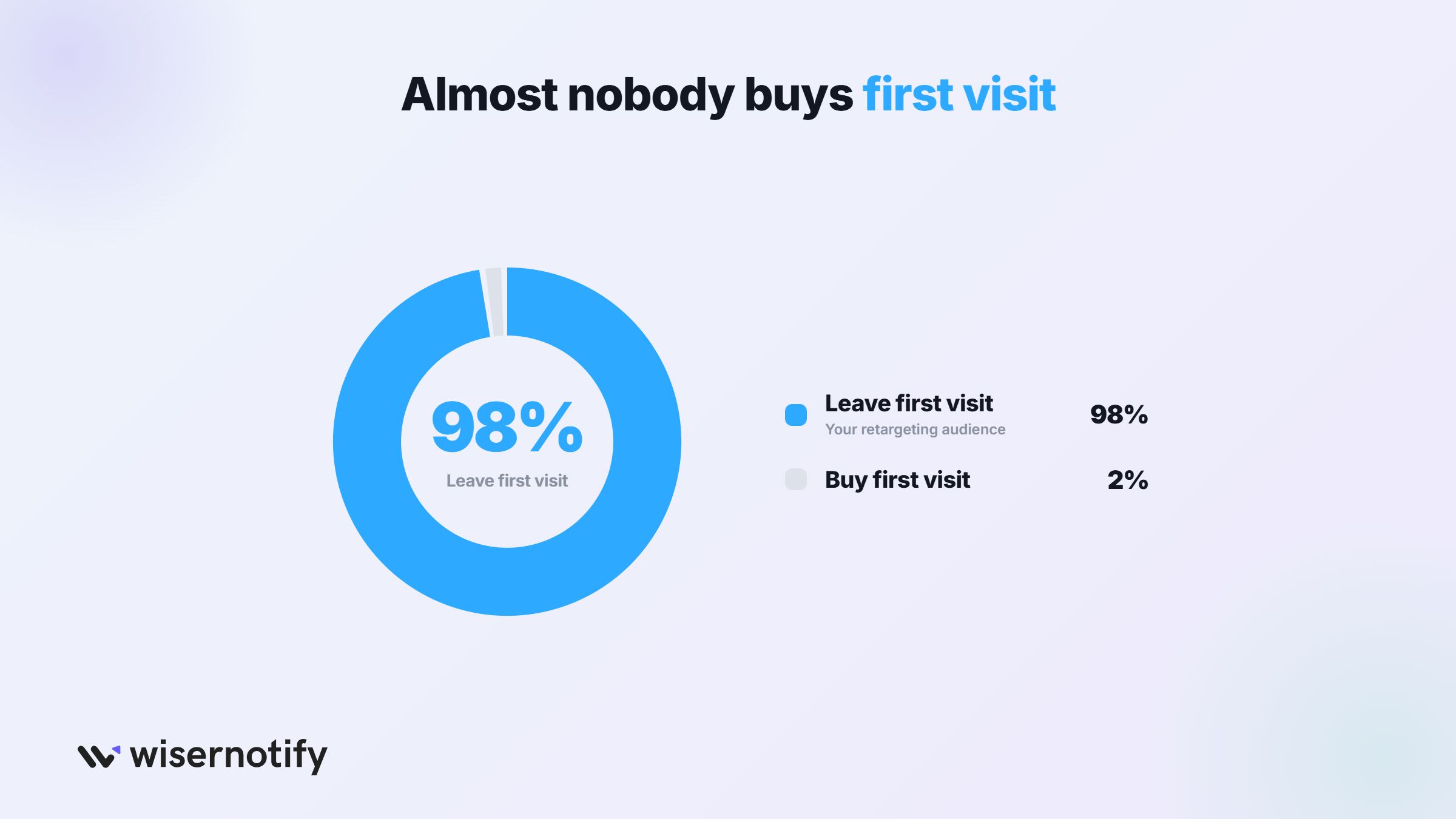
The case for retargeting starts with one uncomfortable fact: almost nobody buys on the first visit.
1. 97% of website visitors leave without converting on their first visit.
2. Only about 2% of shoppers buy the first time they land on a site, which leaves the other 98% as the retargeting audience.
3. The average cart abandonment rate sits just above 70%, so even shoppers who add products mostly walk away.
4. Retargeted visitors convert about 70% more often than cold traffic.
5. The average conversion rate for retargeting campaigns is 3.8%, against 2.2% for campaigns aimed at new audiences.
Retargeting works because it spends money on the only audience that has already shown intent. The scale of that walk-away traffic shows up across all the online shopping statistics.
Boost Conversion Instantly
Add Social Proof & Urgency to your website
What Is a Good Retargeting CTR in 2026?
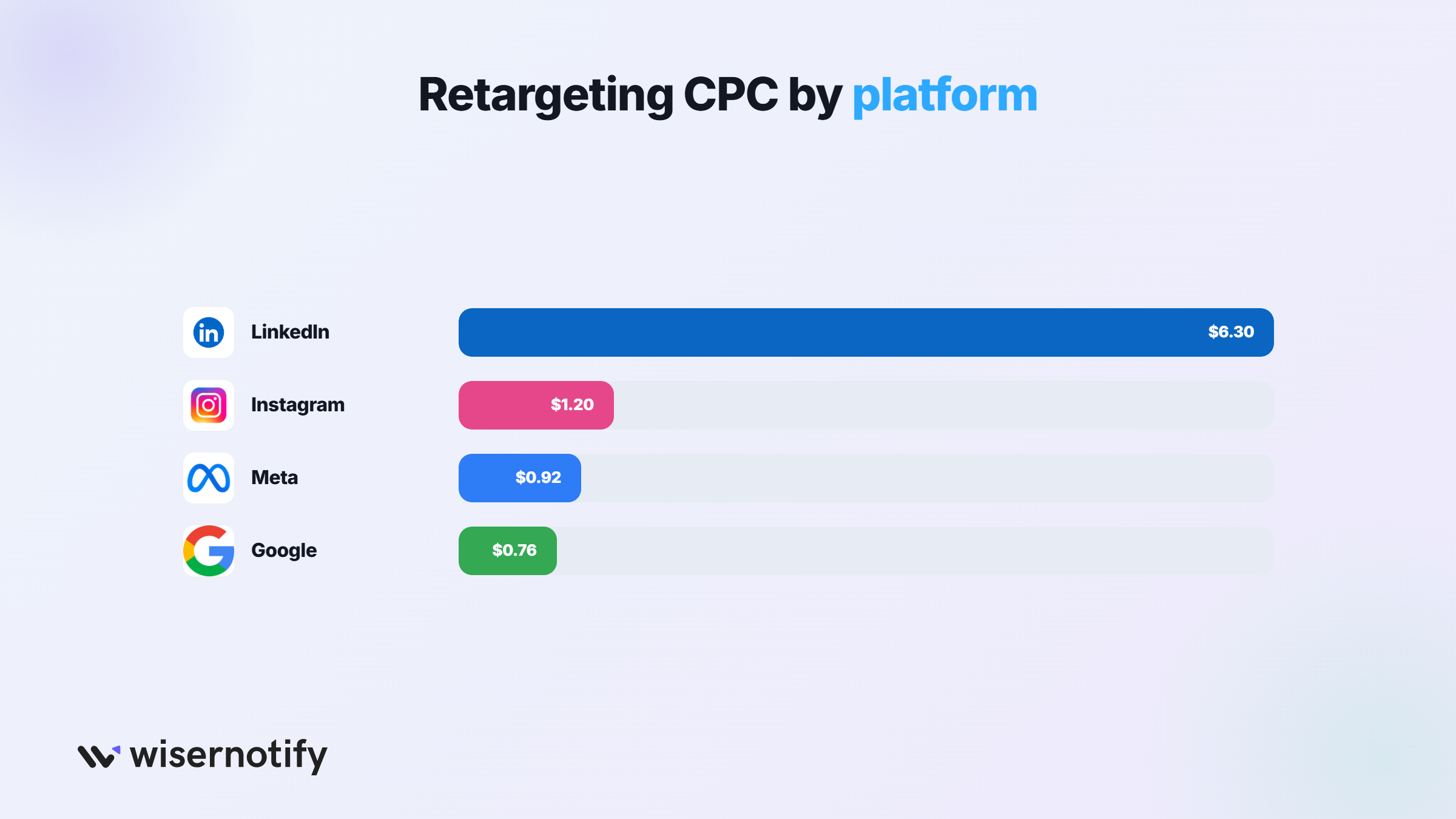
Display retargeting averages about 0.7%, roughly 10 times standard display ads, while search retargeting runs above 5%. Costs vary widely by platform.
6. Retargeted display ads average a 0.7% click-through rate, about 10 times the 0.07% of standard display ads.
7. Search retargeting (RLSA) averages a 5.2% CTR, about 37% higher than regular search ads.
8. The average CPM for retargeting display ads is $5.65, and CPMs rose 18% year over year in early 2026.
9. Average cost per click by platform: Google Display $0.76, Meta $0.92, Instagram $1.20, and LinkedIn $6.30.
10. Overall retargeting CPCs dropped to about $0.95 to $1.25, down from about $1.30 the year before.
11. The average cost per acquisition for retargeting runs $15 to $25, against $30 or more for standard display campaigns.
12. Search retargeting clicks cost about $1.68, about 15 to 22% cheaper than regular search clicks.
13. Around 15% of people who see a retargeting ad later visit the site without clicking it.
The benchmark story is simple: warm audiences click more and cost less per result, and the gap is widest in search.
Retargeting Conversion and ROAS Statistics
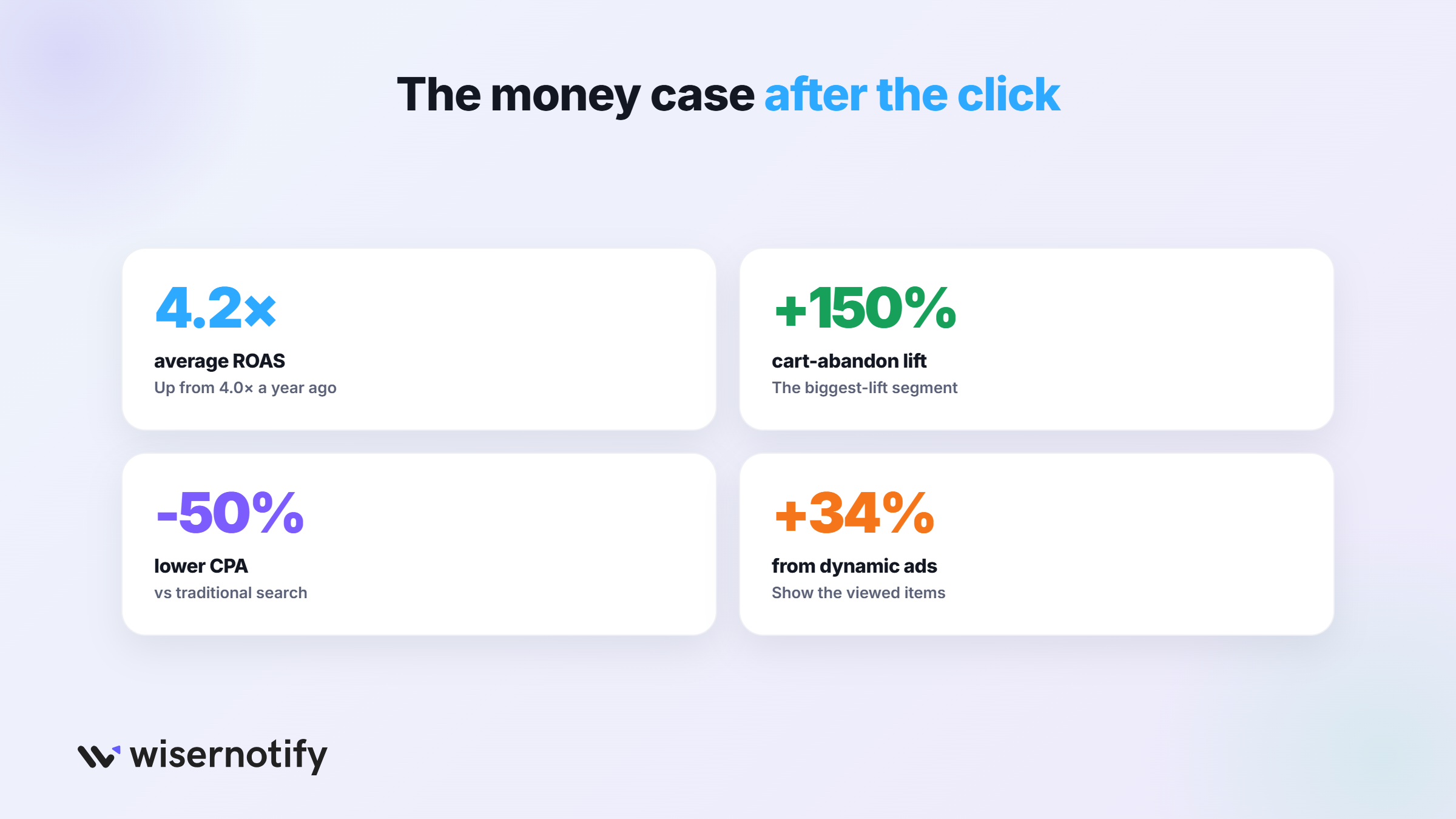
Clicks are the small win. The money case for retargeting is what happens after the click.
14. Retargeting campaigns deliver an average return on ad spend of about 4.2x, up from 4.0x a year earlier.
15. Dynamic product ads, which show the exact items a shopper viewed, convert 34% better than static retargeting ads.
16. Cart abandonment retargeting delivers the biggest lift of any segment, improving conversions by up to 150%.
17. Retargeting cuts cost per acquisition by up to 50% compared with traditional search campaigns.
18. Across industries, retargeting CPAs run 20 to 40% lower than cold-audience campaigns.
19. Personalized retargeting emails lift click rates by about 14% over generic reminder emails.
20. Advertisers pairing retargeting with regular prospecting report up to 4 times better overall ROI than running either alone.
The pattern: the more specific the ad is to what the person actually looked at, the better every number gets. That’s the same mechanism behind these ecommerce personalization statistics.
Platform Statistics: Where Retargeting Money Goes
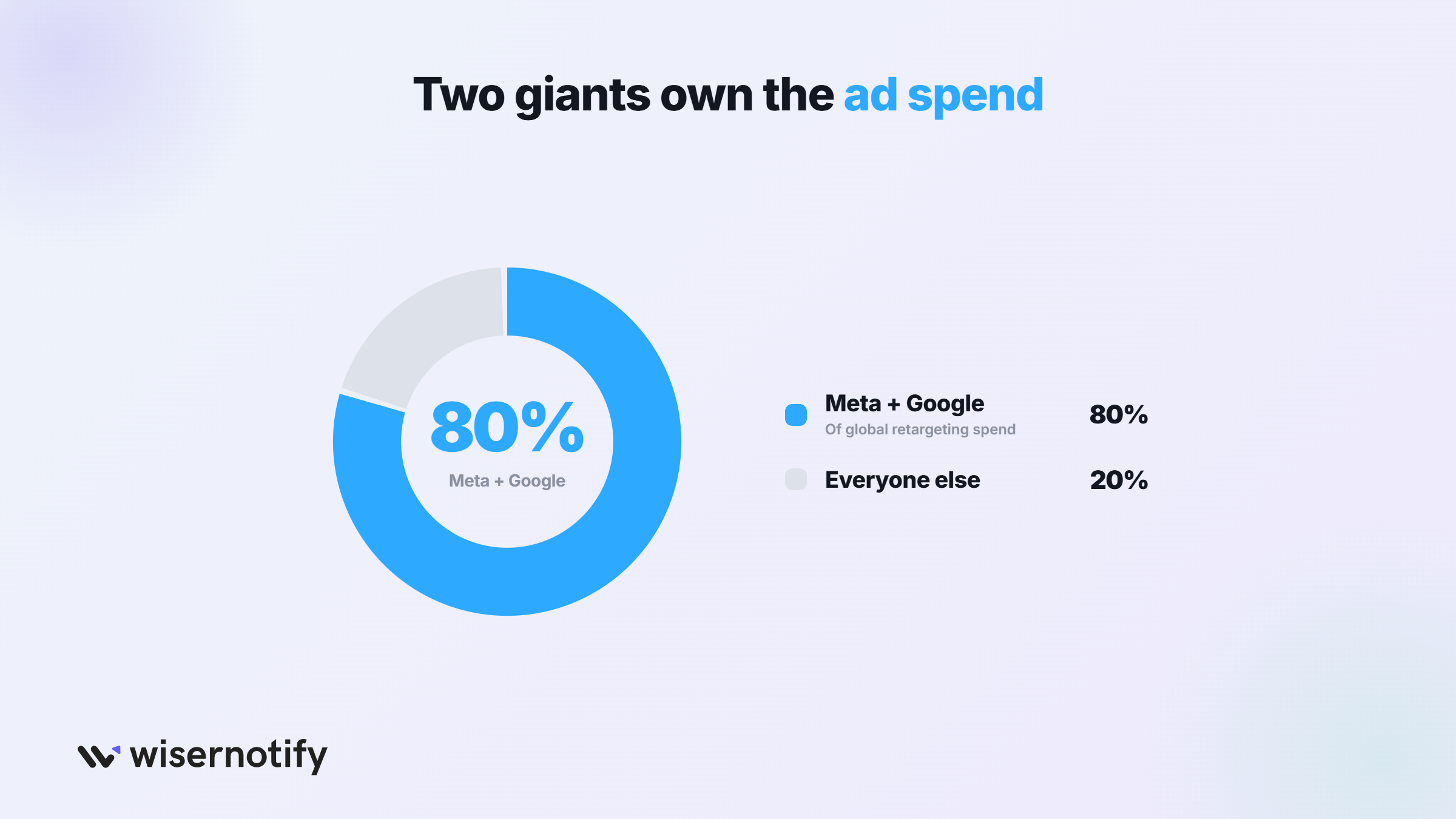
Two companies collect most of the world’s retargeting spend, and mobile is where most of the audience lives.
21. Facebook and Google together account for more than 80% of global retargeting ad spend.
22. 77% of marketers use retargeting as part of their advertising strategy.
23. 54% of B2B companies run retargeting through LinkedIn Ads.
24. About 60% of retargeting ad interactions now happen on mobile devices.
25. Mobile retargeting campaigns convert around 25% better than desktop-only campaigns.
26. 35% of brands put more than 10% of their entire digital ad budget into retargeting.
Platform choice follows the audience: ecommerce lives on Meta and Google, B2B pays the LinkedIn premium, and everything skews mobile, as the mobile commerce statistics keep showing.
Boost Conversion Instantly
Add Social Proof & Urgency to your website
Email and Cart Recovery Statistics
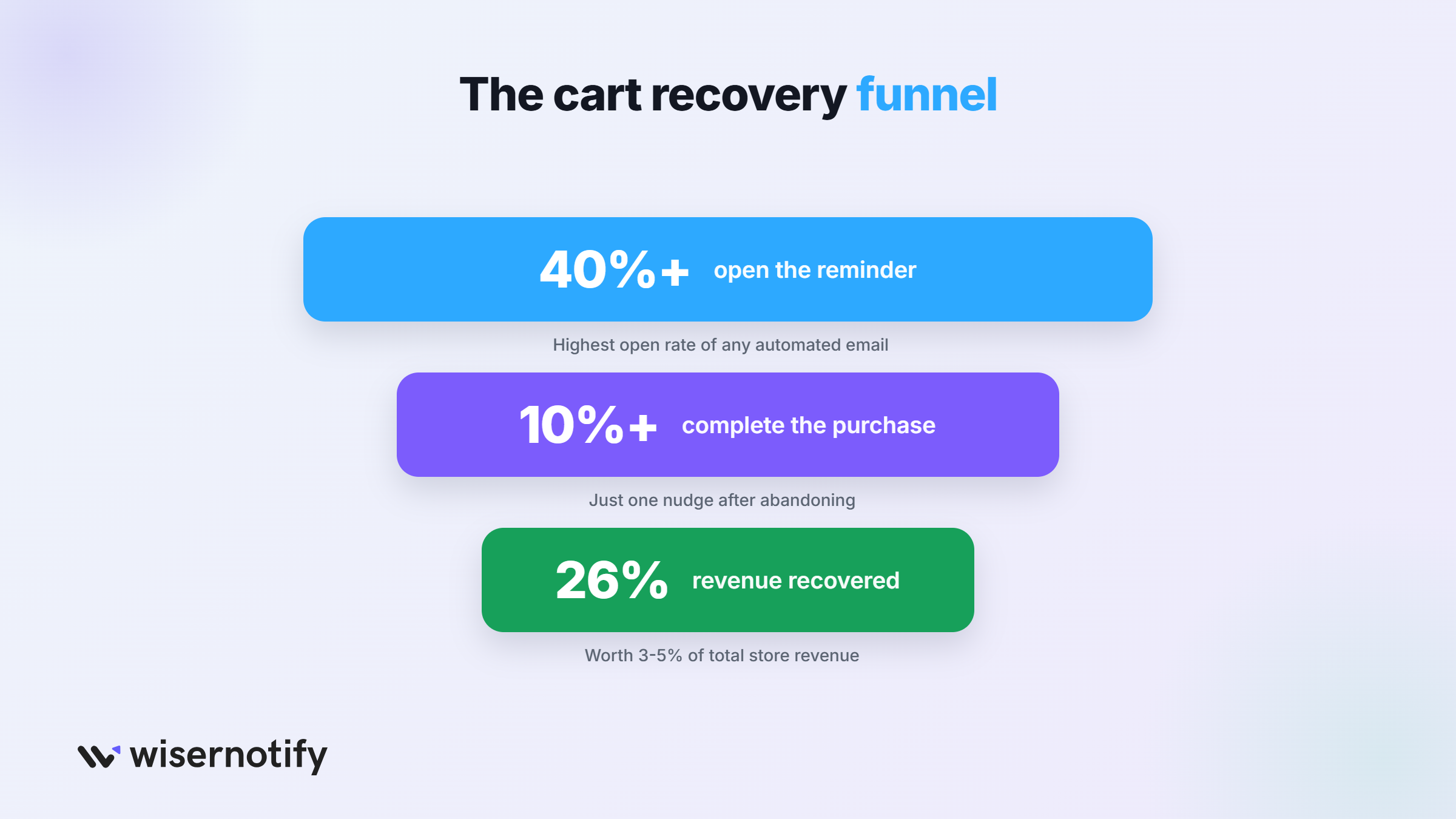
Email is the retargeting channel you own outright, and it recovers revenue no ad platform can touch.
27. Abandoned cart campaigns recover about 26% of otherwise lost revenue.
28. Cart abandonment emails regularly post open rates above 40%, among the highest of any automated email.
29. More than 10% of people who receive a cart reminder email complete their purchase.
30. Cart recovery emails generate roughly 3 to 5% of total revenue for many online stores.
31. Dynamic ads showing the abandoned products recover 10 to 25% of carts on top of what email brings back.
An abandoned cart is the strongest buying signal a store gets. The full picture of why shoppers bail and what brings them back is in these cart abandonment statistics.
Did Privacy Changes Kill Retargeting?
No. Google ended up keeping third-party cookies in Chrome, but about a third of browsing was already cookieless, so retargeting shifted toward first-party data instead of dying.
32. In April 2025, Google officially dropped its plan to remove third-party cookies from Chrome, after four years of delays.
33. Google then shut down most of its Privacy Sandbox ad tools later in 2025, so cookies keep working but the replacement tech is shelved.
34. Safari and Firefox have blocked third-party cookies for years, which means roughly a third of web browsing happens beyond cookie-based retargeting regardless of what Chrome does.
35. Apple’s App Tracking Transparency prompt gets a yes from only about a quarter to a third of iPhone users, which made mobile in-app retargeting audiences much smaller.
36. 88% of marketers now prioritize first-party data such as email lists, accounts, and purchase history for targeting.
37. Despite all of it, 48% of marketers plan to increase retargeting budgets this year.
The short version: cookies survived, but the change in habits stuck. Email lists and customer accounts you own are now the safest base for retargeting.
Boost Conversion Instantly
Add Social Proof & Urgency to your website
AI Changed How Retargeting Runs
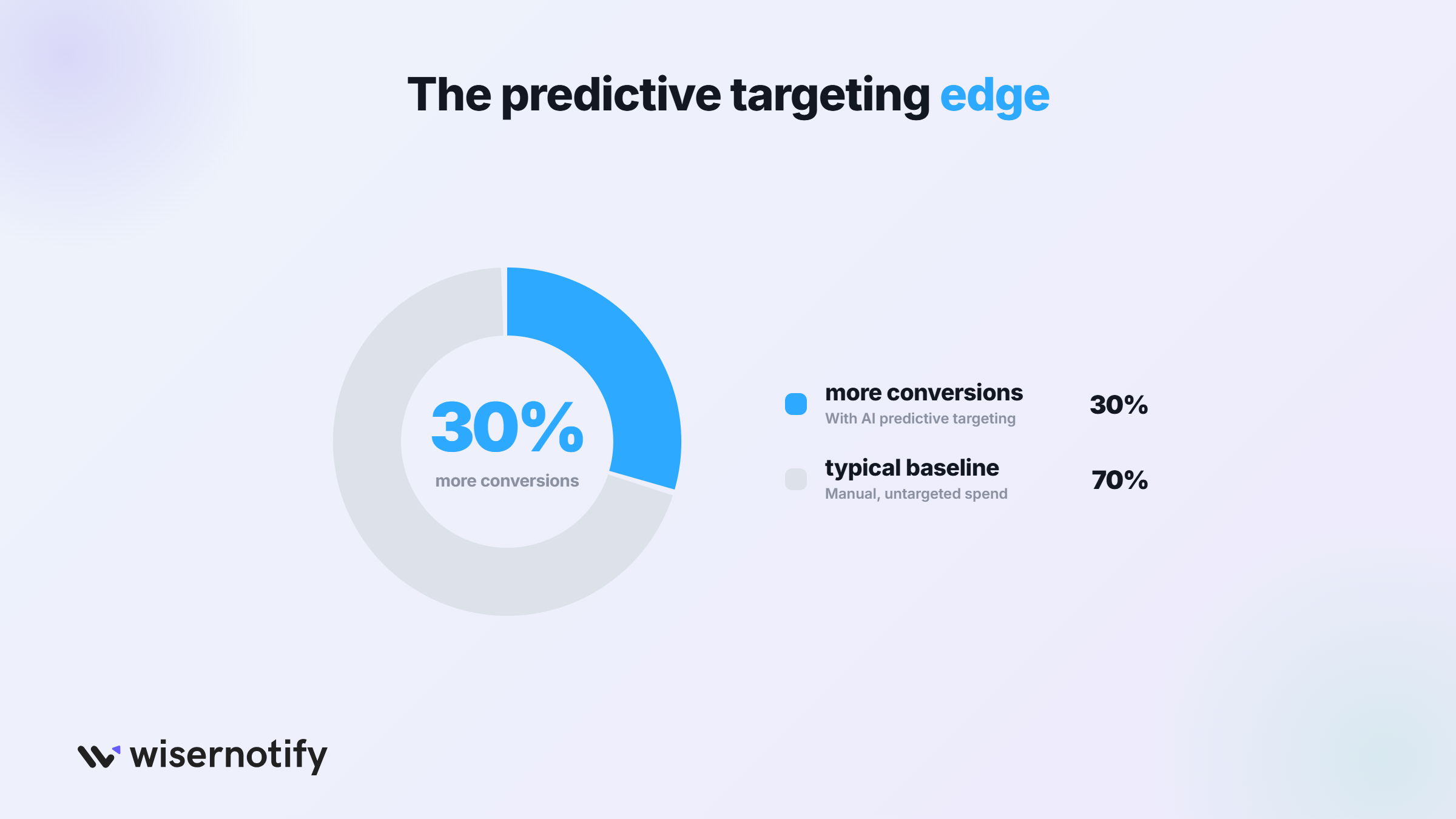
The second quiet revolution: on the big platforms, machines took over most of the targeting decisions.
38. Google’s Performance Max and Meta’s Advantage+ have folded classic manual retargeting into automated audiences, so the platform now decides who sees the ads.
39. AI-based predictive targeting lifts conversion rates by up to 30% by concentrating spend on the visitors most likely to buy.
40. Automated bidding and optimization tools improve overall campaign performance by roughly 20 to 25%.
41. Most buyers need somewhere between 5 and 12 ad views before they convert.
42. Engagement starts dropping once someone has seen the same ad more than 15 to 20 times. After that, people start ignoring the ad.
The marketer’s job now is to feed the platforms good audiences and good ads, cap the frequency, and let the automation do the bidding.
How to Use These Numbers
The data points to a short playbook. Segment by intent first: someone who abandoned a cart is worth a different budget and message than someone who read one blog post.
Use dynamic ads wherever your catalog allows, because showing the exact product converts a third better than generic creative.
Cap frequency before fatigue sets in, build first-party lists so your retargeting survives any future privacy turn, and make the landing page finish the job: a retargeted click that lands on a page with visible reviews, recent purchases, and live activity converts far better than one landing on a plain page.
That’s where social proof and FOMO marketing help close the sale, especially on dedicated ecommerce landing pages.
Boost Conversion Instantly
Add Social Proof & Urgency to your website
Wrap Up
Retargeting still works in 2026. The people who already visited your site, viewed a product, or left a cart are still the easiest audience to convert, and the numbers on this page show it.
What changed is how it runs. Cookies stayed in Chrome but not in other browsers, the ad platforms automated most of the targeting, and first-party data like email lists became the most reliable way to reach past visitors.
If you take three things from this page: collect your own audience data, show people the exact products they looked at, and make sure the page they come back to gives them a reason to trust you.
Sources
Searchlab | SQ Magazine | Spiralytics | DemandSage | Baymard Institute | Google Privacy Sandbox
Frequently Asked Questions
What is retargeting in digital marketing?
Retargeting is an advertising method that shows ads to people who already visited your website or interacted with your brand. It helps bring those visitors back and increases the chances of conversion.
Why are retargeting campaigns effective?
Retargeting campaigns focus on users who already showed interest in a product or service. Because the audience is familiar with the brand, these campaigns usually achieve higher engagement and better conversion rates than regular ads.
How does retargeting improve conversion rates?
Retargeted ads remind visitors about products or pages they viewed earlier. These reminders encourage users to return and complete actions such as purchases, signups, or demo requests.
Which platforms are commonly used for retargeting ads?
Businesses run retargeting ads on platforms such as Google Ads, Facebook, Instagram, LinkedIn, and display advertising networks. Many companies also use email remarketing as part of their retargeting strategy.
How many times should users see a retargeting ad?
Many marketers aim to show retargeting ads about 5–12 times per user each week. This keeps the brand visible without causing ad fatigue or making users ignore the ads.

Krunal Vaghasiya is a marketing tech expert who boosts e-commerce conversion rates with automated social proof and FOMO strategies. He loves to keep posting insightful posts on online marketing software, marketing automations, and improving conversion rates.




 Capterra