


I’ve tested every major review platform on this list. Some I’ve set up for clients, others I’ve used to benchmark against WiserReview’s own review features.
And after 5+ years of working with ecommerce store owners, I can tell you this: picking the wrong review tool costs you more than money. It costs you trust.
Junip is a good platform. Clean design, solid mobile-first forms, and a solid Shopify integration.
But it’s not the only game in town, and depending on your store’s size, platform, or growth stage, it might not be the best fit.
So I put together this list of 9 Junip alternatives I’ve personally evaluated. Not a surface-level roundup.
I’m covering what each tool actually does well, where it falls short, current pricing, and who should (and shouldn’t) use it.
Why Ecommerce Brands Switch From Junip
Before I get into alternatives, here’s what I keep hearing from store owners who’ve outgrown Junip (or never quite fit with it):
Shopify lock-in is the biggest one. Junip only works with Shopify and Shopify Plus. If you’re running WooCommerce, BigCommerce, Squarespace, or a headless setup, Junip isn’t even an option. That’s a dealbreaker for a lot of brands.
Pricing scales fast. Junip’s free plan is limited, and paid plans jump to $29/month (Core), $79/month (Growth), and $299/month (Premium). Features like Google Shopping syndication and AI review summaries are locked behind higher tiers. For a growing store doing 2,000+ orders, you’re paying $79/month before you unlock the features that actually move the needle.
No loyalty or referral programs. Junip does reviews. That’s it. If you want to reward customers for leaving reviews, run a referral program, or build a points system, you’ll need a separate app. That means more monthly costs and more tools to manage.
Limited UGC capabilities. Junip collects photos and videos, but it doesn’t put visual content front and center the way Loox or Fera.ai do. If user-generated content is core to your brand strategy, you might feel held back.
Integration gaps. Junip connects with Klaviyo, Omnisend, and a few others. But deeper integrations with tools like Gorgias, Postscript, or custom marketing stacks? Those are either limited or missing entirely.
What I Look For When Testing Review Platforms
I’ve evaluated 30+ review tools over the past few years. Not from a “read the features page and summarize” angle. I actually install them, set up collection flows, check widget loading times, and test how they handle real customer data.
Here’s the checklist I use:
Review the collection rate. How many customers actually leave a review when asked? This varies wildly between platforms. Junip claims an industry-leading 10%+ submission rate, and from what I’ve seen, that’s accurate. Any alternative needs to match or beat that number; you’re leaving social proof on the table.
Widget performance. I run Lighthouse audits on every review widget I test. A widget that adds more than 1.5 seconds to page load is hurting your product page conversions more than it’s helping with social proof. Several tools on this list load asynchronously with CDN delivery, which keeps things fast.
Migration path. Most stores switching from Junip have existing reviews they can’t afford to lose. I check whether each tool supports direct import from Junip (not just generic CSV) and whether star ratings, photos, and verified buyer badges are preserved during the transfer.
Google Shopping compatibility. If you’re spending money on Shopping ads, your reviews need to feed into Google’s Seller Ratings program. Not every free plan includes this. I note which tools gate this feature behind premium tiers.
Customization vs. complexity. Some tools give you 200 customization options but require CSS knowledge to use them. Others look polished out of the box but don’t let you change much. The sweet spot is somewhere in between, and each tool on this list handles it differently.
Quick Comparison: 9 Best Junip Alternatives (2026)
| Platform | Best For | Starting Price | Free Plan | Platforms |
|---|---|---|---|---|
| WiserReview | Multi-platform stores want a fast setup | $9/mo | Yes | Shopify, WooCommerce, BigCommerce, WordPress |
| Judge.me | Budget-conscious Shopify stores | $15/mo | Yes (unlimited) | Shopify, WooCommerce |
| Yotpo | Enterprise brands wanting full-stack retention | $79/mo | Yes (50 orders) | Shopify, BigCommerce, WooCommerce |
| Stamped.io | DTC brands wanting reviews + loyalty | $23/mo | Yes | Shopify, BigCommerce |
| Loox | Visual-first brands relying on photo UGC | $9.99/mo | No (free trial) | Shopify |
| Okendo | Shopify Plus brands focused on branding | $19/mo | Yes | Shopify |
| Fera.ai | Stores wanting reviews + social proof widgets | $9/mo | Yes | Shopify, BigCommerce, Wix |
| Growave | Shopify stores want all-in-one engagement | $49/mo | Free trial | Shopify |
| Ali Reviews | Dropshipping stores importing AliExpress reviews | $14.95/mo | Free trial | Shopify |
9 Best Junip Alternatives I’ve Tested (2026)
1. WiserReview
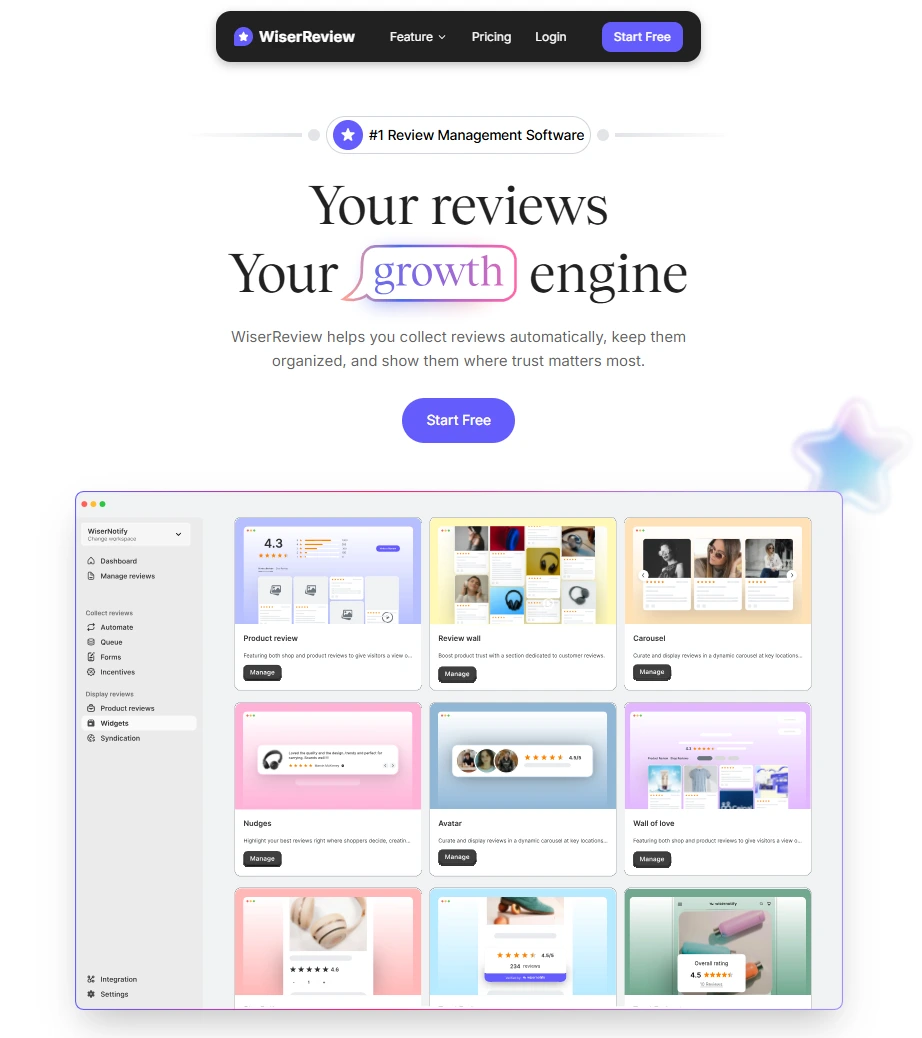
I built WiserReview, so I’ll be upfront about that. But I’m including it here because it genuinely solves the biggest pain points store owners bring to me about Junip.
The #1 complaint I hear? “I’m not on Shopify, so Junip doesn’t work for me.” WiserReview runs on Shopify, WooCommerce, BigCommerce, WordPress, and custom stores. No platform lock-in.
What it does well:
- Collects text, photo, and video reviews through automated email, SMS, and WhatsApp requests
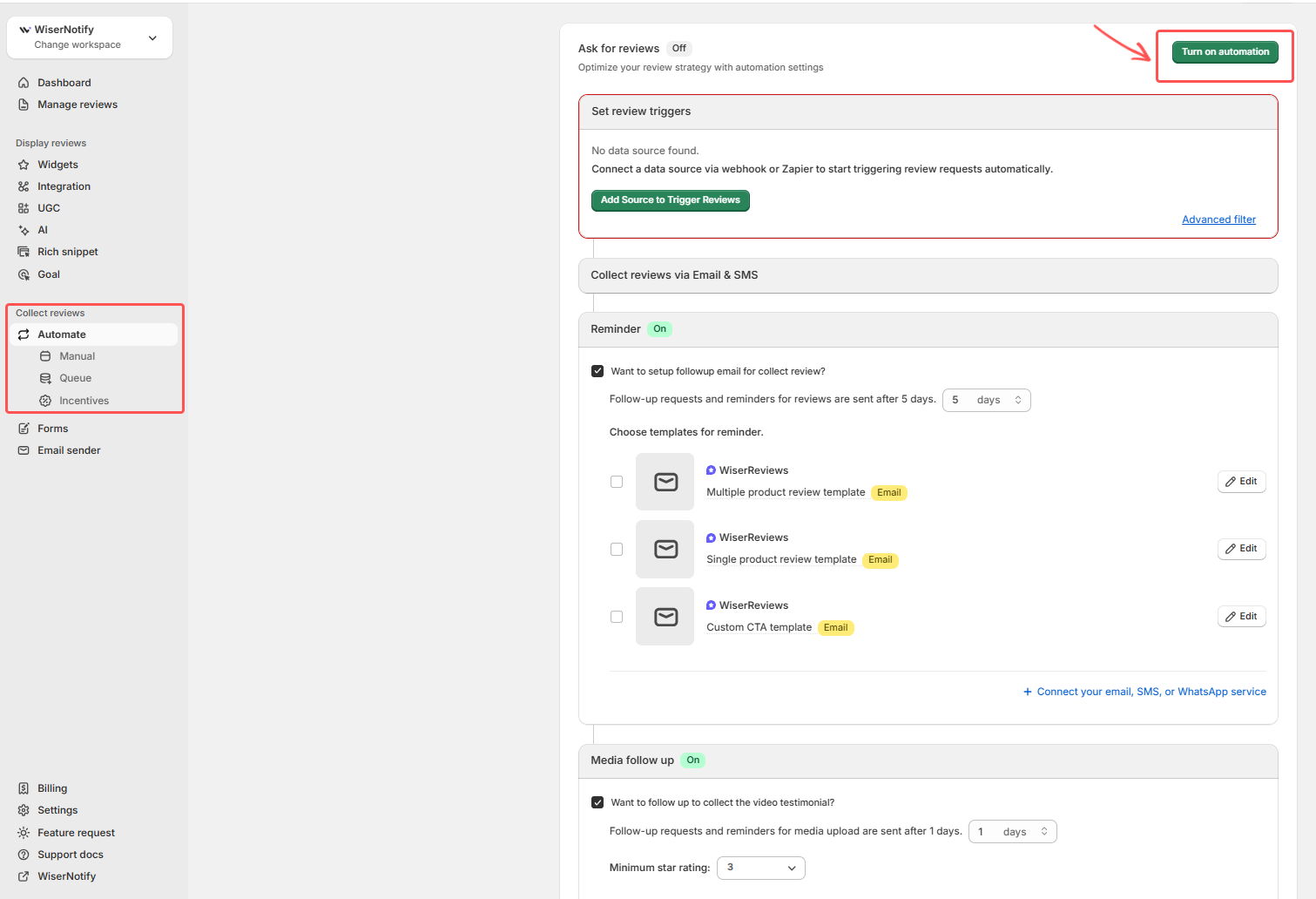
- Review widgets load fast (CDN-delivered, auto-resized images) even on media-heavy product pages
- One-click migration from Junip, Judge.me, Loox, or any platform (CSV import included)
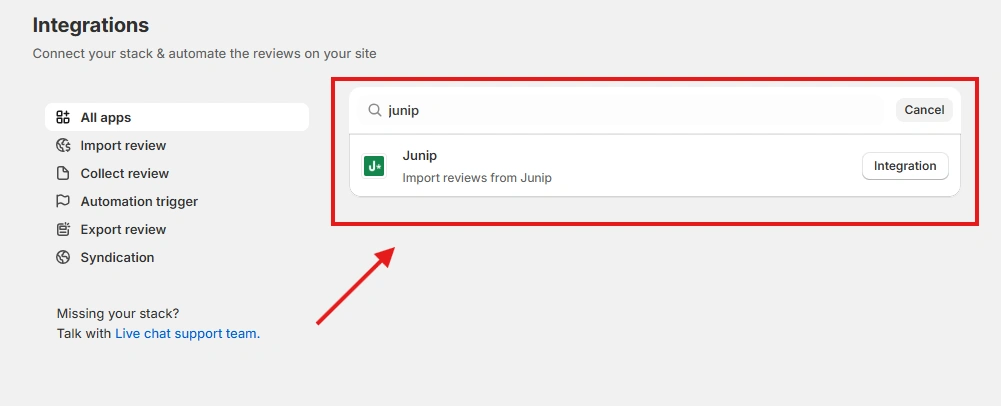
- Google Shopping review feed built into paid plans, not locked behind premium tiers
- Product-rich snippets for SEO without extra configuration
- Conversion-focused widgets that customers actually stop and read

Where it falls short: The free plan has sending limits, so high-volume stores will need to upgrade. And while the widget customization is solid, if you want pixel-perfect design control, Okendo offers greater granularity.
Pricing: Free plan available. Paid plans start at $9/month.
Rating: 4.7/5
Who should pick this: Stores on WooCommerce, BigCommerce, or multiple platforms. Also a strong fit for Shopify brands that want Google Shopping syndication without paying $79+/month.
2. Judge.me

If budget is your main concern, Judge.me is hard to beat. Their free plan includes unlimited review requests, photo and video reviews, and on-site carousels.
I’ve recommended it to dozens of store owners who were just starting out.
What they nail: The forever-free plan is genuinely useful, not a stripped-down teaser. You get enough to build real social proof without spending anything. Their widgets load fast, and the $15/month paid plan unlocks Google Shopping, Q&A, and full widget customization.
The catch: Judge.me’s interface feels dated compared to Junip’s sleek design. If brand aesthetics matter to you (and they should), the out-of-the-box widgets need more work to look polished. I’ve also noticed the customization options, while extensive, require more CSS tinkering than most store owners want to deal with.
Pricing: Free (unlimited). Awesome plan at $15/month.
Rating: 4.8/5
Who should pick this: New Shopify stores, budget-conscious brands, or anyone who just needs solid review collection without the bells and whistles.
3. Yotpo

Yotpo is the enterprise player in this space.
If you’re doing millions in revenue and need review syndication to Google, Meta, TikTok, and even retail partners like Target and Walmart, Yotpo is built for that.
What they nail: Their AI-powered review summaries are genuinely useful for products with hundreds of reviews. Shoppers can scan a quick AI summary instead of scrolling through pages. The syndication network is unmatched. No other tool pushes your reviews to as many sales channels.
The catch: Yotpo’s pricing isn’t transparent. Their free plan caps at 50 monthly orders, which is basically a trial. Most real features require a sales conversation, and I’ve heard from store owners that costs can balloon quickly. The setup is also more complex than Junip’s plug-and-play approach.
Pricing: Free (50 orders). Paid plans require a demo call. Published plans start around $79/month.
Rating: 4.6/5
Who should pick this: Mid-size to enterprise brands already spending $200+/month on marketing tools, where review syndication across retail channels is a priority.
Also check: 10 Best Yotpo Alternatives I’ve Found in 2026 (Tested)
4. Stamped.io
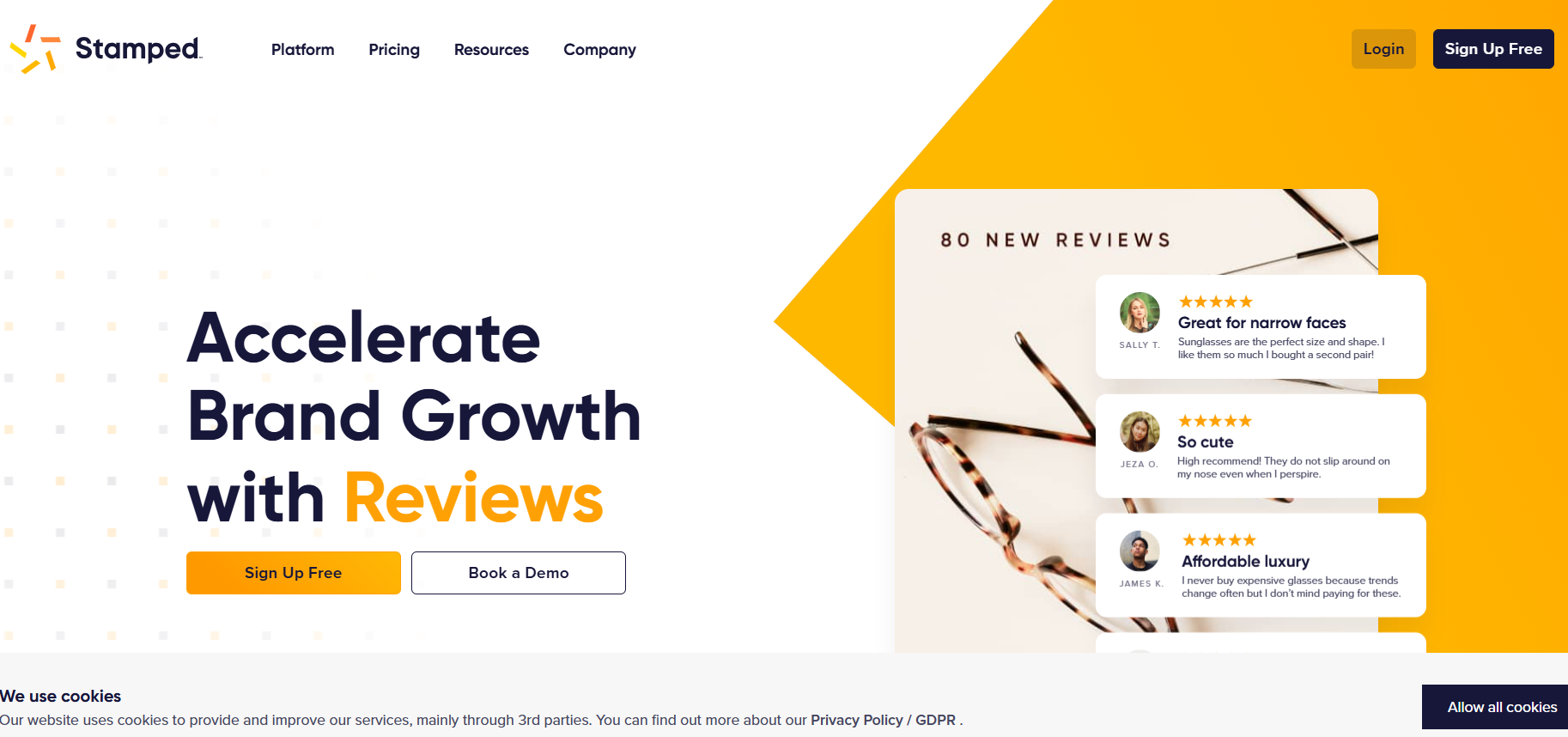
Stamped sits in that sweet spot between Judge.me simplicity and Yotpo’s complexity. It’s a reviews-first platform with built-in loyalty and referral features that actually work.
What they nail: The combination of reviews, NPS surveys, loyalty programs, and referrals in one dashboard is genuinely convenient. I’ve seen DTC brands save $50-80/month by replacing separate review and loyalty apps with Stamped. Their community Q&A feature is also underrated. It lets shoppers answer each other’s questions on product pages, which builds trust in a way reviews alone can’t.
The catch: Video reviews are gated to higher plans. And while the loyalty features are solid, they’re not as deep as dedicated loyalty platforms like Smile.io. You’re getting good-enough versions of several tools, which work for most brands but might frustrate power users.
Pricing: Free plan available. Paid plans start at $23/month.
Rating: 4.7/5
Who should pick this: DTC brands doing 200-2,000 monthly orders who want reviews and loyalty in one tool without Yotpo’s pricing.
Also see: I Tested 9 Stamped.io Alternatives for Ecommerce (2026)
5. Loox

Loox is what happens when a review platform decides that visuals are everything. And honestly? For certain brands, they’re right.
What they nail: If your products look great in photos (think fashion, beauty, home decor, food), Loox’s gallery layouts are the best in the space. The review display widgets are beautiful out of the box, which is rare. They also have a referral feature that lets reviewers share discount codes with friends. Smart move, and it actually drives word-of-mouth without feeling pushy.
The catch: Loox is Shopify-only. No WooCommerce, no BigCommerce. Video reviews are locked behind the $34.99/month plan. And I’ll be honest, the text review experience feels like an afterthought. If you need detailed written feedback (attributes, specific product aspects), Okendo does this better.
Pricing: Starts at $9.99/month. No free plan (14-day trial).
Rating: 4.9/5
Who should pick this: Shopify-only brands where product photography and visual UGC drive purchasing decisions. Think apparel, skincare, food, and lifestyle products.
6. Okendo

Okendo is the premium choice for Shopify and Shopify Plus stores that care deeply about brand identity. Their attribute-based reviews collect specific details (fit, quality, scent, texture) that generic review forms miss.
What they nail: The review forms are the most detailed I’ve seen. Shoppers can rate individual product attributes, upload photos, and provide structured feedback that’s actually useful for product teams. The Google Seller Ratings integration works well, and the widget loads quickly.
The catch: Like Junip, Okendo only supports Shopify. Pricing starts at $19/month and jumps to $119/month for the “Growth” plan, where most of the interesting features live. For the price, I’d expect multi-platform support.
Pricing: Starts at $19/month. Growth plan at $119/month.
Rating: 4.7/5
Who should pick this: Shopify Plus brands in fashion, beauty, or wellness where detailed product attributes (fit, shade, texture) matter for purchasing decisions.
Also check: I Tested 10 Okendo Alternatives for Ecommerce (2026)
7. Fera.ai

Fera is the only platform on this list that combines product reviews with real-time social proof notifications. Those little popups showing “Sarah from Austin just purchased…” alongside your product reviews? That’s Fera’s sweet spot.
What they nail: The combination of reviews and live social proof notifications creates a trust loop that’s hard to replicate with separate tools. They also support Shopify, BigCommerce, AND Wix, which gives them broader platform coverage than Junip. Incentivized review requests (offering discounts for reviews) are built in and easy to set up.
The catch: The social proof popups can feel aggressive if not configured carefully. I’ve seen stores where the constant notifications actually distract from the shopping experience. The review widget design is decent but not as polished as Loox or Okendo.
Pricing: Free plan available. Paid plans start at $9/month.
Rating: 4.6/5
Who should pick this: Small to mid-size stores on Shopify, BigCommerce, or Wix who want review collection and social proof in one tool.
8. Growave
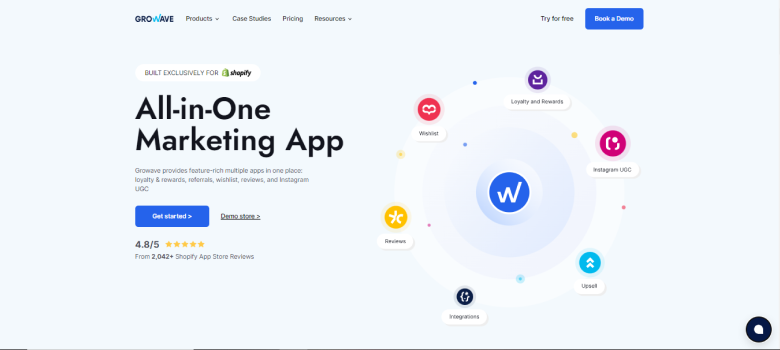
Growave bundles reviews, loyalty, referrals, wishlists, and social login into a single Shopify app. It’s the Swiss Army knife approach.
What they nail: If you’re currently running 3-4 separate Shopify apps for reviews, loyalty, wishlists, and social login, Growave replaces them all. That alone can save you $ 100+ per month in app fees. The wishlist feature (with automatic back-in-stock notifications) is something no other review platform offers.
The catch: The “jack of all trades, master of none” concern is real here. Growave’s reviews aren’t as in-depth as those of dedicated review tools, the loyalty program isn’t as flexible as Smile.io, and the referral feature isn’t as polished as ReferralCandy. You’re trading depth for convenience.
Pricing: Starts at $49/month with a free trial.
Rating: 4.6/5
Who should pick this: Shopify stores spending $100+/month on multiple engagement apps that want to consolidate into one tool.
9. Ali Reviews
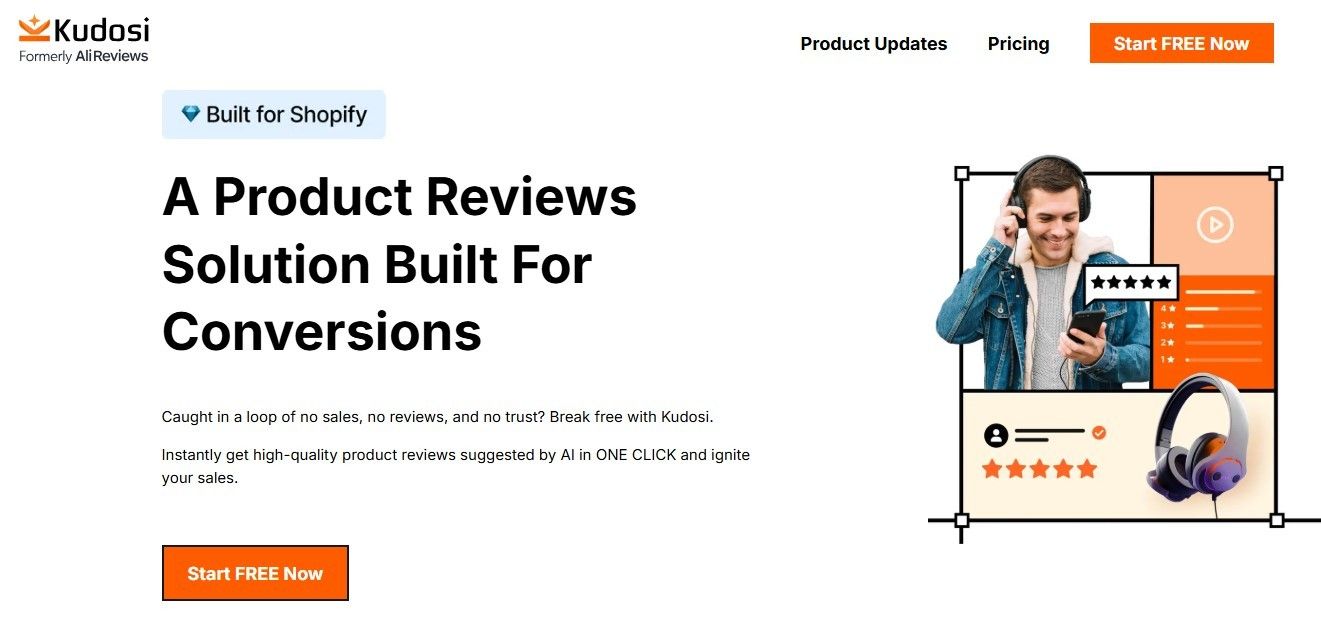
Ali Reviews is purpose-built for one thing: importing reviews from AliExpress into your Shopify store. If you’re running a dropshipping business, this is the tool.
What they nail: The AliExpress import is smooth. You can pull photo reviews, filter by rating, and get hundreds of reviews on new products within minutes. For dropshippers, this is the fastest way to build initial social proof for products with no reviews on your store.
The catch: Once you move beyond dropshipping and start building your own brand, Ali Reviews feels limiting. The organic review collection features (post-purchase emails, on-site forms) are basic compared to Junip or WiserReview. And imported reviews aren’t “real” customer feedback about your store’s experience. Serious brands eventually outgrow this.
Pricing: Starts at $14.95/month with a free trial.
Rating: 4.6/5
Who should pick this: Dropshipping stores sourcing from AliExpress that need quick social proof on new product listings.
How to Pick the Right Junip Alternative for Your Store
After setting up review systems for hundreds of stores, here’s the decision framework I use:
Start with your platform. If you’re not on Shopify, your options narrow fast. WiserReview, Judge.me, and Fera.ai support multiple platforms. Yotpo and Stamped cover BigCommerce too. Everything else? Shopify only.
Then check your budget. Under $15/month? Judge.me’s free plan or WiserReview’s starter. Under $50/month? Stamped, Fera, or Okendo’s base plan. Over $100/month? Yotpo or Growave make sense if you need loyalty and reviews bundled.
Think about what matters most:
- Visual UGC priority: Loox (Shopify) or WiserReview (multi-platform)
- Reviews + loyalty in one: Stamped or Growave
- Enterprise syndication: Yotpo
- Detailed product attributes: Okendo
- Fastest free plan: Judge.me
- Reviews + social proof popups: Fera.ai
- Dropshipping: Ali Reviews
Don’t overthink the migration. Every tool on this list supports CSV import. Most can pull your existing Junip reviews directly. The switch itself takes less than an hour for most stores. The real question isn’t “can I migrate?” but “will I get better results after?”
Common Mistakes When Switching Review Platforms
I’ve helped enough brands switch that I know where things go wrong. Here are the traps:
Choosing based on features you’ll never use. The store doing 200 orders/month doesn’t need Yotpo’s enterprise syndication. Buy what matches your current stage, not your 5-year plan.
Ignoring widget speed. A review widget that adds 2 seconds to your page load costs you conversions. Always check the Lighthouse/PageSpeed impact before committing. Junip is fast. Make sure whatever you switch to is at least as fast, if not faster.
Skipping the review migration. Your existing reviews are valuable SEO assets. Rich snippets, star ratings in search results, and product page trust signals. Don’t start from scratch if you don’t have to.
Forgetting about Google Shopping. If you run Google Shopping ads, your review tool needs to support Google’s review feed. Not every free plan includes this. Check before you commit.
Paying for loyalty features you already have. If you’re already using Smile.io or LoyaltyLion, you don’t need Stamped or Growave’s built-in loyalty. Pick a reviews-only tool and save money.
My Final Take on Junip Alternatives
Look, Junip isn’t a bad tool. Their mobile-first review forms are genuinely well designed, and the Shopify integration is clean.
If you’re a Shopify-only brand doing under 500 orders/month and you just need basic review collection, Junip’s Core plan at $29/month is a solid pick.
But here’s what I tell store owners who ask me directly:
If you’re on WooCommerce or BigCommerce, Junip’s not even in the conversation. WiserReview or Judge.me are your best bets, depending on budget.
If you want reviews AND loyalty without managing multiple apps, Stamped.io gives you the best balance of features and price.
If visual content drives your brand and you’re on Shopify, Loox makes your reviews look better than anything else on the market.
If you’re an enterprise brand spending serious money on multi-channel marketing, Yotpo’s syndication network is unmatched.
And if you’re just starting out with a tight budget? Judge.me’s free plan is the obvious starting point. You can always upgrade later when you know exactly what you need.
The power of customer reviews as a conversion driver isn’t going anywhere. If anything, it’s getting stronger as shoppers become more skeptical of brand claims.
Whatever tool you pick, just make sure you’re actually collecting and displaying reviews, because every day without social proof on your product pages is money left on the table.


