
How to Get More Reviews for Your Cleaning Company
Most cleaning companies have five or six Google reviews and cannot work out why. The work is good, clients stay for years, nobody complains. The reviews just never show up.
It is because cleaning is invisible. Your client walks in, everything is where it should be, and they get on with their evening. Nobody writes a review about a thing not being a problem.
You have one advantage nothing else in this list has, though. You see the same people every week.
Why Cleaning Companies Get Fewer Reviews
- Good work is invisible. A great meal gets photographed. A clean kitchen just looks normal, which is the whole point of it.
- You are usually not there. Most jobs happen while the client is at work, so there is no moment where someone says thank you in person.
- They are buying trust, not cleaning. Somebody is getting a key to their house. Reviews are the only proof that is a safe idea, and they count for more than your price.
- Nobody asks the regulars. Six months into a weekly clean, they would write you a great review. They have just never been asked.
How to Get More Reviews for Your Cleaning Company
Eleven that work for cleaning specifically, roughly in the order they make a difference.
1. Ask after the third or fourth clean
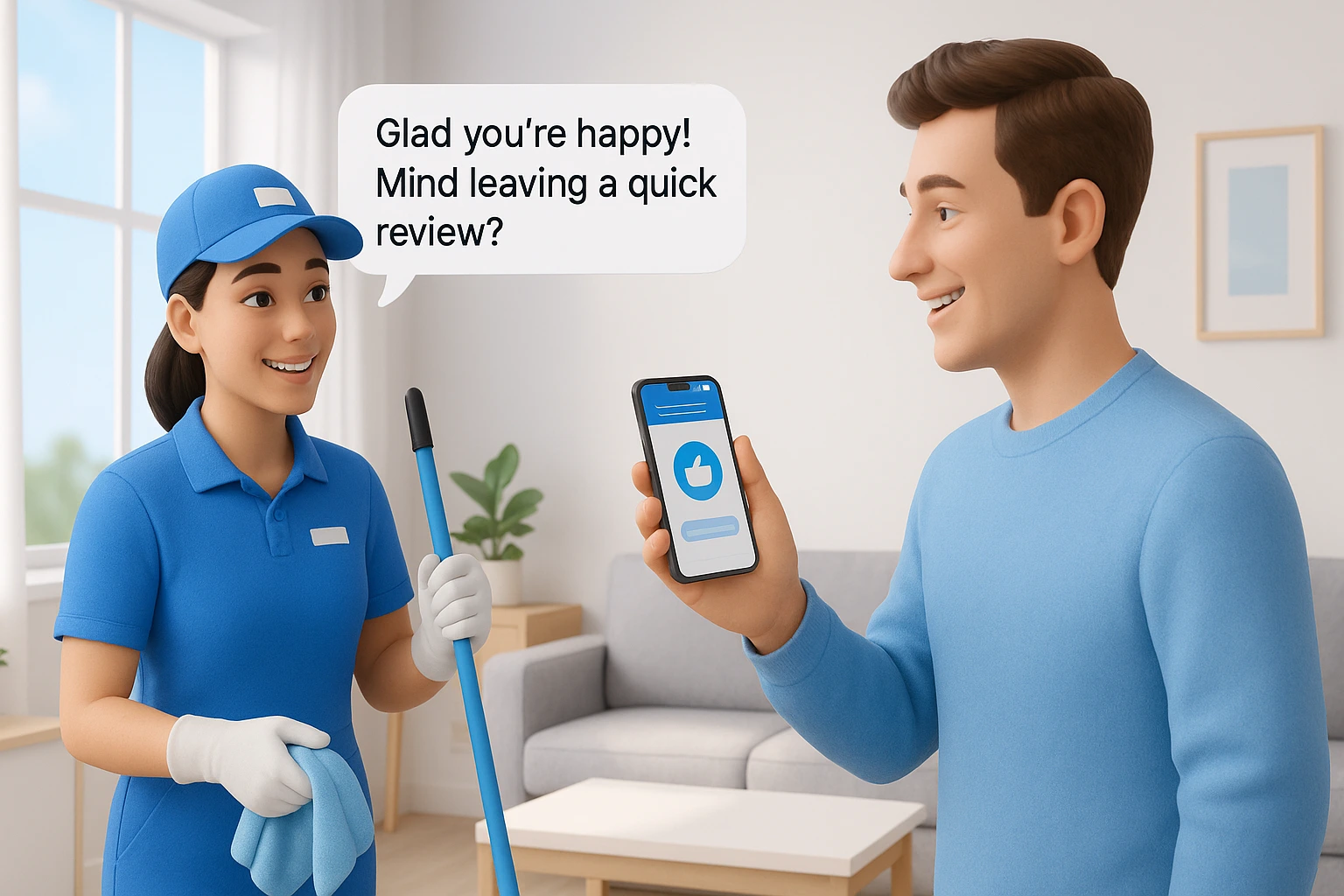
Every guide says ask straight after the job. For cleaning that is too soon. One visit tells a client nothing about whether you show up next week.
By the fourth visit they know you turn up, and that is what they will write about. It beats “did a good job” by a mile.
For one-off deep cleans and end of tenancy, ask the same day, while the difference is still visible.
2. Leave a review card in the house
You are in their home and they are not. That is a card on the kitchen worktop, not an email.
Leave a small card with a QR code where they will spot it walking in. That catches them when the house looks its best. Five words and a code will do. Our guide to the Google review QR code covers making one.

All your reviews in one place
Collect reviews, manage every response, and display them where they matter most.
3. Send a text, not an email
Your clients are not sitting at a desk all day. Email gets buried under forty others.
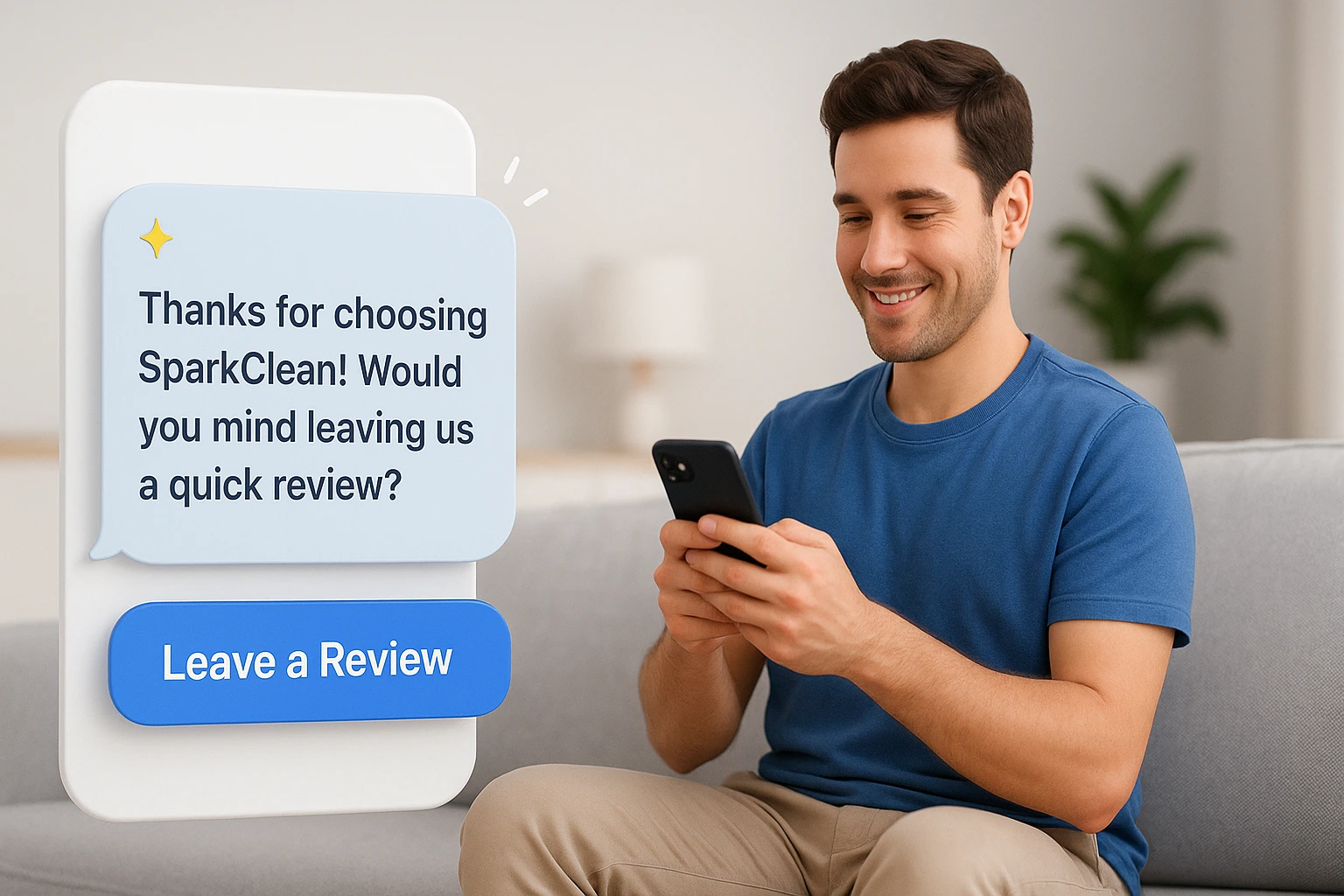
A short text an hour after the job lands while the house is still fresh. One line, one link, and only to numbers you have consent to use. There is wording worth copying in our guide to review text messages.
4. Let the cleaner ask, not the office
If your team meets clients face to face, the person who did the work is the one who should ask. A request from Maria who has cleaned their house for two years is a different thing from an email from admin@.
Give the team one sentence and a card. Do not tie it to a bonus, because that turns it into a sales pitch and clients hear the difference.
5. Ask the clients you have had longest
This is the quickest win there is, and hardly anyone does it. Your oldest clients have never been asked, because you started working together before reviews were on your mind.
Pull your client list, pick the twenty who have been with you longest, and message each one personally. Someone two years in will write you a better review than anyone new, because they can vouch for consistency.
6. Give clients something to write about
Cleaning reviews come out short because clients cannot think what to say. Ask an open question and you get “great service, thank you”.
Ask a narrow one instead. What made the difference this week? Anything you would want done differently? The answers give them the sentence, and you can ask if they will put that on Google.
7. Pick one platform per client
Four options gets you nothing. One link, chosen for where your work comes from:
- Google for nearly everyone, because it is what shows when somebody searches cleaners near them.
- Facebook if your bookings come through local groups, which for domestic cleaning they often do.
- Checkatrade, Bark or Yell if that is where your enquiries arrive.
- Nextdoor for domestic work in one area, where neighbours ask each other first.
Check where last month’s enquiries came from rather than guessing.
8. Trigger requests off the job, not the calendar
Doing this by hand stops after a fortnight. Trigger it off a completed job in your scheduling software instead.
Three settings that matter:
- Fire on job completion, with an hour or two of delay so it arrives once they are home.
- Only ask a recurring client once a quarter. Weekly clients get asked every week otherwise, which is how you lose them.
- Skip anyone who complained, and deal with that yourself first.
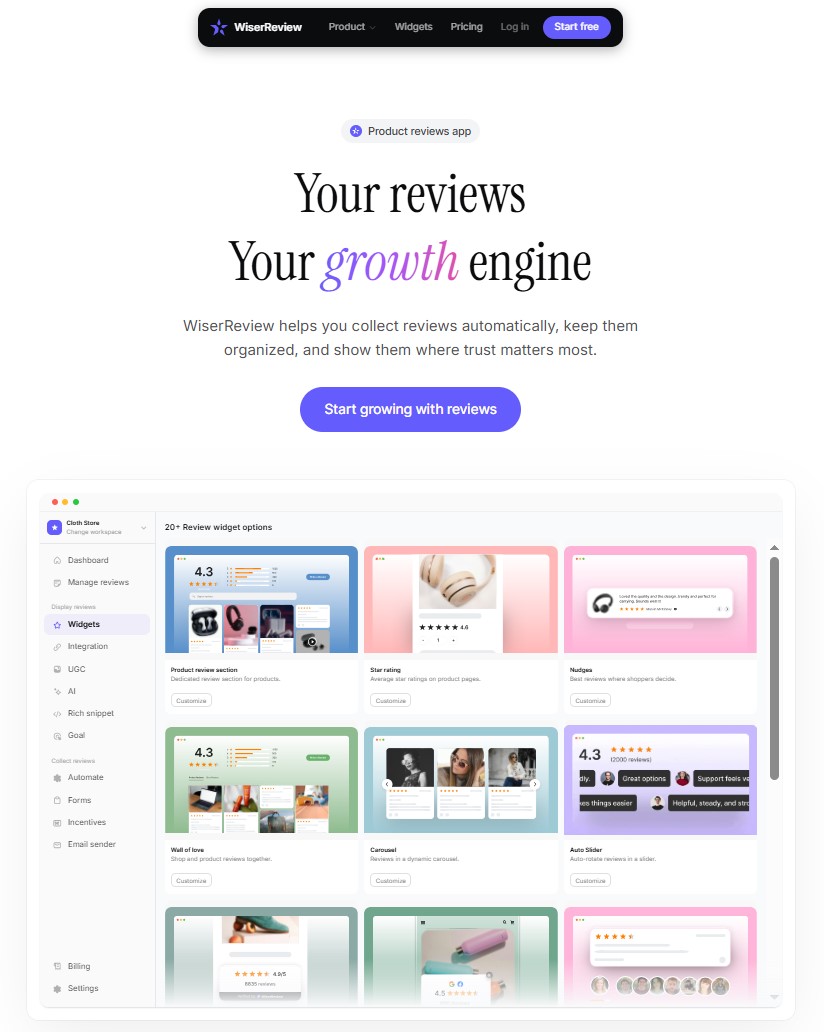
Most review software is built for shops, where somebody buys once and gets asked once. Recurring work needs more than that, which is what WiserReview is set up for:
- Collecting. Requests by text, email or WhatsApp once a job is marked done, plus the QR code for the card you leave behind.
- Getting more back. The throttle so regulars are not asked weekly, and a reminder that only goes to people who did not reply.
- Managing. One inbox for the lot, so you are not signing into four sites to answer people.
- Showing them. Widgets that pull the results onto your site so nothing gets retyped.
All your reviews in one place
Collect reviews, manage every response, and display them where they matter most.
9. Answer every review, especially the bad ones
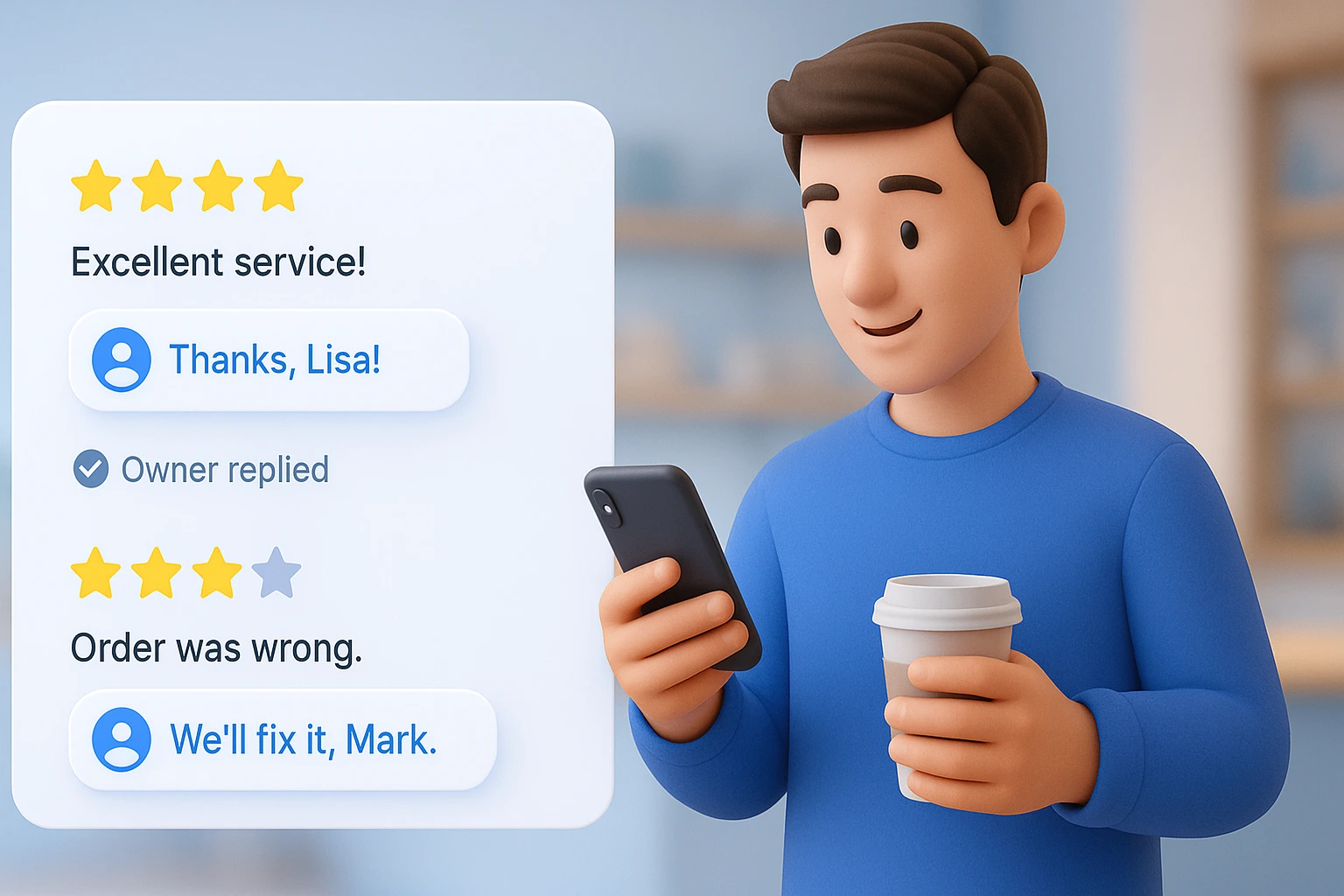
Cleaning complaints are usually one missed thing on one visit. Leave it unanswered and it is the first thing your next enquiry reads.
Reply with what you did about it. Someone deciding whether to give you a key is judging how you handle a problem far more than the problem itself. We have worked through replies to bad reviews for products if you want a starting point.
10. Reward the review, never the rating
- Fine: a prize draw for anyone who leaves a review, credit against next month’s clean, a small charity donation.
- Not fine: anything that only pays out on five stars, or a discount promised for a good one.
Google bans incentivised reviews outright, and the FTC now fines businesses for fake reviews and for hiding real ones. Reward the act, never the score.
11. Put the reviews where people are choosing
A reviews page on your website that nobody visits does nothing. Put them next to your prices and your booking form, which is where somebody decides.
Name the service and the area with each one. “Great job” is worth little. “Fortnightly clean in Didsbury, same two cleaners every time” tells the next enquiry exactly what they want to know.
How WiserNotify Works for Cleaning Companies
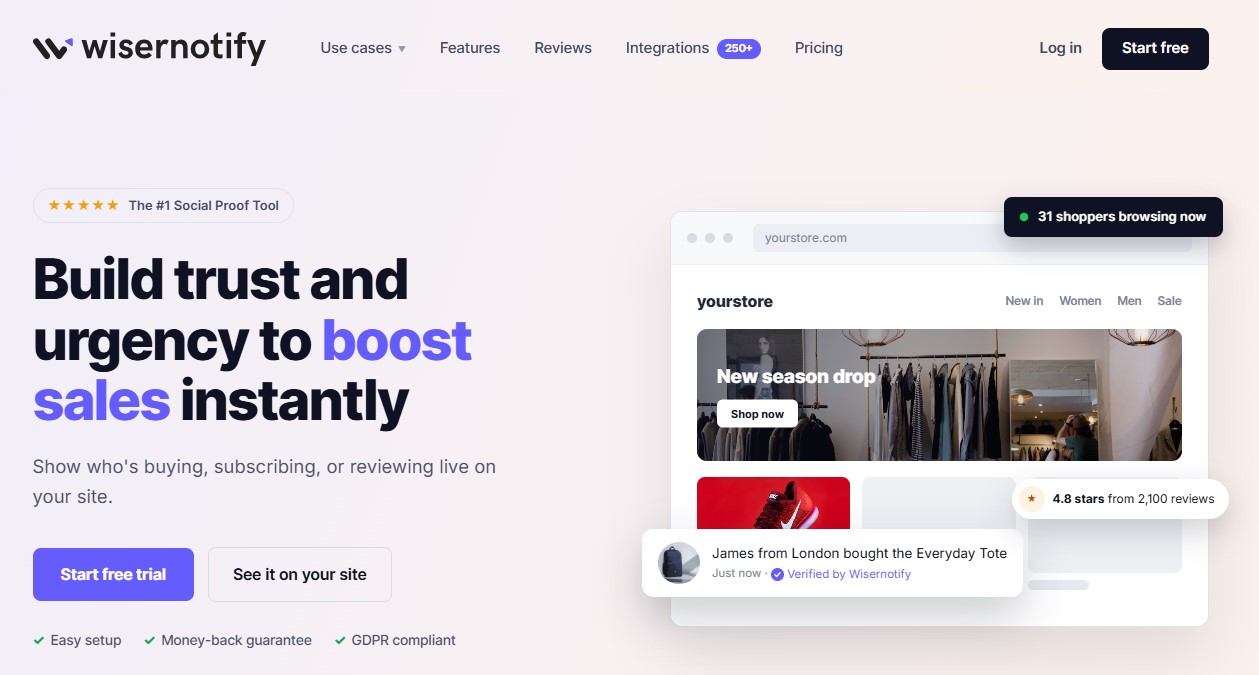
Somebody looking for a cleaner has four local sites open and nothing to choose between them. The one that looks busy gets the call.
WiserNotify shows real activity from your site while they are deciding.
- Recent bookings. “Someone in Chorlton booked a fortnightly clean an hour ago.”
- Review notifications. Your Google and Facebook ratings in the corner instead of buried at the bottom.
- Live viewers. Useful when you are running a promotion or a seasonal deep clean offer.
- Announcement bars. Slots left this month, a new area you cover, holiday scheduling.
Every number comes from your own data, so a quiet week looks like a quiet week. The inline messaging guide shows where each one goes on a real page.
Build trust & FOMO
Highlight real-time activities like reviews, sales & sign-ups.


Wrap Up
Wait until you are a regular fixture, leave a card in the house, and text rather than email. Those three fix most of it.
Then ask your longest-standing clients, throttle the regulars, and answer everything that comes in.
Also check: How to ask for reviews, with examples
Related Guides
- How to get more reviews for your salon
- How to get more reviews for a dental clinic
- How to get more reviews for an event planning company
- How to add Facebook reviews to your website
Frequently Asked Questions
When should a cleaning company ask for a review?
After the third or fourth visit for recurring clients, once they know you turn up reliably. For one-off deep cleans, ask the same day while the difference is visible.
Why do cleaning companies get so few reviews?
Because good cleaning is invisible. Clients come home, notice nothing wrong, and get on with their evening. Nobody writes a review about a thing not being a problem.
How often can I ask a recurring cleaning client?
Once a quarter at most. Weekly clients asked every week will stop reading your messages, and some will cancel.
Which review platform matters most for a cleaning business?
Google for nearly everyone, since it shows when someone searches cleaners near them. Add Facebook if your work comes through local groups, or Checkatrade and Bark if enquiries arrive there.
What should I do about a bad review for one missed clean?
Reply with what you did about it. Anyone deciding whether to give you a key is judging how you handle a problem more than the problem itself.

Krunal Vaghasiya is a marketing tech expert who boosts e-commerce conversion rates with automated social proof and FOMO strategies. He loves to keep posting insightful posts on online marketing software, marketing automations, and improving conversion rates.




 Capterra