I’ve spent five years building trust tools at WiserNotify, and I’ve tested virtually every type of trust badge across hundreds of client sites.
The conclusion is simple: trust badges work, but only when you use the right ones in the right places.
But here’s what most trust badge guides won’t tell you: slapping a random “Secure Checkout” icon on your footer doesn’t do much.
The badges that actually move the needle are specific, well-placed, and matched to the concerns your visitors have at each stage of the buying journey.
This guide covers the 12 trust badges that consistently improve conversions, exactly where to place each one, and the mistakes I see stores make over and over.
What Are Trust Badges?
trust badges
don’t trust the site with their credit card
trust signals
A trust badge is a small icon or seal displayed on a website to signal that the site is safe, legitimate, and reliable.
You’ve seen them everywhere: the padlock icon near the checkout button, the Visa and Mastercard logos at the bottom of a payment page, the “30-Day Money Back Guarantee” shield on a product page.
Trust badges work because they tap into a psychological principle called transference of trust.
When you display a recognizable logo from a company your visitors already trust (like PayPal, Norton, or the BBB), some of that trust transfers to your site.
For ecommerce checkout pages specifically, trust badges address the number one reason people abandon carts: they don’t feel safe entering their payment information.
Research shows that 19% of cart abandonments occur because shoppers don’t trust the site with their credit card information.
Why Trust Badges Matter for Conversions
70% cart abandonment
Low credibility for new brands
Visitors leave quickly
Weak brand reputation
Up to 42% more conversions
Instant trust from known logos
Longer sessions, more exploring
Stronger reputation over time
Trust badges aren’t just decoration. They solve real conversion problems at every stage of the buying journey.
They reduce cart abandonment. Nearly 70% of online shopping carts are abandoned before checkout. A significant portion of those abandonments happen because shoppers don’t feel safe. Security badges and payment logos directly address that fear.
They build instant credibility for new brands. If you’re a new store or a brand people haven’t heard of, trust badges borrow credibility from organizations people already know. An SSL badge from DigiCert or a payment badge showing Visa means your unknown store is associated with a known, trusted entity.
They improve the overall user experience. When visitors feel safe, they explore more, spend more time on your site, and are more likely to return. Trust is the foundation of every other conversion metric.
They strengthen brand reputation over time. Displaying badges from third-party endorsements (BBB accreditation, Google Reviews, industry certifications) signals that your business takes customer security seriously.
The key insight from five years of testing: trust badges don’t just increase sales on the page where they appear.
They create a compound effect across your entire site.
When visitors trust your checkout, they also trust your product pages, your brand story, and your future emails.
Also check: 70+ Social Proof Examples That Build Trust
Build urgency
Add floating offers with countdown timer & coupon code.
12 Best Trust Badges That Actually Increase Sales
I’ve organized these by category so you can pick the ones that match your business type and customer concerns.
Every ecommerce site should have at least one badge from each category.
Ecommerce Trust Badges
1. Free Shipping and Returns Badge

Unexpected shipping costs are the number one reason shoppers abandon carts. A free shipping badge eliminates that uncertainty before it becomes an objection.
The most effective approach is to place this badge directly on product pages near the price and again on the checkout page.
When visitors see “Free Shipping” before they even add an item to the cart, it reduces friction in the purchase decision.
If you offer conditional free shipping (like “Free shipping over $50”), display that threshold clearly. Conditional free shipping badges can increase average order value because shoppers add items to qualify for free shipping.
Best placement: Product pages (near price), cart page, checkout page
2. Secure Checkout Badge

A secure checkout badge tells visitors their payment information is encrypted and protected. This is the single most important trust badge for any site that processes payments.
The badge typically shows that your site uses SSL encryption (the padlock icon) and often includes the name of the certificate authority: DigiCert, GlobalSign, or Comodo.
Visitors may not know what SSL means, but they recognize these logos and associate them with safety.
To get a legitimate, secure checkout badge, purchase an SSL certificate from a certificate authority.
Most hosting providers include one for free. Once installed, the CA provides a badge you can display on your checkout pages.
Best placement: Checkout page (near payment form), product pages (below “Add to Cart” button), website footer
Build trust & FOMO
Highlight real-time activities like reviews, sales & sign-ups.
3. Money-Back Guarantee Badge

A money-back guarantee removes the biggest objection in online shopping: “What if I don’t like it?”
When shoppers know they can get a refund, the perceived risk of buying drops significantly.
The more specific your guarantee, the more effective it is. “30-Day Money-Back Guarantee” works better than just “Money-Back Guarantee.”
“60-Day No-Questions-Asked Refund” works even better because it’s more generous and reduces the mental effort required to return.
I’ve seen stores increase conversion rates by 15-20% just by adding a clear money-back guarantee badge on their product pages.
The key is to make the policy visible, not buried on a Terms page nobody reads.
Best placement: Product pages, checkout page, “About Us” page
4. Accepted Payment Methods Badge

Displaying logos of accepted payment methods (Visa, Mastercard, PayPal, Apple Pay, Google Pay) does two things: it tells shoppers what they can pay with, and it borrows trust from those brands.
When a first-time visitor sees the PayPal logo on your checkout page, they’re thinking, “PayPal protects buyers, so my money is safe here.”
That association is powerful, especially for stores that don’t yet have strong brand recognition.
Display all the payment methods you accept. Don’t hide options.
The more recognizable logos a visitor sees, the more trust signals they’re receiving.
Best placement: Checkout page, website footer, product pages
Build trust & FOMO
Highlight real-time activities like reviews, sales & sign-ups.
5. Customer Review and Rating Badge

Review badges show your store’s average rating from platforms like Google, Trustpilot, or your own review system.
They’re among the most powerful trust signals because they reflect real customer experiences, not just your brand’s promises.
A Spiegel Research Center study found that displaying reviews can increase conversion rates by up to 270% for higher-priced products.
The effect is strongest when the reviews include photos or videos from real customers.
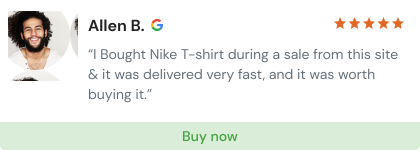
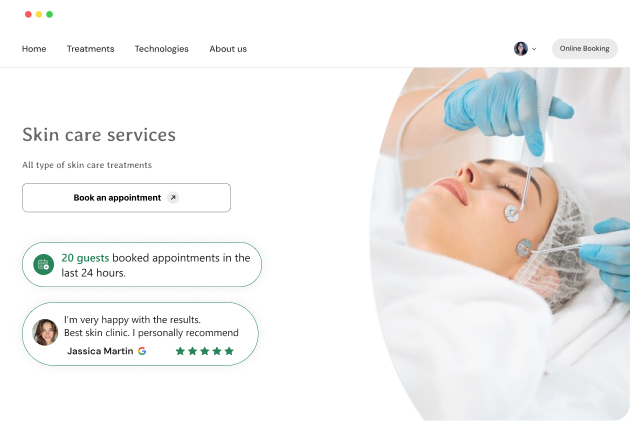
You can display review badges as star ratings on product pages, aggregate review scores in the footer, or use review notification widgets that show recent reviews in real time. Dynamic review badges that update automatically are more effective than static screenshots because visitors can see they’re up to date.
Tools like WiserNotify let you pull reviews from Google, Trustpilot, and other platforms and display them as live notifications on your site.
This approach combines traditional trust badges with social proof marketing, which is significantly more powerful than either strategy alone.
Best placement: Product pages, homepage, landing pages, checkout sidebar
Security Trust Badges
6. SSL Certificate Badge

An SSL certificate encrypts data between a visitor’s browser and your server. Without it, browsers display “Not Secure” warnings that instantly kill trust.
Most modern hosting providers include free SSL certificates. Once installed, you get the padlock icon in the browser’s address bar.
But you can also display a dedicated SSL badge from providers like DigiCert, Comodo, or Let’s Encrypt on your pages.
The SSL badge matters most for pages where visitors enter personal information: checkout, registration, contact forms, and account creation.
Best placement: Checkout page, registration forms, contact pages, footer
7. PayPal Verified Badge

PayPal is one of the most trusted payment brands globally.
If you accept PayPal, displaying the PayPal Verified badge tells visitors their transactions are protected by PayPal’s buyer protection program.
This badge is especially effective for international transactions where buyers may not trust unfamiliar payment processors.
PayPal’s dispute resolution process gives shoppers confidence that they’ll get their money back if something goes wrong.
Best placement: Checkout page, payment section, footer
Build trust & FOMO
Highlight real-time activities like reviews, sales & sign-ups.
8. Norton/McAfee Security Badge

Third-party security badges from Norton, McAfee, or TRUSTe signal that your site has been scanned for vulnerabilities and meets security standards.
These carry significant weight because the brands are widely recognized.
A study by CXL found that the Norton Secured seal was the most trusted trust mark among consumers, followed by Google Trusted Store and BBB Accredited Business.
These badges typically require a subscription to the security provider’s scanning service.
The investment is worth it for high-traffic ecommerce stores where even a small percentage improvement in conversion rate translates to significant revenue.
Best placement: Checkout page, homepage footer, anywhere sensitive data is collected
Website Trust Badges
9. Third-Party Endorsement Badge (BBB, ISO)

Endorsement badges from recognized organizations such as the Better Business Bureau (BBB), ISO certifications, or industry-specific accreditations signal to visitors that a reputable third party has vetted your business.
BBB accreditation is particularly powerful in the US market. An A+ BBB rating displayed on your site signals that your business meets ethical standards and resolves customer complaints.
ISO certifications work well for B2B companies where compliance and quality standards matter.
The key with endorsement badges: only display them if you’ve actually earned them.
Fake endorsement badges are a legal risk and, if discovered, destroy the trust you’re trying to build.
Best placement: Homepage, “About Us” page, footer
10. “As Featured In” Media Badge

If your brand has been covered by recognizable publications (Forbes, TechCrunch, Business Insider, or even industry-specific publications), displaying their logos creates an association between your brand and those trusted outlets.
This works because of authority bias: people trust brands that respected media outlets have acknowledged.
Even if the coverage was just a brief mention, the logo creates a halo effect.
Format these as a horizontal strip of logos below your hero section or on your “About” page. Keep them grayscale for a clean, professional look that doesn’t distract from your main content.
Best placement: Homepage (below hero), “About Us” page, landing pages
11. Satisfaction Guarantee Badge

A satisfaction guarantee goes beyond a money-back guarantee. It promises that you’re committed to making the customer happy, even if that means replacing a product, offering a discount, or going above what’s expected.
This badge works because it shifts the risk from the buyer to the seller. When a visitor sees “100% Satisfaction Guaranteed,” they’re thinking: “Even if something goes wrong, they’ll make it right.”
For service businesses and SaaS companies, satisfaction guarantee badges are especially important because the “product” is intangible. Customers can’t try before they buy, so the guarantee reduces the perceived risk of making a commitment.
Best placement: Product pages, pricing pages, checkout page
12. Social Proof and Real-Time Activity Badges

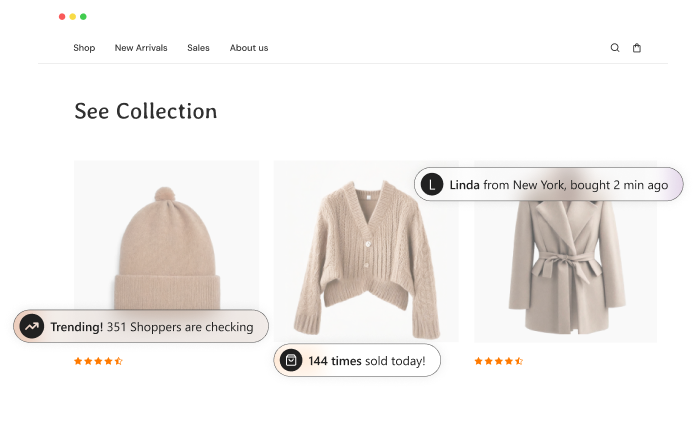
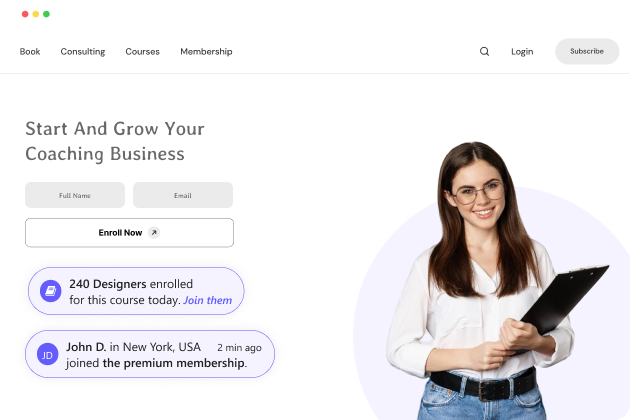
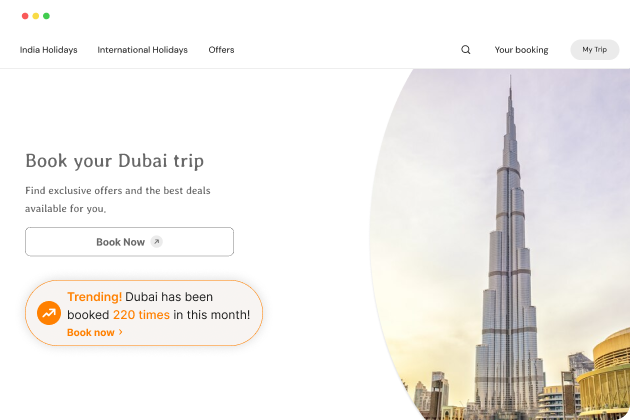
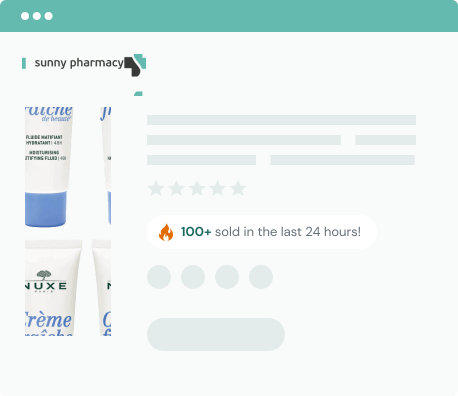
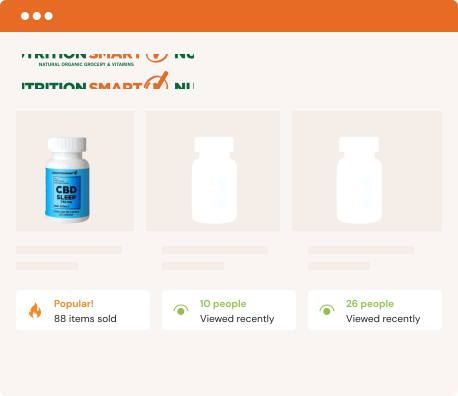
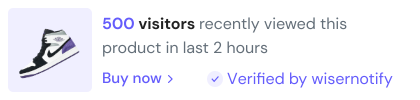
Social proof badges go beyond static icons. They show live data: “23 people bought this today,” “142 visitors viewing this page,” or “Rated 4.8/5 from 500+ reviews.”
These dynamic signals create urgency and trust simultaneously.
The reason dynamic social proof outperforms static badges is recency.
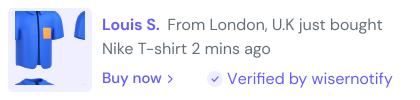
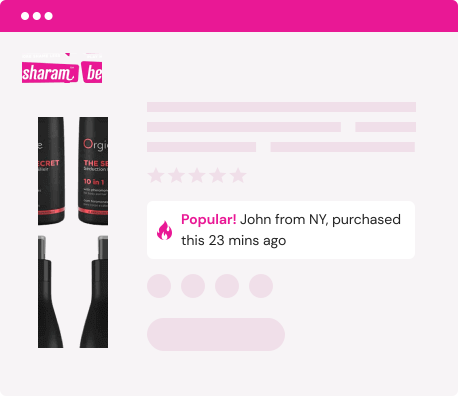
A static “Trusted by 10,000+ customers” badge could be years old. A real-time notification showing “Sarah from London just purchased this 3 minutes ago” feels immediate and authentic.
Tools like WiserNotify let you display recent purchase notifications, live visitor counts, and review popups that update in real time.
These work alongside your static trust badges to create a layered trust system.
Best placement: Product pages, homepage, landing pages, checkout sidebar
Where to Place Trust Badges (Placement Guide)
The right badge in the wrong place is almost as bad as no badge at all. Here’s my placement framework based on testing across hundreds of sites.
Product pages: Free shipping badge (near price), review/rating badge (below product title), money-back guarantee (below “Add to Cart”), and satisfaction guarantee. These badges address objections before the visitor adds to the cart.
Cart page: Secure checkout badge, free shipping confirmation, and accepted payment logos. The cart is where second-guessing begins. Reinforcing security here prevents abandonment.
Checkout page: This is the most critical page. Stack your strongest badges here: secure checkout, SSL, accepted payments, money-back guarantee. Place them near the payment form where anxiety is highest.
Homepage: “As Featured In” logos, aggregate review rating, third-party endorsements, and social proof notifications. The homepage sets the tone of trust for the entire visit. If a visitor doesn’t trust your homepage, they won’t click through to product pages.
Footer: SSL badge, payment method logos, BBB/endorsement badges, and security seals. Footers appear on every page, so badges here provide consistent trust signals across the site. Don’t underestimate the footer. I’ve seen stores add a small strip of payment logos to their footer and see measurable improvements in conversion rates.
Landing pages: Match the badge to the page goal. Lead generation pages need security badges and privacy assurances. Sales pages need payment, guarantee, and review badges. For product listing pages, aggregate review badges and free shipping badges work best.
The golden rule: never use more than 3-4 badges in one location. Too many badges look cluttered and can actually reduce trust by making your site appear desperate.
How to Choose the Right Trust Badges for Your Store

Not every store needs every badge. Here’s how to prioritize based on your situation.
If you’re a new ecommerce store: Start with an SSL badge, accepted payment methods, a money-back guarantee, and free shipping (if you offer it). These four cover the core trust concerns for first-time visitors.
If you’re getting traffic but conversions are low, add secure checkout badges to your checkout page and social proof elements to product pages. Low conversion with decent traffic usually means visitors are interested but don’t trust you enough to buy. Consider adding inline social proof messaging alongside your static badges for a stronger effect.
If you sell high-priced items: Layer multiple trust signals. Review badges with photos, third-party endorsements, extended guarantees, and security badges all work together. Higher prices mean higher perceived risk, so you need more trust signals to offset that.
If you’re a B2B or SaaS company: Focus on endorsement badges (ISO, SOC 2, industry certifications), client logos, review badges from G2 or Capterra, and satisfaction guarantees. B2B buyers care more about compliance and peer validation than payment security.
If you sell internationally, the PayPal Verified badge and accepted payment method logos become critical. International buyers are more cautious and rely heavily on familiar payment brands.
Common Mistakes With Trust Badges
I’ve audited hundreds of ecommerce sites for trust signals. These mistakes come up again and again.
Using badges you haven’t earned. Displaying a BBB badge without actual BBB accreditation, or a Norton badge without a Norton subscription, is deceptive and potentially illegal. Only show badges you’ve legitimately earned or paid for. Fake badges are worse than no badges because they create legal liability and destroy trust if discovered.
Overloading your pages. Five or six badges crammed together under the checkout button look like you’re trying too hard. Stick to 2-3 high-impact badges per page section. Quality over quantity. I’ve seen stores with eight trust badges on their checkout page convert worse than stores with two well-chosen ones.
Placing badges where nobody looks. A security badge buried at the very bottom of your footer won’t help conversions. Put your strongest badges near the points of highest anxiety: payment forms, “Add to Cart” buttons, and pricing sections. The badge needs to be visible at the moment the visitor is deciding whether to trust you.
Using outdated or low-resolution badges. Blurry trust badges actually reduce trust. They look unprofessional and make visitors question whether the badge is legitimate. Always use high-resolution, current versions of badge images. If the badge provider offers an SVG version, use that.
Forgetting the mobile. Over 70% of ecommerce traffic is mobile. Test how your trust badges appear on phones. Badges that look great on desktop often overlap buttons or push content off-screen on mobile. Check that they’re readable and properly positioned on smaller screens. I’ve seen stores lose conversions because trust badges covered the “Buy Now” button on iPhone screens.
Not testing the impact. Add badges one at a time and measure the effect on conversion rates. If a badge doesn’t improve conversions after 2-3 weeks of testing, try a different one or move its placement. Use ROI calculators and A/B testing tools to quantify the impact. The best badge strategy is data-driven, not guesswork.
Ignoring the rest of the trust equation. Trust badges alone won’t save a site with slow load times, broken images, or a sketchy-looking design. Badges work best when they’re part of a comprehensive trust strategy that includes social proof, clear policies, professional design, and responsive customer support. Think of badges as one layer of trust, not the whole stack.