
55+ Video Marketing Statistics (New 2026 Data)
 Krunal Vaghasiya|Sep 4, 2024
Videos are a powerful way to capture the attention of customers and attract them to your brand. That is the reason why video marketing is gaining popularity among businesses.
However, using the powerhouse of video marketing requires in-depth knowledge of how it works. Video marketing has an undeniable influence on customers’ decisions.
It can take your business to new heights and help you stay ahead of the curve. If you want to know just how it does that, take a look at the video marketing statistics discussed in this article.
Top Highlights
It is seen that 91% of businesses use video marketing strategy for brand advertisement, and this statistic has been at a constant high since 2016.
Almost 82% of buyers have been influenced by video content to make purchase decisions.
Almost 88% of businesses consider video marketing as an important part of their overall marketing strategy.
85% of video marketers say that video content is more effective at gathering an audience online than other content.
Around 46% of businesses use live videos on social media platforms to attract attention.
87% of businesses report that video marketing significantly increased their lead generation.
68% of marketers plan to use video marketing in 2026.
Video content can increase the conversion rates of businesses by 80%.
Why Video Marketing Matters
Video marketing has become an important part of a business’s overall marketing strategy.
Its benefits lie in its ability to attract a larger audience and bring in more customers.
1. Video content can increase the conversion rates of businesses by 80%.

According to some studies, video content enhances your conversion rates. Videos influence a wider audience and increase brand awareness.
They improve your SEO performance by increasing the time a customer stays for your content. This also helps generate backlinks and generates more revenue.
2. Almost 82% of buyers have been influenced by video content to make purchase decisions.

Video content has a compelling way of influencing potential customers to make purchase decisions. Your brand attracts more customers, and thus, it gains more popularity.
Moreover, video content creates an emotional connection with your audience by telling your story. They are persuaded to try out your businesses, which helps drive sales and earn customer loyalty.
Don’t Miss: 10 Powerful Testimonial Software for Social Proof That Converts
Video Marketing General Overview
Video marketing strategy has helped businesses expand their reach and generate more revenue. Some key video marketing statistics are given below.
3. Video marketers who make use of video content for advertising generate 50% more revenue than those who do not.

4. It is seen that 91% of businesses use video marketing strategy for brand advertisement, and this statistic has been at a constant high since 2016.

With increased digitization, businesses have adopted video marketing strategies to increase their reach. This statistic further underscores the growing importance of video marketing.
5. Almost 92% of internet users watched online video content in the last year, which highlights the reach of video marketing.
6. Almost 88% of businesses consider video marketing as an important part of their overall marketing strategy.

Businesses have recognized the importance of video marketing and have incorporated it as a marketing tool.
According to video marketers, this will only increase further with the increase in digitization.
7. Almost 86% of marketers prefer using video content as a marketing tool due to its reach and engagement.

Video Consumption Statistics
Video marketing statistics also tell you about trends in viewer habits that can be used to tailor content effectively. Some of the video consumption statistics are listed below.
8. 91.8% of internet users spend around 17 hours per week watching any kind of digital video.

9. Around 55% of people watch videos online on a daily basis, which shows the importance of video content over other types.
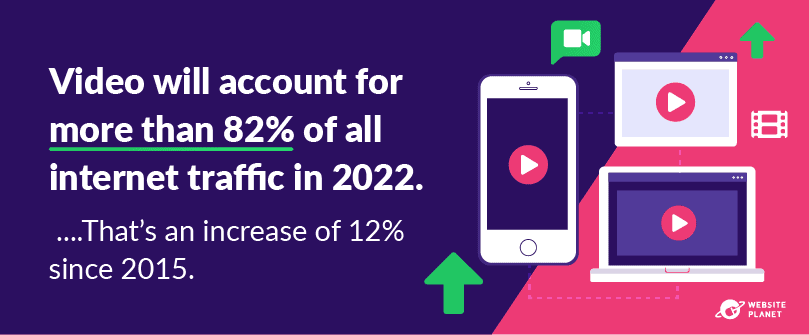
10. 82% of internet traffic was due to video content in 2022, proving its primary role in the consumption of online content.
11. People retail around 95% of the message you want to get across if it’s in video form.

12. 70% of viewers share the videos, which further widens the reach of your brand.
Video Marketing Adoption and Usage
In recent years, video marketing has gained popularity and is being adopted as an effective marketing strategy. The given video marketing statistics highlight its adoption and usage.
13. Ever since video marketing has been adopted as a marketing strategy, companies have seen a 25%growth since 2016.
14. 68% of marketers plan to use video marketing in 2026.

Marketers reported that they do not use video marketing as part of their marketing strategy. However, a lot of them are considering doing so this year, considering its effectiveness.
15. 39% of video content produced by businesses is testimonial videos, and it is the most popular form of video marketing in 2026.
16. 85% of video marketers say that video content is more effective at gathering an audience online than other content.
Businesses report that marketing videos are more likely to gather a wider audience for their brand. It helps in converting the audience into customers.
17. Most marketers allocate 21-30% of their budget as the video marketing budget, which highlights its growing importance.

Video Marketing ROI Statistics
Video marketing has been seen to give a powerful Return On Investment (ROI). These video marketing statistics will show that.
18. 87% of businesses agree that video marketing gives them a positive ROI.

19. Almost 92% of companies are satisfied with the ROI from video marketing efforts, which means that it is helpful in fulfilling the company agenda.
20. 39% of video marketers report more ROI on short-form videos of 30-60 seconds as longer videos engage viewers less.

21. 87% of businesses report that video marketing significantly increased their lead generation.
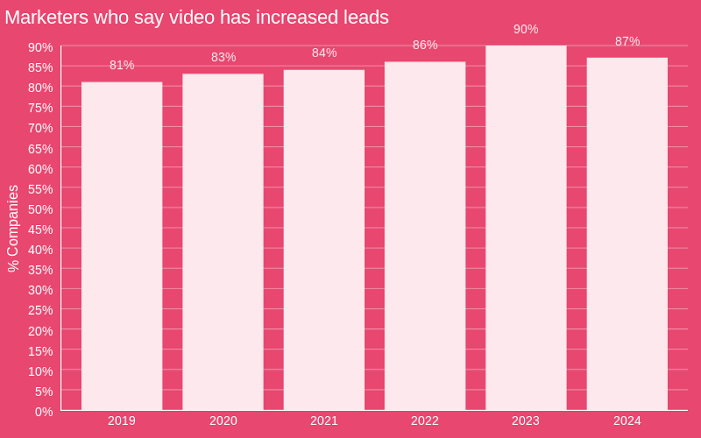
Video marketing data suggests that creating videos has generated more clicks for brands. This, in turn, has increased their lead generation and enhanced their conversion rates.
22. 86% of marketers have seen more website traffic for businesses with the use of video marketing.

Social Media Video Marketing Statistics
According to video marketers, social media platforms are an effective way to advertize a business.
The following video marketing statistics for various social media platforms are discussed below.
Social Media Video Stats for YouTube
Social media video statistics for YouTube are:
23. Almost 1 billion hours of video content is watched on YouTube daily, which underscores its reach as an advertiser.

24. Around 88% of marketers use YouTube for video marketing purposes.

25. 70% of customers say that YouTube has made them aware of new brands.

Social Media Video Stats for Facebook
Video marketing statistics for Facebook are:
26. Facebook gathers almost 8 billion views each day, which shows how popular it is, making it a great platform for video marketing videos.

27. Facebook video ads generate 8% click-through rates for businesses and have surpassed all other platforms.
28. 81% of marketers consider Facebook to be the top social media platform for video marketing.

Social Media Video Stats for Instagram
The marketing stats for social media videos on Instagram are listed below:
29. 72% of customers lean more towards knowing about new products from videos posted on Instagram.
30. Around 91% of Instagram users watch videos created by brands at least once a week, which helps them widen their reach and bring in more customers.
31. Instagram videos get at least 48% more views than photos. That means that video content is more well-received than other types.

Social Media Video Trends for LinkedIn
Social media video trends for LinkedIn are as follows:
The video posts on LinkedIn get almost five times more clicks than static content.
32. Around 76% of B2B marketers say that video content on LinkedIn has helped increase their brand awareness more than other platforms.
33. Almost 80% of viewers like to see LinkedIn videos with the sound off, which highlights the bend towards silent viewing.

Video Marketing on Mobile Statistics
People use mobile phones a lot more compared to other devices. The following stats will highlight the video marketing stats for mobile phones.
34. 75% of people watch videos horizontally on mobile phones. This makes it important to create video content tailored for mobile phones.

35. 100 million people watch online video content every day, and a good percentage of views come from mobile phones.
36. Almost 63% of YouTube watch time comes from mobile phones, which is an important statistic for video marketers.

37. 38% of videos created for marketing are made with smartphones kept in consideration.
38. Around 77% of people who watched a video about an app on their smartphones downloaded it. This makes mobile optimization of videos even more important.
Video Marketing Stats by Formats
Video marketing can be done in various ways. There are explainer videos, testimonials, short videos, and even live videos.
Marketers need to understand all these types to expand their reach and stay ahead of the competition. Some of the important statistics for all these types are given in detail below.
Explainer Videos Statistics
Explainer videos are instructional videos that give an overview of a product or a service provided by a business.
They have a huge impact on customers’ purchase decisions. Some key explainer video statistics are:
39. 85% of people are more inclined towards buying a product if they see an explainer video about it.

40. Almost 95% of users watch an explainer video to learn more about a business and its services. Businesses post videos to explain their services, and this has helped them gain more customers.
41. 72% of businesses that use explainer videos say that it has significantly improved their sales and conversion rates.
Testimonial Videos Stats
Testimonial videos are guarantees of the quality of service or product a business provides.
They help improve conversion rates as well as generate more leads. That is why video marketers sweat on testimonial videos. The given stats further underscore their importance.
42. Video testimonials increase the conversion rates of a business by 25%.
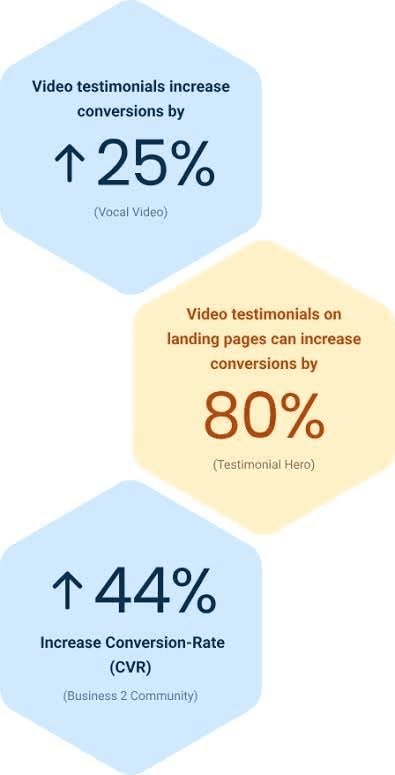
43. Almost 83% of businesses that make use of video testimonials see a considerable increase in their sales.

44. 42% of customers think that video testimonials are more relatable as they convey real customer stories. This helps build trust in your brand and enhances your credibility.
Also See : I Tested 8 Testimonial Software Tools: My Honest Picks (2026)
Product Demo Videos Stats
Product demo videos are visual presentations of how a product or service works. However, they are different from explainer videos.
They are an important bridge between educational and instructional videos. Video marketers work towards them to simplify complex features of a product or a service.
This helps gain more customers. Some important product demo video stats are listed below.
45. 69% of customers prefer product demo videos to help them make a purchase decision.

46. 47% of companies continually invest in product demo videos, which highlight their growing trend.
47. 53% of video marketers say that a product demo video has helped increase their sales. This is because it develops customer confidence in your product.
Short-Form Video Content Statistics
Short-form videos are capturing the attention of video marketers because of their precise and short format.
If your product video is short and still gets your point across, then it will engage more customers. Some important short-form video statistics are given below.
48. Short-form videos under 90 seconds retain 50% of 50% viewers and turn them into customers.
49. They have 2.5 times more engagement of customers than the long ones.
50. 85% of marketers feel that short-form videos are the most effective form of marketing strategy as they have helped increase business sales.

Live Videos Stats
Live videos are also growing in popularity due to their positive effect on the growth of businesses. Some key live video statistics are listed below.
51. Around 46% of businesses use live videos on social media platforms to attract attention.
Live videos help businesses attract a significant audience through social media.
52. They give proof of your credibility, and the customers trust you more. You are also able to retain more customers by this show of authenticity.
53. 4 million people are estimated to view live videos in 2026. Video marketers are making use of this to advertize their brands.
54. Almost 80% of customers prefer to watch a live video about a product than read a blog about it.
Video Creation Statistics
With the increase in video marketing, the video creation process is evolving as well. Some key video creation stats are listed below.
55. 61% of companies say that the time and bandwidth of a video are the biggest hurdles in the production process.
56. Creating a 1-minute live-action video can cost anywhere between $1,500 to $10,000. This cost depends on the resources used to create the video.
57. 80% of video marketers prefer to create videos that are of 3 minutes or less. This is because there is a viewer preference for shorter and more precise content.
58. According to 30% of marketers, creating video content from scratch takes about 2 weeks.
59. 38% of video creators think that the pre-production of a video is more time-consuming than actual production.
Video Distribution Statistics
Video distribution across various platforms is different. The statistics given below will explain that in more detail.
60. 63% of businesses use their own websites to distribute their video content, and nearly 50% use emails to distribute them.
61. 90% of video content marketers use YouTube to distribute their videos as a marketing strategy.
62. Around 20% of marketers use TikTok to distribute their video content.

63. Around 77% of marketers have plans to make and distribute content for IGTV, highlighting the importance of Instagram in video marketing.
Wrap up
In summary, video marketing has become a powerful tool for businesses to expand their business and reach new heights.
The statistics discussed today highlighted its importance as a solid video marketing strategy.
Whether you are a business owner looking to take your business a step further or a budding business owner hoping to make it big, video marketing strategies will take you a long way.
So, make the best out of video marketing and unlock your full potential!
Sources
Wyzowl | Sixth City Marketing | Visme | Lemonlight | Dash | Vidyard | Seige Media | Colorwhistle | Oberlo | Vidico | Synthesia | Thrive Internet Marketing Agency | Wordstream | Runningpony
Krunal Vaghasiya is a marketing tech expert who boosts e-commerce conversion rates with automated social proof and FOMO strategies. He loves to keep posting insightful posts on online marketing software, marketing automations, and improving conversion rates.




 Capterra