
How to Add an Announcement Bar to WooCommerce in Minutes
WooCommerce already gives you a simple way to show a store-wide announcement.
So if all you want to say is: Free shipping on orders over $50
you may not need another plugin at all.
WooCommerce has a built-in Store Notice that can display a message across your store.
But the built-in option is fairly basic. If you want to show different announcements on selected product pages, target visitors by location or device, schedule campaigns, or control how often a message appears, you will need a tool such as WiserNotify.
This guide covers both methods so you can choose the one that fits your store.
Method 1: WooCommerce Built-in Store Notice (Simple Steps)
This is the easiest way to add an announcement bar in WooCommerce because it is already built into WordPress.
You don’t need any plugin.
Step 1: Open Store Notice Settings
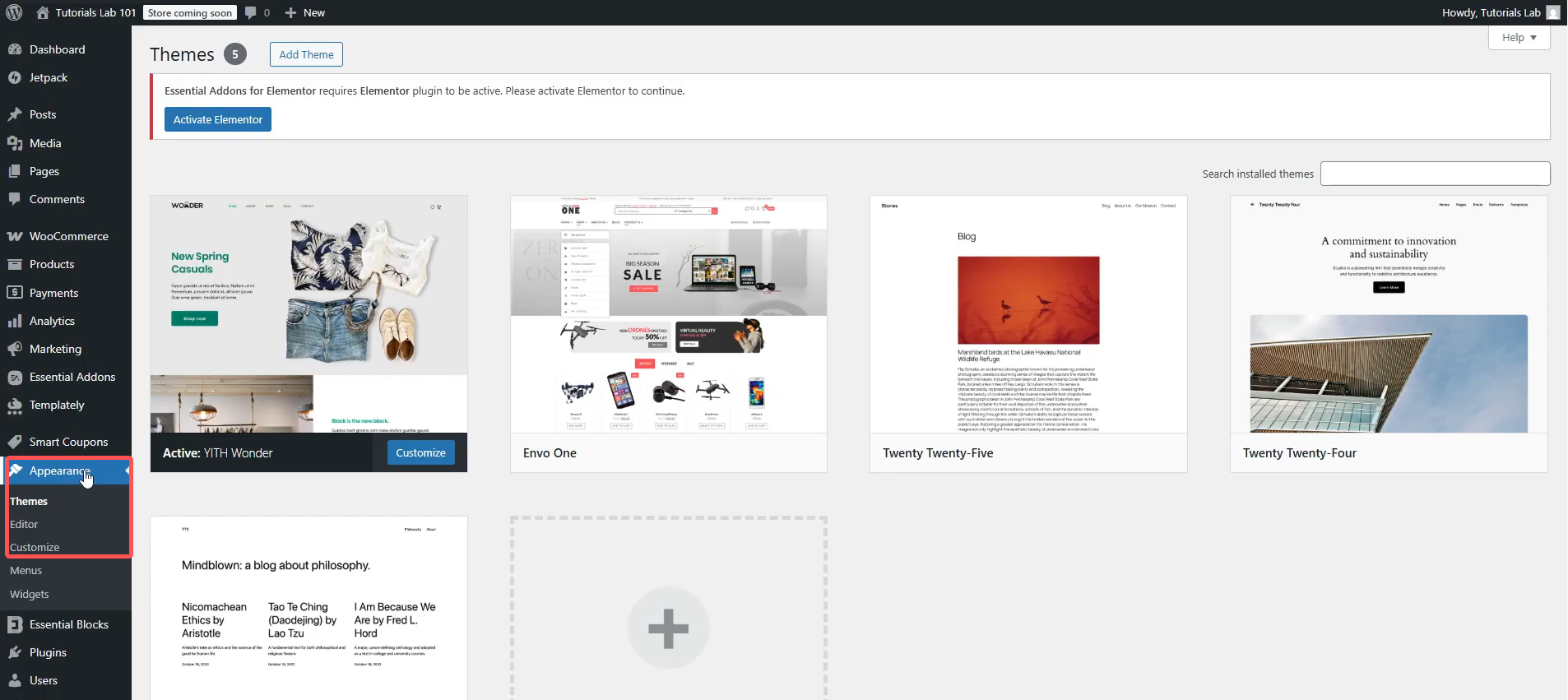
Go to your WordPress dashboard.
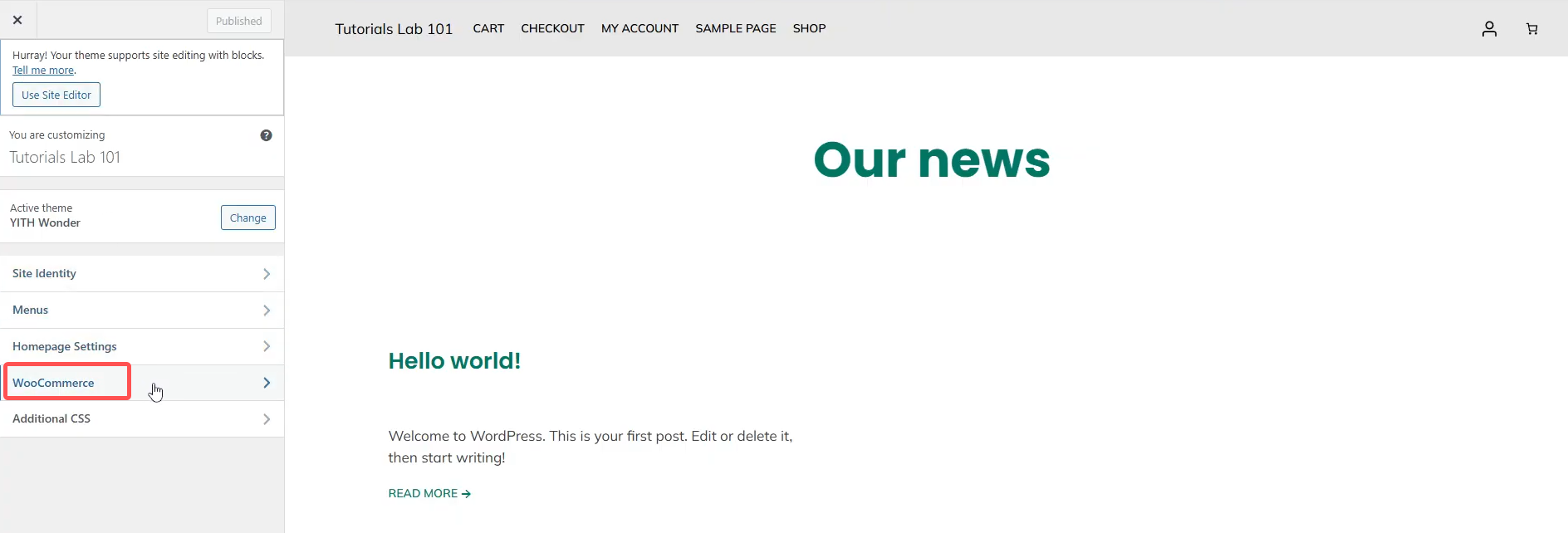
Click:
- Appearance → Customize → WooCommerce → Store Notice
You’ll see a box where you can add your message.
Step 2: Add Your Message
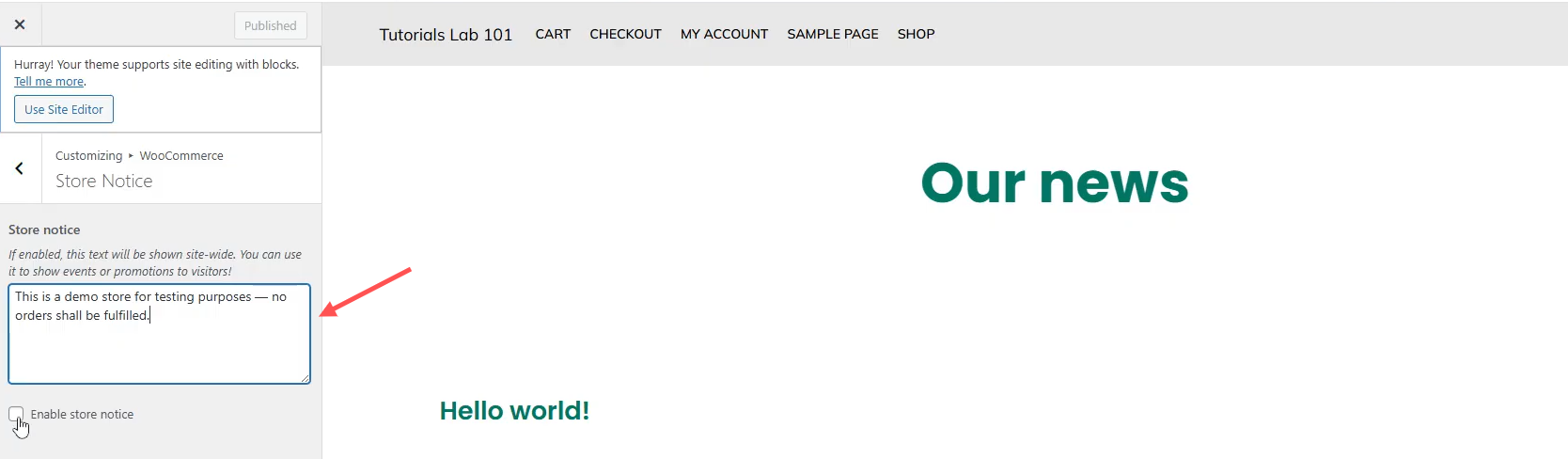
Type your announcement in the box.
Examples:
- Free shipping on orders over $75
- 20% OFF Summer Sale – Ends Sunday
- New collection just launched
Keep it short and clear.
Step 3: Turn It ON
Check this option:
- Enable Store Notice
Now you will see the message appear in the preview of your site.
Step 4: Save / Publish
Click:
- Publish
Now your announcement bar is live on your store.
Build urgency
Add floating offers with countdown timer & coupon code.

Important Note (Block Theme Users)
If you cannot find “Customize” in your menu:
Go to this link directly:
yourstore.com/wp-admin/customize.php
Then again go to:
- WooCommerce → Store Notice
Limitation of Store Notice
This method is very simple, but it has one big limit:
It shows the SAME message to everyone on your website.
So you cannot:
- Show different messages for different products
- Target only US visitors
- Show offers only on specific pages
- Run multiple campaigns at the same time
Method 2: Add a WooCommerce Announcement Bar With WiserNotify
WiserNotify has an official WordPress plugin that connects directly with WooCommerce.
You do not have to manually add the WiserNotify pixel to your theme.
The plugin uses your WiserNotify API key, verifies the connection, and then adds the pixel script to your site automatically.
Here is the correct setup.
Step 1: Install the WiserNotify WordPress Plugin
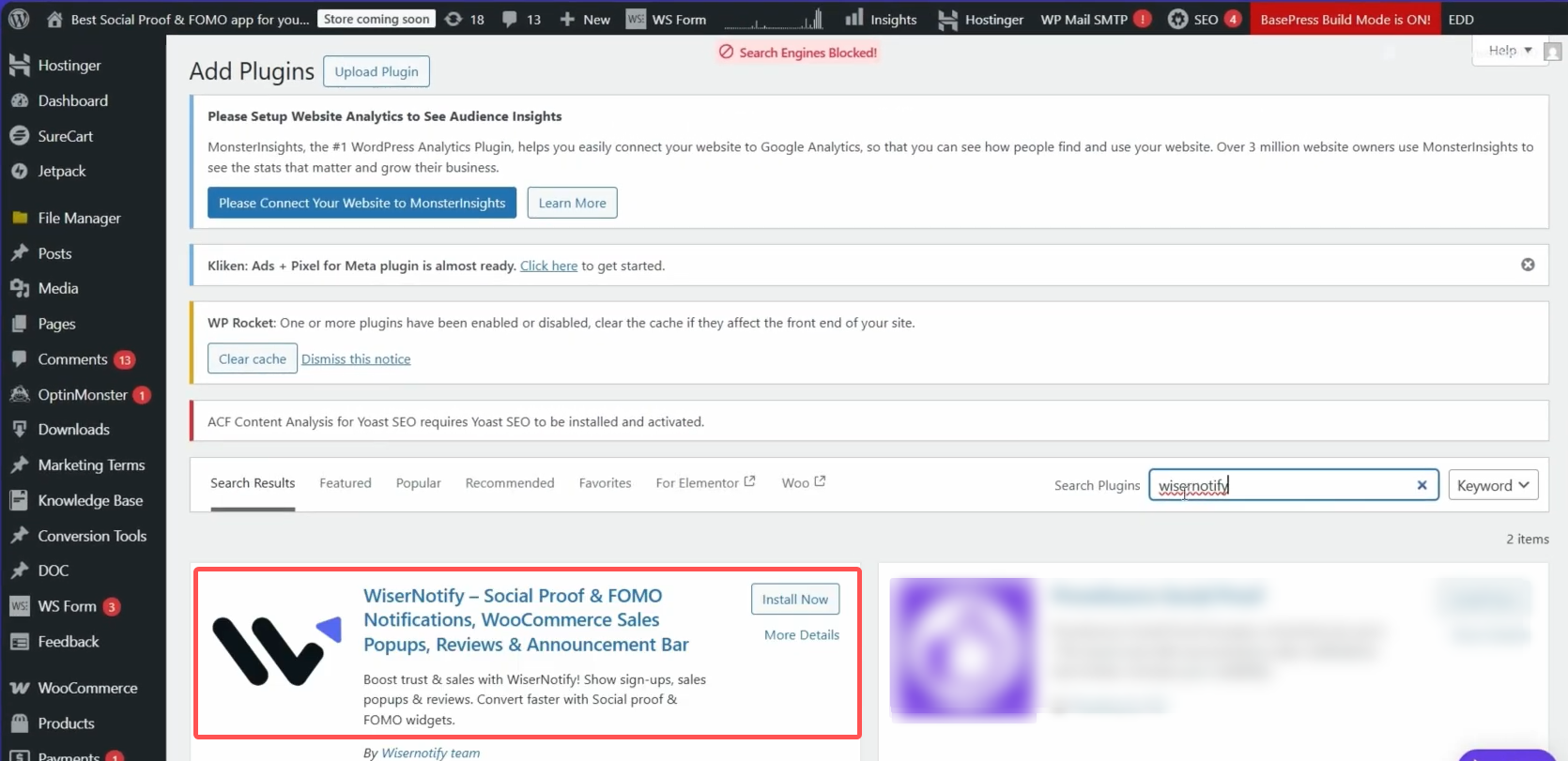
From your WordPress dashboard, go to:
- Plugins > Add New Plugin
Search:
- WiserNotify
- Find the official plugin from the WiserNotify team.
Click:
- Install Now → Activate
That’s it. The plugin is now added to your site.
Step 2: Copy Your WiserNotify API Key
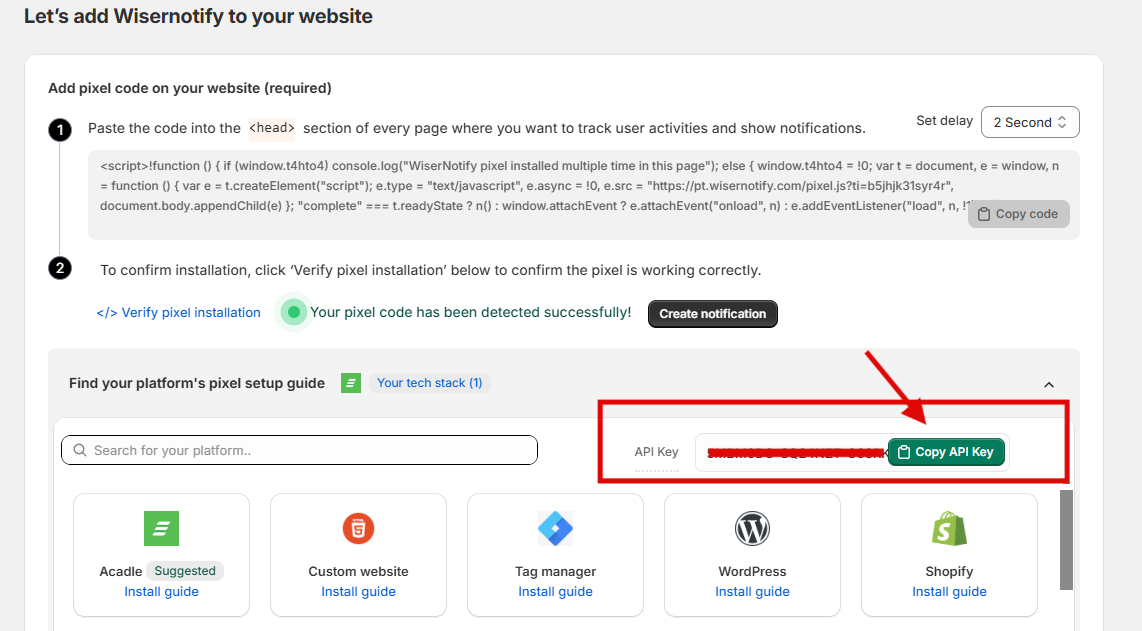
Open your WiserNotify account.
- Go to the Pixel page.
- Copy your API Key.
Important:
- You do not need the full pixel code.
- Only the API key is required.
Step 3: Connect API Key in WordPress
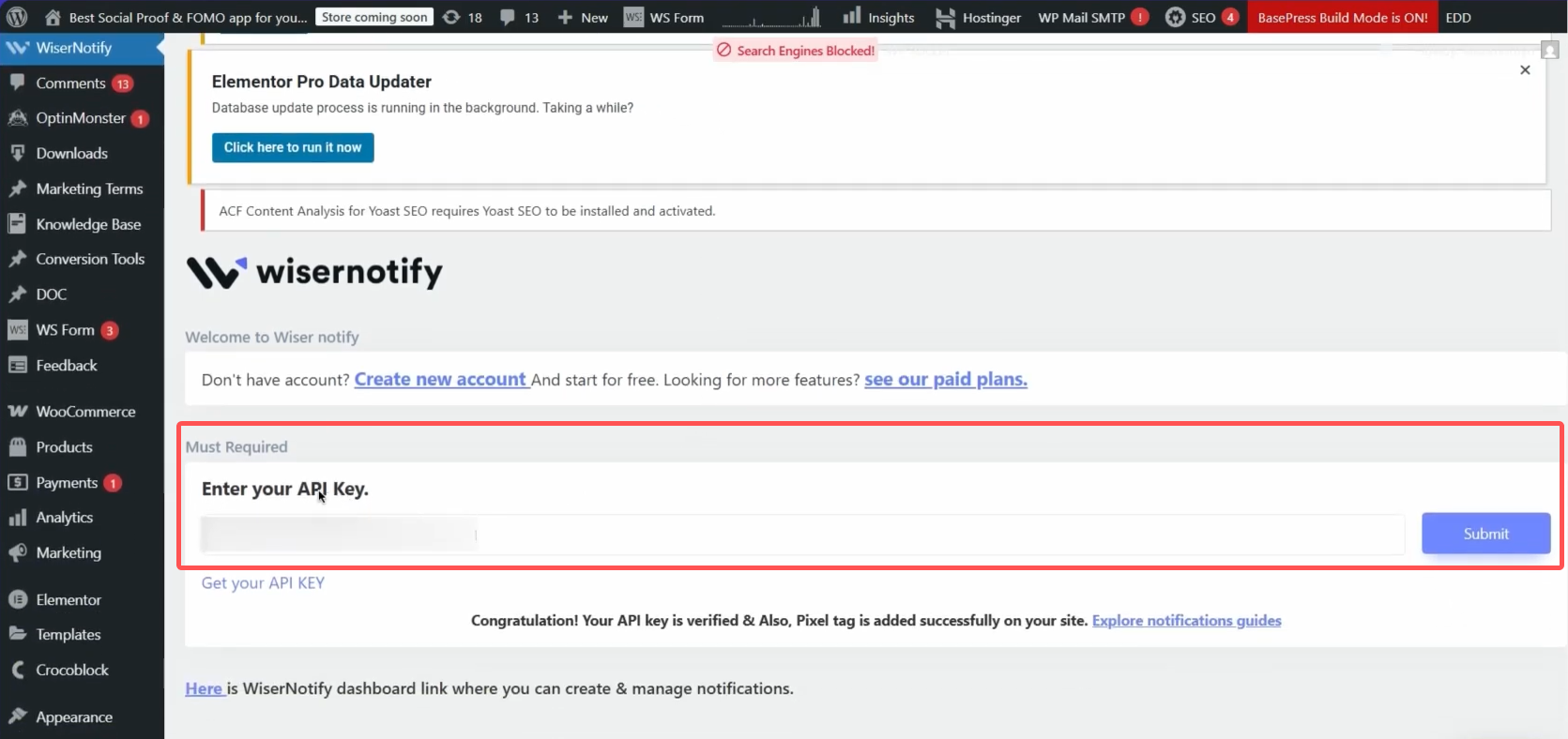
Go back to WordPress.
Open:
- WiserNotify menu
- Paste your API key.
Click:
- Verify / Submit
- Once done, the plugin automatically adds the tracking script to your WooCommerce site.
No coding or theme editing needed.
Step 4: Check Pixel Status
Go back to WiserNotify dashboard → Pixel page
You should see your site as Active / Detected
If not:
- Clear cache plugin (LiteSpeed / WP Rocket / etc.)
- Disable security block (Wordfence, etc.)
- Open site in incognito mode
Then recheck again.
Step 5: Create Announcement Bar
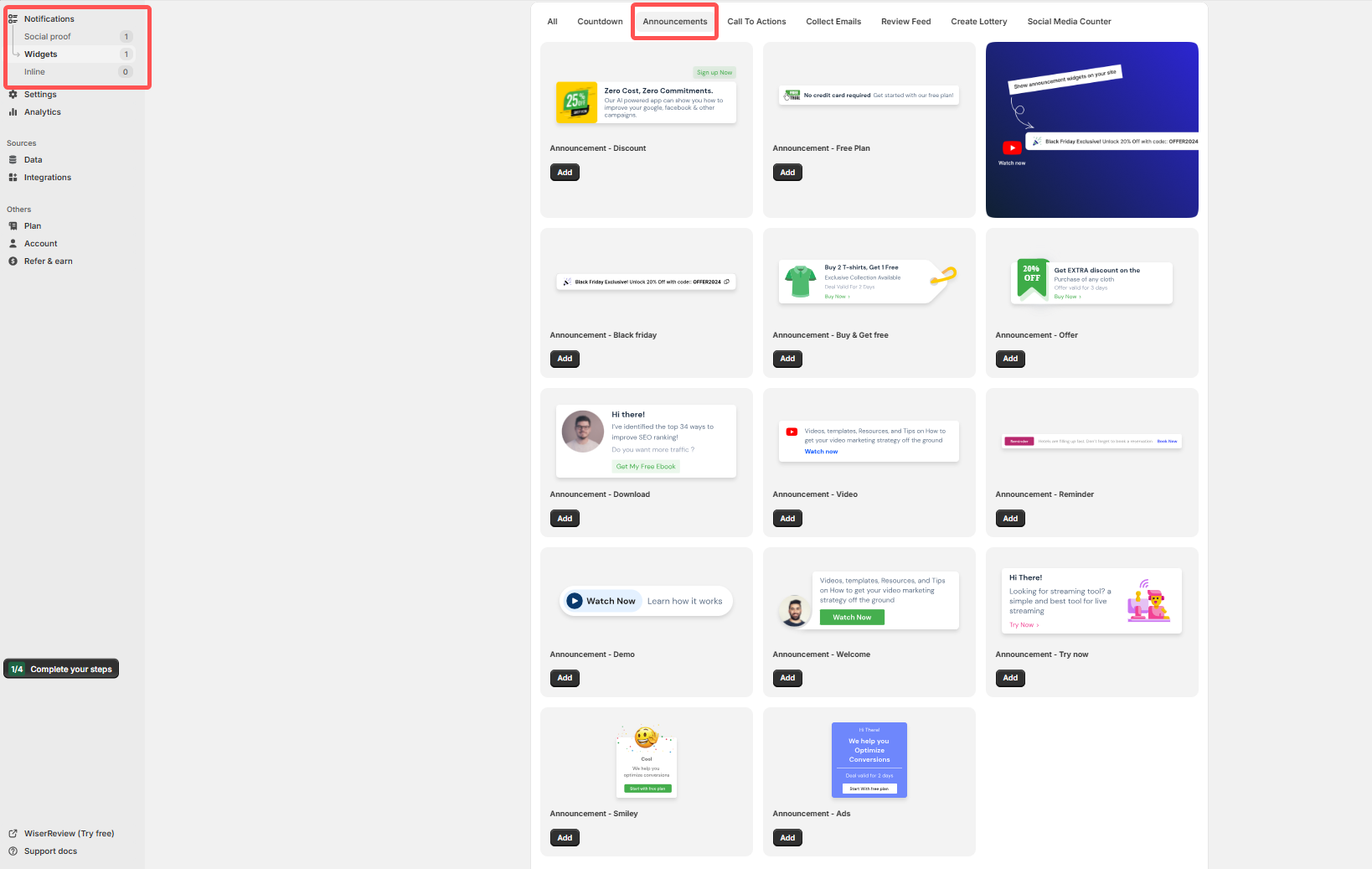
In WiserNotify dashboard:
- Go to Widgets / Notifications
- Select Announcement Bar
Click:
- Add New
Choose a template (sale, shipping, discount, etc.)
Step 6: Add Your Message + Link
Write your message:
Examples:
- Free shipping on orders over $50
- 20% OFF this weekend only
- Use WELCOME10 for 10% off
- New collection just dropped
If needed, add a button link:
- Shop Sale → Sale page
- View Collection → Category page
- Claim Offer → Landing page
Keep it simple and direct.
Step 7: Quick Design Setup
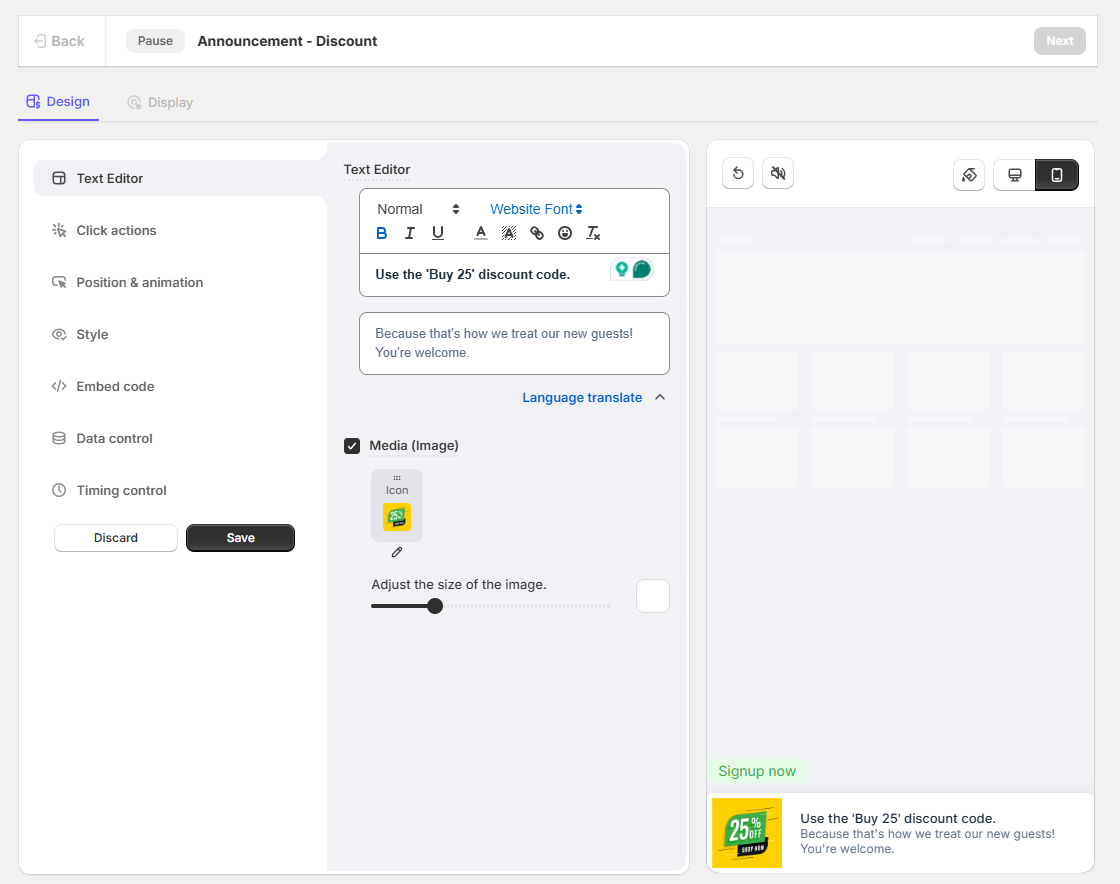
Adjust only basic settings:
- Text color
- Background color
- Button style
- Position (top or bottom)
- Mobile view
Tip: Make it readable first, fancy second.
Step 8: Choose Where It Shows
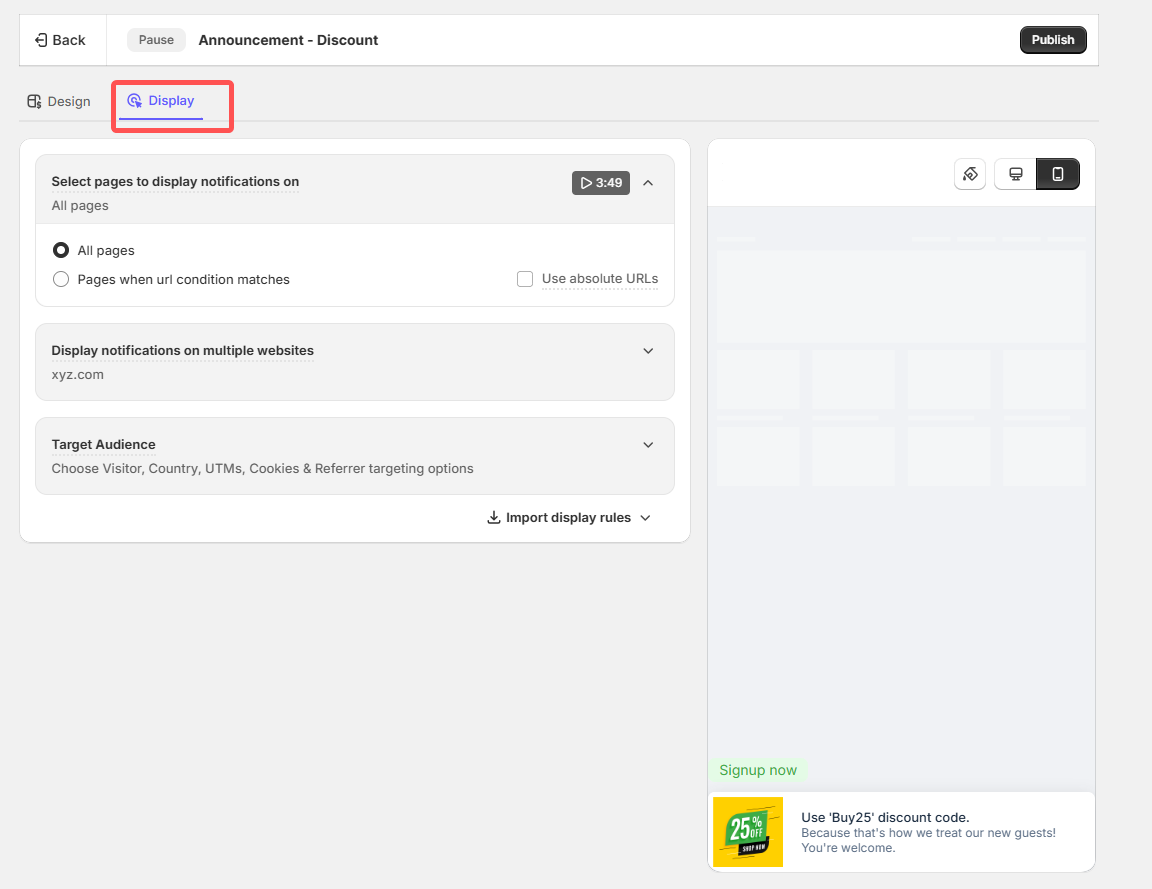
Go to Display Settings
Pick:
- Entire site OR
- Specific pages
Examples:
- Free shipping → show everywhere
- Running shoes sale → only product/category pages
- First-time offer → only new visitors
- US shipping offer → only US visitors
This makes your bar more targeted and useful.
Step 9: Set Timing (Optional)
Set when it should run:
- Start date
- End date
- Days of week
- Delay (optional)
Example:
- Black Friday Sale
- Start: Nov 27
- End: Nov 30
Step 10: Save & Test
Click:
- Save → Publish
Then test:
- Open site in incognito mode
- Check mobile + desktop
- Click button link
- Verify correct pages
Done. Your WooCommerce announcement bar is live.

Boost Conversion Instantly
Add Social Proof & Urgency to your website
Common Mistakes to Avoid in WooCommerce Announcement Bars
WooCommerce announcement bars are simple to set up, but a few small mistakes can reduce their impact or even break the user experience.
Here are the most common ones to watch out for:
1. Using the wrong tool for your goal
Many store owners rely on the default WooCommerce Store Notice even when they need more control.
- Basic tools only support one store-wide message
- No targeting or personalization
- Limited control over timing and placement
Avoid this when: You need page-specific offers, scheduled campaigns, or visitor-based messaging.
2. Ignoring theme behavior
Not all WooCommerce themes display announcement bars the same way.
Some place it above the header, others inside it, and some may even hide it behind sticky elements.
Avoid this when: Assuming the bar will look identical across all WooCommerce themes without testing.
3. The bar not showing correctly
One of the most common issues is the announcement not appearing or appearing inconsistently.
This usually happens due to:
- Cache plugins
- Performance optimization tools
- Script blocking or minification settings
Avoid this when: You haven’t tested the site after enabling caching or optimization plugins.
4. Confusing the bar with the actual offer
Turning off the announcement bar does not stop the promotion itself.
Your WooCommerce coupon, sale price, or free shipping rule will still run unless you disable it separately.
Avoid this when: Assuming the announcement controls the backend discount logic.
5. Poor mobile experience
Announcement bars can easily break layout or cover important elements on mobile devices if not tested properly.
Avoid this when: You haven’t checked how the bar behaves on different screen sizes, especially with sticky headers or floating elements enabled.
Build trust & FOMO
Highlight real-time activities like reviews, sales & sign-ups.
Final Thoughts
WooCommerce gives you two good paths.
For one simple store-wide message, use the built-in Store Notice. It is already part of WooCommerce and takes only a few steps to publish.
For campaigns that need different pages, different visitors, scheduling, or more control over how the announcement appears, use the WiserNotify WordPress plugin.
You do not need custom code for either method.
Choose the simplest option that gives you the control your campaign actually needs.
Frequently Asked Questions
Does WooCommerce have a built-in announcement bar?
Yes. WooCommerce includes a Store Notice feature that lets you display a simple site-wide message such as promotions, shipping updates, or announcements.
Where do I find the WooCommerce Store Notice setting?
Go to: Appearance > Customize > WooCommerce > Store Notice
From there, you can enable the notice, add your message, and publish it.
Why can’t I see the Store Notice option in my dashboard?
If you’re using a block theme (Full Site Editing), the Customizer may be hidden. You can still access it directly by visiting: yourstore.com/wp-admin/customize.php
Can I add an announcement bar in WooCommerce without a plugin?
Yes. The built-in Store Notice is enough for a simple announcement bar. No additional plugin is required.
How do I add a more advanced announcement bar in WooCommerce?
You can use a plugin like WiserNotify to create targeted announcement bars based on pages, visitors, location, or campaigns.

Krunal Vaghasiya is a marketing tech expert who boosts e-commerce conversion rates with automated social proof and FOMO strategies. He loves to keep posting insightful posts on online marketing software, marketing automations, and improving conversion rates.




 Capterra