Table of Contents
UGC Platforms
UGC Platforms

I Tested 10 UGC Platforms for Ecommerce Brands (2026)

Every ecommerce brand I work with asks the same question: Where do I get UGC that actually converts?

Not stock-looking testimonials. Not influencer content that feels like an ad. Real, messy, authentic creator content that stops the scroll on TikTok and Meta.

The answer depends on what kind of UGC you need. Creator marketplaces produce new videos and photos.

Aggregation tools collect and display what customers already post. Some platforms do both.

Here are 10 I’ve tested, with what each one actually does well and where it falls short.

Why UGC Matters for Ecommerce in 2026

2.4x
more likely to be seen as authentic vs brand content
29%
higher CTR on ads using UGC-style creative
86%
of companies now use UGC in their marketing
92%
of people trust word-of-mouth over traditional ads
20-50
fresh creative assets needed per month for paid social

Polished brand ads are losing ground to authentic customer content.

On Meta and TikTok, UGC-style creative outperforms studio content because it looks like something a real person made, not something a marketing team produced.

UGC platforms solve the three biggest headaches: finding creators, managing content rights, and producing enough volume to keep ads fresh.

Without a platform, you’re stuck DMing creators on TikTok, chasing usage rights over email, and tracking everything in spreadsheets.

There are two distinct categories of UGC platforms.

Creator marketplaces: Billo, Insense, and JoinBrands connect you with creators who produce new video and photo content for your ads.

Content aggregation platforms: Bazaarvoice, Taggbox, and Flowbox collect, curate, and display existing customer content (reviews, photos, social mentions) on your site.

Some tools (Yotpo, Cohley) do both.

Build urgency

Add floating offers with countdown timer & coupon code.

First Image Second Image Add to My Website Now

Try for free (No card required)

Quick Comparison Table

Platform Best For Type Free Plan? Pricing From
Billo Affordable UGC video ads Creator marketplace No $99/video
Insense Whitelisted creator ads Creator marketplace No $400/mo
JoinBrands Bulk UGC at volume Creator marketplace Yes $0 + per video
Collabstr Quick creator booking Creator marketplace Yes $0 + per creator
Cohley Enterprise content generation Managed platform No Custom
Aspire Creator relationships + affiliate Influencer + UGC No Custom
Bazaarvoice Enterprise review syndication Content aggregation No Custom (~$7K/yr)
Taggbox Social UGC display widgets Content aggregation Yes $24/mo
Flowbox European ecommerce UGC Content aggregation No Custom
Yotpo Reviews + visual UGC suite Both Limited $15/mo

10 Best UGC Platforms I’ve Evaluated (2026)

1. Billo

Billo UGC video platform
  • Category: UGC video marketplace
  • Best for: Ecommerce brands that need affordable ad-ready UGC videos
  • Pricing: From $99/video. No monthly subscription required.

Billo connects brands with 5,000+ vetted creators to produce short-form video content for TikTok, Instagram, and Meta ads.

You post a brief, get matched with creators, and receive finished videos in 5-7 days. Billo IQ generates automated briefs from your product URL and matches them with creators optimized for ROAS and CTR.

Flat-rate pricing makes budgeting straightforward. Revision rounds are included. Performance tracking through Meta ad account integration shows which creator videos actually convert.

Pros: Simple per-video pricing. Fast 5-7 day delivery. Billo IQ automated briefs. Vetted creator pool. No monthly commitment.

Cons: Limited creative control vs managed platforms. The creator pool is smaller than JoinBrands or Collabstr. No whitelisting/spark ad support. Video quality is functional, not premium.

2. Insense

Insense

  • Category: Creator marketplace + whitelisting
  • Best for: Brands running whitelisted/spark ads through creator accounts
  • Pricing: From $400/month + per-creator fees.

Insense is the UGC platform purpose-built for brands that run ads through creator accounts (whitelisted ads on Meta and Spark Ads on TikTok).

Running ads from a creator’s account rather than your brand account improves performance because the content appears more organic in users’ feeds. Insense makes the whitelisting process manageable at scale.

Creator marketplace with filters for niche, platform, audience demographics, and content style. Built-in chat, contracts, and payment management. Content rights are handled within the platform.

Pros: Best whitelisting/spark ad workflow. Built-in creator contracts and payments. Strong for Meta and TikTok ad creative. Content rights management included.

Cons: Most expensive option (subscription + per-creator fees). Overkill if you don’t run whitelisted ads. Learning curve for the platform. Not cost-effective for small volumes.

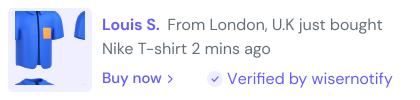
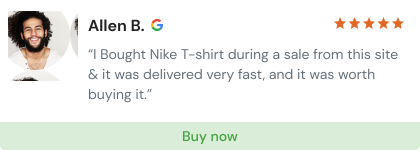
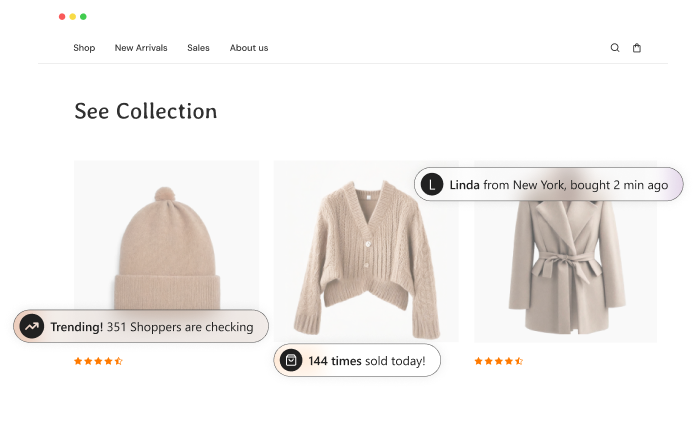
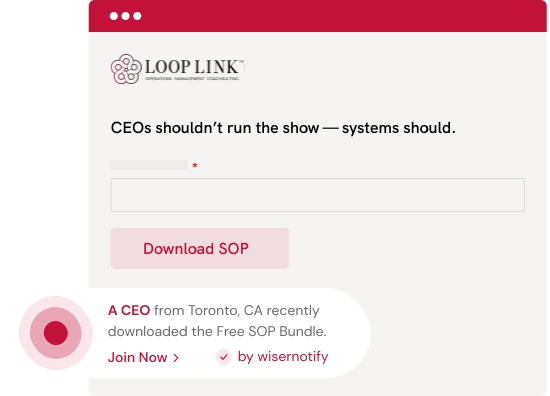
Build trust & FOMO

Highlight real-time activities like reviews, sales & sign-ups.

First Image Second Image Add to My Website Now

Try for free (No card required)

3. JoinBrands

JoinBrands UGC marketplace
  • Category: Self-service UGC marketplace
  • Best for: DTC brands testing 20-50 ad variations per week
  • Pricing: Free to join. Pay per video ($60-150 per video, typically).

JoinBrands is the volume play. If you need dozens of UGC videos per month for aggressive ad testing on Meta and TikTok, JoinBrands handles the logistics of managing many simultaneous creator relationships.

The per-video pricing is competitive, and the platform can manage bulk content ordering at scale.

No monthly subscription. You only pay per video. A large creator pool means more diversity in faces, styles, and angles for your ad creative.

Works well for ecommerce brands running 20-50 ad variations weekly.

Pros: No monthly fee. Competitive per-video pricing. Large creator pool. Built for volume. Fast turnaround.

Cons: Quality varies more than curated platforms like Cohley or Trend.io. Less creative control. You’re managing the process yourself. Limited vetting compared to premium platforms.

4. Collabstr

Collabstr

  • Category: Creator booking marketplace
  • Best for: Small brands and startups finding creators fast
  • Pricing: Free to browse. Pay per creator booking ($50-500+ per creator).

Collabstr is the simplest UGC marketplace. Browse vetted creators, filter by niche, platform, or content type, and purchase content packages directly.

No negotiations, no agency middlemen, no monthly commitment. Pricing is transparent, and creators are ready to book instantly.

Works for both UGC content and influencer posts. Filters for Instagram, TikTok, YouTube, and UGC-only creators.

Good for small businesses and early-stage brands that need a few pieces of content without committing to a platform subscription.

Pros: Simplest booking experience. Transparent pricing. No monthly commitment. Good creator filtering. Works for UGC and influencer content.

Cons: No bulk ordering workflow. Limited project management tools. You manage creator communication yourself. No performance tracking or ad integration.

Build trust & FOMO

Highlight real-time activities like reviews, sales & sign-ups.

First Image Second Image Add to My Website Now

Try for free (No card required)

5. Cohley

Cohley

  • Category: Managed content generation
  • Best for: Mid-market and enterprise brands needing comprehensive UGC
  • Pricing: Custom pricing.

Cohley is the managed UGC platform for brands that want strategic support alongside content production.

The platform handles UGC video, professional photography, product reviews, and influencer activations. Dedicated customer success managers help with strategy and execution.

Content covers the full funnel: short-form video for paid social, photos for product pages and email, reviews for ecommerce PDPs and retail sites like Amazon and Walmart. Usage rights are secured in perpetuity.

Pros: Full-service with strategic support. Covers video, photo, and reviews. Perpetual content rights. SOC2 compliant for enterprise. Dedicated account management.

Cons: Custom pricing (expensive). Not for small brands or one-off content needs. Requires strategic engagement. Long onboarding vs self-service platforms.

6. Aspire

Aspire creator marketing platform
  • Category: Creator marketing + affiliate
  • Best for: Brands building long-term creator relationships and affiliate programs
  • Pricing: Custom pricing.

Aspire goes beyond one-off UGC production. It’s a creator relationship management platform for brands that want ambassador programs, affiliate partnerships, and ongoing collaborations.

Built-in influencer discovery, campaign management, content approval workflows, and performance tracking.

Integrates with Shopify for affiliate tracking and connecting creator activity to actual sales. Performance scoring system shows which creators drive the most revenue, not just engagement.

Pros: Best for long-term creator programs. Affiliate and ambassador management. Shopify sales attribution. Performance scoring per creator.

Cons: Custom pricing (not for small budgets). Complex for brands that just need quick UGC videos. Overkill for one-time campaigns. Steeper learning curve.

Build trust & FOMO

Highlight real-time activities like reviews, sales & sign-ups.

First Image Second Image Add to My Website Now

Try for free (No card required)

7. Bazaarvoice

Bazaarvoice


  • Category: Enterprise review and UGC syndication
  • Best for: Brands selling through retail partners (Walmart, Target, Best Buy)
  • Pricing: Custom (starts ~$7K/year).

Bazaarvoice is the enterprise platform for brands that need customer reviews, ratings, and visual UGC distributed across their entire retail network.

Reviews collected on your DTC site automatically syndicate to 1,750+ retailer websites. Sampling programs (Influenster) send products to consumers for authentic reviews before launch.

12 billion+ reviews managed globally. Content aggregation pulls customer photos and videos from social media for curation and display on product pages.

Pros: Review syndication to 1,750+ retailers. Influenster sampling program. Enterprise analytics. 12 billion+ reviews managed.

Cons: Not for SMB stores. Custom pricing (expensive). Complex onboarding. Primarily review-focused, not video UGC creation.

8. Taggbox

Taggbox

  • Category: Social UGC aggregation and display
  • Best for: Brands displaying social media UGC on websites and digital screens
  • Pricing: Free plan available. Paid from $24/month.

Taggbox pulls user-generated content from Instagram, TikTok, Twitter, YouTube, and other platforms using hashtags, mentions, and handles.

You curate the best posts and display them on your website, event screens, or digital signage using customizable widgets.

Social walls, shoppable galleries, and review widgets display real customer content where it matters. Content moderation filters out spam and irrelevant posts. Works across any website platform.

Pros: Most affordable UGC display tool. Free plan available. Pulls from all major social platforms. Customizable widgets. Works on any website.

Cons: Aggregation only, no creator marketplace. You need existing UGC to curate. Limited analytics compared to enterprise tools. No content creation or creator matching.

Build trust & FOMO

Highlight real-time activities like reviews, sales & sign-ups.

First Image Second Image Add to My Website Now

Try for free (No card required)

9. Flowbox

Flowbox UGC platform for ecommerce
  • Category: Ecommerce UGC aggregation
  • Best for: European ecommerce brands displaying customer photos on product pages
  • Pricing: Custom pricing.

Flowbox is Europe’s leading UGC platform for ecommerce brands that want to collect customer photos and videos from social media and display them on product pages, homepages, and email campaigns.

AI-powered content discovery finds and recommends the best customer posts.

Rights management is built in: brands request permission to use customer content, and Flowbox handles the workflow.

Deep ecommerce integrations with Shopify, Magento, and custom platforms. Shoppable UGC galleries connect customer photos directly to product pages.

Pros: Strong in the European market. Shoppable UGC galleries. AI content discovery. Built-in rights management. Deep ecommerce integration.

Cons: Custom pricing. Less known outside Europe. No creator marketplace. Focused on content display, not creation.

10. Yotpo

Yotpo

  • Category: Reviews + visual UGC + marketing suite
  • Best for: Large DTC brands wanting reviews and visual UGC in one platform
  • Pricing: Free plan (basic). Paid from $15/month. Enterprise pricing for advanced features.

Yotpo bridges the gap between product review software and UGC platforms.

AI-powered review widgets collect and display customer feedback, while visual UGC galleries showcase customer photos and videos in shoppable formats on product pages.

Review syndication pushes ratings to Google Shopping and retail partner sites.

The platform also includes SMS marketing, loyalty/rewards, and subscription management. Deep integrations with Shopify, BigCommerce, and WooCommerce.

Pros: Reviews + visual UGC + SMS + loyalty in one platform. AI-powered widgets. Google Shopping syndication. Strong for Shopify stores.

Cons: Pricing scales fast for advanced features. Steep learning curve. Not a creator marketplace. Visual UGC is aggregation-based, not commissioned content.

Build trust & FOMO

Highlight real-time activities like reviews, sales & sign-ups.

First Image Second Image Add to My Website Now

Try for free (No card required)

Free UGC Platforms: Which Tools Work?

Taggbox (best free plan): Free plan aggregates social UGC from Instagram, TikTok, and Twitter with customizable website widgets. Best free option for displaying existing customer content.

Collabstr: Free to browse and book creators. No monthly fee. Pay per creator only.

JoinBrands: Free to join. No subscription. Pay only per video produced.

Yotpo: Free plan for basic review collection and display. Visual UGC requires paid plans.

For brands that want review-based UGC (customer reviews with photos and videos displayed on product pages), WiserReview offers a free plan that covers review collection via email, SMS, and WhatsApp, as well as 15+ display widgets.

It’s not a UGC creation platform, but product reviews ARE user-generated content, and they’re one of the highest-converting forms of social proof on product pages.

The impact of reviews on purchase decisions makes review UGC worth considering alongside creator-produced content.

How to Pick the Right UGC Platform

Need affordable UGC videos for ads? Billo ($99/video) or JoinBrands (pay per video, no subscription). Both are self-service with fast turnaround.

Running whitelisted/spark ads? Insense. Built-in whitelisting workflow for Meta and TikTok. Most expensive but the only platform purpose-built for this.

Testing 20-50 ad creatives weekly? JoinBrands for volume. No subscription, competitive per-video pricing, large creator pool.

Small brand, first time buying UGC? Collabstr. Simplest booking, transparent pricing, no commitment. Start with 2-3 creators to test.

Enterprise brand with retail partners? Bazaarvoice for review syndication to 1,750+ retailers. Cohley for managed content generation with strategic support.

Want to display customer social posts on your site? Taggbox (free plan available) or Flowbox (enterprise). Both aggregate and curate social UGC.

Building long-term creator programs? Aspire. Ambassador management, affiliate tracking, Shopify sales attribution.

Need reviews + visual UGC in one tool? Yotpo for large DTC brands. WiserReview for affordable multi-platform review UGC.

Icon

Boost Conversion Instantly

Add Social Proof & Urgency to your website

Conclusion

UGC platforms have split into two clear categories in 2026: creator marketplaces that produce new content and aggregation platforms that collect and display existing customer content.

The strongest ecommerce brands use both.

For ad creative production, Billo and JoinBrands offer the most accessible entry points with per-video pricing and no subscriptions.

For brands running whitelisted ads, Insense is the purpose-built choice. For enterprise operations, Cohley (managed content) and Bazaarvoice (review syndication) serve different scales of complexity.

For displaying customer content on your site, Taggbox is the most affordable starting point with a genuinely free plan.

For product review UGC specifically, WiserReview and Yotpo both turn customer feedback into conversion-driving social proof on product pages.

Start with the type of UGC your business needs most: ad creative (creator marketplace), customer social content (aggregation), or product reviews (review platform).

Pick one tool, run a 30-day test, and measure the impact on your ad performance or conversion rates. The data tells you whether to scale up or switch approaches.

FAQ's

A UGC platform is an online tool or website where users can create, upload, and share content such as images, videos, reviews, or posts. These platforms empower users to contribute and engage with content, often fostering a sense of community while offering brands opportunities to leverage authentic user-generated materials.


UGC adds authenticity and trust to marketing campaigns, as consumers tend to trust real-user experiences over traditional advertisements. It also increases engagement, enhances brand credibility, and can significantly influence purchasing decisions.


You can motivate users to contribute by:

  • Hosting contests or challenges.
  • Offering incentives such as discounts or rewards.
  • Highlighting user content on your platform or social media.
  • Providing easy-to-use tools for content creation and sharing.

  • Establish clear guidelines and policies for content submission.
  • Regularly moderate content to maintain quality and community standards.
  • Engage with contributors by responding to comments and showcasing their work.
  • Use analytics to track the performance of UGC and refine strategies.

UGC can significantly boost SEO by generating fresh, diverse, and relevant content. It increases user engagement, dwell time, and backlinks, all of which contribute to better search engine rankings.


Picture of Krunal Vaghasiya
Krunal Vaghasiya
Krunal Vaghasiya is a marketing tech expert who boosts e-commerce conversion rates with automated social proof and FOMO strategies. He loves to keep posting insightful posts on online marketing software, marketing automations, and improving conversion rates.
Wisernotify
Struggling with low conversions?
Use Social Proof & FOMO
Social Media icon