I’ve helped hundreds of store owners set up review collection systems. And the biggest mistake I see? They either don’t ask at all or they ask in a way that feels like a homework assignment.
Here’s what works: a short, specific, well-timed request with a direct link. That’s it. No long paragraphs. No guilt trips. Just make it easy and ask when the customer is happiest.
Whether you need to ask for feedback after a purchase or want phrases like “please leave a review” that don’t sound robotic, this guide has you covered.
This guide gives you ready-to-use examples and review templates for asking customers for reviews by email, SMS, in person, and on platforms like Google, Yelp, and Shopify.
Every review template below is designed to help you ask for a review from a customer without sounding pushy. Copy them, tweak them for your brand, and start collecting.
Also check: I Tested 21 Review Management Software (Here Are the Top 5 for 2026)
When Is the Best Time to Ask for a Review?

Timing is everything. Ask too soon, and the customer hasn’t used your product. Ask too late, and they’ve moved on.
Here’s a quick guide based on what I’ve seen work across different businesses:
Right after a positive interaction. If a customer just told you they love your service, that’s the moment. Don’t wait. Ask while they’re still feeling good about the experience.
A few days after delivery (for physical products). Give them time to open, try, and form an opinion. For most ecommerce products, 3 to 5 days post-delivery hits the sweet spot.
1-2 weeks after purchase (for skincare, supplements, or software). Products that take time to show results need a longer delay. Asking after 7 to 14 days gives the customer something real to write about.
After resolving a support issue. This one surprises people. Customers who had a problem that you fixed well are often your most enthusiastic reviewers. They want to tell the story of how you made it right.
After repeat purchases or loyalty milestones. A customer who just placed their 5th order already loves your product. They just need a nudge.
Best days and times: Weekday mornings (Tuesday through Thursday) tend to get the highest response rates. Avoid weekends and late nights.
How to Ask for Reviews via Email (3 Templates)
Email is still the most effective channel for review requests. 70% of consumers will leave a review when asked, and email gives you enough space to personalize the request without being intrusive.
#1. Simple Post-Purchase Review Request Email
Subject: How’s your [Product Name] working out?
Hi [Name],
Thanks for your recent order! We’d love to hear how [Product Name] is working for you.
It takes less than 2 minutes: [Review Link]
Your feedback helps other shoppers and helps us improve.
Thanks,
[Your Name]
[Business Name]
#2. Follow-Up Reminder Email
Subject: Quick reminder: we’d love your feedback
Hi [Name],
We sent you a note a few days ago asking about your experience with [Product Name]. If you haven’t had a chance yet, we’d really appreciate a quick review.
Just click here: [Review Link]
Thanks for being a customer!
[Your Name]
[Business Name]
#3. Incentive-Based Review Request Email
Subject: Share your thoughts, get 10% off your next order
Hi [Name],
Your opinion matters to us. Share a quick review of [Product Name] and we’ll send you a 10% discount code for your next purchase.
Leave your review here: [Review Link]
Thanks,
[Your Name]
[Business Name]

The key to email review requests: keep them under 100 words, personalize with the customer’s name and product, and include a single clear link. Nothing else competes for their attention.
Also check: 10 Best Review Collection Email Templates to Get More Feedback
How to Ask for Reviews via SMS (3 Templates)
SMS review requests have open rates above 90% and work especially well for local businesses, restaurants, and service providers.
Keep your text under 160 characters when possible.
#4. Post-Purchase SMS
Hi [Name]! Thanks for shopping with [Business Name]. We’d love a quick review: [Link]. Takes 30 seconds!
#5. Service Completion SMS
Hi [Name], thanks for choosing [Business Name]! How was your experience? Share your thoughts here: [Link]. We appreciate your feedback!
#6. Follow-Up Reminder SMS
Hi [Name], just a friendly reminder. We’d love to hear about your experience with [Product]. Leave a quick review: [Link]. Thank you!
SMS works best when sent within 24 to 48 hours of the purchase or service. Any longer and the open-rate advantage disappears.
Also check: Collect Reviews with SMS Like a Pro
How to Ask for Google Reviews (3 Examples)
Google reviews directly affect your local search ranking. According to Google review statistics, 64% of consumers check Google before visiting a business.
Getting more Google reviews should be a priority for any local business.
#7. Google Review Request Email
Hi [Name],
We hope you enjoyed your experience with [Business Name].
Would you take a quick moment to share your feedback on Google? It helps other customers find us and helps us improve.
Here’s the direct link: [Google Review Link]
Thanks so much!
[Your Name]
[Business Name]
#8. Google Review Request SMS
Hi [Name], thanks for visiting [Business Name]! Could you leave us a quick Google review? It really helps: [Google Review Link]. Thank you!
#9. Google Review Stickers and QR Codes (In-Person)

Google offers free marketing materials through the Google Business Profile Marketing Kit.
You can print review stickers, table cards, and posters with QR codes that link directly to your Google review page.
These work great for restaurants, salons, clinics, and any business with a physical location.
To get your materials, visit the Google Business Profile Marketing Kit, search for your business name, and download the assets. Place them at the checkout counter, on receipts, or on your packaging.
Also check: 8 Best Google Review Management Software
How to Ask for Reviews on Social Media (2 Examples)
Social media works best as a public nudge rather than a direct request.
#10. Social Media Post Example
Post a screenshot of a great review and add:
“Reviews like this make our day. If you’ve had a positive experience, we’d love to hear from you, too. [Review Link]”
#11. Social Media DM Example
When a customer tags you in a positive post or story, DM them:
“Hey [Name]! So glad you’re loving [Product]. Would you mind sharing that as a quick review? Here’s the link: [Review Link]. It really helps us out!”
The conversation is already warm, so the ask feels natural.
How to Ask for Reviews on Shopify

Shopify stores have a few unique opportunities to collect reviews:
Order confirmation page. Right after purchase, customers are excited about their order. Add a friendly message like “Already a returning customer? Leave a review of your last purchase while you wait!” with a link to the review form.
Post-delivery email sequence. Set up automated emails that trigger 3 to 7 days after delivery. Include the product name, an image, and a single review link.
Loyalty program integration. Offer points or small discounts for leaving a review. “Earn 50 loyalty points for each product review you leave!” This acknowledges their effort and motivates future engagement.
In-app review prompts. For repeat customers, a gentle pop-up or banner on their next visit asking about their previous purchase can convert well.

How to Ask for Reviews on Yelp
Yelp has strict policies about directly soliciting reviews. You can’t say, “Please leave us a Yelp review.”
But you can include your Yelp profile link in follow-up communications and let customers decide where to leave feedback.
The best approach is to include Yelp as one of several platform options in your review request.
#12. Yelp-Compliant Multi-Platform Request
“We’d love to hear about your experience! Share your feedback on the platform you prefer: [Google Link] | [Yelp Link] | [Facebook Link].”
This gives customers a choice while staying within Yelp’s guidelines.
How to Politely Ask for a 5-Star Review
This comes up a lot. You want great reviews, but asking specifically for “5 stars” can feel pushy and may violate platform policies (including Google’s).
Here’s the approach that works: don’t ask for 5 stars directly. Instead, ask for honest feedback from customers you know are happy.
The timing filter: Only send review requests to customers who have had a positive experience. If someone contacted support with a complaint, remove them from the review request sequence until the issue is resolved.
#13. The soft ask: “If you enjoyed your experience, we’d love it if you could share your thoughts in a quick review.” This implies a positive review without explicitly requesting one.
The pre-screening approach: Some businesses send a quick satisfaction survey first (1-5 stars). Customers who rate 4 or 5 get directed to the public review page. Customers who rate lower get directed to a private feedback form. This filters naturally without being manipulative.
How to Ask for Reviews for B2B and SaaS (2 Templates)
B2B review requests require a different approach. Your customers are professionals, and their time is valuable.
Keep it brief, reference the specific product or feature, and explain why their review matters.
#14. B2B Review Request After Onboarding
Hi [Name],
Now that you’ve been using [Product] for a few weeks, we’d love to hear how it’s going. A quick review on [G2/Capterra/Trustpilot] helps other teams discover us.
It takes about 2 minutes: [Review Link]
Thanks for your support!
[Your Name]
#15. B2B Review Request After a Milestone
Hi [Name],
Congrats on hitting [milestone] with [Product]! We’d love for you to share that success in a quick review. Your insights help other businesses make the right choice.
Leave a review: [Review Link]
Cheers,
[Your Name]
Key Elements of a Great Review Request

Every review request that gets high response rates follows the same pattern:
Personalized greeting. Use the customer’s name. “Hi Sarah” converts better than “Dear Customer.” Reference the specific product they bought when possible.
Short and direct. Keep the entire request under 100 words for email, under 160 characters for SMS. The longer your request, the lower your response rate.
Single clear link. One link to the review page. Not two options, not a “choose your platform” menu (unless you’re Yelp-compliant). One click, one destination.
Explain the impact. “Your review helps other customers make better decisions” is more motivating than “Please leave us a review.” People want to help other people, not just help their business.
Thank them regardless. End with gratitude, whether they leave a review or not. “Thanks for being a customer!” works better than “We’re counting on your review.”
Common Mistakes When Asking for Reviews
I’ve seen all of these, and they all hurt response rates:
Asking too soon. Sending a review request 10 minutes after purchase (before the product even ships) annoys customers and generates useless reviews.
Asking the wrong people. Sending review requests to customers who just filed a complaint is a recipe for 1-star reviews. Filter your audience.
Being too pushy. Three follow-up emails in one week is too many. One request plus one reminder (5 to 7 days later) is the max.
Offering rewards for positive reviews specifically. This violates Google’s policies and most other platforms. You can offer incentives for any honest review, but not specifically for positive ones.
Making it complicated. If customers have to create an account, verify their email, and navigate through 3 pages to leave a review, most won’t bother. One link, one page, done.
Ignoring negative reviews. Not responding to negative feedback signals to potential customers that you don’t care. Address every review, positive or negative, promptly and professionally.
Not following up with reviewers. When someone leaves a glowing review, thank them publicly. It encourages others to do the same and strengthens customer relationships.
How to Automate Your Review Collection

Asking for reviews manually works when you have 10 customers a week. But if you’re doing 50, 100, or 500 orders a month, you need a system.
The manual approach breaks down fast. You forgot to send the email. The timing is inconsistent. Some customers get asked three times, while others never hear from you.
A structured review collection workflow fixes all of this.
Here’s what it looks like:
Trigger Automated Review Requests
Set rules to send personalized review requests via email, SMS, or WhatsApp after purchase or delivery.
Control the delay based on your product type (3 days for physical products, 2 weeks for skincare or software).

Capture Photo, Video, and Text Reviews
Use branded, mobile-friendly forms that customers can complete in under 60 seconds. Include optional photo uploads and star ratings to enhance review quality.

Filter, Tag, and Moderate
Automatically tag reviews by product, sentiment, or keyword. Approve the best ones for public display and route negative feedback to your support team for resolution.

Display Reviews Where They Convert
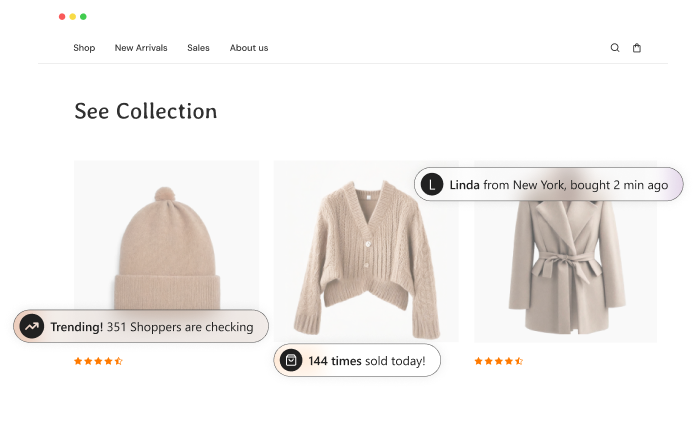
Show your best reviews on product pages, landing pages, and checkout using widgets, floating popups, star rating badges, and review walls. Social proof at the point of decision drives conversions.
WiserReview handles this entire workflow. Automate collection, moderate feedback, and publish reviews directly to your site without coding.

Wrapping Up
Asking for reviews doesn’t have to be awkward. The brands that collect the most reviews do three things consistently: they ask at the right time, they make it easy with a direct link, and they keep the request short and personal.
Start with email. It’s the most effective channel for most businesses. Use the templates above as a starting point, personalize them for your brand, and set up a simple follow-up sequence.
If you’re ready to scale beyond manual requests, automate the process so every customer gets asked at the right moment without you having to remember.
Your customers are happy. They just need a nudge.