I’ve helped 10,000+ businesses set up FOMO campaigns through WiserNotify. Some of those campaigns flopped. Others boosted conversions by 15% or more in the first week.
The difference? Not the tactic itself. It’s how you use it.
FOMO marketing (fear of missing out marketing) taps into a basic human instinct: people hate losing opportunities more than they love gaining new ones.
When you create genuine urgency, scarcity, or exclusivity around your offers, casual browsers turn into buyers.
But here’s what most guides won’t tell you. Overuse FOMO, and your audience stops trusting you. Fake a countdown timer that resets every day, and you’ll lose credibility fast.
In this post, I’m breaking down 9 FOMO marketing strategies that I’ve seen work across thousands of real campaigns.
With real brand examples, real results, and honest advice on what to avoid.
What Is FOMO Marketing?
FOMO stands for Fear of Missing Out. It’s the anxiety people feel when they believe others are experiencing something they’re not.
In marketing, FOMO is a psychological trigger that pushes people to act now instead of later. You’ve felt it yourself. That flash sale is ending in 2 hours.
The “only 3 left in stock” warning. The notification shows 47 people have just bought the same product.
It works because of loss aversion, a concept from behavioral economics.
Research by Daniel Kahneman and Amos Tversky showed that the pain of losing something is roughly twice as powerful as the pleasure of gaining it.
According to a study tracked in our FOMO statistics roundup, 60% of millennials make a reactive purchase within 24 hours after experiencing FOMO. That’s not a small number.
So the psychology is solid. The question is: how do you use it without crossing the line into manipulation?
Let me walk you through what actually works.
9 FOMO Marketing Strategies That Actually Work
These aren’t theoretical ideas. I’ve watched each of these strategies drive real results for WiserNotify users and other brands I’ve studied closely.
1. Limited-Time Offers
This is the most straightforward FOMO tactic. Put a deadline on your offer, and people have to decide now or lose it.
The key? Make the deadline real. If your “24-hour sale” runs every week, people catch on. And they stop caring.
I’ve seen limited-time offers work best when they’re tied to a specific event or reason. A product launch, a holiday, an anniversary. Give people a “why” behind the urgency.
Hostinger does this well. They run time-bound hosting sales tied to seasonal events, with clear end dates that create genuine pressure to act.

Pro tip: Pair your limited-time offer with an announcement bar at the top of your site. I’ve seen this simple combo increase deal visibility by 30% or more compared to relying on banner ads alone.
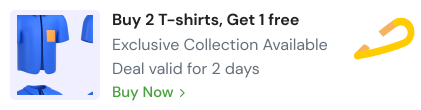
Build urgency
Add floating offers with countdown timer & coupon code.
2. Flash Sales with Countdown Timers
Flash sales are different from regular sales. They’re shorter (usually 2 to 12 hours), less predictable, and typically offer larger discounts.
What makes them work is surprise plus urgency. Your audience didn’t plan for this sale. It just appeared. And it’s disappearing soon.
Adding a countdown timer widget takes this to another level. According to research from CXL Institute, countdown timers can boost conversions by up to 332% when paired with a genuine limited offer.
Boat uses this tactic on product pages by showing a timer next to discounted pricing. Customers see exactly how much time they have left.

One thing I’ve learned from watching flash sales across hundreds of stores: keep them rare. If you run flash sales every week, they become expected. Once a month or less keeps the surprise factor alive.
Build trust & FOMO
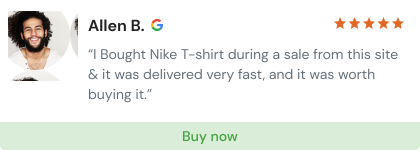
Highlight real-time activities like reviews, sales & sign-ups.
3. Low-Stock and Limited-Availability Alerts
“Only 3 left in stock.”
Five simple words. But they completely change how a shopper thinks about a product.
When something is scarce, we perceive it as more valuable. This goes back to a famous 1975 psychology study where researchers found that cookies from a nearly empty jar were rated as more desirable than identical cookies from a full jar.
Creating urgency through scarcity works because it shifts the decision from “should I buy this?” to “can I afford to miss this?”
Flipkart uses low-stock alerts to prompt buyers to make faster decisions. When shoppers see only a few units remaining, hesitation drops significantly.

But this only works when it’s truthful. I’ve tested fake scarcity alerts on test stores, and bounce rates actually increased. Shoppers are smarter than most marketers give them credit for.
Build trust & FOMO
Highlight real-time activities like reviews, sales & sign-ups.
4. Exclusive Access and VIP-Only Deals
People want what they can’t easily get. That’s just human nature.
Offering exclusive access to deals, content, or products for a specific group (email subscribers, loyalty members, early adopters) triggers both FOMO and a sense of belonging.
I’ve noticed this strategy works particularly well for SaaS companies and course creators. “Join 5,000+ marketers who get our strategies before anyone else” hits differently than a generic “subscribe to our newsletter.”
Drip nails this. Their newsletter signup promises exclusive marketing resources and fresh strategies that aren’t available anywhere else on their site.

The trick is actually delivering exclusive value. If people sign up and get the same stuff everyone else sees, they’ll unsubscribe within a month.
Build trust & FOMO
Highlight real-time activities like reviews, sales & sign-ups.
5. Social Proof Notifications
This is where I have the most hands-on experience, since it’s exactly what WiserNotify does.
Social proof and FOMO work together naturally. When visitors see real-time notifications indicating that others are buying, signing up, or browsing a product, two things happen.
First, trust goes up. If other people are buying, it must be worth buying.
Second, urgency kicks in. If everyone else is grabbing this, maybe I should too before it’s gone.
I’ve personally set up social proof campaigns for ecommerce stores that increased conversion rates from 1.2% to 3.8% just by adding purchase notifications and live visitor counts.
No discount needed. Just proof that other people were buying.
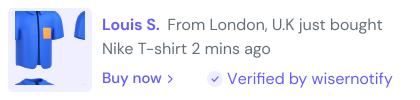
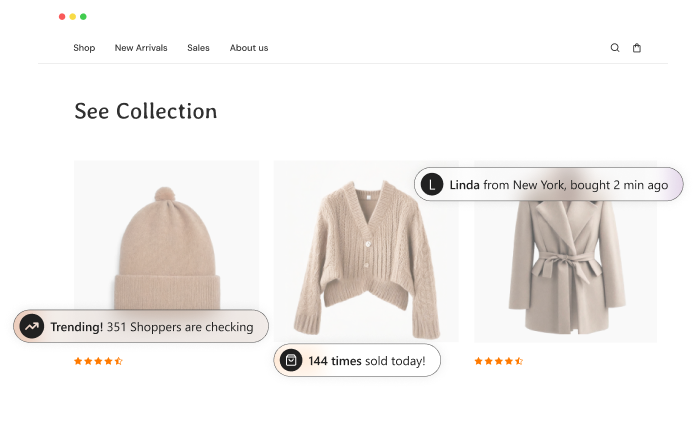
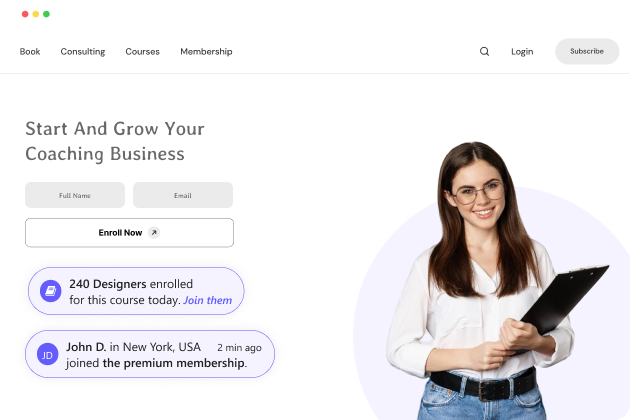
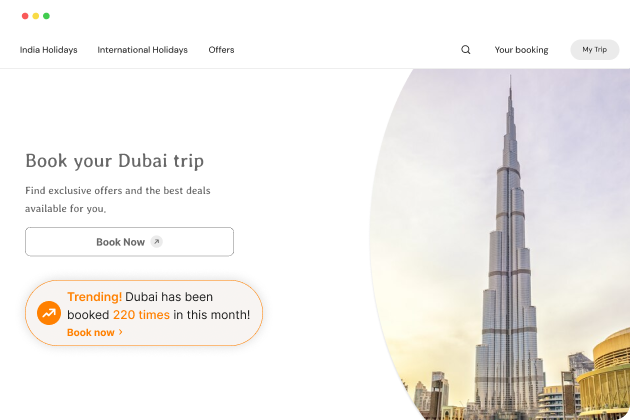
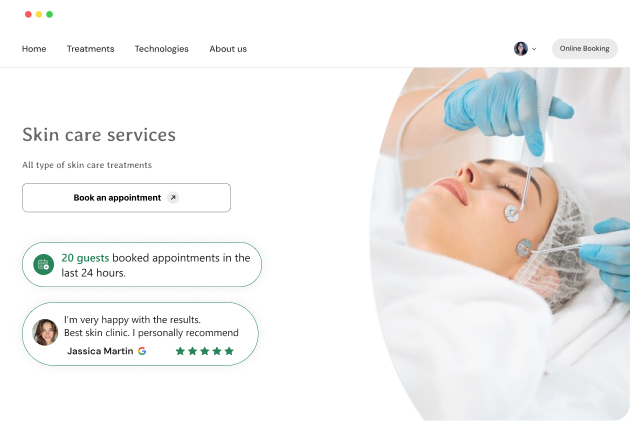
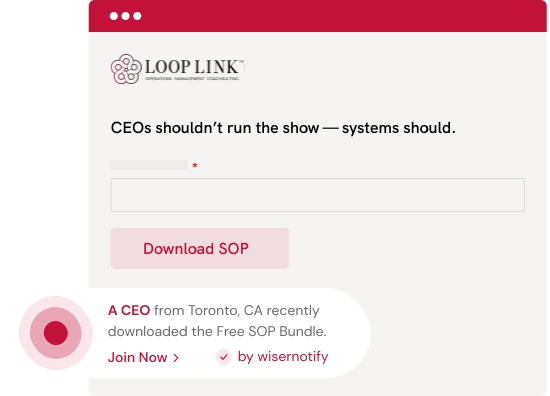
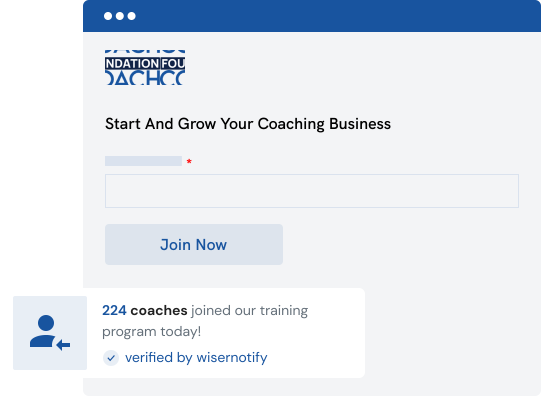
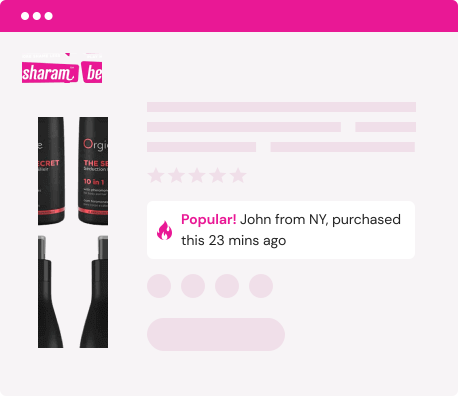
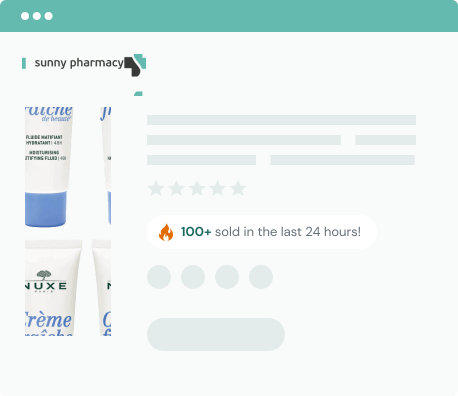
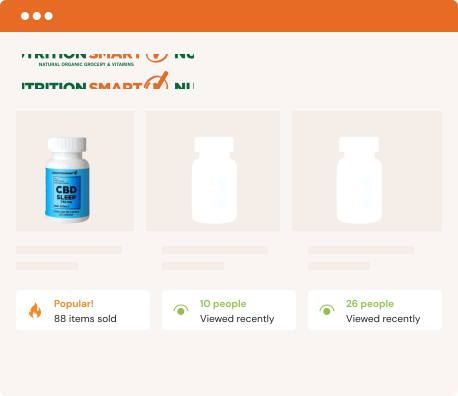
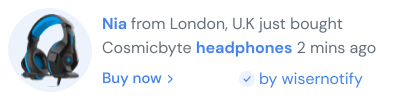
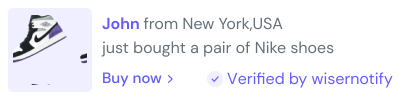
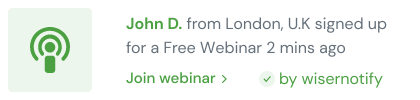
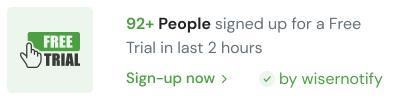
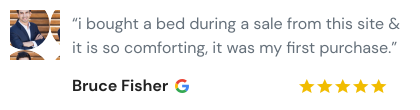
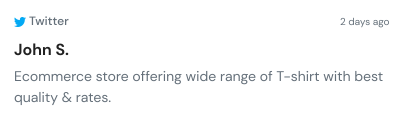
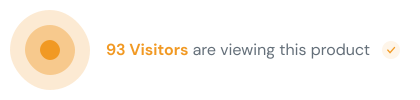
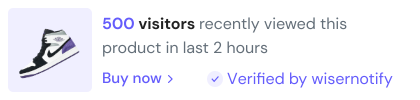
Here’s how WiserNotify implements this: real-time notifications that show recent purchases, visitor counts, and sign-up activity.

The data backs this up. According to a 2024 survey by Influencer Marketing Hub, 75% of consumers search for reviews and testimonials before making a purchase.
Also check: 70+ Genius Social Proof Examples
Build trust & FOMO
Highlight real-time activities like reviews, sales & sign-ups.
6. Early Bird Pricing
Early bird discounts reward people for acting fast. Instead of punishing late buyers, you’re rewarding early ones. The framing matters.
This works especially well for events, course launches, and seasonal promotions. “Get 25% off when you book before [date]” gives people a concrete reason to commit now.
Imagica runs early bird offers for holiday bookings, giving customers a compelling reason to plan ahead and save.

I’ve found that early bird offers convert best when you show how much the price will increase after the deadline. “Save $50, price goes up to $199 on March 15th” is more motivating than just “25% off for early birds.”
Build trust & FOMO
Highlight real-time activities like reviews, sales & sign-ups.
7. Influencer Partnerships
When someone your audience already trusts promotes a product, it creates instant FOMO. “If they’re using it, maybe I need it too.”
Influencer marketing and FOMO overlap more than most people realize. A limited collaboration between a brand and a popular creator feels exclusive by default.
Sugar Cosmetics uses influencer campaigns to create product desire and drive its audience toward quick purchasing decisions.

The best influencer FOMO campaigns pair the creator’s endorsement with a limited-time discount code. “Use my code for 20% off, but it expires Friday.” That’s FOMO plus social proof in one move.
8. Contests and Giveaways
Nothing creates buzz quite like a well-run giveaway. The fear of missing a free prize is surprisingly powerful.
Set a clear entry deadline, promote it across your channels, and watch engagement spike. I’ve seen giveaways grow email lists by 40% or more in a single week when the prize genuinely matches the audience’s interests.
Mageplaza uses a spin-the-wheel pop-up where visitors enter their email for a chance to win discounts. It’s playful, it’s urgent, and it collects leads.

Quick warning: make sure the prize is relevant to your product. A free iPhone giveaway attracts freebie seekers. A free 6-month subscription to your tool attracts actual potential customers.
Build urgency
Add floating offers with countdown timer & coupon code.
9. Limited-Edition Product Drops
Limited editions create FOMO through pure scarcity. When something is available in only small quantities, people assign it greater value.
Think about it. Jim Beam produces 7 to 8 million cases of bourbon annually. Pappy Van Winkle makes about 8,000 bottles. Guess which one people line up for?
This principle applies to any business. Limited-run products, seasonal collections, or exclusive bundles all trigger that “I need to get this before it’s gone” response.
Some trigger words that amplify this effect: “limited run,” “while supplies last,” “one-time release,” “never restocked.”
SEIKO demonstrates this perfectly with limited-edition watch releases that create intense demand through controlled scarcity.

How to Use FOMO Across Different Channels
FOMO isn’t just a website tactic. Here’s how to apply it across your main marketing channels:
Website FOMO
Your site has the most control. Use social proof notifications, countdown timers, low-stock alerts, announcement bars, and exit-intent popups.
Layer multiple FOMO signals onto high-intent pages such as your pricing page, product pages, and checkout.
Don’t overload your homepage with every FOMO tactic at once, though. Pick 2 to 3 signals per page. Too many urgency triggers feel desperate.
Email FOMO
Subject lines do the heavy lifting. Use specific numbers (“only 7 left”), deadlines (“ends at midnight”), and personalization (“saved for you until 6 pm”).
Inside the email, bold your deadline, repeat the scarcity element, and keep the design clean so the CTA button stands out.
Social Media FOMO
Stories with countdown stickers. Posts showing sold-out notifications. Behind-the-scenes clips of limited inventory.
User-generated content showing happy customers with your product.
Social media FOMO works best when it feels organic rather than scripted. A quick photo of a nearly empty warehouse shelf creates more urgency than a designed graphic that says “HURRY!”
17+ FOMO Marketing Phrases That Convert
The right words can trigger instant action. Here are phrases I’ve seen perform well across campaigns, grouped by the type of FOMO they create:
Urgency and Scarcity
- “Limited time only!”
- “Offer ends in [countdown timer].”
- “Only X left in stock.”
- “While supplies last.”
- “Selling out fast!”
- “Deal expires tonight.”
Social Proof
- “[Number] people bought this in the last 24 hours.”
- “Just added to cart by [name] in [location]”
- “Trending right now.”
- “Join [number] happy customers.”
- “Most popular choice this month.”
Exclusivity
- “Members-only discount”
- “Early access sale”
- “VIP offer: get it before it goes public.”
- “Back in stock (grab it before it’s gone again).”
- “Invite-only pricing”
Personal Touch
- “We saved one just for you.”
- “Your cart is about to expire.”
- “This deal won’t come back.”
Context matters with all of these. Pick phrases that match your brand voice and feel honest.
Also check: 9 FOMO Marketing Examples I Studied to Boost Conversions
3 Best FOMO Marketing Tools
You need the right tools to run FOMO campaigns without spending hours on manual setup. Here are three FOMO tools I’ve used or reviewed closely:
1. WiserNotify
WiserNotify (our product, full disclosure) displays real-time social proof notifications: recent purchases, live visitor counts, newsletter signups, and recent actions from other visitors.
It connects with 200+ platforms, including Shopify, WooCommerce, WordPress, and major CRMs. The setup takes about 5 minutes.
What I built WiserNotify to do differently: combine multiple FOMO signals (social proof, urgency, trust) into a single dashboard. Most tools only do one.

2. ProveSource
ProveSource focuses on real-time social proof notifications showing customer activity on your website. It’s easy to customize and supports multiple notification types.
Good for businesses that want a straightforward social proof solution. The free plan is limited, but it’s enough to test whether notifications work for your audience.

3. Fomo
Fomo (the app, not the acronym) was one of the earliest social proof notification tools on the market. It displays recent customer interactions, such as purchases, signups, and reviews.
It integrates with major ecommerce platforms and has a clean notification design. The pricing scales with traffic, which can get expensive at higher volumes.

| Feature | WiserNotify | ProveSource | Fomo |
|---|---|---|---|
| Free Plan | Yes (10,000 visitors) | Yes (1,000 visitors) | No free plan |
| Notification Types | 50+ (social proof, urgency, trust) | 15+ (social proof focused) | 20+ (social proof focused) |
| Integrations | 200+ | 100+ | 100+ |
| A/B Testing | Yes | No | Yes |
| Best For | All-in-one FOMO + social proof | Simple social proof setup | Established ecommerce stores |
How to Measure Your FOMO Campaign Results
Running FOMO campaigns without tracking results is like driving blindfolded. Here are the metrics I watch:
Conversion rate is the big one. Track the percentage of visitors who complete your desired action (purchase, signup, download) before and after adding FOMO elements.
Click-through rate (CTR) tells you whether your FOMO messaging is compelling enough to get clicks. A/B test your FOMO-driven CTAs against standard ones.
Bounce rate can reveal if your FOMO tactics are too aggressive. If bounce rate spikes after adding urgency elements, dial it back.
Revenue per session shows the bottom-line impact. I’ve seen stores increase revenue per session by 20%-35% after adding social proof notifications and countdown timers to product pages.
Track everything through Google Analytics, your ecommerce platform’s built-in analytics, or your FOMO tool’s dashboard.
5 FOMO Mistakes That Kill Conversions
I’ve made some of these myself. Learn from my experience:
Fake urgency. A countdown timer that resets when the page refreshes? Customers notice. And they’ll never trust your deadlines again.
Overusing FOMO. If every page screams “HURRY! LIMITED! ACT NOW!” your visitors will feel overwhelmed, not motivated. Use FOMO on your highest-intent pages, not everywhere.
Ignoring mobile. Most FOMO elements (popups, notification bars, countdown timers) need to work perfectly on mobile. If a pop-up covers the entire mobile screen and can’t be closed, you’re losing customers.
Vague scarcity. “Limited availability” means nothing. “Only 4 left at this price” means everything. Specifics build trust. Vagueness builds skepticism.
No follow-through. Promising a deal ends Friday, but then extending it to Sunday damages credibility permanently. If you set a deadline, honor it.
Start Using FOMO the Right Way
FOMO marketing works. The data proves it, and I’ve seen it firsthand across thousands of campaigns.
But the brands that get the best long-term results aren’t the ones using every trick in the book.
They’re the ones using 2 to 3 FOMO strategies really well, with honesty and consistency.
Pick one or two strategies from this list. Test them on your highest-traffic pages. Measure the results. Then expand from there.
If you want to get started with social proof notifications (the FOMO tactic with the most consistent ROI in my experience), give WiserNotify a try.
The free plan gives you enough to see real results.