
22 Upselling and Cross-Selling Statistics (2026)
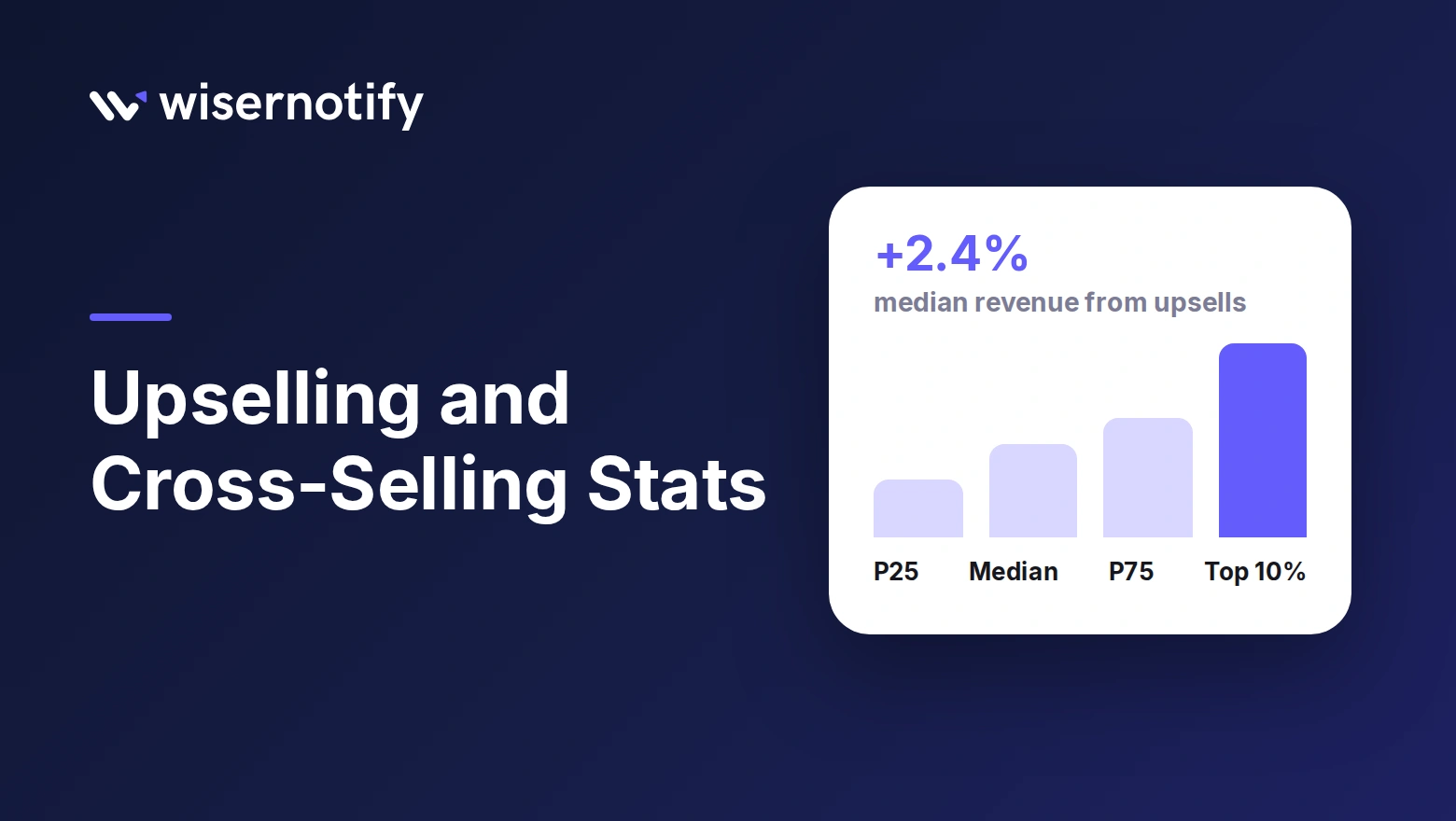
Upselling and cross-selling get sold as easy money. The real numbers are smaller, and more useful. A typical Shopify store adds a little over 2% to its sales from upsells, while the best stores add close to 9%.
Below are 22 numbers from recent sales surveys, Shopify store data, email benchmarks and SaaS retention research, grouped by where the extra sale happens.
Use them to set realistic targets, pick the right placements, and spot where your own offers fall short.
Key Upselling and Cross-Selling Statistics
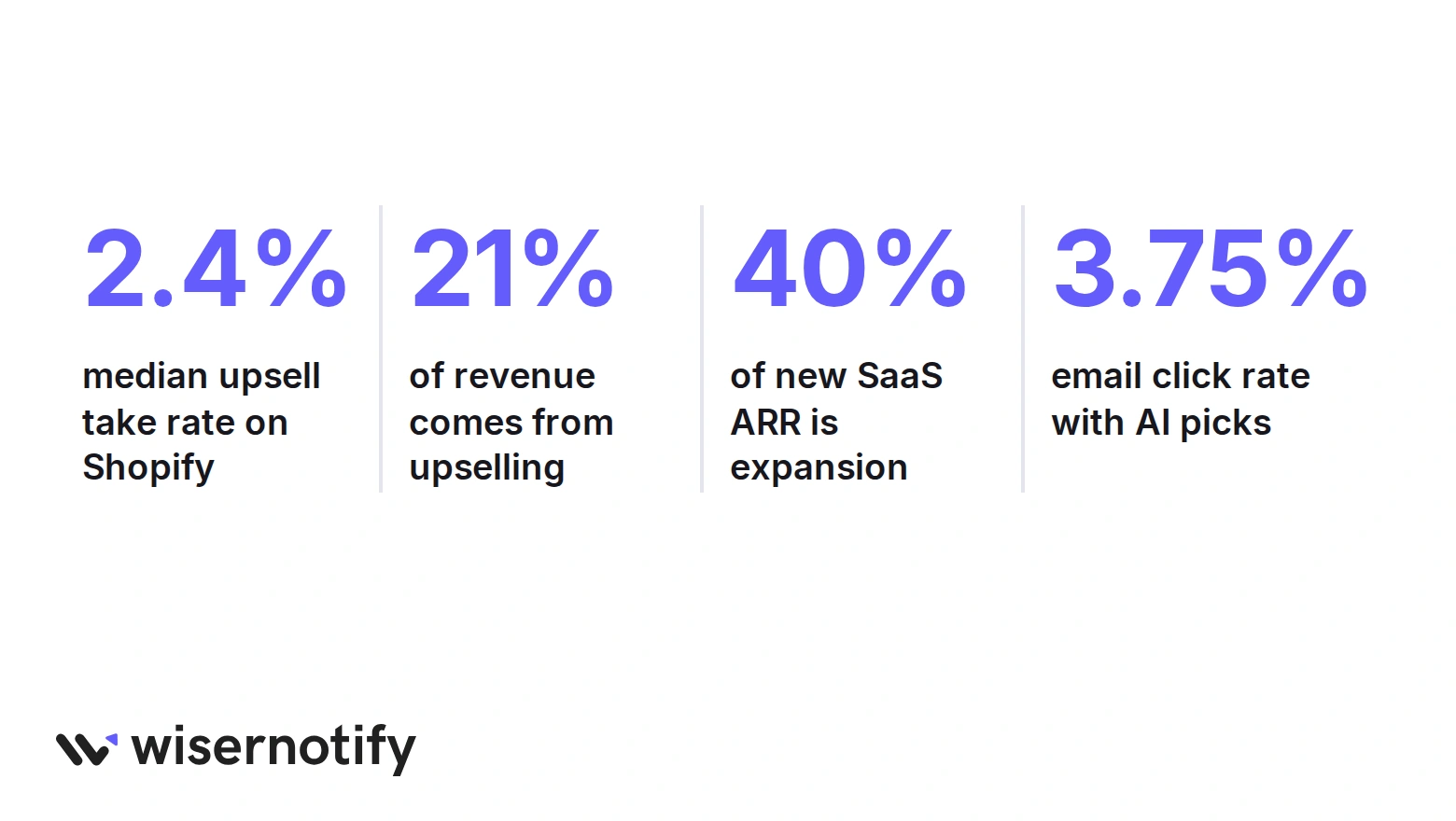
- The median Shopify upsell converts at 2.4% of views, and the top 10% of stores get close to 10%.
- Sales teams say upselling brings in 21% of company revenue, and cross-selling another 21%.
- Offers with no discount convert slightly better than offers with up to 20% off.
- Emails with AI product recommendations reach a 3.75% click rate, more than double the average campaign.
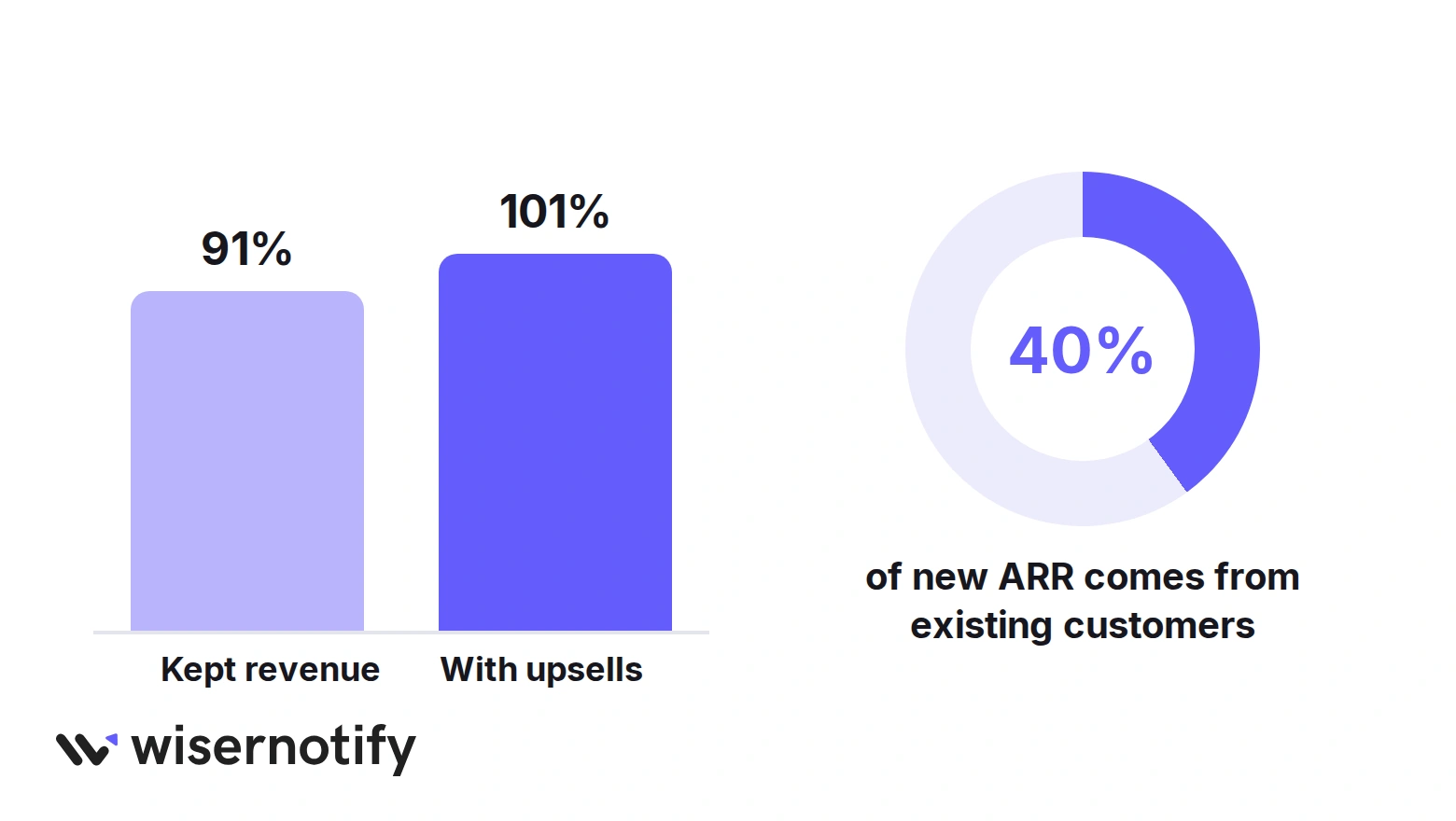
- Expansion from existing customers now makes up 40% of new SaaS revenue.
Upselling vs Cross-Selling
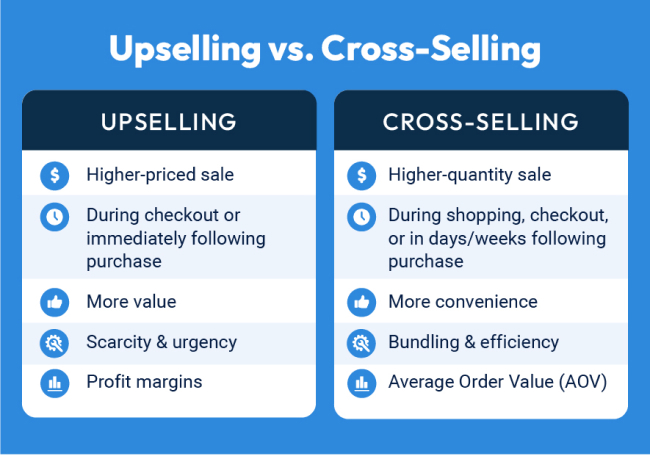
Upselling moves a buyer to a bigger or better version of what they chose. Cross-selling adds a related product next to it. Both raise order value, and both depend on the offer fitting the first choice.
| Upselling | Cross-selling | |
|---|---|---|
| What you offer | A pricier version or upgrade | A related add-on |
| Example | Large coffee instead of small | A pastry with the coffee |
| What it lifts | Price per item | Items per order |
| Where it shows | Product page, plan selection, checkout | Product page, cart, follow-up emails |
Upselling
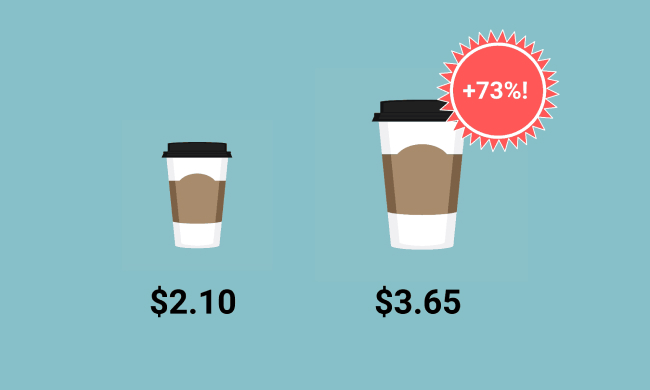
The coffee shop version is simple. Offering the large size turns a $2.10 order into a $3.65 one with no extra item to pack or ship.
Cross-Selling
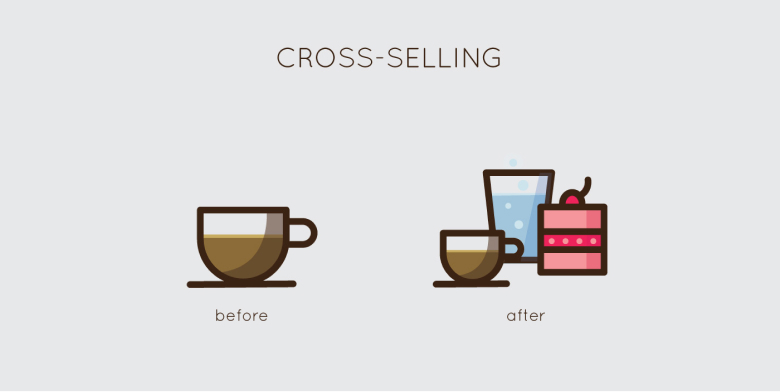
Cross-selling adds the cake and the water. It works when the add-on solves the next small problem the buyer will have, like a case for a new phone.
For ways to put both into practice, see these upsell and cross-sell strategies.
Sales Team Upselling Statistics
1. 91% of Sales Pros Upsell
Upselling is close to universal among sales teams. In a survey of more than 1,400 sales professionals, 91% said they upsell existing customers.
2. Upsells Bring In 21% of Revenue
The same survey put the payoff at 21% of company revenue on average. That makes upselling a core revenue line, not a side tactic.
3. 87% Cross-Sell for Another 21%
Cross-selling is nearly as common, with 87% of sales pros using it. It also drives about 21% of company revenue on average.
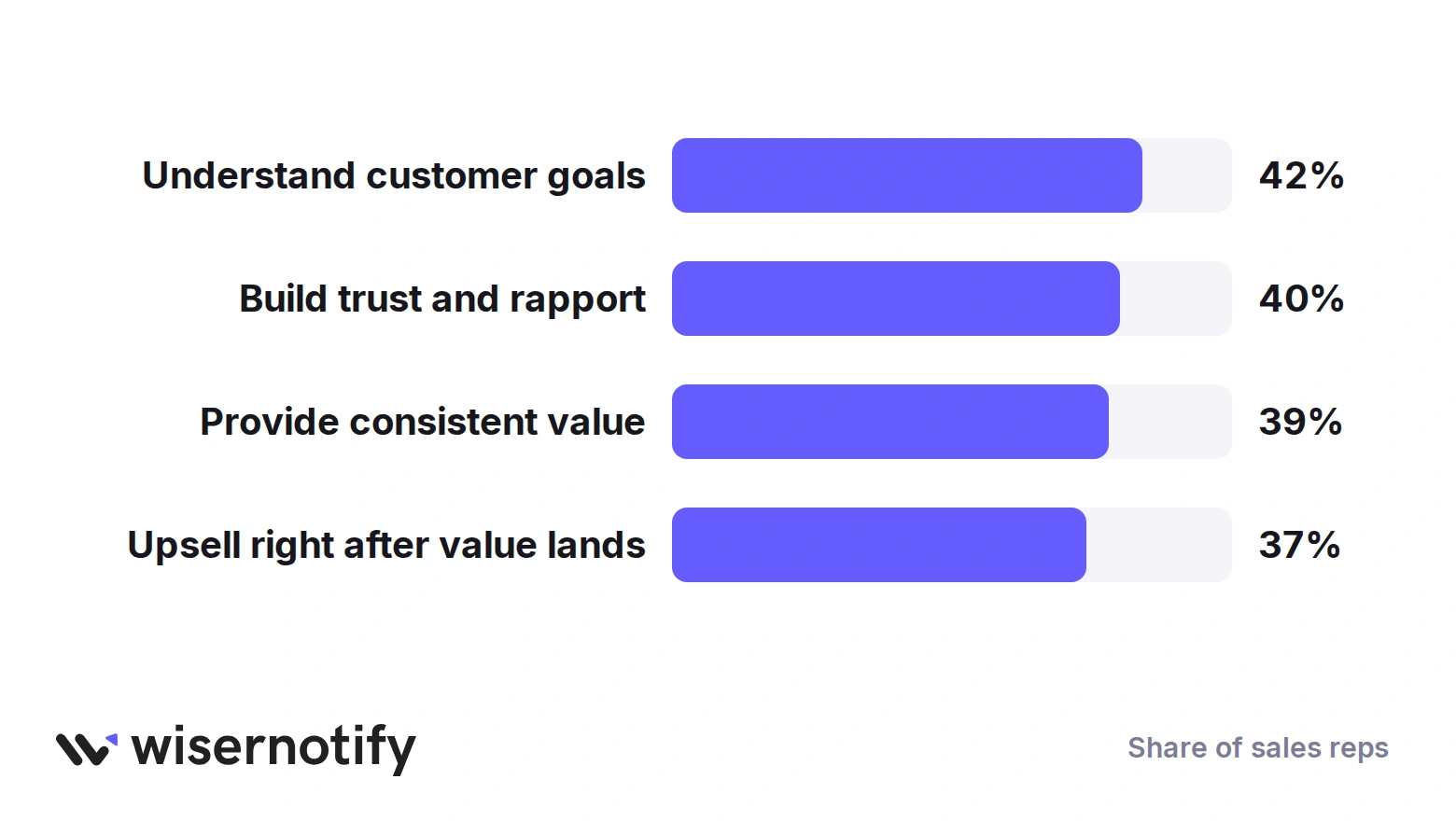
4. 42% Start With Customer Goals
Asked what drives repeat sales and upsells, 42% of reps named understanding customer goals. Offers land when they match where the customer is trying to go.
5. 40% Say Trust Wins the Upsell
Building trust and rapport was the single most effective upsell and cross-sell strategy for 40% of sales pros. Close behind, 39% pointed to providing consistent value.
6. 37% Wait Until Value Lands
Timing matters as much as the offer. 37% of reps hold the upsell until right after the customer sees results from what they already bought.
Build trust & FOMO
Highlight real-time activities like reviews, sales & sign-ups.


Ecommerce Upsell Statistics
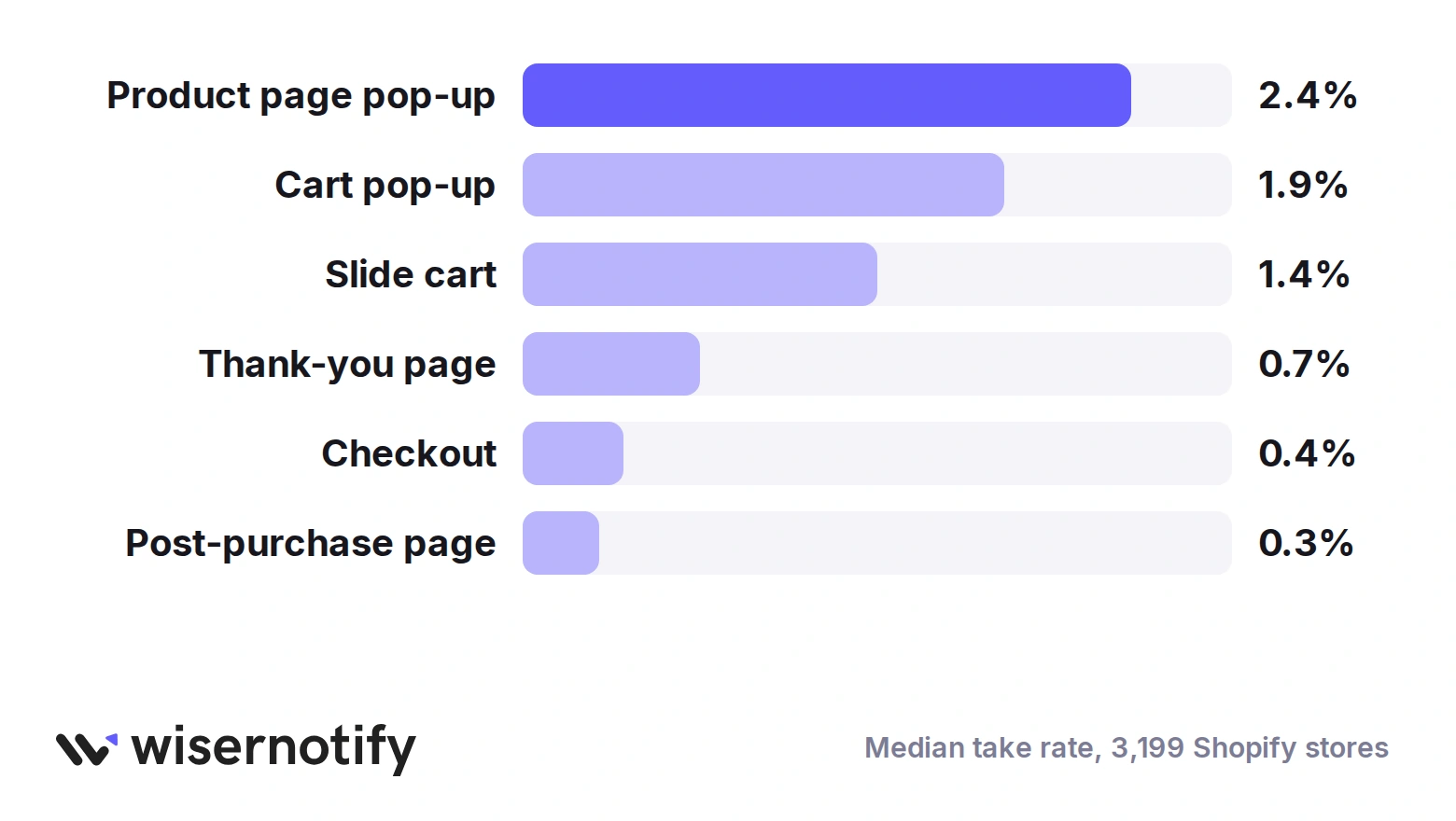
These eight numbers come from 3,199 Shopify stores and 218.6 million upsell offer views between January and August 2026. Every figure is a median across stores, so one large store can’t skew it.
7. The Median Take Rate Is 2.4%
Of every 100 upsell offers shown, the median store sells 2.4. The top 10% of stores get close to 10, which is where most “double your AOV” claims come from.
8. Upsells Add 2.4% to Sales
The median store earns 2.4% more than it would without upsells. The top 10% add 8.9%, and stores that use three or more placements tend to sit at the top.
9. 7.5% of Orders Include an Upsell
At the median, 7.5 of every 100 orders carry at least one upsell item. In the top 10% of stores, it’s 22.5.
10. $2.16 Extra per Order
Median upsell revenue works out to $2.16 per order, or $983 per store over 30 days. The top 10% earn $9.36 per order.
11. Product Pages Convert Best
Product page pop-ups lead at a 2.4% median take rate, ahead of cart pop-ups at 1.9%. One-click post-purchase offers convert at just 0.3%, though every sale there is pure extra revenue.
12. Discounts Barely Move It
Upsells with no discount convert at 2.3%, against 2.0% for offers at 1% to 20% off. Bigger cuts of 21% to 50% drop to 1.5%. Relevance matters more than price.
13. AI Picks Beat Hand-Picked Ones
On product page pop-ups, AI-chosen recommendations convert at 3.2% versus 1.9% for hand-picked products. Later in the funnel, at the cart and after checkout, manual picks pull ahead again.
14. Three Products Beat One
Offers showing a single product convert at 1.5%. Showing three lifts that to between 2.9% and 3.2%, so give shoppers a small choice instead of one take-it-or-leave-it item.
Want to see how stores lay these offers out? Browse these product recommendation examples.
AI Recommendation Statistics
15. AI Picks Double Email Clicks
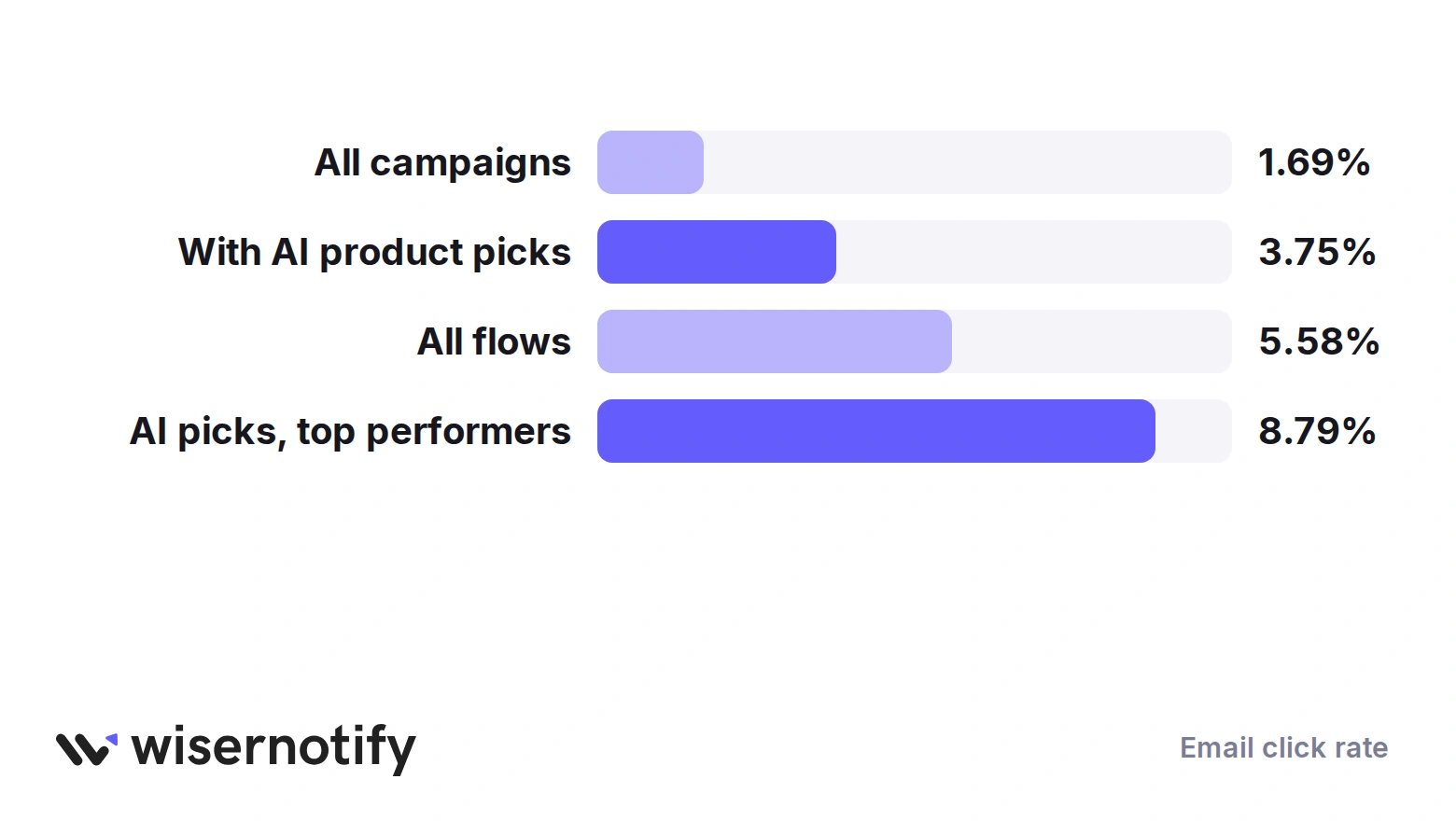
Emails with AI product recommendations reach a 3.75% click rate on average, and 8.79% for top performers. The average campaign sits at 1.69%, based on more than 183,000 online stores.
16. Amazon’s AI Assistant Drove $12B
Amazon’s AI shopping assistant, which suggests products in a chat instead of a search box, was used by more than 300 million customers in 2025. Amazon credits it with nearly $12 billion in incremental annualized sales.
17. Assistant Users Buy 60% More Often
Shoppers who use that assistant are 60% more likely to complete a purchase. Cross-selling is moving from a widget under the product to a conversation about what the buyer needs.
18. Automations Earn 16x More per Send
Automated emails, the group that post-purchase and cross-sell flows belong to, made up just 2% of sends but 30% of email revenue across 150,000 brands. Each one earned $2.87 versus $0.18 for a scheduled campaign.
For the bigger picture on online sales, see these ecommerce stats and trends.
SaaS Expansion Revenue Statistics
19. Upsells Add 10 Points of Retention
Private B2B SaaS companies keep 91% of revenue at the median before upsells. Add upgrades, extra seats and add-ons, and net retention climbs to 101%.
20. 40% of New ARR Is Expansion
Expansion from existing customers now makes up 40% of total new annual recurring revenue for SaaS companies. Upsells have become as central as new logos.
That is also why customer lifetime value tends to rise fastest at companies that sell well to the customers they already have.
Upselling Case Studies
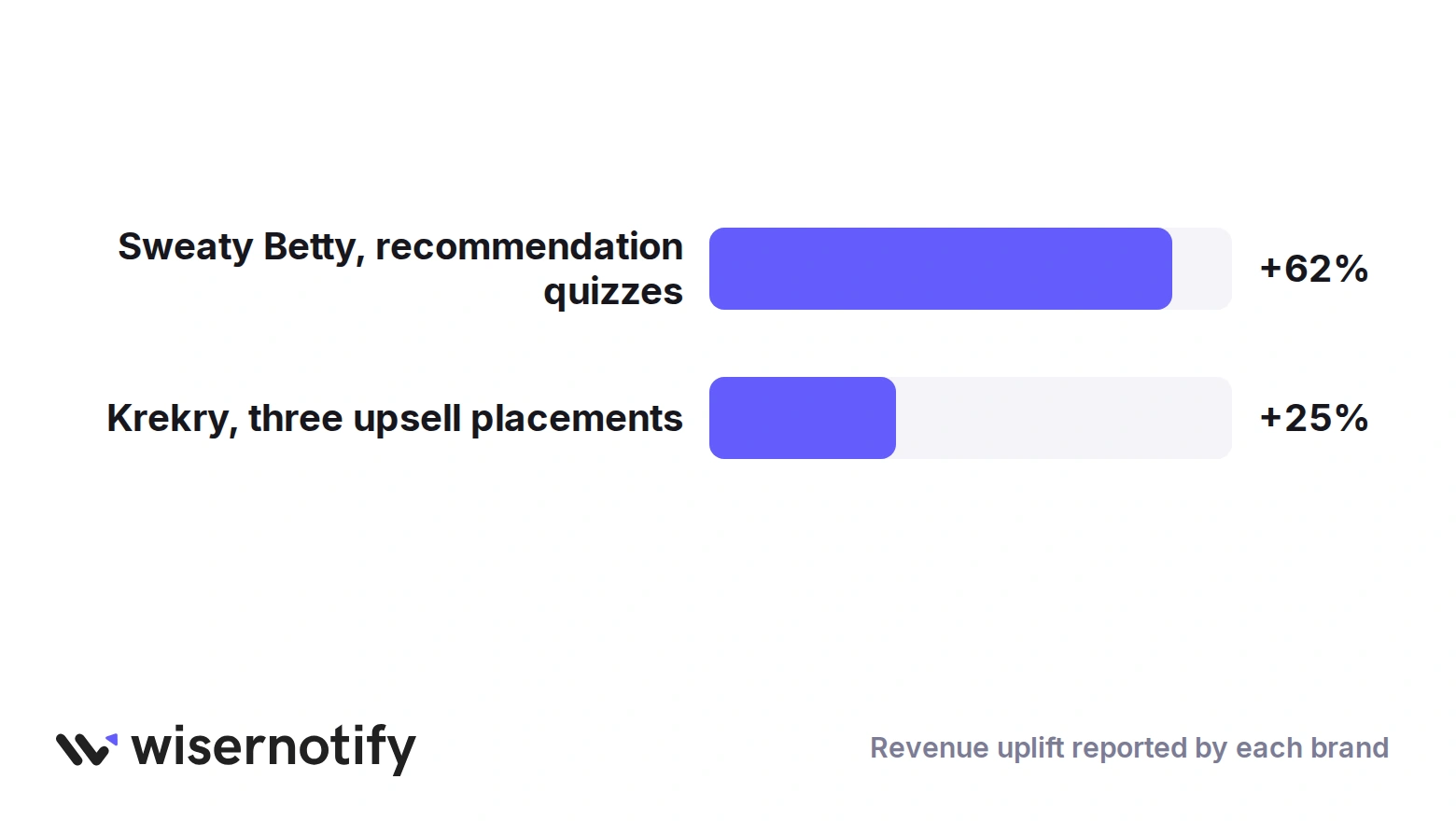
Two recent cases show what the top of the benchmark range looks like in practice. Both report their own numbers, so treat them as what is possible rather than what is typical.
21. Krekry: 25% Extra Revenue
Krekry, a store run by the makers of a Shopify upsell app, adds 25% to its sales through upsells in 2026. The offers sit on the product page, in the cart and after checkout, each showing several products.
22. Sweaty Betty: 62% Uplift
Sweaty Betty, the UK activewear brand, added recommendation-powered quizzes to its site in 2023. Within six months, revenue from the quizzes was 62% higher than from the quizzes it ran before, and algorithm-picked recommendations beat hand-picked ones on product pages.
How to Use These Upsell Numbers
Treat the medians as your floor, not your goal. Here is what the data points to.
- Benchmark by placement. A 0.5% take rate is weak on a product page but normal after checkout. Compare each offer with its own placement.
- Start before the purchase. Product page and cart offers convert several times better than post-purchase ones.
- Test without a discount. Relevant single-item offers sell about as well at full price, which protects your margin.
- Show three options. Moving from one product to three roughly doubles the take rate.
- Show what others added. A small notification like “Maya added the travel case” puts social proof right where the upsell decision happens.
For more ways to lift order value, read our guide on how to increase online sales.

Boost Conversion Instantly
Add Social Proof & Urgency to your website
Wrap Up
Upselling works, but rarely in the way it gets pitched. Small, relevant offers shown at the right moment add steady revenue, and the stores that win use several placements instead of one big promotion.
Pick one placement this week, compare its take rate with the benchmark above, and fix the offer before adding another.
Frequently Asked Questions
What is a good upsell take rate?
The median Shopify store converts about 2.4% of upsell offers it shows, so anything above that beats the typical store.
Where do upsell offers convert best?
Product page pop-ups convert best, followed by cart pop-ups. Post-purchase offers convert least but add pure extra revenue.
Do discounts increase upsell conversion?
Not much for single add-ons. Offers with no discount convert about as well as small discounts, so test full price first.
How much revenue do upsells add?
The median store adds about 2.4% to its sales from upsells, while the best stores add close to 9%.
What is the difference between upselling and cross-selling?
Upselling moves a buyer to a pricier version of what they chose. Cross-selling adds a related product alongside it.
Why does upselling matter for SaaS companies?
Expansion from existing customers now makes up about 40% of new SaaS revenue, so upsells drive a large share of growth.

Krunal Vaghasiya is a marketing tech expert who boosts e-commerce conversion rates with automated social proof and FOMO strategies. He loves to keep posting insightful posts on online marketing software, marketing automations, and improving conversion rates.




 Capterra