
83 Trigger Words That Drive Clicks and Sales (With Examples)

Trigger words are words that spark a quick emotional reaction, such as urgency, curiosity, trust or desire, and nudge people to click, buy or sign up. “Now,” “free,” “secret” and “guaranteed” are classic examples.
Below are 83 marketing trigger words sorted by the emotion they create, each with a ready-to-use example and a note on when it backfires.
Key takeaways
- Match the word to the feeling you want: urgency, curiosity, trust, desire or ease.
- A trigger word only works if the claim behind it is true. Fake urgency and empty “guaranteed” claims lose trust fast.
- One or two trigger words per headline or button is enough.
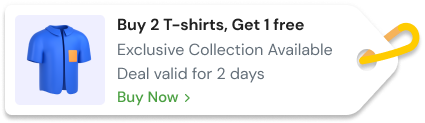
Build trust & FOMO
Highlight real-time activities like reviews, sales & sign-ups.

What Are Trigger Words?
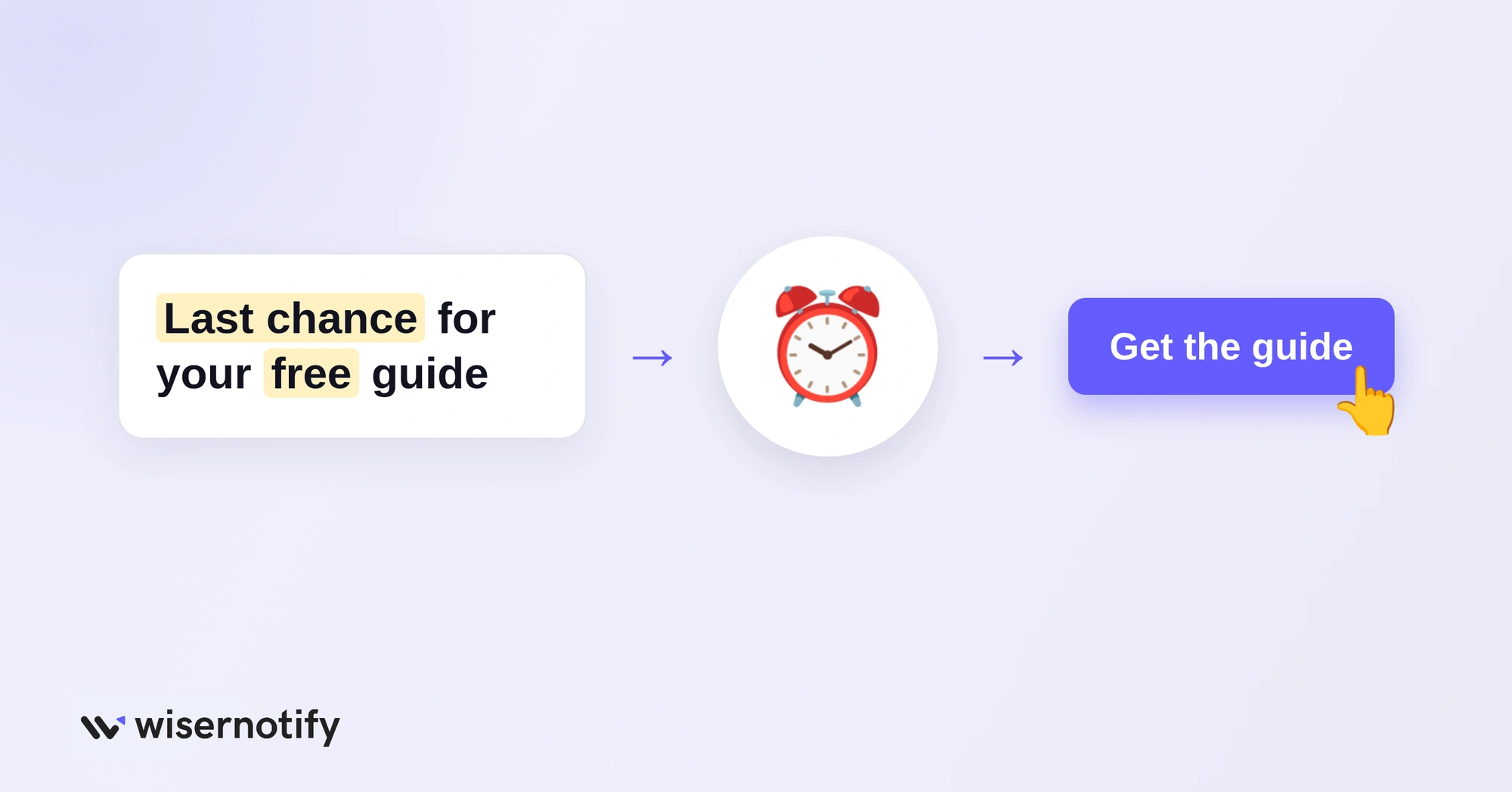
In marketing, trigger words are words and phrases chosen to get an instant emotional response. They tap into feelings like joy, fear, curiosity or desire and prompt an action, such as a click, a purchase or a sign-up.
They show up everywhere copy has to work hard: headlines, subject lines, buttons, ads and limited-time offers.
Trigger Words vs Power Words vs Buzzwords
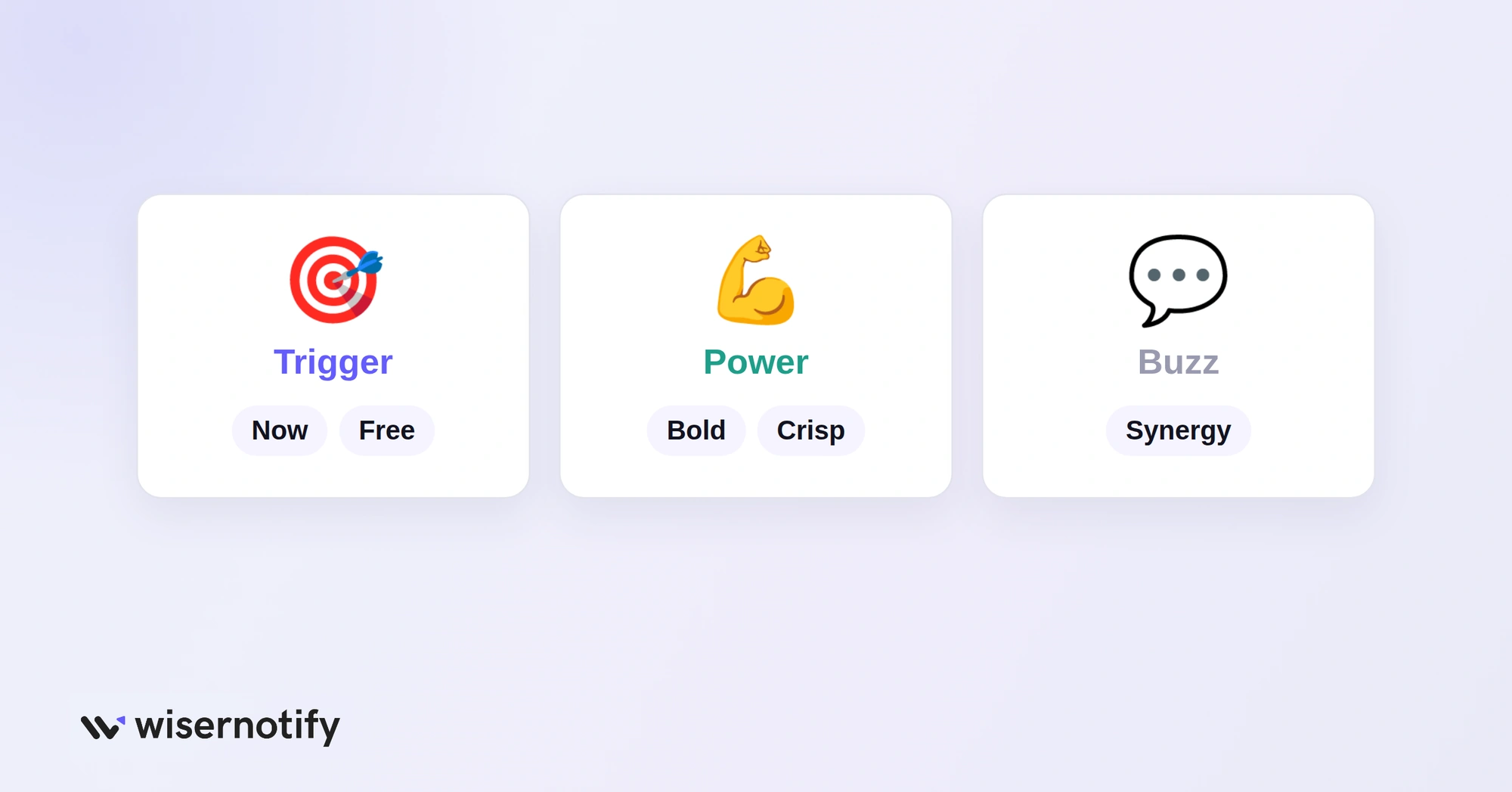
These three terms get mixed up. Here is the difference:
- Trigger words create a specific feeling that leads to action, such as urgency (“today only”) or trust (“guaranteed”).
- Power words add strength or vividness to writing, but do not always spark a feeling.
- Buzzwords are trendy terms that grab attention for a while, then wear out, such as “synergy” or “game-changing.”
83 Trigger Words by Emotion
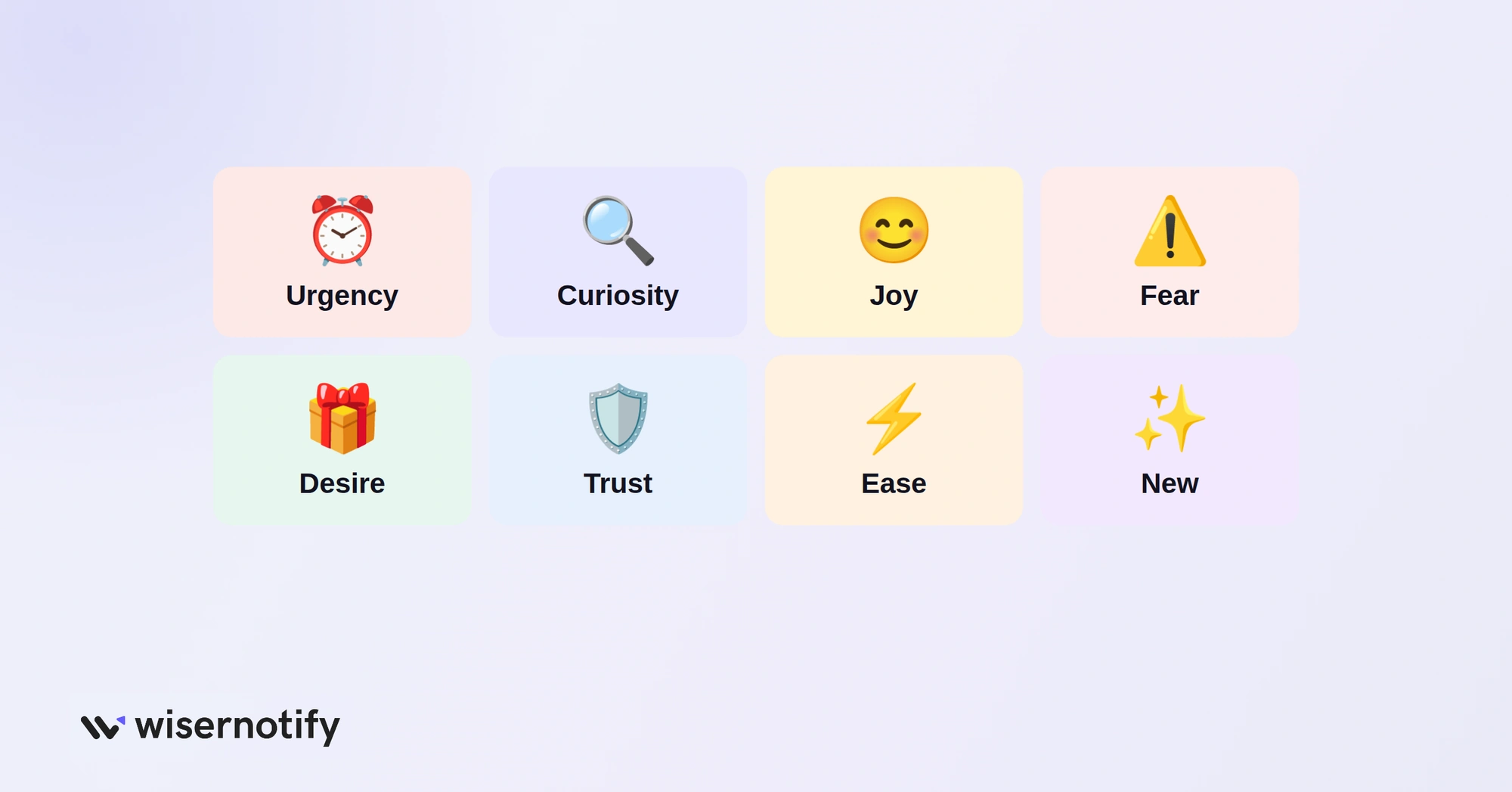
Each list below groups words by the emotion they trigger. Use the example as a starting point, and check the last column before you publish.
Urgency and Scarcity Words
Pushes people to act now instead of later.
| Word | Example | Backfires when |
|---|---|---|
| Now | Get your copy now | Nothing changes if they wait |
| Limited | Limited stock: 40 left | The stock is not limited |
| Exclusive | Exclusive offer for members | Everyone gets the same offer |
| Last chance | Last chance: sale ends tonight | You extend the sale the next day |
| Don’t miss out | Don’t miss out on early access | Used in every email |
| Ending soon | Early-bird pricing ending soon | There is no end date |
| While supplies last | Free tote while supplies last | Supplies never run out |
| Today only | Today only: free shipping | The offer returns tomorrow |
| Instant | Get instant access | Delivery takes days |
| Deadline | Enrollment deadline: Friday | The deadline moves |
| Rush | Rush delivery available | It sounds like pressure, not service |
| Critical | Critical security update | The update is routine |
Curiosity Words
Opens a gap the reader wants to close.
| Word | Example | Backfires when |
|---|---|---|
| Discover | Discover what top stores do differently | The content is basic |
| Secret | The secret to faster checkouts | It is common knowledge |
| Reveal | We reveal our full pricing model | Nothing is revealed |
| Unveiled | New collection unveiled | It is a minor update |
| Hidden | Find the hidden costs in your plan | It feels like clickbait |
| Shocking | The shocking cost of slow pages | The claim is not surprising |
| Unusual | An unusual way to cut returns | The idea is ordinary |
| Little-known | A little-known Shopify setting | Everyone already uses it |
| Forbidden | Forbidden words for email subjects | It reads as hype for a serious brand |
| Mysterious | The mysterious drop in open rates | You never explain it |
| Breakthrough | A breakthrough in skin repair | You cannot back it up |
| Amazing | See the amazing before and after | Everything is called amazing |
Joy and Positive Feeling Words
Links your brand with a good feeling.
| Word | Example | Backfires when |
|---|---|---|
| Happy | Join 2,000 happy customers | The number is not real |
| Joyful | Make gifting joyful again | The product is not emotional |
| Delightful | A delightful unboxing | The packaging is plain |
| Wonderful | Wonderful for sensitive skin | Used without a reason |
| Fantastic | Fantastic value for teams | It replaces a specific benefit |
| Incredible | Incredible 5-hour battery | The spec is average |
| Brilliant | A brilliant way to plan meals | It sounds like hype |
| Perfect | The perfect first camera | It is not right for everyone |
| Effective | Effective in two weeks | There is no proof |
Fear and Loss Words
Shows what the reader could lose. Use only when you offer the fix.
| Word | Example | Backfires when |
|---|---|---|
| Danger | The danger of skipping backups | It scares without a solution |
| Warning | Warning: your cart expires soon | Used for minor things |
| Risk | Try it risk-free for 30 days | There are hidden conditions |
| Avoid | Avoid these 5 checkout mistakes | The list is thin |
| Prevent | Prevent failed payments | It does not prevent them |
| Stop | Stop losing leads at checkout | The problem is not real |
| Protect | Protect your store from fraud | Protection is weak |
| Vulnerable | Is your site vulnerable? | It is used to scare |
| Exposed | Keep customer data from being exposed | It exaggerates the threat |
| Loss | Stop revenue loss from abandoned carts | It lacks a real number |
| Failure | Why most launches fail | It shames the reader |
| Consequence | The consequence of ignoring reviews | It sounds like a threat |
Desire and Gain Words
Promises a reward, bonus or upgrade.
| Word | Example | Backfires when |
|---|---|---|
| Profit | Grow profit per order | You cannot show how |
| Bonus | Bonus: free setup call | The bonus has no value |
| Win | Win back lost customers | It suggests a contest |
| Gain | Gain 10 hours a week | The number is made up |
| Advantage | Get an advantage over competitors | It is vague |
| Benefit | See every member benefit | It lists features, not benefits |
| Reward | Earn rewards on every order | Rewards are hard to redeem |
| Free | Free shipping over $50 | There is a catch |
| Gift | Claim your free gift | The gift needs a purchase you did not mention |
| Premium | Premium support included | Support is standard |
| Luxury | Luxury feel, fair price | The product is basic |
| Elite | Elite coaching program | It alienates beginners |
Trust and Proof Words
Builds confidence that the claim is true.
| Word | Example | Backfires when |
|---|---|---|
| Certified | Certified organic cotton | You have no certificate |
| Guaranteed | 30-day money-back guarantee | The guarantee has fine print |
| Proven | Proven by 500 customer tests | There is no evidence |
| Tested | Dermatologist tested | It was not tested |
| Endorsed | Endorsed by the local chamber | The endorsement is old |
| Recommended | Recommended by physical therapists | You cannot name them |
| Official | Official retailer | You are not official |
| Trusted | Trusted by 1,200 local shops | The number is inflated |
| Authentic | Authentic handmade leather | It is mass produced |
| Real | Real reviews from real buyers | Reviews are filtered |
| Results | See results in 7 days | Results vary widely |
| Case study | Read the case study | There is no data in it |
Ease and Speed Words
Removes effort and waiting.
| Word | Example | Backfires when |
|---|---|---|
| Easy | Easy returns | Returns are hard |
| Simple | Simple 3-step setup | Setup takes an hour |
| Quick | Quick 2-minute quiz | It takes ten minutes |
| Effortless | Effortless meal planning | It still needs work |
| Fast | Fast shipping in 2 days | Shipping is slow |
| Convenient | Convenient curbside pickup | It is inconvenient |
| Hassle-free | Hassle-free cancellation | Cancelling is hard |
| No obligation | No obligation quote | You follow up aggressively |
Newness Words
Signals something fresh worth a look.
| Word | Example | Backfires when |
|---|---|---|
| New | New: dark mode is here | It is not new |
| Introducing | Introducing our spring line | Nothing changed |
| Latest | Shop the latest arrivals | The stock is old |
| Innovative | An innovative way to track orders | It sounds like buzzword filler |
| Groundbreaking | Groundbreaking battery tech | It is an incremental update |
| First | The first app built for florists | You are not first |
How to Use Trigger Words Well
- Pick one emotion per message: urgency and curiosity in the same button compete with each other.
- Put them where decisions happen: headlines, subject lines and calls to action.
- Back every claim: “limited” needs a real limit, “proven” needs proof, “guaranteed” needs a clear guarantee.
- Test two versions: run the plain and trigger-word versions side by side and keep the winner.
Hold back with analytical buyers, complex products and long sales cycles. There, clear facts and demos beat emotional words.
Trigger Words in Calls to Action
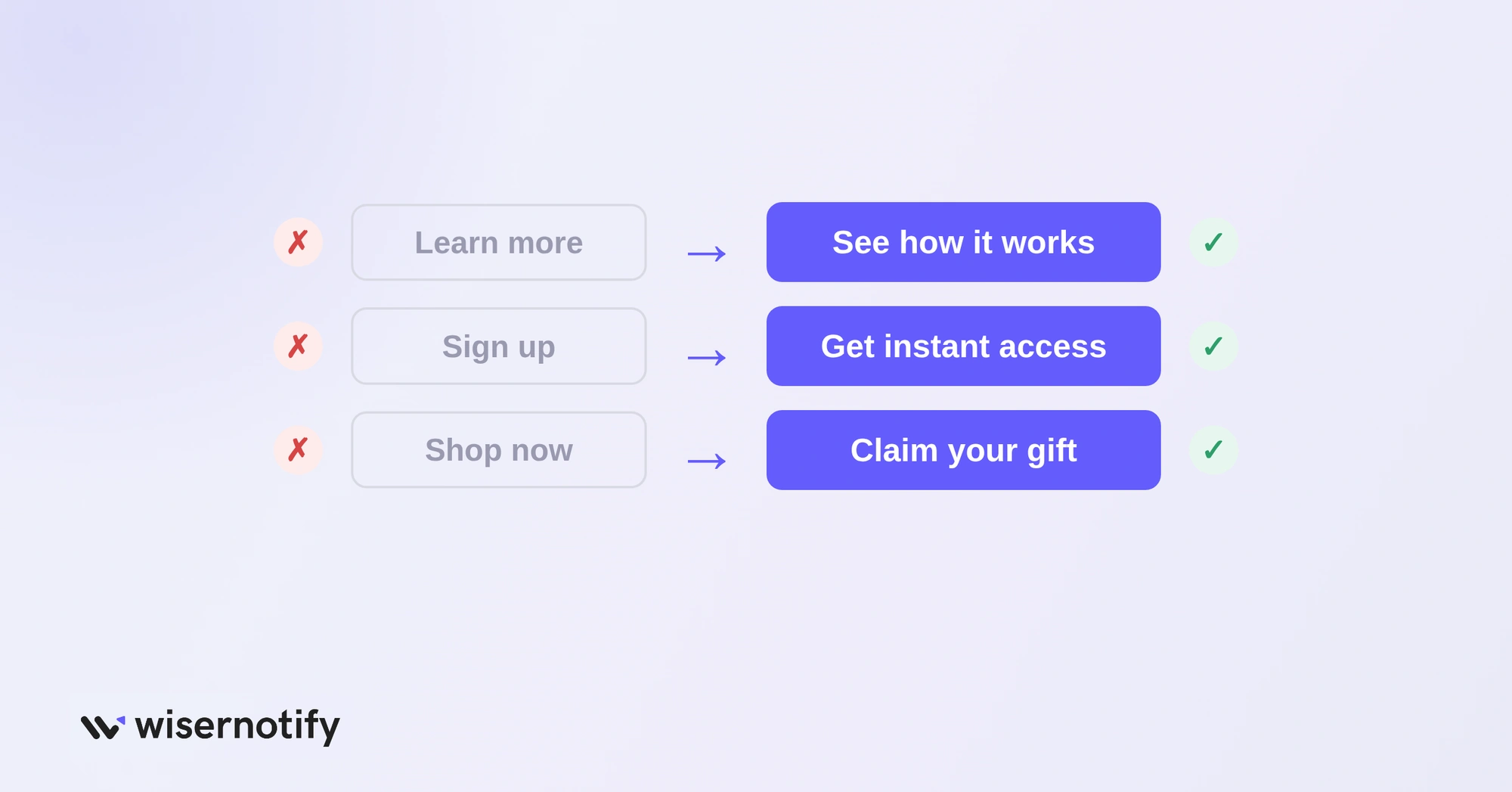
Small changes to button copy can make the next step clearer and more appealing:
| Instead of | Try | Emotion |
|---|---|---|
| Learn more | See how it works | Curiosity |
| Sign up | Get instant access | Ease and speed |
| Shop now | Claim your free gift | Desire |
| Download | Get the free guide | Desire |
| Buy | Try it risk-free for 30 days | Trust |
Find more wording in our list of call to action phrases.
Where to Use Trigger Words
Email Subject Lines

The subject line decides whether the email gets opened. One trigger word, such as “Your early access is ready,” is enough. Avoid stacking words spam filters flag, like “free!!!”
Social Media Ads

Ads have a second to stop the scroll. Lead with the offer and one emotion, such as “New” or “Today only.”
Social Media Posts

Curiosity words like “discover” and “little-known” work well in post captions that link to a longer piece.
Website Copy
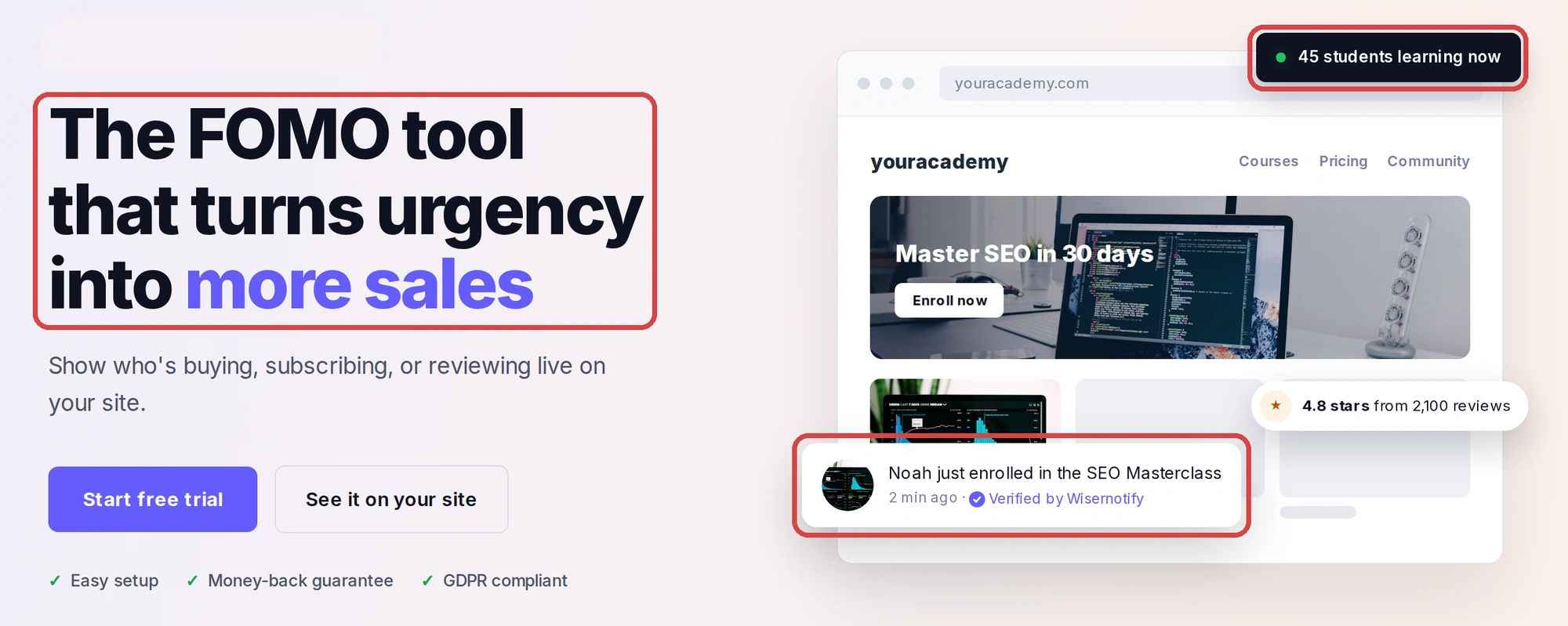
Our own homepage leads with “FOMO,” “urgency” and “more sales,” then backs them up with live notifications. Use trust and ease words near product details and pricing, where visitors weigh the decision.
Landing Pages

Landing pages have one goal, so pair one clear promise with honest urgency to create urgency.
Pop-Ups

A pop-up offer like “Get 10% off your first order” gives a concrete reason to share an email.
Ad Headlines

Put the strongest word at the start of the headline, where it is seen even when the text gets cut.
Product Headlines

Words like “new,” “limited” or “bestselling” make one product stand out on a busy page.
Subheadings

A curiosity word in a subheading keeps readers moving down the page.
Buttons

Buttons should say what the visitor gets, such as “Get instant access” or “Claim your free gift.”
Trigger Words in Social Proof Notifications
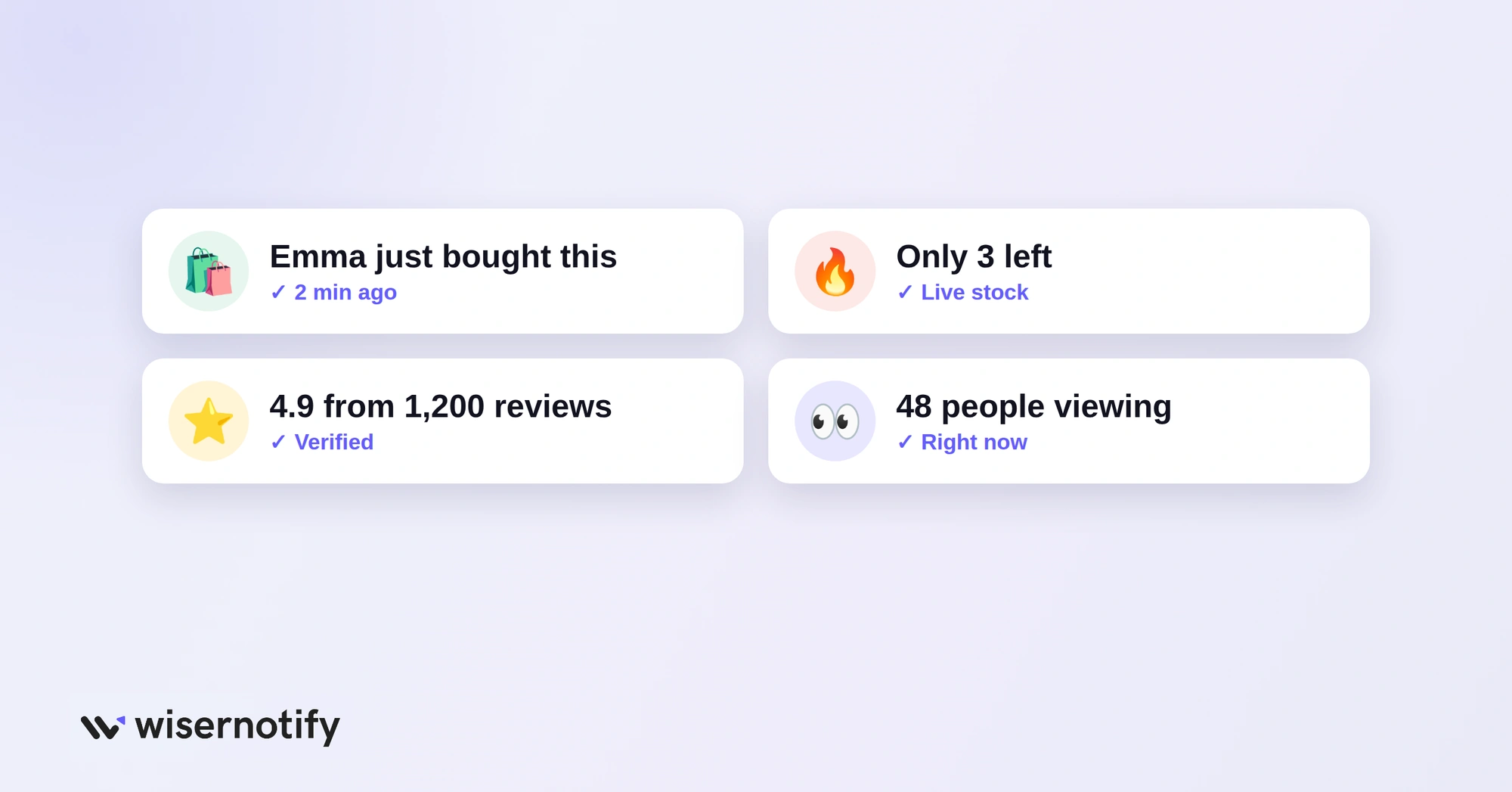
Short notification copy is where trigger words and social proof meet. With WiserNotify, you can write messages like:
- Trust: “Trusted by 1,200 shoppers this week”
- Urgency: “Only 3 left in stock”
- Social proof: “Emma from Denver just bought this”
- Newness: “New: 48 people signed up today”
Because the numbers come from real activity, the trigger word never makes a promise you cannot keep.
3 Common Mistakes With Trigger Words
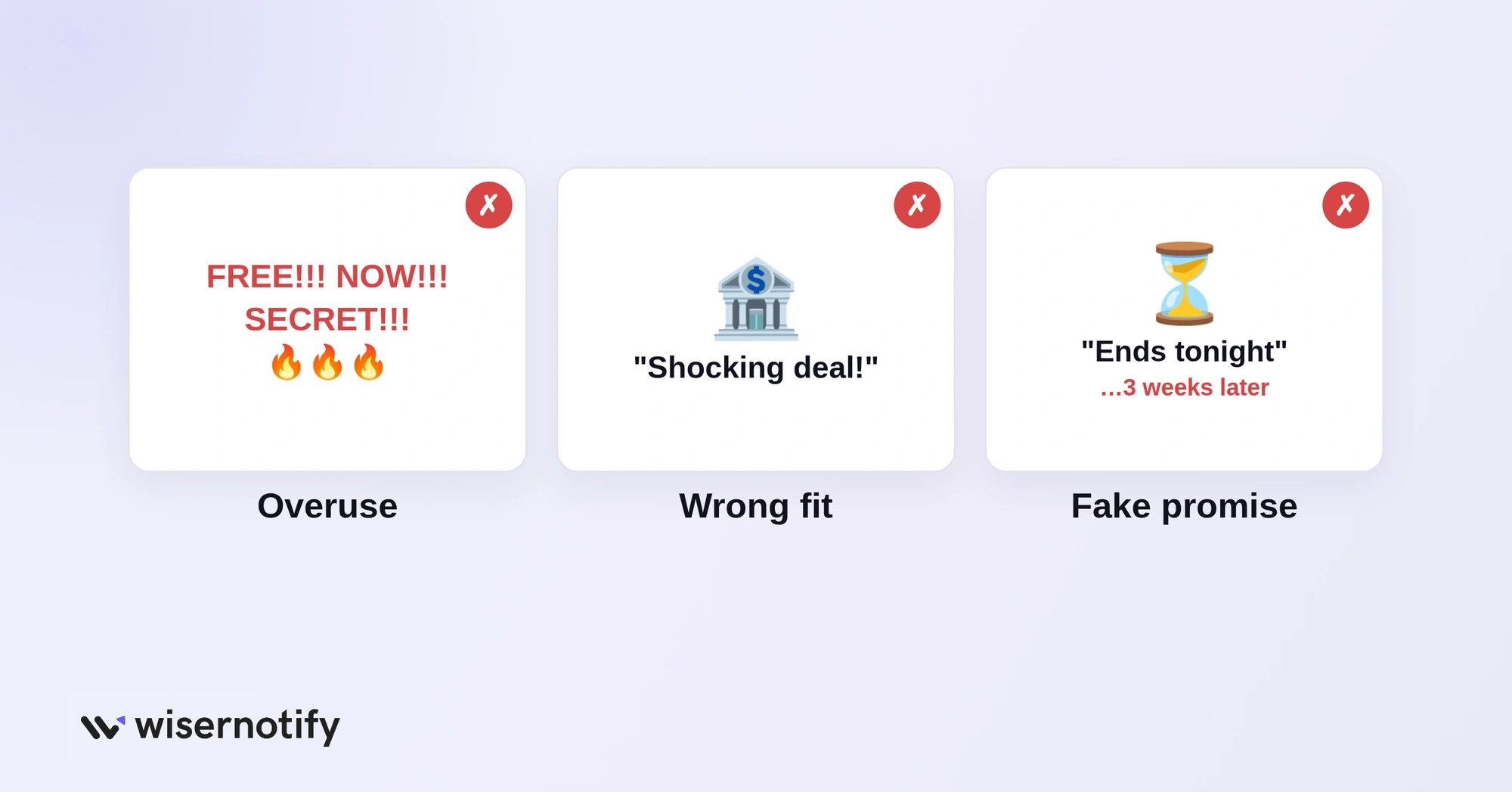
- Overuse: five trigger words in one headline reads as spam and weakens every one of them.
- Wrong fit: “Forbidden” or “shocking” can feel off for a bank, a clinic or a B2B brand.
- False promises: fake deadlines and empty guarantees bring refunds, bad reviews and lost trust.
Wrap Up
Trigger words work when they point to something true. Pick the emotion you want, choose one word that fits, and put it where the decision happens.
Then test it against a plain version and keep what your audience responds to.

Boost Conversion Instantly
Add Social Proof & Urgency to your website
Frequently Asked Questions
What is an example of a trigger word?
“Limited” is a classic example. It creates urgency and pushes people to act before an offer is gone.
What are the most used trigger words in marketing?
Free, now, new, limited, exclusive, easy, proven, guaranteed, instant and you are among the most common.
What are bad trigger words?
Words that sound cheap, pushy or fake, such as “cheap,” “shocking” or an overused “guaranteed,” can hurt trust.
What is the difference between trigger words and power words?
Trigger words aim to spark a specific feeling that leads to action. Power words add strength to writing but do not always trigger a feeling.
How many trigger words should I use in a headline?
One or two is enough. More than that starts to read like spam.

Krunal Vaghasiya is a marketing tech expert who boosts e-commerce conversion rates with automated social proof and FOMO strategies. He loves to keep posting insightful posts on online marketing software, marketing automations, and improving conversion rates.




 Capterra