
20 Testimonial Examples That Build Trust and Drive Sales (2026)
I’ve spent the last few years studying how the best brands use testimonials, and I keep noticing the same pattern. The ones that convert aren’t necessarily from the happiest customers. They’re from the most specific ones.
“Great product, would recommend” does nothing. “We reduced our onboarding time by 40% in the first month.” We close deals.
That gap between vague praise and specific proof is where most businesses leave money on the table. In this post, I’m breaking down 20 real testimonial examples across different formats and use cases, and explaining exactly what makes each one work so you can apply the same principles to your own.
Why Testimonials Work (The Numbers)

Before getting into the examples, here’s why this matters. According to research on testimonial statistics, 92% of consumers read reviews before making a purchase decision.
Adding a testimonial to a sales page can increase conversions by 34%. And 71% of customers say they’ve purchased after watching a video testimonial.
The mechanism isn’t complicated. People don’t trust brands. They trust other people who’ve already made the decision they’re considering.
A testimonial bridges that gap by giving the prospect a proxy for their own experience before they commit.
What makes one testimonial more effective than another comes down to specificity, relevance, and credibility. The examples below cover all three.

All your reviews in one place
Collect reviews, manage every response, and display them where they matter most.
Types of Testimonials

Not every testimonial format works for every situation. Here’s a quick breakdown of the main types before we get into the examples.
Quote testimonials are written endorsements featuring direct quotes from satisfied customers. They’re fast to read, easy to place anywhere on a page, and work well when the quote is specific and attributed to a real person with a name and title.
Video testimonials show real customers talking on camera about their experience. They add authenticity that text alone can’t deliver. Viewers hear tone of voice, see facial expressions, and connect with the person in a way that written reviews can’t replicate.
Case studies are detailed accounts showing exactly how a product or service solved a specific problem. They include context, process, and measurable results. Best for B2B and high-consideration purchases where buyers need proof before committing.
Social media testimonials are organic mentions, tags, and reviews from customers on their own platforms. They carry extra credibility because they weren’t prompted by the brand, which makes them feel more genuine to new visitors.
Peer testimonials feature customers from the same industry, role, or situation as your target buyer. The power is in the relatability. When a prospective customer sees someone just like them getting results, the mental leap to “this could work for me” gets much shorter.
Influencer and expert testimonials leverage credibility from recognized figures. These work best when the influencer genuinely uses the product and their audience overlaps with your target customer.
Also check: 4 Effective Testimonial Advertising Strategies
10 Best Customer Testimonial Examples
These are examples of individual testimonials, quotes, and social proof moments from real brands. Each one illustrates a specific principle you can apply to your own collection.
1. Dialpad’s Case Study
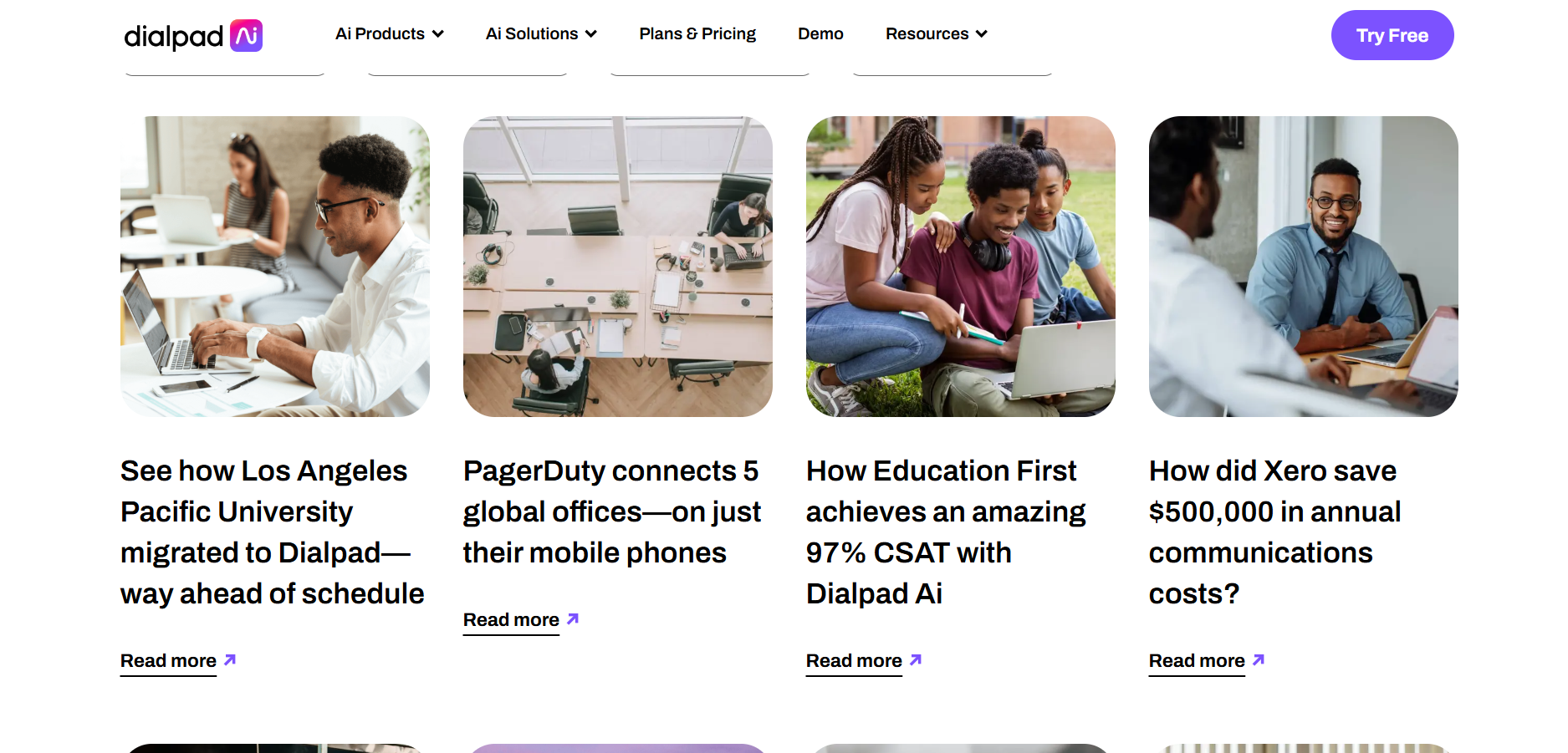
Dialpad displays customer testimonials alongside concrete business outcomes, naming recognizable companies like Xero and PagerDuty.
This is the brand association play: when buyers see companies they respect vouching for a product, trust transfers automatically.
The layout pairs professional imagery with metric-led copy. You don’t just learn that customers are happy. You learn what changed for them after switching to Dialpad.
What to steal: Lead your testimonials with the outcome, not the sentiment. “Our team communication improved” is weak. “We cut response time by 60% after switching to Dialpad” is a case study in a sentence.
2. Timothy Sykes Trustpilot Reviews
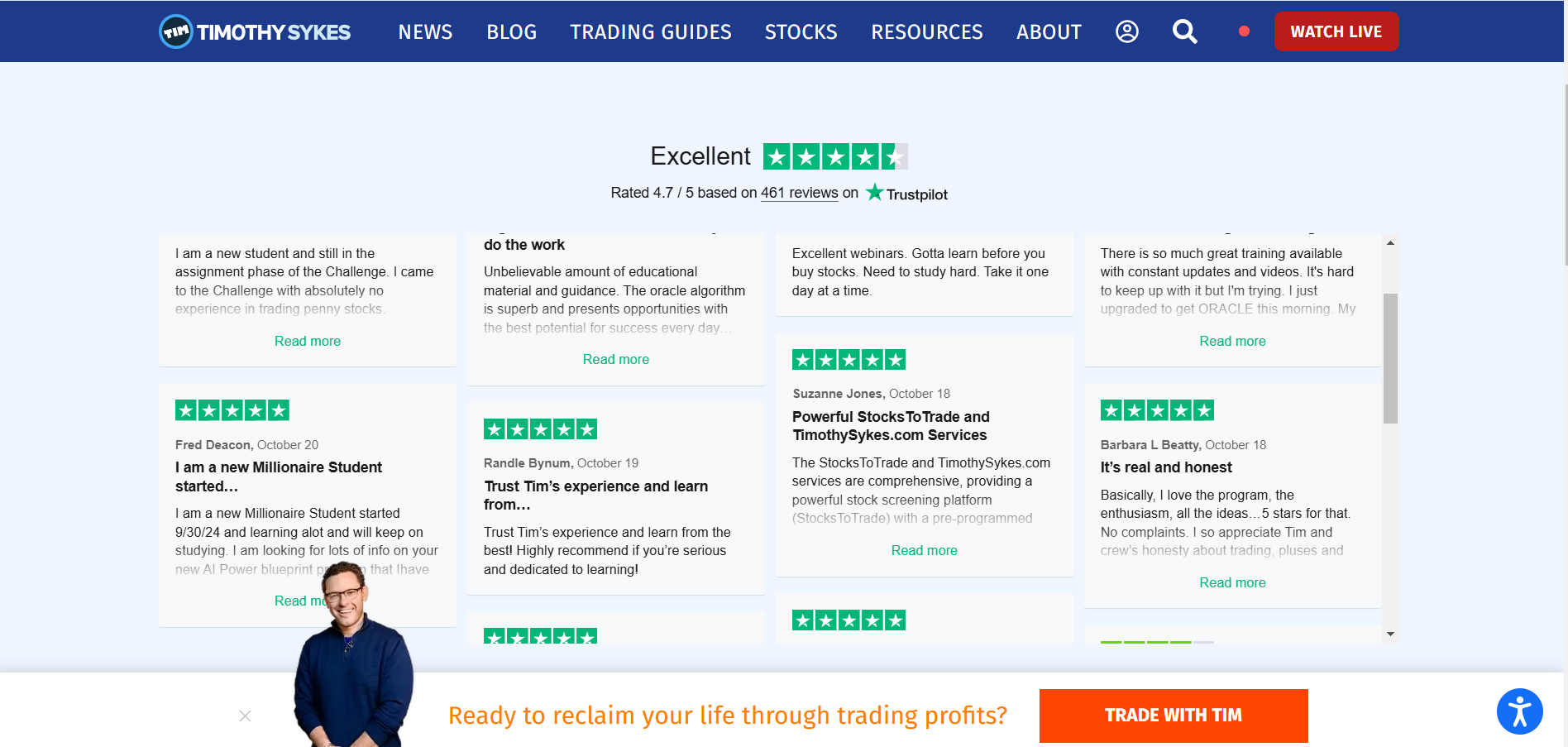
Timothy Sykes pulls his Trustpilot reviews directly onto his website. The third-party sourcing does significant work here.
Visitors know Trustpilot reviews can’t be fabricated by the brand, which gives them a credibility floor that self-hosted testimonials don’t have.
The reviews highlight specific results students achieved during the trading course, not just how they felt about it.
That combination of verified source plus specific outcome is hard to beat for building trust with skeptical audiences.
What to steal: Pull your best reviews from third-party review platforms (Google, Trustpilot, G2, Capterra) and feature them on your site rather than writing testimonials from scratch. The verification badge does half the trust-building for you.
3. Ahrefs Customer Quotes
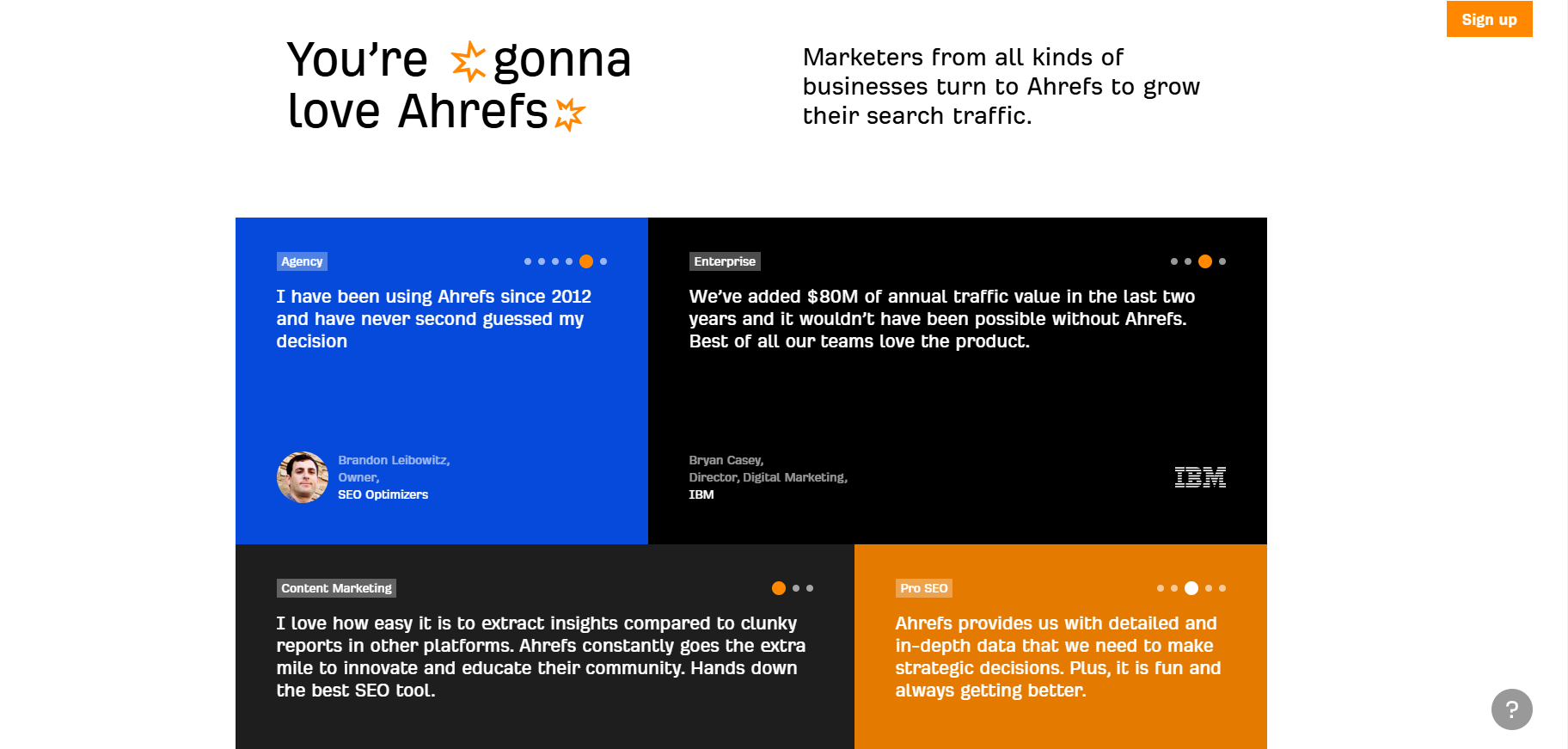
Ahrefs features short, punchy customer quotes across different industries, each tied to a specific use case.
The quotes feel personal because they come from recognizable companies and named individuals with job titles readers can verify.
What makes the Ahrefs approach effective is segmentation. They don’t show one testimonial to every visitor. They match quotes to the visitor’s context. SEO agencies see agency testimonials. Content teams see content-focused quotes.
What to steal: Segment your testimonials by customer type, use case, or industry. A testimonial from a Shopify store owner means nothing to a SaaS founder, and vice versa. The more relevant the social proof, the more it converts.
Also check: 10 Powerful Testimonial Software for Social Proof That Converts
4. Famewall’s Video Testimonials
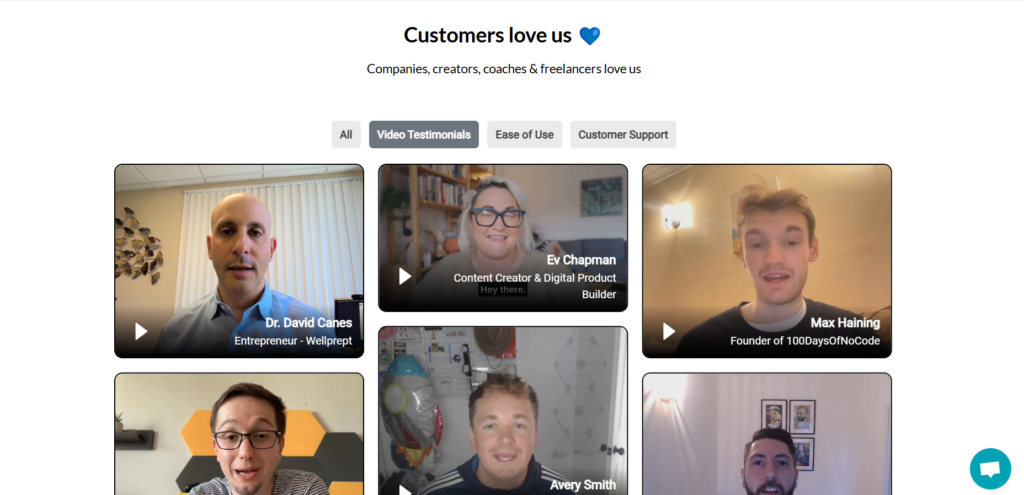
Famewall’s homepage features video testimonials from a genuinely diverse group: content creators, coaches, and founders. The variety matters.
When the pool of reviewers spans different types of customers, new visitors are more likely to find someone who looks like them.
The video format adds something written testimonials can’t deliver: you see faces, hear voices, and pick up on the enthusiasm (or lack of it) in tone. A video testimonial from a genuinely happy customer is almost impossible to fake convincingly.
What to steal: Prioritize video for your highest-friction conversion points. If someone is one click away from a purchase decision and still hesitating, a 60-second video from a customer who had the same doubts can close the gap.
All your reviews in one place
Collect reviews, manage every response, and display them where they matter most.
5. Dollar Shave Club Customer Quotes
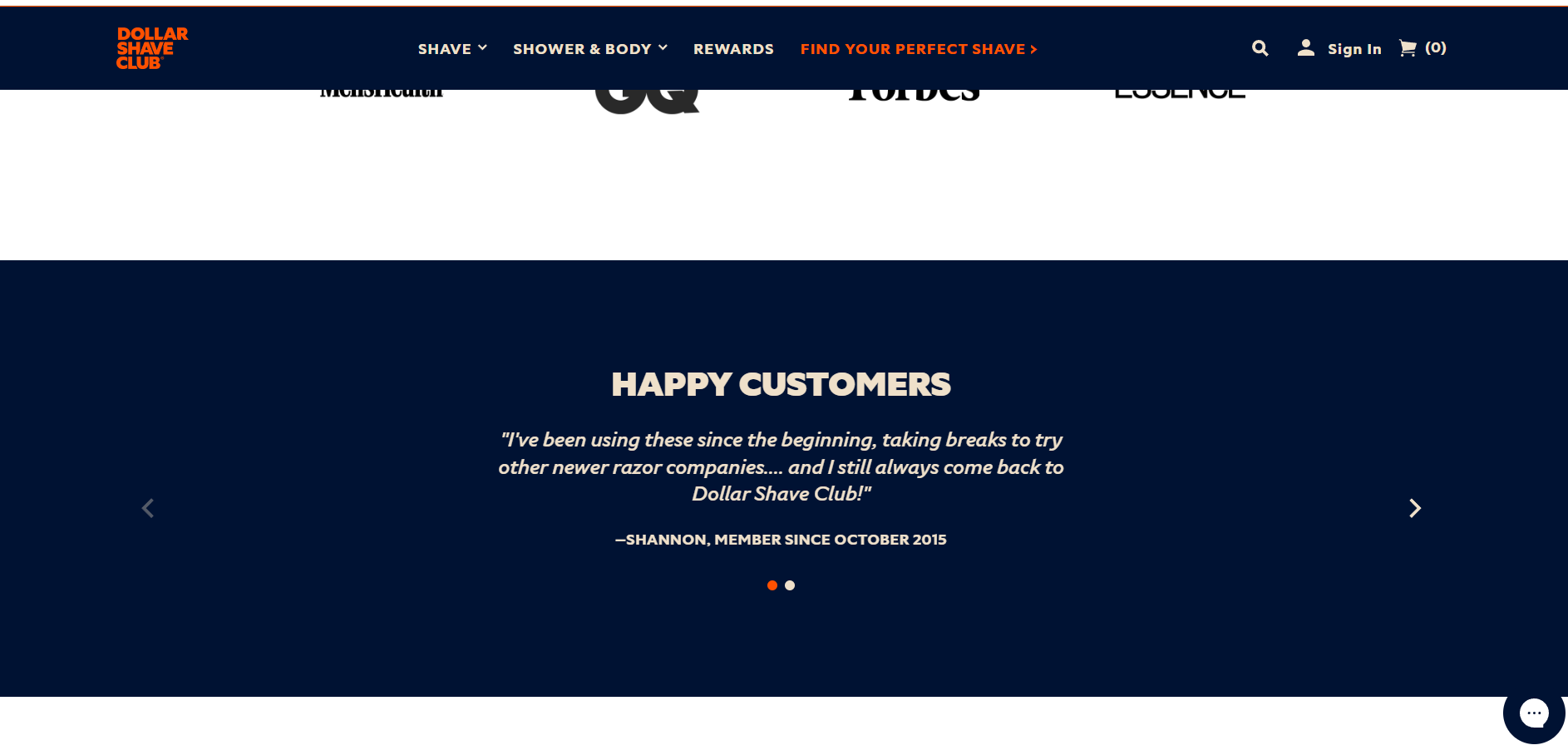
Dollar Shave Club’s testimonial approach leans into loyalty rather than first impressions. Their featured quotes emphasize long-term customer relationships: “I’ve tried every razor company and I keep coming back.” That framing answers the retention question that new buyers are silently asking.
For subscription businesses especially, showing that existing customers stay is more persuasive than showing they were initially happy. Acquisition testimonials prove value. Retention testimonials prove consistency.
What to steal: If your business model depends on repeat purchases or subscriptions, collect testimonials specifically from long-term customers and lead with the duration. “Used it for 3 years and still my go-to” says more than “loved my first order.”
6. Shopify’s Video Case Study
Shopify’s LinkedIn case study format shows the full customer journey: where the business started, what problem they faced, how Shopify solved it, and what the results looked like. It’s a narrative arc, start to finish, not a single quote.
The video format makes it watchable rather than just readable. Viewers see a business owner talking about real numbers.
The emotional authenticity is built into the format itself. And placing it on LinkedIn gives it a professional context that a website testimonial page wouldn’t have on its own.
What to steal: For B2B products or high-ticket offers, invest in one well-produced video case study per customer segment. A single three-minute video showing a $50K revenue increase is worth more than 50 generic five-star reviews.
Also check: How to Effectively Manage Testimonials for Maximum Impact
7. Freehand by InVision Customer Stories
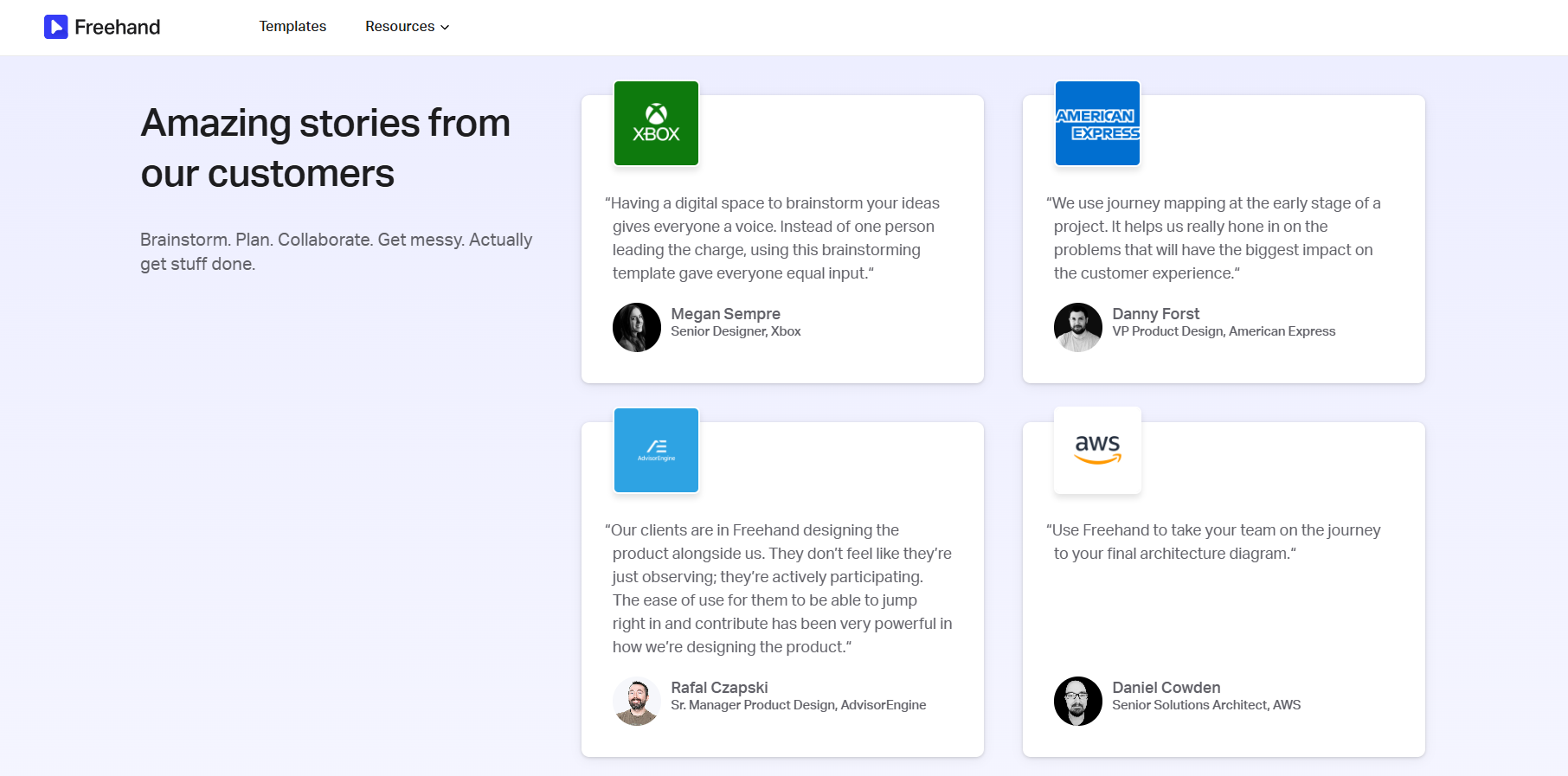
Freehand’s testimonial section features quotes from recognizable design and tech brands. This taps into authority transfer: when Airbnb, Spotify, or a similar brand says your tool works, every smaller brand in your audience thinks “if it works for them, it’ll definitely work for us.”
The quotes focus on emotional outcomes: collaboration, innovation, efficiency. These read less like feature testimonials and more like culture testimonials, telling prospective buyers not just what the product does, but what kind of team it helps you become.
What to steal: If you have even one well-known customer, feature them prominently and let their logo do the credibility work. One Airbnb quote beats ten testimonials from unknown businesses every time.
8. Blue Apron’s Social Media Posts
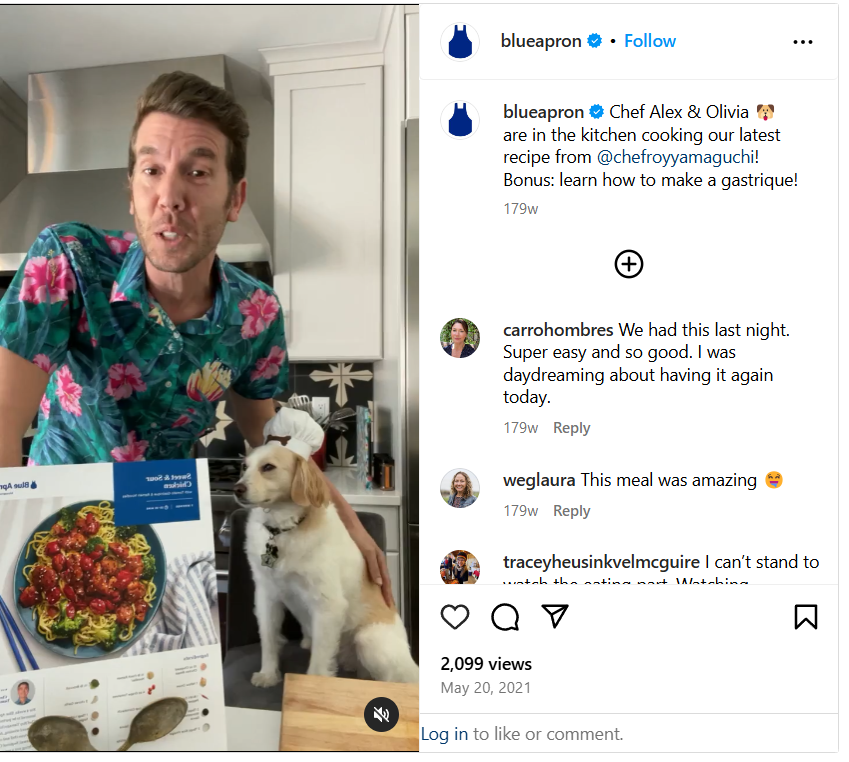
Blue Apron’s Instagram content functions as social proof even when it isn’t explicitly framed as a testimonial.
Cooking sessions with real people, viewer comments about how easy the meals are, and collaborative recipes with chefs. All of it builds trust through association and lifestyle positioning.
The user comments in the replies are the actual testimonials here, and they work because they’re completely unprompted.
When someone who wasn’t paid by the brand says, “This is easier than I expected and tastes incredible,” that carries weight a marketing copy never could.
What to steal: Monitor your brand’s social mentions and pull the best organic comments to use as testimonials. Ask permission, then feature them on your site with a link to the original post. The verifiability of social proof is part of what makes it persuasive.
9. BambooHR
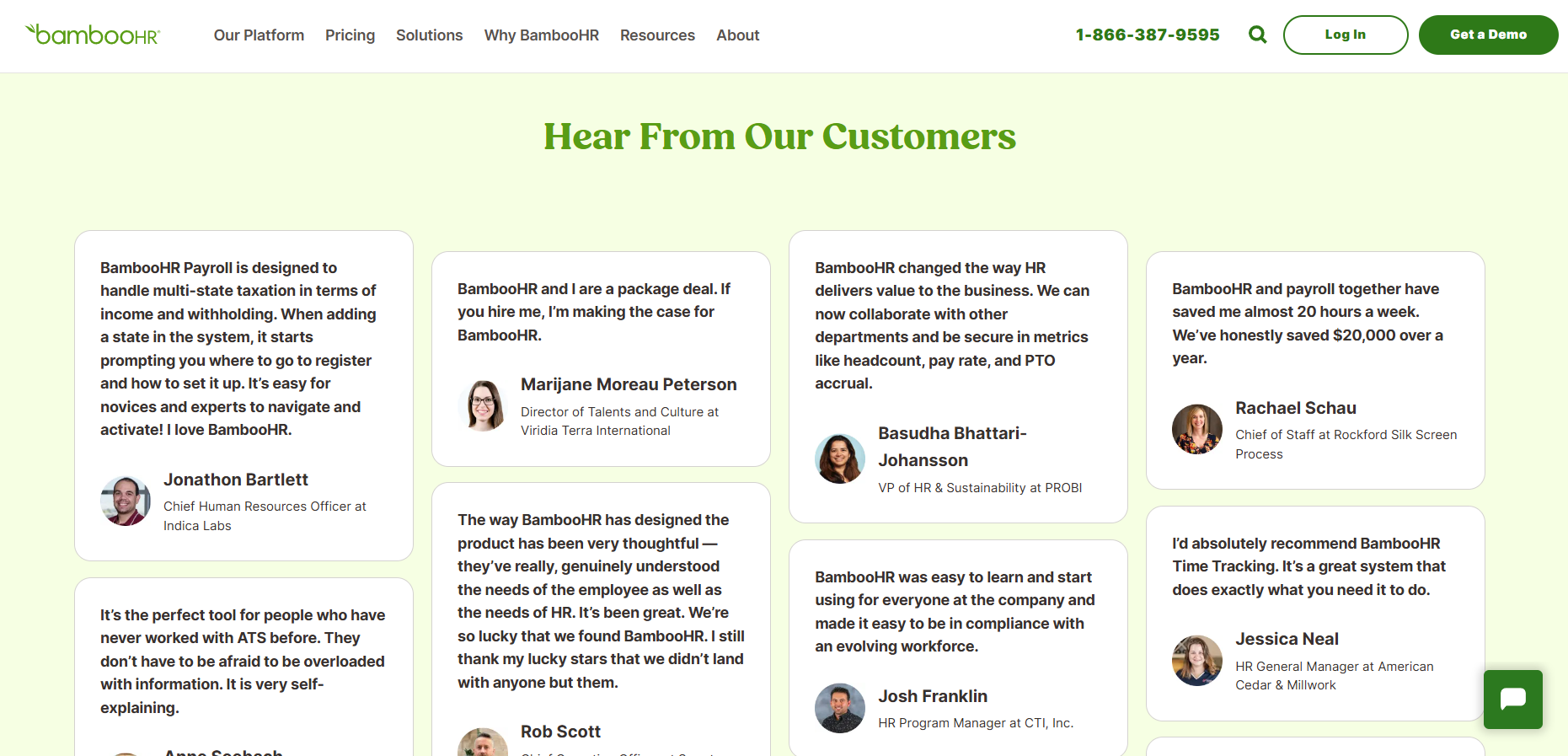
BambooHR’s testimonial section covers specific, quantifiable benefits: time saved, simplified payroll, improved HR collaboration.
Each quote addresses a specific pain point that HR professionals face, which means visitors who share those pain points instantly recognize the relevance.
The combination of job titles, company names, and photos makes these testimonials feel like real people rather than marketing copy.
You can verify that these people exist. That verifiability is the entire point of a well-structured testimonial section.
What to steal: Ask customers to describe a specific problem they had before using your product, not just how happy they are with it. “Before BambooHR, payroll took me half a day” sets up the testimonial. “Now it takes 20 minutes” closes it.
10. Harry’s Peer Review Sites
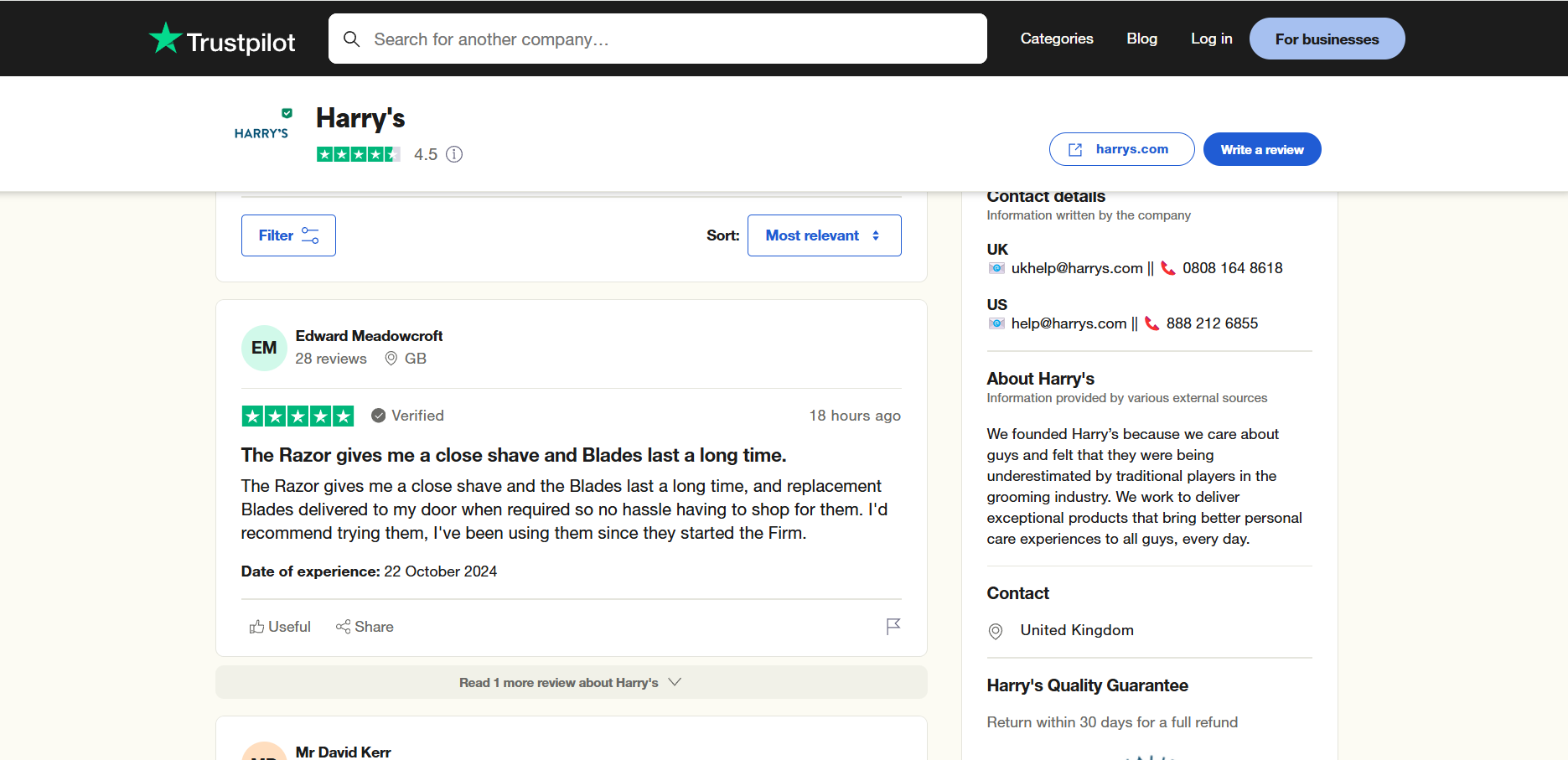
Harry’s pulls customer reviews from Trustpilot and features them alongside a verification badge. The reviews focus on simple, specific product benefits: quality, convenience, value. They don’t try to be profound. They try to be honest, and that’s what makes them work.
The verification badge matters more than most brands realize. It’s a signal to skeptical visitors that these reviews couldn’t have been manufactured by the brand.
That one visual element dramatically increases the believability of every testimonial next to it.
What to steal: Display your third-party review platform rating and total review count prominently alongside individual testimonials. The aggregate number does the volume work; the individual quotes do the specificity work.
All your reviews in one place
Collect reviews, manage every response, and display them where they matter most.
10 Best Testimonial Page Examples
A testimonial page is a dedicated section of your site where you showcase customer feedback, case studies, and success stories in one place. Done well, it becomes one of your highest-converting pages. Here are 10 brands whose testimonial pages are worth studying.
1. The Farmer’s Dog
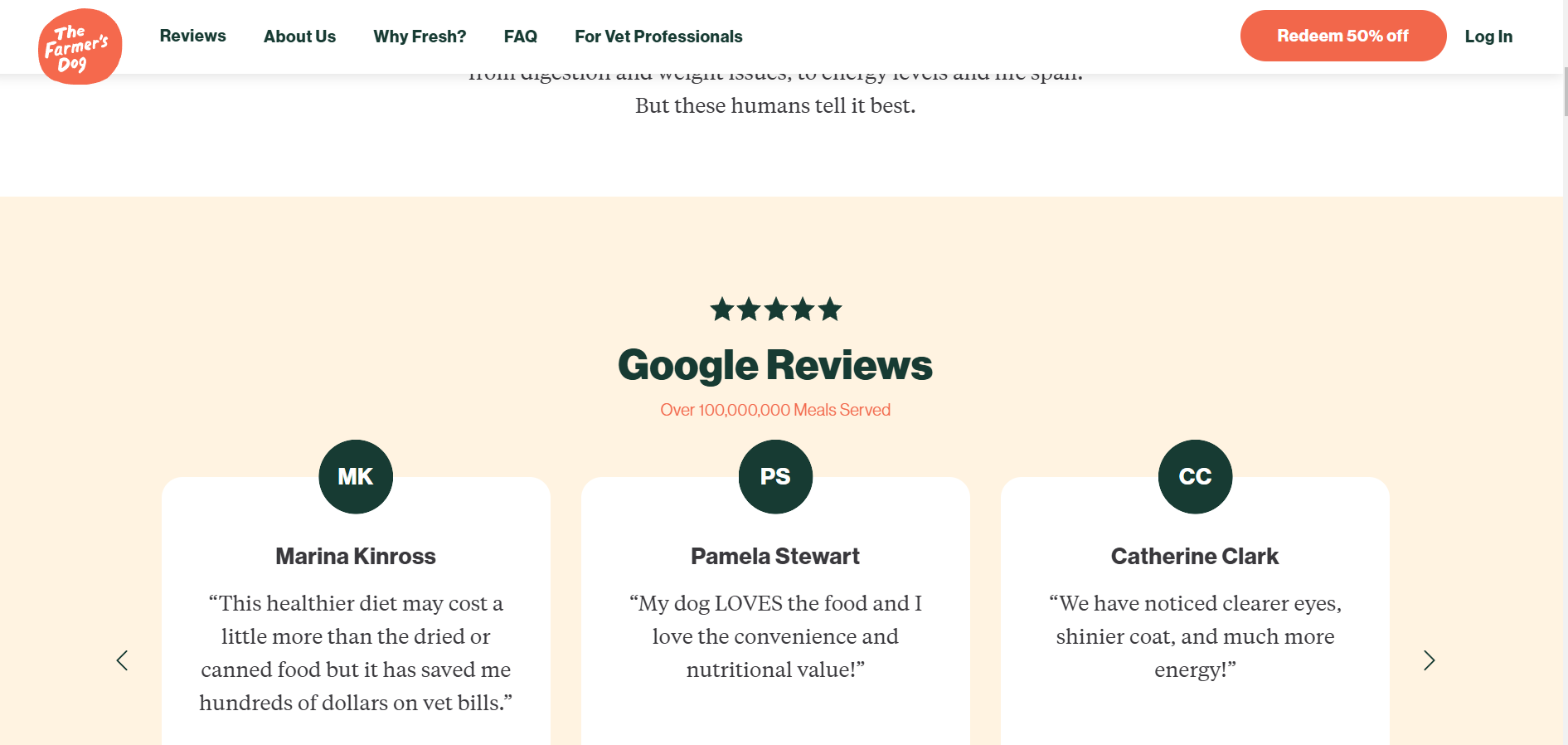
The Farmer’s Dog review page mixes written customer testimonials with veterinarian endorsements.
That combination is smart for a health-adjacent product: pet owners want emotional validation from other pet owners and scientific credibility from experts. The page delivers both.
Including testimonials about health improvements ties directly to the purchase motivation. People don’t buy The Farmer’s Dog. They buy a healthier, happier dog. The testimonials speak to the outcome, not the product.
2. Mixpanel
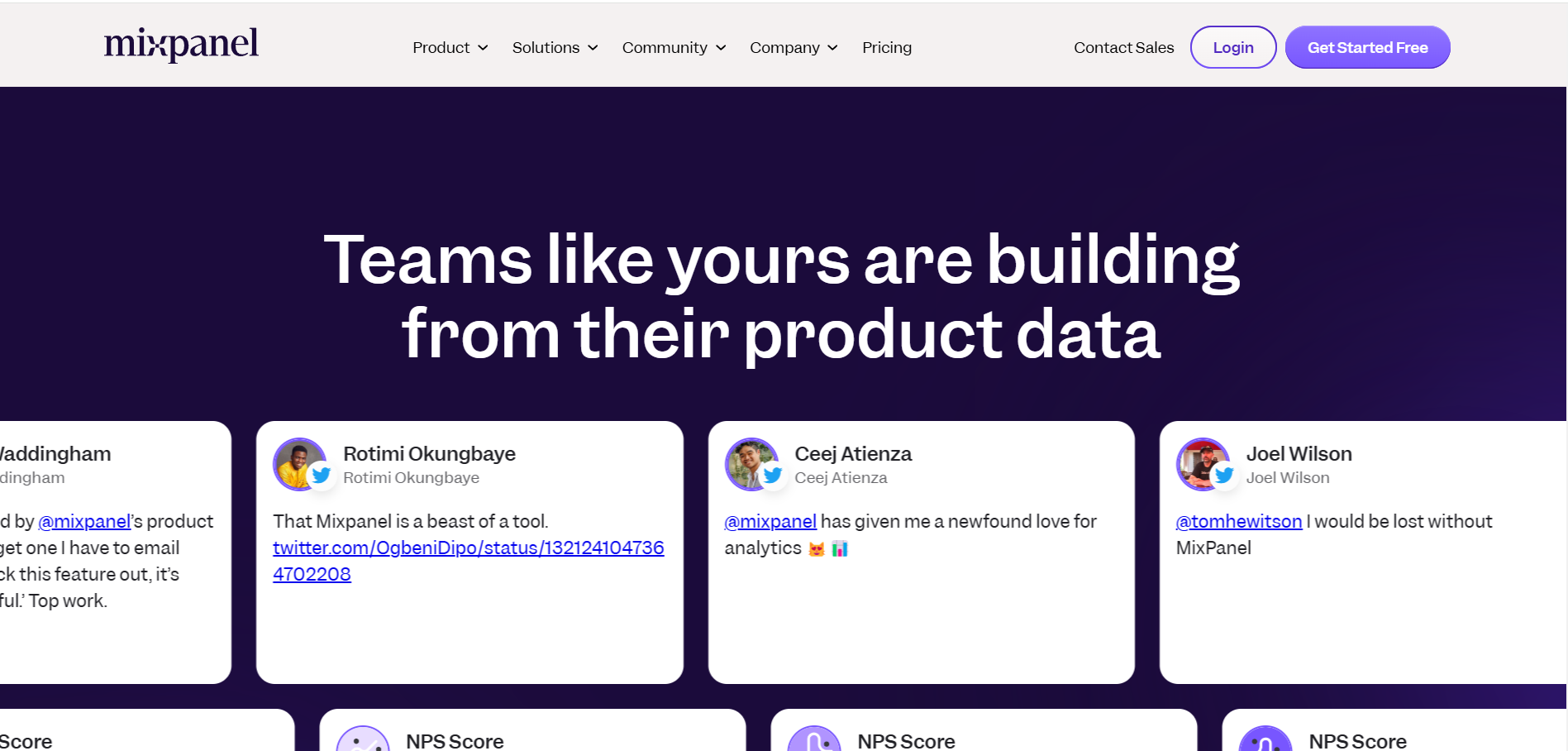
Mixpanel’s sliding card design makes the testimonial page interactive without being distracting. Quotes from Yelp and Ticketmaster provide enterprise credibility.
The focus on analytics and usability speaks directly to the product’s core value proposition.
What works here is the design decision to let testimonials carry the page rather than competing with them. No loud CTAs, no product screenshots crowding the space. Just customer voices and enough breathing room to let them land.
3. UpRight
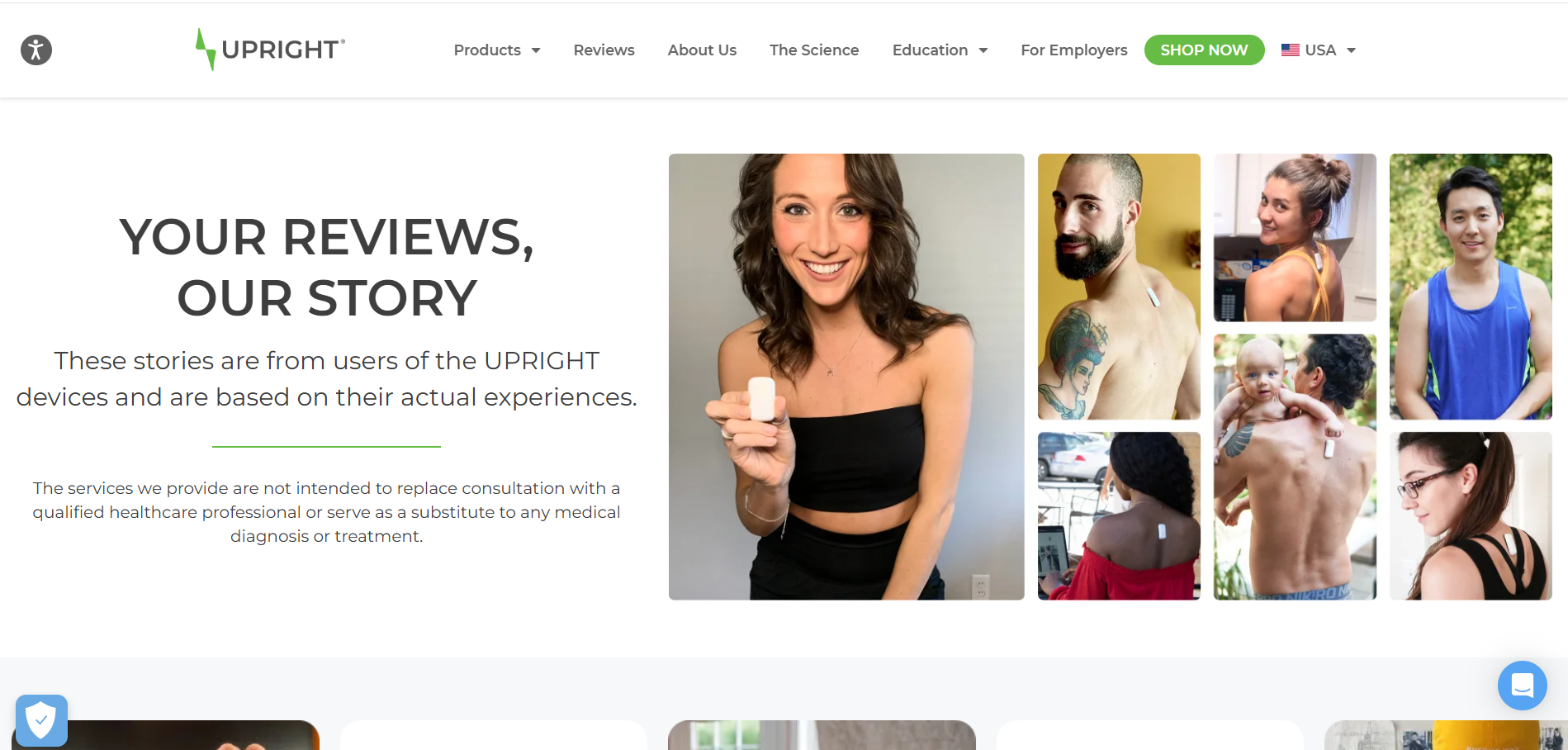
UpRight’s testimonial page combines written reviews, video testimonials, and social media mentions.
The multi-format approach is intentional: different buyers prefer different types of social proof. Some people read testimonials. Some watch videos. Some check social media. Covering all three formats means no visitor leaves without finding the proof format they trust most.
Showing users wearing the product in photos adds a layer of authenticity that stock imagery never could. You see an actual person’s posture. You believe the product works because you can see it working.
4. Bonsai
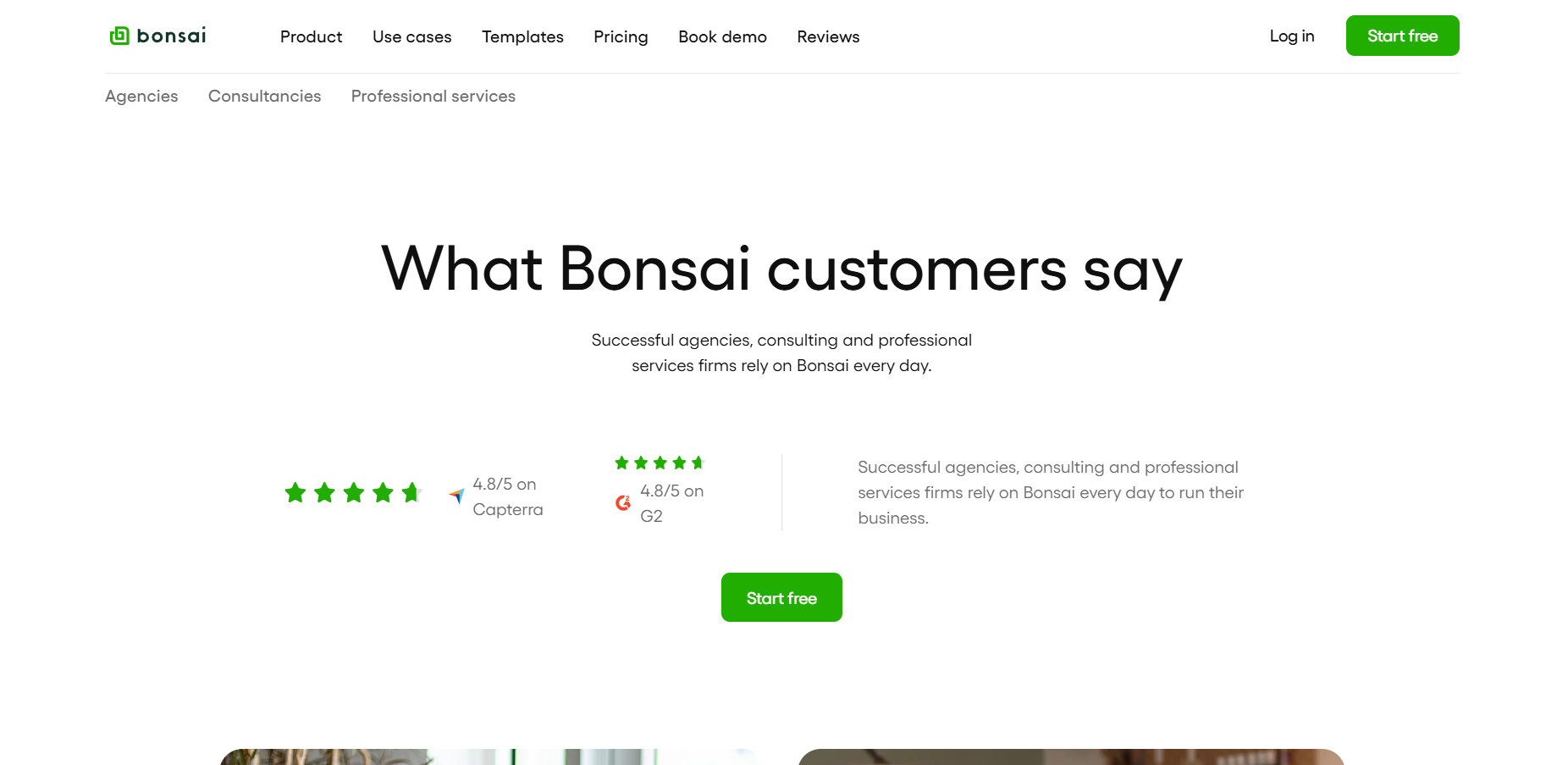
Bonsai’s clean testimonial page targets a specific audience: freelancers, agencies, and professional service firms. Every testimonial is selected to resonate with that persona.
A freelance designer reading quotes from other freelancers sees themselves in the social proof, which dramatically reduces the “but will it work for me?” friction.
The Capterra and G2 ratings add third-party validation at the aggregate level, while individual testimonials add it at the personal level. That two-layer structure covers both the skeptical decision-maker and the emotional buyer.
5. Patriot Software
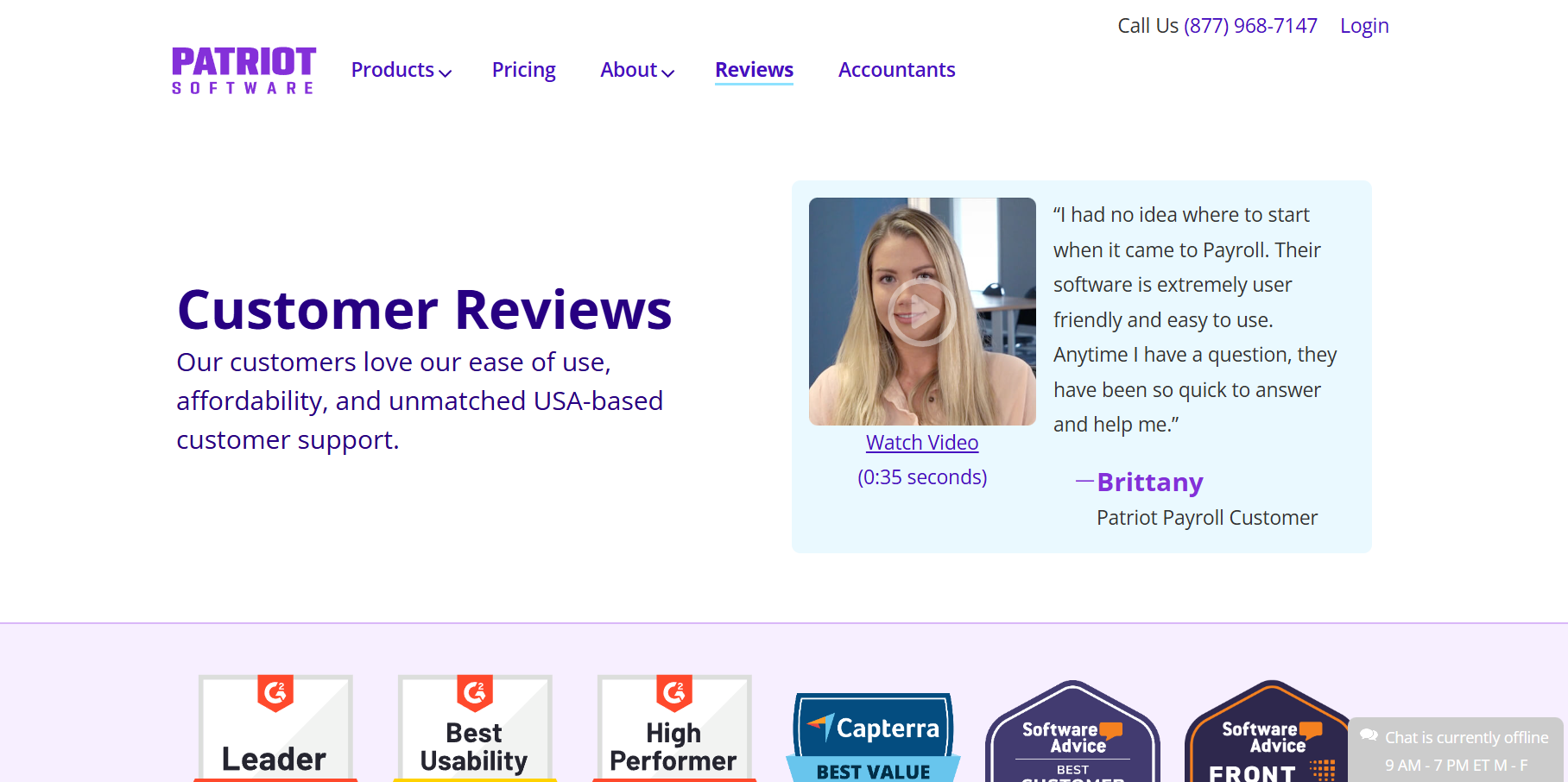
Patriot Software’s testimonial page is filterable by product category, which solves a common problem with large testimonial collections: relevance.
A small business owner looking at payroll software doesn’t want to wade through accounting testimonials to find something relevant. The filter makes the right testimonial immediately accessible.
The carousel and grid layout combination gives visitors control over how they browse. Some want to scan quickly. Some want to read deeply. Good testimonial page design accommodates both.
6. Calamari
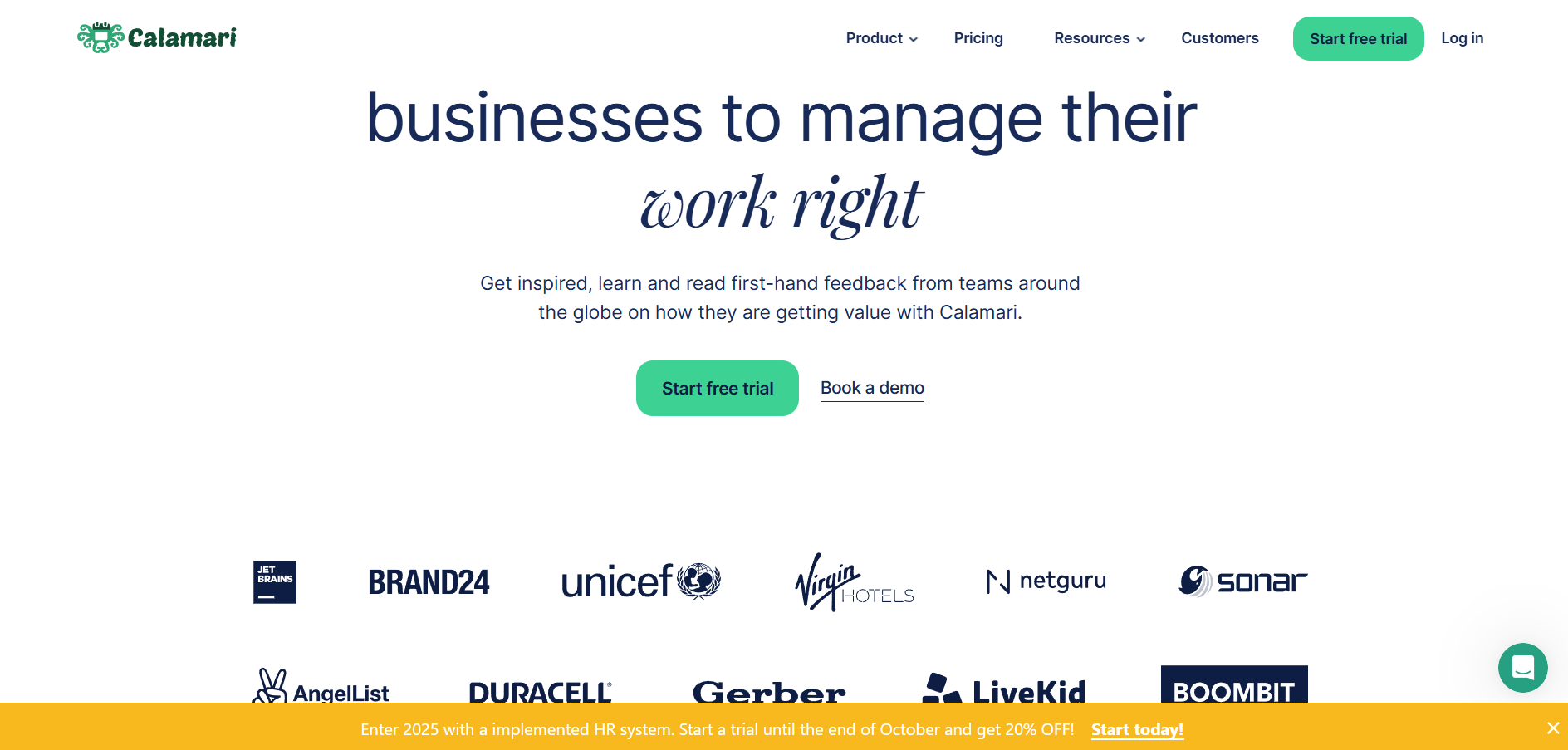
Calamari’s testimonial page leads with client logos from UNICEF and Virgin Hotels. For an HR software targeting global enterprises, these logos signal “companies like us trust this.”
The diversity of clients across different industries also signals flexibility: if it works for a hotel chain and an international NGO, it’ll likely work for your organization too.
The page pairs testimonials with direct CTAs for free trials and demos. Social proof builds confidence, and the immediate CTA gives buyers somewhere to go with that confidence before it fades.
All your reviews in one place
Collect reviews, manage every response, and display them where they matter most.
7. DevRev
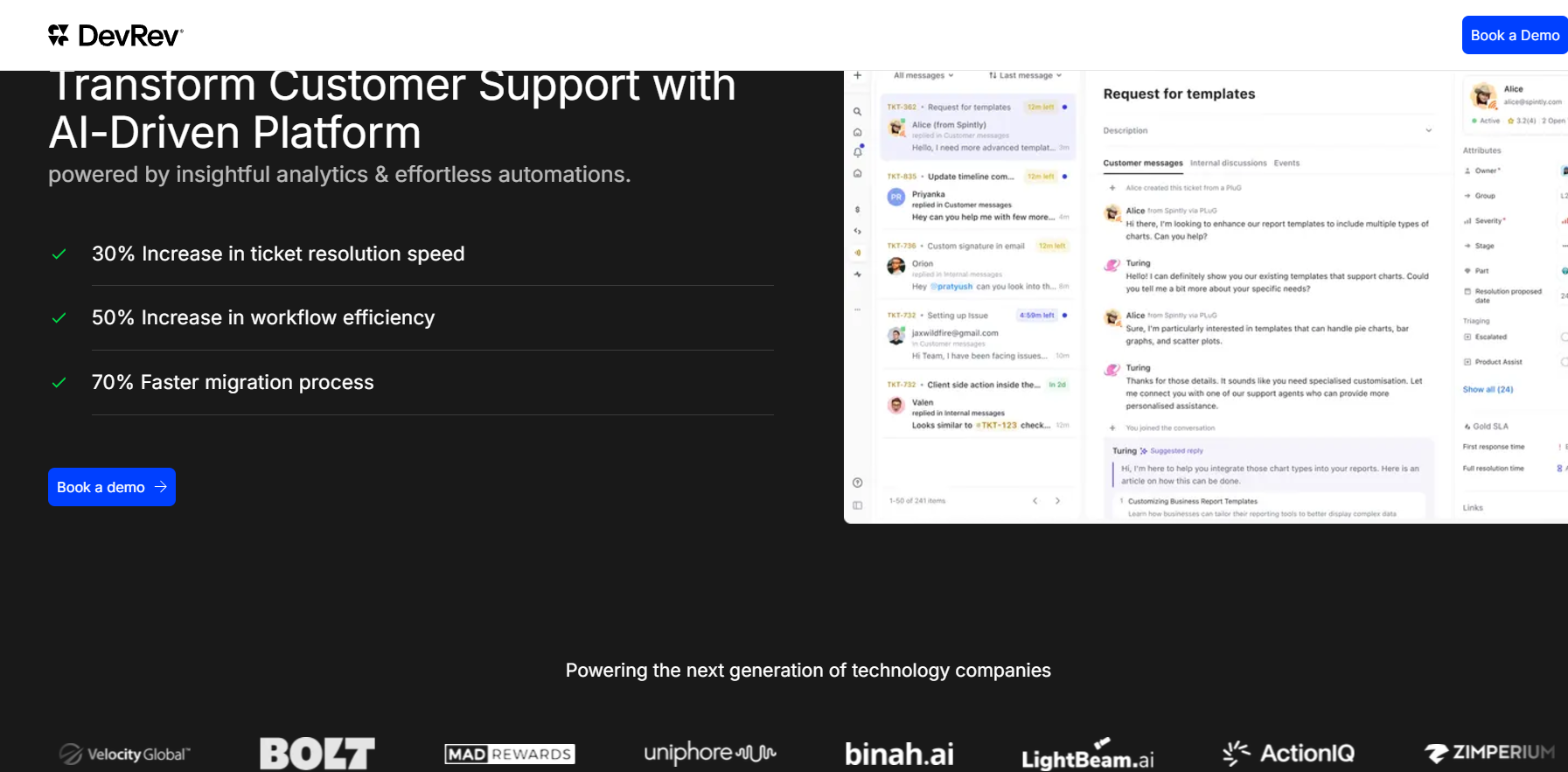
DevRev leads with specific, data-backed results: “30% increase in ticket resolution speed,” “50% increase in workflow efficiency,” “70% faster migration process.”
These numbers land because they’re the exact metrics DevRev’s target buyers use to measure their own teams.
When your testimonials speak in the same language your buyers use to evaluate their own performance, the connection is immediate. DevRev’s buyers are engineers and product managers who care about throughput and efficiency, so its testimonials are written in those terms.
8. Lumen
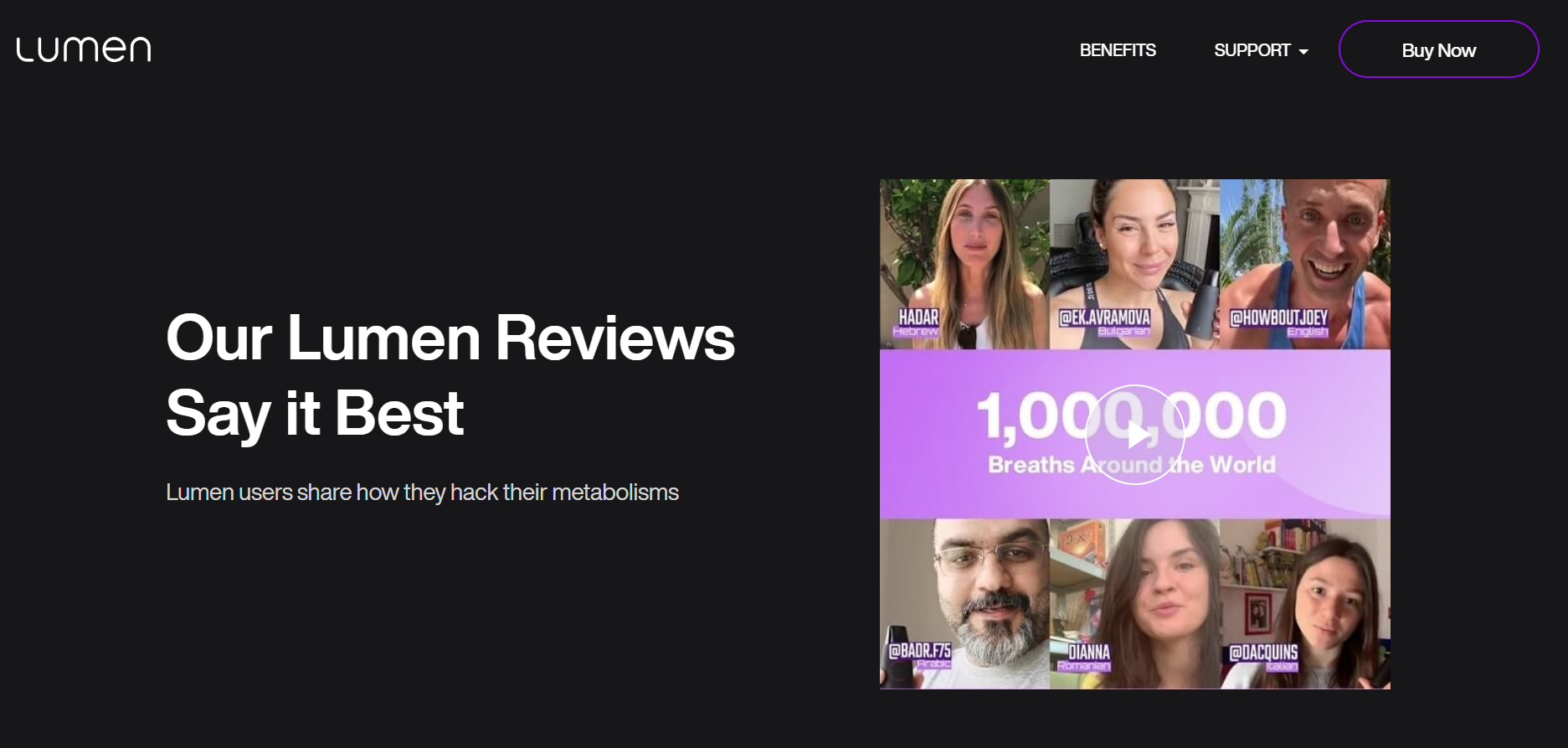
Lumen sells a metabolic health device, a complex, science-based product that requires significant trust before purchase.
Their testimonial page addresses this by stacking multiple types of proof: user-generated content, expert endorsements, video testimonials, and short text reviews.
The calls to action are placed alongside testimonials rather than after them, which means buyers can act on their growing confidence immediately rather than having to hunt for a buy button later.
9. Casper
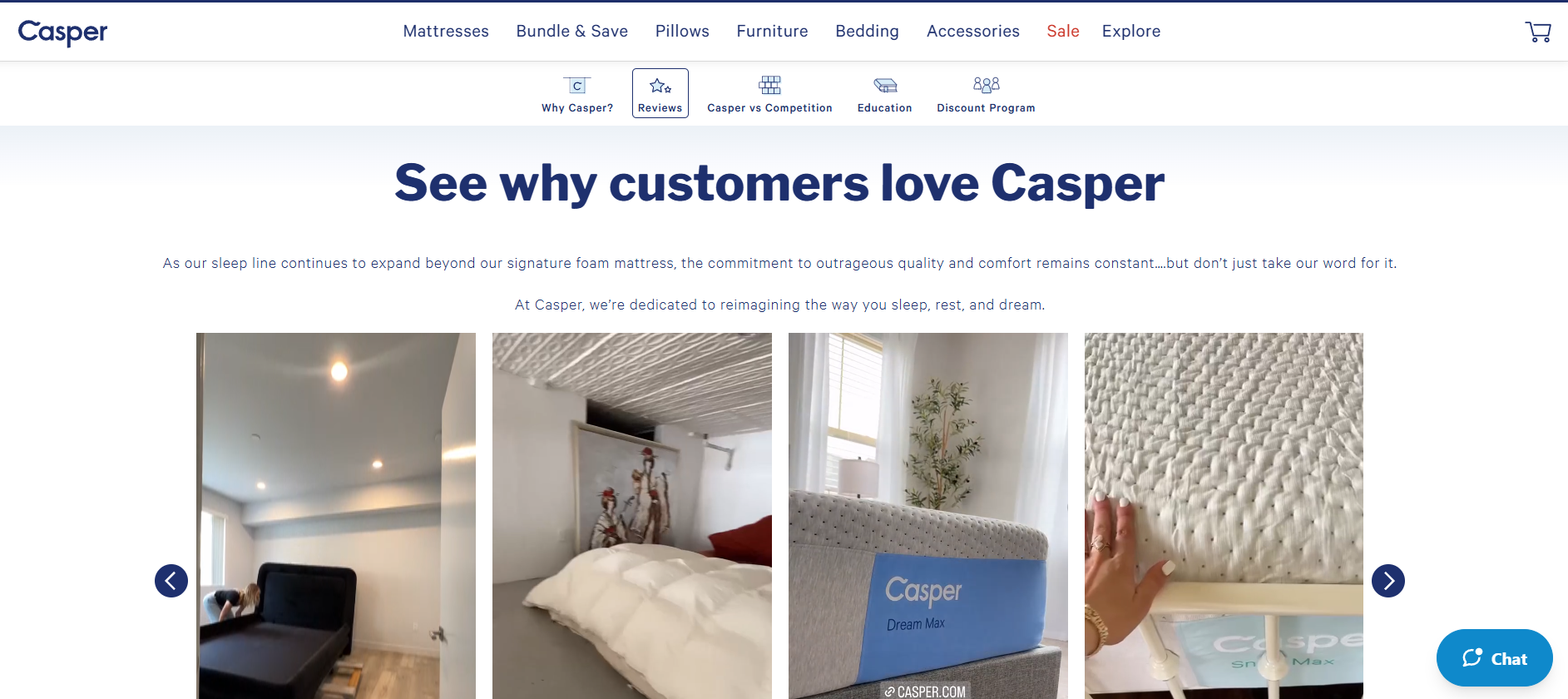
Casper’s testimonial page sells a lifestyle: better sleep, more productive mornings, a more comfortable home, not just a mattress.
Videos of customers enjoying their mattresses in real living spaces connect with the emotional purchase driver: not “I need a mattress” but “I want to sleep better.”
When testimonials address the emotional goal rather than the functional product, they speak to a deeper motivation. Casper understands that no one lies awake dreaming of a mattress. They dream of a good night’s sleep.
10. Appraisd

Appraisd combines strong G2 and Capterra ratings with diverse, global customer imagery.
For a performance management platform targeting organizations of all sizes, showing that companies from startups to enterprises use the product reduces the “are we too small/big for this?” objection before it’s asked.
Also check: 27 Social Proof Examples from Top Brands You Can Steal
Common Testimonial Mistakes to Avoid

A weak testimonial strategy usually isn’t a case of having too few reviews. It’s a case of a few recurring habits working against you.
- Using vague, generic quotes: “great service, highly recommend” could belong to any business in any industry. It signals nothing and gets skipped over.
- Editing out the customer’s voice: polishing a quote until it reads like brand copy strips out the very thing that made it credible in the first place.
- Never refreshing them: testimonials from three years ago, especially ones tied to a product version that no longer exists, quietly undermine trust instead of building it.
- Skipping attribution: an anonymous “J.D., verified customer” carries a fraction of the weight of a real name, company, and photo.
- Showing the same one or two testimonials everywhere: repetition across every page makes visitors wonder if that’s all the proof you have.
- Ignoring negative or mixed feedback entirely: a page with zero critical notes reads as curated rather than honest, which can work against you with skeptical buyers.
How to Ask for a Customer Testimonial (With a Template)

Most customers who’d happily vouch for you never will, simply because nobody asked at the right moment. Timing and specificity in the request matter almost as much as the testimonial itself.
- Ask right after a win: the best moment is right after a customer hits a milestone, renews, or tells your support team something positive. Wait too long and the specific details fade from memory.
- Make it a two-minute task: a long form kills response rates. One or two guided questions beat an open “tell us about your experience” every time.
- Ask a specific question, not a general one: “What changed after you started using [product]?” produces a usable quote. “How was your experience?” produces “great, thanks.”
- Offer a starting point: give customers two or three example questions or a short template they can fill in. Most people freeze at a blank box, not at the idea of writing a testimonial.
Here’s a simple email template you can adapt:
Subject: Quick favor?
Hi [Name], glad to hear [specific result they mentioned] worked out. Would you be up for sharing a couple lines about your experience? Even just answering these two questions would help:
1. What was the situation before you started using [product]?
2. What changed after?
Happy to feature you (with a link back to your site) if that’s useful for you too.
WiserReview – #1 Testimonial Software

Knowing what makes a great testimonial is one thing. Having the infrastructure to collect, organize, and display them at scale is another.
WiserReview is a dedicated review and testimonial platform built for ecommerce brands, agencies, and service businesses that want to turn customer feedback into a consistent conversion asset.
Here’s a breakdown of the core features and how each one fits into your testimonial strategy.
Collect Testimonials

WiserReview makes it easy to gather text, photo, and video testimonials from real customers across every channel they use. You don’t need to chase anyone down manually.
The platform handles the outreach so you focus on using the reviews, not hunting for them.
- Send review requests automatically after purchase via email, SMS, or WhatsApp
- Accept photo and video submissions alongside written reviews for richer social proof
- Use customizable review forms with branded links – no login required for the customer
- Set minimum star rating requirements before requesting media testimonials
- Offer incentives like discount codes to encourage responses, fully automated
- Import existing reviews from Google, Facebook, Judge.me, Yotpo, and other platforms
Manage Testimonials

Every review that comes in lands in a central dashboard where you can moderate, tag, filter, and respond before anything goes public.
This gives you complete control over what gets displayed and where, without the chaos of managing spreadsheets or scattered inboxes.
- Approve, reject, or auto-publish reviews based on rating, content type, or keywords
- Tag and filter reviews by product, location, team member, or topic
- Reply publicly to reviews to show active engagement
- Invite teammates with role-based access (Owner, Admin, Editor, Viewer)
- Manage multiple stores or brands from a single account with separate workspaces
Automate Testimonials

The most powerful review programs run on autopilot. WiserReview lets you set up multi-step follow-up sequences that trigger based on order status, delivery confirmation, NPS score, or any custom event.
Set it once and the platform handles the rest indefinitely.
- Trigger review requests automatically based on order completion or delivery
- Build multi-step reminder sequences to maximize response rates
- Connect with 1,000+ tools via integrations including your CRM, email platform, and Zapier
- Auto-post high-converting reviews to Instagram, Twitter/X, or LinkedIn
- Set up webhook exports to sync review data across platforms in real time
Display Testimonials

Collecting reviews is only half the equation. WiserReview gives you 15+ display widgets that let you put the right testimonial in front of the right visitor at exactly the right moment.
Every widget is fully customizable to match your brand without touching a single line of code.
- Carousel widget: Highlight top reviews in a swipeable slider on your homepage or product pages
- Wall of Love: A dedicated, searchable testimonial page that builds deep credibility
- Review popups: Real-time notifications showing recent reviews to nudge hesitant buyers
- Trust badges: Display aggregate star ratings near CTAs and buy buttons
- Review nudges: Place high-impact testimonials next to add-to-cart buttons
- Floating sidebar: Show reviews as visitors browse without interrupting the experience
- SEO rich snippets: JSON-LD schema markup so star ratings appear in Google search results
AI Review Translation

If you sell internationally, reviews left in one language are invisible to customers browsing in another.
WiserReview’s AI translation automatically converts reviews into the visitor’s language, so every testimonial you’ve earned works for every market you serve. You don’t lose social proof at the border.
AI Search

As your review library grows into the hundreds or thousands, finding the right testimonial for a specific use case becomes a real problem.
WiserReview’s AI search lets you query your entire review database in natural language – search for reviews mentioning a specific feature, product attribute, or customer outcome and surface them instantly without manual filtering.
AI Review Summary

Visitors don’t always have time to read through 200 reviews.
WiserReview’s AI review summary scans your full collection and generates a concise, accurate summary of what customers consistently say – both positives and areas for improvement.
This gives new visitors the signal they need to make a decision faster, without having to dig through dozens of individual testimonials.
AI Product Insight

Your reviews contain more business intelligence than most brands realize.
WiserReview’s AI Product Insight analyzes incoming feedback to identify recurring themes, sentiment patterns, and product-specific signals.
If customers keep mentioning a sizing issue or a specific use case you hadn’t considered, the AI surfaces it automatically so your product and marketing teams can act on it.
- Identify top positive attributes customers mention most frequently
- Flag recurring complaints before they become a reputation problem
- Route sentiment insights to the right team automatically
- Use feedback trends to inform product updates and copy improvements
AI Smart Topic
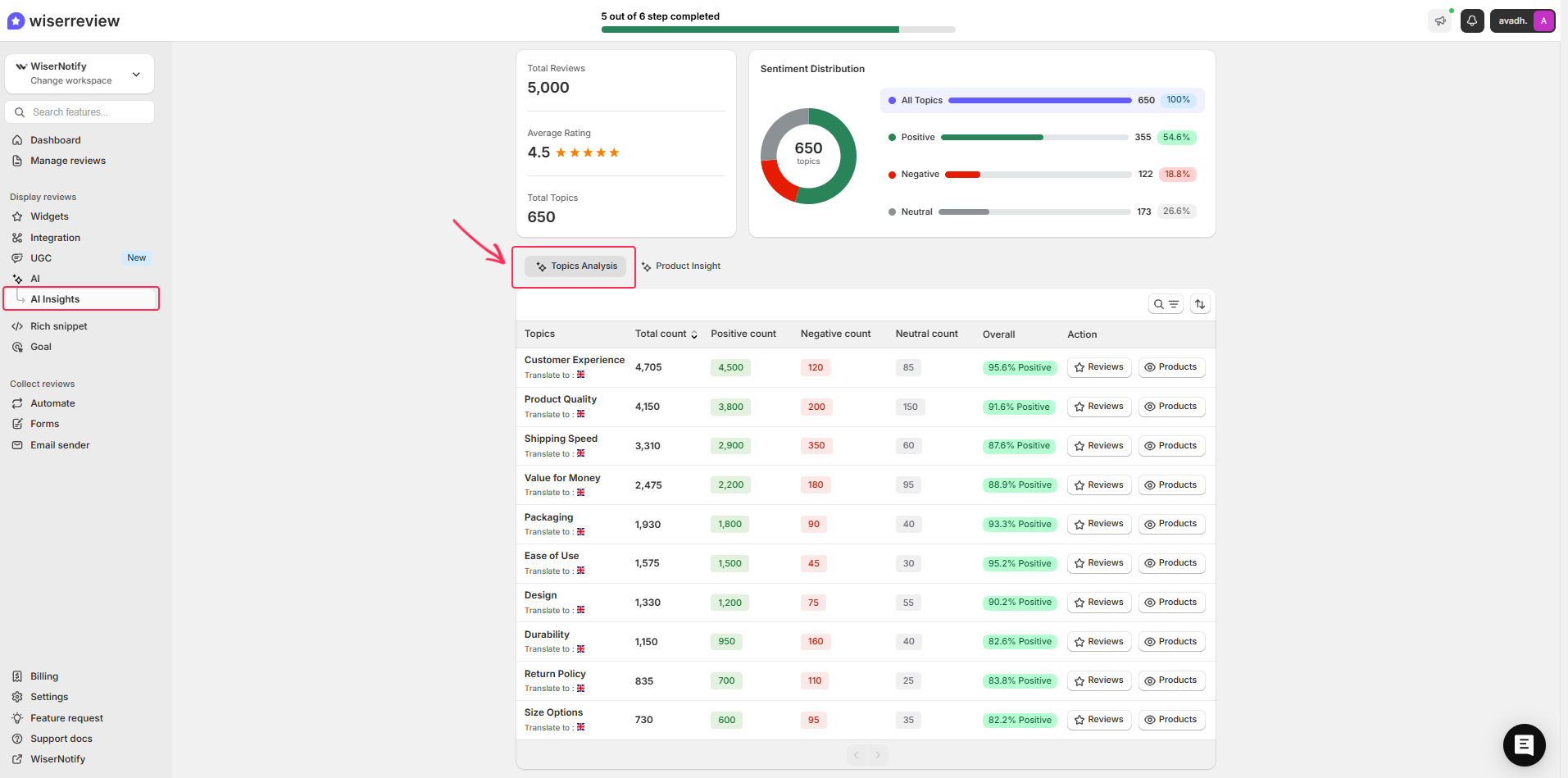
WiserReview’s AI Smart Topic feature automatically groups reviews by theme – quality, shipping, customer service, ease of use, value for money- without you having to manually tag anything.
This makes your testimonial library instantly navigable for both your team and your website visitors.
Someone researching whether your shipping is reliable can filter directly to those reviews. Someone evaluating product quality sees exactly what they need. Your testimonials stop being a flat list and become a structured resource that serves both conversion and research use cases at once.
Pricing

Where to Place Testimonials for Maximum Impact

- Homepage: Place one or two of your strongest testimonials above the fold or directly after your hero section. First impressions determine whether visitors stay or leave, and social proof in that window reduces early bounce dramatically.
- Product or service pages: Match testimonials to the specific product being viewed. Relevance drives conversion; generic social proof is background noise.
- Checkout and cart pages: This is where purchase anxiety peaks. A single strong testimonial from a customer who had the same hesitation can recover abandoned buyers.
- Landing pages: Testimonials on landing pages should directly address the offer on that page. If you’re running a free trial campaign, feature testimonials from customers who converted from trial to paid and explain why.
- Paid ad campaigns: Customer quotes in ad creative consistently outperform brand-written copy because they feel less like advertising. Even a three-word quote paired with a customer photo can lift click-through rates significantly.
What Makes a Testimonial Persuasive
- Specificity over sentiment: “We increased qualified leads by 47% in 90 days” is 10x more persuasive than “great tool, very happy with it.” Numbers are memorable and verifiable in a way that adjectives aren’t.
- Objection handling: The best testimonials address a concern the prospect already has. “I was worried it would be too complicated to set up, but I was live in 20 minutes” directly neutralizes a common sales objection before the prospect even raises it.
- Attribution that can be verified: A name, job title, company name, and photo make a testimonial feel real. Every element of attribution you add increases the credibility of the testimonial as a whole.
- Natural language: Testimonials that sound like marketing copy don’t feel like testimonials. Keep the customer’s original language, quirks and all. That’s where the authenticity lives.
All your reviews in one place
Collect reviews, manage every response, and display them where they matter most.
Wrapping Up
The 20 examples in this post share one thing: they’re specific, attributed, and positioned where they can influence a decision at the right moment.
Your testimonials don’t need to be polished. They need to be honest, specific, and relevant to the person reading them. The brands that do this well treat testimonials as a core conversion asset, not an afterthought added to the site once a year.
Start by auditing what you already have. Pull your most specific quotes to the front. Add attribution wherever it’s missing. And if you’re looking for a way to display that social proof in real time across your site, WiserNotify makes it simple without requiring developer time.
Also check: Easiest Ways to Display Testimonials on Your Website
Frequently Asked Questions
What's the difference between a testimonial and a review?
A review is usually posted by the customer on a third-party site like Google or Trustpilot. A testimonial is a quote a business selects and features on its own site, often pulled straight from a review.
How many testimonials should a website have?
There’s no fixed number. A handful of specific, well-attributed testimonials placed where they matter beats dozens of generic ones scattered across every page.
What makes a testimonial trustworthy?
Specific details, a real name and photo, and language that sounds like the customer said it, not brand copy someone polished afterward.
Do you need permission to use a customer's testimonial?
Yes. Always get explicit consent before publishing a customer’s words, photo, or video, even if they posted it publicly themselves.
Which testimonial format converts best: text, video, or case study?
Video tends to work best for high-friction decisions, short text quotes build quick trust, and case studies suit complex B2B purchases. Most sites do best with a mix.

Krunal Vaghasiya is a marketing tech expert who boosts e-commerce conversion rates with automated social proof and FOMO strategies. He loves to keep posting insightful posts on online marketing software, marketing automations, and improving conversion rates.




 Capterra