


I’ve tested dozens of sales promotion techniques across ecommerce stores, SaaS products, and retail businesses. Some drove a 30% spike in revenue in a week. Others barely moved the needle.
The difference isn’t the type of promotion. It’s the execution.
A well-timed flash sale with the right audience targeting will outperform a poorly planned discount every single time.
The opposite is also true: even “proven” tactics like BOGO deals can backfire if they train your customers to wait for the next sale rather than buy at full price.
This guide covers 20 sales promotion strategies that actually work. I’ve organized them by technique type (not industry) so you can pick the ones that match your goals, whether that’s clearing inventory, acquiring new customers, or increasing average order value.
Also check: 23 Latest Sales Promotion Examples That Drive Results
What Is a Sales Promotion?
A sales promotion is a short-term marketing strategy designed to drive immediate purchases through incentives.
Unlike brand advertising (which builds awareness over months), sales promotions compress buying decisions into days or hours using urgency, scarcity, and perceived value.
The most common methods of sales promotion include percentage discounts, BOGO offers, free shipping thresholds, flash sales, loyalty point multipliers, free trials, referral bonuses, and seasonal campaigns.
Understanding these sales promotion methods in marketing helps you pick the right tool for the right situation.
What separates effective sales promotions from wasteful ones is targeting.
The right offer shown to the right customer at the right moment in their buying journey converts dramatically better than a blanket discount shown to everyone.

Boost Conversion Instantly
Add Social Proof & Urgency to your website
Types of Sales Promotion
Before diving into specific techniques, it helps to understand the three main categories of sales promotion activities:
Price-based promotions reduce the cost of purchase. This includes percentage discounts, dollar-off coupons, BOGO deals, free shipping, and bundle pricing. These are the most common and easiest to implement, but they carry the highest risk of eroding your margins if overused.
Value-added promotions increase what the customer gets without cutting the price. Think free gifts with purchase, loyalty points, extended warranties, or premium feature upgrades. These protect your margins while still giving customers a reason to buy now.
Engagement-based promotions create interaction and buzz. Contests, sweepstakes, referral programs, and social media challenges fall under this category. They’re best for brand awareness and customer acquisition, though they require more creative effort to execute.
The best promotion strategy combines elements from all three categories throughout the year.
Think of each type as a different sales promotion tool in your toolkit, and rotate between them to keep your sales promotion ideas fresh and your business promotions effective.
20 Sales Promotion Techniques That Work
1. Percentage Discounts
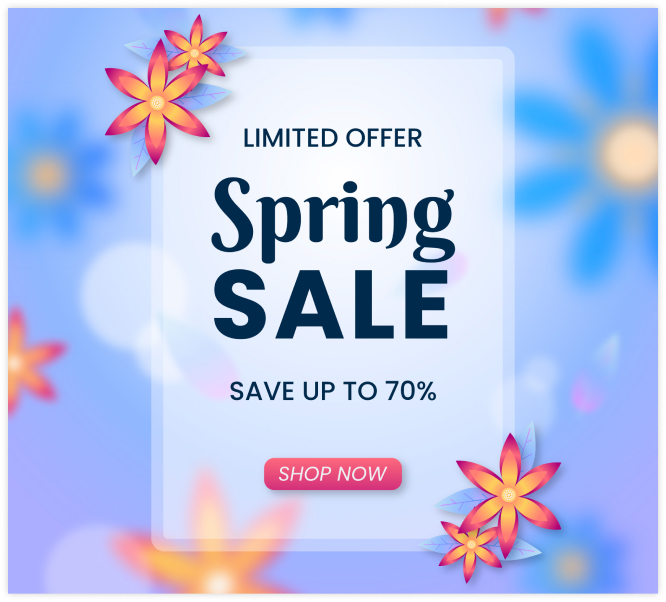
The most straightforward sales promotion method. Offer 10%, 20%, or 30% off a product or category for a limited time. Simple to understand, simple to execute.
Why it works: Customers immediately grasp the value. No math required. “25% off everything” is universally appealing.
When to use it: Seasonal clearances, slow inventory periods, or quick revenue boosts. Keep discounts between 15% and 30% for the best balance of conversion lift vs. margin protection.
Real example: Nike’s seasonal end-of-season sales consistently move older inventory at 20-30% off, making room for new collections while maintaining brand perception.
Also check: 50+ Coupon Code Ideas (With Names That Actually Convert)
2. Flash Sales
Flash sales offer deep discounts for a very short window, typically 24 to 48 hours. The extreme time pressure drives impulse purchases and creates buzz.
Why it works: Scarcity and urgency are two of the strongest psychological buying triggers. When customers see a countdown timer ticking, hesitation drops.
When to use it: To clear specific inventory, generate quick cash flow, or re-engage dormant email subscribers. Announce through email, SMS, and social media simultaneously for maximum impact.
Real example: Amazon’s Prime Day started as a single flash sale event and now generates billions in revenue in just 48 hours, proving the power of time-limited deep discounts.
Build urgency
Add floating offers with countdown timer & coupon code.


3. Buy One Get One (BOGO)
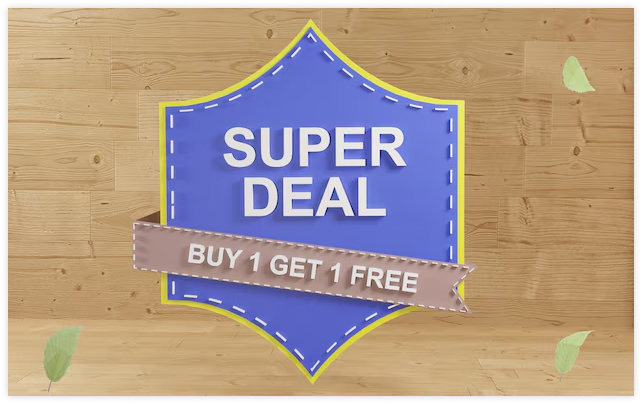
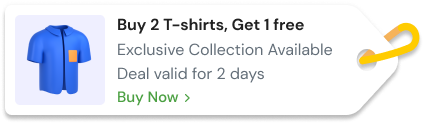
BOGO deals offer a free or discounted item when customers purchase at full price. This increases average order value while giving customers the perception of massive savings.
Why it works: The word “free” is the most powerful word in marketing. BOGO deals feel like a bigger win than an equivalent percentage discount, even when the actual savings are the same.
When to use it: To move paired products, clear excess inventory, or increase units per transaction. Works best for consumable products where customers will eventually need more anyway.
4. Free Shipping Thresholds
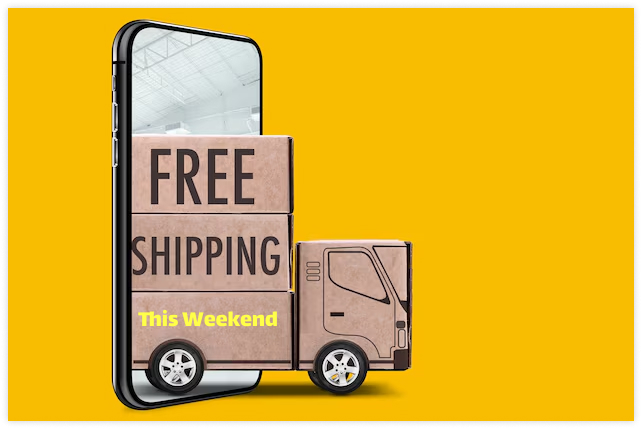
Set a minimum order value for free shipping. Customers who are close to the threshold will add items to their cart to qualify, increasing average order value organically.
Why it works: Shipping costs are the number one reason for cart abandonment. A 2025 study found that 48% of shoppers abandon their carts due to unexpected shipping fees. Removing that friction directly increases conversion rates.
When to use it: Always, as a baseline promotion. Set your threshold 15-20% above your current average order value to encourage upselling.
Real example: Amazon’s $35 free-shipping threshold for non-Prime members consistently prompts customers to add “just one more item” to qualify.
5. Limited-Time Offers With Countdown Timers
Add visible countdown timers to product pages, email campaigns, and popups. The ticking clock transforms browsing into buying by creating genuine urgency.
Why it works: Loss aversion is a proven psychological principle. People are more motivated by the fear of missing a deal than by the potential of gaining one.
When to use it: During product launches, holiday weekends, or when promoting specific categories. Pair with FOMO marketing tactics like “only 3 left in stock” for maximum impact.
Build trust & FOMO
Highlight real-time activities like reviews, sales & sign-ups.
6. Exit-Intent Popups
Trigger a special offer when a visitor moves their cursor toward the browser’s close button. This last-chance discount captures sales that would otherwise be lost.
Why it works: You’re targeting people who have already browsed your products and shown interest. A small discount at this moment has a much higher conversion rate than the same discount shown to a cold visitor.
When to use it: On product pages and cart pages. Offer 10-15% off or free shipping to convert visitors who are abandoning. Test different offers to find what resonates with your audience.
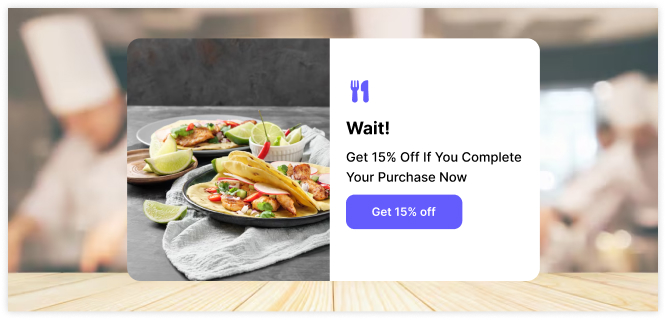
7. Abandoned Cart Recovery Discounts
Send automated emails to customers who added items to their cart but didn’t complete checkout. Include a small discount to encourage them to come back.
Why it works: These customers have the highest purchase intent of any segment on your site. They chose your product, added it to the cart, and only need a small push to finish. A 10% discount or free shipping offer in a well-timed email can recover 5-15% of abandoned carts.
When to use it: Send the first reminder within 1 hour, a second at 24 hours with a discount, and a final urgency email at 72 hours. Include product images and a one-click return-to-cart link.
8. Loyalty and Rewards Programs
Reward repeat customers with points, tier-based perks, or exclusive access. Loyalty programs shift the value equation from “cheapest price” to “best relationship.”
Why it works: Acquiring a new customer costs 5-7x as much as retaining an existing one. Loyalty programs incentivize repeat purchases and increase customer lifetime value.
When to use it: As a permanent program, not a one-time promotion. The best loyalty programs offer points per purchase, birthday rewards, early access to sales, and exclusive products.
Real example: Starbucks Rewards drives over 50% of the company’s revenue through its app-based loyalty program. Members earn stars per purchase and unlock free drinks, food, and upgrades as they progress through tiers.
9. Referral Programs
Turn your happiest customers into your sales team. Offer both the referrer and the new customer a reward upon a successful referral.
Why it works: People trust recommendations from friends more than any advertisement. A dual-sided referral incentive (where both parties benefit) has the highest participation rate.
When to use it: After a customer has made 2+ purchases and demonstrated satisfaction. The reward can be cash credit, a free product, or a percentage discount on the next order.
Real example: Dropbox grew from 100,000 to 4 million users in 15 months, largely through its referral program, which gave both the referrer and the referred user extra storage space.
10. Holiday and Seasonal Campaigns
Align your promotions with natural shopping moments: Black Friday, Cyber Monday, Valentine’s Day, back-to-school, and end-of-year clearances. Customers expect deals during these periods and are already in buying mode.
Why it works: You’re swimming with the current instead of against it. Consumer spending during Black Friday and Cyber Monday alone exceeds $35 billion in the US, and shoppers are actively looking for deals.
When to use it: Plan seasonal promotions at least 4-6 weeks in advance. Build anticipation through email previews, “coming soon” social posts, and early access for loyal customers.
Also check: 38 Christmas Marketing Techniques (Examples Included)
11. Free Trials
Let potential customers use your product for 7, 14, or 30 days without payment. This is the gold standard for SaaS and digital product sales promotions.
Why it works: Free trials eliminate the biggest barrier to purchase: risk. Once a user integrates your product into their workflow, the switching cost of not subscribing becomes the motivator.
When to use it: For software, digital tools, subscription services, and any product where the value becomes clear through usage. Keep the trial period long enough for users to experience the core value, but short enough to create urgency to make a decision.
12. Bundle Pricing
Combine complementary products into a single package at a lower price than buying each individually. Bundles increase average order value while giving customers a perceived bargain.
Why it works: Bundling simplifies the buying decision. Instead of evaluating five separate products, the customer evaluates one package. The discount on the bundle feels significant even if margins on individual items remain healthy.
When to use it: When you have complementary products that are naturally used together. “Starter kits,” “complete sets,” and “essentials bundles” are effective naming conventions.
13. Coupon Codes
Distribute unique or generic coupon codes through email, social media, influencer partnerships, or physical packaging. Coupons are versatile, trackable, and easy to segment by audience.
Why it works: Coupons feel personal. A code like “WELCOME10” for first-time buyers or “LOYAL20” for returning customers creates a sense of exclusivity even when the discount is standard.
When to use it: For first-time buyer acquisition, win-back campaigns for lapsed customers, influencer partnerships, and event-based promotions. Always set expiration dates to create urgency.
14. Tiered Discounts (Spend More, Save More)
Offer increasing discounts based on cart value: “Spend $50, get 10% off. Spend $100, get 20% off. Spend $150, get 30% off.” This structure directly incentivizes larger purchases.
Why it works: Customers anchored on the highest tier will actively add items to reach the next discount level. The perceived savings from hitting a higher tier often outweigh the additional spending in the customer’s mind.
When to use it: During major sales events (Black Friday, end-of-season), or as a permanent feature for wholesale or B2B customers. Works especially well for stores with broad product catalogs.
15. Annual Plan Discounts
For subscription businesses, offer a meaningful discount (typically “2 months free” or 20% off) to customers who commit to annual billing instead of monthly billing.
Why it works: Annual plans lock in revenue, reduce churn, and provide upfront cash flow. Customers feel rewarded for commitment, and businesses gain revenue predictability.
When to use it: As a permanent offer on your pricing page, with additional urgency during promotional windows. Highlight the total annual savings prominently.
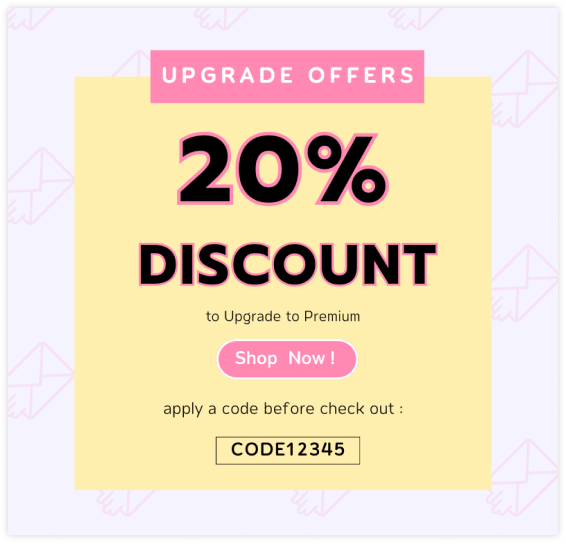
16. Upgrade and Upsell Offers
Offer existing customers a discount to upgrade to a higher tier of your product or service. This works for SaaS plans, product lines, and membership levels.
Why it works: Existing customers are the easiest to upsell because they already trust your product. A targeted upgrade offer with a time-limited discount can shift significant revenue from basic to premium tiers.
When to use it: When a customer reaches a usage limit, after a successful onboarding period, or during renewal windows. Highlight the specific features they’ll unlock.
17. In-Store Events and Experiences
For brick-and-mortar businesses, host events that drive foot traffic, such as VIP shopping nights, product demos, workshops, or “shop and sip” evenings with refreshments and exclusive discounts.
Why it works: Events create memorable brand experiences that online-only competitors can’t replicate. Attendees often spend more during events and share their experience on social media, generating organic reach.
When to use it: For new product launches, seasonal collections, or to re-engage lapsed local customers. Pair with an exclusive event-only discount to drive purchases during the event.

18. Personalized Product Recommendations
Use browsing history and purchase data to suggest relevant products through email, on-site widgets, or during checkout. Personalized suggestions feel helpful rather than promotional.
Why it works: Personalized recommendations convert 2-3x better than generic product displays because they show customers items they’re genuinely likely to want based on their behavior.
When to use it: On product pages (“Customers also bought”), in post-purchase emails (“Complete your setup”), and during checkout (“Don’t forget these”). The more specific the recommendation, the higher the conversion.
19. Webinars and Live Demos
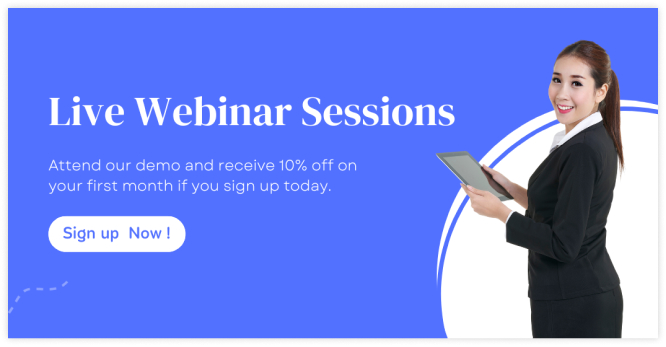
Host educational webinars or live product demos that showcase your product’s value, then offer an exclusive discount to attendees who sign up during or immediately after the session.
Why it works: Attendees self-select as interested prospects. By the end of a well-run demo, they’ve seen the product solve their specific problem. An exclusive post-demo discount captures high-intent leads at peak interest.
When to use it: For SaaS products, professional services, and complex products where education drives conversion. “Attend our demo and get 20% off your first 3 months” is a proven format.
20. Partner and Cross-Promotion Discounts
Partner with complementary (non-competing) brands to offer joint promotions. Both brands access each other’s customer base, and customers get a deal on products that naturally go together.
Why it works: Cross-promotions expand your reach to pre-qualified audiences without ad spend. A fitness equipment brand partnering with a nutrition supplement company creates natural synergy.
When to use it: When you can identify a brand that shares your target audience but doesn’t compete with you. Structure the promotion so that both brands offer value to the other’s customers.
Boost Conversion Instantly
Add Social Proof & Urgency to your website
Which Sales Promotion Is Most Effective?
There’s no single “best” promotion. Effectiveness depends on your business model, audience, and goals. But here’s what the data consistently shows:
For ecommerce: Free shipping thresholds and abandoned cart recovery emails deliver the highest ROI because they target customers with existing purchase intent. Flash sales and percentage discounts are best for quick revenue spikes, but should be used sparingly to avoid training customers to wait for deals.
For SaaS and software: Free trials consistently outperform every other sales promotion technique. Once users experience the product, conversion rates from trial to paid range from 15% to 25% with well-designed onboarding flows. Annual plan discounts are the second most effective for reducing churn and increasing LTV.
For retail: Loyalty programs generate the highest long-term ROI. Starbucks, Sephora, and Amazon Prime all prove that customers who join loyalty programs spend 2-3x more annually than non-members. Seasonal sales and in-store events drive the strongest short-term results.
For B2B: Webinars with exclusive post-demo discounts and referral programs consistently outperform cold discounting. B2B buyers respond to education and proof of value, not urgency tactics.
How to Plan a Sales Promotion That Delivers
Running a promotion without a plan is like running ads without tracking conversions.
Here’s the framework I use:
Start with one clear goal. Are you trying to acquire new customers, increase average order value, clear inventory, or reduce churn? Each goal calls for a different promotion type. Trying to do all four at once dilutes everything.
Define your audience segment. A blanket “20% off everything” promotion is expensive because it discounts to people who would have bought anyway. Target specific segments: first-time visitors, cart abandoners, lapsed customers (90+ days since last purchase), or high-value customers you want to reward.
Set a firm budget and timeline. Calculate the cost of the promotion, including discounts, fulfillment, and marketing spend. Model the break-even scenario. If you need to sell 500 units at the discounted price to break even, make sure your traffic and conversion assumptions support that number.
Create urgency that’s genuine. Countdown timers, “limited stock” alerts, and end dates work because they accelerate decisions. But fake urgency (timers that reset, “limited” stock that never runs out) destroys trust. If you say the sale ends Sunday, it ends Sunday.
Measure what matters. Track total revenue (not just units sold), customer acquisition cost, average order value, and whether promotional buyers return at full price. A promotion that generates $50K in discounted sales but never sees repeat purchases isn’t successful.
Follow up after the promotion. Send thank-you emails to buyers. Offer a smaller follow-up incentive to convert promotional buyers into repeat customers. The real value of a promotion isn’t the initial sale. It’s the customer relationship that follows.
Also check: How to Increase Online Sales: Proven Strategies
3 Sales Promotion Examples That Drove Real Results
Groupon’s Daily Deals Model. Groupon built an entire business on the flash sale concept, offering massive discounts on local experiences and products with 24-hour expiration windows. The extreme time pressure drove conversion rates that traditional advertising couldn’t match. At its peak, Groupon’s model proved that urgency plus deep discounts creates purchasing behavior even for products customers weren’t actively shopping for.
Thrive Market’s Trial + Gift Bundle. Thrive Market combined two promotion techniques brilliantly: a 30-day free membership trial plus a free gift bundle for first-time subscribers. This stacked approach lowered every barrier to entry. The trial removed risk, and the gift bundle added immediate tangible value. The result was a significant increase in membership sign-ups and strong retention because customers had time to experience the full product catalog.
Best Buy’s Tiered Black Friday Structure. Instead of a flat discount, Best Buy used tiered pricing during Black Friday: different discount levels for different spending thresholds. This drove customers to spend more than they originally planned, pushing average order values significantly above normal. Their 2022 Q4 revenue hit $11 billion, driven heavily by this ecommerce growth strategy.
Common Sales Promotion Mistakes to Avoid
Running promotions too frequently. If customers learn that you run a sale every two weeks, they’ll stop buying at full price and simply wait. Space out your promotions and vary the types so customers can’t predict the pattern.
Discounting without targeting. A 20% blanket discount given to everyone costs you margin on customers who would have purchased anyway. Use segmentation to offer discounts only to the segments that need an incentive: first-time visitors, cart abandoners, or lapsed customers.
Ignoring the math. A promotion that generates $50K in revenue but costs $60K in discounts, ad spend, and fulfillment isn’t a promotion. It’s a loss. Always calculate break-even before launching.
Forgetting the follow-up. The promotion ends, you celebrate the revenue spike, and then nothing. Without post-promotion nurturing, most promotional buyers never return. Build a follow-up sequence that converts one-time deal-seekers into loyal customers.
Using fake urgency. Countdown timers that reset, “only 2 left” warnings on products with unlimited inventory, and sales that “end tonight” but restart tomorrow. Customers notice, and it erodes the trust that makes future promotions effective.
Wrapping Up
The most effective sales promotion strategies share three traits: they target specific customer segments (not everyone), they create genuine urgency (not fake scarcity), and they’re measured by long-term customer value (not just short-term revenue spikes).
Start with one or two techniques from this list that align with your current business goal.
Test them, measure the results, track whether promotional buyers return at full price, and refine your approach before adding more tactics to your mix.
The best promotion isn’t the biggest discount. It’s the one that brings in customers who stay.


