
45 Marketing Automation Statistics for 2026 (AI & ROI Data)
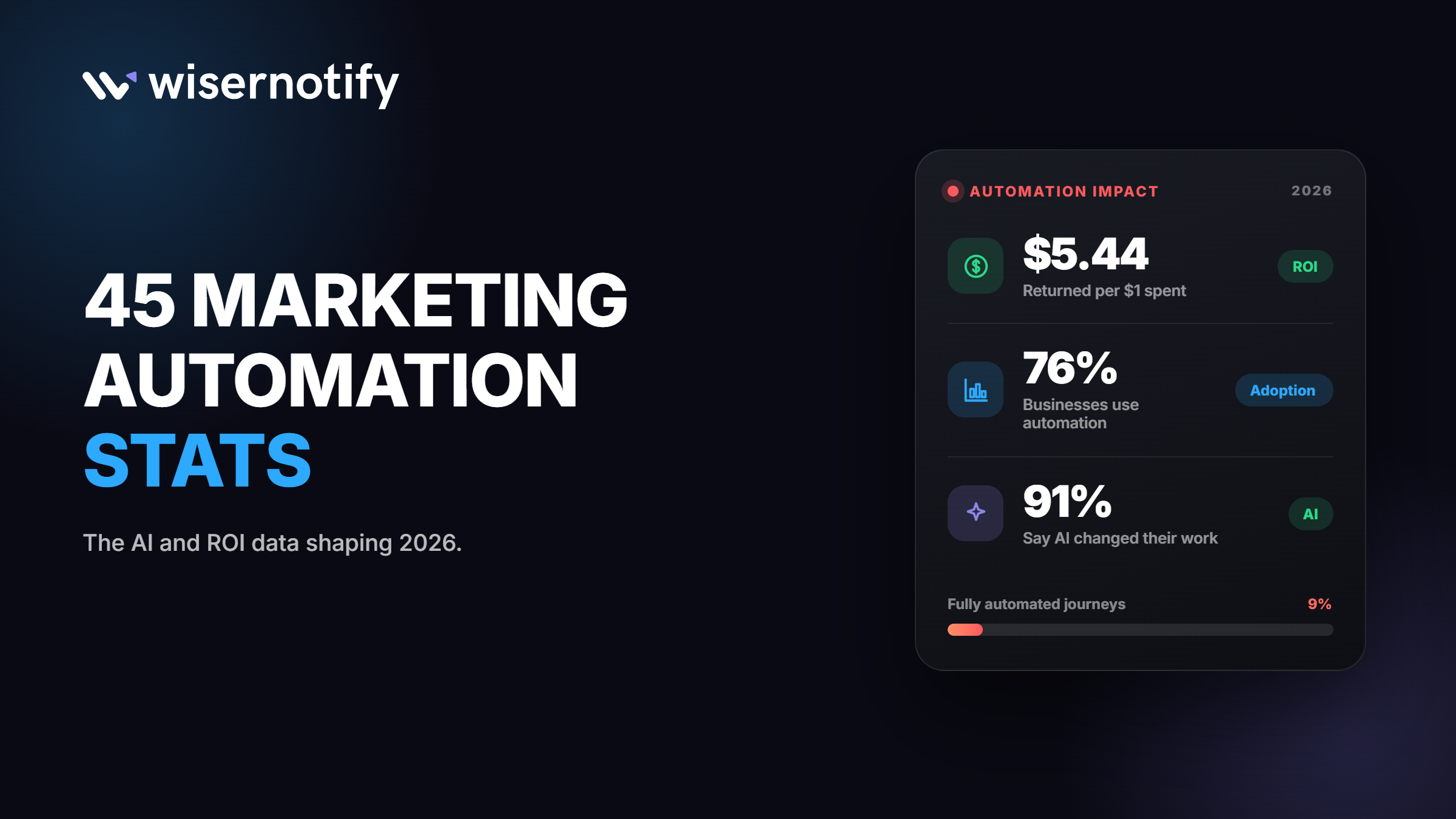
Most marketing teams are small and busy. Automation is how they keep up: it sends the emails, posts the social updates, and follows up with leads while the team works on other things.
In 2026, automation is also changing fast. AI agents can now build and run campaigns on their own, and almost every major platform added them in the last year.
This page has 45 up-to-date marketing automation statistics: how many businesses use it, how big the market is, what ROI it delivers, and what AI is changing.

Boost Conversion Instantly
Add Social Proof & Urgency to your website
Key Marketing Automation Statistics
| Metric | Latest Figure |
|---|---|
| Businesses using marketing automation | 76% |
| Marketers who have used or plan to use a platform | 96% |
| Global market size in 2024 | $6.65 billion |
| Projected market size by 2030 | $15.58 billion |
| Return for every $1 spent | $5.44 |
| Companies with positive ROI within the first year | 76% |
| Lift in qualified leads from automated nurturing | Up to 451% |
| Extra revenue from automated emails | 320% more |
| Marketers who say AI changed how they work | 91% |
| Teams running fully automated customer journeys | Only 9% |
How Many Businesses Use Marketing Automation?
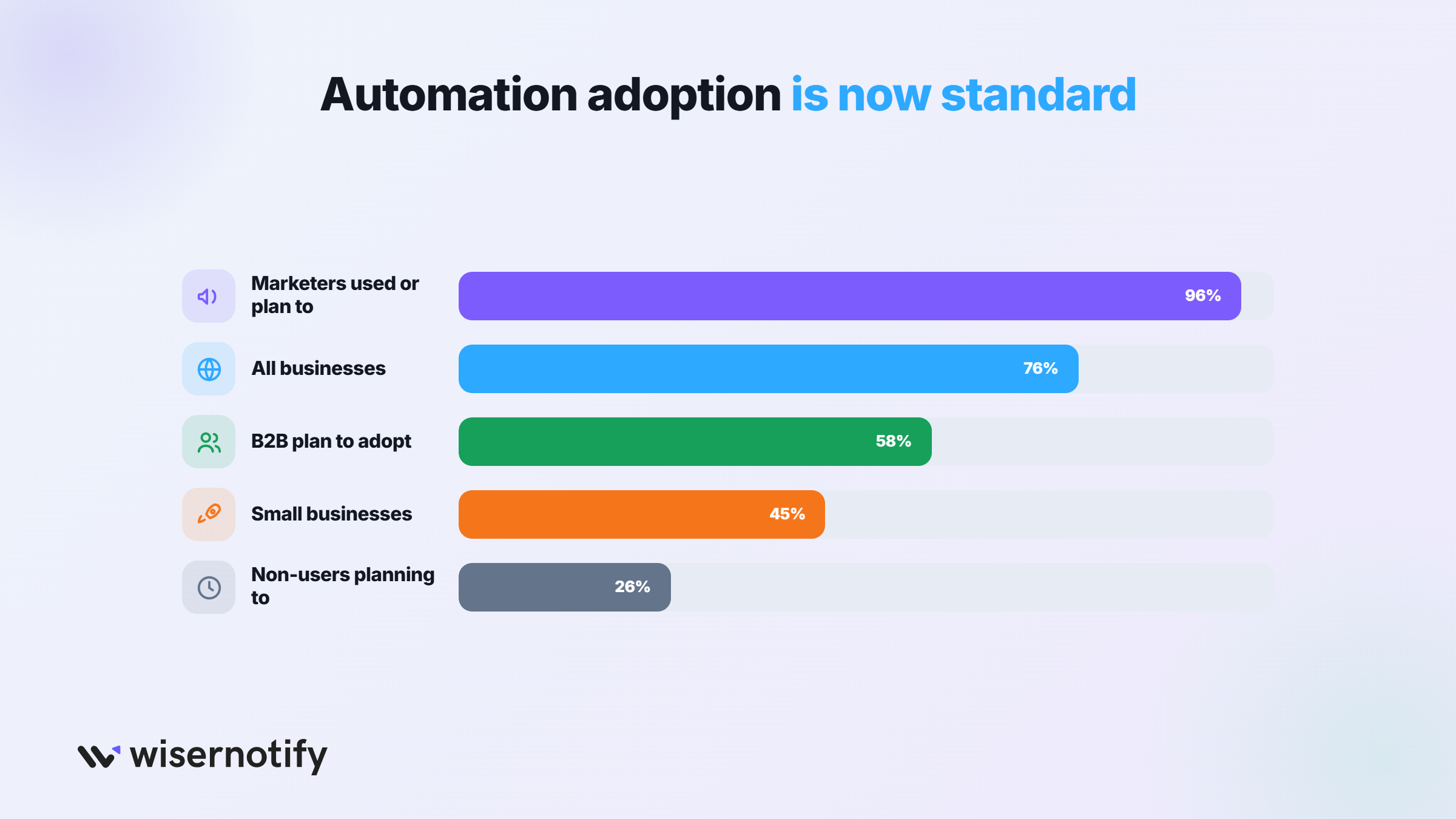
76% of businesses use marketing automation, and 96% of marketers have either used a platform or plan to. It is now a standard part of the marketing stack.
1. 76% of businesses use some form of marketing automation.
2. 96% of marketers have used a marketing automation platform or plan to use one.
3. 45% of small businesses now use marketing automation tools.
4. 58% of B2B companies plan to adopt automation in their marketing campaigns.
5. 26% of companies that don’t use automation yet plan to implement it in the coming years.
6. At least 454 companies now sell marketing automation software.
7. HubSpot leads the market with about a 29.6% share of automation software users.
8. Even with all those options, 66% of marketers say they can’t find a tool that fits their needs completely.
Adoption is high, but so is frustration with tool choice. Most teams end up mixing two or three tools instead of using one platform for everything.
Boost Conversion Instantly
Add Social Proof & Urgency to your website
Marketing Automation Market Size Statistics
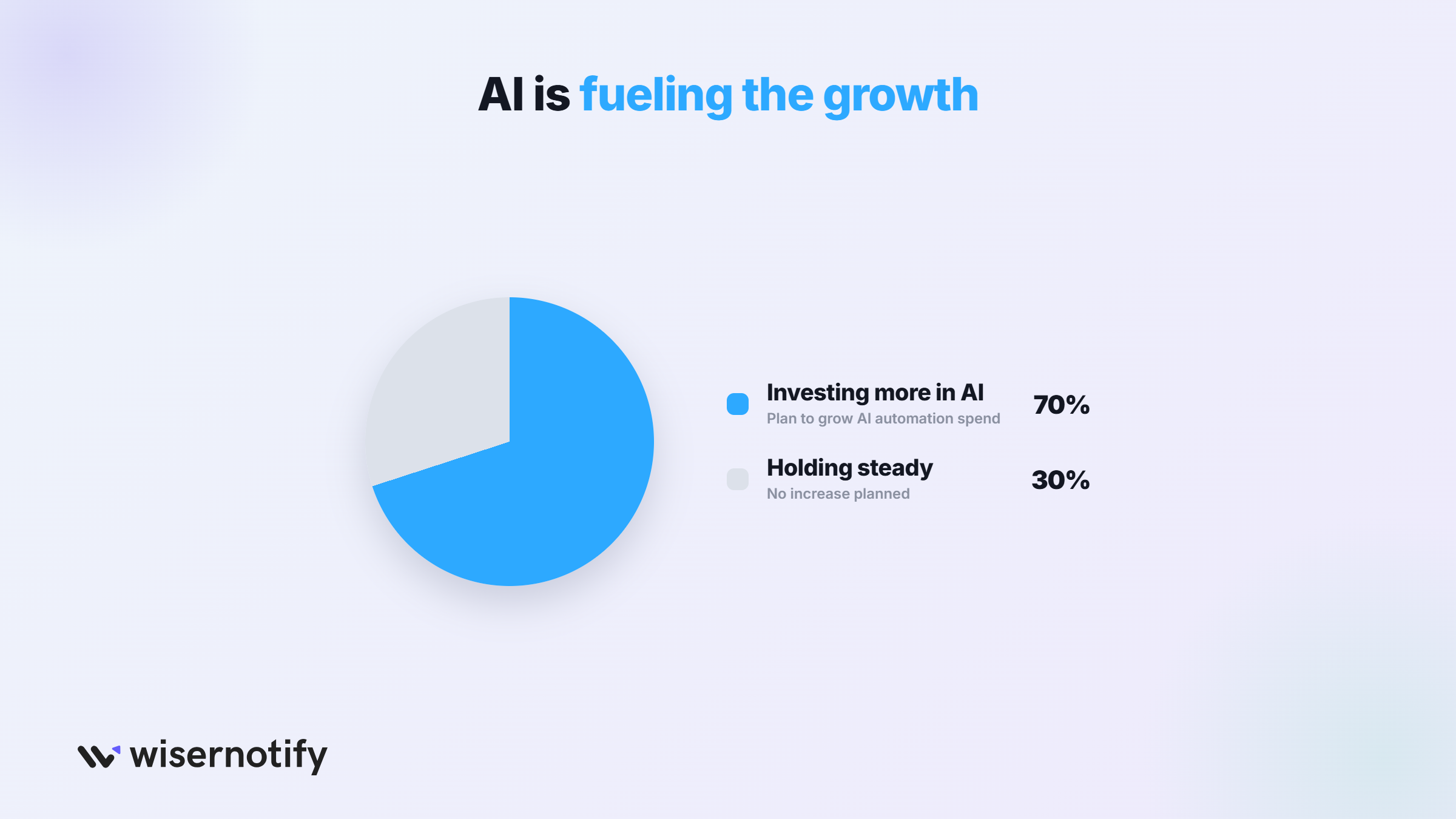
The market keeps growing at a steady double-digit rate, and AI features are the main reason budgets keep rising.
9. The global marketing automation market reached $6.65 billion in 2024.
10. It is projected to grow to $15.58 billion by 2030, at about 15% per year.
11. A separate forecast puts the market at $8.44 billion in 2026, rising 62% to $21.7 billion by 2032.
12. 68% of marketers expect their marketing automation budget to increase this year.
13. 70% of marketers plan to invest more in AI-powered automation tools.
The exact forecasts differ, but every one of them points the same direction: up.
What ROI Does Marketing Automation Deliver?
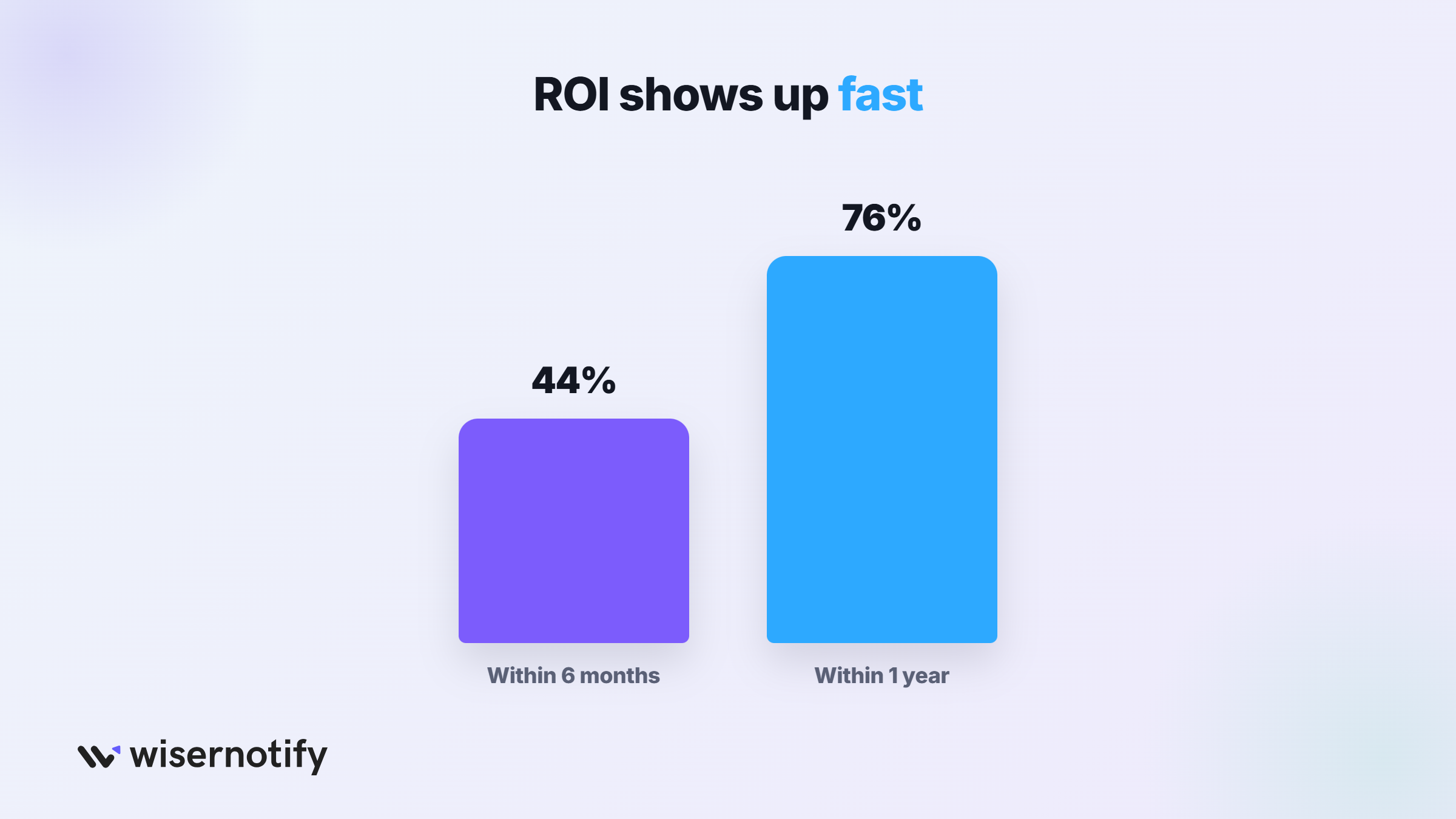
About $5.44 back for every $1 spent, and 76% of companies see positive ROI within the first year.
14. Marketing automation returns an average of $5.44 for every $1 spent over the first three years.
15. 76% of companies see a positive return on investment within the first year.
16. 44% of companies see ROI within the first six months.
17. Automation lifts sales productivity by 14.5% on average.
18. It also cuts marketing overhead by about 12.2%.
19. B2B marketers using automation see 20% more sales opportunities on average.
The return comes from two places at once: automation saves staff time and it converts more of the leads you already have.
Lead Generation Statistics
The biggest measurable win in automation is what it does to lead quality.
20. Companies that nurture leads with automation see up to 451% more qualified leads.
21. Nurtured leads make 47% more purchases than leads that get no follow-up.
22. 80% of marketing automation users report better lead generation results.
23. 63% of companies using automation outperform their competitors.
Most leads are not ready to buy on day one. Automated follow-up is what keeps them warm until they are, which is why the lead generation statistics and automation numbers move together.
Boost Conversion Instantly
Add Social Proof & Urgency to your website
Marketing Automation Use Case Statistics
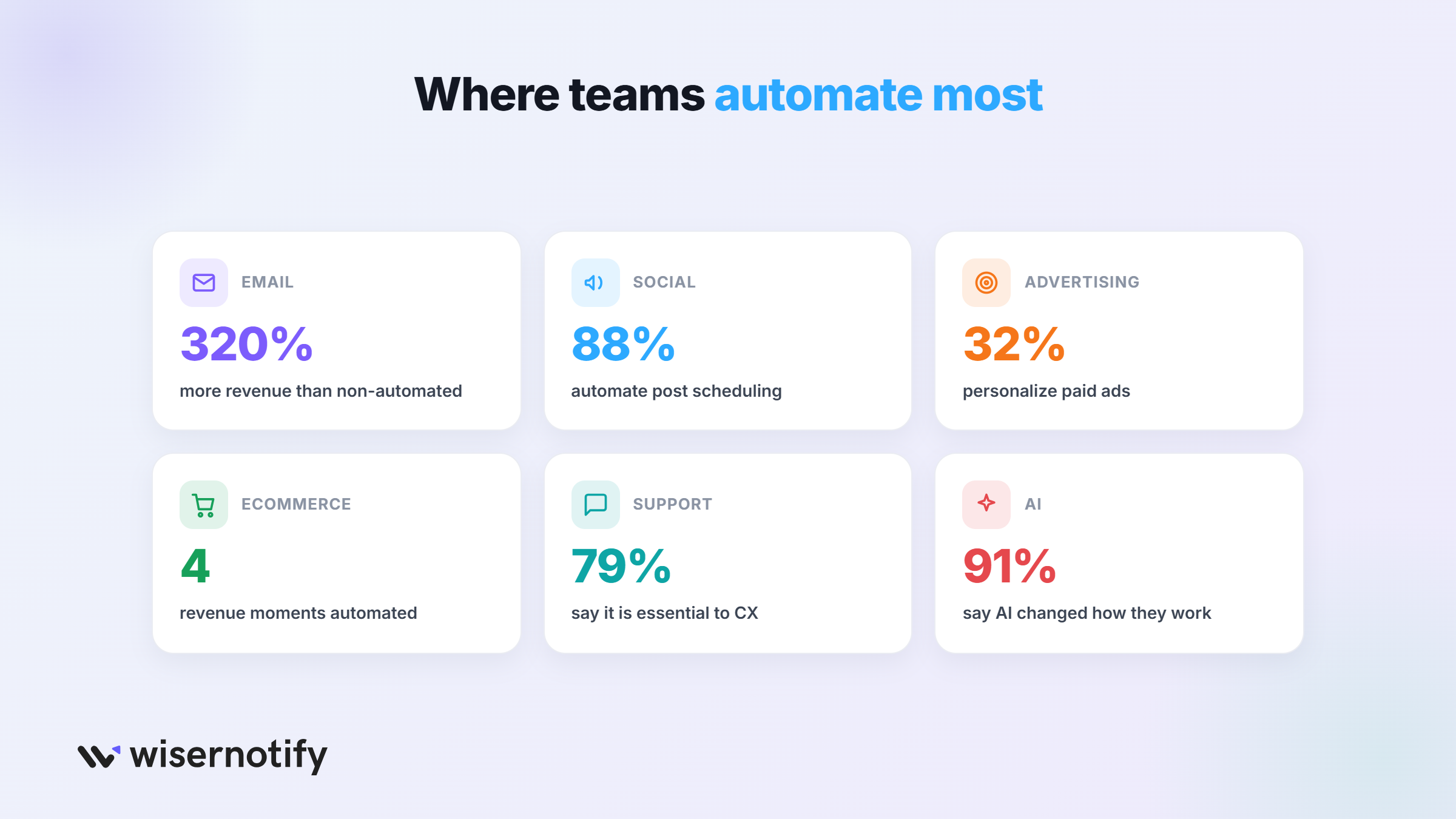
Different channels get automated at very different rates. Here is where teams actually use it.
Email Automation
24. Email is the most automated marketing channel.
25. Automated emails generate 320% more revenue than non-automated campaigns.
26. 21% of all email marketing revenue now comes from automated campaigns.
27. 31% of email marketing runs entirely through automation software.
Welcome emails, cart reminders, and re-engagement emails do most of that work. They run on triggers, so they reach people at exactly the right moment.
Social Media Automation
28. 47% of marketers use automation for social media management.
29. 88% of marketers automate social media post scheduling, the most common use of all.
30. Teams save more than six hours a week by automating social posting.
Advertising Automation
31. 32% of marketers use automation in paid ads to personalize what each person sees.
32. 29% plan to add automation to their paid ad campaigns next.
Ecommerce Automation
Online stores automate the moments that make money: abandoned cart emails, product recommendations, back-in-stock alerts, and review requests.
The full breakdown is in our guide to ecommerce marketing automation.
Customer Service Automation
33. 79% of businesses say automation is essential to the customer experience journey.
34. 73% of customers believe AI and automation can improve their experience.
Fast answers matter more than perfect answers for routine questions, and that is what automation is good at. The customer experience statistics show the same pattern.
AI in Marketing Automation
35. 91% of marketers say AI and automation tools have changed how they work.
36. 77% of marketers now use AI to help create content.
37. More than 80% of enterprises will use generative AI in their applications by the end of 2026.
Boost Conversion Instantly
Add Social Proof & Urgency to your website
What Changed With AI Agents?
Automation used to mean building if-this-then-that workflows by hand. Now the big platforms include AI agents that build and run campaigns from a simple goal.
38. Every major automation platform added AI agents in the past year, including Salesforce Agentforce, HubSpot Breeze, and Klaviyo AI.
39. AI agent adoption is moving faster than any earlier automation trend on record.
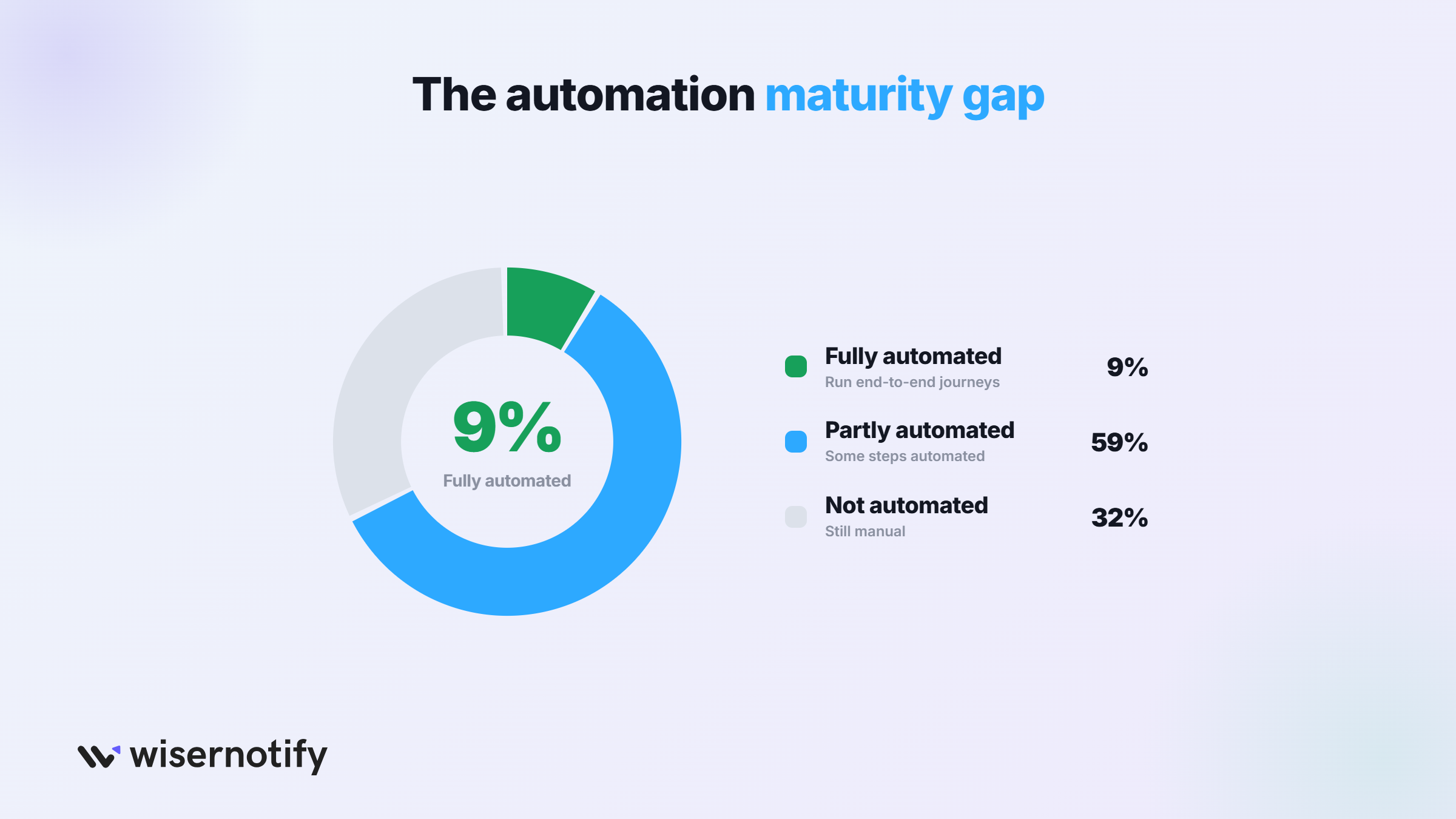
40. Still, only 9% of marketers run fully automated customer journeys today, and 59% automate only parts of the journey.
41. 52% of marketers say collecting quality data is their biggest automation obstacle, because AI tools are only as good as the data behind them.
The tools are ahead of the teams right now. The winners in 2026 are the ones fixing their data first, then letting the agents work.
The same AI shift is changing how people search too, as these ChatGPT user statistics show.
Where Marketing Automation Goes Next
Three shifts stand out in the current data.
42. Cross-channel automation adoption is growing about 35% year over year, because customers expect the same message on email, social, and the website.
43. Hyper-personalized automated campaigns convert around 30% better than generic ones.
44. Better business analytics is the top reason IT leaders adopt machine learning, ahead of cost cutting.
45. Connecting automation with CRM data is where teams report the biggest revenue impact, because campaigns can react to what customers actually do.
The direction is clear: fewer disconnected tools, more connected data, and more of the routine work handed to AI.
For how to put this into practice, see these marketing automation examples and our automation strategy guide.
Boost Conversion Instantly
Add Social Proof & Urgency to your website
Conclusion
Marketing automation is now normal. Three out of four businesses use it, the money returns are clear, and the market keeps growing every year.
The new part is AI. Agents can now handle work that used to need hand-built workflows, but most teams are still early: only 9% run fully automated journeys, and bad data is the main thing holding the rest back.
The practical takeaway is simple.
Start with the automations that touch money, like email follow-ups and abandoned carts, keep your customer data clean, and add proof like reviews and live activity to the pages your automations send people to. That is what turns automated traffic into actual sales.
Sources
Backlinko | MoEngage | SeoProfy | SQ Magazine | EntrepreneursHQ | Digital Applied
Frequently Asked Questions
How many businesses use marketing automation?
76% of businesses use it, and 96% of marketers have used or plan to use a marketing automation platform.
What is the ROI of marketing automation?
About $5.44 back for every $1 spent, and 76% of companies see positive ROI within the first year.
How big is the marketing automation market?
About $8 billion in 2026, heading toward $15.58 billion by 2030.
What is the most automated marketing channel?
Email. Automated emails bring in 320% more revenue than non-automated campaigns.
Are AI agents replacing marketing automation?
No, they are becoming part of it. Platforms like Salesforce and HubSpot now include AI agents that build and run campaigns from a goal.

Krunal Vaghasiya is a marketing tech expert who boosts e-commerce conversion rates with automated social proof and FOMO strategies. He loves to keep posting insightful posts on online marketing software, marketing automations, and improving conversion rates.




 Capterra