
How to Attract Customers to Buy Your Product (14 Ways)

Getting people to your site is the easy half. Losing them at the point of paying is the expensive half, and it usually comes down to one thing. Nothing on the page answers the question they are quietly asking.
That question is hardly ever “is this any good”. It is closer to “is this right for me, and can I trust these people with my card”.
Below are fourteen ways to answer it. After that, a straight answer on whether cutting your price works, and what to do when you have no reviews yet.
How to Get People to Buy Your Product
Fourteen ways, roughly in order of what they return. If you are still working out where the traffic comes from, our customer acquisition examples cover that side.
1. Lead with the problem, not the product
Nobody wakes up wanting your product. They wake up with a problem, and your product is one way out of it.
Open with the thing they will nod at, then the fix. “Stop losing an hour a week to invoicing” gets read. “Advanced invoicing software” does not. The landing page statistics show how much the opening line carries.
2. Write for one person, not everyone
Copy that tries to suit everybody suits nobody.
Pick the customer you make the most money from and write to them. Say what they do and what goes wrong for them now. Name them if you can, because the moment somebody sees themselves on the page they stop skimming. The rest will still buy if it fits them, and increasing conversion rate in sales goes further on the wording.
3. Nobody wants to be the first buyer
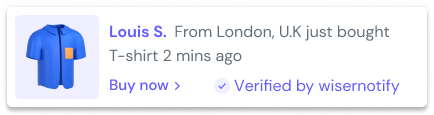
A shopper on a site they have never used wants a sign that other people bought and were glad. Without it, even a good page feels risky.
- Recent purchases, pulled from your own orders.
- Ratings beside the price, not at the bottom of the page.
- Counts that mean something. “1,240 sold this month” beats a badge.
- Reviews with the outcome, not “great product” but what it changed.
Our roundup of social proof examples has the formats, the testimonial examples show what a usable quote looks like, and the social proof statistics cover how far they move a decision.
Build trust & FOMO
Highlight real-time activities like reviews, sales & sign-ups.

4. Your product page is doing the selling
Most people never see your homepage or your about page. They land on a product and decide there. So put everything on it.
- Photos from every angle, including the one you think nobody cares about.
- The dimensions and what is in the box. Half your returns start here.
- Delivery and returns in plain words, not policy language.
- Whatever keeps landing in your inbox. If people email to ask it, the page should already have answered it.
There is more in building a product page that converts.
5. Descriptions should answer questions
Product copy is mostly adjectives. Buyers want measurements and materials, and to know what it fits and what it does not.
Write the boring specifics down. They are what people search for, and they are what stops a return three weeks later. Our product description examples show the shape.
6. Let them try before they commit
Free trials, samples and thirty-day returns all do the same job. They take the risk off the buyer and put it on you, which is the whole point.
Say it next to the buy button rather than in the footer. Nobody is reassured by a promise they never saw. It works for the same reason product reviews matter so much on a page like this.
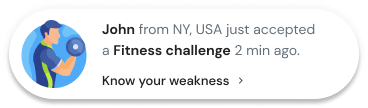
7. A deadline works when it is true
People who leave were rarely saying no. They were saying not now, and not now quietly turns into never. So give them a reason to decide today.
- A sale that ends on Friday, and does end on Friday.
- Stock down to the last few, when it truly is.
- A price that goes up when the new range lands.
Invent any of those and you will be caught, and it costs more trust than it wins sales. We have covered where the line sits in creating urgency in sales.
Build trust & FOMO
Highlight real-time activities like reviews, sales & sign-ups.
8. Checkout is where you lose them
Anyone who reaches your checkout wanted to buy. If they leave at that point, the checkout did it.
- Let people buy without an account. Nobody wants a password to buy a lamp.
- Take the wallet payments they already use. Apple Pay and the rest save typing a card number.
- Show the delivery cost early. A number appearing at the last step feels like being caught out.
The cart abandonment statistics put a figure on what each of those costs you.
9. Show it being used, not sitting still
On a white background, nothing tells you the size of a thing or how it feels in the hand. Somebody holding it does.
Customer photos work harder than studio shots because they look like real life. Thirty seconds of video answers things no amount of writing can. There is more on getting them in collecting photo reviews.
10. Ask for reviews properly
Reviews are the biggest thing between a stranger and a purchase, and most shops leave them to chance.
Ask once, a few days after it arrives, with a link that takes two taps. Answer the bad ones in public and calmly, because everybody reads the reply. The online review statistics show what a single star is worth.
11. Chase the ones who nearly bought
Somebody who looked at a product and left is worth far more than a stranger, and they have not decided yet.
Run those separately and send them to the product they looked at, not the homepage. Answer whatever stopped them instead of shouting the offer again. An exit intent popup catches the ones already reaching for the tab.
12. The email list sells while you sleep
Hardly anybody buys on the first visit. That visit turns into a sale weeks later, through the list.
Give away something small and useful, then send things worth opening. Social proof in email marketing covers what to send and when.
13. Borrowed trust beats advertising
One line from somebody a buyer already follows sounds like an opinion. The same words in an advert sound like an advert.
Smaller creators with a real audience in your niche cost less and get believed more. The user generated content statistics show how far they reach.
14. Sell again to the people who bought
Winning a new customer costs more than selling again to somebody who already trusts you. Most shops spend it the wrong way round.
Put a related item on the thank-you page while the card is still out. Send a reminder when whatever they bought runs out. We have gone through the rest in upsell and cross-sell strategies.

Boost Conversion Instantly
Add Social Proof & Urgency to your website
Do Cheap Products Attract More Buyers
Up to a point, and then it works against you. Dropping the price brings people in, but it also decides which people, and what they will expect from you.
- Cheap brings price shoppers. They buy once, send more back, and go to whoever is cheaper next month.
- Too cheap looks like poor quality. On anything people care about getting right, a suspiciously low price puts them off rather than pulling them in.
- You cannot un-discount. Once people know your product at a sale price, the full price feels like a rip-off.
- The extra pays for everything else. Free returns and good photos and someone answering the phone all come out of it. Race to the bottom and those go first.
Better to be the obvious choice at a fair price than the cheapest on the list. Compete on your returns policy and your delivery, both of which are harder to copy than a number. If you do run offers, our discount strategies cover doing it without training people to wait.
How to Get Your First Customers
The first ten are the hardest, because nobody has heard of you and you have nothing to point at. A few ways in:
- Make one simple offer. One product, one price, one clear promise. Too much choice freezes people who do not know you yet.
- Price it for feedback, not profit. Charge less in exchange for an honest review and both sides get something.
- Go where they already are. Forums, subreddits, local groups. Answer questions for weeks before you mention what you sell.
- Ask the first buyers for a photo. Ten real photos beat a professional shoot when nobody knows you.
- Start with people you can ring. Friends of friends and old colleagues will take the call. Cold traffic comes later.
Everything else is built on those first reviews, so treat getting them as the job rather than a nice extra. Once a few are in, visual reviews will do more for you than any advert at that stage.
How WiserNotify Helps You Sell More
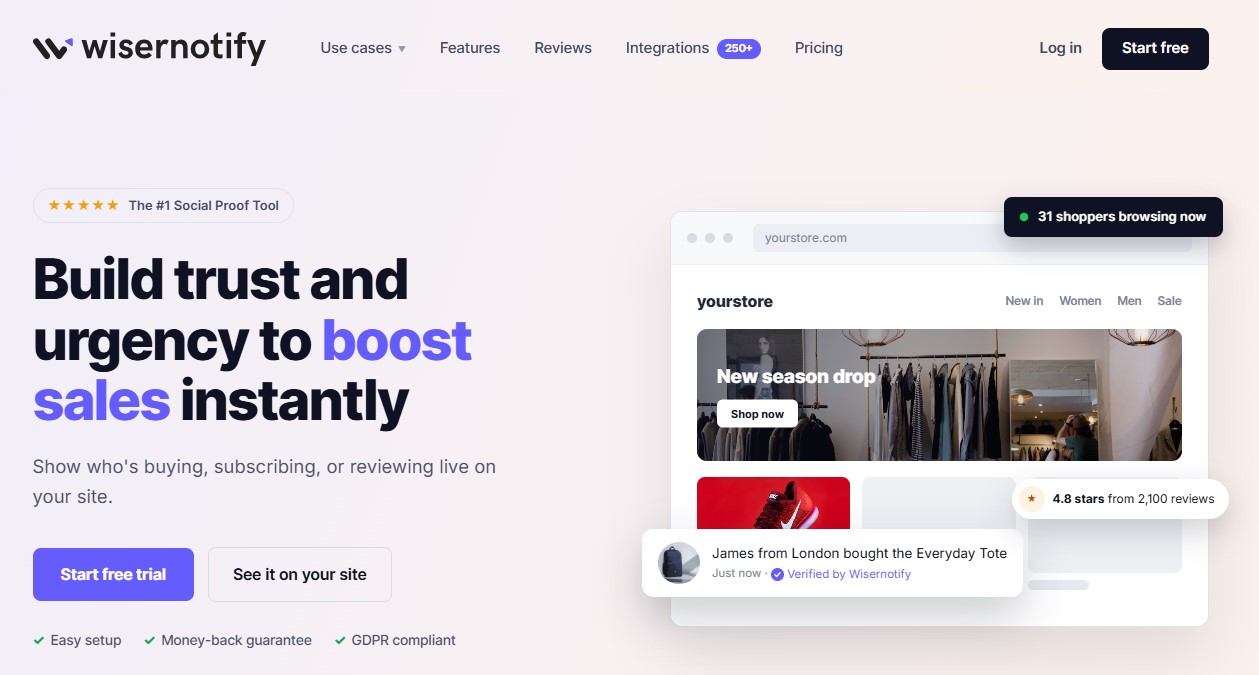
Most of what is above needs proof where the buyer is looking. Getting your real orders and ratings onto every product page, and keeping them right, is the bit most shops never manage. So the page stays bare.
WiserNotify is a social proof tool that does that side for you.
- Purchase notifications. “Someone bought this 12 minutes ago”, straight from Shopify, WooCommerce or Stripe.
- Live visitor notifications. How many people are looking now, with a floor so quiet days stay quiet.
- Recent activity counters. Units sold over a window you set, per product or per collection.
- Review notifications and the review feed widget. Your Google and Facebook ratings on the product page, where the decision happens.
- Countdown timer widget and announcement bar. For a sale that does end, and for saying so on every page.
- Display and trigger rules. By page, device and whether they have visited before, so a returning shopper sees something different.
- A/B testing and reports. Impressions, clicks and hovers per notification, so you can tell which ones sell.
It all comes out of your own store through 250-plus integrations, so a quiet week looks like a quiet week. A conversion rate optimisation audit will tell you where to put it first.
Wrap Up
Open with the problem rather than the product. Put the ratings where the price is. Carry the risk yourself instead of asking the buyer to. Those three are worth more than the other eleven together.
Then fix the checkout, because everyone who gets that far already wanted to buy.
Also check: How to increase checkout conversion
Related Guides
- Social proof marketing
- Product recommendation examples
- Reducing shopping cart abandonment
- Ecommerce statistics and trends
Frequently Asked Questions
What is product marketing strategy?
Product marketing strategy focuses on promoting and selling a product using different techniques like compelling content marketing, leveraging social media channels, email marketing, social proof, and monitoring results.
What is a value proposition?
A value proposition is a clear statement that highlights the benefits of your product and helps you stand out from competitors.
What key performance metrics (KPIs) should we track to measure the success of marketing efforts?
To effectively measure the success of marketing efforts, it’s crucial to focus on KPIs like website traffic, bounce rate, conversion rate, brand awareness, social media engagement, Click-through rate, and lead generation.
What role does customer experience play in attracting customers?
Customer experience plays a key role in attracting and retaining customers by providing a seamless, personalized, and enjoyable experience across all touchpoints that influence customers’ decisions to buy a product.
What are some attractive ways to attract customers in 2024?
Innovative ways include using AR & VR to create immersive shopping experiences, leveraging AI for hyper-personalized marketing, engaging customers with gamification, and exploring new platforms like the metaverse.

Krunal Vaghasiya is a marketing tech expert who boosts e-commerce conversion rates with automated social proof and FOMO strategies. He loves to keep posting insightful posts on online marketing software, marketing automations, and improving conversion rates.




 Capterra