
Yelp vs Google Reviews: Which Matters More in 2026?

For most businesses, Google reviews matter more. They show up right inside Google Search and Maps, where 71% of consumers read reviews, and Google lets you ask customers for them.
Yelp still carries weight for restaurants, bars, salons and home services in big US cities, where many people check it before they book.
The two platforms play by different rules. Google encourages review requests, while Yelp’s software hides reviews it thinks a business asked for.
This guide compares reach, reliability, review rules, revenue impact and local SEO, then shows which platform to prioritize for your type of business.
Key takeaways
- Google reaches more shoppers: 71% of consumers use it to read reviews, and 45% wrote a Google review in the past year, against 24% on Yelp.
- You can ask customers for Google reviews. Yelp asks businesses not to, and filters reviews it thinks were requested.
- Yelp’s filter is stricter. About 70% of reviews posted on Yelp in 2025 were recommended; the rest were hidden or removed.
- Google reviews feed local search rankings directly. Yelp reviews help most inside Yelp itself.
- Most local businesses should build Google first and keep Yelp claimed and answered.
Yelp vs Google Reviews at a Glance
| Feature | Google Reviews | Yelp Reviews |
|---|---|---|
| Where reviews appear | Google Search and Maps | Yelp app and website |
| Review volume | 1 billion+ reviews published in 2025 | 22 million new in 2025, 330 million total |
| Asking customers for reviews | Allowed, with a review link | Discouraged; requested reviews may be hidden |
| Filtering | Automated removal of policy-violating reviews | Recommendation software hides reviews it doesn’t trust |
| Replying to reviews | Public reply only | Public comment or private message |
| Local SEO impact | Direct ranking factor in the local pack | Mostly affects ranking inside Yelp |
| Cost | Free Business Profile | Free listing, with paid ads sold separately |
| Strongest for | Almost every local business | Restaurants, salons and home services in US cities |

Show Real Reviews That Build Trust
Collect and display photo, video, and text reviews with full design control.
Which Platform Do Customers Use More?
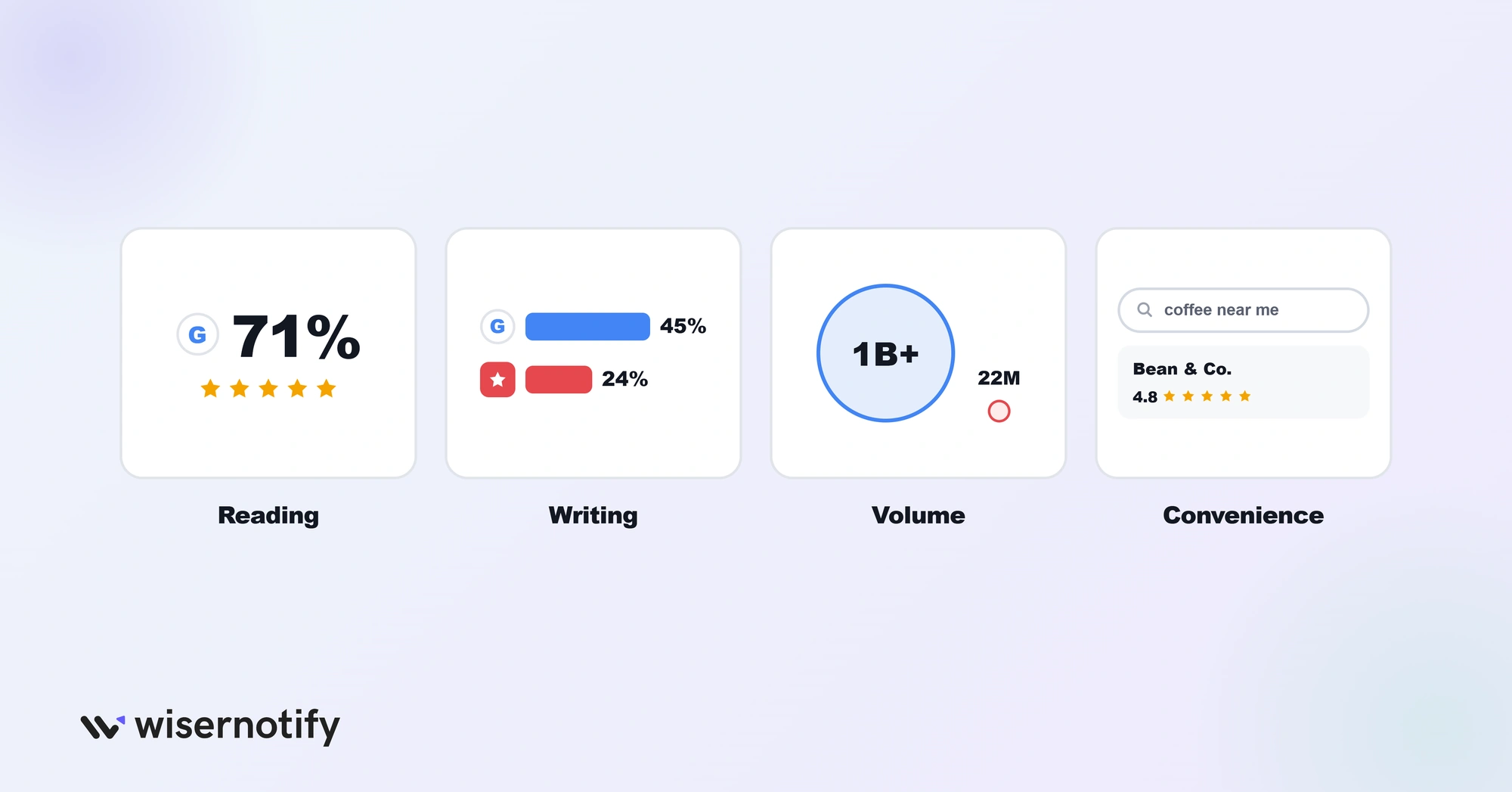
Google, by a wide margin, on every measure that matters:
- Reading: 71% of consumers use Google to read reviews of local businesses.
- Writing: 45% left a Google review in the past year, compared with 24% on Yelp.
- Volume: Google published more than 1 billion reviews in 2025. Yelp added 22 million, for 330 million in total since launch.
- Convenience: Google reviews appear the moment someone searches for a business, with no separate app to open.
Yelp’s audience is smaller but more deliberate. Its users usually start inside Yelp because they are actively comparing places.
For more numbers on both, see our Yelp statistics and Google review statistics.
Are Yelp or Google Reviews More Reliable?
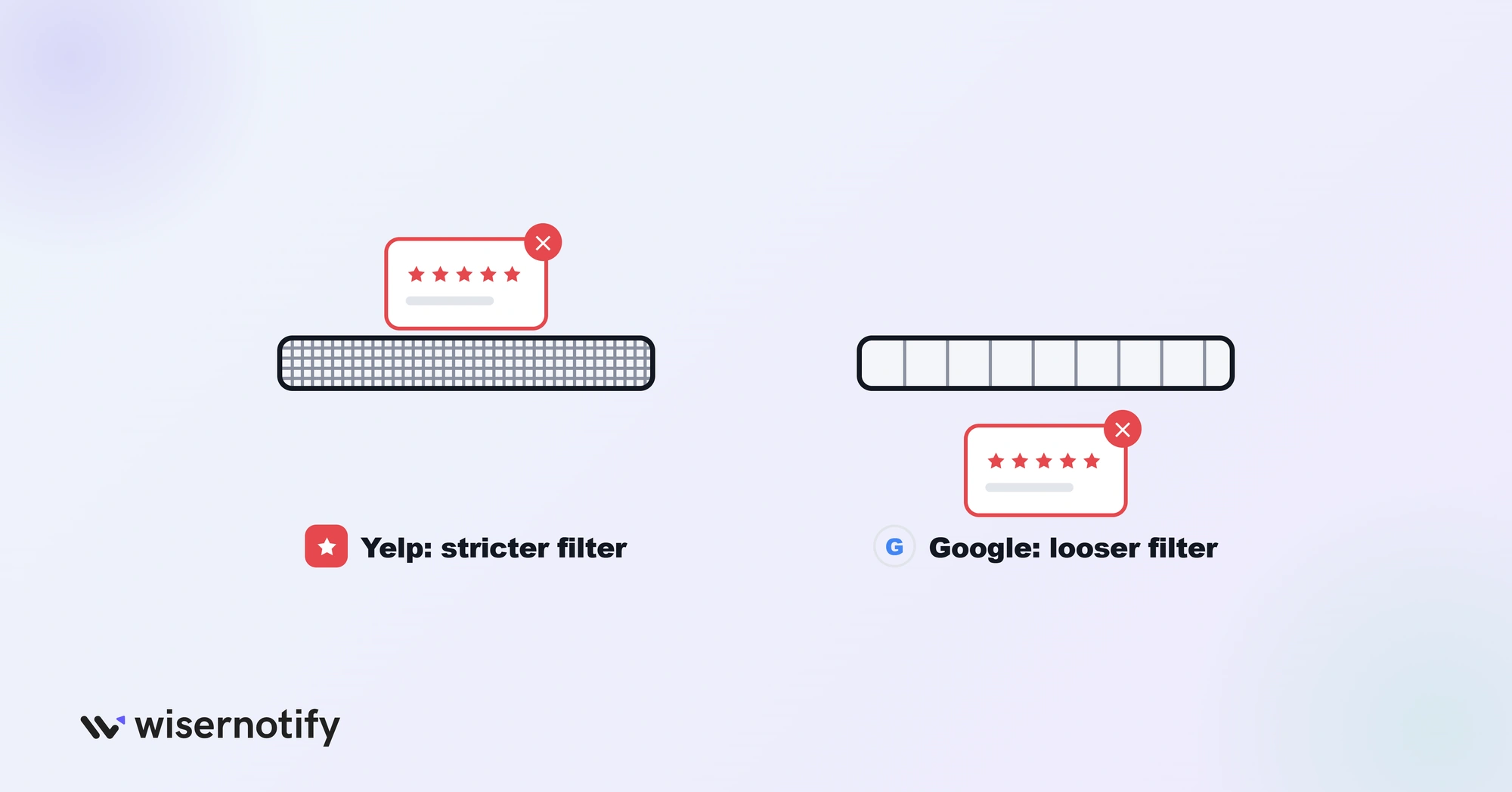
Yelp’s reviews are filtered more strictly, so what you see there has passed a tougher check. Google removes more fake reviews in total, but its filter is looser about what stays up.
How Yelp filters reviews
- Every review goes through recommendation software. Of about 22 million reviews posted in 2025, 70% were recommended, 17% were “not recommended” and 11% were removed.
- Not recommended reviews stay readable on a separate page, but they don’t count toward the star rating.
- Businesses caught gaming reviews get a public alert. Yelp placed 363 Suspicious Review Activity Alerts in 2025.
How Google filters reviews
- Google blocked or removed more than 292 million policy-violating reviews in 2025, most before anyone saw them.
- Some fakes still slip through, so detailed and recent reviews from real customers carry the most weight with shoppers.
Our fake review statistics cover the wider problem.
Can You Ask Customers for Reviews?
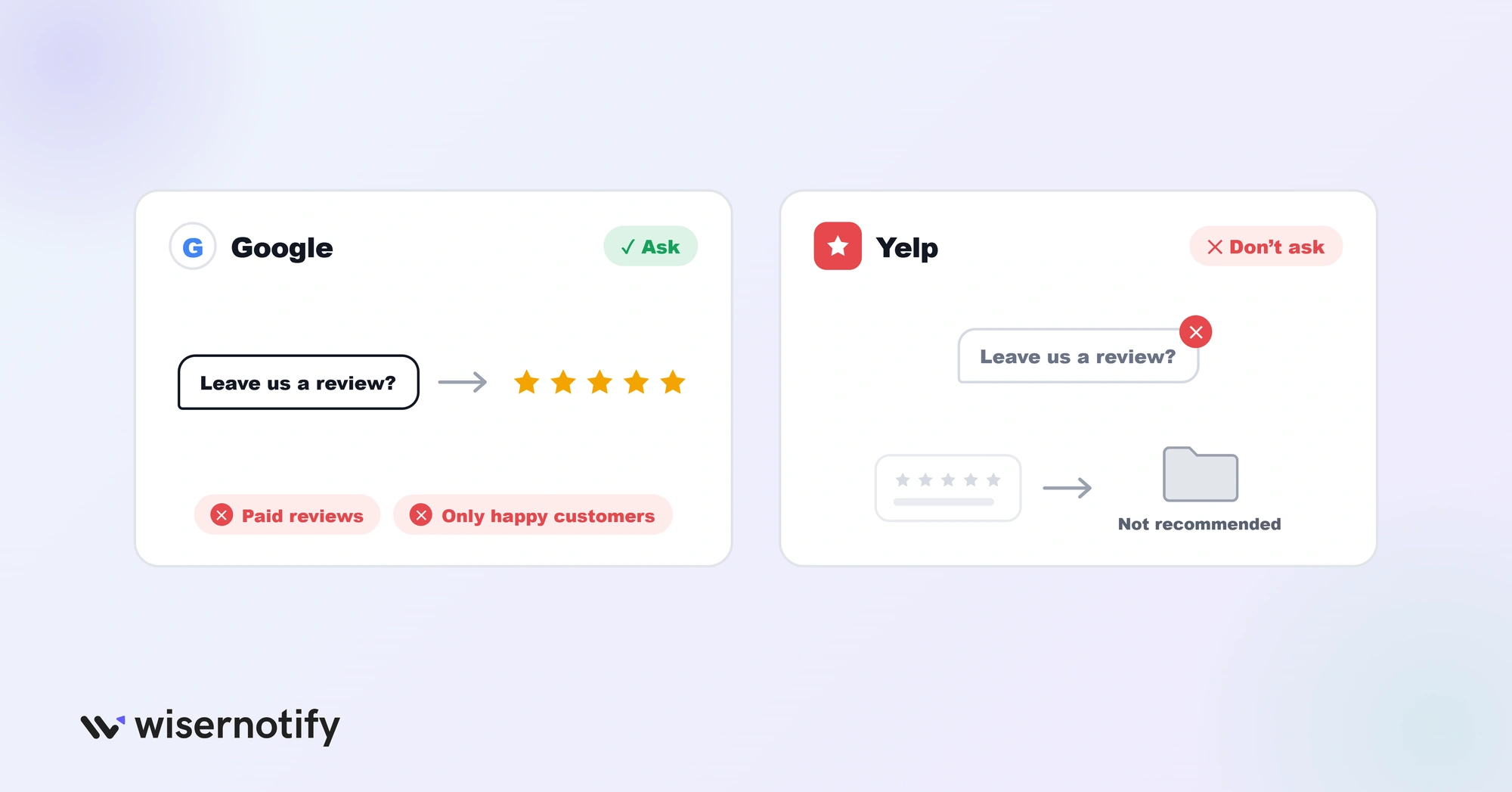
This is the biggest practical difference between the two.
On Google, yes. Google lets businesses share a review link and ask customers for feedback. It only bans two things:
- Paying or rewarding people for reviews.
- Asking only happy customers while discouraging unhappy ones.
These ways to get more reviews all work on Google.
On Yelp, no. Yelp’s guidelines ask businesses not to request reviews at all:
- Don’t ask anyone to review you, including customers, friends, family or mailing lists.
- Don’t have staff compete to collect reviews.
- Don’t follow a survey or feedback form with a Yelp review request.
Yelp’s software looks for reviews that seem prompted and moves them to “not recommended,” where they don’t affect the rating.
The practical takeaway: send review requests to Google, and let Yelp reviews come on their own. Claim your Yelp page and link to it from your site so customers can still find you there.
How Each Platform Affects Revenue and Local SEO
Both ratings move revenue, but only Google reviews move your position in Google’s local results.
Yelp and revenue
- A Harvard Business School study of Seattle restaurants found that a one-star increase in Yelp rating led to a 5% to 9% increase in revenue.
- The effect held for independent restaurants, not chains.
- The data covers 2003 to 2009, so treat it as a direction rather than a forecast.
Google and local SEO
In the 2026 survey of local SEO experts that ranks 187 local pack factors, three review signals made the top 11:
- High Google star ratings: #6
- Google reviews with written text: #9
- Review recency: #11
Yelp reviews help most inside Yelp’s own search results, and only indirectly elsewhere.
How to Respond to Reviews on Yelp and Google
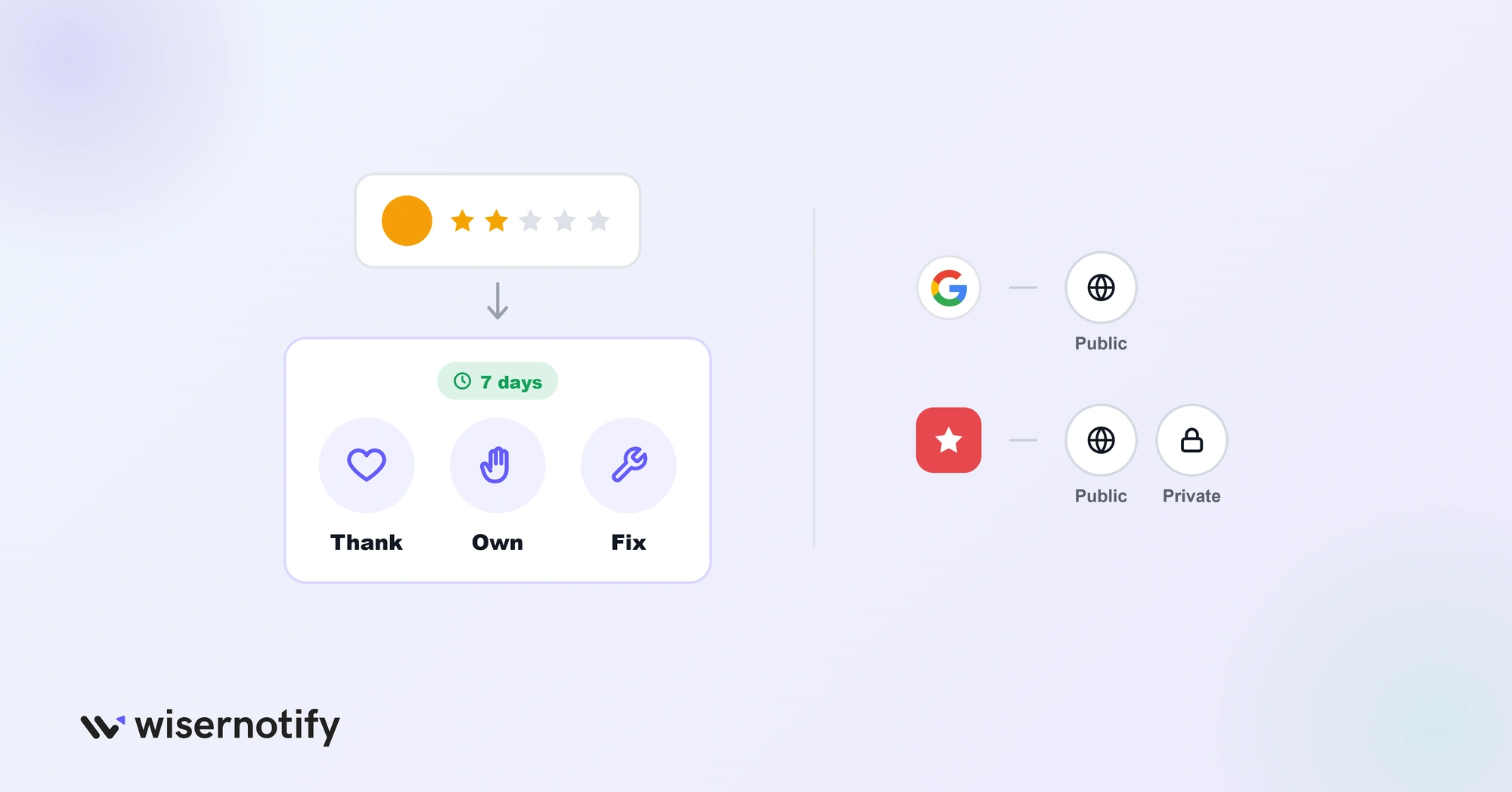
Reply on both, and reply fast. 89% of consumers expect business owners to respond to reviews, and 81% expect it within a week.
The tools differ:
- Google: reply publicly from your Google Business Profile. There is no private message option, so keep replies short, polite and specific.
- Yelp: read and reply in your Yelp for Business account, either as a public comment or a private message to the reviewer.
For negative reviews on either platform:
- Thank the customer for the feedback.
- Own what went wrong, without arguing.
- Say what you’ll do to fix it.
- On Yelp, settle details privately, but still post a short public reply so others see you listened.
Use these Google review response examples as a starting point.
Which Should Your Business Focus On?
Use Google as the base for almost every business, then decide how much time Yelp deserves.
| Business type | Focus on | Why |
|---|---|---|
| Restaurants and cafes | Google and Yelp | Diners check both, and Yelp’s revenue effect is strongest for independents |
| Salons, spas and barbers | Google and Yelp | Yelp is a common search starting point in US cities |
| Home services and contractors | Google first, Yelp second | Map pack rankings drive calls; Yelp adds leads in larger metros |
| Doctors, dentists and clinics | Patients search by name and location on Google | |
| Retail stores | Shoppers check hours, stock and reviews in Maps | |
| Hotels and travel | Google, plus travel sites | Travel platforms outweigh Yelp for bookings |
| Online stores and SaaS | Neither as a priority | On-site reviews and industry review sites matter more |
If you only have time for one, pick Google. Keep your Yelp page claimed and answered either way, because an ignored Yelp page still shows up when people search your name.
Build trust & FOMO
Highlight real-time activities like reviews, sales & sign-ups.

How to Manage Yelp and Google Reviews Together

Handling two platforms by hand gets messy. A simple routine keeps it under control:
- Claim both profiles and keep hours, phone and address identical on each.
- Check new reviews weekly in your Google Business Profile and your Yelp for Business account, and reply within a week.
- Ask for reviews only through Google, with a direct review link in receipts, emails or texts.
- Show your best reviews on your own website, where every visitor sees them.
WiserReview can import your Google reviews into one dashboard and display them on your site. WiserNotify can show Google and Yelp reviews as small notifications while people browse.
See how to add Yelp reviews to a website and add Google reviews to a website.
Show Real Reviews That Build Trust
Collect and display photo, video, and text reviews with full design control.
Wrap Up
Google is where most customers read and write reviews, and it is the only one of the two that lets you ask for them. Build your review habit there first.
Keep Yelp claimed, answered and accurate, and give it more attention if you run a restaurant, salon or service business in a big city.
Frequently Asked Questions
Is Yelp or Google better for restaurants?
Use both. Google brings more diners through Search and Maps, while Yelp still influences independent restaurants in many US cities.
Are Yelp reviews more trustworthy than Google reviews?
Yelp filters reviews more strictly, so fewer questionable reviews count toward the rating. Google removes more fake reviews overall but lets more borderline reviews stay up.
Can I ask customers to leave a Yelp review?
Yelp asks businesses not to, and its software may hide reviews that look requested. Ask for Google reviews instead.
Why are some of my Yelp reviews not recommended?
Yelp’s software hides reviews it considers less reliable, such as those from new accounts or reviews that seem solicited. They stay readable but don’t affect your rating.
Do Yelp reviews help Google rankings?
Only indirectly. Google reviews are a direct local ranking factor, while Yelp reviews mainly affect how you rank inside Yelp.
Is Yelp free for businesses?
Yes. Claiming a Yelp page and replying to reviews is free; Yelp sells advertising separately.

Krunal Vaghasiya is a marketing tech expert who boosts e-commerce conversion rates with automated social proof and FOMO strategies. He loves to keep posting insightful posts on online marketing software, marketing automations, and improving conversion rates.




 Capterra