
10 Customer Feedback Email Templates That Get Replies
Most customer feedback emails get ignored because they ask for the wrong thing at the wrong time.
“How did we do?” is sent the morning after an order, before the box has arrived. A survey link that could take thirty seconds or ten minutes. A subject line that could belong to any company.
Below are ten templates you can copy, the timing that decides whether they get opened, and what to do with the replies once they land. If you want a public rating instead of private feedback, use these review request message templates.
Key takeaways
- A feedback email asks for private input. A review request asks for a public rating. Send feedback first.
- Time it from delivery or the event, never from the order date.
- Ask one question, make replying the easiest option and send from a real name.
- Reply to every answer within a day, then ask the happy customers for a review.
| Trigger | When to send | Template |
|---|---|---|
| Order delivered | 3 to 7 days after delivery | #1 |
| Support ticket closed | 2 to 3 days after close | #2 |
| Regular check-in | Every quarter | #3 |
| Account cancelled | Within 1 day | #4 |
| New signup | Day 7, then day 30 | #5 |
| Long-time customer | After a few months of use | #6 |
| Repeat order | After the third order | #7 |
| Service visit | Within 24 hours | #8 |
| Usage drops | After 2 to 3 quiet weeks | #9 |
| No reply to first email | 4 to 7 days later | #10 |
What Is a Customer Feedback Email?
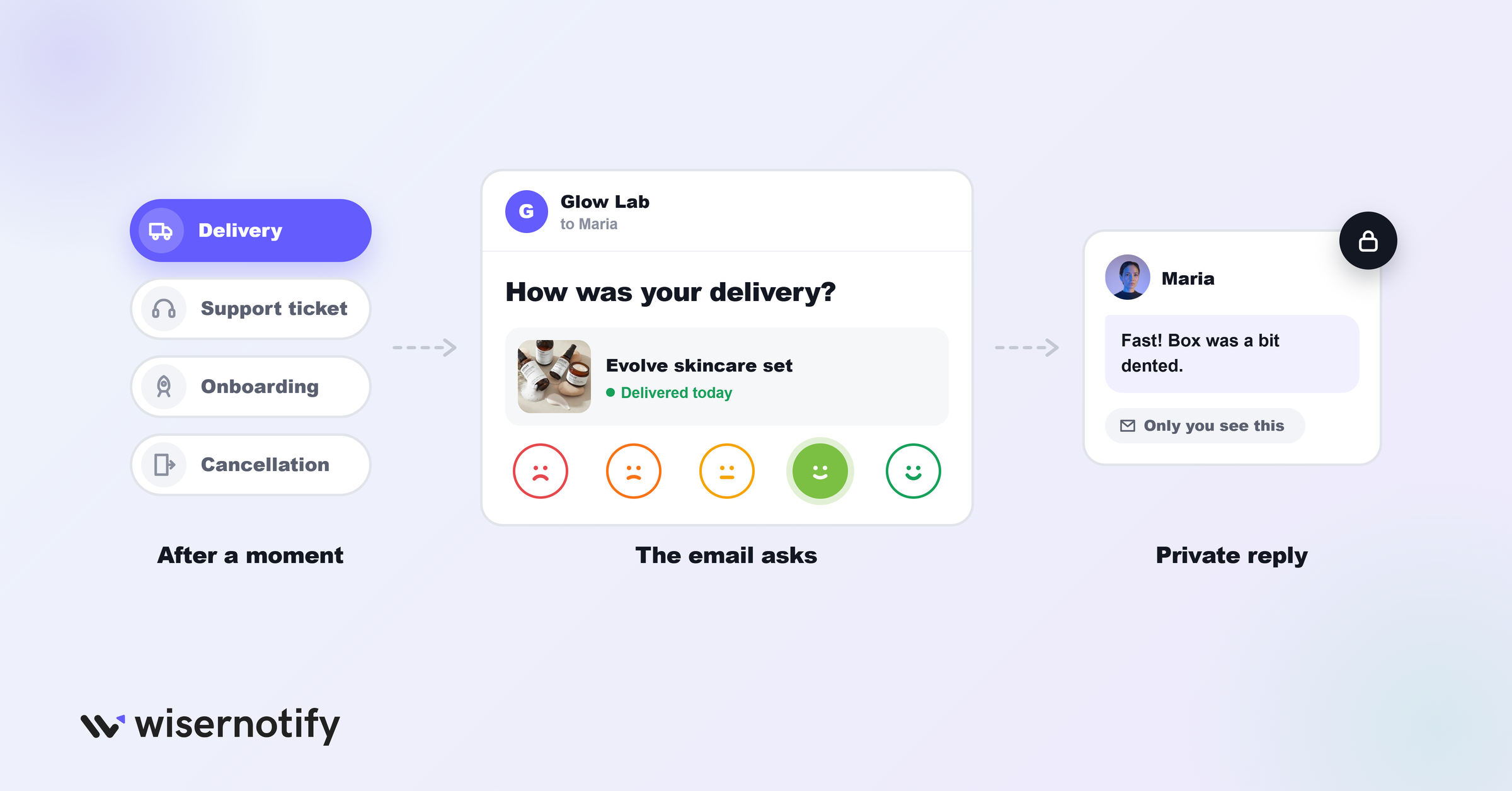
A customer feedback email asks someone what they thought of a product, a service, or an interaction with your team. The reply comes back to you privately.
You are collecting information you can act on, not building a rating other people will read. Both matter, and the online review statistics show how much weight the public version carries.
It usually goes out after a specific moment: a delivery, a support ticket, an onboarding week, a cancellation. The moment is what makes the question answerable.
Feedback Email vs Review Request
These get mixed up constantly, and sending the wrong one wastes the moment.
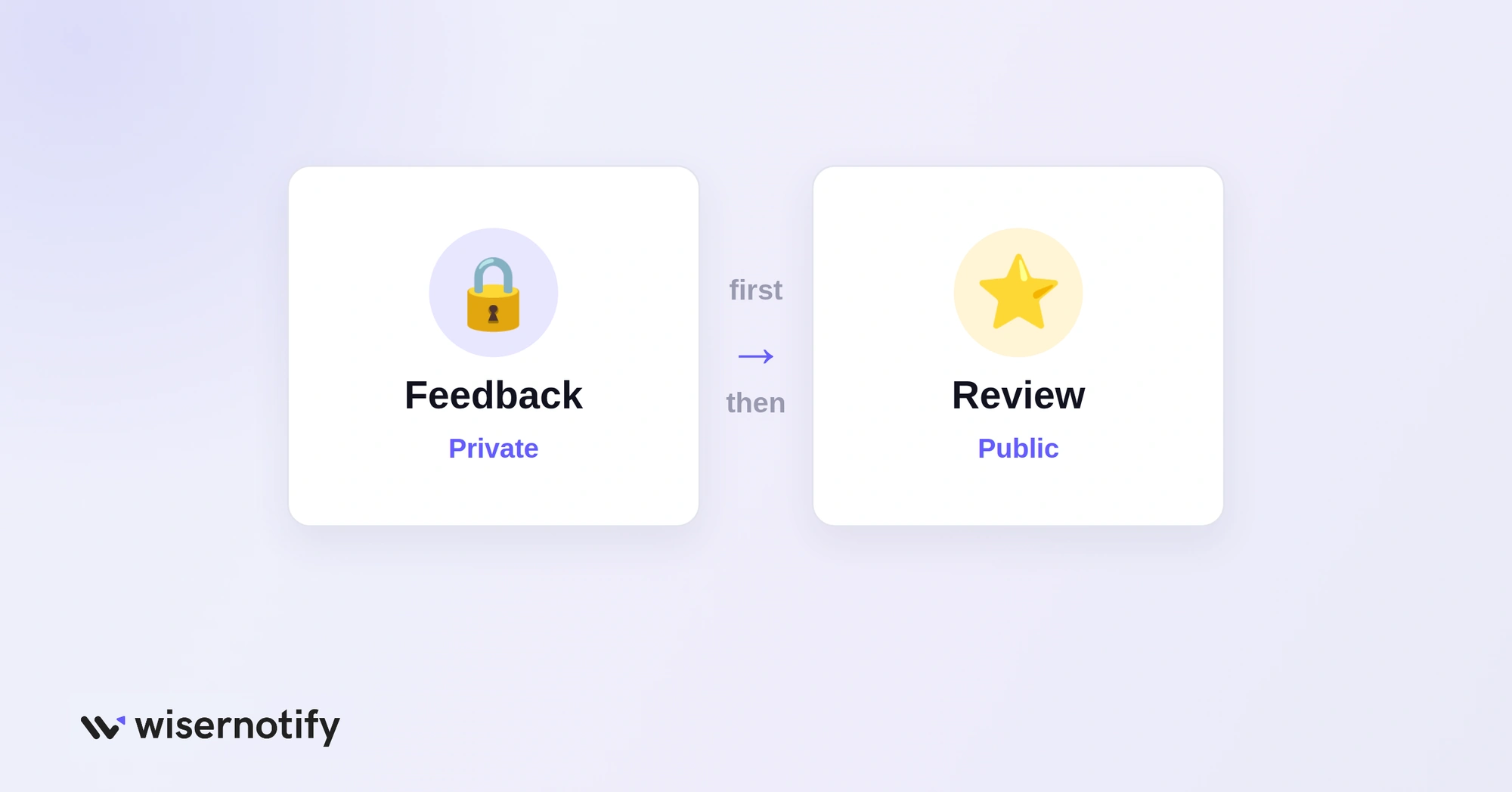
- A feedback email asks for private input. It can be critical, it can be detailed, and nobody else sees it. Send it when you want to fix something.
- A review request asks for a public rating on Google, Trustpilot or one of the other customer review platforms. Use it when you want proof other buyers can see.
The order matters, and most people get it backward. Ask for feedback first, and you find out who is happy before you ask them to say so in public. Ask for a review first and you hand your unhappy customers a megaphone.
For the public version, the review request message templates linked above cover email, SMS and Google requests.

All your reviews in one place
Collect reviews, manage every response, and display them where they matter most.
10 Customer Feedback Email Templates
Each one is written for a specific moment. Swap the bracketed parts and send.
1. After delivery
Subject: How is the [product name] working out?
Hi [customer name],
Your [product name] arrived a few days ago, so you have had a chance to use it properly by now.
Is it doing what you hoped? One line back is plenty, and it goes straight to the team that makes it.
Thanks,
[your name]
The specific product name does the work here. “How was your order?” gets ignored because it reads as automated.
2. After a support ticket
Subject: Did we sort it out?
Hi [customer name],
You got in touch last week about [issue]. I wanted to check it is properly fixed and not just closed on our side.
If anything is still off, reply here and it comes back to me.
[your name]
Send it two or three days after the ticket closes, not the same hour. People need to use the fix before they know whether it worked.
3. Satisfaction score
Subject: One question, 10 seconds
Hi [customer name],
How likely are you to recommend [business name] to someone else?
[0 to 10 scale]
If you pick anything under 7, the next screen asks why. We read that part most closely.
Thanks,
[your name]
Putting the time in the subject line lifts completion more than anything else you can change about a survey email.
4. After a cancellation
Subject: What made you leave?
Hi [customer name],
Your account closed yesterday. No pitch to come back, I promise.
I would just like to know what pushed you out. Price, a missing feature, something that broke, or a competitor doing it better. Whatever it was, it helps us.
[your name]
Churn feedback is the most useful and the least collected. Say plainly that you are not selling and reply rates climb.
5. Onboarding check-in
Subject: How is week one going?
Hi [customer name],
You have been using [product] for a week. Usually that is long enough to hit the first snag.
What has been the most confusing part so far? Nothing is too small.
[your name]
Ask what confused them, not how it is going. The first has an answer. The second gets a shrug.
6. Feature request
Subject: What would you add to [product]?
Hi [customer name],
You have been with us [time period] and know the product properly by now.
If you could add or change one thing, what would it be? We read every reply when we plan the roadmap.
[your name]
Ask for one thing. Asked to list everything, most people list nothing.
7. Repeat customer
Subject: Order number [x] and still curious
Hi [customer name],
That is your [number] order with us, which we do not take for granted.
What keeps you coming back, and what would make you stop? Both are useful.
Thanks,
[your name]
Regulars notice small changes new customers never see. They are the ones who will tell you the packaging got flimsier.
8. After a service appointment
Subject: How did [technician name] do?
Hi [customer name],
[Technician name] was out to you on [date].
Was the work done properly, and did they turn up when we said they would? A quick reply either way helps.
[your name]
Naming the person raises reply rates and gives you feedback you can act on with a person instead of a department.
9. Quiet customer
Subject: Everything all right?
Hi [customer name],
Your usage has dropped off over the past few weeks and I would rather ask than guess.
Has something changed on your side, or is something not working on ours?
[your name]
This catches people before they cancel, which is when feedback is still worth something.
10. Follow-up to a non-responder
Subject: Bumping this up your inbox
Hi [customer name],
I sent a note last week asking about [product or service]. Inboxes being what they are, it probably got buried.
Still keen to hear your take if you have a minute.
[your name]
One follow-up, four to seven days later, with a different subject line. Two follow-ups is where you start annoying people.
When to Send a Feedback Email
Timing decides more than the copy does. Send once the customer has enough experience to answer, and not before.
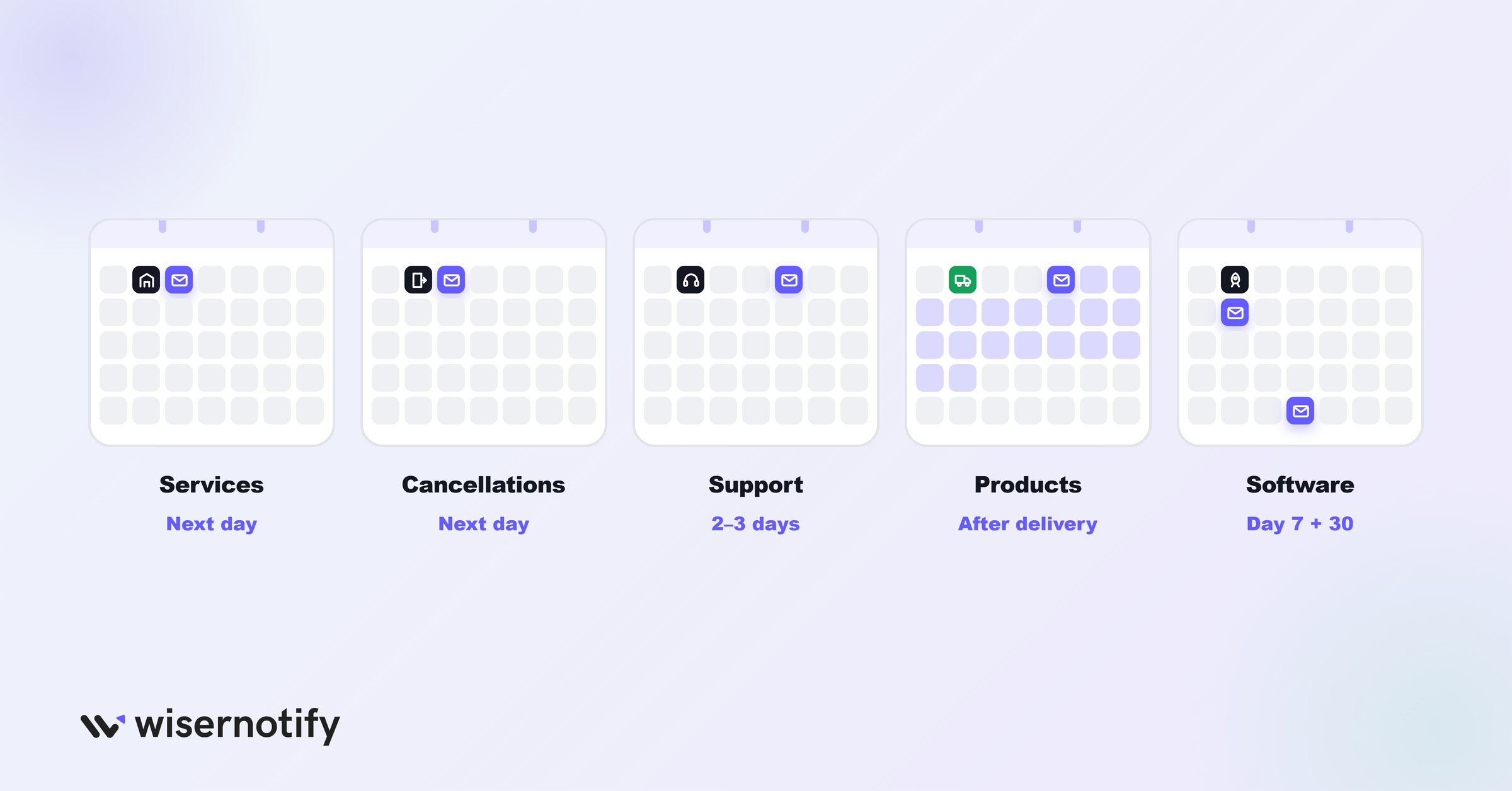
- Physical products. Base it on delivery confirmation, never the order date. Then wait long enough for real use. A few days for something simple, two to three weeks for skincare or anything with a break-in period.
- Support tickets. Two to three days after close.
- Software. Seven days for the first check-in, then again at thirty.
- Services. Within twenty-four hours, while the visit is fresh.
- Cancellations. Within a day, before they have mentally moved on.
The most common mistake is triggering on purchase rather than delivery. A customer who ordered Monday and receives it Friday should not get a feedback email on Tuesday.
Once you are past a handful a week, this is worth running as a sequence rather than sending each one by hand. WiserReview ships four editable email templates for this: single product, multiple product, a custom CTA version, and an incentive reward email.
Each one triggers on order status rather than order date, with three days as the default for domestic orders and seven for international. A reminder only goes out if the first email got no reply, and anyone who already reviewed that order is skipped.
All your reviews in one place
Collect reviews, manage every response, and display them where they matter most.
Feedback Email Subject Lines
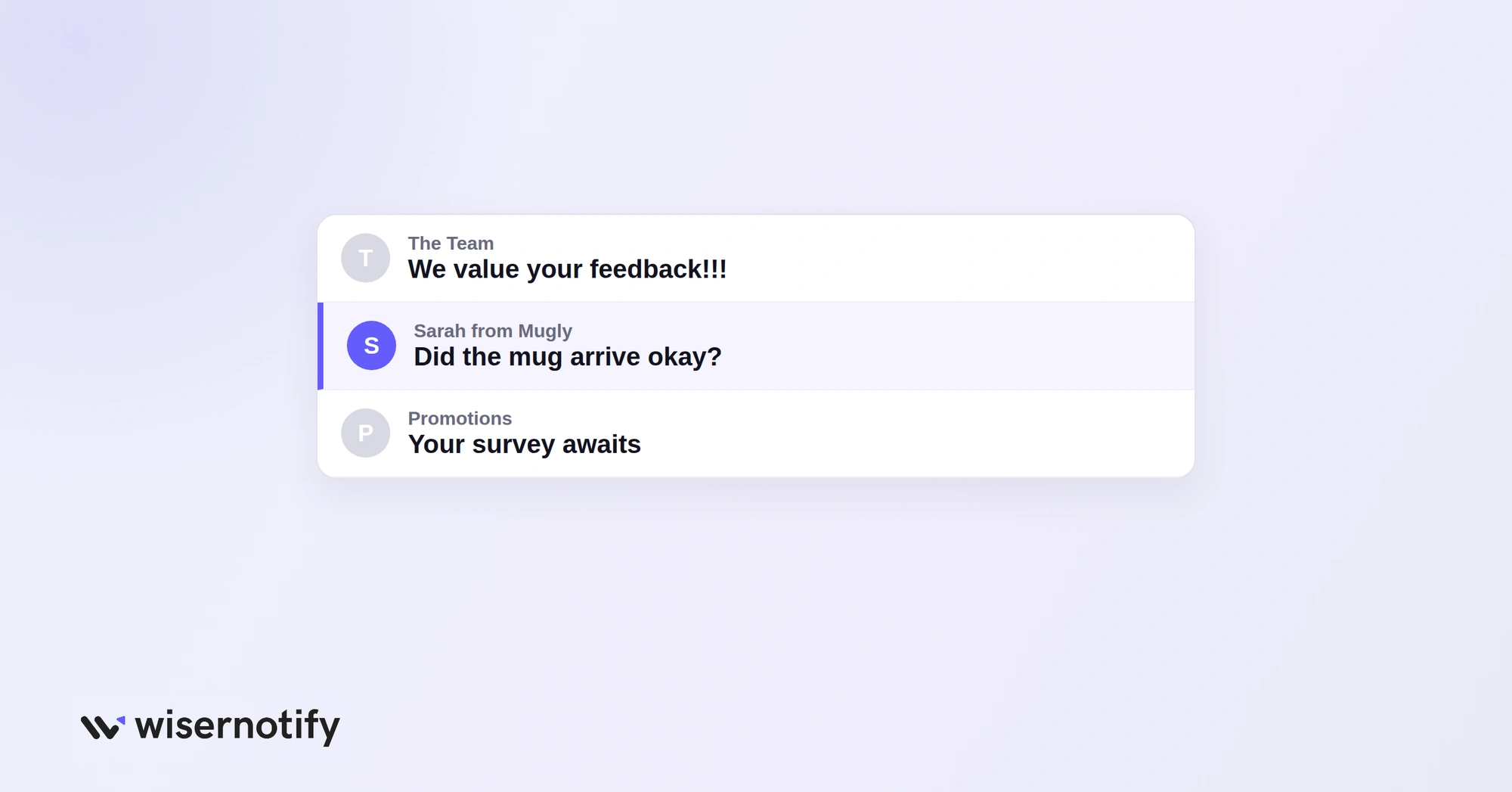
The subject line decides whether any of this matters. Short, specific, and no exclamation marks.
Direct
- Still getting on with the [product name]?
- Did we sort it out?
- Quick question about your order
Time-bound
- One question, 10 seconds
- 30 seconds, if you have them
Personal
- [Customer name], what did you think?
- How did [technician name] do?
Follow-up
- Bumping this up your inbox
- Still curious what you thought
Send from a person, not from “The Team”. A real name in the sender field lifts open rates further than any subject line tweak, which is the same reason social proof in email marketing works better signed by a human.
Feedback Email Templates by Industry
The structure holds everywhere. What changes is when you send and what you ask about.
Clothing
Subject: How did the [item] fit?
Hi [customer name], you have had the [item] about a week now, long enough to wear and wash it.
Did the sizing match what you expected? Fit is the thing we get wrong most often, so it helps to hear.
Send a week after delivery. Ask about fit and fabric, not the order.
Electronics and gadgets
Subject: Did setup go smoothly?
Hi [customer name], you should be up and running with the [product] by now.
Was anything confusing during setup? That first thirty minutes is where most problems show up.
Send two or three days in, once they have unboxed it and tried.
Hotels
Subject: How was room [number]?
Hi [guest name], thanks for staying with us.
One question while it is fresh: was the room ready and comfortable when you arrived?
Send on checkout day and ask about one thing, not the whole stay.
Restaurants and cafes
Subject: How was the [dish]?
Hi [customer name], you ordered the [dish] last night.
Did it match what you pictured from the menu? We rewrite descriptions when they do not.
Send the same evening or next morning, and name what they ordered.
Flowers and gifts
Subject: Did they like them?
Hi [customer name], your [order] was delivered to [recipient] on [date].
Did it land well? You are the one who has to hear about it if it did not.
Ask the sender, not the recipient. The sender is your repeat buyer.
SaaS
Subject: How did [feature] go?
Hi [customer name], you set up [feature] this week.
Did it do what you needed, or did you have to work around something?
Ask about the last thing they did in the product, not the product overall.
How to Write a Customer Feedback Email
Ask one question
Every extra question costs you replies. If you need five answers, use a survey and say how long it takes. If you want an honest sentence, ask one thing.
Make replying the easiest option
A plain reply loses nobody. A link loses a few, a form loses more, and a login loses most of them. Every step you add costs you answers.
Say what happens next
“This goes straight to the team that makes it” gives someone a reason to bother. Feedback that vanishes into an inbox is why most people stopped answering these.
Write like a person
“We value your opinion” is invisible. “Is it doing what you hoped?” is a question someone can answer. Read it out loud before you send it.
Keep it under a hundred words
If it needs scrolling on a phone, it is too long. Greeting, context, one question, sign-off.
What to Do With Customer Feedback
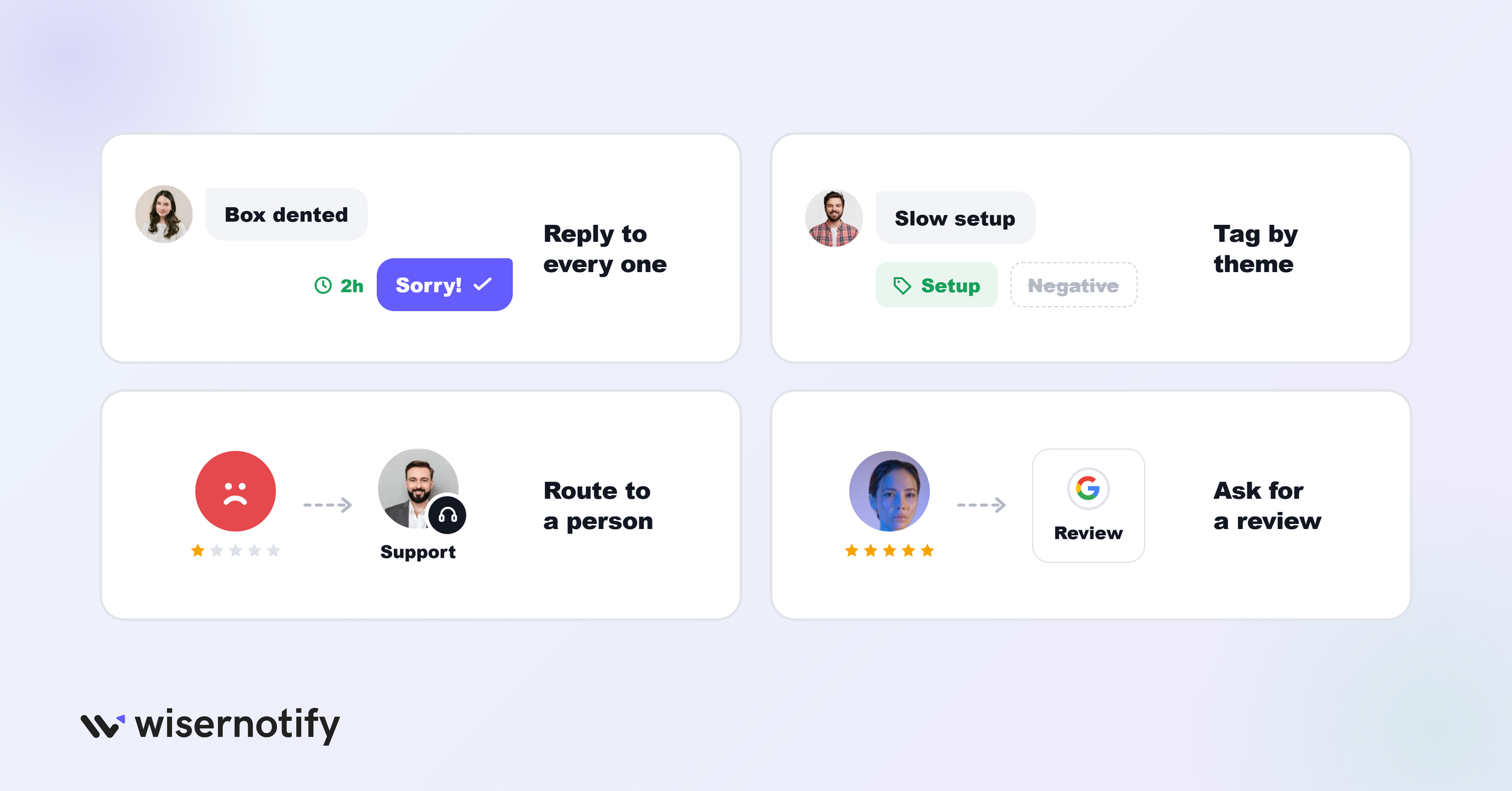
Collecting feedback and doing nothing with it is worse than not asking, because you have now taught someone their answer does not matter.
- Reply to every one, within a day. Even a line. Silence after a request is the thing people remember.
- Tag by theme, not by sentiment. “Shipping” and “confusing setup” are actionable. “Negative” is not.
- Route the unhappy ones to a person. A complaint answered well often turns into a customer who stays.
- Then ask the happy ones publicly. Someone who just told you they love it is the right person to ask for a review. A strong reply is also the raw material for a testimonial, once you have permission to use it.
There are more social proof examples if you want to see how brands display what they collect.
Feedback Email Mistakes to Avoid
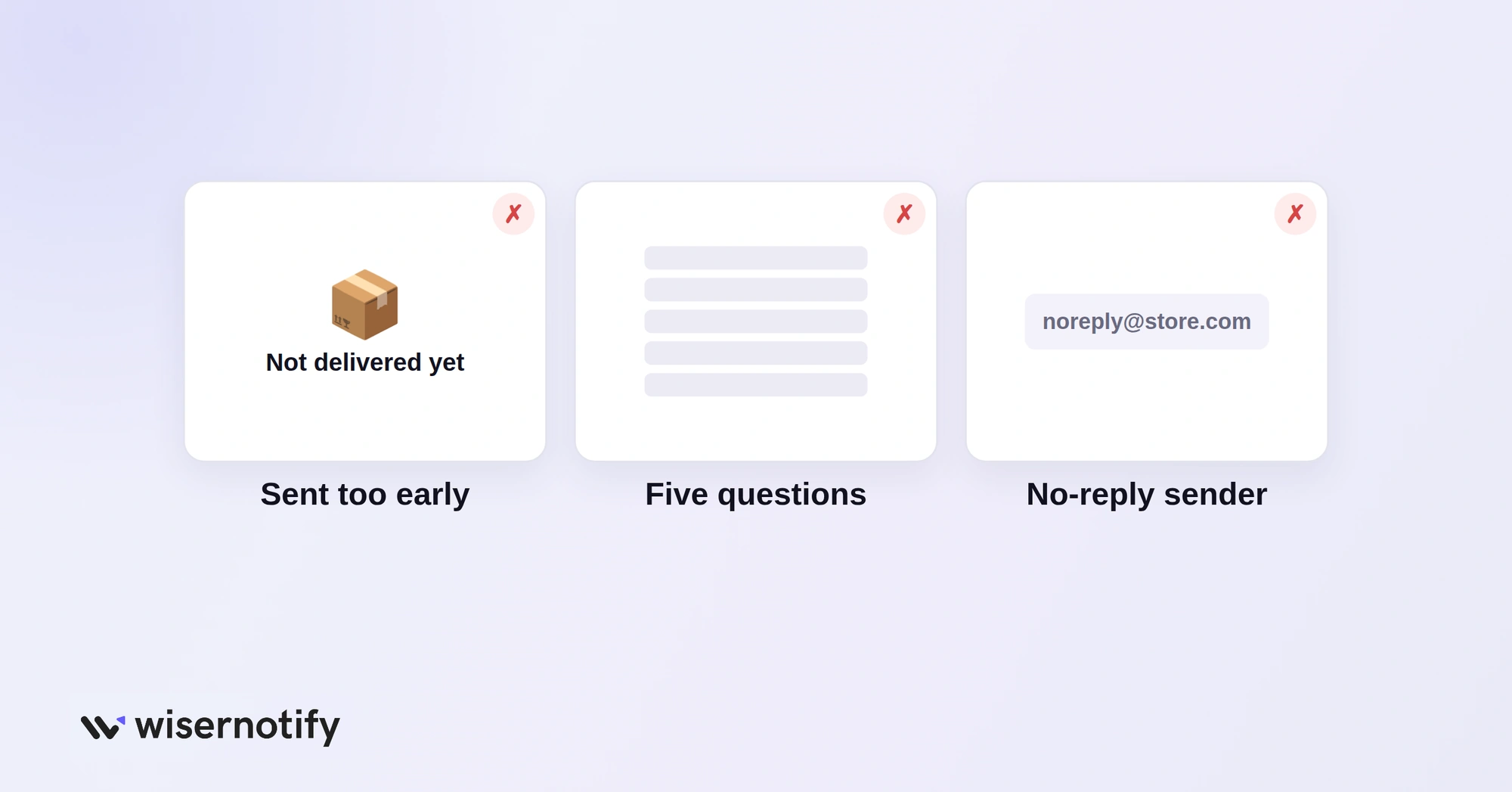
- Sending on purchase instead of delivery. The single most common error, and it makes the email unanswerable.
- Asking five questions. Each one halves your replies.
- A no-reply sender address. Asking for feedback from an address that cannot receive it tells people exactly how much you want it.
- Never following up. One reminder recovers a meaningful share of non-responders. Most companies send none.
- Sending to everyone at once. Batching means the replies all land in one afternoon and most go unanswered.
All your reviews in one place
Collect reviews, manage every response, and display them where they matter most.
Wrap Up
A feedback email works when the timing lets someone answer honestly and the question is small enough to bother with.
Pick one moment, write four sentences, send from a real name, and reply to everything that comes back.
Then ask the happy ones for a review, once you already know they are happy.
Also check: 45 fake review statistics you can trust (2026)
Related Guides
- Social proof popup guide with 11 real examples
- 33 social proof statistics worth knowing (2026)
- 12 best social proof tools to increase website conversion
- 5 social proof widget types and how to create one
Frequently Asked Questions
What is a review request email?
It’s an email that asks a customer to leave a public rating on Google, your store or a review site. Send it after private feedback shows they’re happy.
What is the difference between a feedback email and a review request?
Feedback is private input you can act on. A review is a public rating, so send the feedback email first and ask the happy customers for a review after.
When should you send a review request email?
A few days after delivery for simple products, or right after a service visit. Count from when they could use it, not from the order date.
How do I get more replies to feedback emails?
Ask one question, make replying the easiest option and send from a real name rather than “The Team.”
Should I offer an incentive for feedback?
Usually not. People chasing a discount tell you what you want to hear, so keep feedback emails honest.
What should I do with negative feedback?
Reply within a day and route it to a person. Tag it by theme, like shipping or setup, so you know what to fix.

Krunal Vaghasiya is a marketing tech expert who boosts e-commerce conversion rates with automated social proof and FOMO strategies. He loves to keep posting insightful posts on online marketing software, marketing automations, and improving conversion rates.




 Capterra