
How to Get Star Ratings in Google Search Results (2026)

Google shows stars under a search result when three things line up. The page is about something Google accepts star ratings for, such as a product, a recipe, or an app.
The reviews and the average rating are visible on that page. And the page carries valid review markup for that item.
Get those three right, run the page through the Rich Results Test, and the stars appear after Google recrawls it.
There are two other places stars show up in Google, your Business Profile in the map pack and seller ratings on your ads. Each has its own rules, and all three are covered below.
Key takeaways
- Stars in organic results come from Review and AggregateRating markup on an eligible page, with the reviews shown on that page.
- Product, Software App, Recipe, Book, Event, and Movie pages qualify. Your own homepage, service pages, and blog posts don’t.
- Reviews about your business on your own site are “self-serving” in Google’s rules and never earn stars, even through an embedded Google reviews widget.
- Your Google Business Profile rating is the plain average of every published rating, shown to one decimal. The only way up is more good reviews.
Where Star Ratings Show in Google
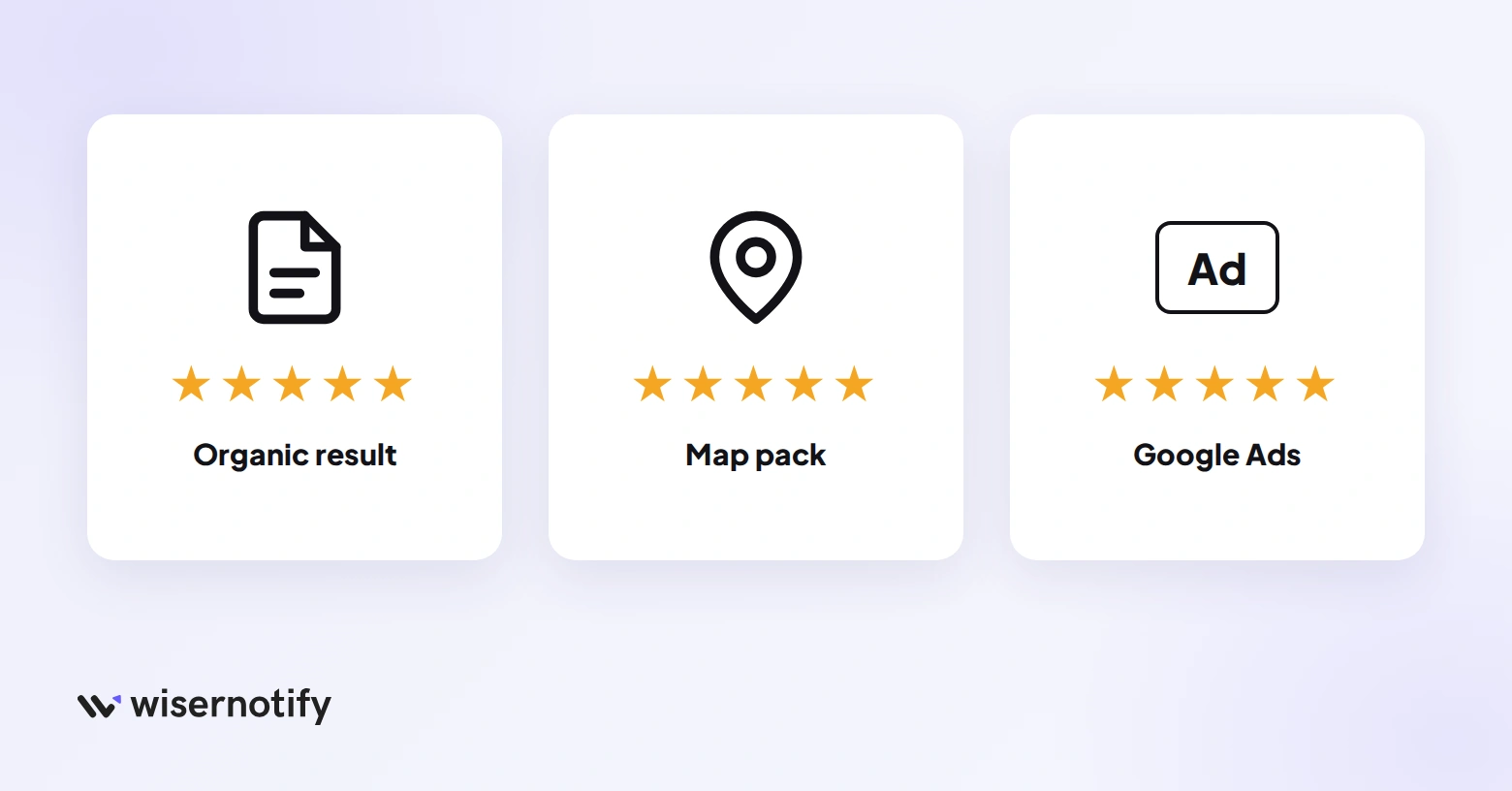
Three different systems put stars on a Google results page, and they don’t share data.
| Where the stars appear | What feeds them | Who controls it |
|---|---|---|
| Under an organic result (rich result) | Review markup on your page, with the reviews visible on it | You, through the page’s structured data |
| Map pack and knowledge panel | Reviews left on your Google Business Profile | Google, from customer reviews |
| Under a Google Ads text ad (store rating) | Google Customer Reviews or an approved review partner | Google, once you pass its review threshold |
Most people searching for this want the first one, stars under their own pages. That’s the one you can switch on yourself, so it gets the most space here.
Which Pages Can Get Star Ratings?
Google only shows review stars for pages about an item it lists as eligible. The schema type you use decides it, and the table below is the current list from Google’s review snippet documentation.
| Schema type | Page type | Stars eligible? |
|---|---|---|
| Product | Product pages on your store | Yes, with your own product reviews on the page |
| SoftwareApplication | App or SaaS product pages | Yes |
| Recipe | Single recipe pages | Yes |
| Book, Event, Movie | One book, event, or film per page | Yes |
| Course | Course pages inside a course list | Yes, as part of the course list feature |
| LocalBusiness or Organization | Your own business website | No. Reviews about yourself on your own site are self-serving |
| LocalBusiness or Organization | A directory reviewing other businesses | Yes |
| Service, Article, WebPage | Service pages, blog posts, homepages | No. Not a supported type for review snippets |
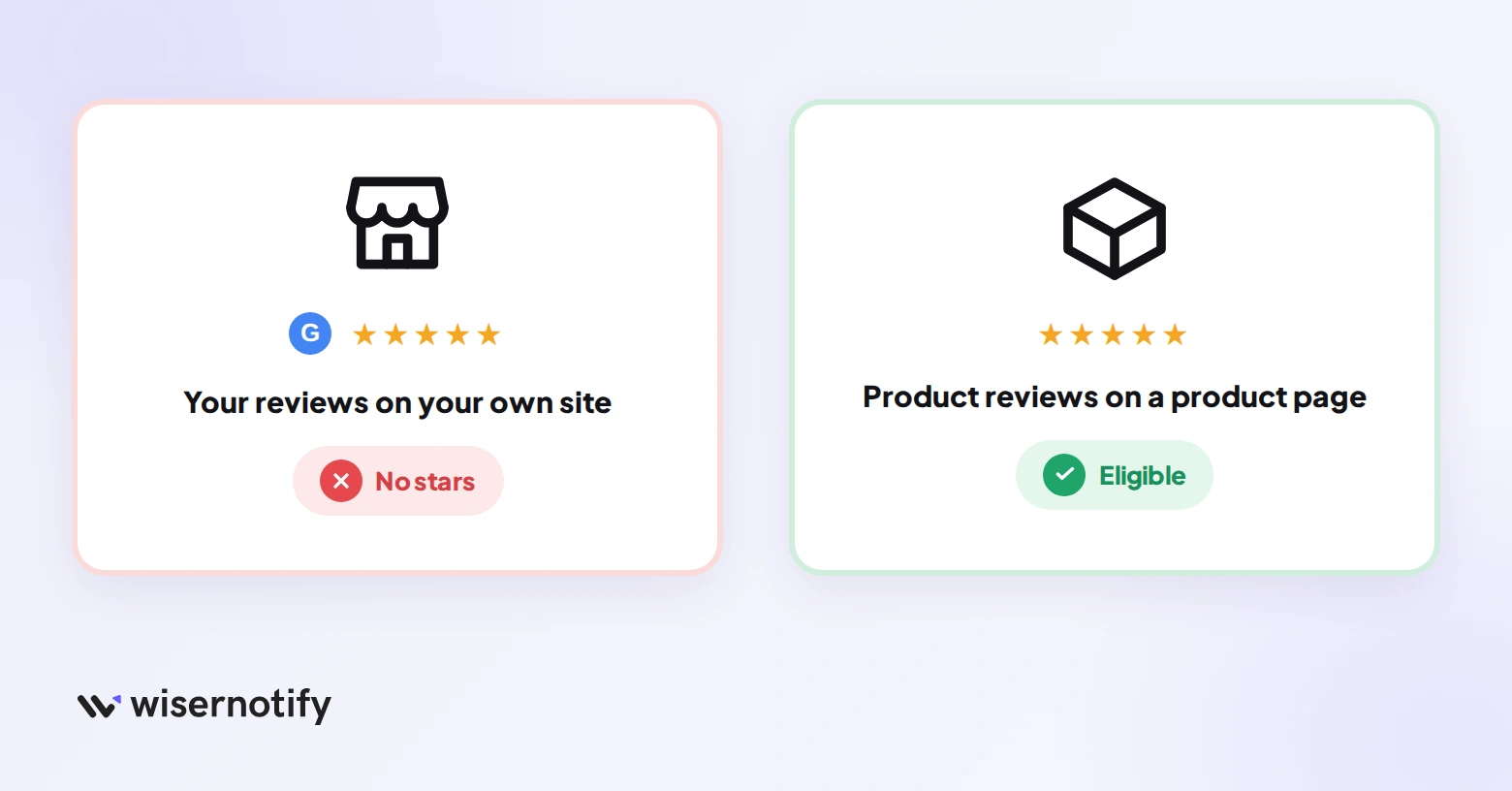
The self-serving rule catches most local businesses. A dentist who embeds their Google reviews on their own site, with LocalBusiness markup wrapped around them, gets nothing. The reviews are about the dentist, on the dentist’s site.
Product pages are the clean case. Reviews of a product you sell, collected on your own site and shown on the product page, qualify.

Get stars on your product pages
Collect product reviews and switch on Google review schema from one widget.
How to Get Star Ratings in Google Search Results
Five steps, in the order Google checks them. Skip one and the other four don’t matter.
Step 1: Pick an eligible page
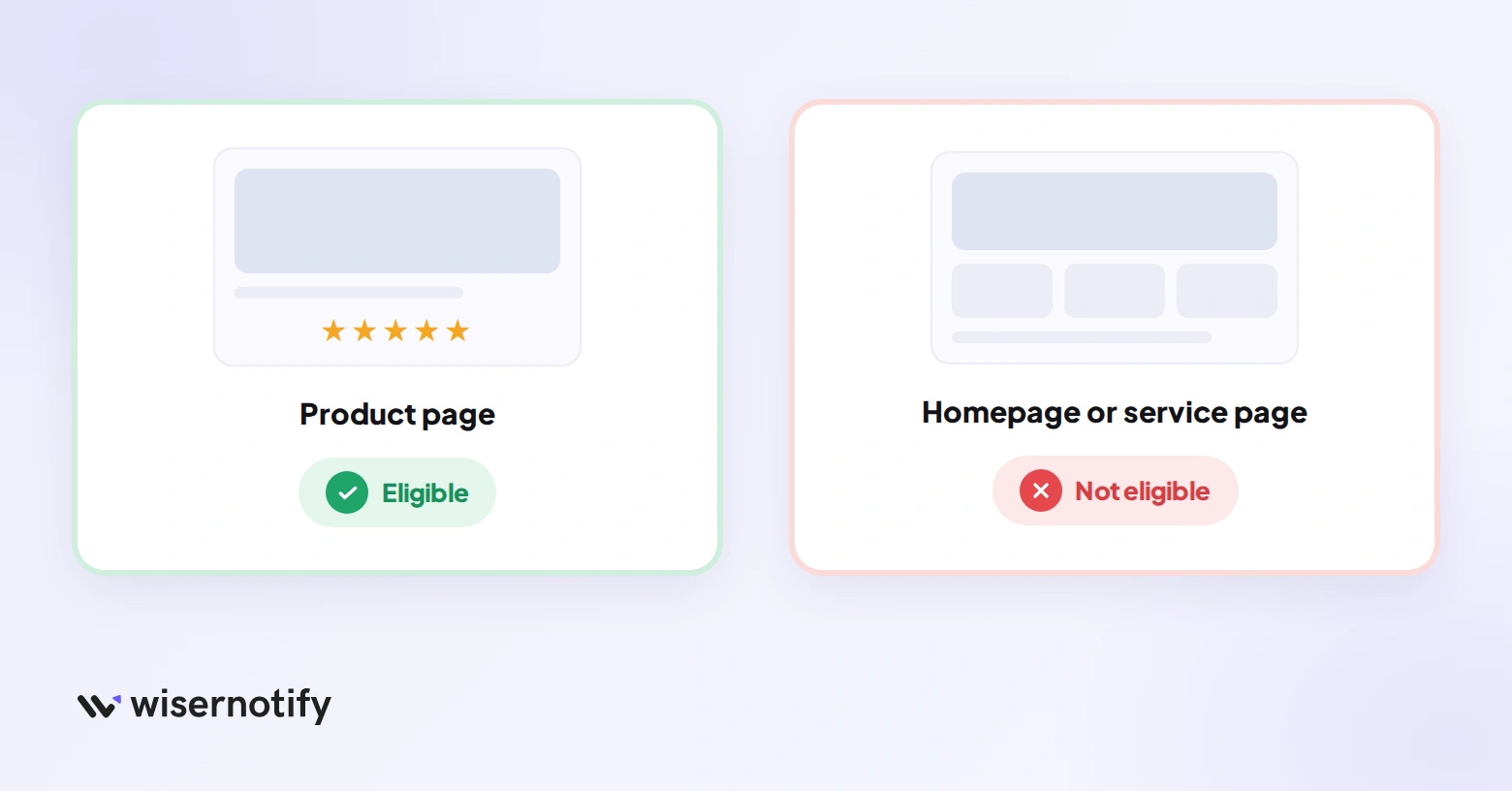
Start with the pages in the Yes rows above. For a store, that’s product pages, and our product page examples show where the reviews usually sit. For a SaaS tool, it’s the page for the app itself.
Leave the homepage, category pages, and service pages alone. Google treats review markup on a page that isn’t about one specific item as spam, and the page can lose rich results altogether.
Step 2: Put real reviews on the page
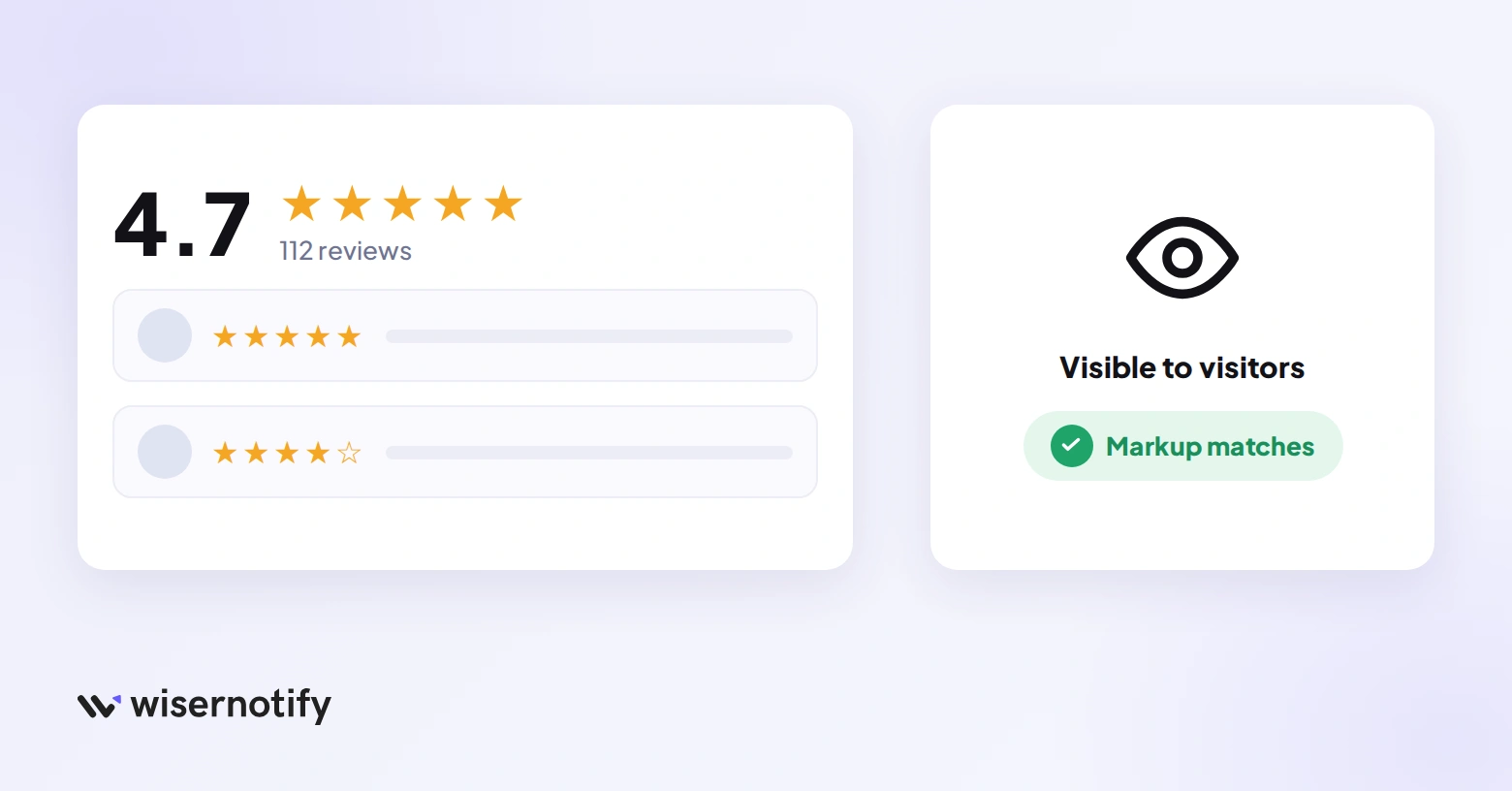
Google’s first technical rule is that the review content you mark up has to be obvious to anyone who opens the page.
If the markup says 4.7 from 112 reviews, visitors need to see that rating and be able to read the reviews.
Collect them from real customers, with a name and a comment, and show them on the product page itself. Our guide on how to get more reviews covers the asking.
Two things Google won’t accept here. Reviews pulled in from other websites can’t be counted in your aggregate rating, and reviews written for a reward have to say so on the page.
Step 3: Add the review markup
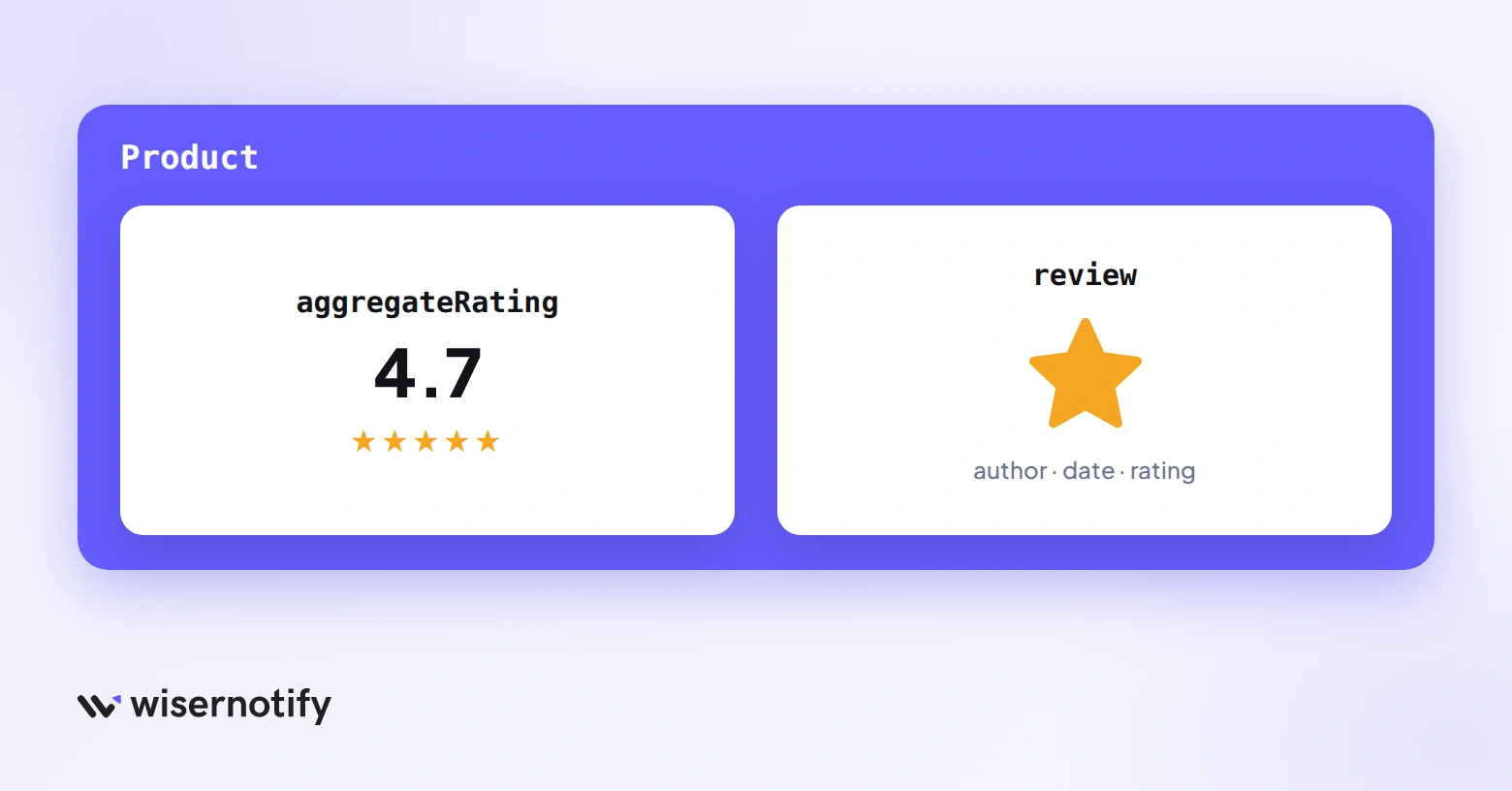
The markup is JSON-LD placed in the page’s HTML, nested inside the item it describes. For a product, the shape looks like this.
{
  "@context": "https://schema.org/",
  "@type": "Product",
  "name": "Everyday Tote",
  "image": "https://example.com/tote.jpg",
  "aggregateRating": {
    "@type": "AggregateRating",
    "ratingValue": 4.7,
    "reviewCount": 112
  },
  "review": [{
    "@type": "Review",
    "author": { "@type": "Person", "name": "Priya S." },
    "datePublished": "2026-09-14",
    "reviewRating": { "@type": "Rating", "ratingValue": 5 },
    "reviewBody": "Fits a laptop and still looks good."
  }]
}
Four rules keep it valid. Name the item. Give every review an author with a real name. Use a dot for decimals, 4.7 not 4,7. And if you list individual reviews, include the aggregate rating too.
You don’t have to write this by hand. A review tool that outputs schema does it for every product page at once, which is what the next section covers.
Step 4: Run the Rich Results Test
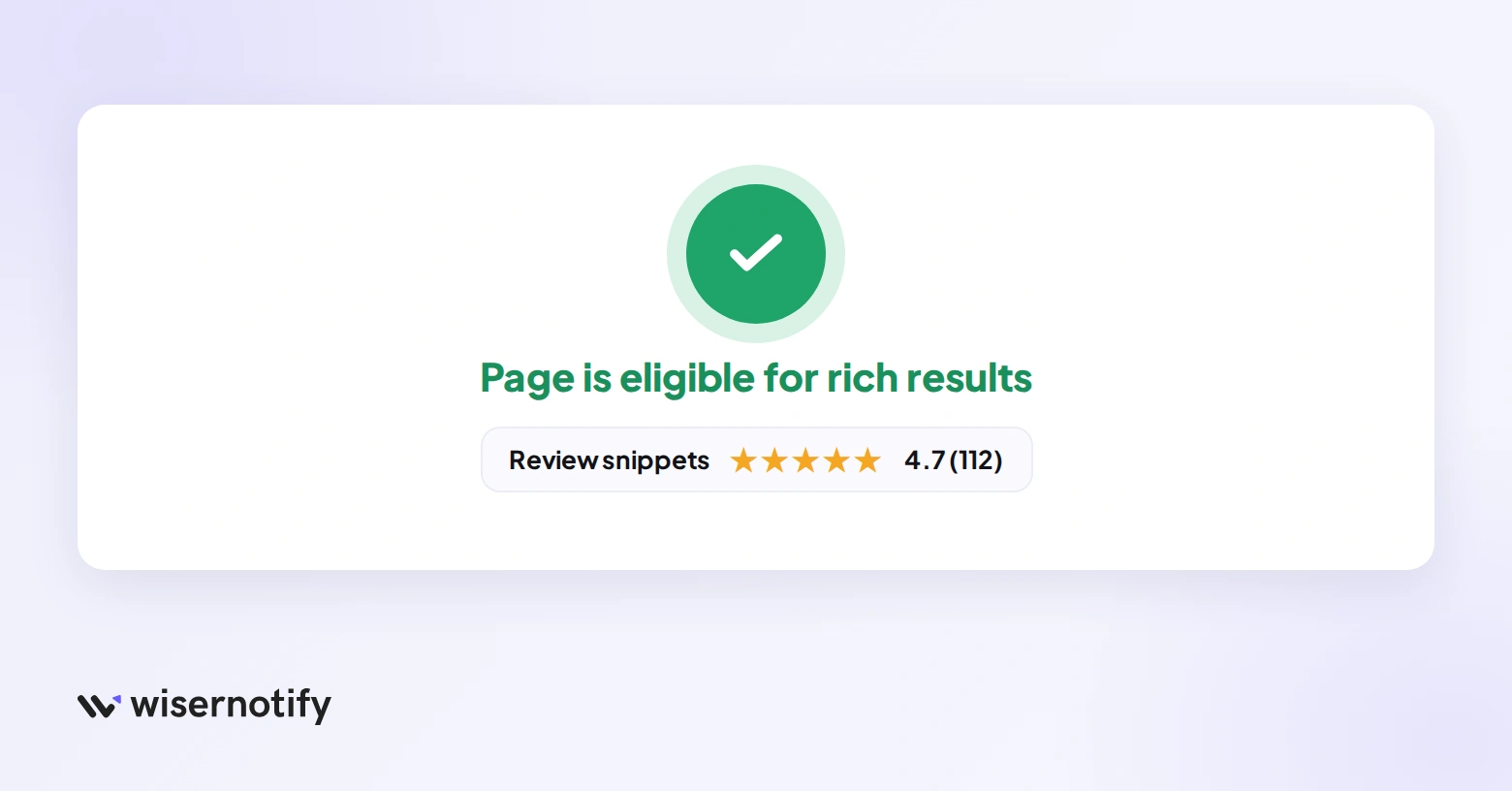
Paste the page URL into Google’s Rich Results Test. A valid page shows a Review snippets item with no critical errors. Warnings are fine, but anything marked critical blocks the stars.
The test only checks syntax. It can’t tell you that a review is self-serving or that the reviews aren’t visible, so re-read Steps 1 and 2 if the test passes and the stars still don’t show.
Step 5: Request indexing and wait
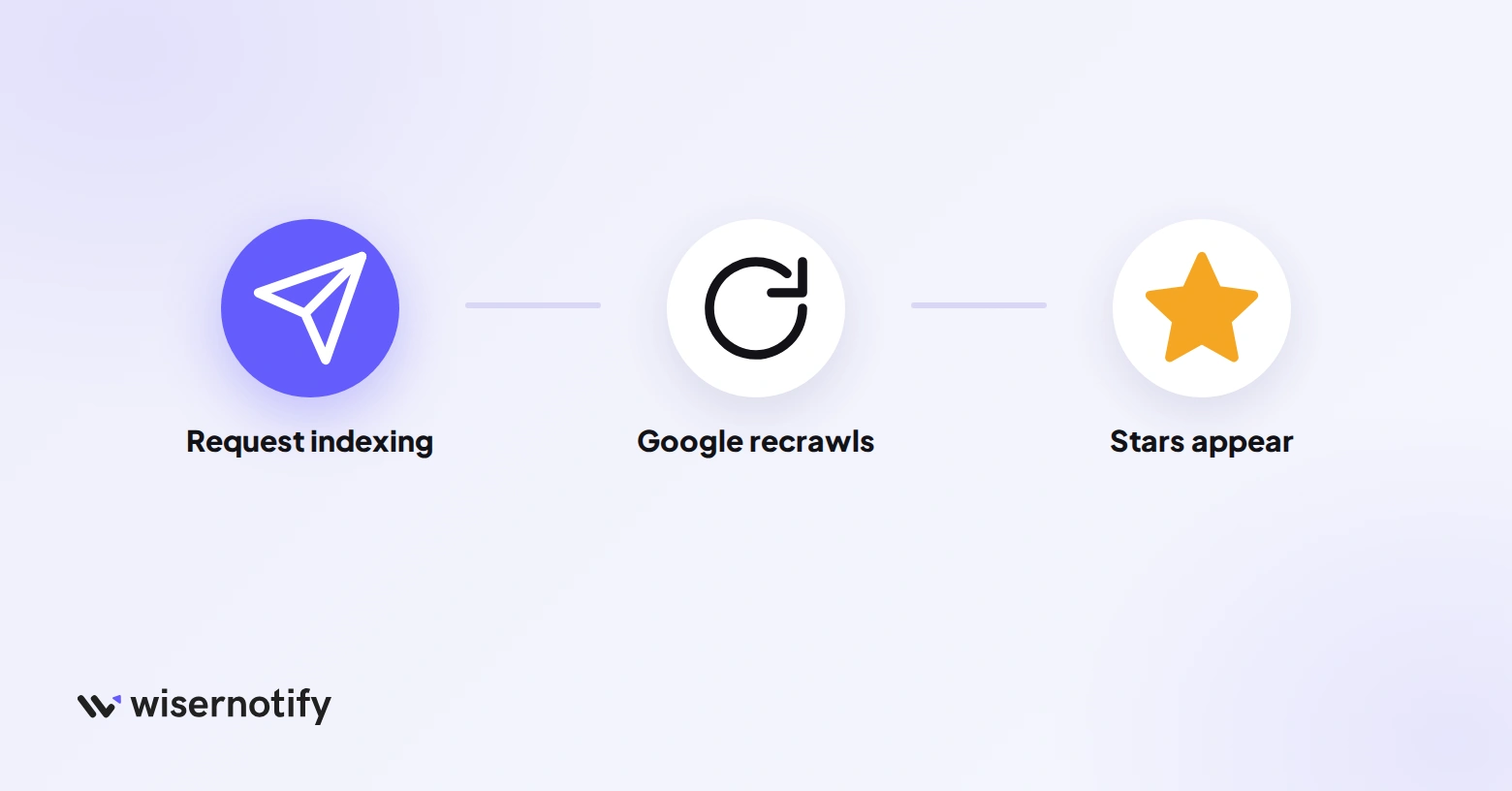
Open the URL in Search Console’s URL Inspection tool and request indexing. Google needs to recrawl the page before anything changes, and a few days is normal.
After that, watch the Review snippets report under Enhancements in Search Console. It lists every page Google sees as valid, and every one with an error.
Add Star Ratings With WiserReview
WiserReview collects product reviews after each order and shows them in a widget on the product page. The same widget writes the Product review schema, so the reviews and the markup come from one place. The steps below work on any website.
Step 1: Open the Product review widget
- Log in to the WiserReview dashboard.
- Click Widgets in the left menu.
- Click Configure on the Product review section widget.
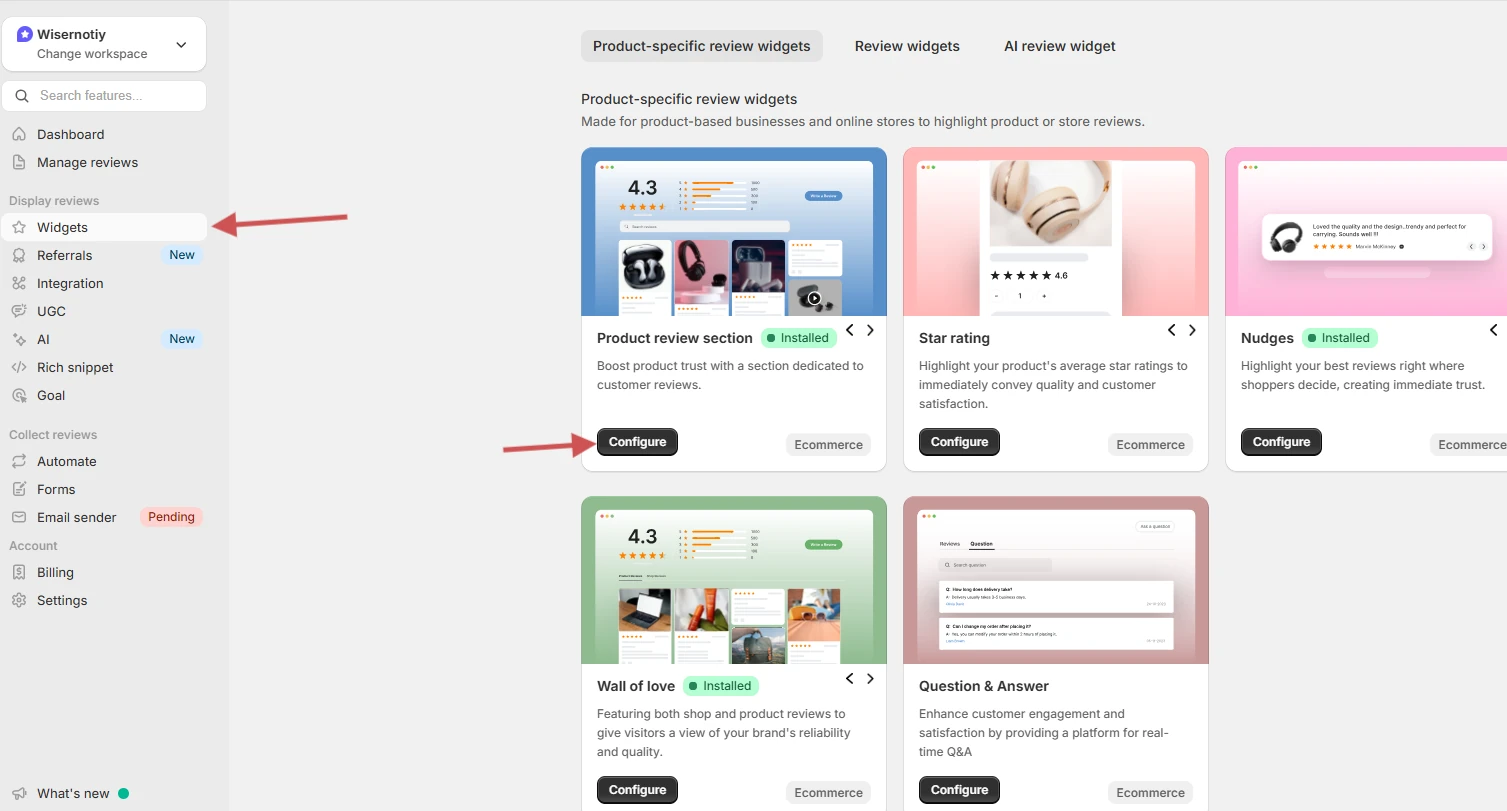
Step 2: Open the install code
- Click Install at the top of the widget editor.
- In the Embed your review widget window, select the Custom tab.
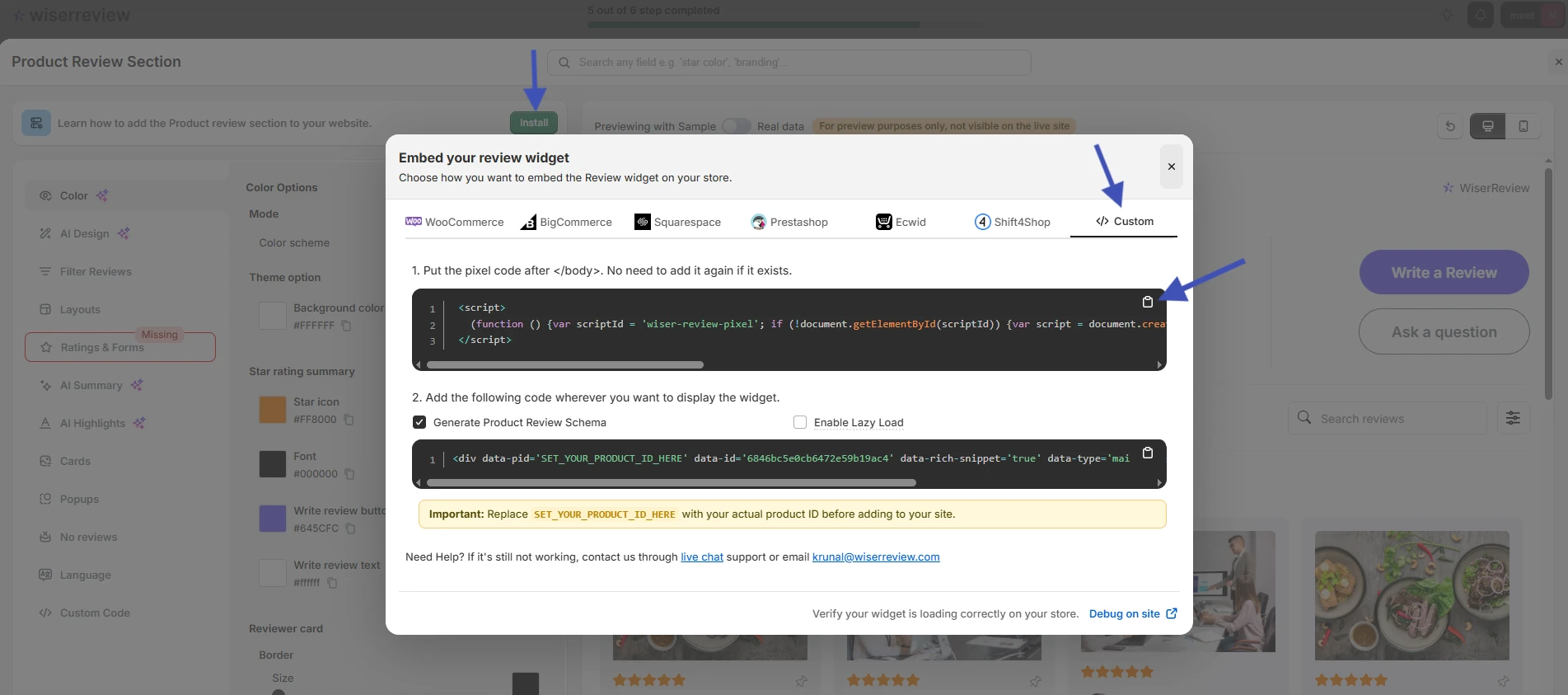
Step 3: Generate the schema code
- Tick Generate Product Review Schema.
- Copy the first snippet, the pixel code.
- Copy the second snippet, the Product review widget code.
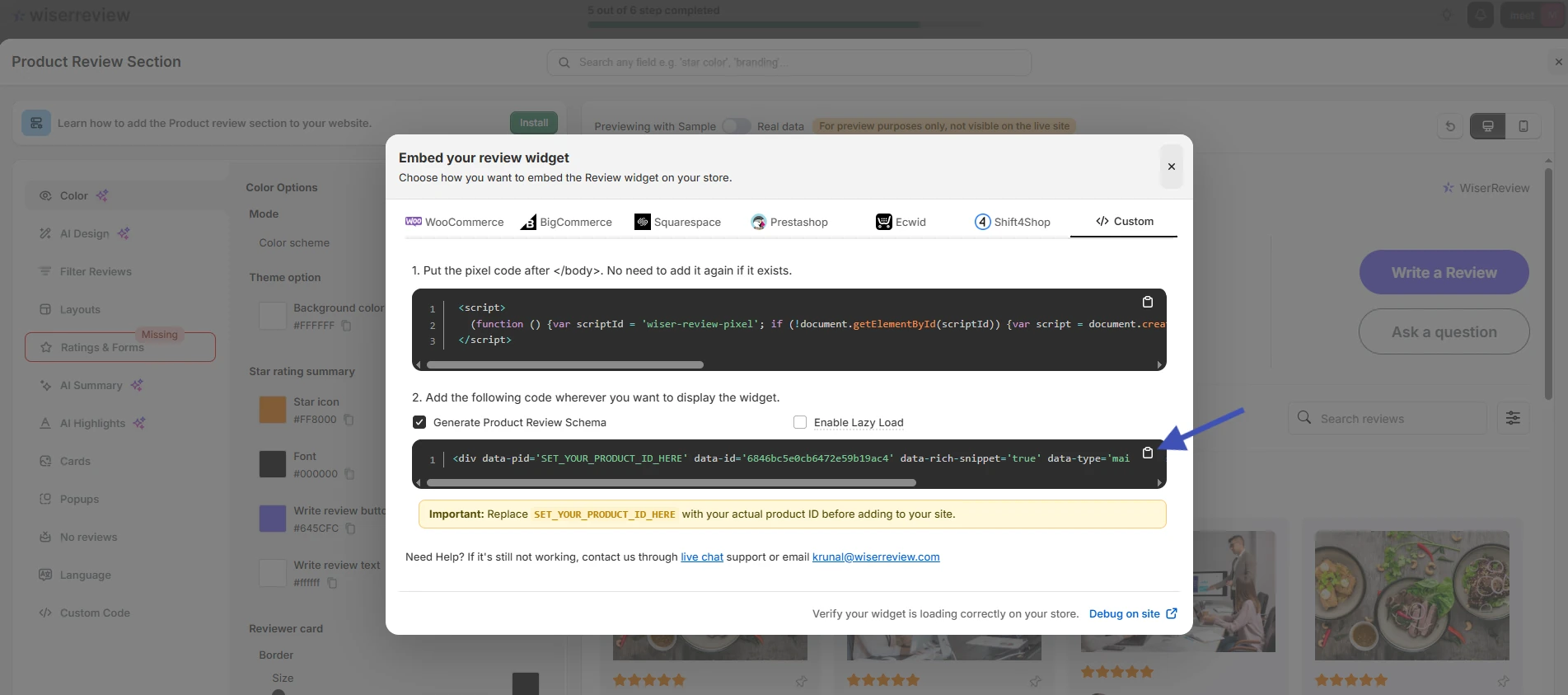
Step 4: Add the code to your site
- Paste the pixel code before the closing body tag of your site. Once is enough.
- Paste the widget code on the product page where the reviews should appear.
- Replace SET_YOUR_PRODUCT_ID_HERE with that product’s ID.
- Publish, then run the page through the Rich Results Test.
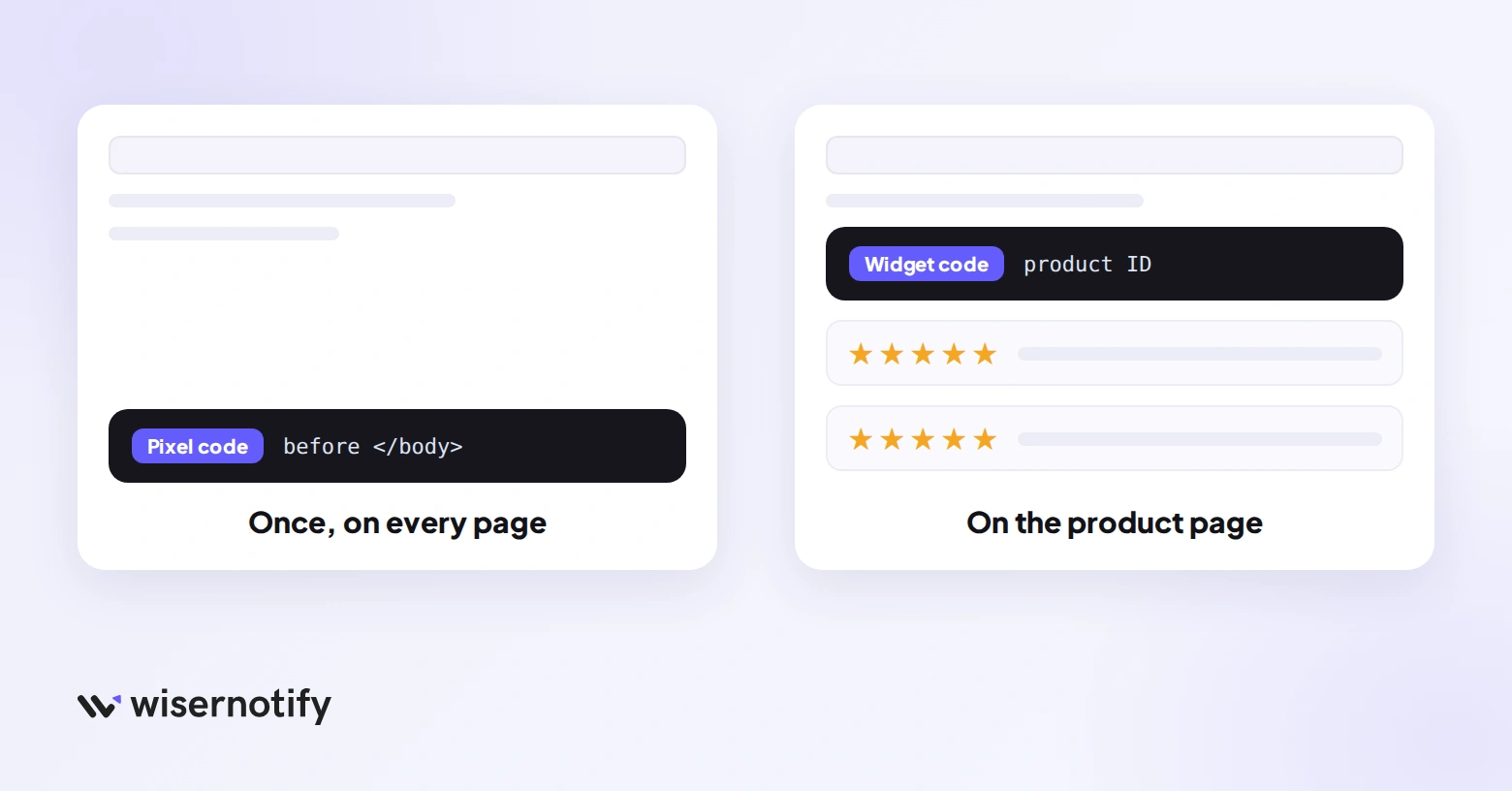
From then on every product page with published reviews carries valid JSON-LD, with the rating and count pulled from the reviews shown in the widget.
On Shopify and WooCommerce the same switch sits inside the app and plugin settings, so there is no code to paste. Our add reviews to Shopify guide covers the Shopify side, and the plugin route means you don’t need a separate schema plugin from our Google review WordPress plugins list.
One honest limit. WiserReview can import your Google and Facebook reviews and display them, but those don’t go into the schema, because Google doesn’t allow reviews from other sites in an aggregate rating.
The stars come from the product reviews you collect yourself. Our guide on how to add Google reviews to website covers the display side.
Star Ratings on Your Google Business Profile
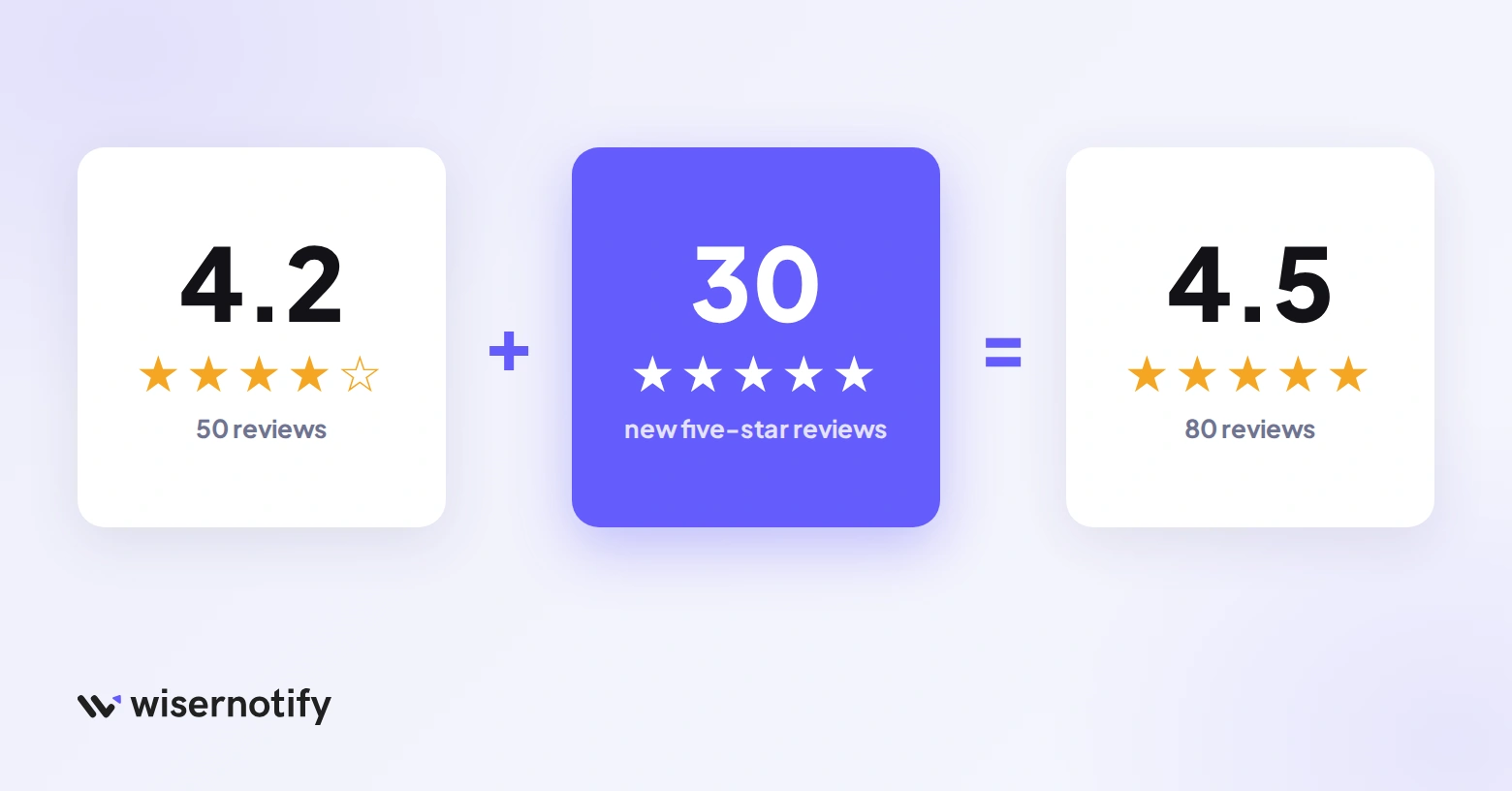
The stars in the map pack and the knowledge panel come from your Google Business Profile, not from your website. Google averages every published rating and shows the result to one decimal, with the review count beside it.
That makes the math simple and the fix slow. A business at 4.2 across 50 reviews needs 30 straight five-star reviews to reach 4.5. There’s no setting that moves it.
- Ask every customer, not the happy ones. Google’s policy bans selective asking, and the volume is what moves the average. The how to ask for reviews examples post has the wording. Share your Google review link after every job or order.
- Reply to every review. Replies don’t change the number, but they change what the next reviewer writes.
- Report reviews that break policy. Off-topic, fake, or conflict-of-interest reviews can be flagged from the profile. Anything else stays.
- Keep the profile complete. Categories, hours, photos, and posts affect whether you show in the pack at all, which is where the stars live.
The Google Business Profile statistics show how heavily the rating weighs on who gets the call.
More Google reviews, on autopilot
Send the review link after every order and route happy customers to Google.
Star Ratings in Google Ads
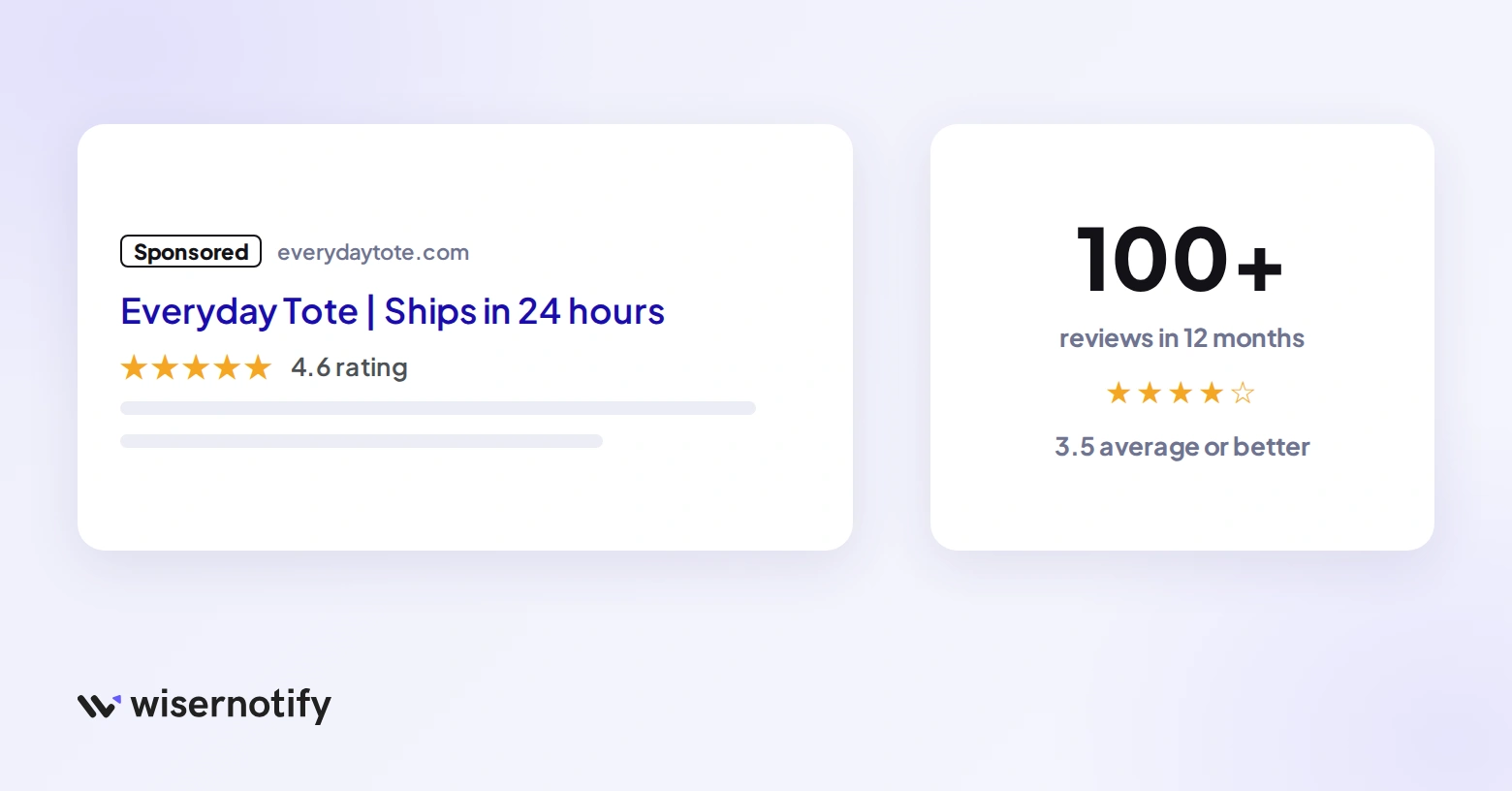
The stars under a text ad are Google’s store rating, once called seller ratings. They come from Google Customer Reviews or from a review partner that feeds Google, never from markup on your site.
The Google review statistics post has the click data on rated ads.
Google generally wants at least 100 eligible, unique reviews in the past 12 months for the country the ad runs in before it calculates a rating, and a 3.5 average or better for the stars to show on ads.
The extension switches on by itself once you qualify.
You can check whether Google has a rating for you by opening the store ratings lookup with your domain. If it’s empty, the review count is the usual reason.
Google Stars Not Showing? Check These First
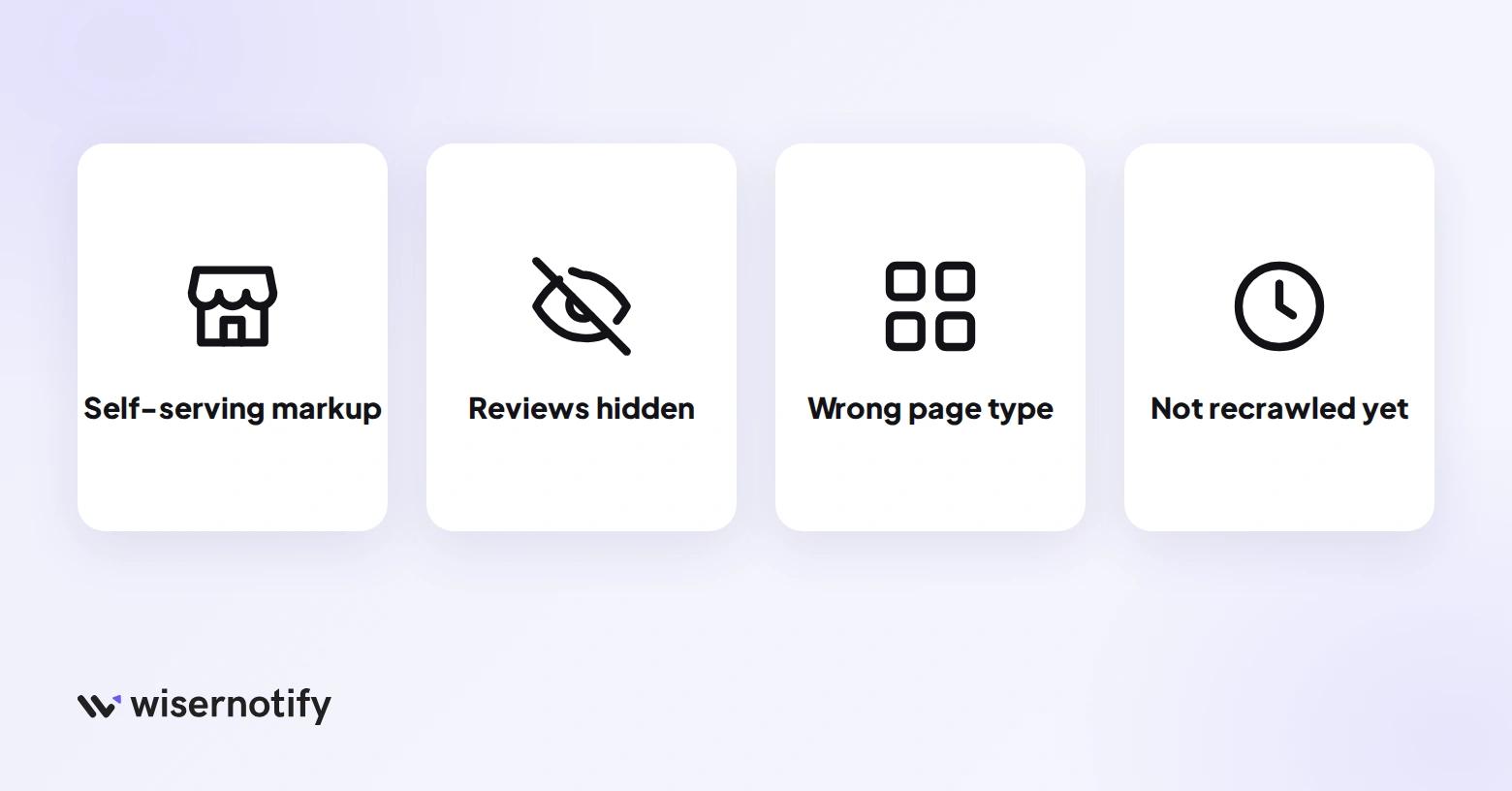
Stars that never appear, or that vanish, almost always trace back to one of these.
- Self-serving markup. LocalBusiness or Organization reviews on your own site, including an embedded Google reviews widget. Google ignores them by design.
- Reviews not visible. The schema is there but the reviews are collapsed, loaded only on click, or on another page.
- Wrong page type. Markup on a category page, a collection, or the homepage. Move it to the single-item pages.
- A critical error in the test. Missing name, missing author, a comma in the decimal, or reviews without an aggregate.
- Nothing recrawled yet. Request indexing and give it a few days before you change anything.
- A manual action. Search Console’s Manual Actions report will say “structured data issue”. Fix the markup, then request a review.
- Google chose not to. Valid markup makes a page eligible, not entitled. Some queries never show stars, and that’s normal.
Mistakes That Get Stars Removed
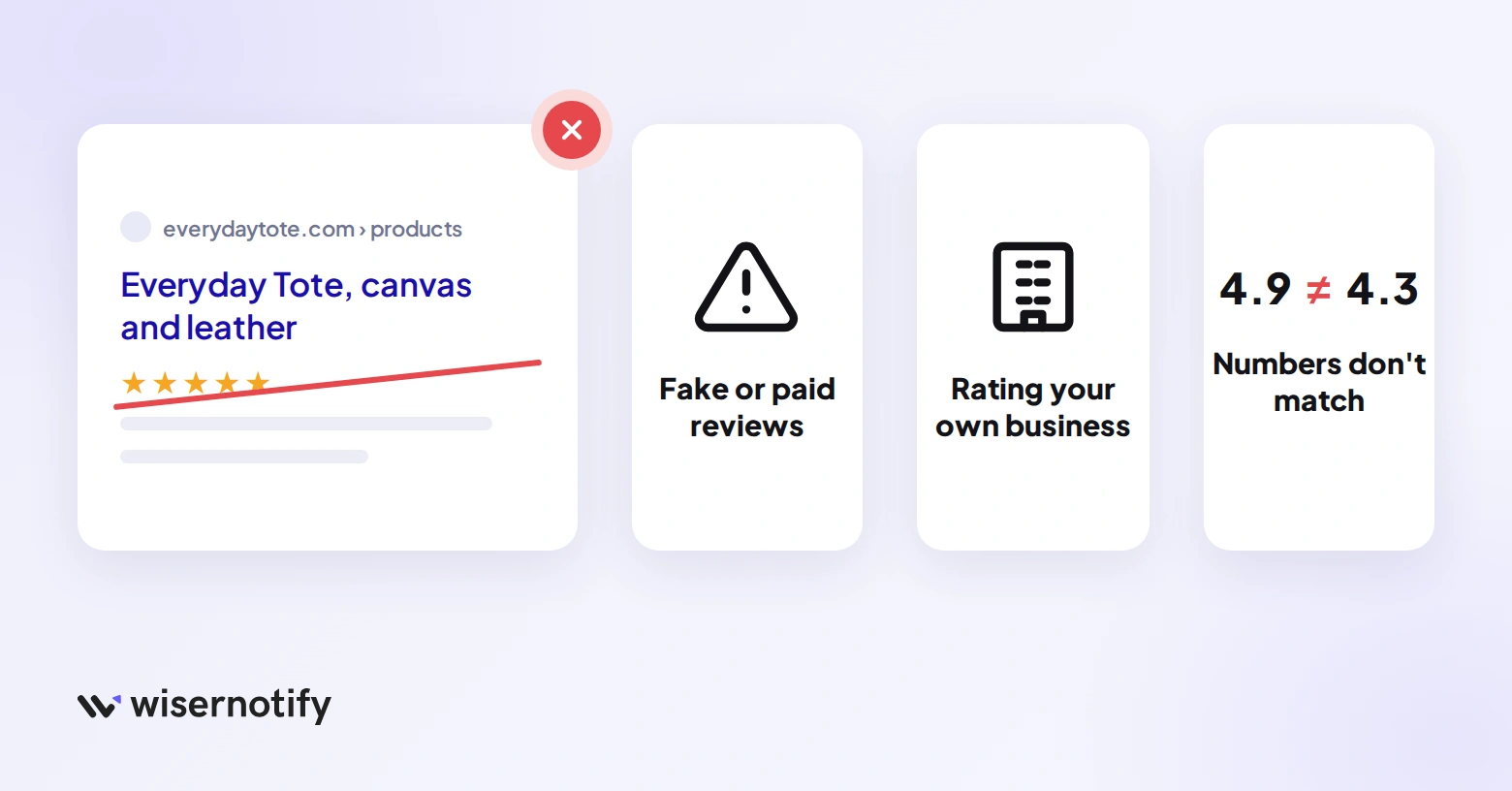
Google can drop rich results for one page or for the whole site, so these are worth avoiding from the start.
- Fake or undisclosed incentivized reviews. Added to Google’s guidelines this year. A review written for a discount has to say so, on the page and in the markup.
- Rating your own business. Testimonials about your company wrapped in Organization schema. Keep them on the page, drop the markup.
- Markup on everything. Review schema on pages with no reviews, or one aggregate copied across the site.
- Numbers that don’t match. A 4.9 in the markup and a 4.3 in the widget is the quickest route to a manual action.
- Aggregating other sites’ reviews. Pulling a Trustpilot or Google rating into your Product schema breaks the same rule.
When a bad review lands, answer it the way our Google review response examples show rather than hiding it from the page. Hidden reviews break the visibility rule.
Reviews on the page, schema in the code
WiserReview collects product reviews and writes the Google review schema for you.
Wrap Up
Stars under your own result take an eligible page, visible reviews, and valid markup, in that order. Product pages with first-party reviews are the surest route, and a review widget that writes the schema removes the coding.
Stars in the map pack take more good reviews on your Business Profile, and stars on ads take enough reviews for Google to trust the average.
Different systems, same raw material. Ask every customer, show what they said, and let Google do the counting.
Frequently Asked Questions
How do I get star ratings to show in Google search results?
Put real reviews on an eligible page such as a product page, add Review and AggregateRating markup for that item, then test the page in the Rich Results Test and request indexing.
Which pages are eligible for Google star ratings?
Pages about a product, software app, recipe, book, event, or movie. Homepages, service pages, and blog posts aren’t supported, and reviews about your own business on your own site don’t count.
Why are my Google star ratings not showing?
Usually the markup is self-serving, the reviews aren’t visible on the page, the page type isn’t eligible, or Google hasn’t recrawled the page yet.
Can I get stars by embedding my Google reviews on my website?
No. Google treats reviews about your business on your own site as self-serving, so an embedded Google reviews widget with LocalBusiness markup won’t produce stars.
How is the Google star rating calculated?
Your Business Profile rating is the average of every published rating, shown to one decimal, so the only way to raise it is to collect more high ratings.
How do I get star ratings in Google Ads?
Collect reviews through Google Customer Reviews or an approved review partner. Google switches the store rating on by itself once you pass its threshold of around 100 eligible reviews in a year.
Does WiserReview add review schema?
Yes. The product review widget writes Product review schema for each product page once you enable rich snippets in the widget settings.

Krunal Vaghasiya is a marketing tech expert who boosts e-commerce conversion rates with automated social proof and FOMO strategies. He loves to keep posting insightful posts on online marketing software, marketing automations, and improving conversion rates.




 Capterra