Table of Contents
brand partnership strategy

I Tested 10 Cross-Promotion Examples: What Works (2026)

I’ve set up cross-promotion campaigns for WiserNotify with dozens of SaaS partners over the past five years. Some doubled our email list in a single month. Others barely moved the needle.

The difference wasn’t the partner size or the discount offered. It was the structure of the partnership and how well both audiences aligned.

Here are 10 cross-promotion examples from brands that got the formula right, with the specific strategy behind each one and how you can replicate it.

Icon

Boost Conversion Instantly

Add Social Proof & Urgency to your website

What Is Cross-Promotion?

Cross-promotion is when two or more brands collaborate to promote each other’s products to their respective audiences.

You partner with a complementary brand, share access to each other’s customers, and both benefit from borrowed trust.

Here’s why it works:

Costs almost nothing. No ad budget required. Both brands contribute to their audience and channels instead of paying per click.

Comes with built-in trust. When a brand your customers already know recommends you, that endorsement carries real weight.

Reaches people you can’t reach on your own. Your partner’s email list and social following include people who’ve never heard of you but already buy complementary products.

Drives results fast. A well-executed cross-promotion can spike traffic, signups, or sales within days.

Build urgency

Add floating offers with countdown timer & coupon code.

First Image Second Image Add to My Website Now

Try for free (No card required)

Types of Cross-Promotion

Types of cross-promotion including co-branding email marketing product bundles influencer partnerships and sponsorships

Cross-promotion takes many forms depending on your goals, budget, and partner:

Co-branding: Two brands create a joint product that combines both identities. Think Apple Watch Nike Edition or GoPro x Red Bull. Both brands contribute their strengths to make something neither could build alone.

Email marketing cross-promotion: Partners feature each other in their newsletters. This works because you’re reaching an already-engaged audience that opted in to receive recommendations.

Product bundle deals: Combining complementary products into a single package at a discount. Customers get more value, and both brands increase their average order value.

Influencer partnerships: A brand collaborates with a creator whose audience aligns with its target market. The influencer’s endorsement feels authentic because their community trusts their recommendations.

Social media campaigns: Joint giveaways, co-created content, or simple mutual shoutouts. These work especially well on Instagram and TikTok, where visual storytelling drives engagement.

Content collaborations: Co-authored ebooks, webinars, or guides that provide value to both audiences while positioning both brands as thought leaders.

Build trust & FOMO

Highlight real-time activities like reviews, sales & sign-ups.

First Image Second Image Add to My Website Now

Try for free (No card required)

10 Cross-Promotion Examples That Actually Worked

1. BlendJet x Herbivore Botanicals (Collaborative Giveaway)

BlendJet and Herbivore Botanicals Instagram collaborative giveaway cross-promotion

BlendJet and Herbivore Botanicals teamed up on Instagram to run a summer-themed giveaway.

Followers could win a BlendJet portable blender plus Herbivore skincare products by following both accounts, liking the post, and tagging friends.

What they do right: The brands are complementary (health + wellness) without competing. The entry mechanics (following both accounts and tagging friends) guarantee audience crossover. Every tagged friend becomes a new potential follower for both brands.

Steal this: Find a brand in your space that serves the same customer but sells a different product. Run a joint giveaway where the entry requirement is to follow BOTH accounts. You’ll each gain followers from the other’s audience at zero cost.

2. McDonald’s x DreamWorks (Co-Branded Product)

McDonald's Shrek-themed Happy Meal co-branded cross-promotion with DreamWorks

McDonald’s created Shrek-themed Happy Meals with DreamWorks, featuring collectible toys and custom packaging inspired by the movie franchise. Parents came for the toys, stayed for the meals.

What they do right: McDonald’s taps into existing movie hype (DreamWorks handles the cultural moment), while DreamWorks gets physical placement in thousands of restaurants globally. The collectible angle drives repeat visits.

Steal this: Tie your cross-promotion to a cultural moment, a movie release, a holiday, a trending topic. Timing your partnership with existing buzz amplifies results without extra ad spend.

Also check: Product Bundling Examples That Boost Sales

3. e.l.f. Cosmetics x Influencer Partnership

e.l.f. Cosmetics partnered with popular beauty influencer Lars Gummer to create an Instagram Reel showcasing their products in a casual, relatable style.

The content felt like a friend’s recommendation, not a sponsored ad.

What they do right: e.l.f. gives the influencer creative freedom instead of a rigid script. The result looks native to the influencer’s feed, so their followers engage with it rather than scroll past.

Steal this: When partnering with influencers, provide the product and the key message, but let them decide HOW to present it. Authentic content outperforms scripted ads every time. Their audience can spot a forced promotion instantly.

Build trust & FOMO

Highlight real-time activities like reviews, sales & sign-ups.

First Image Second Image Add to My Website Now

Try for free (No card required)

4. Thursday Boot Company x Cobbler’s Choice (Social Media Cross-Promo)

Thursday Boot Company and Cobbler’s Choice (footwear care products) ran a mutual promotion on Instagram.

Thursday featured Cobbler’s Choice cleaning products in a demo video, while Cobbler’s Choice showcased Thursday boots in their own content.

What they do right: This is the most natural cross-promotion possible. Someone who buys premium boots also needs premium boot care. The partnership doesn’t feel forced because the products genuinely complement each other.

Steal this: Think about what your customer needs AFTER buying your product. Who sells that? That brand is your ideal cross-promotion partner. A laptop company partners with a laptop bag brand. A coffee maker brand partners with a specialty beans brand.

5. AllTrails x Calm (Email Collaboration)

AllTrails and Calm app email cross-promotion offering free months of Calm

AllTrails (hiking app) and Calm (meditation app) created a campaign in which users who recorded a hike on AllTrails received 3 free months of Calm. Outdoor activity meets mental wellness. A natural pairing.

What they do right: The incentive is activity-based rather than passive. Users have to DO something (record a hike) to earn the reward (free Calm subscription). This means the cross-promotion reaches engaged, active users, not just people collecting freebies.

Steal this: Make your cross-promotion reward conditional on engagement. “Buy X, get Y free” is good. “Complete this action, unlock this reward” is better because it filters for high-intent users.

Also check: 23 Sales Promotion Examples to Boost Your Campaign

6. Apple x Nike (Product Collaboration)

Apple Watch Nike Edition product collaboration cross-promotion

Apple and Nike created the Apple Watch Nike Edition, combining Apple’s smartwatch technology with Nike’s sports branding, custom watch faces, and exclusive band designs.

The product appeals to fitness enthusiasts who value both tech and athletic identity.

What they do right: This isn’t a logo swap. Both brands contribute genuine product value. Apple provides the hardware, Nike provides the fitness-focused UX design. The result is a product that’s better than what either brand could create alone.

Steal this: The strongest cross-promotions create something NEW, not just a bundle of existing products. If you can co-create a product, feature, or experience that combines both brands’ strengths, you’ll generate far more buzz than a simple “check out our partner” email.

7. Adidas x Ivy Park (Co-Branded Collection)

Adidas x Ivy Park co-branded fashion collection cross-promotion

Adidas partnered with Ivy Park to release an inclusive, versatile fashion line that merged athletic performance with streetwear style.

The collection drew from both brands’ identities and sold out quickly thanks to the combined fan bases.

What they do right: The collaboration targets a specific identity (inclusive athleticwear) rather than trying to appeal to everyone. This focus gives the collection a clear story that both audiences connect with.

Steal this: When planning a co-branded product, don’t try to please both audiences equally. Find the OVERLAP, the specific values or interests shared by both customer bases, and build the entire campaign around that intersection.

Build trust & FOMO

Highlight real-time activities like reviews, sales & sign-ups.

First Image Second Image Add to My Website Now

Try for free (No card required)

8. The Chat Shop x LiveChat (eBook Collaboration)

The Chat Shop and LiveChat eBook collaboration cross-promotion

Two brands in the live chat space co-authored “A Complete Guide to Online Sales,” an eBook providing value to ecommerce businesses.

Both brands promoted it to their email lists and social audiences.

What they do right: Content collaborations generate leads for BOTH partners. Every download requires an email address, which both brands can add to their nurture sequences. The content positions both brands as experts, building trust before any sales pitch.

Steal this: Co-create a genuinely useful piece of content (guide, report, or webinar) with your partner. Gate it behind an email signup. Both brands promote it, and both brands get every lead. This is one of the highest-ROI cross-promotion formats for B2B companies.

Also check: How to Create Urgency in Sales

9. Coca-Cola x Oreo (Limited Edition Product)

Coca-Cola x Oreo limited edition co-branded product cross-promotion

Coca-Cola and Oreo collaborated on a limited-edition product that combined both brands’ flavors into a unique offering. The limited availability created massive buzz and drove urgency.

What they do right: Scarcity is the engine here. “Limited edition” means you either buy now or you miss it forever. This taps into the same FOMO psychology that makes flash sales so effective. Combine two beloved brands with artificial scarcity, and you get lines out the door.

Steal this: Make your cross-promotion time-limited. “Available for 2 weeks only” creates far more urgency than a permanent partnership. Combine this with countdown timers on your landing page to heighten the sense of urgency.

Build urgency

Add floating offers with countdown timer & coupon code.

First Image Second Image Add to My Website Now

Try for free (No card required)

10. Byredo x Ouai (Co-Branded Beauty Product)

Byredo x Ouai limited edition leave-in conditioner cross-promotion

Fragrance brand Byredo and haircare brand Ouai released a limited-edition leave-in conditioner that combined Byredo’s signature scents with Ouai’s formulation expertise. It sold out almost immediately.

What they do right: Each brand brings a distinct skill the other lacks. Byredo can’t make haircare products alone. Ouai can’t create luxury fragrances alone. Together, they create something neither could build independently. That’s the hallmark of a great cross-promotion.

Steal this: The best partnerships combine two different competencies, not two similar ones. Ask yourself: “What can my partner do that I can’t?” If the answer is clear and specific, you’ve found the right partner.

How to Find the Right Cross-Promotion Partner

Choosing the wrong partner is the fastest way to waste a cross-promotion campaign. Here’s the framework I use:

Step 1: List your customer’s adjacent needs. What does your customer need before, during, or after using your product? Those needs point to your ideal partners. If you sell running shoes, your customer also needs running socks, fitness apps, and hydration products.

Step 2: Check audience overlap. Your partner should serve a similar audience but sell a different product. If you both sell the same thing, you’re competitors, not partners.

Step 3: Verify the balance of audience sizes. A 50,000-follower brand partnering with a 5-million-follower brand creates an imbalance. The smaller brand gains massively while the larger brand sees minimal return. Aim for partners within 2-5x of your own audience size.

Step 4: Align on values and quality. Your brand reputation travels with your partner’s. If they have a poor customer experience, that reflects on you. Research reviews, social sentiment, and product quality before committing.

Step 5: Start small. Don’t jump into a co-branded product line. Start with a mutual social media shoutout or email mention. If that goes well, escalate to a giveaway or content collaboration. Build trust before committing resources.

Cross-Promotion Ideas by Channel

Different channels suit different goals. Here’s where each format works best:

Instagram/TikTok: Joint giveaways, co-created Reels, mutual Story shoutouts, and product feature videos. Best for: brand awareness and follower growth. Visual products perform best here.

Email marketing: Newsletter mentions, dedicated partner emails, and co-authored content promotions. Best for: lead generation and driving traffic. Email audiences are pre-warmed and high-intent.

Content marketing: Co-authored blog posts, joint webinars, eBooks, and podcast guest swaps. Best for: thought leadership and long-term SEO value. The content lives forever and continues generating leads.

Product/In-store: Bundle deals, co-branded packaging, in-store displays, and receipt-back promotions. Best for: increasing average order value and driving impulse purchases.

Events and sponsorships: Co-hosted workshops, conference booth sharing, and joint charity campaigns. Best for: local businesses and B2B brands looking to build relationships.

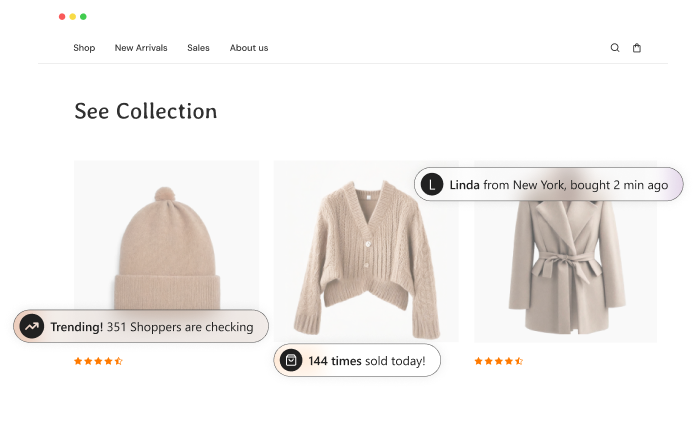
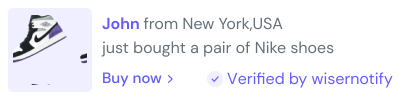
Your website: Partner recommendation widgets, “customers also bought from” sections, and co-branded landing pages. At WiserNotify, we’ve seen brands add partner-recommendation social-proof notifications to their checkout pages to cross-promote complementary products. When a customer sees “Sarah from Austin also purchased [partner product],” it acts as both social proof and a natural cross-sell.

How to Measure Cross-Promotion Success

You can’t improve what you don’t measure. Track these KPIs for every cross-promotion campaign:

New audience reached: How many new followers, email subscribers, or site visitors came from your partner’s audience? Use UTM parameters or unique landing pages to track this accurately.

Engagement rate: Likes, comments, shares, email opens, and click-through rates on cross-promotional content. Higher engagement than your baseline means the partner’s audience is responding.

Conversion rate: How many of those new visitors actually purchased, signed up, or took the desired action? This tells you if the partner’s audience is a real fit or just window shopping.

Revenue attributed: Use unique promo codes or tracking links to attribute sales directly to the cross-promotion. “Use code PARTNER15 at checkout” makes this easy.

Cost per acquisition: Even though cross-promotions are “free,” they cost time and effort. Compare the CPA of your cross-promotion leads against your paid ad CPA to understand the true value.

Icon

Boost Conversion Instantly

Add Social Proof & Urgency to your website

Common Mistakes That Kill Cross-Promotions

I’ve seen these derail otherwise promising partnerships:

Picking a partner based on size, not fit. A massive brand with zero audience overlap will give you impressions but no conversions. A smaller brand whose audience perfectly matches yours will outperform every time.

No clear terms upfront. Who posts first? Who creates the content? What’s the timeline? How long does the promotion run? Agree on everything in writing before launching. Vague agreements lead to one brand doing 90% of the work.

One-and-done campaigns. The best cross-promotions are ongoing relationships, not single posts. Brands like Thursday Boot Company and Cobbler’s Choice run multiple campaigns together because their audience fit has been proven. Don’t abandon a good partner after one campaign.

Promoting without providing value. “Check out our partner!” isn’t compelling. “Our partner is offering 20% off exclusively for our audience.” Every cross-promotion needs a clear value proposition for the audience, not just the brands.

Ignoring your existing audience’s reaction. If your audience doesn’t respond to your partner’s product, listen. Pushing a mismatched partnership erodes trust with your own community.

No tracking or measurement. If you can’t tell whether the campaign worked, you can’t improve the next one. Always use unique links, codes, or landing pages.

Conclusion

The best cross-promotions don’t feel like advertising. They feel like genuine recommendations from brands you trust.

Every example in this post follows the same pattern: complementary audiences, a clear value exchange, and a partnership structure in which both sides genuinely benefit.

Start by mapping your customer’s adjacent needs. Find one brand that fills a gap you don’t.

Reach out with a specific, small-scale proposal (a mutual social shoutout or email mention). Track the results. If it works, escalate.

Cross-promotion is one of the few marketing strategies that gets better as you scale.

Each successful partnership opens the door to the next one, because brands want to partner with brands that have a track record of running successful collaborations.

If you want to amplify your cross-promotion campaigns with real-time social proof (showing visitors that others are buying your partner’s recommended products), WiserNotify offers a free trial to test it on your site.

We’re already helping 10,000+ businesses turn browser trust into buying action.

FAQ's

Cross-promotion is a marketing strategy where two brands collaborate to promote each other’s products or services. By partnering with a complementary brand, both can tap into each other’s audiences, increase brand awareness, and drive mutual growth.

Look for a partner with an overlapping audience, aligned values, and complementary products or services. Ensure they’re committed to the campaign, and set clear KPIs to measure success.

Popular cross-promotion ideas include co-branded products, joint social media giveaways, content collaborations, bundled offers, and referral partnerships. The best idea depends on your goals and the partner’s strengths.

Yes, cross-promotion is ideal for small businesses, as it’s low-cost and effectively increases brand awareness by tapping into new audiences through strategic partnerships.

Picture of Krunal Vaghasiya
Krunal Vaghasiya
Krunal Vaghasiya is a marketing tech expert who boosts e-commerce conversion rates with automated social proof and FOMO strategies. He loves to keep posting insightful posts on online marketing software, marketing automations, and improving conversion rates.
Wisernotify
Struggling with low conversions?
Use Social Proof & FOMO
Social Media icon